
 Can Tho
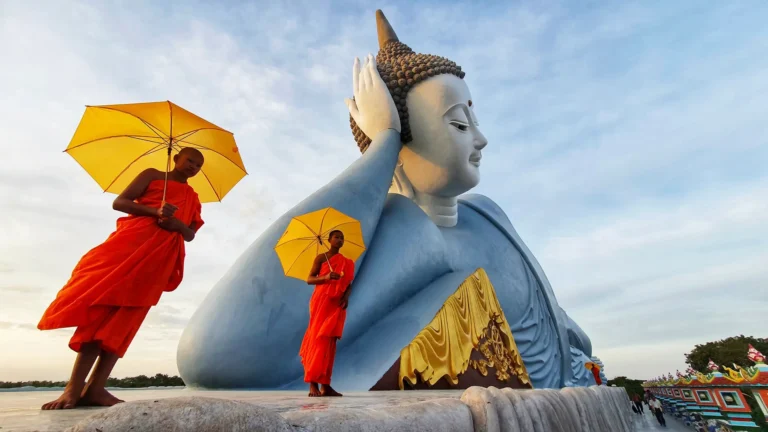
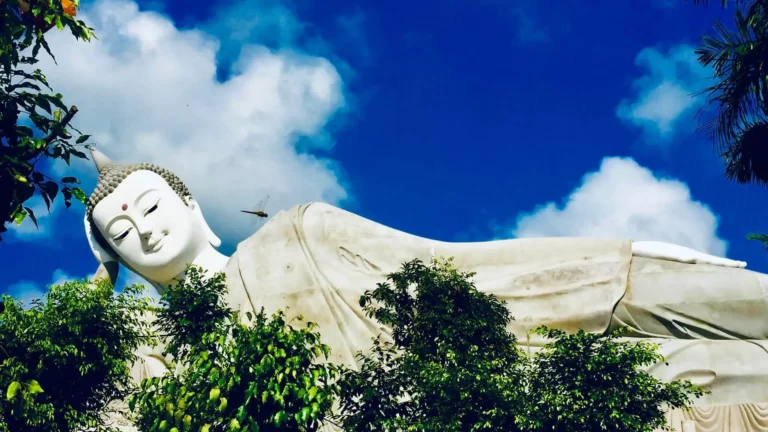

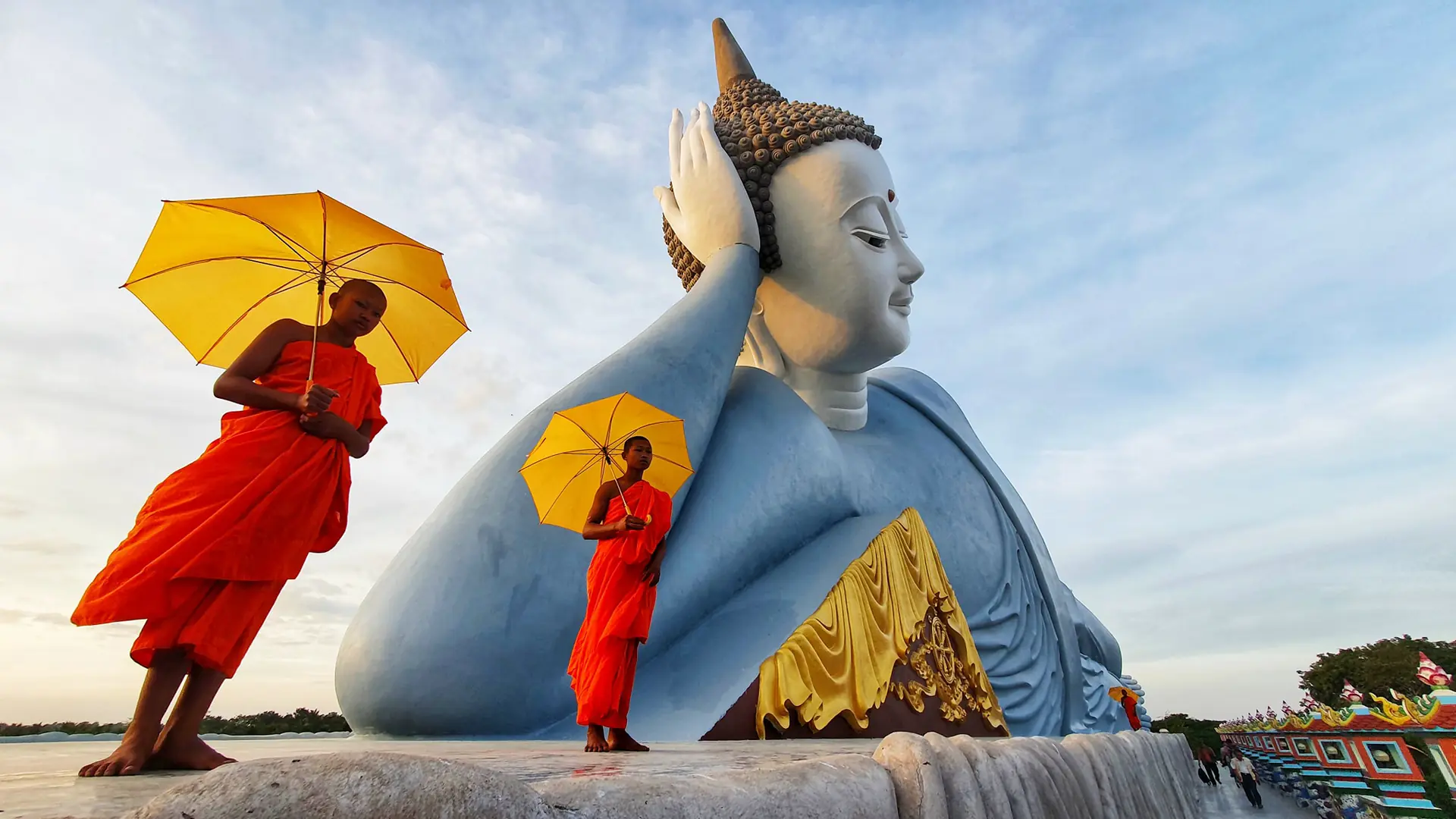
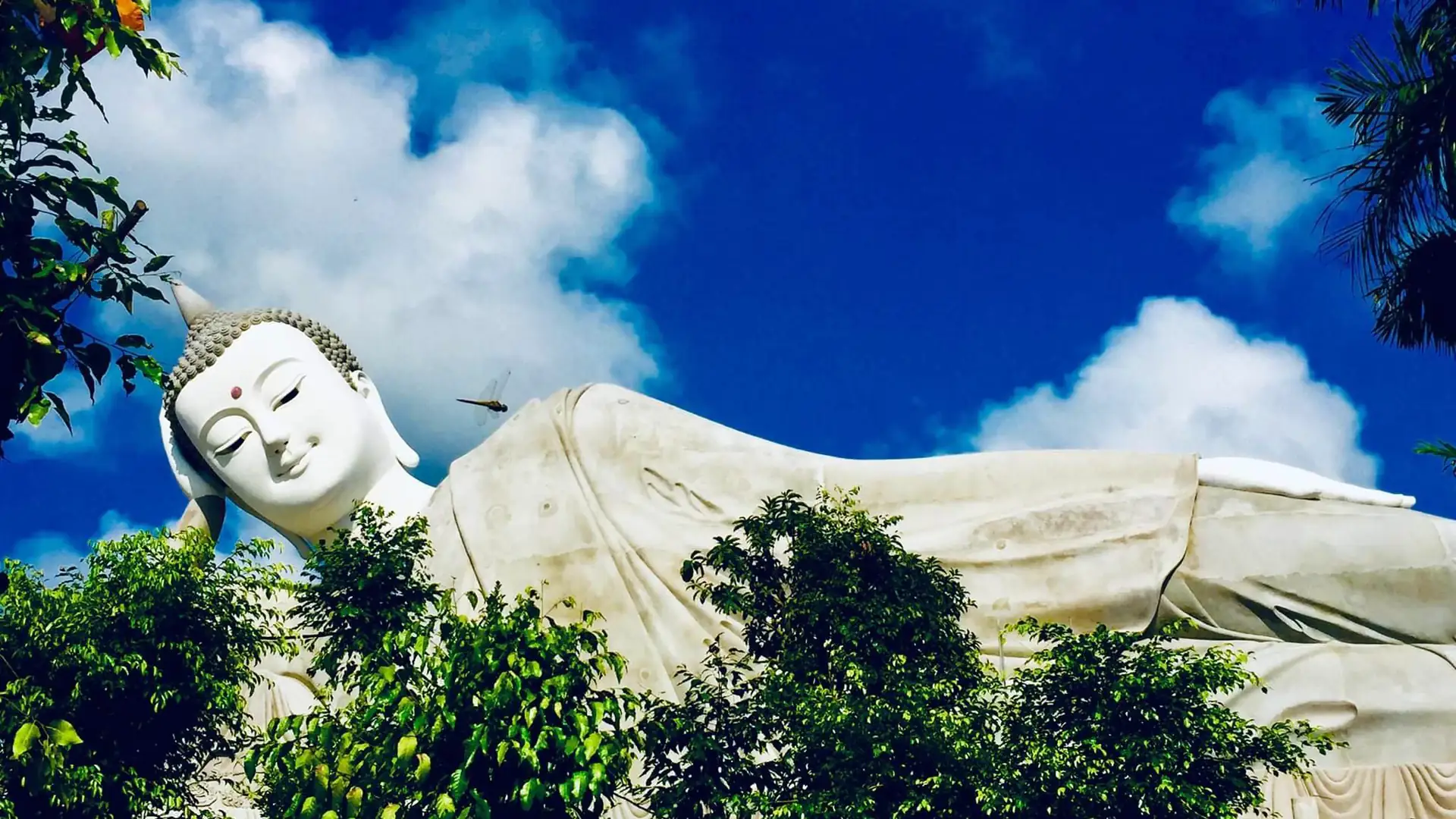
In the former Soc Trang city center, a white and pale blue Buddha lies on its side above the treetops of a Khmer temple. The statue at Som Rong Pagoda is 63 meters long, and you can spot it well before you reach the gate.
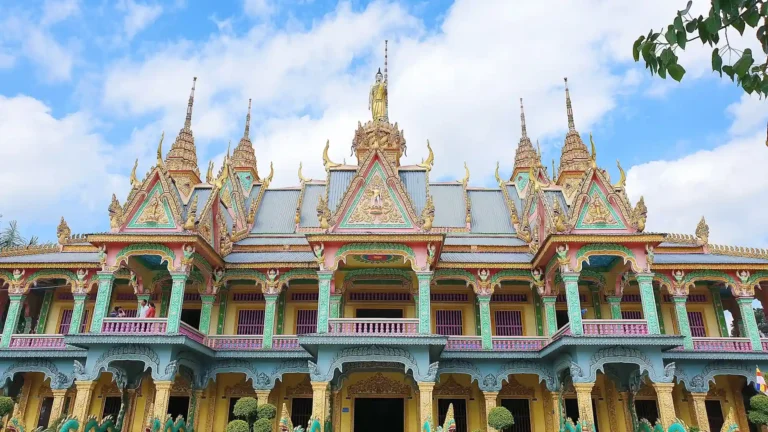
Som Rong Pagoda, officially Wat Patum Wongsa Som Rong, is an active Khmer Theravada Buddhist temple. The Vietnam News Agency describes it as one of the most famous spiritual attractions in the Mekong Delta. Beyond the reclining Buddha, the grounds hold a smoke-gray four-faced stupa, a richly decorated main sanctuary and a Sala hall that keeps a pair of floating stones.
Many travel guides still list the pagoda in Soc Trang Province. Since Vietnam’s 2025 administrative changes, its location is Soc Trang Ward, Can Tho City. The temple itself has not moved.
Som Rong Pagoda at a glance
| Visitor Information | Details |
|---|---|
| Vietnamese name | Chùa Som Rông |
| Official name | Wat Patum Wongsa Som Rong (also Botum Vong Sa Som Rong) |
| Location | Ton Duc Thang Street, Soc Trang Ward, Can Tho City, Vietnam |
| Former address | Soc Trang City, Soc Trang Province |
| Religion | Khmer Theravada Buddhism |
| Founded | 1785, according to the pagoda's original records |
| Grounds | About 5 hectares |
| Reclining Buddha | 63 m long, about 22.5 m high, 490 tonnes |
| Opening hours | 7:00 AM-6:00 PM daily |
| Entrance fee | Free admission; voluntary donations are welcome |
| Suggested visit duration | 45-90 minutes |
| Best time for photos | 7:00-9:00 AM or 4:00-5:30 PM |
| Main highlights | Reclining Buddha, four-faced stupa, main sanctuary murals, Sala hall with floating stones |
| Google Maps | Chùa Som Rông (Som Rong Pagoda) |
Information checked on November 23, 2026. Arrive before 5:30 PM so you have time to walk the grounds before closing.
The reclining Buddha at Som Rong Pagoda
The reclining Buddha is the reason most visitors come. According to reports by Vietnam’s national media, the statue is 63 meters long, about 22.5 meters high and weighs 490 tonnes. Soc Trang’s provincial Department of Culture, Sports and Tourism recognizes it as the largest reclining Buddha statue in Vietnam, as reported by Vietnamnet in 2025.
The statue is a recent addition to a much older temple. It was built in the late 2010s and painted in white and light blue, which stands out against the gold and red of the traditional Khmer buildings around it.
A reclining Buddha represents the moment the Buddha passed into final nirvana (parinirvana). It is a calm, resting pose rather than a sleeping one, so treat the statue as a sacred image, not a photo prop.
The statue sits on a raised platform. The space underneath is not a museum: the Vietnam News Agency describes it as an area for the monks’ daily activities and study, so keep your voice down if you walk nearby.
What to see at Som Rong Pagoda
The grounds cover about 5 hectares, so give yourself time to walk around rather than stopping only at the statue.
The entrance gate
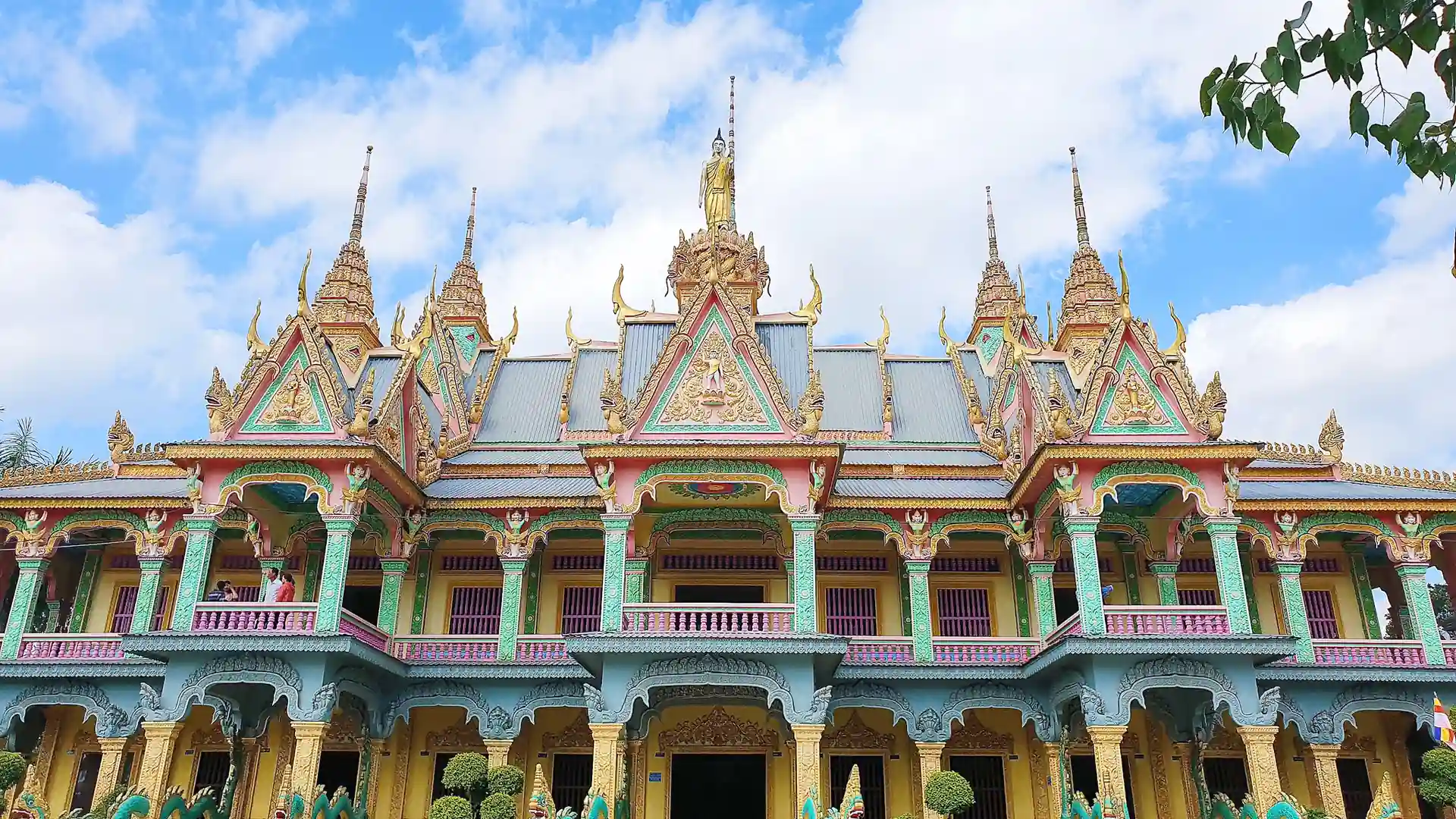
The gate is decorated with Naga serpents and Krud, the mythical bird known elsewhere as Garuda. Both figures appear throughout Khmer temples in the Mekong Delta as protectors of Buddhist spaces, and you will see them again on the stupa stairs and the main sanctuary.
The main sanctuary
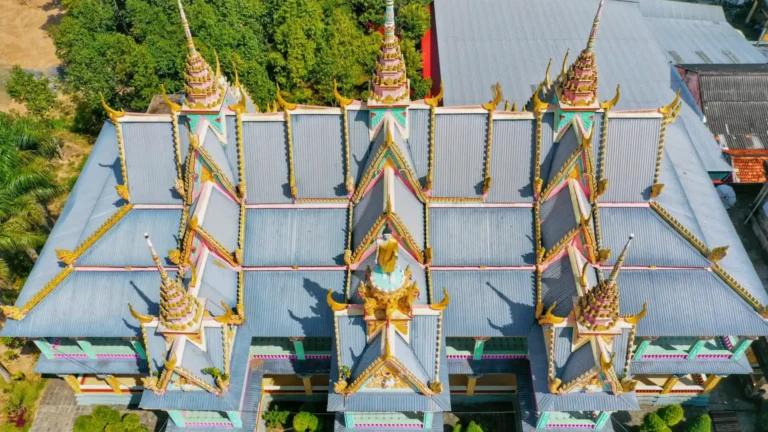
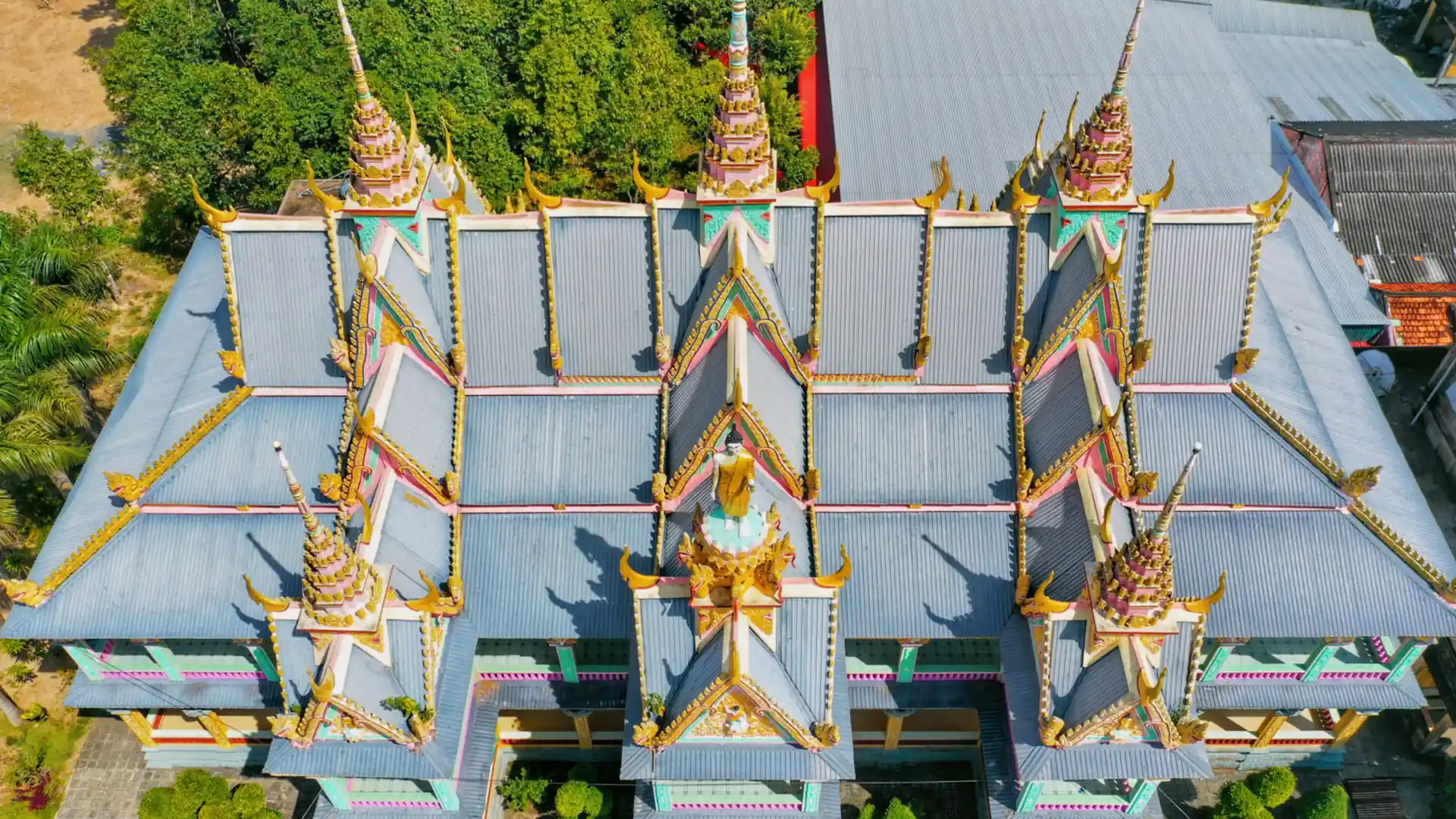
The main sanctuary (chánh điện) is the religious heart of the pagoda. Its three-tiered roof has dragon motifs at each corner, and carvings of the celestial dancer Keynor and the bird Krud sit where the roof meets the columns.
Inside, murals on the walls and ceiling tell the life story of the Buddha. Voice of Vietnam reports that the hall also keeps two wooden statues dating from the pagoda’s early years. Ask before entering, and remove your shoes at the door.
The four-faced stupa
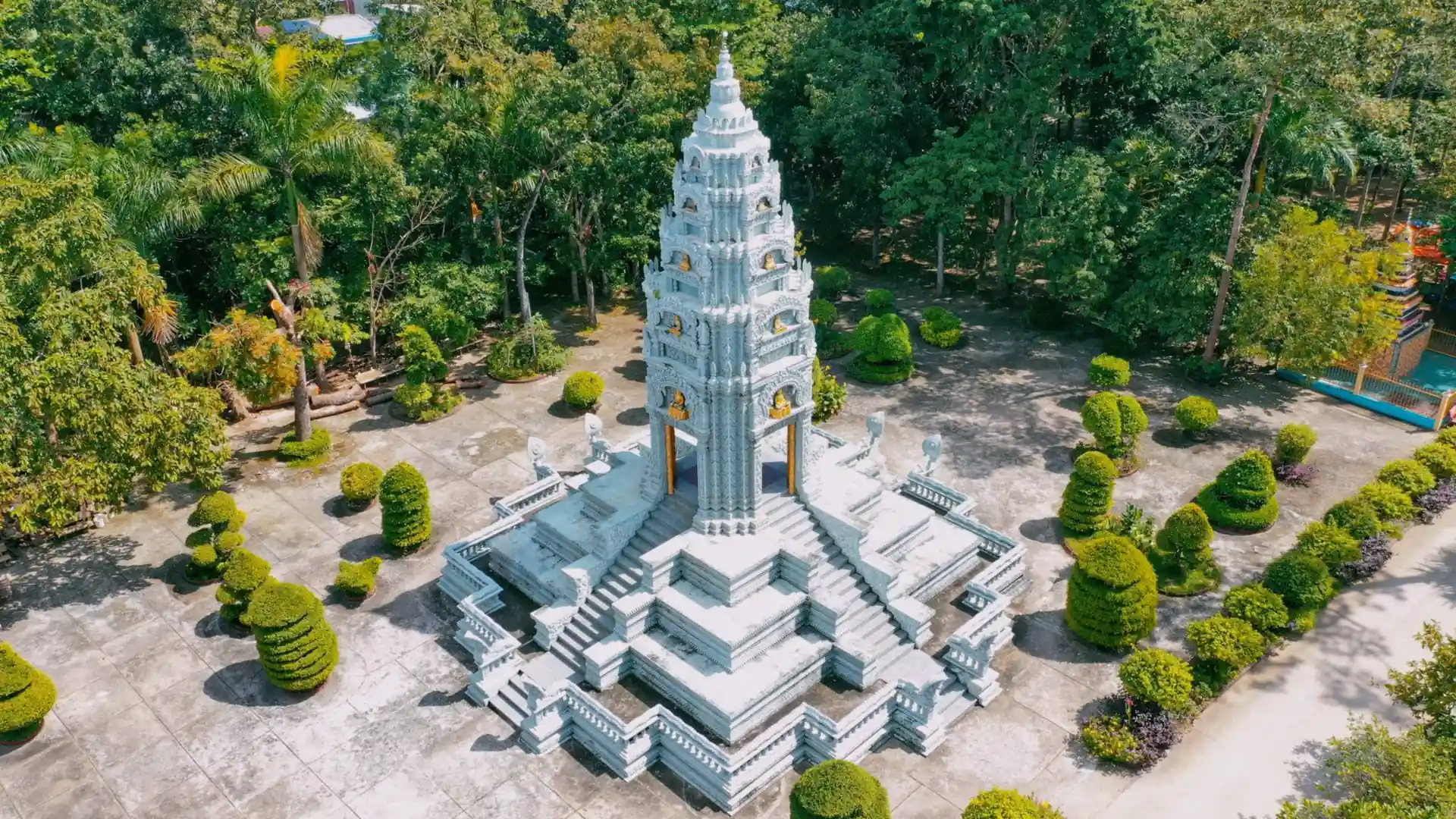
Near the entrance, a smoke-gray stupa rises about 25 meters. It was completed in 2012 and, unusually for a Khmer temple, is not painted yellow or gold. The stupa has four faces with four entrances, symbolizing the four Buddhist virtues of loving-kindness, compassion, sympathetic joy and equanimity. Naga serpents line its staircases.
The stupa keeps the remains of former abbots and respected Buddhists, so visit it quietly.
The Sala hall and the floating stones
The Sala is the hall where the community gathers for important religious activities. The newer Sala, started in 2017, stands on a plot of more than 1,100 square meters.
Under the Buddha altar in the Sala, look for a pair of stones weighing about 4.2 kg that float on water. According to Voice of Vietnam, the abbot brought them from Cambodia in 2018. Local visitors are often curious about them, but they are part of the altar, so look without touching.
The library
The former Sala now serves as a library with more than 1,500 books. It is a reminder that Khmer pagodas have long been places of learning for the community, not only of worship.
The history of Som Rong Pagoda
According to the original records kept at the pagoda, Som Rong was founded in 1785. The first temple was a simple structure of bamboo, wood and thatched leaves. It has been rebuilt and restored many times since, and Vietnamnet reports that twelve generations of abbots have looked after it.
Most of what you see today is much newer than the temple’s founding: the stupa dates from 2012, the new Sala from the late 2010s and the reclining Buddha from the same period.
Where the name comes from
The pagoda is named after the Som Rong tree, a wild plant that once grew in large numbers around the temple. When Voice of Vietnam visited in 2023, only a couple of Som Rong trees were left on the grounds.
Not to be confused with Pothisomron Pagoda
The names sound similar, but Som Rong Pagoda in Soc Trang Ward is a different temple from Pothisomron Pagoda, a historic Khmer pagoda in O Mon Ward on the other side of Can Tho City. If you are using a map app, search for “Chùa Som Rông” or “Som Rong Pagoda Soc Trang” to avoid ending up in the wrong place.
How to get to Som Rong Pagoda
Som Rong Pagoda is on Ton Duc Thang Street in Soc Trang Ward, Can Tho City, in what used to be the center of Soc Trang City.
From central Can Tho
The pagoda is not part of the Ninh Kieu sightseeing area. Travelers staying in central Can Tho need to drive south to the former Soc Trang city center, so plan it as a day out rather than a quick stop between other city sights.
A private car or a prearranged transfer is the most practical option, especially if you want to see several Khmer temples on the same day.
Google Maps directions from Ninh Kieu Wharf to Som Rong Pagoda
Combining it with other Khmer sites
Som Rong is easy to pair with other sights in the former Soc Trang area:
- Khleang Pagoda is on the same street, Ton Duc Thang. It hosts the Khmer Moon Worship ceremony during the Ooc Om Boc Festival.
- Chen Kieu Pagoda, famous for its porcelain mosaics, is about 12 km from the former city center along the highway toward Bac Lieu.
When to visit Som Rong Pagoda
The pagoda is open from 7:00 AM to 6:00 PM every day, and there is no entrance fee. Pilgrims and travelers are free to walk in and look around.
For photos, come early, between 7:00 and 9:00 AM, or late in the afternoon, between 4:00 and 5:30 PM. The air is cooler, the light is softer, and the sun brings out the carved detail of the stupa and the soft colors of the reclining Buddha. The midday sun is strong, and there is little shade around the statue.
Don’t let a gray sky put you off. When our team visited on an afternoon of light rain, there were very few people around, and the soft light made the white statue and the colorful halls look even better in photos.
Khmer festivals bring the pagoda to life, but also bring crowds. The biggest season in the area is Ooc Om Boc, held around the 14th and 15th days of the tenth lunar month (usually October or November), when Soc Trang Ward hosts the Ngo boat races. Weekends and Buddhist holidays are also busier.
If you visit during a ceremony, watch from a respectful distance and follow any instructions from the monks.
Practical tips for visiting Som Rong Pagoda
Som Rong is an active temple where monks live and study. A few simple habits make the visit easier for everyone.
- Clothing: Dress modestly and cover your shoulders and knees. Bring a light scarf or long pants if you are traveling in shorts.
- Main sanctuary: Keep quiet and be polite inside the main sanctuary, especially when people are praying.
- Shoes: Remove them before entering the main sanctuary and the Sala.
- Photography: The statue and the exterior buildings are popular with photographers. Ask permission before taking photos inside the halls or of monks and worshippers.
- Behavior: Speak quietly, do not climb on statues or railings, and do not point your feet toward Buddha images when sitting.
- Monks: Women should avoid touching monks or handing objects directly to them.
- Donations: There is no entrance fee. If you would like to support the temple, use the donation box.
- Weather: Bring water, a hat and sunscreen, plus a light raincoat in the rainy season.
Is Som Rong Pagoda worth visiting?
Yes, if you are interested in Buddhist architecture or Khmer culture, or if you are already traveling through the former Soc Trang area. The reclining Buddha is the obvious draw, but the four-faced stupa, the carved main sanctuary and the floating stones give you reasons to stay longer than a photo stop.
If you only have a few hours in Can Tho, the drive makes it a big commitment for a single temple. In that case, Munir Ansay Pagoda in central Can Tho or Pitu Khosa Rangsay Pagoda are closer ways to see Khmer temple architecture. For a full day of Khmer heritage, combine Som Rong with Khleang and Chen Kieu.
Frequently asked questions about Som Rong Pagoda (FAQ)
Where is Som Rong Pagoda?
Som Rong Pagoda is on Ton Duc Thang Street in Soc Trang Ward, Can Tho City, Vietnam. Before 2025 the address was Soc Trang City, Soc Trang Province.
How big is the reclining Buddha at Som Rong Pagoda?
The statue is 63 meters long, about 22.5 meters high and weighs 490 tonnes, according to Vietnamese national media. Soc Trang’s provincial Department of Culture, Sports and Tourism recognizes it as the largest reclining Buddha statue in Vietnam.
Is there an entrance fee?
No. Entry to Som Rong Pagoda is free, and visitors can leave a voluntary donation.
What are the opening hours?
Som Rong Pagoda is open from 7:00 AM to 6:00 PM every day.
When is the best time to take photos?
Go between 7:00 and 9:00 AM or between 4:00 and 5:30 PM, when the light is softer and the grounds are cooler.
How long should I spend at Som Rong Pagoda?
Allow 45-90 minutes to see the reclining Buddha, the stupa, the main sanctuary and the Sala at a relaxed pace.
What should I wear?
Wear clothing that covers your shoulders and knees, and be ready to take off your shoes before entering the halls.
Is Som Rong Pagoda the same as Pothisomron Pagoda?
No. Som Rong Pagoda is in Soc Trang Ward, while Pothisomron Pagoda is a separate Khmer temple in O Mon Ward, Can Tho City.
Is Som Rong Pagoda in Soc Trang or Can Tho?
Both names are correct in different ways. The pagoda is in the former Soc Trang City, which became Soc Trang Ward of Can Tho City after Vietnam’s 2025 administrative changes.
Explore Khmer heritage in the Mekong Delta
Som Rong Pagoda is one of 92 Khmer pagodas that Voice of Vietnam counted in the former Soc Trang Province in 2023, and a good starting point for understanding how Khmer Buddhism shapes daily life in the southern Mekong Delta. Find more places to explore in our Can Tho destination guides and the Can Tho travel guide.
Looking for a guided Khmer cultural experience from Can Tho? Mekong Smile’s Vinh Long tour from Can Tho is a 5-hour trip to Phu Ly Pagoda and a traditional tofu skin workshop, from $64 per adult (1,600,000 VND).
Need help planning a trip to Soc Trang?
Want to see Som Rong, Khleang and Chen Kieu in one day, or add the former Soc Trang area to a longer Mekong Delta route? Tell us your dates and starting point, and our local team will suggest a plan.
Planning Your Mekong Trip?
Get a free, personalized itinerary from our local experts in under 120 minutes.

Get a Free Consultation Leave your contact, we handle the rest.

