
 Can Tho

Can Tho is known for its floating markets, riverside neighborhoods, and life along the Mekong Delta’s waterways. But beyond the river, the city also has a rich cultural heritage shaped by Vietnamese, Khmer, and Chinese communities.
Pitu Khosa Rangsay Pagoda, also known as Vien Quang Pagoda, offers a closer look at one part of that heritage. Tucked into a neighborhood in central Can Tho, this Khmer Buddhist temple is known for its multi-story architecture, detailed sculptures, and longstanding connections to local education and cultural preservation.
You don’t have to be Buddhist to find the pagoda interesting. Its architecture, artwork, and community history offer plenty to discover, even during a short visit.
Pitu Khosa Rangsay Pagoda at a Glance
| Visitor information | Details |
| Vietnamese name | Chùa Pitu Khôsa Răngsây |
| Alternative names | Vien Quang Pagoda, Chua Sau |
| Location | 27/18 Đ. Mạc Đĩnh Chi, Ninh Kiều, Cần Thơ, Việt Nam |
| Founded | 1948 |
| Tradition | Khmer Theravada Buddhism |
| Listed hours | 7:00 AM-7:00 PM |
| Suggested visit | 30-45 minutes |
| Admission | Confirm locally before visiting |
| Main interests | Khmer architecture, local heritage, religious art, and cultural history |
Why Visit Pitu Khosa Rangsay Pagoda?
A Buddhist temple might not be the first place on your itinerary if you’re visiting Can Tho for its floating markets or local food. However, Pitu Khosa Rangsay provides something different from the city’s river attractions.
Discover Can Tho’s Khmer Heritage
The Mekong Delta is home to Khmer communities whose cultural traditions are an important part of southern Vietnam’s history.
These traditions can be seen in religious architecture, language, festivals, music, and community life. Pitu Khosa Rangsay reflects several of these connections in one place.
Visiting the pagoda offers an opportunity to appreciate this cultural heritage without participating in religious activities. Simply observing the building and understanding its history can add another perspective to your time in Can Tho.
See Khmer Architecture in an Urban Neighborhood
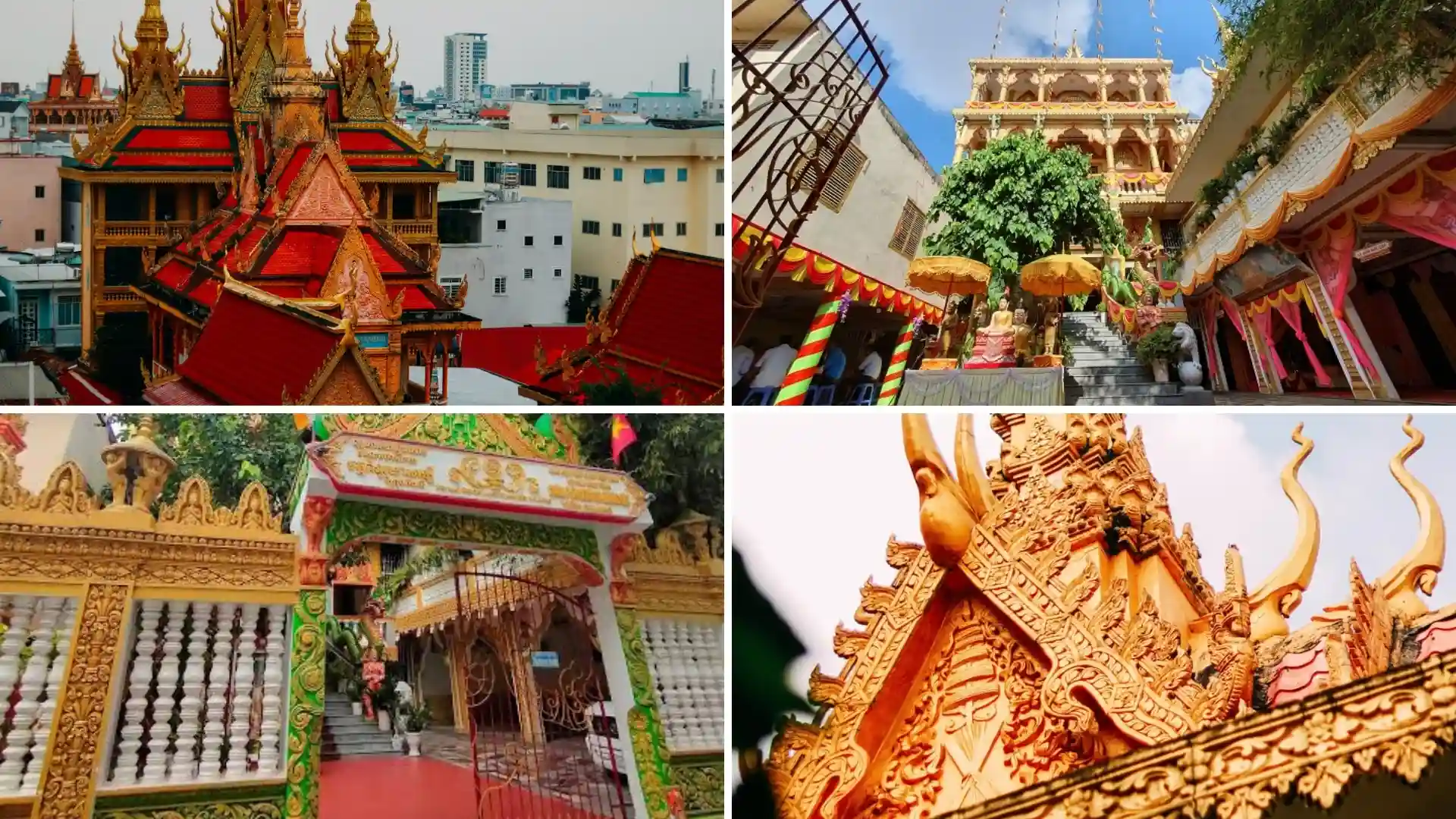
One of the pagoda’s most distinctive features is its location.
Unlike larger temple complexes surrounded by extensive grounds, Pitu Khosa Rangsay stands on a relatively compact property within a residential area.
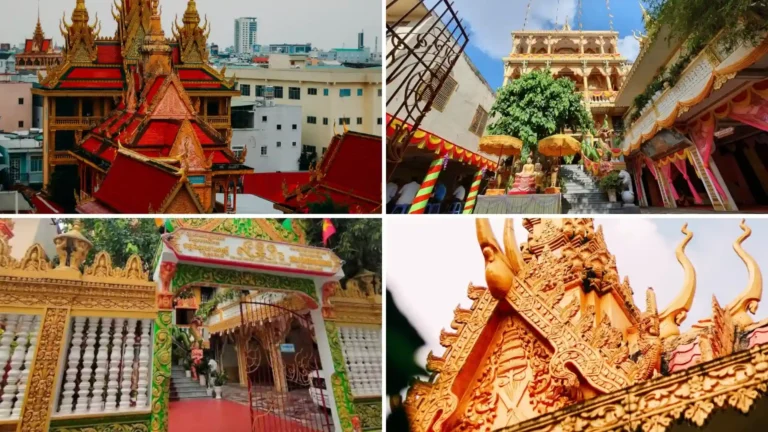
The elaborate rooflines, sculpted figures, and multi-level sanctuary contrast with the surrounding streets. This makes the pagoda particularly interesting for travelers who enjoy discovering historic and cultural places within a modern city.
Learn About a Temple That Serves Its Community
Pitu Khosa Rangsay is more than an architectural landmark.
Over the years, it has supported Khmer-language learning, traditional cultural education, and students who moved to Can Tho from other parts of the Mekong Delta.
Understanding this role changes how you see the building. It is not simply a monument from the past but a place connected to the community around it.
What to Look for at Pitu Khosa Rangsay Pagoda
The architectural details are among the main reasons to visit. If you have limited time, focus on the exterior, roof decorations, and any worship spaces that are open to visitors.
1. The Multi-Story Main Sanctuary
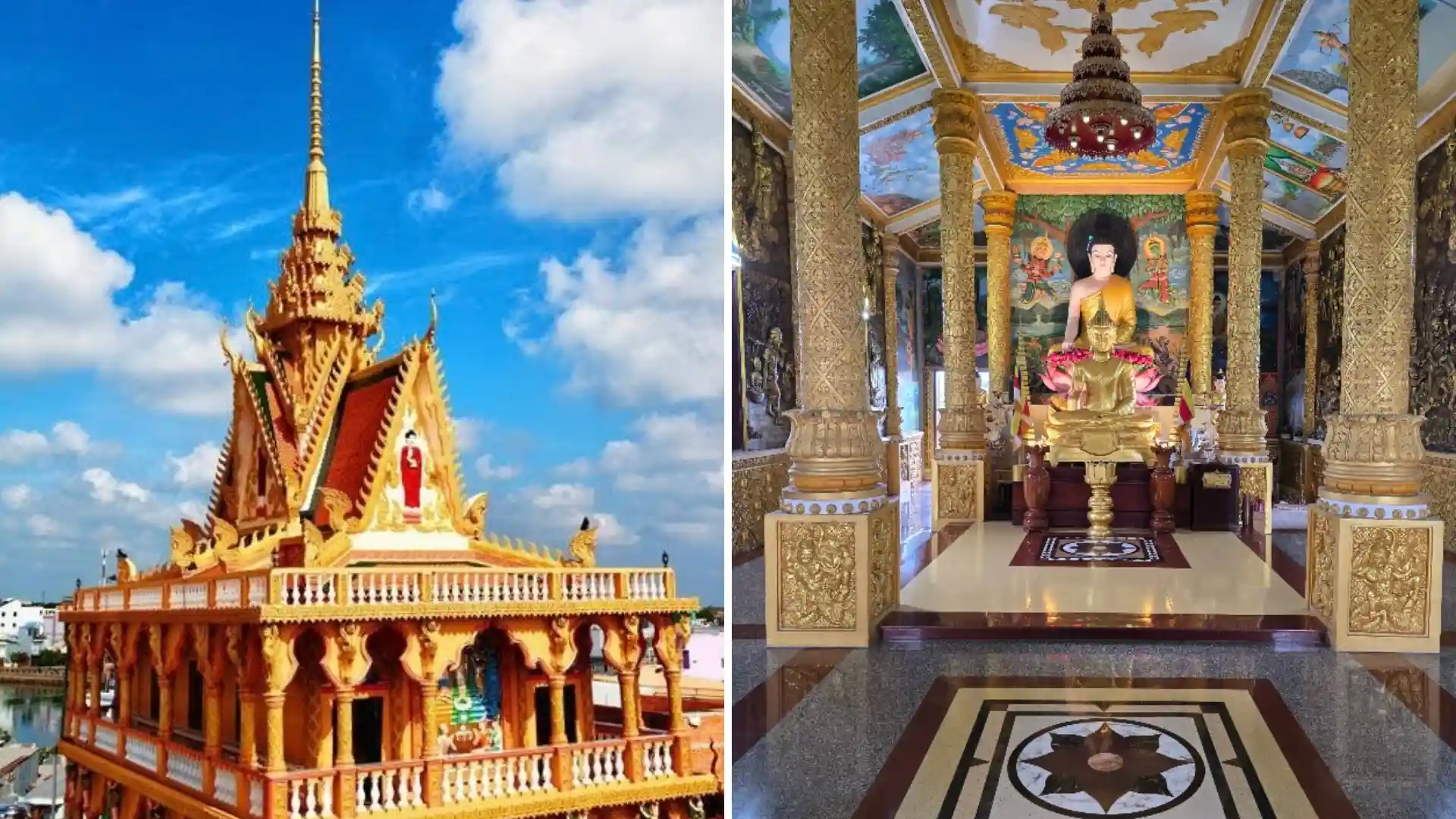
The pagoda’s main sanctuary is an example of how traditional Khmer architectural elements have been incorporated into a multi-level urban building.
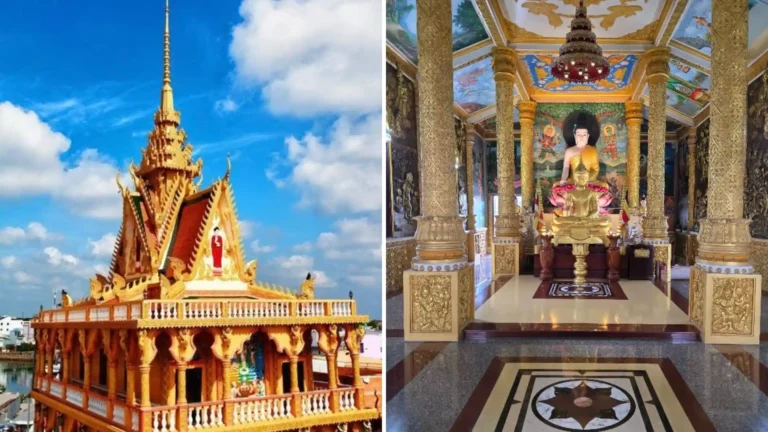
The current structure was inaugurated on April 21, 2012, following more than four years of construction. It includes a ground floor, three upper levels, and a roof tower.
Rather than spreading across a large courtyard, the sanctuary rises vertically, making use of the limited space available in the neighborhood.
From outside, notice how the different levels are connected visually through repeated roof forms, decorative columns, and sculpted ornamentation.
The building’s appearance reflects both Khmer Buddhist artistic traditions and adaptations to a modern urban setting.
2. Mythological Figures and Decorative Sculptures
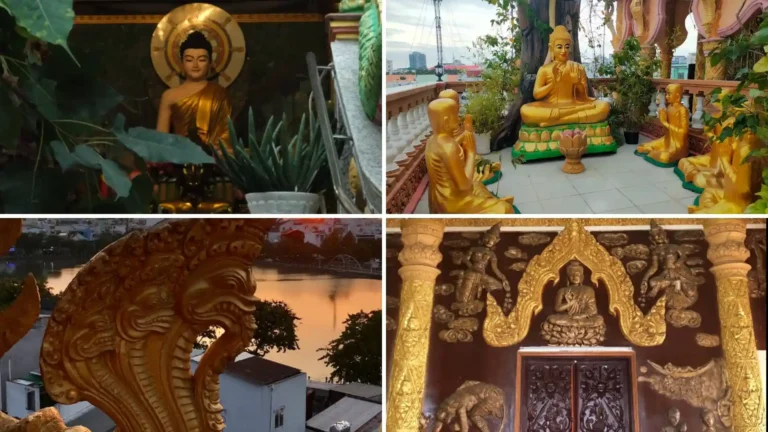
Look closely at the roof supports, columns, and decorative panels. The building incorporates figures and motifs associated with Khmer artistic traditions, including:
- Garuda: A powerful bird-like figure found in Hindu and Buddhist artistic traditions across Southeast Asia.
- Kinnari: A celestial figure often represented with both human and bird characteristics, associated with beauty and grace in regional art.
- Hanuman: A figure from the Ramayana tradition, which also appears in Khmer cultural storytelling.
- Stylized serpents, flames, and floral patterns: Decorative forms that contribute to the temple’s distinctive visual identity.
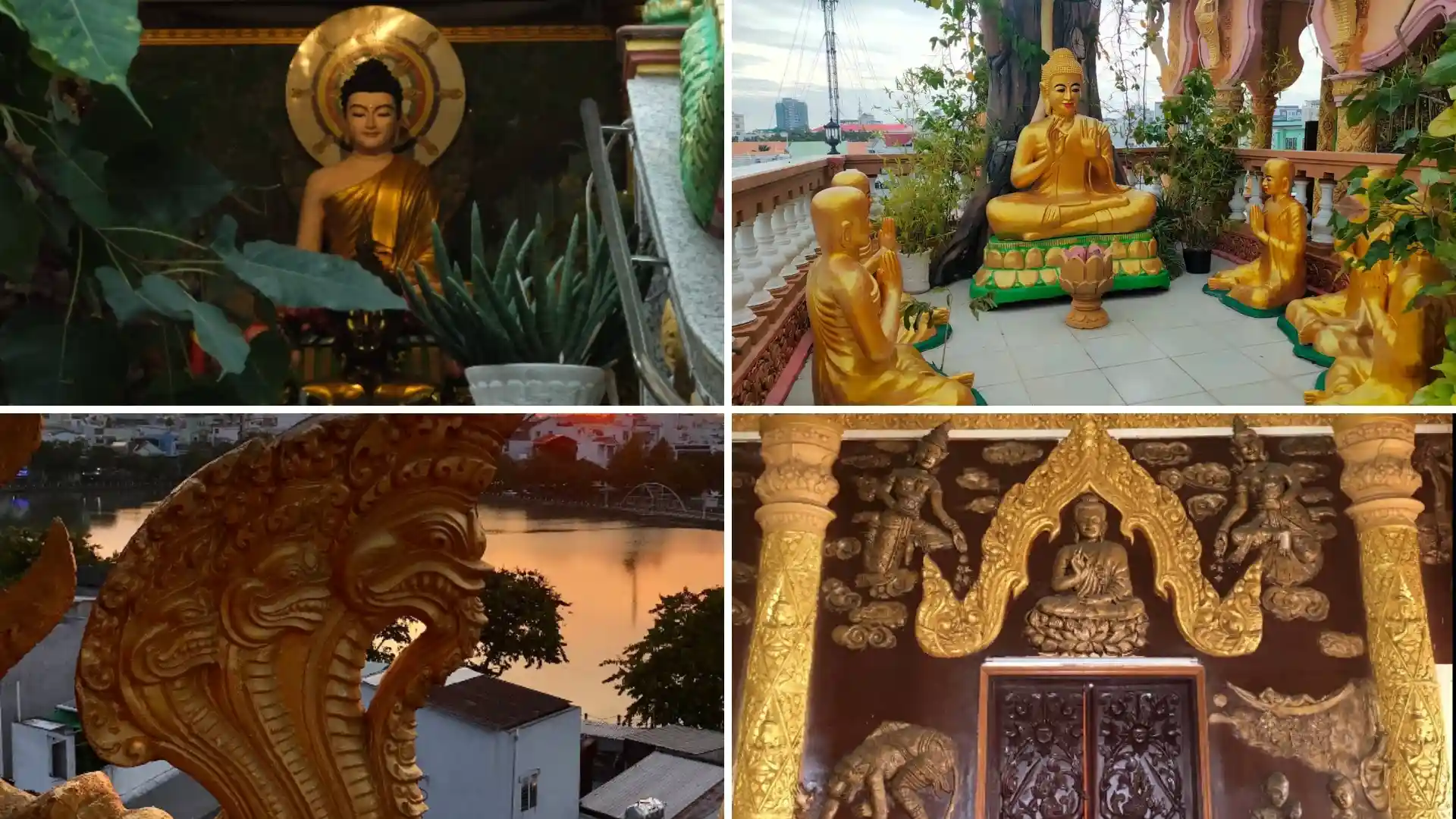
These figures help explain why Khmer temple architecture can look different from other Buddhist buildings visitors may encounter in Vietnam.
Their presence also reflects the long history of artistic and cultural exchange across mainland Southeast Asia.
You do not need to understand every religious reference to appreciate the craftsmanship. Observing the shapes, expressions, and repeated patterns is a useful way to begin exploring the building.
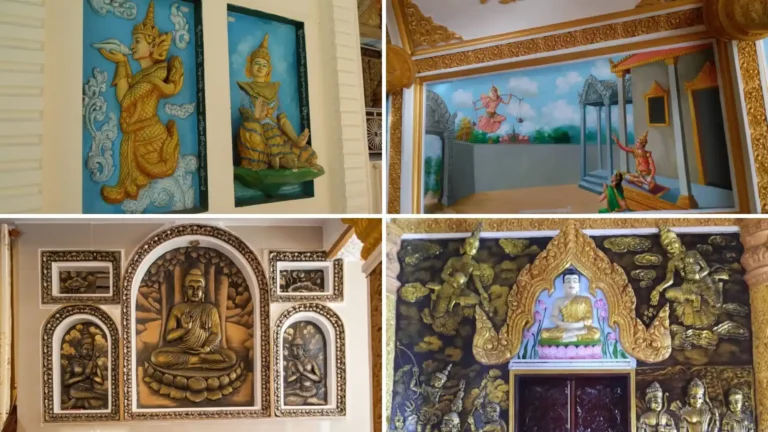
3. Carved Wooden Windows and Religious Artwork
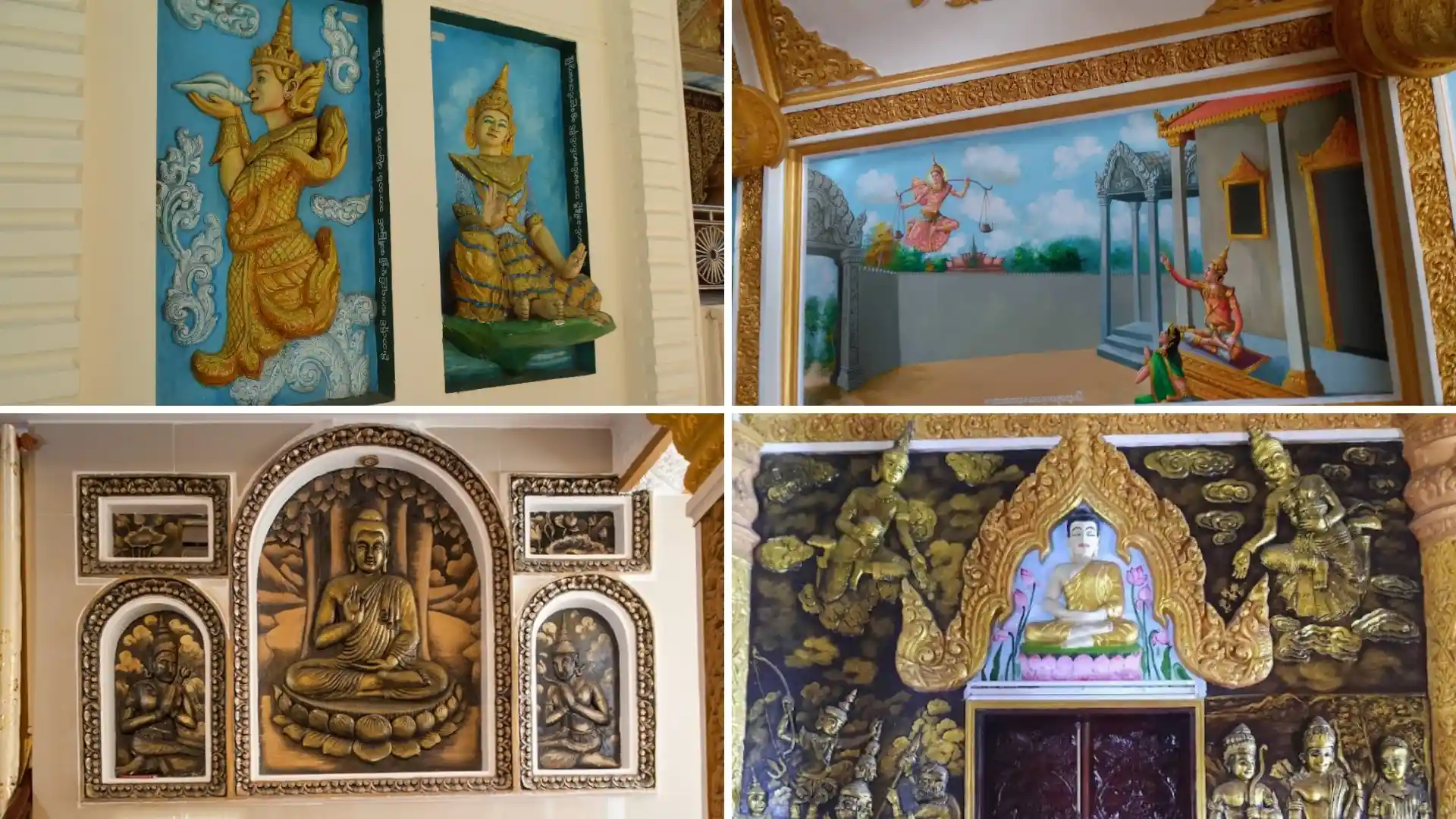
Another notable architectural feature is the temple’s carved wooden windows.
Historical descriptions document 12 sets of windows decorated with carved scenes inspired by Buddhist stories, Khmer literary traditions, and mythological figures.
The building also features paintings depicting episodes from the life of the Buddha.
For visitors interested in traditional art, these details offer a different experience from simply photographing the exterior.
However, some artwork is located inside religious spaces. Do not assume that every floor or sanctuary is open to tourists. Ask permission before entering unfamiliar areas.
4. Buddha Images and Worship Spaces
Pitu Khosa Rangsay follows the Khmer Theravada Buddhist tradition, which is practiced in communities across mainland Southeast Asia.
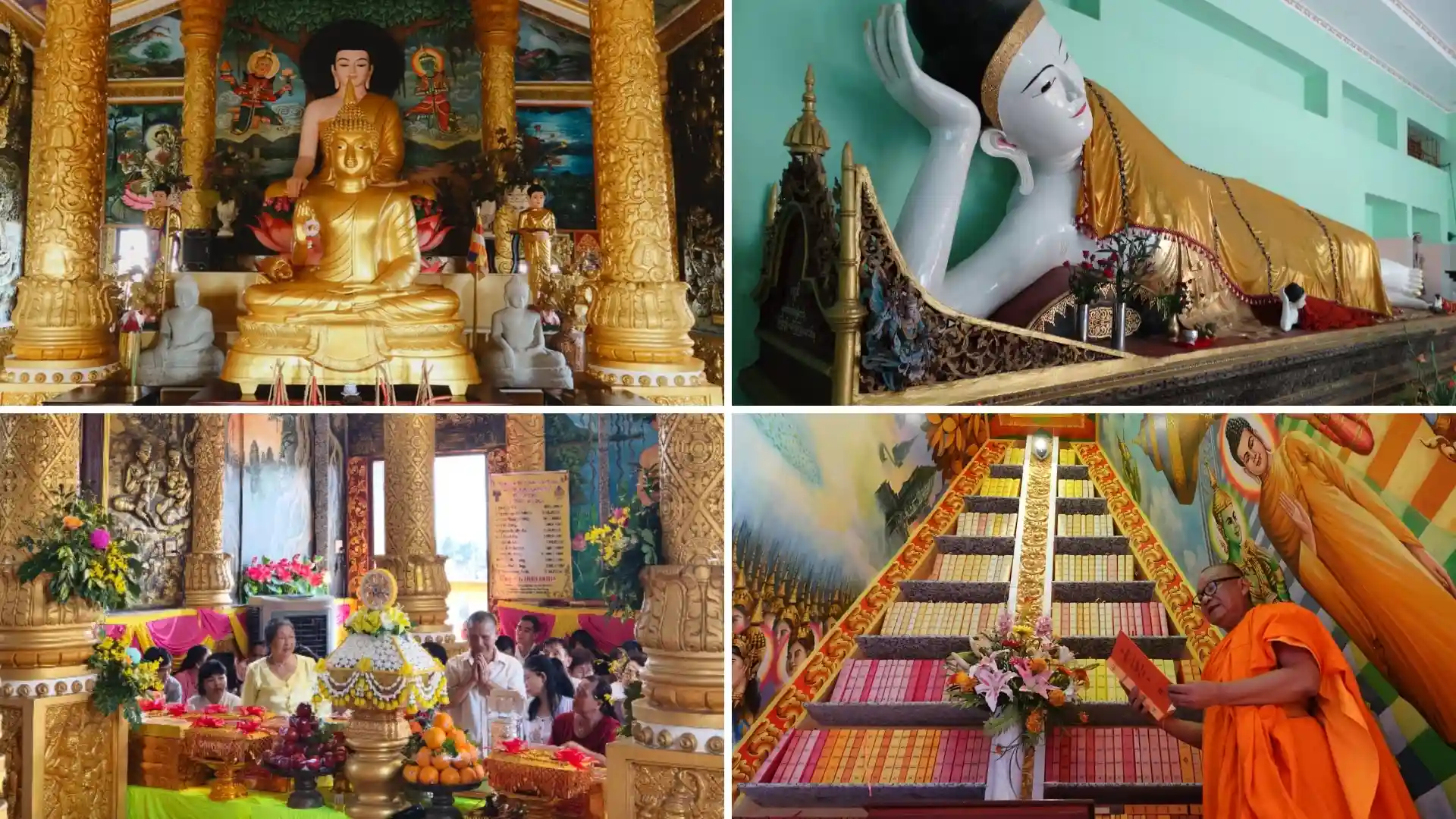
Inside the temple are Buddha images and spaces used for religious ceremonies, meditation, and community observances.
If you are permitted to enter, take a moment to observe how the artwork and arrangement of the sanctuary differ from the temple’s exterior.
You do not need to pray, make offerings, or participate in rituals to visit respectfully. Quiet observation is entirely appropriate.
Remember that these are working religious spaces. Worshippers and monks should be able to continue their activities without interruption.
A Brief History of Pitu Khosa Rangsay Pagoda
Pitu Khosa Rangsay Pagoda was established in 1948 to meet the religious needs of the Khmer Buddhist community in Can Tho.
Its earliest structure was modest, built with wooden pillars and a thatched roof on land contributed by local Buddhist supporters.
The pagoda is also known as Chua Sau, meaning “Rear Pagoda.” This traditional name distinguishes it from nearby Muni Rangsay Pagoda, historically known as Chua Truoc, or “Front Pagoda.”
Over the decades, the temple underwent several periods of rebuilding and improvement.
A major reconstruction project began in 2007, leading to the completion of the present multi-story main sanctuary in April 2012.
Although the building has changed considerably since 1948, it continues to reflect the cultural and religious traditions of the Khmer community.
More Than a Temple: Language, Education, and Cultural Preservation
One of the most interesting aspects of Pitu Khosa Rangsay is its contribution to community life.
Khmer Buddhist pagodas have historically served as important places for religious learning and the preservation of cultural traditions. At Pitu Khosa Rangsay, that role has extended to education and support for students.
Khmer Language and Traditional Music
The pagoda has organized free Khmer-language classes for local children and activities introducing young learners to traditional Khmer music.
One tradition associated with these activities is nhac ngu am, or Khmer five-tone ensemble music, which uses several types of traditional instruments.
These educational activities are important because language and music help preserve cultural knowledge across generations.
They also show how a religious institution can contribute to cultural continuity beyond formal worship.
These are community activities, not scheduled tourist performances. Visitors should not expect to attend classes or watch music demonstrations without prior permission.
Supporting Students in Can Tho
The pagoda has also helped students from economically disadvantaged backgrounds, including those who came from other Mekong Delta communities to study in Can Tho.
Its educational support has included accommodation and assistance with daily living needs.
This adds another dimension to the pagoda’s history: alongside its religious and artistic significance, it has contributed to educational opportunities within the local community.
Preserving Historical Khmer Manuscripts
A less widely known part of the pagoda’s cultural heritage is its collection of historical books and manuscripts.
Local reporting in 2026 documented a collection of more than 4,000 books associated with the pagoda, including centuries-old palm-leaf manuscripts.
These manuscripts preserve material related to religious teachings, customs, ceremonies, and traditional moral education.
Some have been displayed at cultural events in Can Tho, offering the public an opportunity to learn about historical writing and book preservation.
The collection is significant from a cultural perspective, but it should not be treated as a public museum or a regularly accessible exhibition. Availability for visitors has not been confirmed.
How to Get to Pitu Khosa Rangsay Pagoda
The pagoda is located at 27/18 Mac Dinh Chi Street, Ninh Kieu Ward, within Can Tho’s central urban area.
From Ninh Kieu Wharf
If you’re staying near Ninh Kieu Wharf, you can travel toward Mac Dinh Chi Street by taxi or ride-hailing service.
Walking is also an option for travelers comfortable navigating the city, although the distance and route will depend on your starting point.
Because the pagoda is located within a neighborhood rather than directly on a major tourist street, using its full address on a navigation app is helpful.
From Other Parts of Can Tho
A taxi or ride-hailing service is usually a convenient choice if you’re coming from a hotel outside the central area.
Show the driver the Vietnamese name, Chùa Pitu Khôsa Răngsây, along with the full street address.
Be careful not to confuse it with Munir Ansay Pagoda, another Khmer Buddhist temple in central Can Tho.
Getting Around the Neighborhood
The temple’s compact urban location means the surrounding streets may be narrower than the major roads around Ninh Kieu Wharf.
If you arrive by car, check where the driver can safely stop. Avoid assuming that parking is available directly at the entrance.
When Is a Good Time to Visit?
For a comfortable visit, consider the morning or later afternoon, when temperatures in Can Tho may be less intense than at midday.
The official tourism listing gives opening hours of 7:00 AM to 7:00 PM, but access to individual temple spaces may vary.
A visit of around 30-45 minutes is a reasonable starting point if you mainly want to observe the exterior architecture and accessible public spaces.
Allow more time if you have a particular interest in photography, religious art, or architectural details.
The pagoda is associated with the Khmer Buddhist cultural calendar, including occasions such as Chol Chnam Thmay (Khmer New Year), Sene Dolta, and Buddhist ceremonies.
However, festival dates and access arrangements can change. Visiting during a religious occasion does not automatically mean that ceremonies are open to tourists.
Visiting Etiquette: What International Travelers Should Know
Pitu Khosa Rangsay is an active place of worship rather than a purpose-built tourist attraction.
A few simple considerations will help you visit respectfully:
- Dress modestly. Clothing that covers your shoulders and knees is a sensible choice.
- Remove your shoes when required. Look for signs or follow the example of local visitors before entering worship areas.
- Keep your voice low. Avoid disrupting ceremonies, meditation, or study activities.
- Ask before photographing people. This is especially important for monks, children, and anyone participating in religious activities.
- Respect restricted areas. Do not enter residential, educational, or private rooms without permission.
- Avoid touching religious objects. This includes Buddha images, offerings, and ceremonial decorations.
- Do not use drones without permission. The surrounding neighborhood and religious setting deserve privacy.
If you’re unsure about a particular custom, a polite question or a simple gesture to ask permission is usually better than making assumptions.
Other Cultural Places to Visit in Can Tho
Pitu Khosa Rangsay works well as part of a broader cultural itinerary around central Can Tho.
Munir Ansay Pagoda
Munir Ansay Pagoda is another Khmer Theravada Buddhist temple in the city center.
Visiting both provides an opportunity to compare their architecture, locations, and approaches to traditional decorative art.
Although they belong to the same broad religious tradition, they are separate temples with different histories.
Ong Temple
Ong Temple, near Ninh Kieu Wharf, reflects the heritage of Can Tho’s Chinese community.
Its Cantonese-style architecture, decorative carvings, and hanging incense coils offer an interesting contrast to Khmer Buddhist design.
For travelers interested in how different communities have shaped Can Tho, the two sites complement each other.
Can Tho Museum
Can Tho Museum is another useful stop for visitors looking to understand the city’s broader history and regional cultures.
A museum visit can provide additional context for the architecture and traditions encountered at religious landmarks.
For more ideas on combining cultural sites with markets, food, and river experiences, explore our Can Tho Travel Guide.
Is Pitu Khosa Rangsay Pagoda Worth Visiting?
Pitu Khosa Rangsay is a worthwhile stop if you enjoy cultural landmarks, architecture, and discovering places beyond the usual sightseeing route.
It may be particularly appealing if you:
- Enjoy observing traditional craftsmanship and decorative architecture.
- Want to learn more about Khmer culture in southern Vietnam.
- Are interested in how religious sites contribute to education and community life.
- Have some free time in central Can Tho and prefer exploring independently.
However, it is a relatively compact site, not a large temple complex with extensive gardens, scheduled demonstrations, or a dedicated visitor exhibition.
If your time in Can Tho is limited and your priority is experiencing river life, you may prefer to focus on the floating market or other waterways first.
For travelers with an interest in local heritage, Pitu Khosa Rangsay offers a meaningful addition to a city itinerary.
Its value lies not only in its architecture but also in the story of a community that has maintained its cultural traditions through education, art, and shared spaces.
Frequently Asked Questions
Where is Pitu Khosa Rangsay Pagoda located?
The pagoda is at 27/18 Mac Dinh Chi Street, Ninh Kieu Ward, Can Tho City, Vietnam.
Is Pitu Khosa Rangsay Pagoda open to tourists?
The official Can Tho Tourism Portal lists it as a visitor attraction. Access to particular areas may depend on religious activities and local arrangements.
Do you have to be Buddhist to visit?
No. Visitors of different backgrounds can appreciate the architecture and cultural heritage without participating in religious practices. Respectful behavior is expected.
Is there an entrance fee?
A current official admission policy could not be independently confirmed. Check locally before visiting rather than assuming entry is free.
How long should I spend at Pitu Khosa Rangsay Pagoda?
Around 30-45 minutes is a practical estimate for viewing the architecture and accessible areas. It is not an official visiting requirement.
What is special about the pagoda?
The temple combines Khmer Buddhist architectural features with a multi-story urban design. Its history also includes Khmer-language education, student support, and the preservation of historical manuscripts.
Can I see the old Khmer manuscripts at the pagoda?
The pagoda is associated with a collection of historical books and palm-leaf manuscripts, but regular public access has not been confirmed. Do not plan your visit around seeing the collection without making arrangements in advance.
Is Pitu Khosa Rangsay the same as Munir Ansay Pagoda?
No. They are two separate Khmer Buddhist temples in central Can Tho.
Can I take photographs inside the pagoda?
Photography rules may vary between areas. Ask permission before photographing interiors, monks, ceremonies, or people using the temple.
What other places can I visit nearby?
Munir Ansay Pagoda, Ong Temple, and Can Tho Museum are useful additions to a cultural itinerary around central Can Tho.
