
 Can Tho
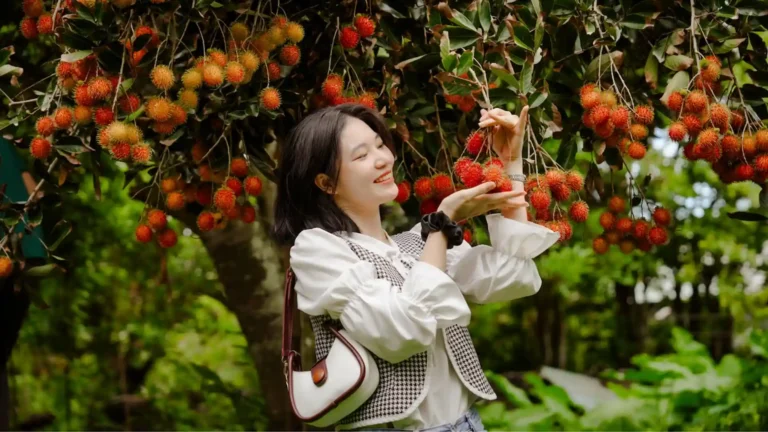

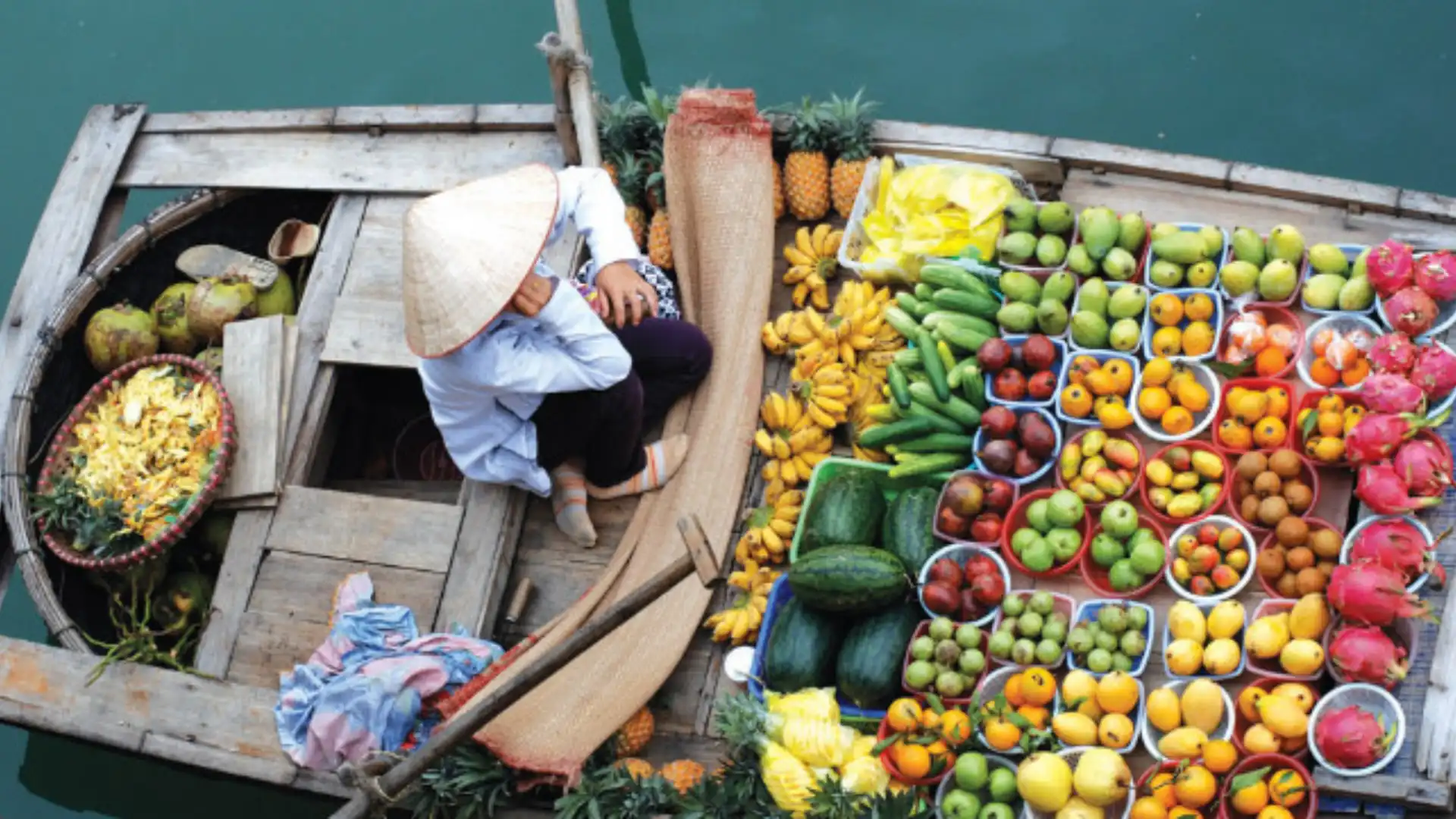
A bunch of red rambutans hanging over a narrow garden path, freshly cut pineapple at a riverside stall, or a ripe mango selected by a market vendor: fruit is an everyday part of life in Vietnam’s Mekong Delta.
Travel through the region and you will find different fruits associated with different places. Cù lao An Bình in Vĩnh Long is known for rambutan and longan. Cao Lãnh in Đồng Tháp has its mangoes, while Lai Vung is associated with mandarins grown for the Tết season. In Cần Thơ, the fruit gardens around Phong Điền offer a closer look at tropical agriculture, and pineapple fields stretch across the Hỏa Lựu area.
These fruits are worth exploring beyond the market stall. Some gardens welcome visitors for tasting and guided walks, while others remain working farms where harvesting follows the needs of growers.
There is no single fruit season across the Mekong Delta. Summer brings several well-known orchard harvests, but mangoes, mandarins, pineapples, and other crops follow different calendars. Knowing what grows where can help you choose the right place to visit.
When is fruit season in the Mekong Delta?
May through August is a good period for visiting many fruit gardens around Cần Thơ and Vĩnh Long. Rambutan, mangosteen, durian, and several other fruits have important harvest periods during these months.
Elsewhere, the calendar looks different. Quýt hồng Lai Vung is particularly associated with Tết, while xoài cát Hòa Lộc has a main harvest in spring. Khóm Cầu Đúc has more than one harvest period during the year.
Fruit varieties, weather, and farming techniques all affect the timing. Growers may also encourage trees to flower outside their natural season.
Typical Mekong Delta fruit seasons
| Fruit | Typical harvest period | Growing areas |
| Rambutan (chôm chôm) | Main natural harvest around June-July; off-season crops also occur | Cù lao An Bình, Vĩnh Long; Cần Thơ |
| Mangosteen (măng cụt) | Around mid-May to late June in parts of Vĩnh Long | Vĩnh Long, Cần Thơ, Cái Mơn |
| Durian (sầu riêng) | Natural harvest commonly around May-June; off-season crops also occur | Cái Mơn - Chợ Lách, Vĩnh Long; Cần Thơ |
| Longan (nhãn) | Often summer to early autumn, depending on variety | Vĩnh Long, Cần Thơ |
| Mango (xoài) | Main Hòa Lộc mango crop around March-May; other varieties and off-season crops vary | Cái Bè, Cao Lãnh, Đồng Tháp |
| Lai Vung mandarin (quýt hồng) | Harvest closely associated with the period before Tết | Lai Vung, Đồng Tháp |
| Cầu Đúc pineapple (khóm Cầu Đúc) | Main crop around February-March; another crop around July-August | Hỏa Lựu and surrounding areas, Cần Thơ |
| Tắc Cậu pineapple (khóm Tắc Cậu) | Varies by crop and farming schedule | Bình An - Tắc Cậu, An Giang |
| Hạ Châu Burmese grape (dâu Hạ Châu) | Seasonal; local harvest dates may follow the lunar calendar | Phong Điền, Cần Thơ |
| Coconut (dừa) | Produced throughout the year | Coconut-growing areas of Vĩnh Long |
| Pomelo (bưởi) | Varies by variety and orchard | Bình Minh, Vĩnh Long; Kế Sách, Cần Thơ |
| Star apple (vú sữa) | Varies by variety and growing area | Vĩnh Kim, Đồng Tháp; Cần Thơ |
The periods above are a guide to regional harvests, not guaranteed dates for fruit picking. A garden may welcome visitors even when its trees are flowering or carrying young fruit.
There is also a difference between buying fruit and seeing it grow. A vendor may sell ripe durian, mango, and rambutan on the same day because the produce comes from several growing areas. A nearby orchard may have only one of those fruits ready to harvest.
For a trip centered on a particular fruit, checking the current harvest with the garden is more useful than relying on a general calendar.
Tropical fruits to try in the Mekong Delta
Some fruits are easy to recognize. Others may be unfamiliar until you see them cut open or hear their Vietnamese names.
Here are the varieties and regional specialties worth looking for during your journey.
Rambutan: the colorful fruit of summer orchards
Vietnamese name: Chôm chôm
Rambutan has a red, orange, or yellow skin covered in soft, hair-like spines. The flesh inside is translucent, juicy, and sweet, sometimes with a slight tartness.
You can open the fruit by gently splitting its skin. Eat the flesh and discard the central seed.
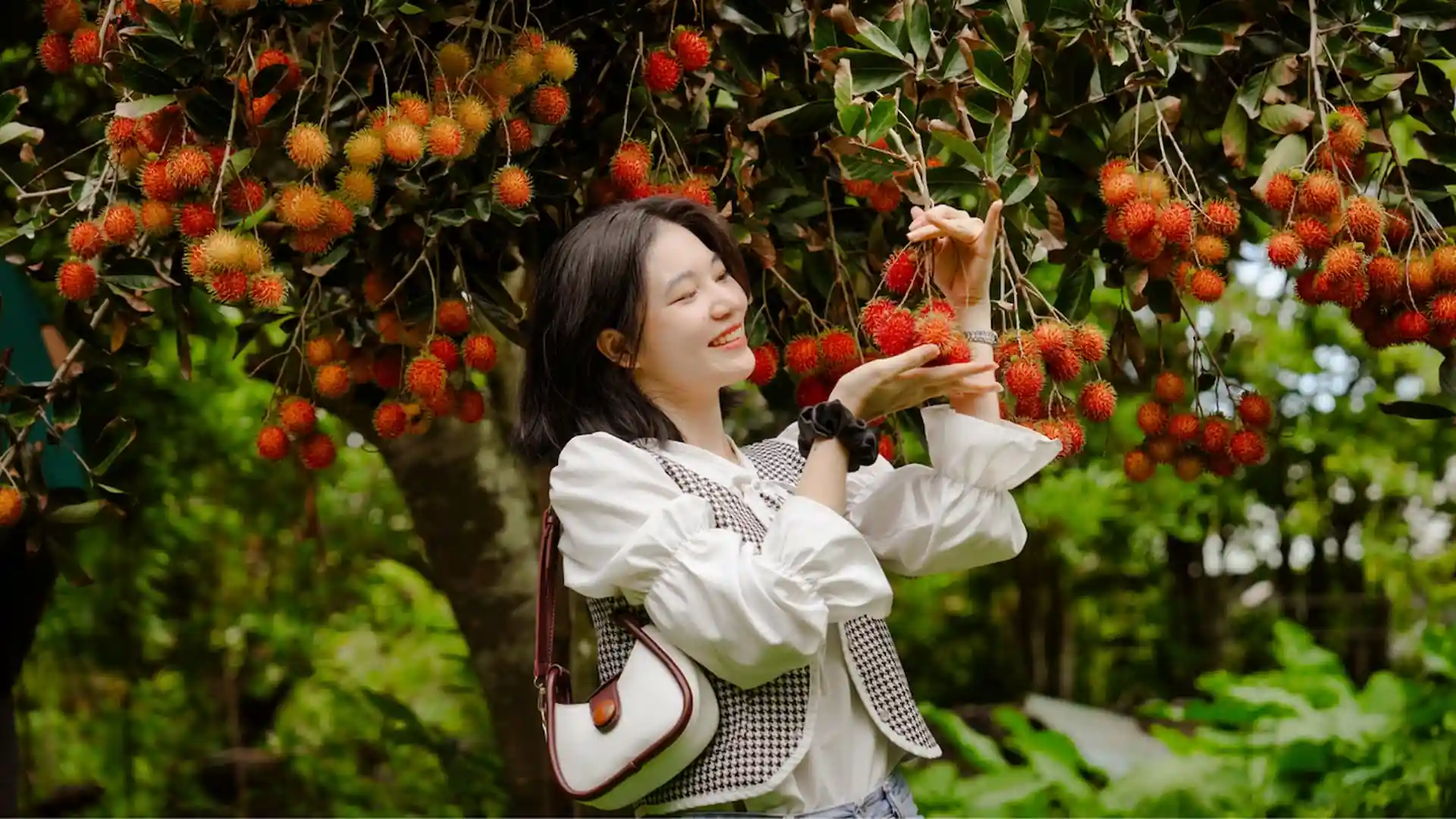
Rambutan is particularly associated with Cù lao An Bình, Vĩnh Long, where orchards grow along village roads and waterways.
During the main summer harvest, clusters of colorful rambutan hang among the leaves, making the trees easy to recognize even from a garden path.
Some orchards allow visitors to taste or pick rambutan under the owner’s guidance. Others serve fruit that has already been collected.
If you want to see rambutan on the trees, June and July are useful months to consider, although the actual harvest varies between gardens.
Mangosteen: a sweet fruit beneath a purple rind
Vietnamese name: Măng cụt
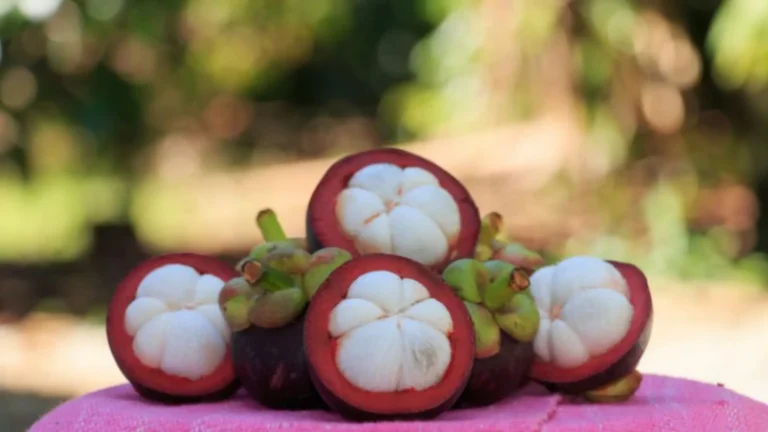
Mangosteen has a thick, dark-purple rind and delicate white segments inside. Its flavor combines sweetness with a refreshing tartness.
The rind can be opened by carefully pressing or cutting around the middle. Avoid cutting too deeply, as the white flesh can be easily damaged.
Mangosteen grows in several fruit-growing areas of Vĩnh Long and Cần Thơ, including the gardens around Cái Mơn.
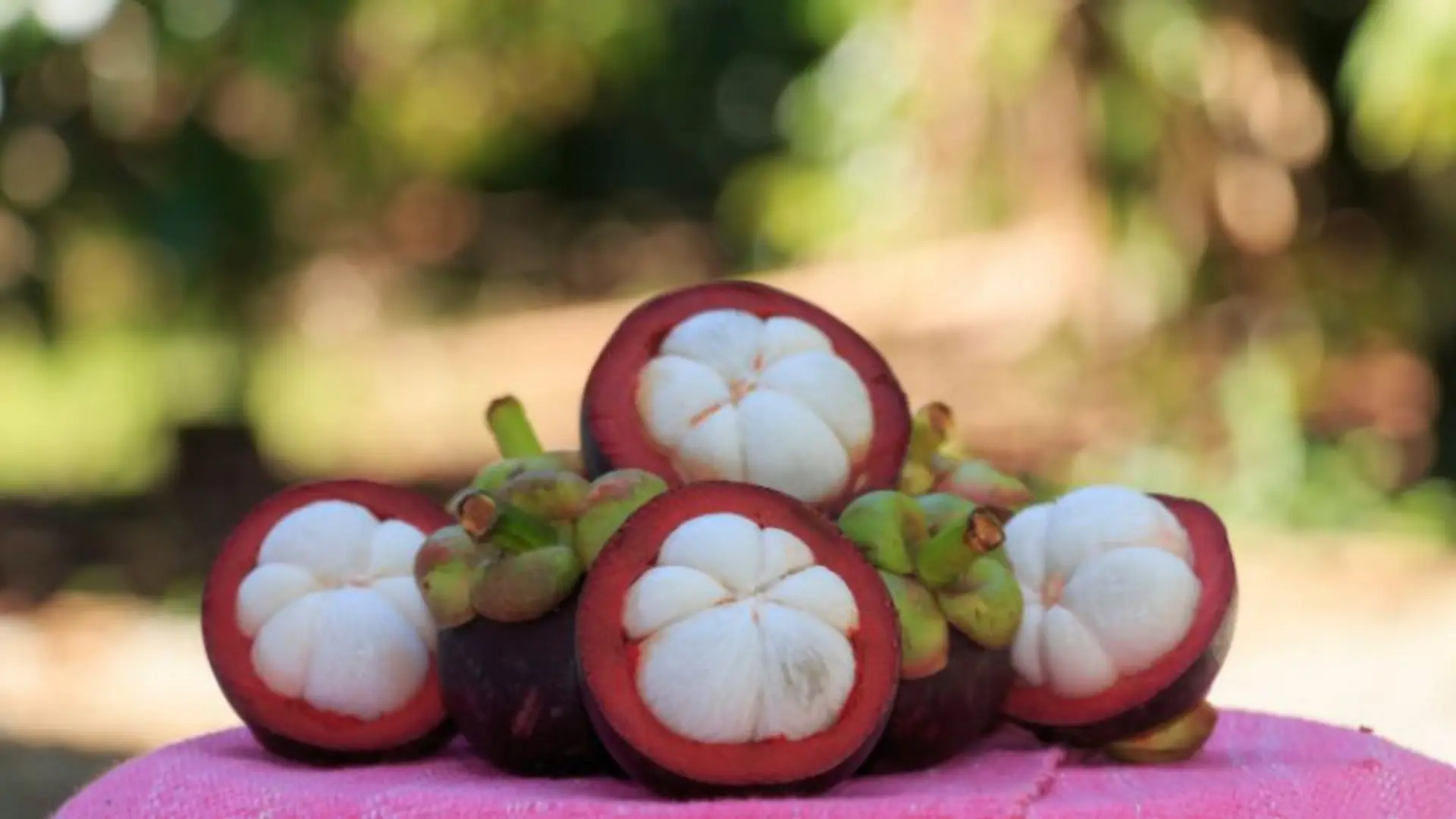
In parts of Vĩnh Long, the harvest is particularly associated with mid-May through June.
If you buy mangosteen at a market, ask the vendor to select ripe fruit. A good seller can also show you how to open it without damaging the segments.
Durian: the distinctive flavor of Cái Mơn
Vietnamese name: Sầu riêng
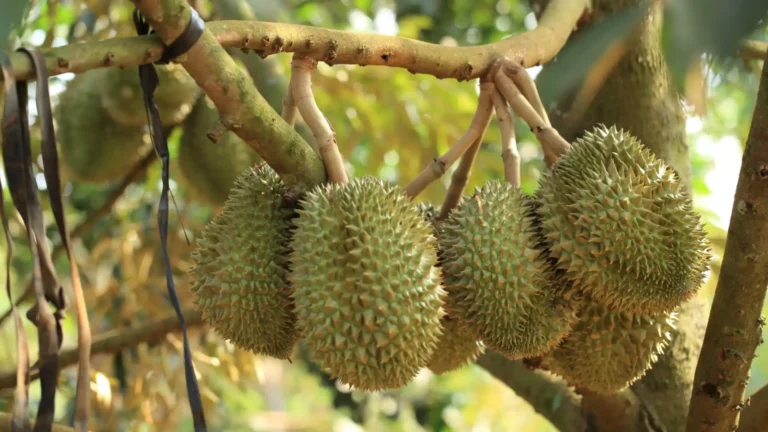
Durian is recognizable by its large, thorn-covered shell and strong aroma. Inside are soft yellow segments with a creamy texture.
The flavor depends on the variety and ripeness. Some durians are very sweet, while others have richer, slightly bitter notes.
The fruit has a particularly strong connection with Cái Mơn – Chợ Lách, Vĩnh Long, an area known for fruit cultivation and nurseries. Durian is also grown in other parts of Vĩnh Long and Cần Thơ.
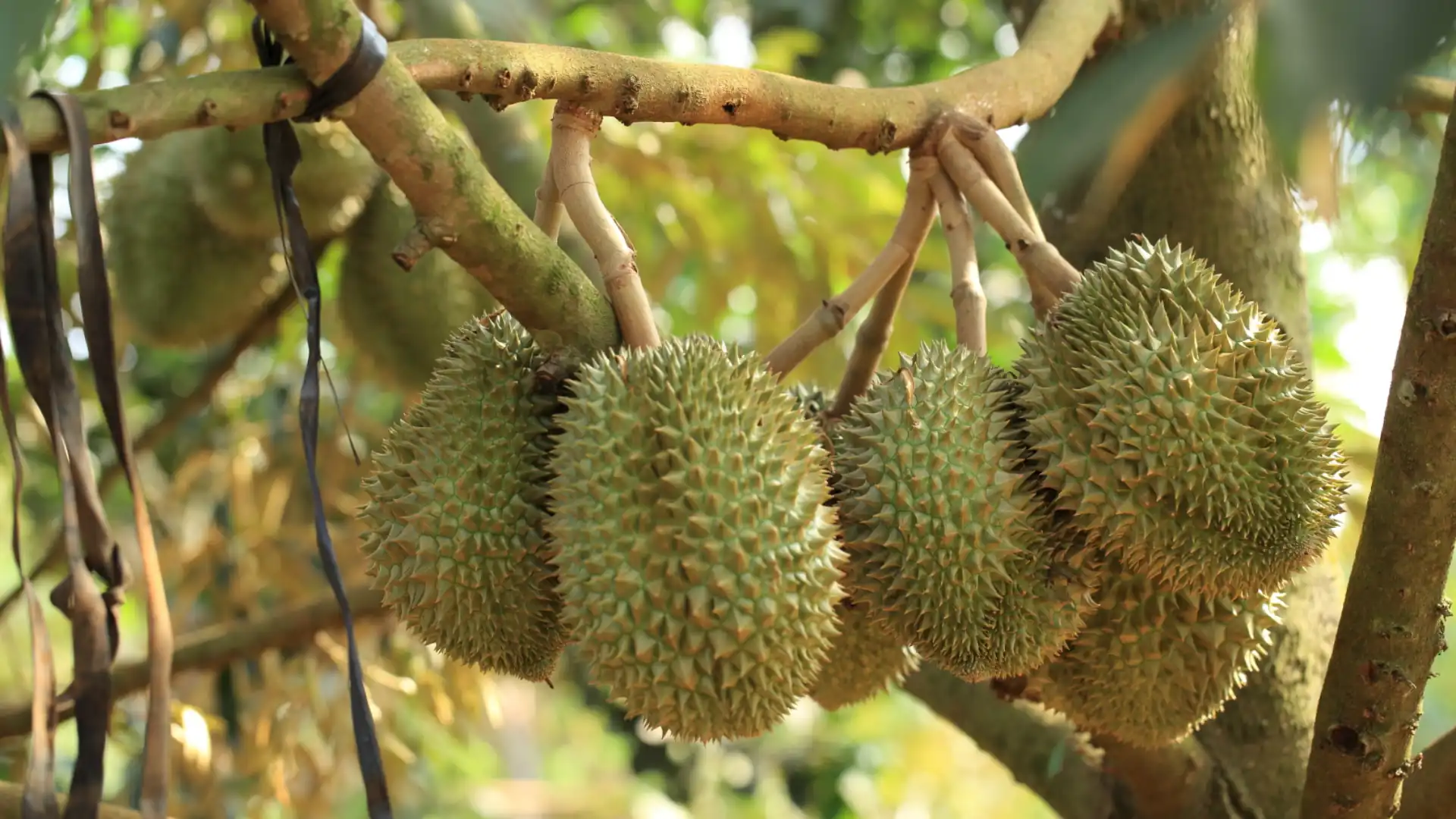
The natural harvest is commonly strongest around May and June, although off-season production can extend availability.
If you have never tried durian, start with a small prepared portion rather than buying a whole fruit. Its rich flavor and aroma are quite different from most other tropical fruits.
At a durian orchard, follow the grower’s instructions. The fruits are heavy and covered in sharp spines, so harvesting should be left to experienced workers.
Longan: small fruit with a floral sweetness
Vietnamese name: Nhãn
Longan grows in bunches of round, light-brown fruits. Its thin shell opens to reveal translucent flesh surrounding a dark seed.
The flavor is sweet, juicy, and sometimes subtly floral. Longan is usually eaten fresh, making it an easy fruit to enjoy at a local market or during a garden visit.
Longan is widely cultivated in Vĩnh Long and Cần Thơ, including the orchards of Cù lao An Bình.
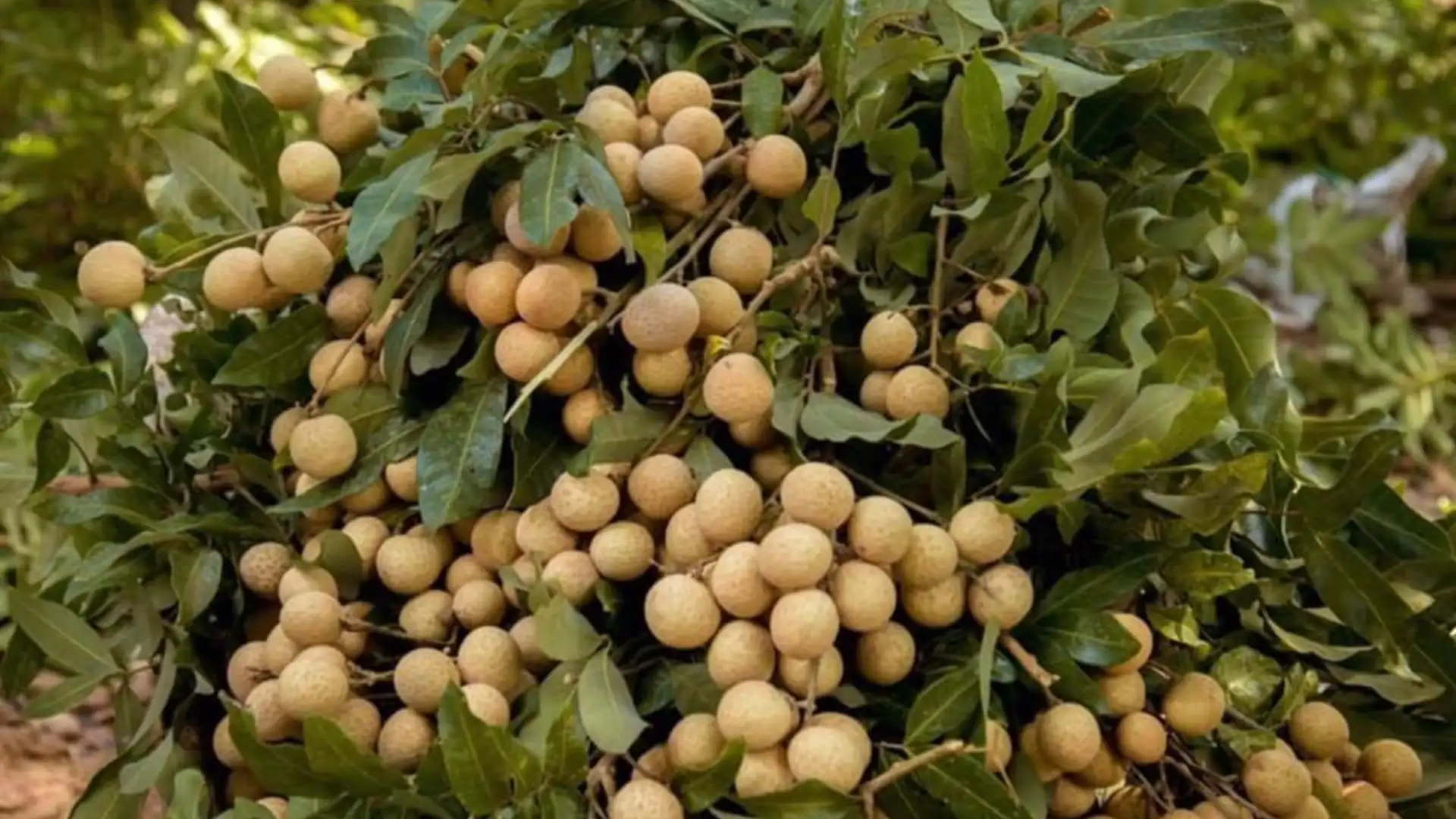
Different varieties follow different growing cycles. Some are harvested during summer, while other crops are produced at different times through farming techniques.
Rather than expecting longan in a particular month, ask which variety is being harvested at the garden you plan to visit.
Mango: from Cái Bè to Cao Lãnh
Vietnamese name: Xoài
Mango is familiar to many travelers, but Vietnamese varieties offer a wide range of flavors and textures.
Ripe mango is generally eaten fresh, while firm green mango is commonly sliced and served with chili salt.
Two growing areas in Đồng Tháp are particularly recognizable.
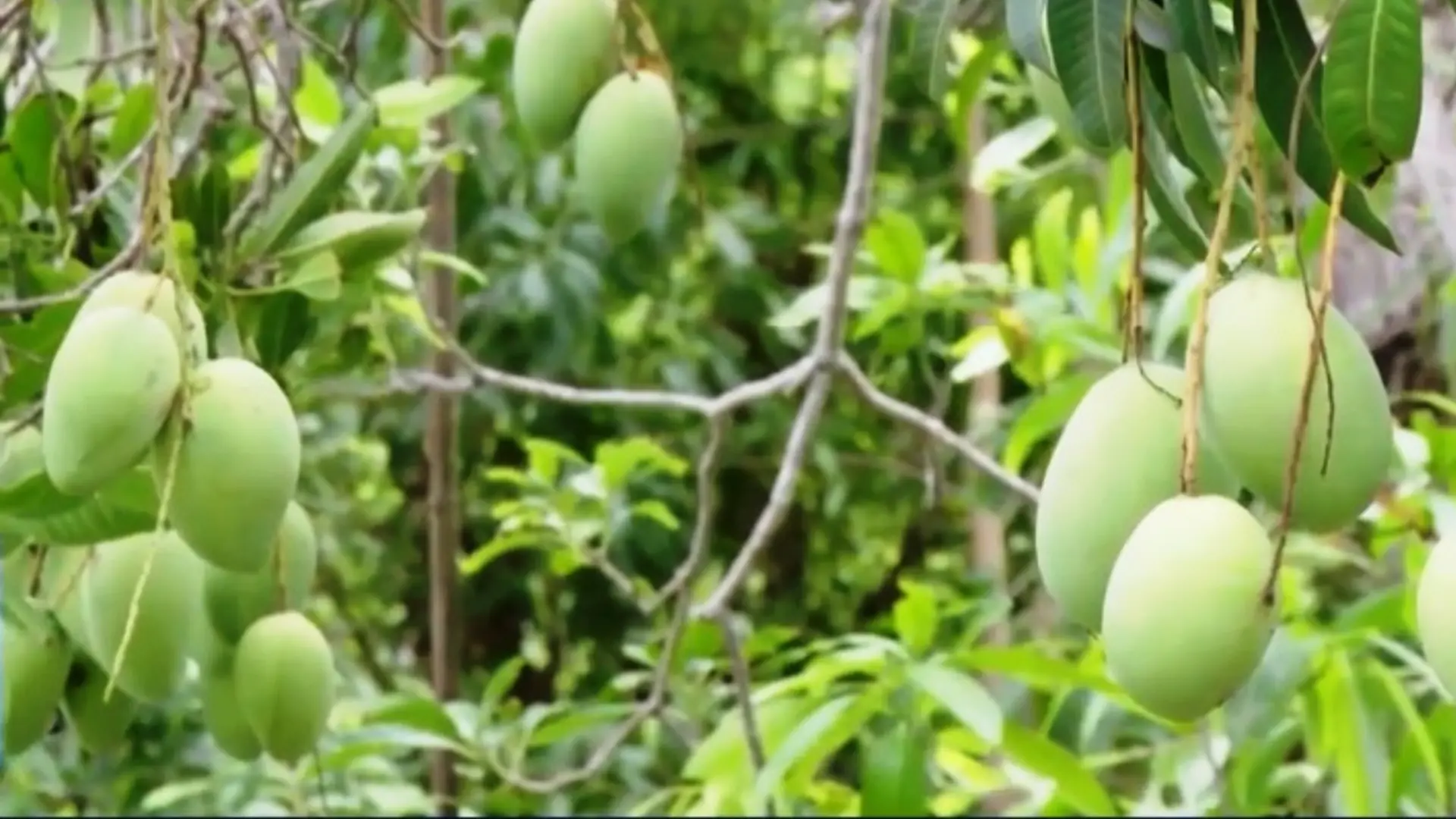
Xoài cát Hòa Lộc is associated with the Cái Bè area. It is known for its fragrant, sweet flesh and relatively smooth texture.
The main harvest generally falls around March to May, although growers can produce additional crops outside that period.
Xoài Cao Lãnh is associated with the Cao Lãnh growing area, including varieties such as xoài cát Chu.
Cao Lãnh’s mango-growing tradition is an important part of local agriculture, and some growers also develop farm-based visitor experiences.
At a market, ask for the variety by its Vietnamese name. Two ripe mangoes may look similar but taste quite different.
Quýt hồng Lai Vung: mandarins grown for Tết
Vietnamese name: Quýt hồng Lai Vung
In Lai Vung, Đồng Tháp, mandarin growing is closely connected to the Tết season.
As the fruit ripens, its peel develops a bright orange color. The flesh is juicy, sweet, and gently tart.
The weeks leading up to Lunar New Year are particularly important for growers. At suitable orchards, the branches carry clusters of ripe mandarins, creating a distinctive seasonal landscape.
Some Lai Vung gardens welcome visitors for walks and photography during this period. Others focus on commercial harvesting and may not have regular tourist access.
Since Tết falls on a different Gregorian date each year, confirm both the harvest and visitor arrangements before making the journey.
For travelers visiting the Mekong Delta around the Lunar New Year period, Lai Vung offers an alternative to the better-known summer fruit-garden experiences.
Pomelo: the citrus fruit of Bình Minh and Kế Sách
Vietnamese name: Bưởi
Pomelo is a large citrus fruit with a thick rind and juicy segments. Its taste ranges from sweet to mildly tart, depending on the variety.
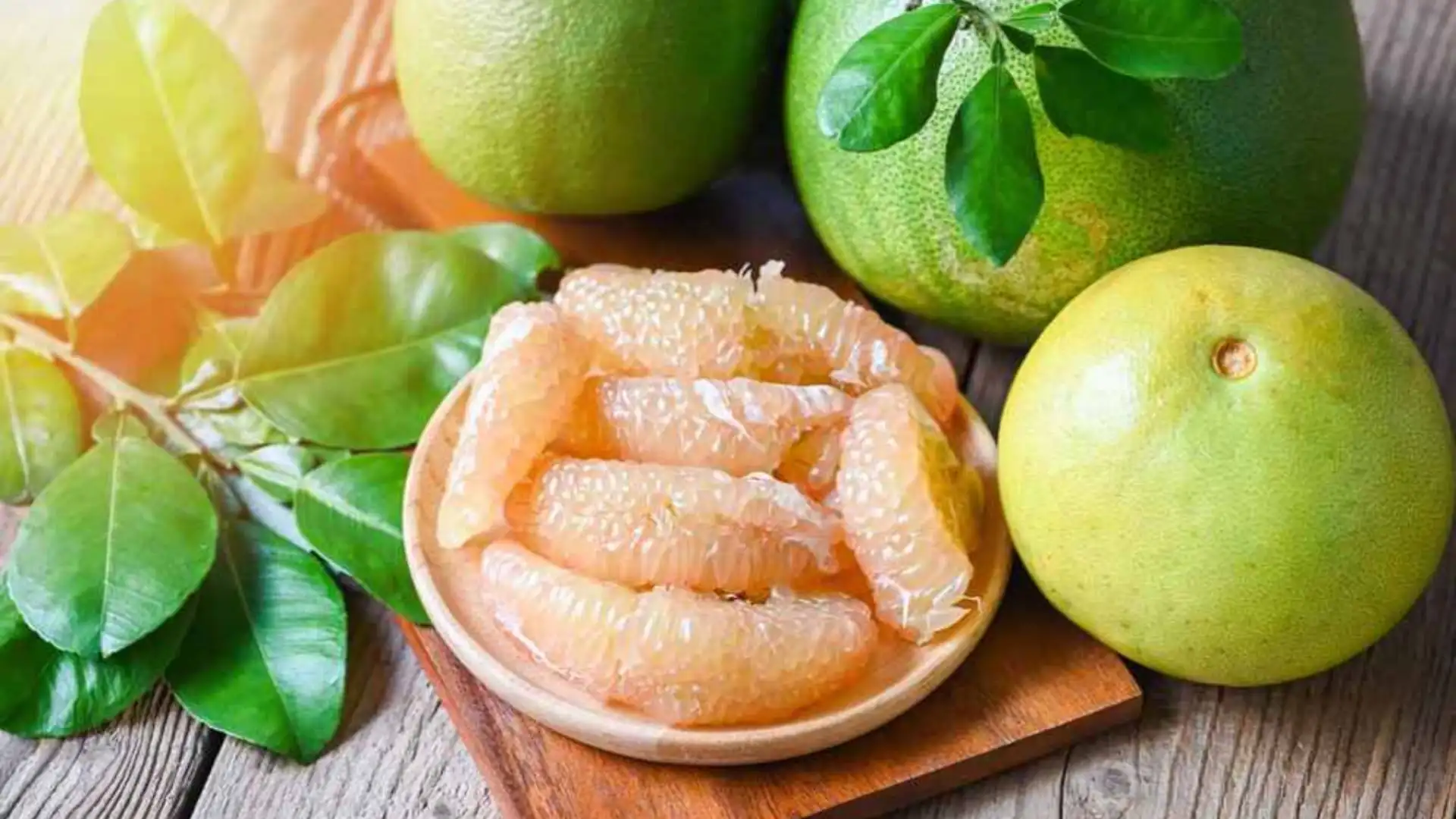
Bưởi Năm Roi is associated with the Bình Minh growing area of Vĩnh Long, while bưởi da xanh is strongly connected with fruit-growing communities elsewhere in the province.
Kế Sách, Cần Thơ, is another established pomelo-growing area, cultivating both bưởi Năm Roi and bưởi da xanh.
Pomelo is usually peeled and eaten fresh. Its firm segments are also used in Vietnamese salads.
Because harvest timing varies, ask the seller or grower which variety is currently available rather than assuming there is one pomelo season across the Delta.
Pineapple: khóm Cầu Đúc and khóm Tắc Cậu
Vietnamese names: Khóm, thơm, dứa
Pineapple fields offer a different view of the Mekong Delta’s fruit-growing landscape.
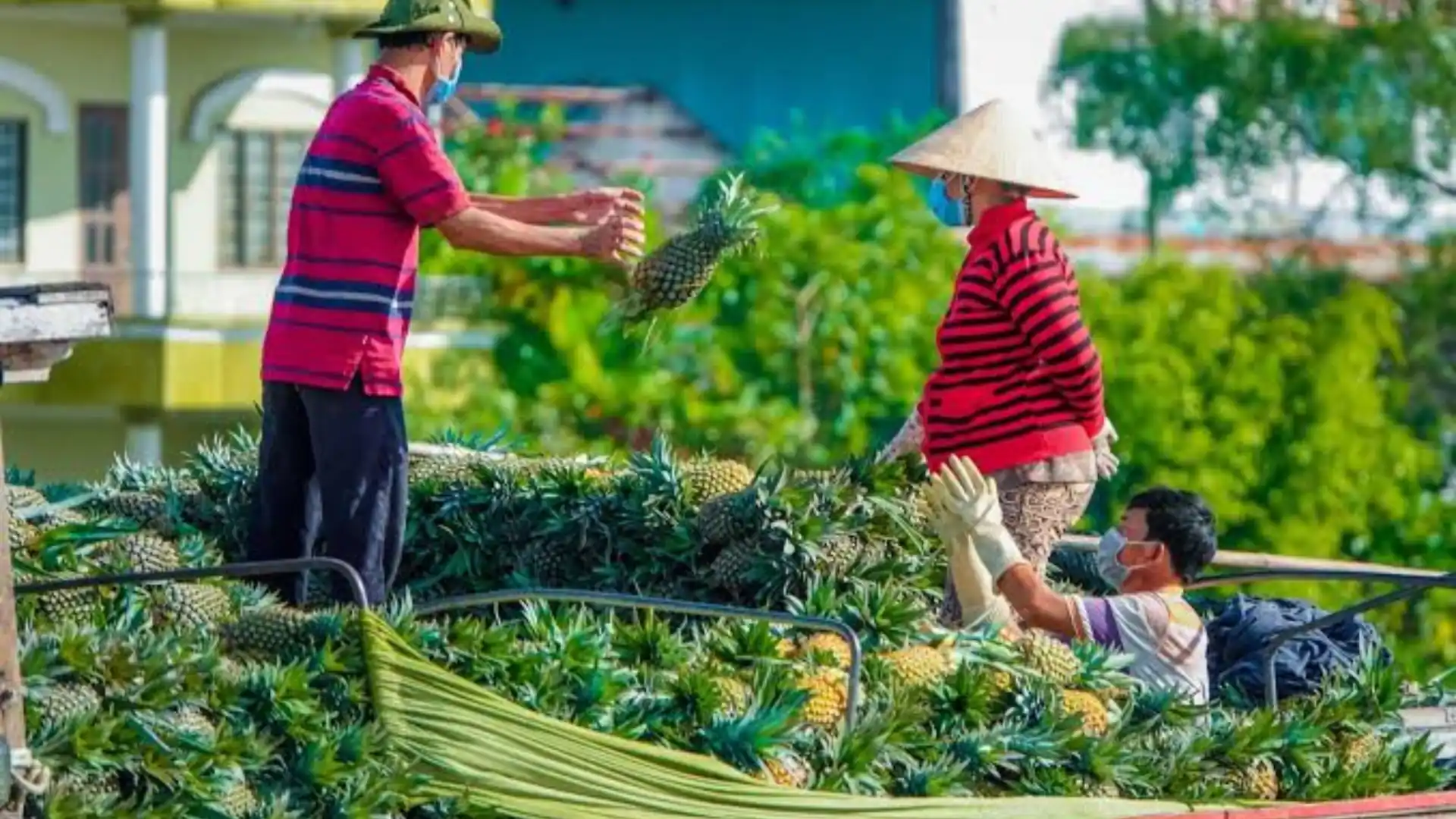
Unlike mango or rambutan, pineapples grow close to the ground among rows of stiff, pointed leaves. Farmers work through these dense fields to tend and harvest the fruit.
Two regional specialties stand out.
Khóm Cầu Đúc is grown in parts of Cần Thơ, particularly around xã Hỏa Lựu and nearby agricultural areas.
This pineapple has a recognized geographical identity and is associated with a sweet flavor and characteristic aroma. Its main crop generally falls around February-March, with another harvest period around July-August.
Khóm Tắc Cậu is associated with xã Bình An, An Giang, where pineapple cultivation is closely connected to the waterways of the sông Cái Lớn and sông Cái Bé.
In both areas, pineapples are sold fresh and may be used in locally processed foods.
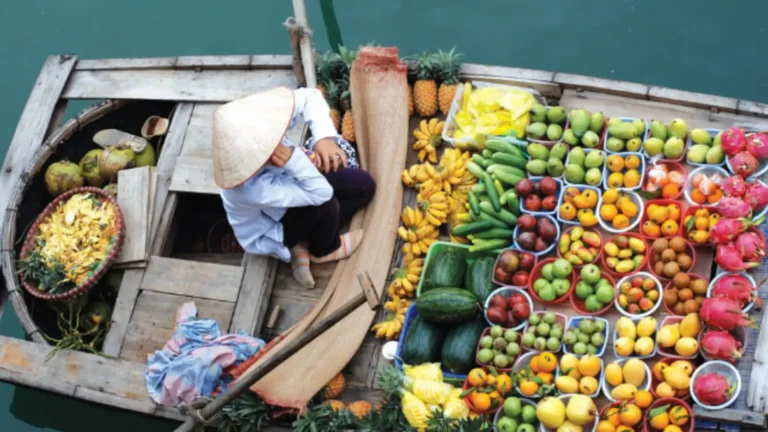
At a market, pineapple is often peeled and sliced for immediate eating. Around agricultural waterways, travelers may also see boats carrying harvested fruit.
These are working farming areas rather than guaranteed walk-in attractions. Anyone interested in seeing pineapple cultivation up close should arrange a visit with a local grower or guide.
Dâu Hạ Châu: a specialty of Phong Điền
Vietnamese name: Dâu Hạ Châu
Dâu Hạ Châu is closely associated with the fruit-growing area of Phong Điền, Cần Thơ.
The small yellowish fruits grow in clusters along the branches and sometimes close to the trunk. Inside is juicy flesh with a pleasant balance of sweetness and acidity.
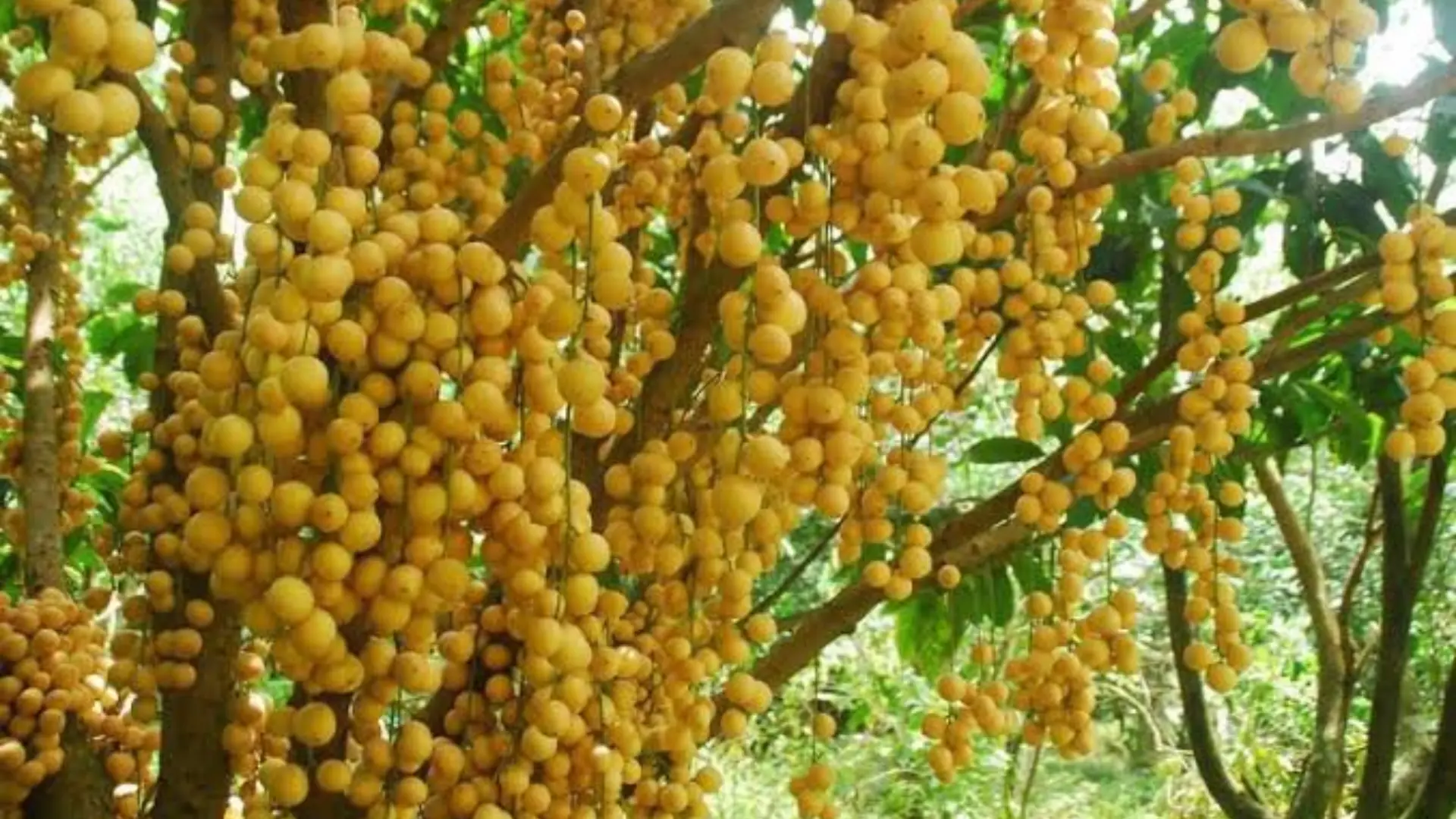
The fruit is commonly described in English as a type of Burmese grape, although it is not related to the grapes used in winemaking.
During harvest, the clusters can make the trees look quite different from an ordinary mango or rambutan orchard.
The season is sometimes described locally using lunar months, which do not match the same Gregorian dates every year.
If dâu Hạ Châu is on your tasting list, ask a garden in Phong Điền whether its trees are carrying ripe fruit before arranging your visit.
Coconut: part of the riverside landscape of Vĩnh Long
Vietnamese name: Dừa
Coconut palms are particularly familiar in the areas around Giồng Trôm, Mỏ Cày and Châu Thành, Vĩnh Long.
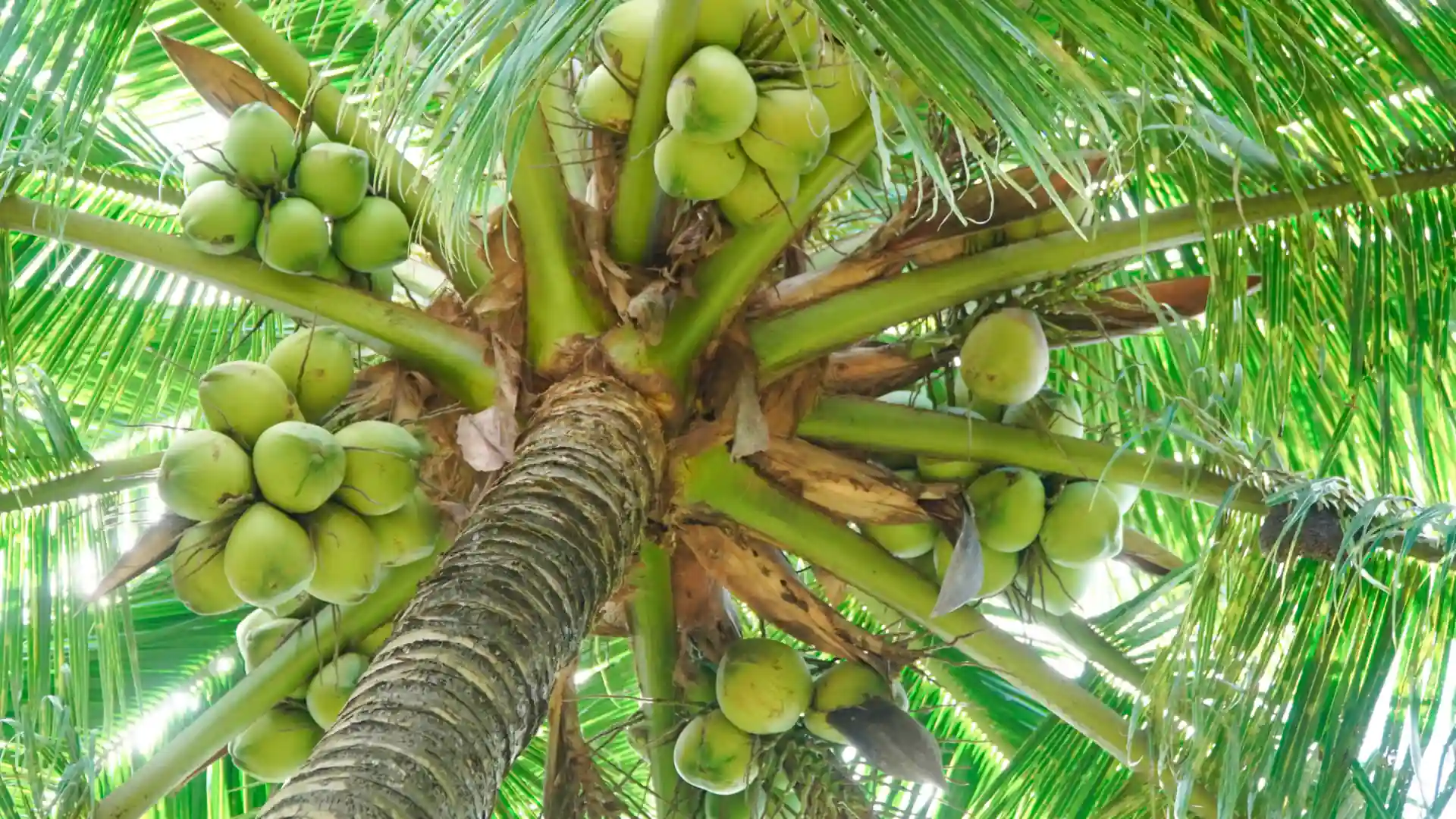
Young coconuts provide drinking water and soft flesh. Mature coconuts are used for coconut milk, cooking, candy, and other regional products.
Unlike many orchard fruits, coconut palms can produce throughout the year.
For visitors, coconut-related activities can go beyond drinking fresh coconut water. Some local workshops demonstrate how coconut candy or other products are made.
A coconut-processing workshop and a coconut grove offer different experiences, so check what the visit includes before booking.
Star apple: the smooth-skinned fruit of Vĩnh Kim
Vietnamese name: Vú sữa
Star apple has smooth green or purple skin and soft, sweet flesh. When cut open, the white interior may have a milky appearance, with dark seeds embedded in the flesh.
Vú sữa Lò Rèn is particularly associated with Vĩnh Kim, Đồng Tháp.
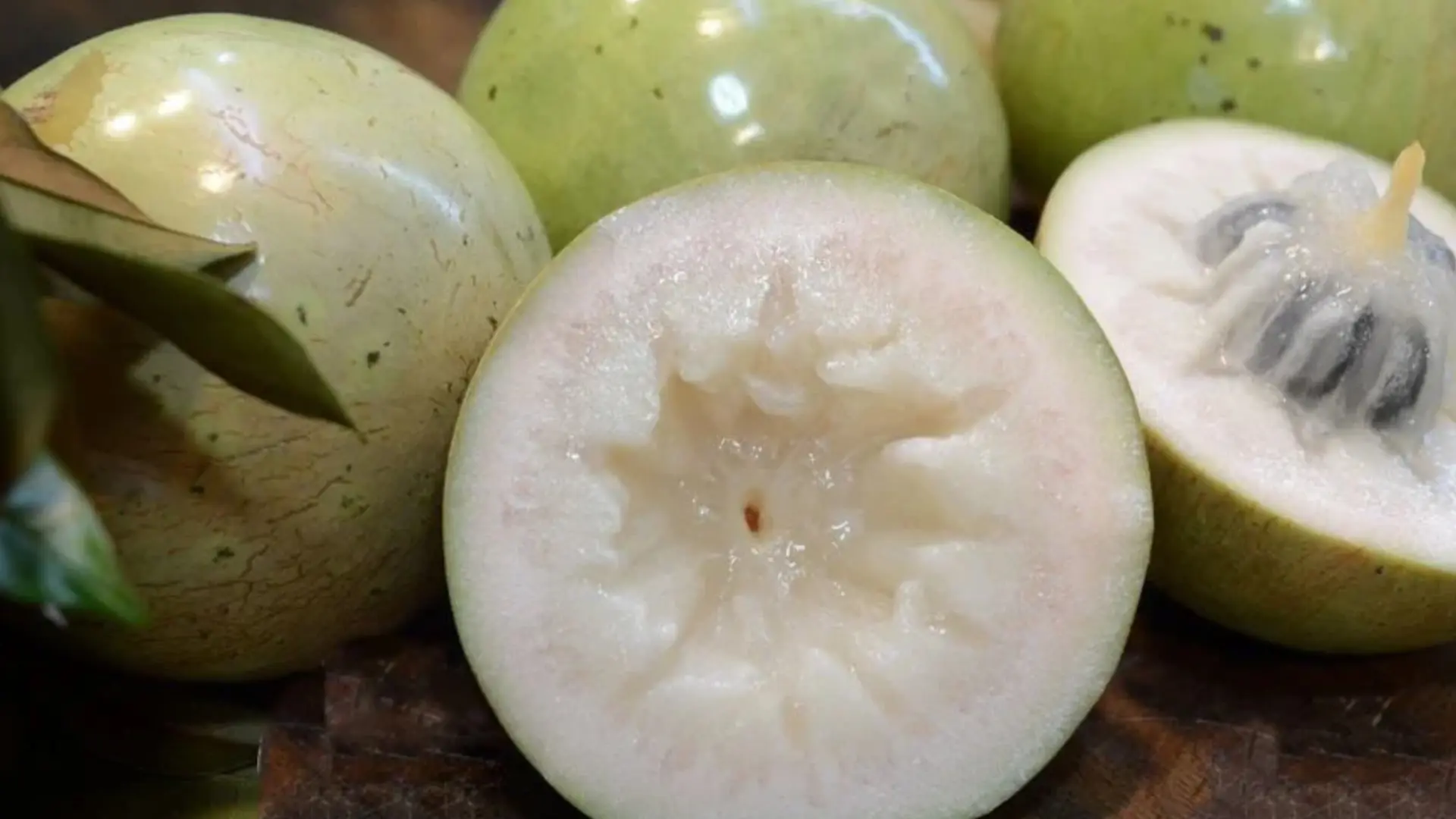
The fruit is usually eaten ripe. A vendor can help you choose one that is ready to enjoy, since appearance alone may not make ripeness obvious to a first-time buyer.
Star apple is also grown in other areas of the Mekong Delta, including Cần Thơ.
Harvest periods vary by variety and location, so check locally if you specifically want to visit a star apple orchard.
Mận: the crisp, juicy water apple
Vietnamese name: Mận
In southern Vietnam, mận commonly refers to the fruit known in English as water apple or rose apple. It is different from the plum familiar to many European travelers.
Depending on the variety, mận may have red, pink, or pale-green skin. The flesh is crisp, light, and juicy.
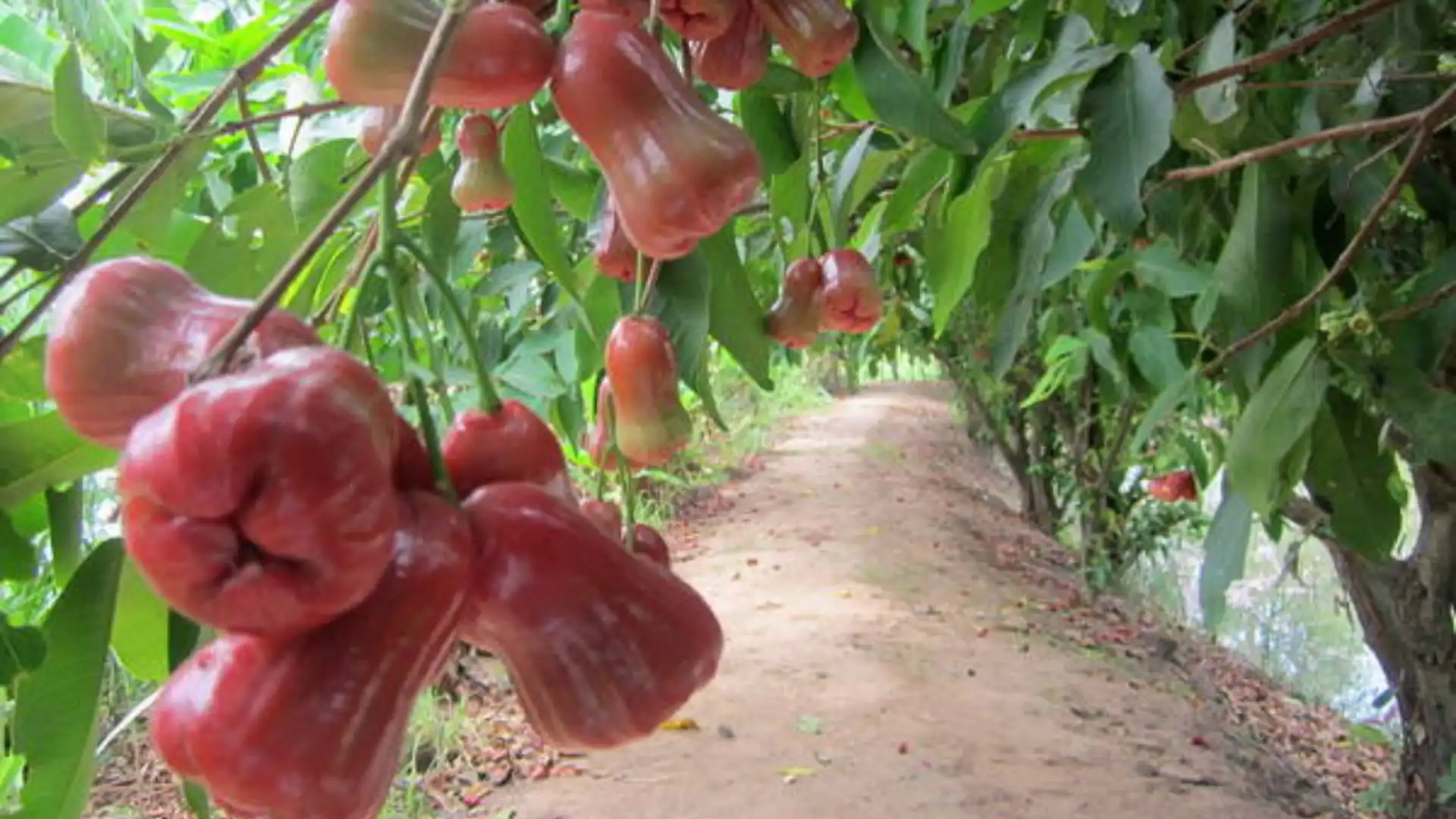
It is commonly eaten fresh, sometimes with chili salt.
You may see mận growing in clusters along orchard paths or sold in baskets at local markets.
Its refreshing texture makes it a good fruit to try between richer varieties such as durian and jackfruit.
Other fruits you may encounter
The Mekong Delta also produces jackfruit (mít), guava (ổi), dragon fruit (thanh long), bananas (chuối), papaya (đu đủ), and other tropical produce.
Jackfruit has sweet yellow pods with a chewy texture. Guava can be eaten firm or ripe, while dragon fruit has soft white or red flesh dotted with tiny black seeds.
Not all these fruits have a short, clearly defined season. Some varieties can be produced over extended periods, and market supplies may come from several growing areas.
When visiting a market, you do not need to recognize everything immediately. Asking the vendor for the Vietnamese name is often the simplest way to discover something new.
Where to visit fruit-growing areas in the Mekong Delta
The Delta’s fruit-growing regions are spread across Cần Thơ, Vĩnh Long, Đồng Tháp, An Giang, and other agricultural areas.
Some destinations have established fruit-garden tourism. Others are better known for commercial growing, with visits possible only by arrangement.
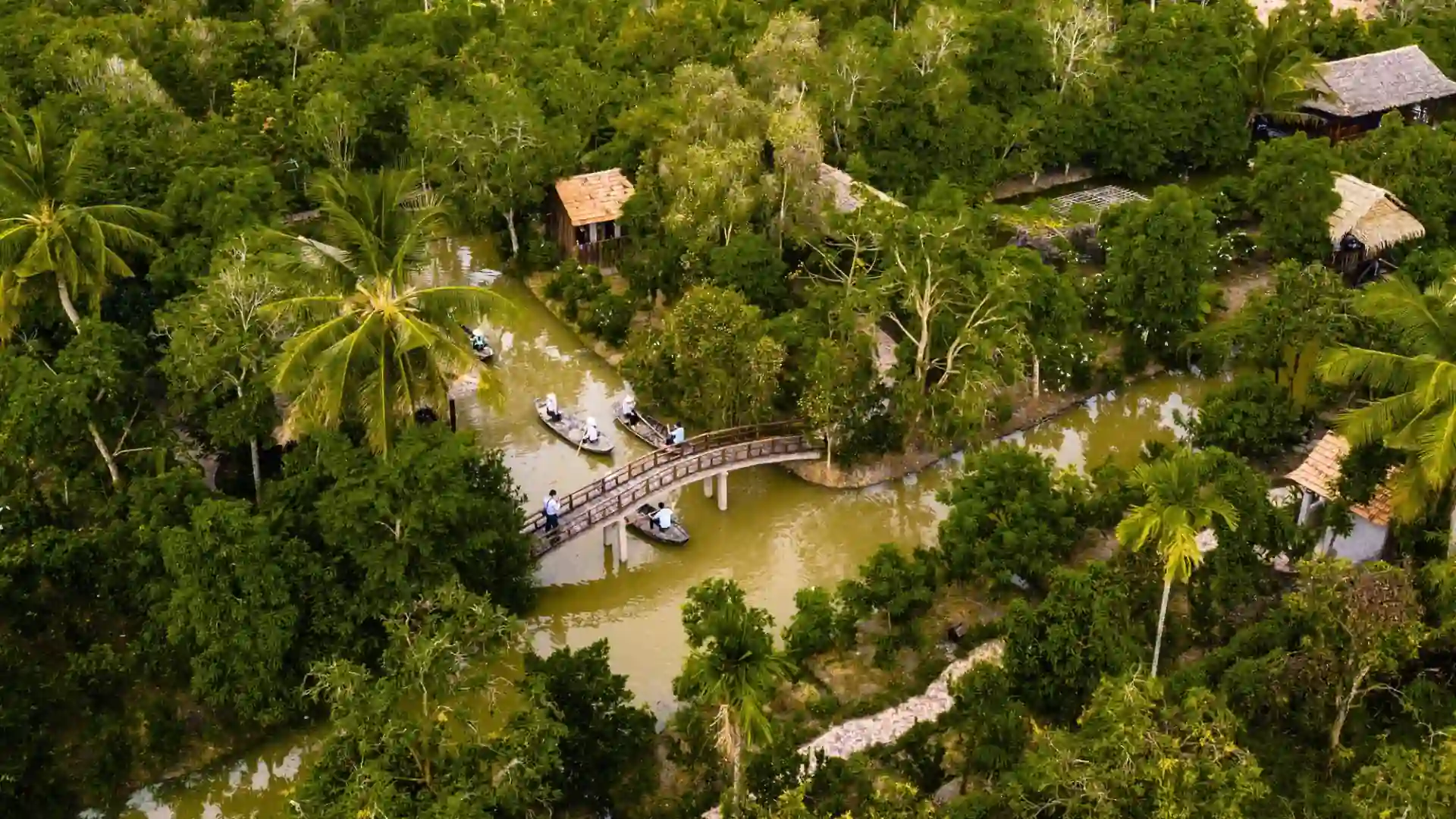
Phong Điền, Cần Thơ: gardens close to the city
Phong Điền is a practical choice for travelers staying in central Cần Thơ who want to experience tropical fruit growing.
The area is associated with rambutan, durian, mangosteen, longan, star apple, and dâu Hạ Châu.
From late spring into summer, some gardens have ripe fruit ready for tasting, although the selection changes with the harvest.
Visitor experiences vary. Family gardens may focus on seasonal produce and a walk among the trees, while larger tourism sites combine orchards with food and other activities.
Khu du lịch Mỹ Khánh is one of the established visitor destinations in the area.
If you want to compare garden experiences, see our guide to fruit gardens in Cần Thơ.
Cù lao An Bình, Vĩnh Long: rambutan, longan and river villages
Cù lao An Bình, xã An Bình, tỉnh Vĩnh Long lies across the sông Cổ Chiên from the central Vĩnh Long area.
The island is associated with rambutan and longan orchards, narrow village roads, and waterways running between gardens and homes.
During the rambutan harvest, some gardens welcome visitors to walk among the trees and taste seasonal fruit.
An outing can also include cycling, a boat excursion, or a meal at a local home, depending on the itinerary.
For a day focused on countryside scenery as well as fruit, Cù lao An Bình offers more variety than a quick stop at a market.
Our Vĩnh Long Travel Guide covers other places to visit in the surrounding area.
Cái Mơn – Chợ Lách, Vĩnh Long: durian and fruit-tree nurseries
Cái Mơn – Chợ Lách, tỉnh Vĩnh Long is closely associated with durian cultivation and fruit-tree nurseries.
The growing area includes places such as xã Vĩnh Thành, xã Chợ Lách and xã Phú Phụng.
Alongside durian, growers cultivate rambutan, mangosteen, longan, and other fruit trees.
For travelers interested in how orchards are established, the nursery tradition is especially interesting. Young trees are grown and prepared for planting, while mature orchards produce fruit for sale.
This is primarily a working agricultural region, so a visit to a nursery or fruit farm should be arranged in advance.
Cao Lãnh and Lai Vung, Đồng Tháp: two different harvest experiences
Cao Lãnh, tỉnh Đồng Tháp is associated with mango growing, particularly xoài cát Chu and other local varieties.
Some growers welcome visitors to learn about mango cultivation, although access depends on the farm and the harvest schedule.
Lai Vung, tỉnh Đồng Tháp offers a different experience, centered on quýt hồng mandarins.
During the Tết harvest period, some orchards receive visitors who come to see the ripe fruit and take photographs among the trees.
The two areas are worth distinguishing when planning a trip. A mango-focused visit and a Tết-season mandarin garden have different timing and visitor arrangements.
Cái Bè, Tân Phong and Vĩnh Kim, Đồng Tháp: fruit and riverside trade
Cái Bè, cù lao Tân Phong and Vĩnh Kim, tỉnh Đồng Tháp are associated with orchards, fruit production, and riverside trade.
Cái Bè is connected with xoài cát Hòa Lộc and other agricultural products. Vĩnh Kim is recognized for vú sữa Lò Rèn.
Markets in the surrounding area bring together produce from different farms and regions.
If your main interest is tasting several fruits, a market can be convenient. For a closer look at cultivation, arrange a visit to a working orchard or a garden that welcomes tourists.
Hỏa Lựu and Kế Sách, Cần Thơ: pineapple and pomelo country
The agricultural landscape of Cần Thơ extends beyond the fruit gardens closest to the city center.
Xã Hỏa Lựu and nearby areas are associated with khóm Cầu Đúc. Pineapple fields here are working agricultural land, and access should be arranged with a local grower.
Xã Kế Sách is another important fruit-growing area, particularly for bưởi Năm Roi and bưởi da xanh.
These places are useful for travelers interested in the diversity of local agriculture rather than only established tourist gardens.
Bình An – Tắc Cậu, An Giang: pineapple fields near the rivers
Xã Bình An, tỉnh An Giang is home to the Tắc Cậu pineapple-growing area.
Here, pineapple cultivation is closely connected to the landscape around the sông Cái Lớn and sông Cái Bé.
Visitors traveling through this part of An Giang may encounter pineapple stalls and working agricultural areas.
The region is known primarily for production rather than organized orchard tourism. Arrange a farm visit separately if you want to learn about cultivation.
Fruit garden or local market: which should you choose?
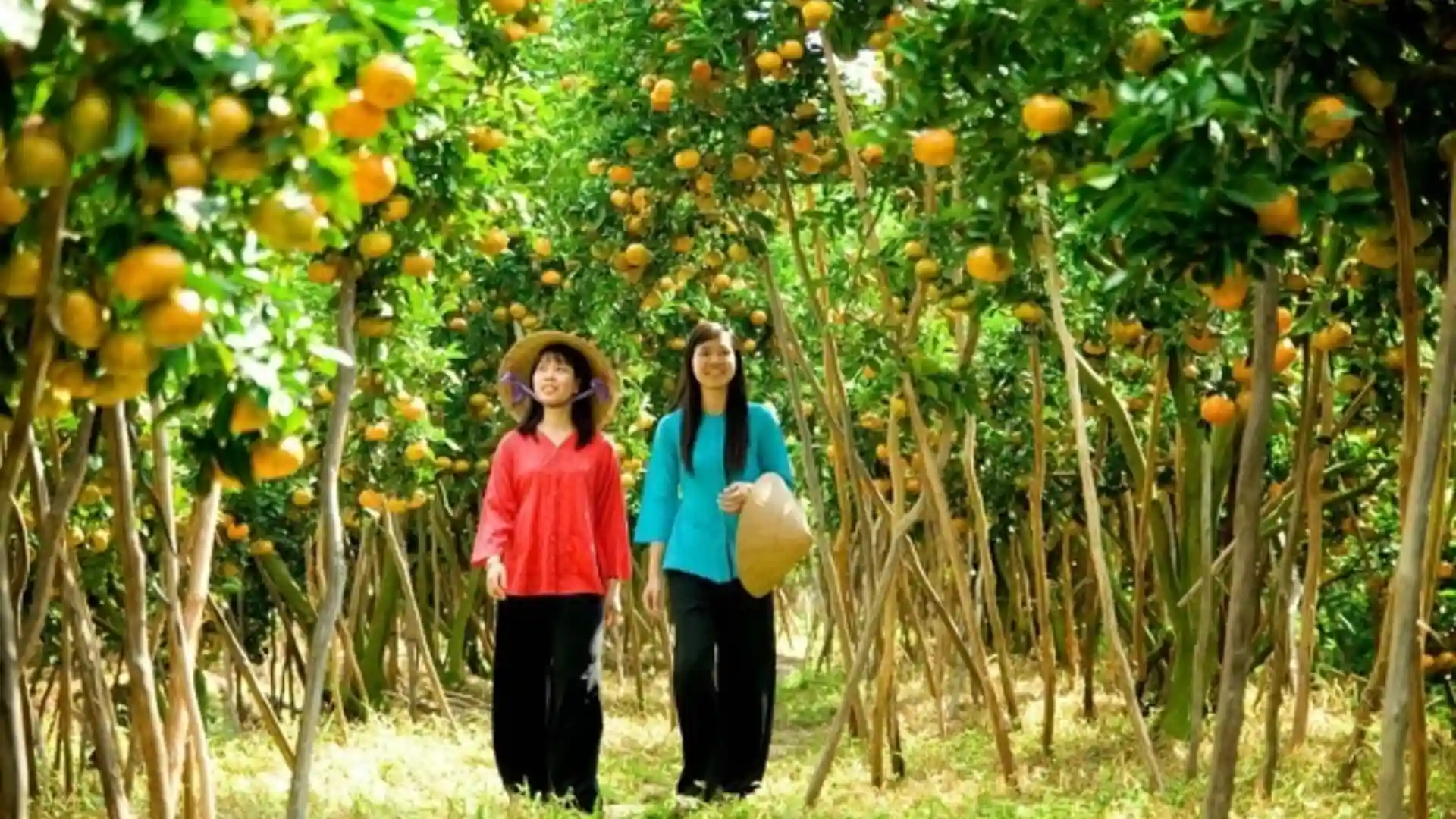
An orchard and a market can both be worthwhile, but they offer different ways to experience the region’s fruit.
| Experience | What you can expect | Suitable for |
| Local fruit market | Several types of fruit brought together from different farms and growing areas | Travelers who want to taste a variety of fruits |
| Working orchard | Fruit trees, cultivation, and seasonal harvesting | Visitors interested in agriculture and local farming |
| Tourist fruit garden | Garden walks, tasting, and sometimes supervised picking or meals | Families and travelers who prefer an organized visit |
| Agricultural production area | Commercial fields, nurseries, or food-processing activities | Visitors who arrange a specialist visit in advance |
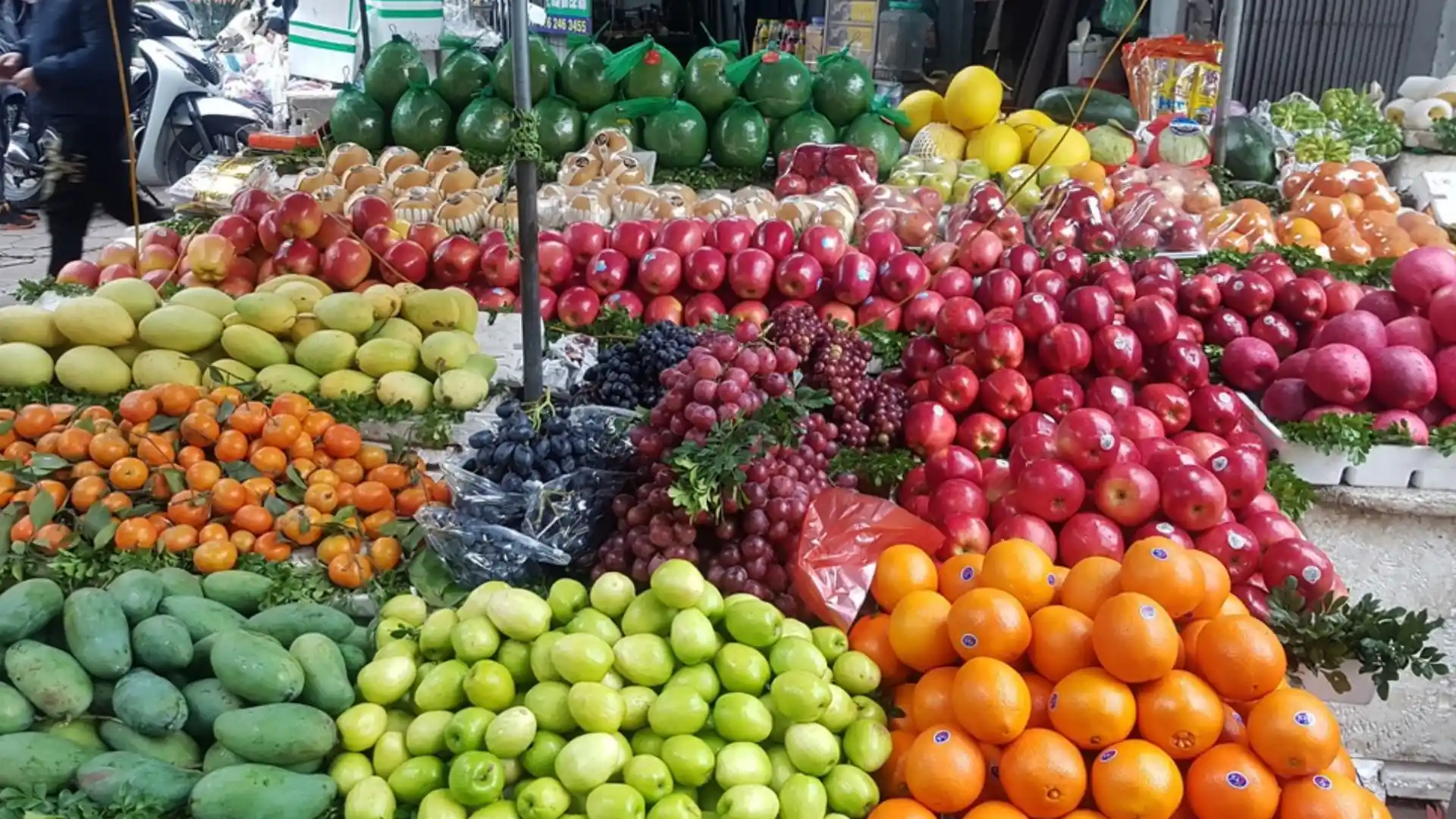
If you want to try rambutan, mangosteen, mango, and other fruits in one outing, a market may be the simpler choice.
If you want to see fruit growing on the trees, choose an orchard with a confirmed harvest.
A garden does not need ripe fruit to be interesting. Trees may be flowering, carrying young fruit, or being tended by farmers. These stages are also part of understanding how local agriculture works.
Tips for visiting a Mekong Delta fruit garden
A little preparation can make an orchard visit more enjoyable, especially when the garden is a working farm rather than a purpose-built attraction.
Check what is ripe before visiting. A garden may grow several fruits without harvesting them all at the same time.
Ask about fruit picking. Some owners allow visitors to pick fruit under supervision, while others provide tasting only.
Confirm what the admission fee includes. Entrance, tasting, guided activities, meals, and fruit to take home may be charged separately.
Wear comfortable shoes. Garden paths can be uneven or muddy after rain.
Respect the trees and the people working there. Avoid pulling branches, climbing trees, or taking fruit without permission.
Choose fruit prepared hygienically. Wash or peel fruit appropriately and take care when buying pre-cut produce exposed to heat or poor handling conditions.
For durian and other heavy fruits, stay clear of harvesting work unless a grower directs you to a safe viewing area.
How to plan a fruit-focused Mekong Delta trip
The right destination depends on what you hope to see.
If you are staying in Cần Thơ, the gardens around Phong Điền are a practical introduction to the region’s tropical fruits. They can fit into a countryside excursion without requiring a long multi-province journey.
For rambutan, longan, and village life, consider Cù lao An Bình in Vĩnh Long during a suitable harvest period.
For mango-growing traditions, look toward Cao Lãnh or Cái Bè in Đồng Tháp.
If you are traveling around Tết, Lai Vung offers a seasonal mandarin-growing experience quite different from summer orchards.
For an interest in pineapple cultivation, Hỏa Lựu in Cần Thơ and Tắc Cậu in An Giang are recognizable growing areas, although farm visits need local arrangements.
You do not need to visit all these places on one trip. Choosing one area and allowing time for a garden, a market, and the surrounding countryside often makes for a more comfortable day.
If your travel dates are fixed, start by checking which fruit is actually being harvested rather than choosing a destination solely because it is famous for a particular crop.
For wider travel planning, read our Mekong Delta Travel Guide and guide to the best time to visit the Mekong Delta.
Experience fruit gardens with Mekong Smile
Fruit gardens can be part of a broader journey through the waterways and countryside of the Mekong Delta.
For travelers staying in Cần Thơ, Mekong Smile’s Can Tho Floating Market & Fruit Garden Tour combines chợ nổi Cái Răng, a traditional rice noodle workshop, a seasonal fruit garden, and a boat journey through smaller waterways.
The An Binh Islet Tour from Can Tho includes a trip along the sông Cổ Chiên, a fruit-garden visit, and experiences connected with local crafts and food production in Vĩnh Long.
The fruit available on either tour depends on the season and the garden visited. A fruit-garden stop does not guarantee that a particular variety will be ripe or available for picking.
If there is a fruit you especially want to try, contact Mekong Smile before booking to check what may be available during your visit.
Website: https://mekongsmile.com/
Hotline / WhatsApp: +84 774 839 165
Email: contact@mekongsmile.com
Office: 5 Trần Văn Hoài, phường Ninh Kiều, Cần Thơ, Việt Nam
Planning Your Mekong Trip?
Get a free, personalized itinerary from our local experts in under 120 minutes.

Get a Free Consultation Leave your contact, we handle the rest.
FAQs about Mekong Delta fruit
When is the best time to visit fruit orchards in the Mekong Delta?
May through August is a useful period for several orchard areas around Cần Thơ and Vĩnh Long. Other crops have different seasons, including xoài cát Hòa Lộc in spring and quýt hồng Lai Vung around Tết. Check the current harvest before arranging a garden visit.
What fruits grow in the Mekong Delta?
The region grows rambutan, mangosteen, durian, longan, mango, pomelo, pineapple, coconut, star apple, water apple, jackfruit, and other tropical fruits. Some are associated with particular growing areas and local varieties.
Where can I visit a fruit garden near central Cần Thơ?
Phong Điền is a practical choice for established fruit gardens and countryside experiences. The most suitable garden depends on the season, which fruits are ripe, and the activities available.
When is rambutan season in Vĩnh Long?
The natural rambutan harvest is commonly strongest around June and July, although timing varies between orchards and some crops are produced outside the main season.
When is quýt hồng Lai Vung in season?
Quýt hồng Lai Vung is particularly associated with the weeks leading up to Tết. Because Lunar New Year falls on a different Gregorian date each year, confirm the harvest and garden access before traveling.
Can tourists pick fruit directly from the trees?
Some tourist orchards offer supervised picking, but not all gardens permit it. Ask the owner about the rules and whether picking is included in the visit.
Can I find tropical fruit in December or January?
Yes. Markets sell fruit throughout the year, and some crops are harvested outside their main natural seasons. However, the fruits ripe on nearby orchard trees will depend on the crop and location.
Where can I see pineapple farming in the Mekong Delta?
Hỏa Lựu in Cần Thơ is associated with khóm Cầu Đúc, while the Tắc Cậu area of Bình An, An Giang, is known for khóm Tắc Cậu. These are mainly working agricultural areas, so farm access should be arranged in advance.
Is fruit at a Mekong Delta market always grown nearby?
No. Fruit vendors may purchase produce from several growing areas. If you want to taste a specific regional variety, ask about the fruit’s name and origin before buying.
