
 Can Tho
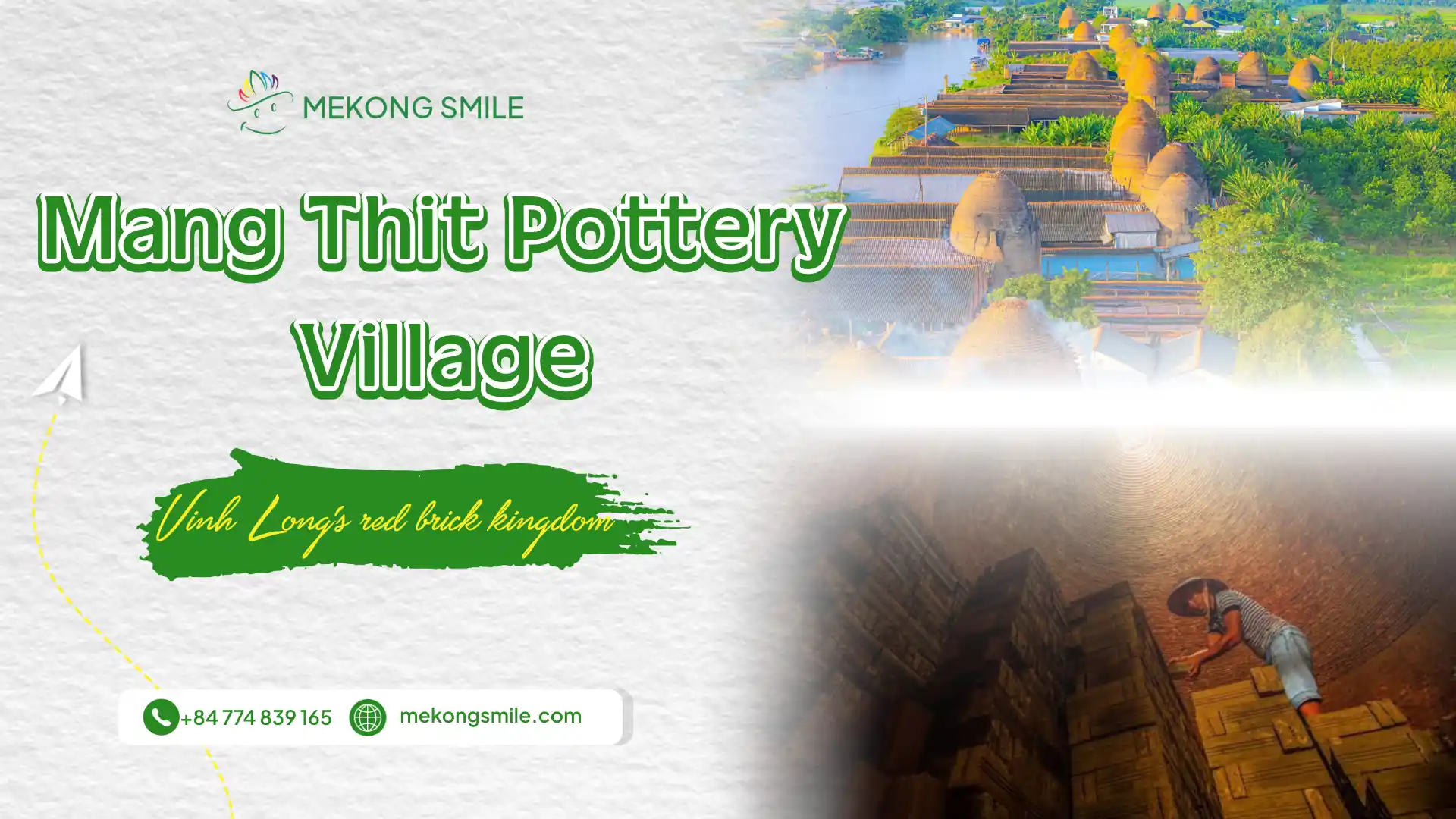
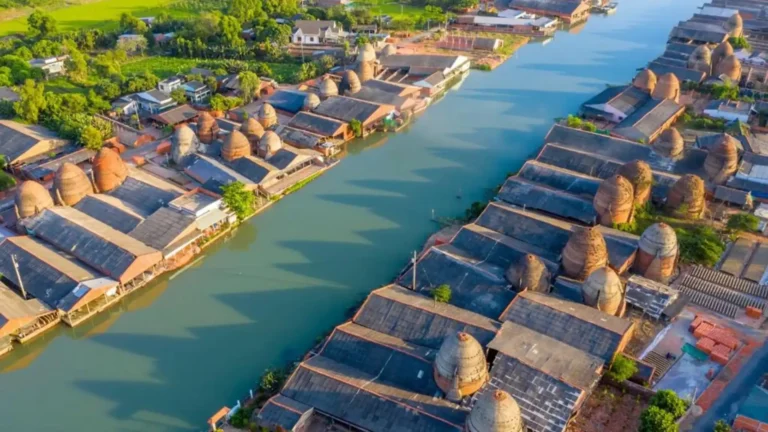
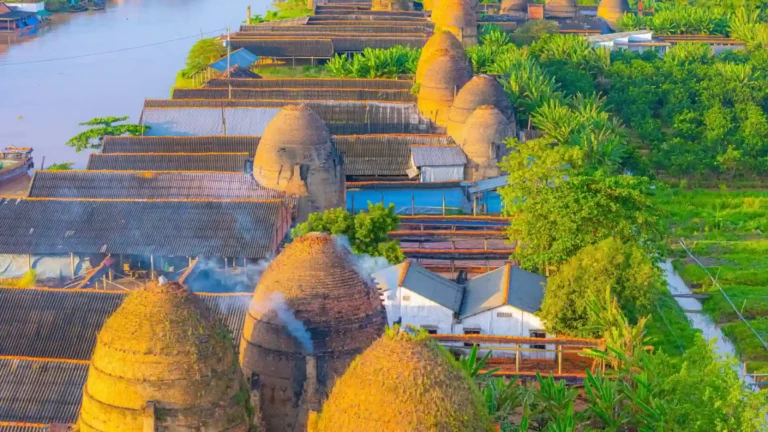

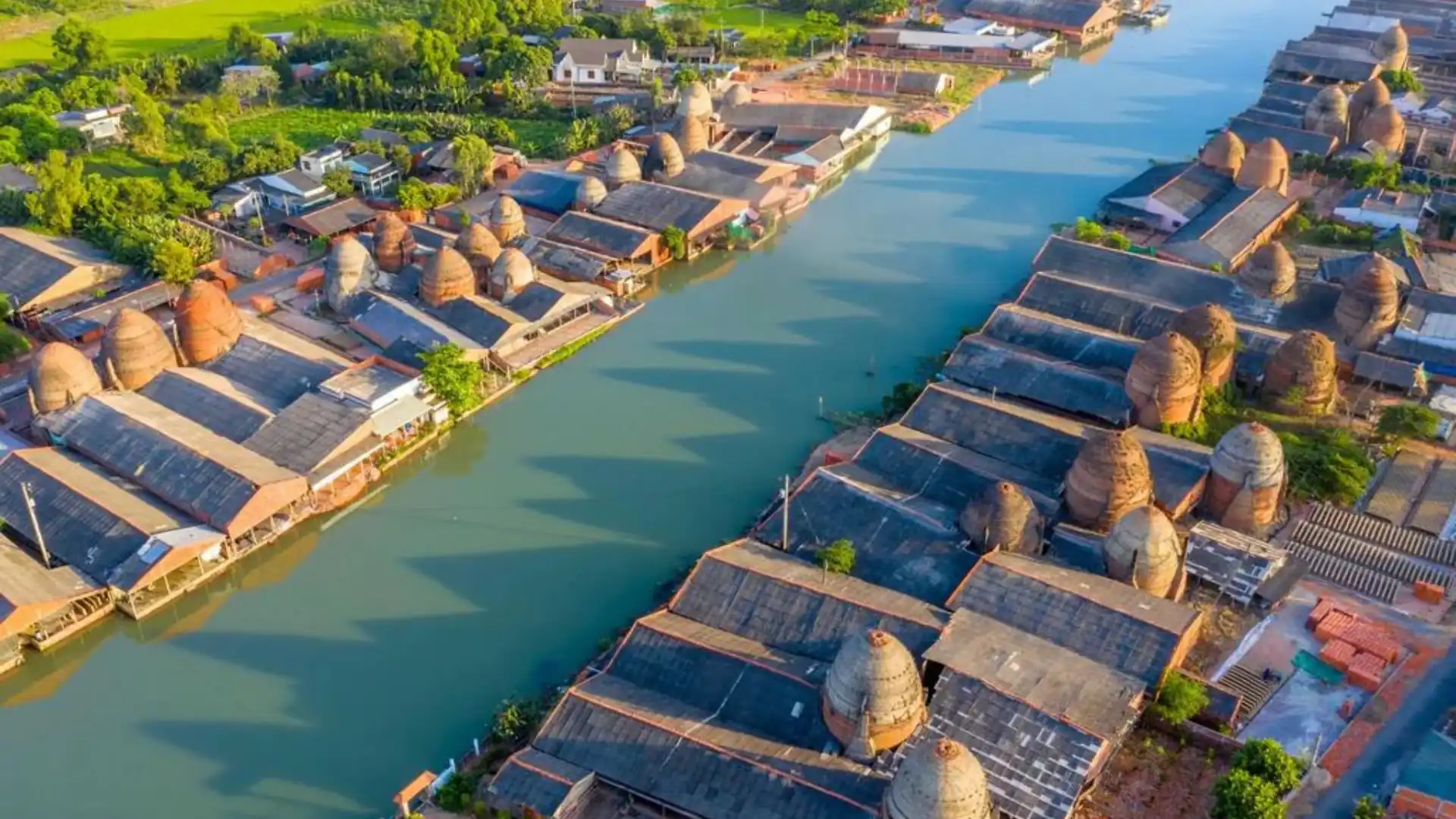
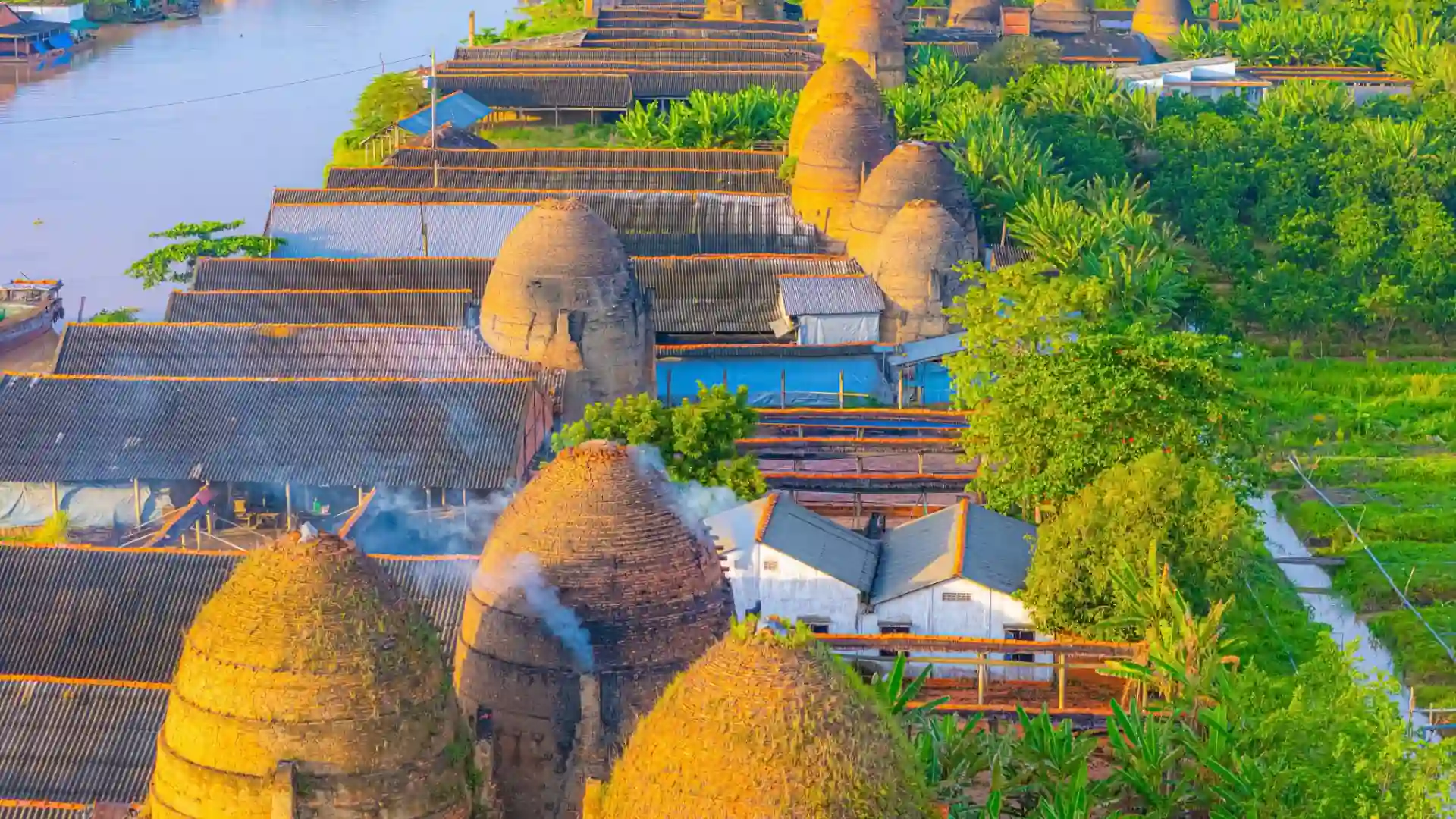
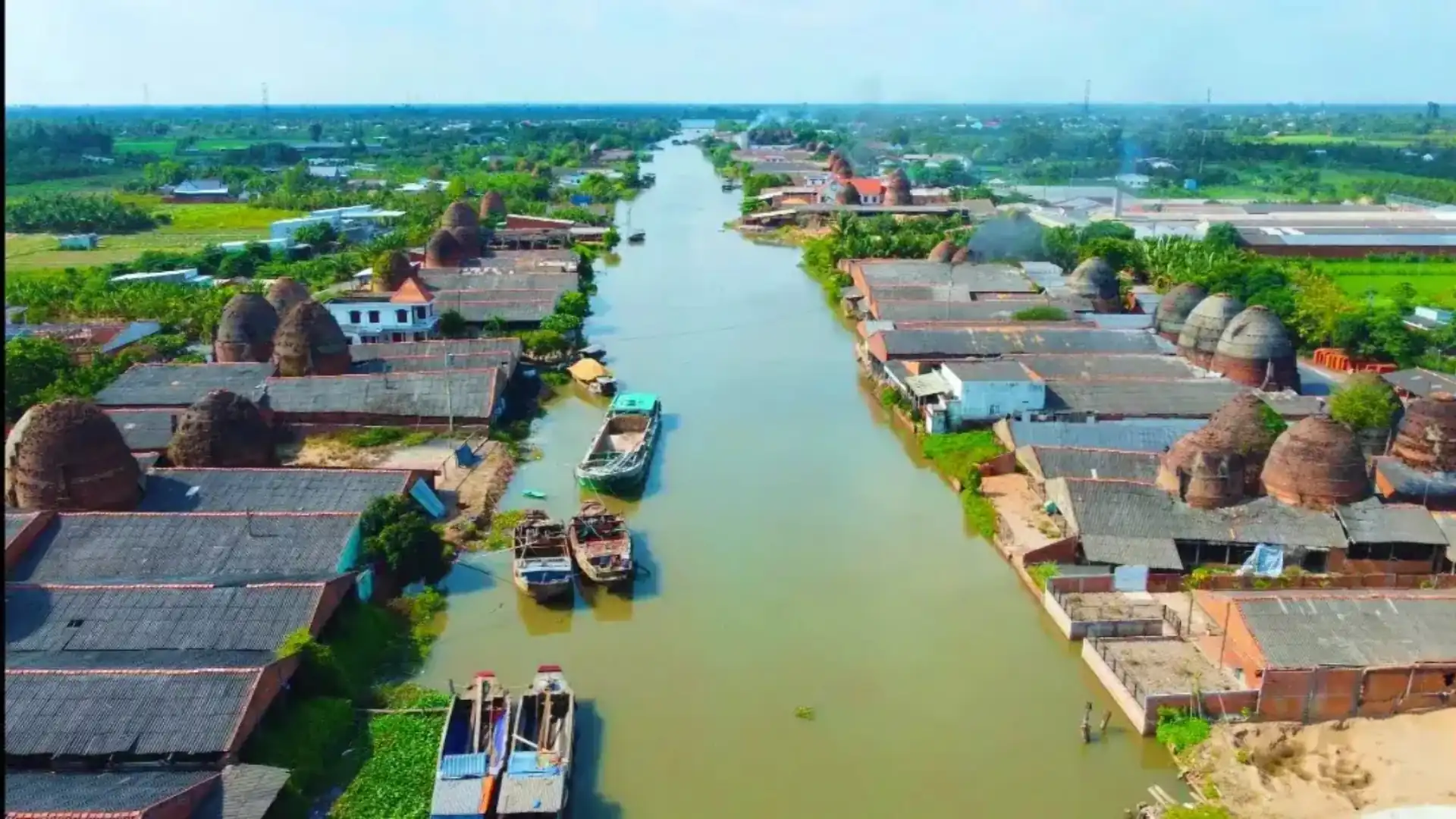
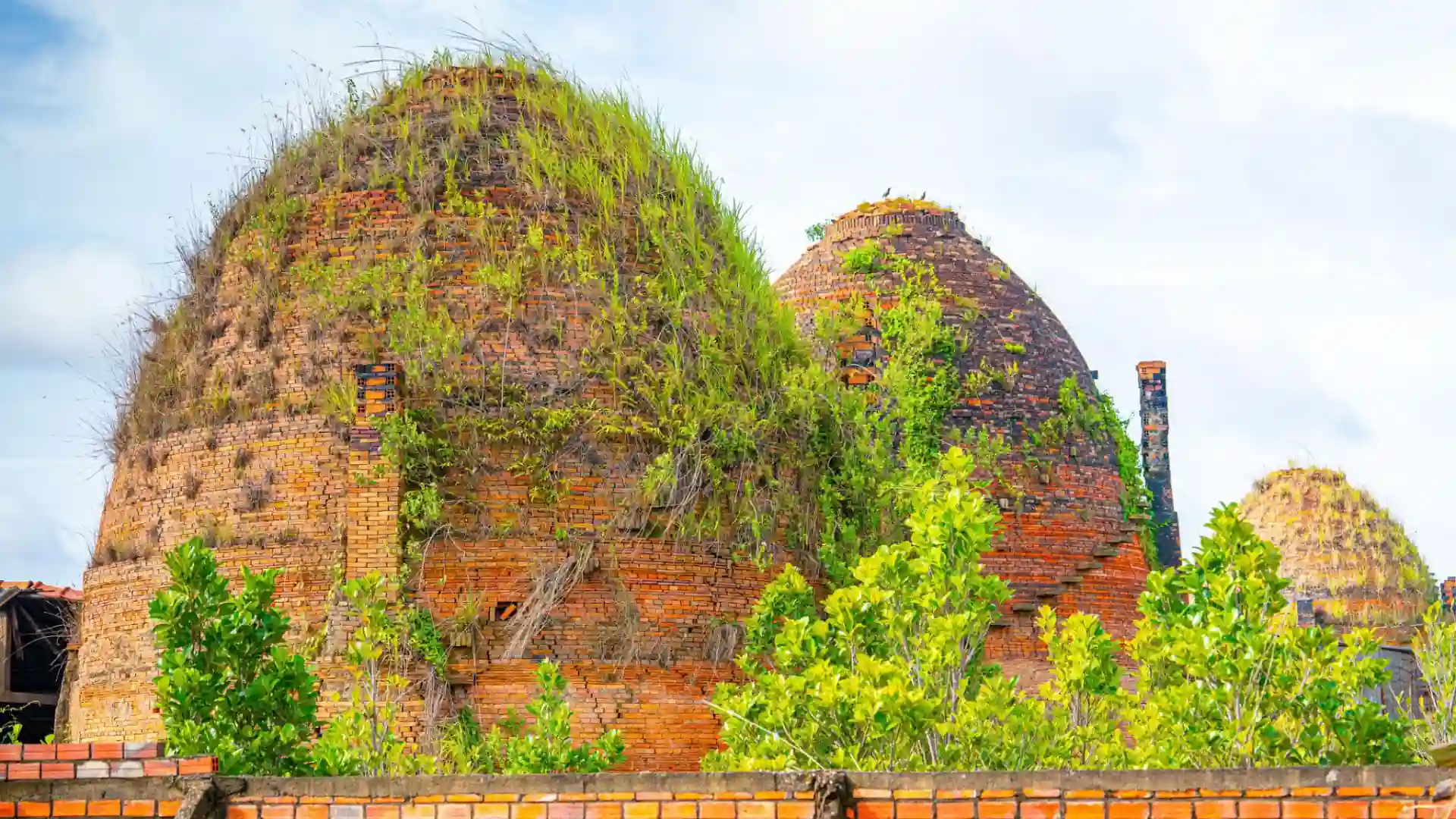
Along Thay Cai Canal in Vinh Long, rows of rounded brick kilns rise above riverside workshops and gardens. Their walls have weathered into shades of terracotta, orange and brown. Some remain part of working properties, while others have stood unused long enough for moss and plants to grow across their surfaces.
This is Mang Thit Pottery Village, a historic brickmaking and pottery area in Vietnam’s Mekong Delta. Often called the Red Kingdom, Mang Thit developed around the region’s clay, rice agriculture and waterways.
Visitors come to see its unusual kiln architecture, learn how traditional bricks and pottery were made, and discover a side of Vinh Long’s history that differs from the better-known fruit gardens and river islands.
Where is Mang Thit pottery village?
Mang Thit Pottery Village is in Vinh Long Province, southern Vietnam, approximately 20 kilometres from central Vinh Long, depending on the kiln cluster you plan to visit.
The best-known kilns stand along Thay Cai Canal (kênh Thầy Cai) and nearby waterways connected to the Co Chien River (sông Cổ Chiên).
Rather than one enclosed tourist village, Mang Thit is a riverside craft landscape spread across several communities. Traditional kilns, drying yards, workshops, family homes and boat landings developed alongside one another.
Following Vietnam’s administrative reorganisation in July 2025, the principal heritage area is located in Nhon Phu Commune (xã Nhơn Phú) and parts of Binh Phuoc Commune (xã Bình Phước), Vinh Long Province. Mang Thit remains the familiar historical name.
How Mang Thit became the Red Kingdom
Brickmaking became an established industry in Vinh Long during the late nineteenth and early twentieth centuries. Mang Thit’s location provided several practical advantages: clay for making bricks, rice husks for kiln fuel, and waterways for transporting heavy materials.
Clay could be delivered by boat, processed and shaped at a nearby workshop, dried in a yard and fired in a kiln. Finished bricks were then loaded onto boats for delivery to construction markets.
This explains why the kilns were built so close to the canals. The river was part of the production system, connecting the workshops with suppliers and customers.
At its height, the wider Mang Thit area supported a substantial brick and pottery industry. Local families worked in clay preparation, shaping, drying, firing, kiln maintenance and river transport.
Production later declined as costs increased, construction materials changed and environmental requirements placed pressure on traditional kilns. Many closed, while others were dismantled or left unused.
The remaining kilns now preserve the physical traces of an industry that shaped the area’s economy and daily life for generations.
Inside Mang Thit’s traditional brick kilns
The distinctive egg-shaped architecture
Mang Thit’s most recognisable structures are its rounded brick kilns, often called lò hột vịt because of their egg-shaped form.
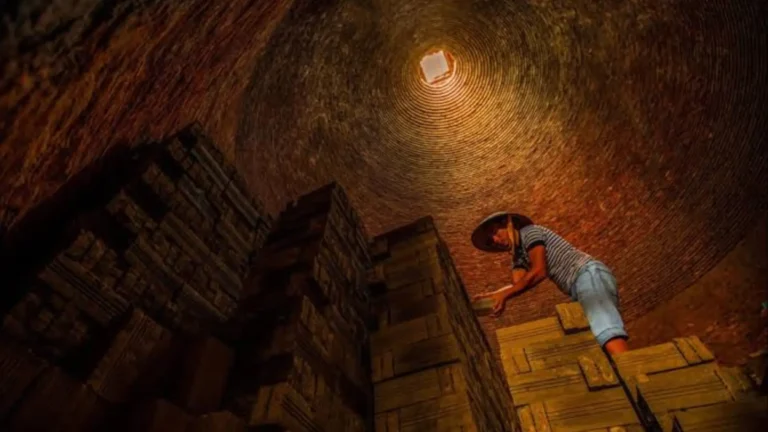
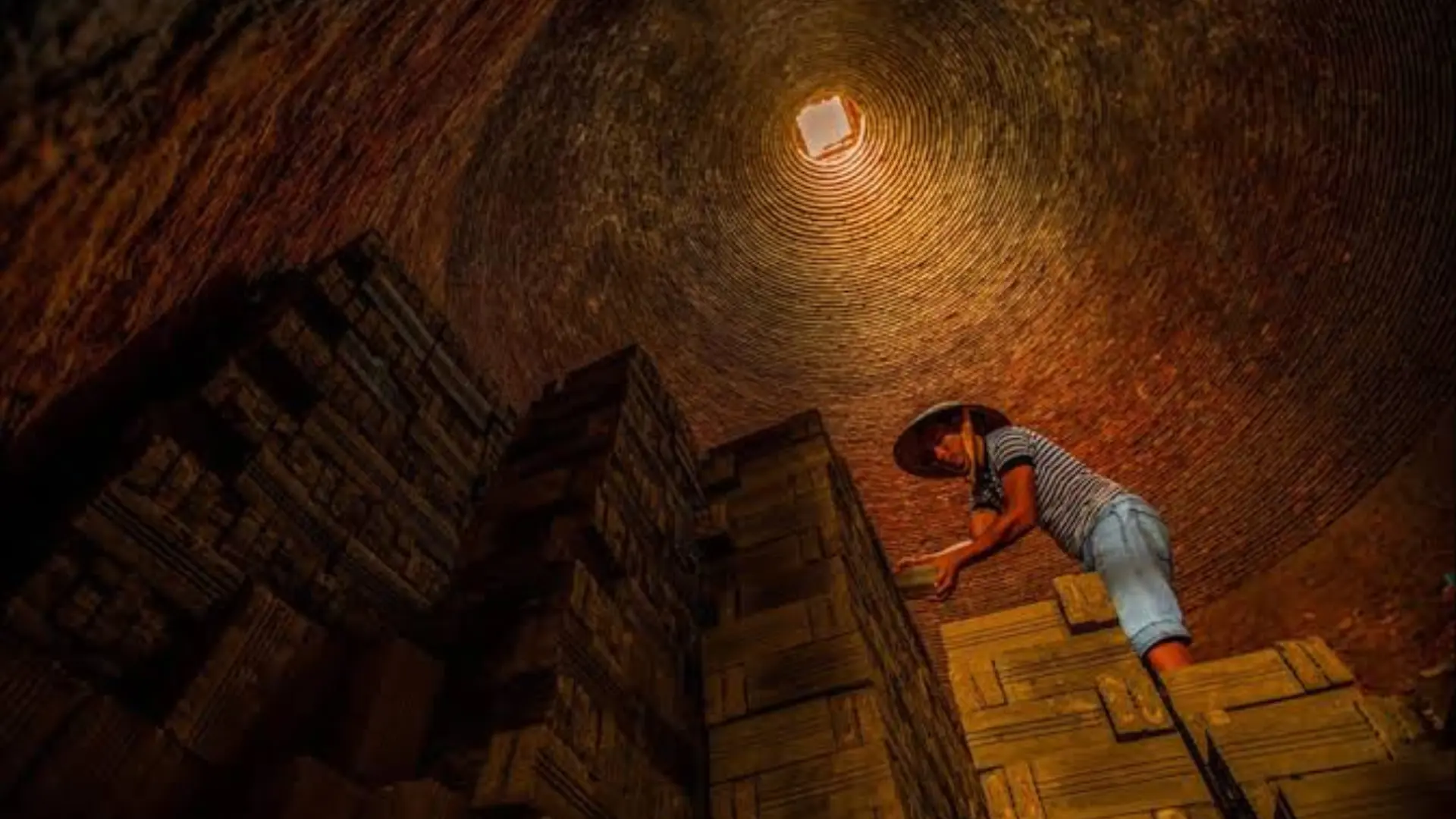
Built from red bricks, these kilns have thick lower walls and curved bodies that narrow towards openings near the top. Their design helps retain and circulate heat during firing.
Maintaining a kiln also requires experience. Workers traditionally inspected the brickwork, repaired cracks and prepared the structure for repeated heating and cooling cycles.
How traditional bricks are made
The traditional process involves several stages, each requiring attention to the properties of clay and the conditions inside the kiln.
- Preparing the clay: Raw clay is processed and mixed until it reaches a suitable consistency for shaping.
- Forming the bricks: Workers use moulds or machinery to shape the clay into bricks and other building materials.
- Drying: Newly formed bricks are left to dry before firing. Excess moisture can cause cracking when the products are heated.
- Loading the kiln: Bricks are carefully stacked to maintain stability and allow hot air to circulate.
- Firing and cooling: Rice husks are traditionally used as fuel. Workers control the firing process and allow the kiln to cool before removing the finished products.
Preparing, firing, cooling and unloading a kiln can take several weeks. The duration varies according to the kiln, products and working conditions.
Copy SEO ảnh 8
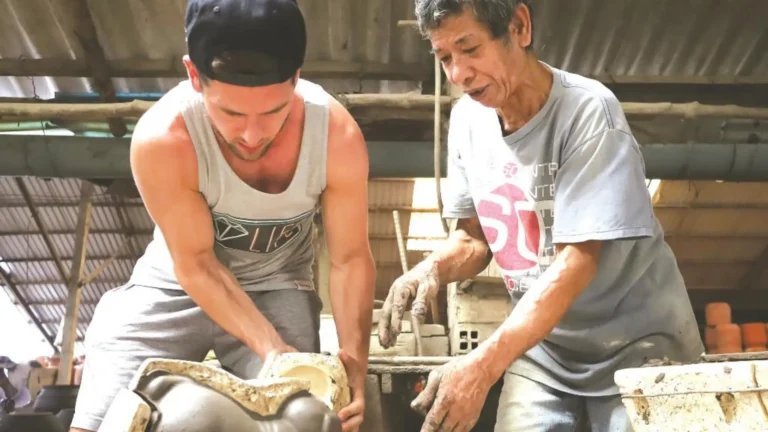
The craft of red pottery
Alongside building bricks, Vinh Long’s workshops developed a tradition of producing red pottery, including garden pots, decorative jars and architectural pieces.
Many products retain the natural orange-red colour of fired clay. Their surfaces, shapes and finishes reflect the techniques used by individual workshops.
Pottery-making requires additional attention to shaping and finishing. Craftspeople learn to judge the consistency of the clay and understand how each piece responds to drying and heat.
What can visitors see and do at Mang Thit pottery village?
1. See the brick kilns from the waterways
Viewing Mang Thit from the water helps explain how the industry developed. Along the canals, groups of rounded kilns stand beside workshop roofs, drying yards and old river landings.
A boat journey offers a wider view of this landscape than visiting individual structures by road. It also reveals how boats connected the workshops with the rest of the Mekong Delta.
Boat excursions should be arranged in advance. There is no confirmed daily public sightseeing service covering the entire heritage area. Travellers should check the departure point, route and workshop stops with a local operator.
For more context on the region’s river transport, see our guide to traditional boats of the Mekong Delta.
2. Visit a traditional workshop
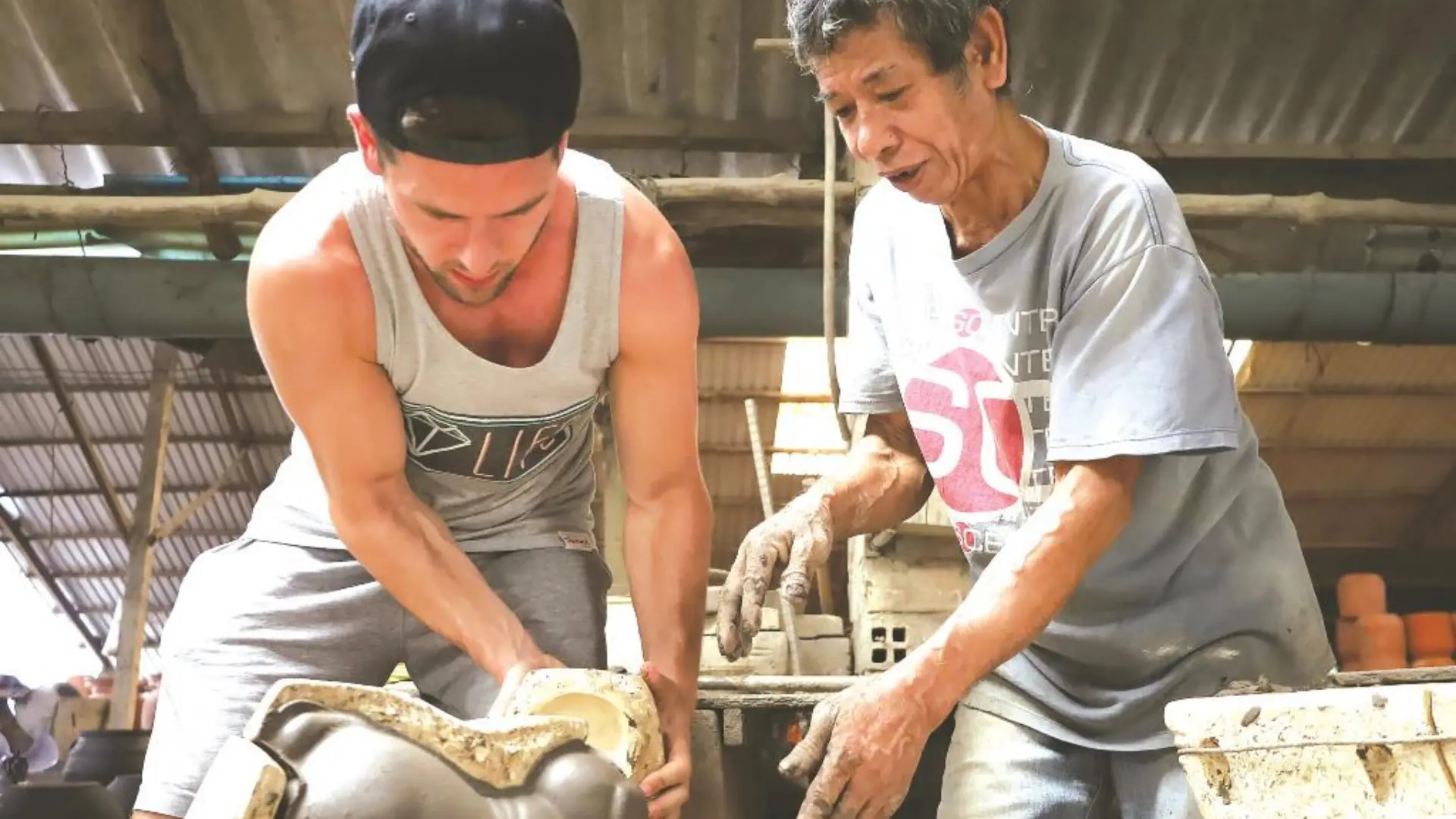
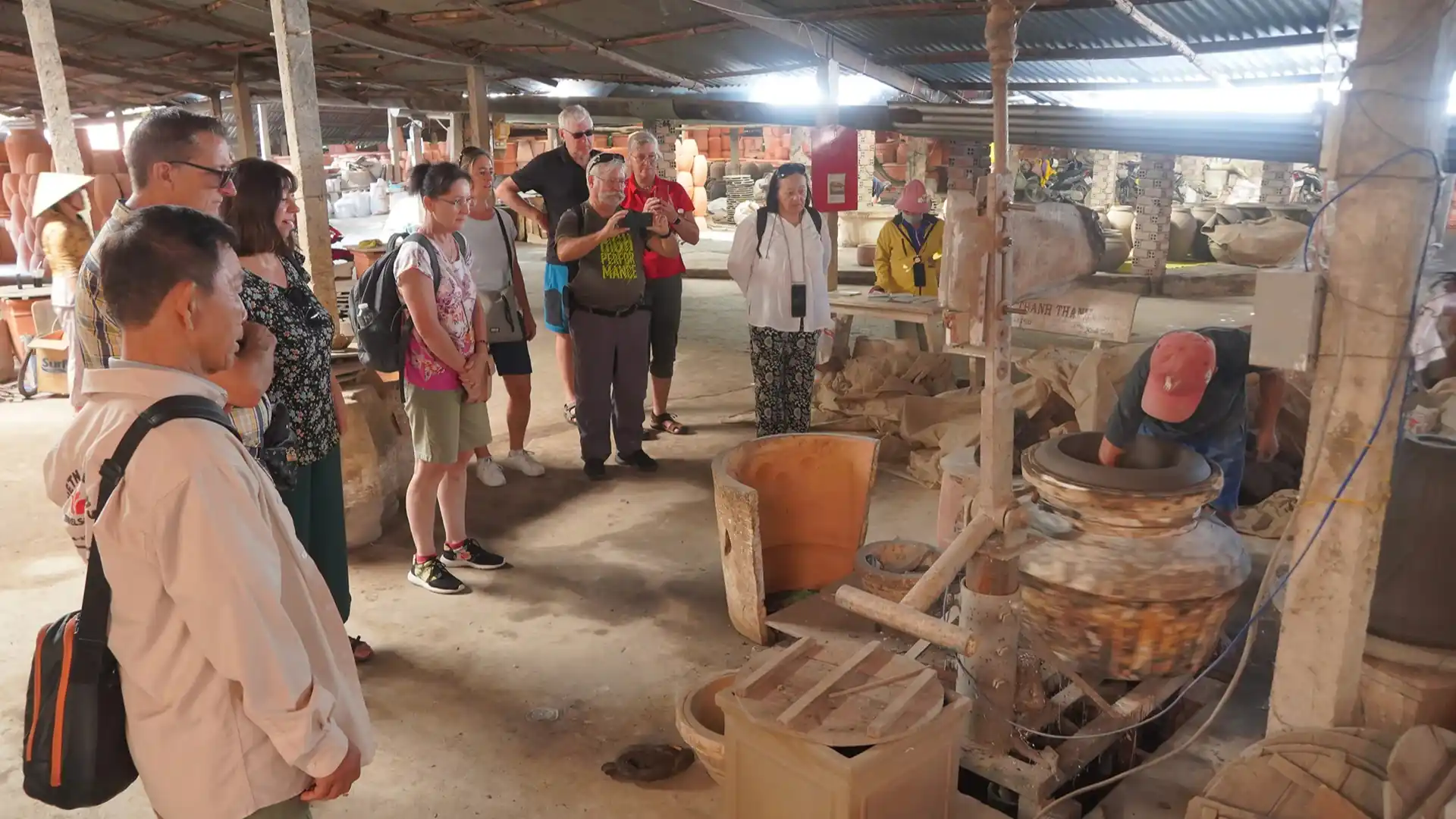
A workshop visit offers an opportunity to understand the skills behind brickmaking and pottery. Depending on the facility and production schedule, visitors may observe clay preparation, shaping, drying or other stages of the craft.
Some workshops continue production, while others have adapted their spaces for tourism. Not every kiln is operating, and not every workshop accepts visitors.
If you are particularly interested in seeing craftspeople at work, arrange access before travelling rather than relying on an unscheduled visit.
3. Discover decorative red pottery
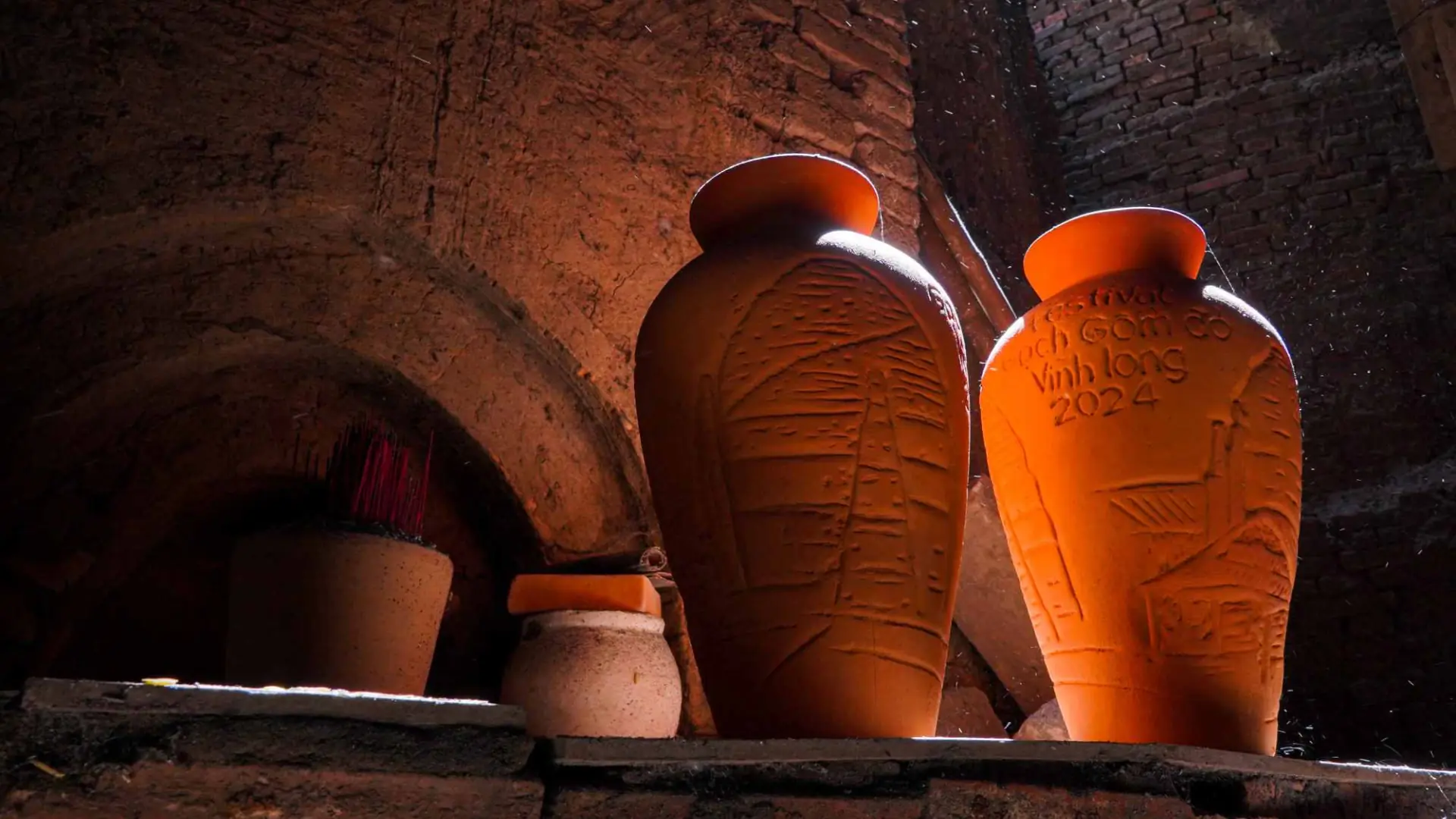
Traditional pottery workshops also produce objects for everyday use, gardens and decoration. Large clay jars and ornamental pieces show how local craftspeople have applied their skills beyond ordinary building bricks.
Visitors interested in hands-on pottery activities should confirm availability in advance. Such experiences are not offered at every historic kiln site.
One separate attraction is Làng gốm Tư Buôi in Thanh Duc Ward, Vinh Long. Associated with artisan Nguyễn Văn Buôi, it is known for red pottery and ceramic architecture. It should not be confused with the main Mang Thit kiln landscape along Thay Cai Canal.
4. Photograph the historic kiln landscape
The rounded kiln silhouettes, weathered brickwork and surrounding greenery make Mang Thit an interesting place for photography.
Early morning and late afternoon usually provide softer light and more comfortable conditions for walking outdoors.
However, many kilns and workshop yards are privately owned. Visitors should ask permission before entering or photographing workers at close range. Old kilns may also have unstable sections, so avoid climbing onto walls or entering damaged structures.
Why Mang Thit’s old kilns are being preserved
When traditional brick production declined, maintaining unused kilns became increasingly difficult for local owners. Some structures were dismantled, while others deteriorated after years without regular maintenance.
In December 2021, Vinh Long Province approved the Mang Thit Contemporary Heritage Project (Đề án Di sản đương đại Mang Thít), identifying a heritage landscape of approximately 3,060 hectares.
The project seeks to preserve the historic kilns, support local communities and develop cultural tourism. A later master plan established a longer-term development direction towards 2045.
Conservation and tourism development were still being implemented in 2026, with further work needed on planning and visitor infrastructure. Mang Thit is therefore an evolving heritage destination rather than a fully completed tourist complex. It is not currently a UNESCO World Heritage Site.
Protecting the kilns involves more than maintaining their brick walls. The practical knowledge of local craftspeople, the workshops, the drying yards and the connections to the waterways are also part of the area’s heritage.
How to visit Mang Thit pottery village
Getting there
From Vinh Long: Central Vinh Long is a practical starting point for visiting Mang Thit Pottery Village, particularly the traditional kiln clusters around Thay Cai Canal.
From Can Tho: Mang Thit can be included in a longer Vinh Long day trip. A private vehicle is generally a practical option, while an arranged boat excursion may provide an opportunity to see the kilns from the water.
Because the kiln clusters are spread across different properties, identify a specific meeting point or workshop before setting out.
How much time should you allow?
Allow approximately half a day to explore the principal kiln landscape and visit a workshop if access has been arranged.
A longer visit is useful if you plan to combine the kilns with a boat excursion or other attractions in Vinh Long.
Best time to visit
Morning and late afternoon are generally more comfortable for outdoor visits. The drier months make walking around workshop yards and village roads easier, while clay surfaces and old brickwork can become slippery after rain.
Working kilns follow production schedules, so visitors should not assume they will see active firing on any particular day.
Entrance fees and practical tips
There is no confirmed single entrance ticket for the entire Mang Thit heritage landscape. Individual workshops, guided visits and boat excursions may have separate charges.
- Arrange workshop visits and boat transport ahead of time.
- Wear closed-toe shoes suitable for dusty or uneven ground.
- Bring drinking water, sun protection and some cash.
- Ask permission before entering private workshops or kiln yards.
- Keep a safe distance from operating kilns, machinery and unstable brick structures.
Explore more of Vinh Long with Mekong Smile
Mang Thit reveals Vinh Long’s traditional brickmaking heritage, while nearby river islands, gardens and cultural sites offer other ways to experience the province.
For more places to explore, browse our Vinh Long destinations collection or read the Vinh Long travel guide.
Travellers interested in orchards and riverside communities can also discover An Binh Islet, located across the Co Chien River from central Vinh Long.
Related tours from Can Tho
An Binh Islet Tour: A full-day experience featuring a Co Chien River cruise, fruit gardens and traditional craft activities, including a pottery-village visit. The published itinerary does not specifically identify the Mang Thit kiln clusters, so confirm the exact stop before booking if Mang Thit is your priority.
Vinh Long Tour: A separate cultural journey through local waterways, a traditional tofu skin workshop and Khmer heritage at Phu Ly Pagoda. Mang Thit is not included in the standard published itinerary.
If the historic brick kilns are your main reason for travelling, contact Mekong Smile to discuss the route and available local arrangements before making a booking.
Contact Mekong Smile
Website: Mekong Smile
Hotline / WhatsApp: +84 774 839 165
Email: contact@mekongsmile.com
Office: 5 Tran Van Hoai Street, Can Tho City, Vietnam.
Planning Your Mekong Trip?
Get a free, personalized itinerary from our local experts in under 120 minutes.

Get a Free Consultation Leave your contact, we handle the rest.
Frequently asked questions about Mang Thit pottery village
Can visitors enter the traditional brick kilns?
Access depends on the owner and the condition of each kiln. Some are on private property, while damaged or abandoned structures may be unsafe to enter.
Can tourists make pottery at Mang Thit?
Hands-on experiences may be available at selected visitor-oriented workshops, but they are not guaranteed at every historic kiln site. Confirm the activity and location before visiting.
Are the traditional brick kilns still operating?
Some production activities continue in the wider craft area, but many old kilns have stopped regular firing. Arrange a workshop visit in advance if seeing the production process is important to you.

