
 Can Tho
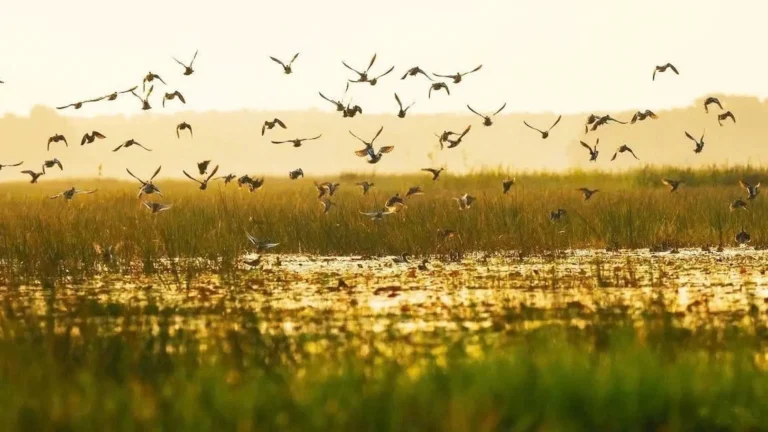

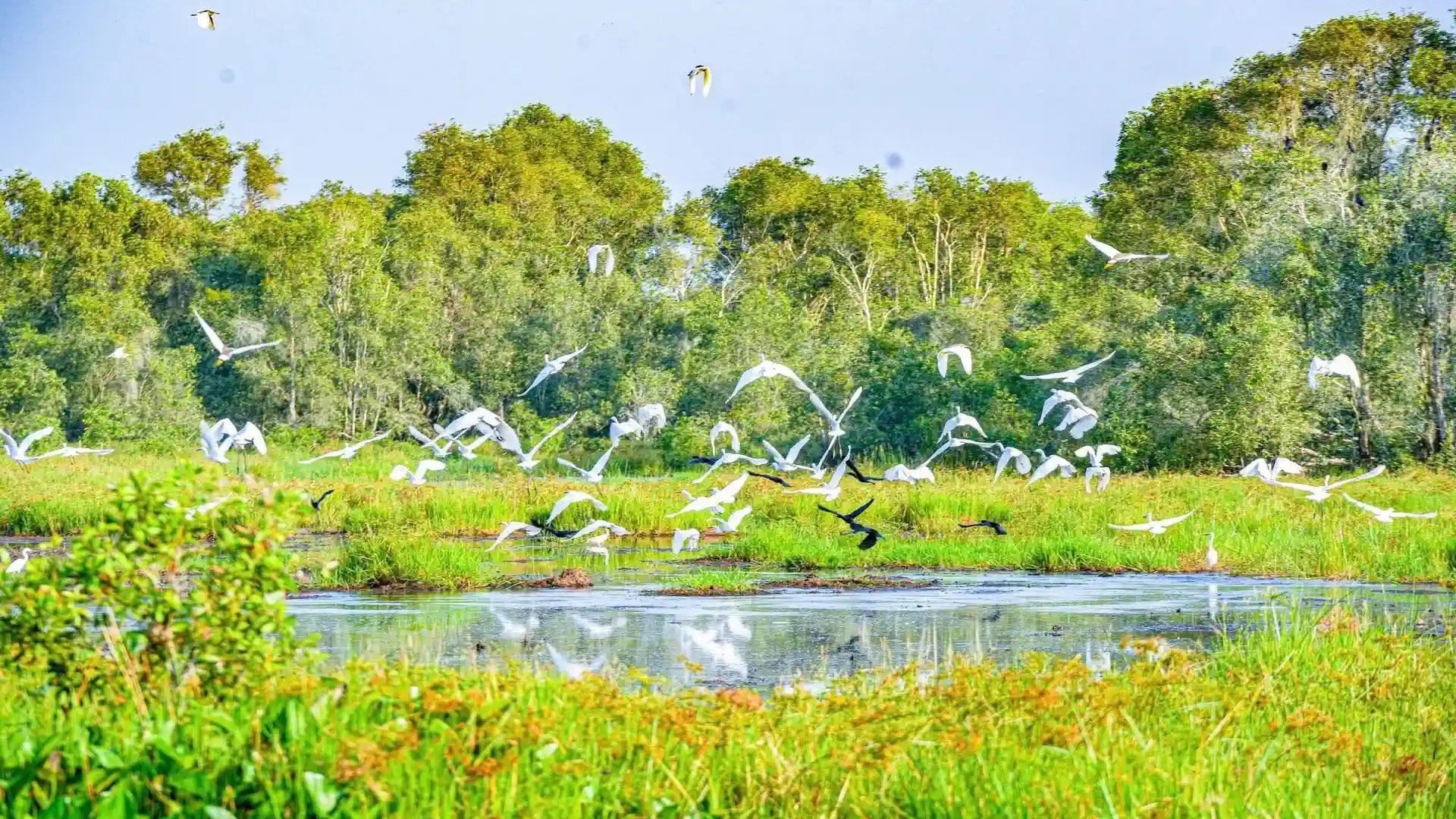
Tram Chim National Park is a protected wetland in Dong Thap Province, about 40 km north of Cao Lanh, in the low basin that Vietnamese call Dong Thap Muoi, the Plain of Reeds. It covers roughly 7,300 hectares of seasonally flooded grassland, cajuput forest and open marsh, and it is listed as a Ramsar wetland of international importance.
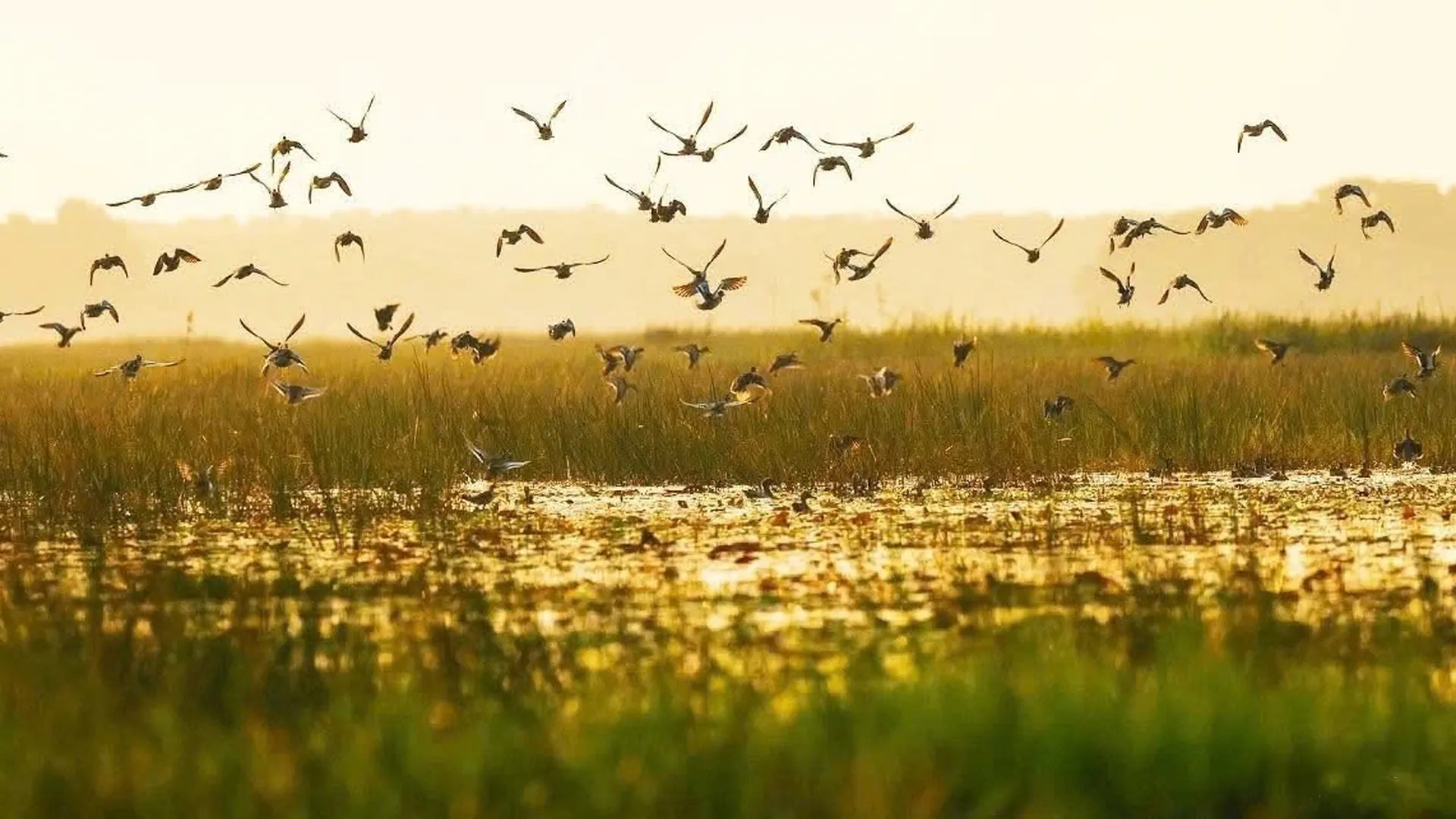
Most people come for the birds, and many arrive hoping to see sarus cranes. That part deserves a straight answer before you plan anything. Wild cranes now visit only rarely, and the cranes living at the park are young birds brought in from Thailand for a breeding program. What you can count on is the wetland itself: long boat rides through the canals, wide views over the grass, and plenty of storks, egrets and cormorants.
Tram Chim National Park at a glance
| Detail | Information |
|---|---|
| Vietnamese name | Vườn quốc gia Tràm Chim |
| Address | Hamlet 4, Tram Chim Commune, Dong Thap Province (formerly Tam Nong District) |
| Tourism area phone | +84 277 3827 436 |
| Size | About 7,300 hectares |
| Protected status | National park since 1998, Ramsar site since 2012 |
| Landscape | Seasonally flooded grassland, cajuput forest, lotus and water lily marsh, canals |
| Main reasons to go | Waterbirds, wetland scenery, boat trips, lotus in the wetter months |
| Distance | About 40 km from Cao Lanh, around 3 hours by car from Can Tho, 3 to 4 hours from Ho Chi Minh City |
| Time needed | Half a day at the park |
| Hours | Daytime visits, roughly 7 AM to 5 PM, with the last boats in the mid afternoon |
| Reference prices | Entry about $1.50 per adult, children under 16 free, boats from about $35 per boat |
Details checked on November 18, 2026. Call the tourism area before you go to confirm hours and boat availability.
What kind of place is Tram Chim?
The Plain of Reeds once stretched across a large part of the northern Mekong Delta. In the dry months it was grass and sedge with stands of cajuput (melaleuca) trees. When the Mekong rose, it turned into a shallow inland sea for several months of the year. Tram Chim is one of the last pieces of that landscape that is still managed as wetland rather than rice land.
It has not always looked this way. During the war the area was drained and burned, and the soils turned acidic. Work to restore the flooding began in 1985, sarus cranes were recorded there in 1986, and the site became a provincial reserve in 1991 to protect them. It was raised to a national park in 1998, and in 2012 it became Vietnam’s fourth Ramsar site.
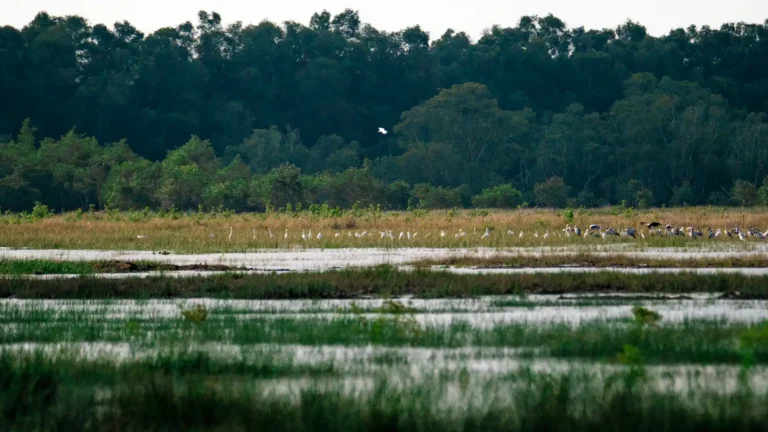
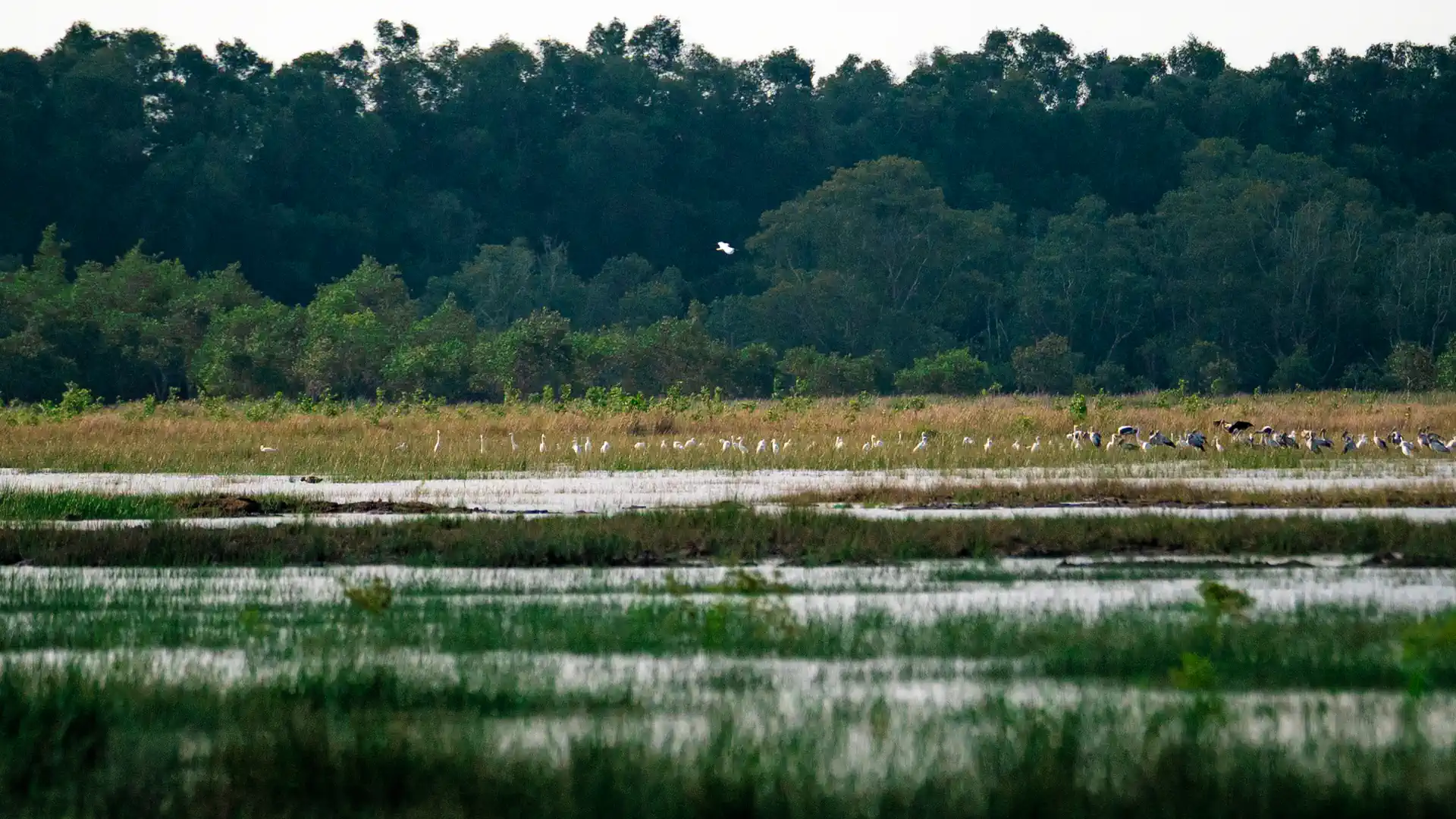
The park’s water is managed through dikes and canals. Since late 2023 the park has lowered water levels to bring back the old cycle of flooding and drying, so the landscape changes a great deal through the year. In the high-water months you look out over sheets of water, lotus and floating plants. In the dry season the same ground becomes open grassland with pools where the birds gather. If you have seen Tra Su Forest near Chau Doc, Tram Chim feels much bigger and more open, with more sky and fewer trees.
Will you see sarus cranes at Tram Chim?
Probably not. Wild sarus cranes now visit only rarely and briefly, and the cranes living at the park are young birds from Thailand, kept in enclosures for a breeding program. None had been released by October 2026.
What happened to the wild cranes
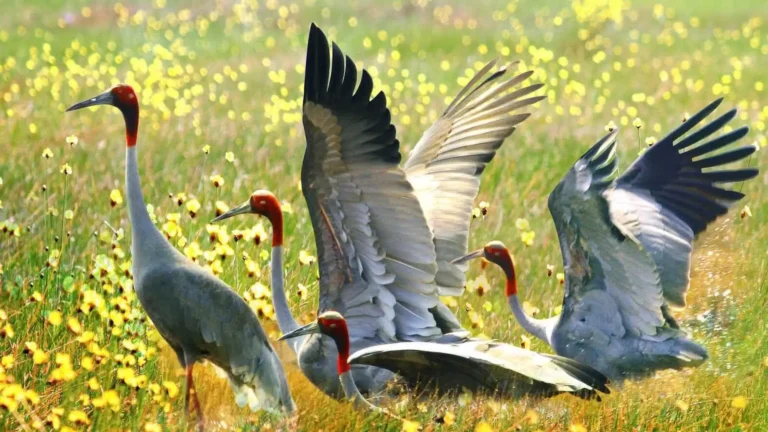
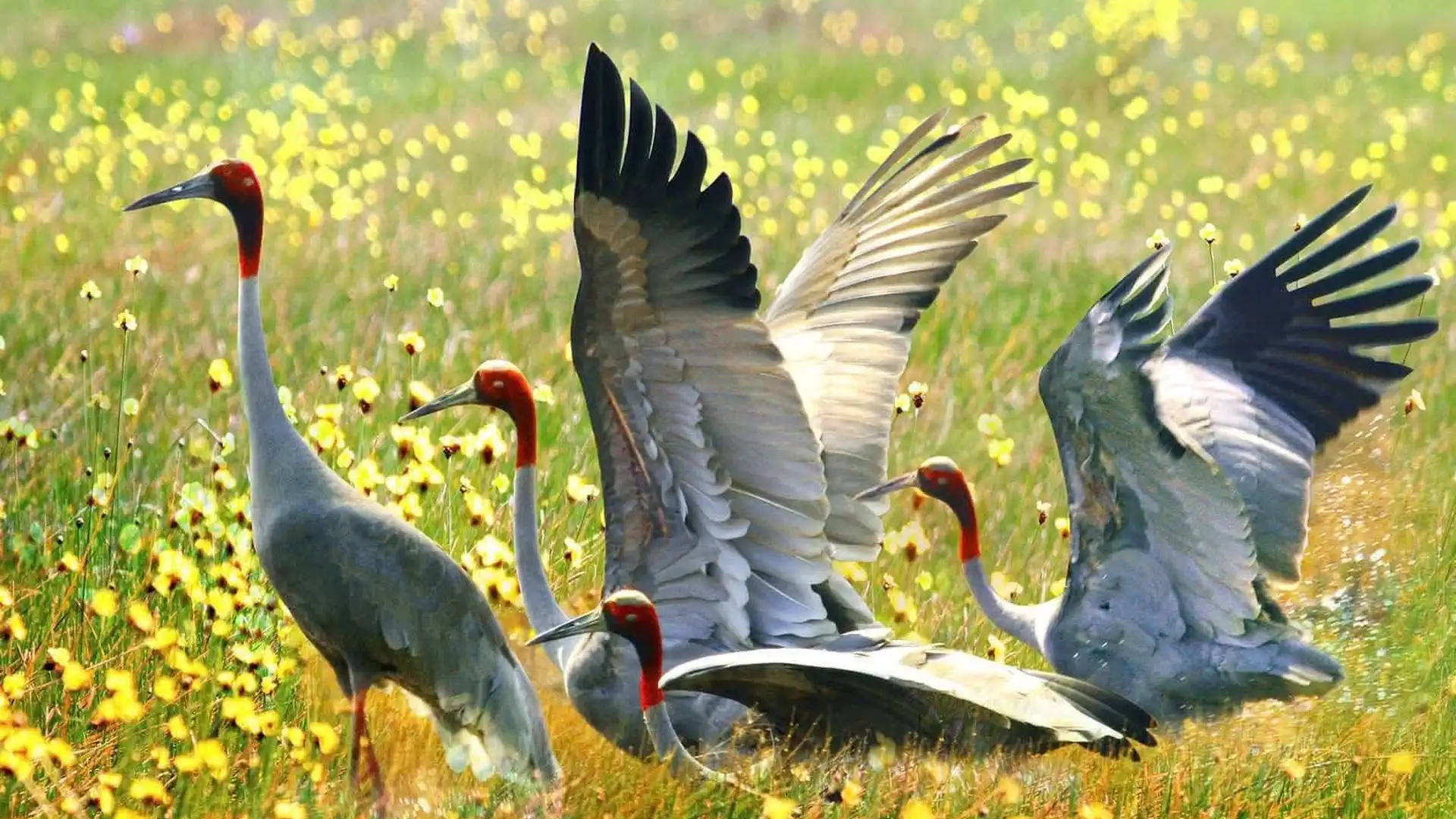
The sarus crane, a tall gray crane with a bare red head, is the bird Tram Chim was protected for. The cranes that came here belong to a population shared with Cambodia. They breed in northern Cambodia in the rainy season and fly down to the Delta in the dry season.
Nearly 30 years ago, more than 1,000 sarus cranes came to Tram Chim. The flock then shrank year after year, and in some years no cranes came at all. Recent sightings have been small: three cranes in 2021, and four that stopped on a feeding ground for about half an hour in March 2024.
Bringing the cranes back
Under a provincial project running from 2022 to 2032, Dong Thap plans to raise and release 100 sarus cranes at Tram Chim, with at least 50 of them surviving. Young cranes bred in Thailand arrived in two groups of six, in April 2025 and in June 2026, as reported by Vietnam’s Government News. One bird from the first group died in July 2025. The others have adapted well, and some have begun to pair. A third group of 12 cranes from Thailand was due in late September 2026, and the park plans to trial-release one pair in 2027.
For a visitor, the crane story is a conservation effort in progress, not a sighting to plan around. If the cranes matter to you, ask at the visitor area what can be seen.
Sarus crane or red-crowned crane?
In Vietnamese the bird is called sếu đầu đỏ, which means “red-headed crane.” It is sometimes translated as “red-crowned crane,” but that is a different species from northeast Asia. The crane of Tram Chim is the sarus crane.
Is Tram Chim National Park worth visiting?
Tram Chim is a good fit if you:
- Enjoy wetlands and big open landscapes more than busy sights
- Want to watch storks, egrets, cormorants and other waterbirds
- Like photography and do not mind early starts and long lenses
- Are traveling slowly through Dong Thap, An Giang or Chau Doc and want a nature stop
You may want to skip it if you:
- Are going mainly to see wild sarus cranes
- Have only one or two days in the Delta, where a stay around Can Tho is easier to arrange
- Expect lots of facilities, shade and short walks
If the drive to Dong Thap is hard to fit in, our Southern Forest Tour is a five-hour wetland trip from Can Tho, with long-tail boat and sampan rides and stork colonies along the way.
Best time to visit Tram Chim
There is no single best month. The park changes with the water, and each season offers something different.
High-water season (roughly September to November)
Water spreads across the grassland and the canals run deep, so boats can go further into the park. Lotus and water lilies are often in bloom around this time, and the scenery is at its greenest. Expect more mosquitoes and the occasional heavy shower.
Dry season (roughly December to May)
As the water drops, the grassland opens up and birds concentrate around the remaining pools, which can make them easier to spot. This is also the period when wild cranes used to arrive. Roads are easier, but March and April can be very hot by midday.
Time of day
Early morning is the best time for birds and for soft light. The last boats leave well before the park closes, so do not plan to arrive at 4 PM.
| Season | Landscape | Birds | Boat trips |
|---|---|---|---|
| High water (about Sep to Nov) | Flooded grassland, lotus, water lilies | Spread out over a wider area | Longer routes, deeper water |
| Dry season (about Dec to May) | Open grassland and pools | Gather around remaining water | Routes depend on water levels |
Water levels vary from year to year, so treat these months as a rough guide rather than a promise.
What you do at Tram Chim
Take a boat through the canals
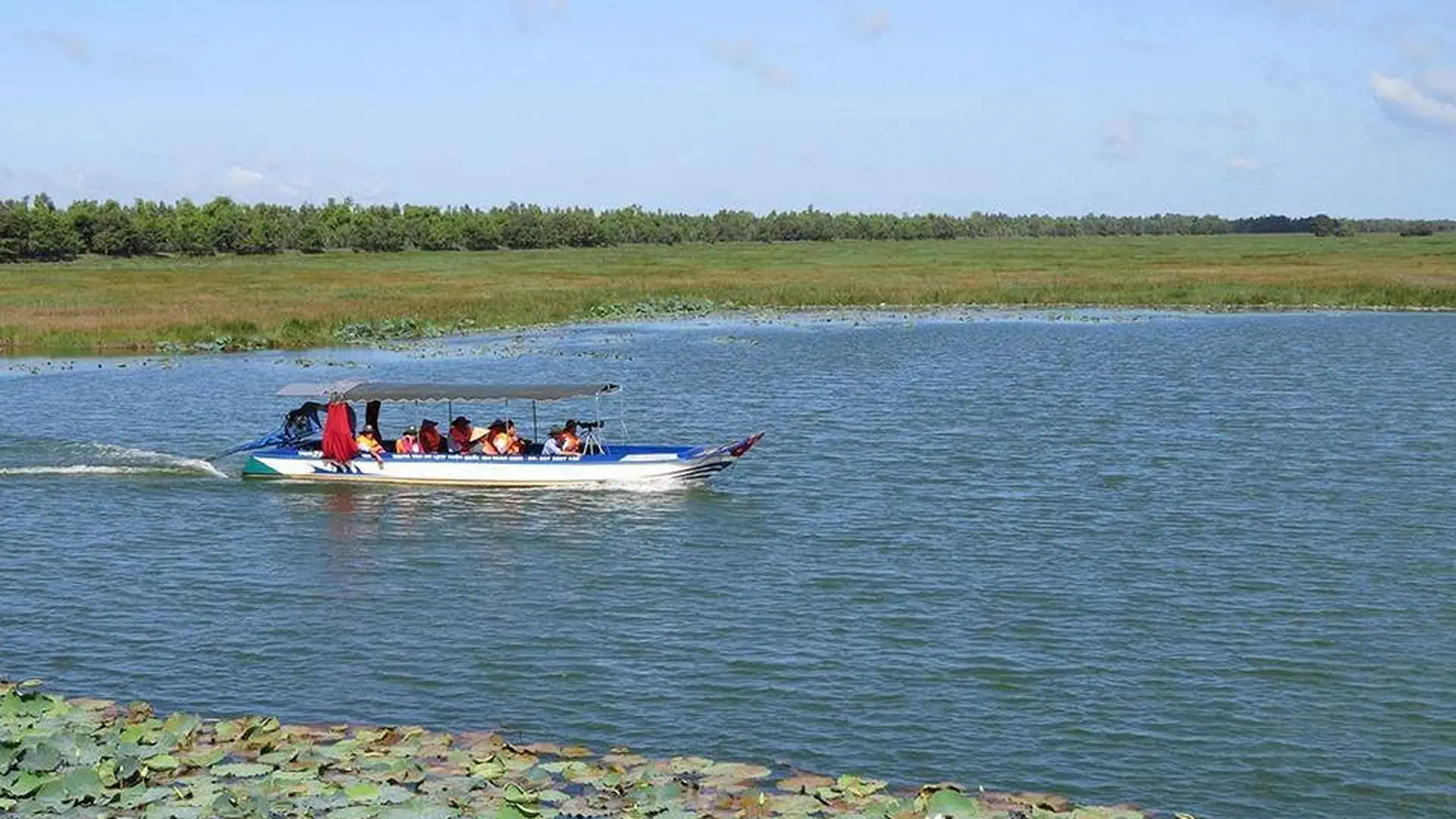
Almost every visit centers on a boat ride through the park’s canals. The tourism area runs two routes for its covered boats:
- Nang Ong route: about 12 km round trip, usually 1 to 1.5 hours
- Ca Na route: about 21 km round trip, usually 2 to 3 hours
Boats are priced per boat and take up to 10 people, so a small group can share the cost. The longer route goes deeper into the wetland and gives you more time with the birds. The shorter one works if you are on a day trip from Can Tho or Ho Chi Minh City and need to save time for the drive back. A third route to the flower fields has been suspended since May 2026.
The boats are set up for eating on board, so you can bring your own food or buy a meal from the restaurants by the dock and have lunch on the water.
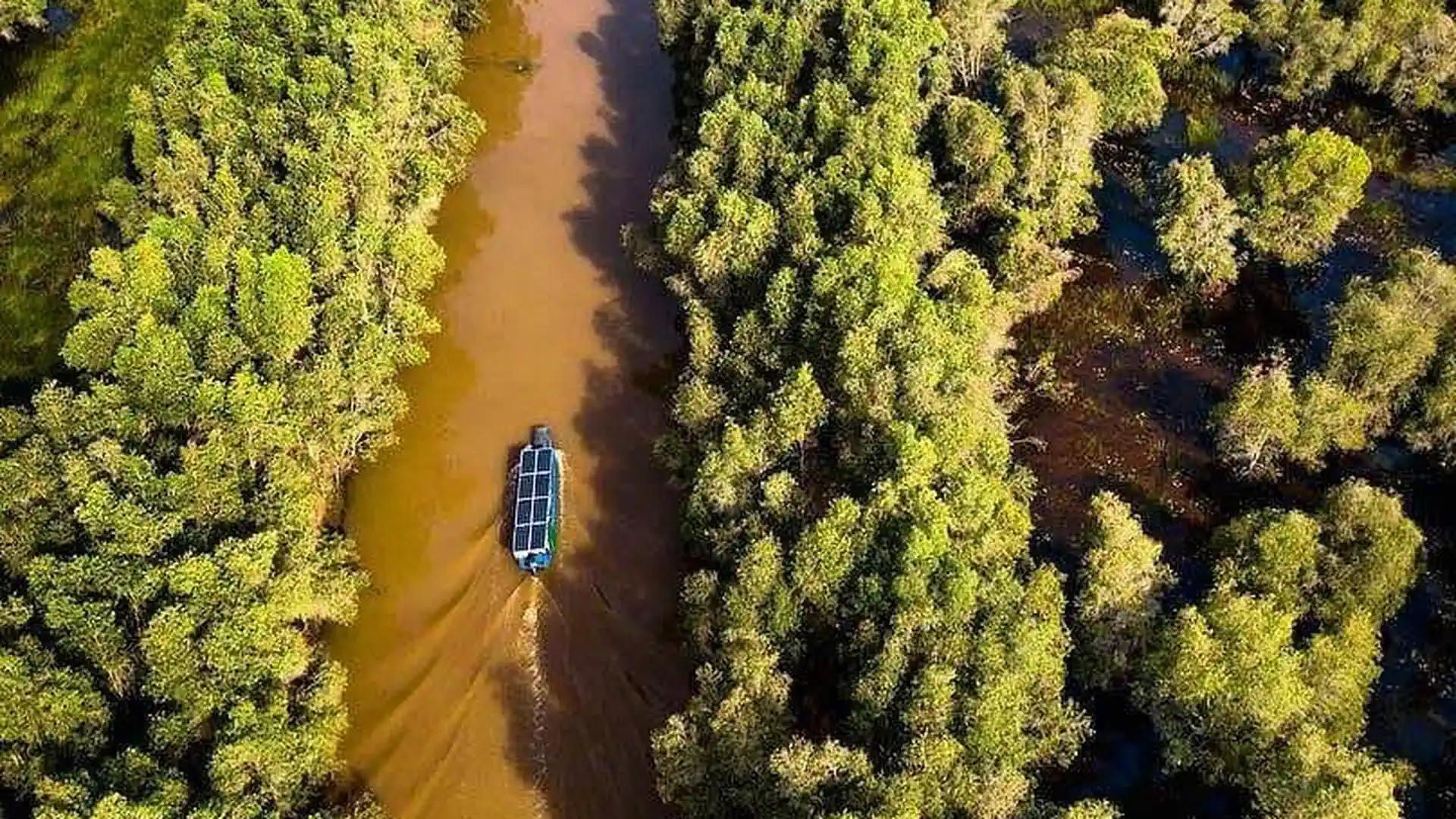
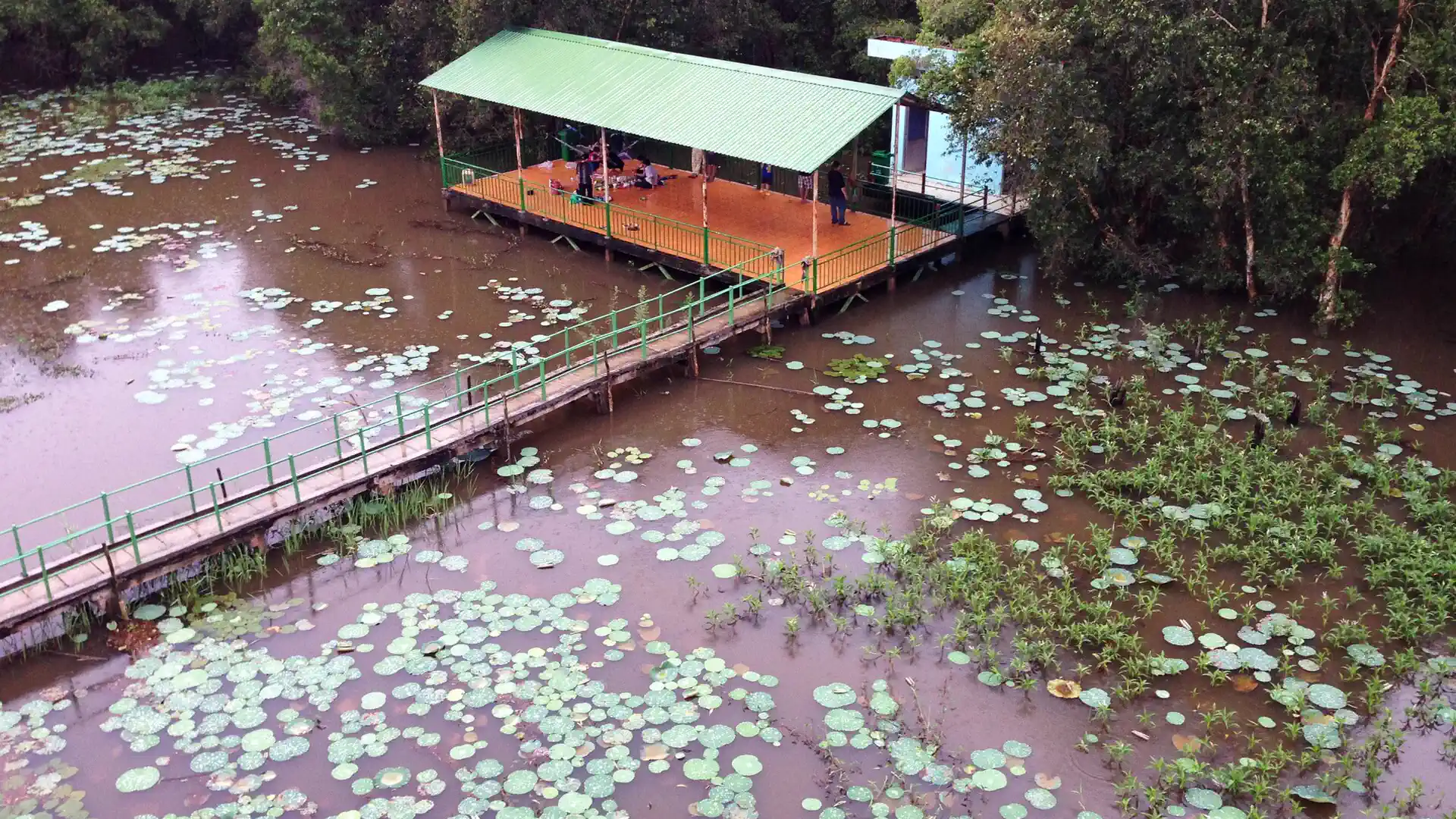
Some stretches run between walls of cajuput trees, where the water turns brown and the canal feels much narrower than the open marsh.
Watch for waterbirds
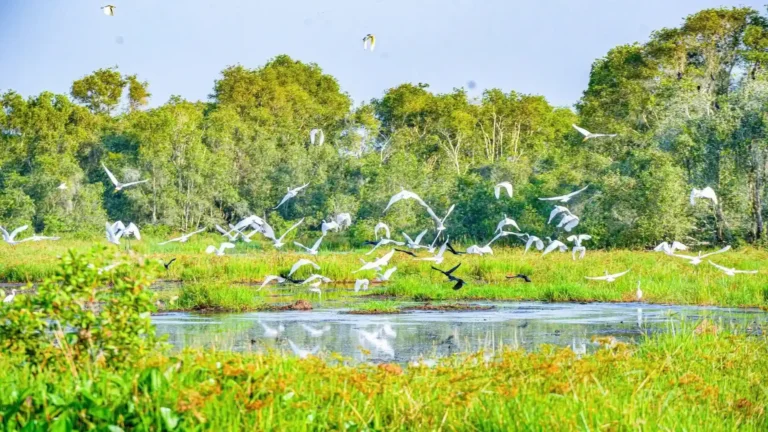
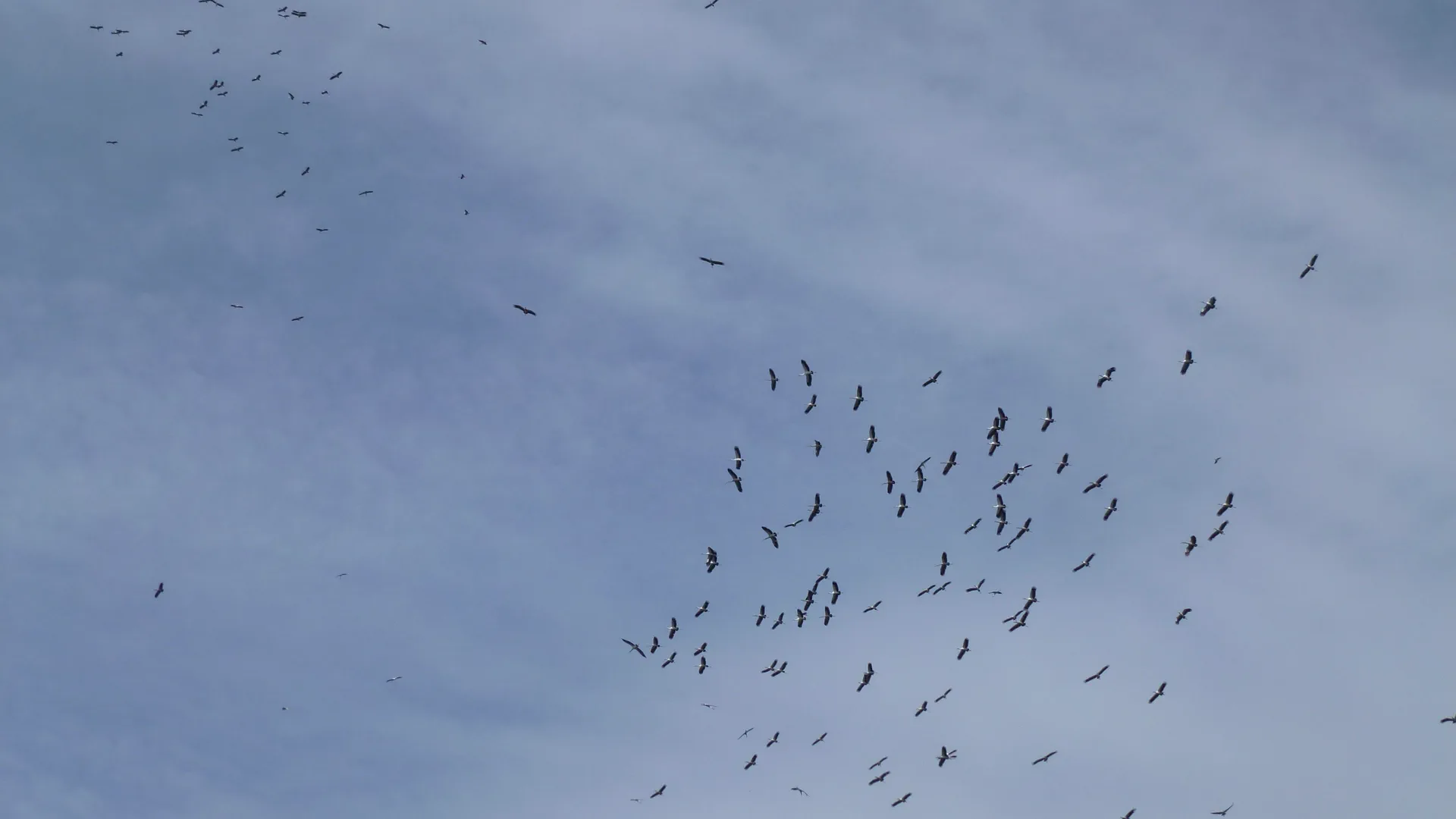
More than 200 bird species have been recorded at Tram Chim. On a single visit you are more likely to see the common waterbirds: Asian openbill storks, several kinds of egrets and herons, and cormorants perched on dead branches above the water. Rarer visitors do turn up. In April 2026, six spot-billed pelicans were seen in the park’s strictly protected zone, the first record in about six years.
Birds here keep their distance, so binoculars make a real difference. A local guide at the boat dock can point out birds you would likely miss on your own.
See the lotus fields
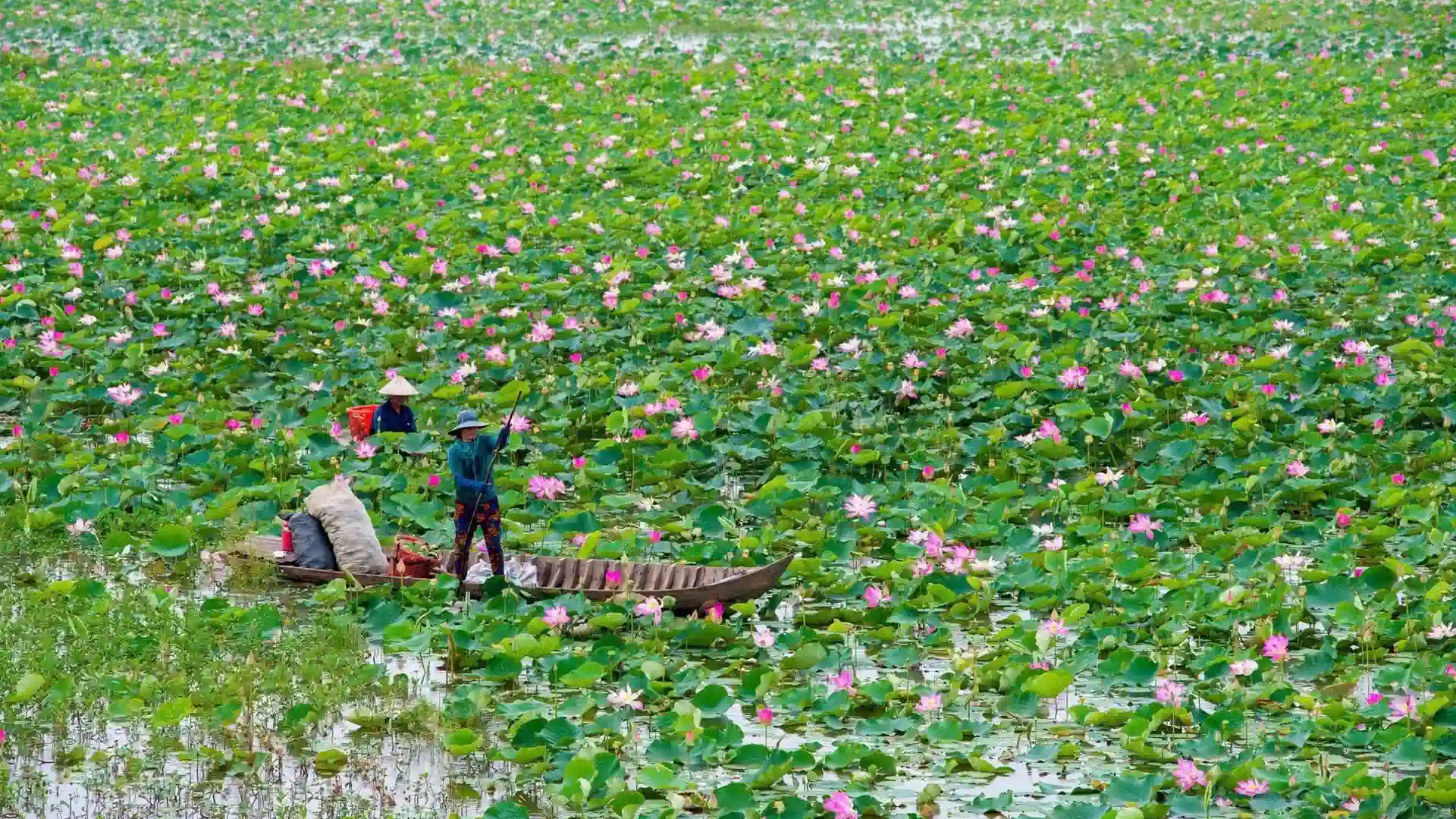
Lotus is part of the identity of Dong Thap, and in the wetter months you will see it in bloom around Tram Chim and across the surrounding countryside. Pink and white flowers rise above wide fields of leaves, and local farmers still pole small wooden boats through the fields to harvest the flowers, seed pods and stems for market.
The best chance to see lotus in flower is from around mid-year into the high-water season. Blooms depend on the water and the field, so ask your guide or the boat crew where the lotus is flowering when you visit.
Look over the wetland from above
The park has had a watchtower near the main visitor area, and the view from the top shows how flat and wide the Plain of Reeds really is. Check on arrival whether it is open.
Notice the life around the park
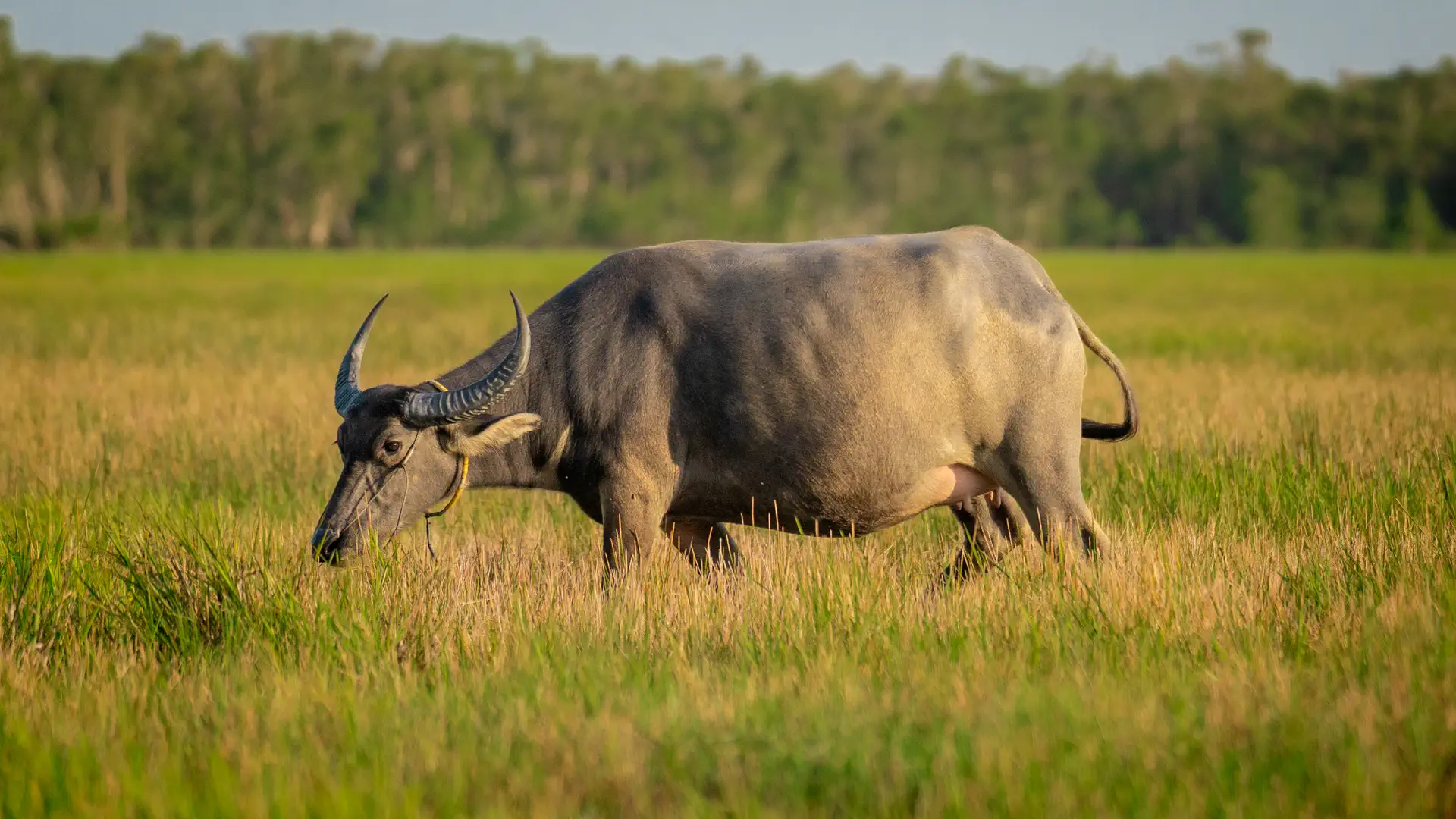
Tram Chim is not wilderness in the strict sense. Farmland surrounds it, and you may see water buffalo grazing on the grass at the edge of the wetland. In the wetter months, patches of lotus and water lilies spread across the marsh.
A half-day at Tram Chim: sample plan
A morning visit of three to four hours covers the essentials and gets you on the water while the birds are most active.
- 7:00 AM: Arrive at the boat dock and buy entry tickets.
- 7:30 AM: Set off on the Nang Ong route (about 1 to 1.5 hours) or the Ca Na route (about 2 to 3 hours).
- Late morning: Climb the watchtower if it is open, and walk the area around the dock.
- Lunch: Eat on the boat or at the restaurants near the dock.
- Early afternoon: Head back to Cao Lanh or Can Tho, or continue toward Chau Doc.
If you are coming from Can Tho or Ho Chi Minh City on the same day, you will arrive later than 7 AM. In that case, take the shorter route and keep lunch simple, so you are not driving back in the dark.
Tram Chim ticket prices and opening hours
These are reference prices, based on the rates published by the Tram Chim tourism area in 2026. The entry fee was raised from 20,000 to 40,000 VND on August 1, 2026.
| Item | Reference price | Published rate |
|---|---|---|
| Entry, adult | About $1.50 per person | 40,000 VND |
| Entry, children under 16 | Free | Free |
| Nang Ong boat route (about 12 km) | About $35 per boat | 900,000 VND |
| Ca Na boat route (about 21 km) | About $46 per boat | 1,200,000 VND |
These are reference prices. Check at the ticket office before you pay. USD amounts are rounded, at about 26,000 VND to the dollar.
What a visit costs for your group
Because the boat is priced per trip, the cost per person drops quickly as your group grows.
| Group | Route | Total | Per person |
|---|---|---|---|
| 2 adults | Nang Ong | About $38 (980,000 VND) | About $19 |
| 2 adults | Ca Na | About $49 (1,280,000 VND) | About $25 |
| 4 adults | Nang Ong | About $41 (1,060,000 VND) | About $10 |
| 4 adults | Ca Na | About $52 (1,360,000 VND) | About $13 |
These examples cover entry and the boat only, for adults. Transport and food are not included.
Opening hours: Tram Chim is a daytime visit, roughly 7 AM to 5 PM, and the last boats leave in the mid afternoon. Hours can change around Tet, so call the tourism area on +84 277 3827 436 to confirm.
Bring cash in small notes. We would not count on card payment at the ticket office.
How to get to Tram Chim National Park
Tram Chim sits well away from the main tourist routes, and most visitors come by private car. On older maps you will still see the address as Tam Nong District. Since the 2025 administrative changes, the park is in Tram Chim Commune, Dong Thap Province.
From Can Tho
Allow around three hours each way by car. A day trip is possible if you leave early, but it makes for a long day with roughly six hours on the road. Staying a night in Cao Lanh makes the trip more relaxed. If you are based in Can Tho, our Can Tho travel guide covers the city itself.
From Ho Chi Minh City
The park is about 160 km from Ho Chi Minh City, or 3 to 4 hours by car. Buses run to Cao Lanh, and from there you need a taxi or private car for the last 40 km or so. By bus, a same-day return is hard to manage.
From Cao Lanh
Cao Lanh is the nearest city, about 40 km away. Plan on roughly an hour by car or taxi.
Combining Tram Chim with other Mekong Delta wetlands
Tram Chim fits best into a longer trip through the western Delta. A few ideas:
- Tram Chim and Tra Su. Tra Su Cajuput Forest near Chau Doc is a flooded cajuput forest that you explore by motorboat and rowing boat. It is smaller and more sheltered than Tram Chim, and the two make a good contrast. Expect around two hours by road between them.
- Tram Chim and Chau Doc. Chau Doc adds floating villages, Sam Mountain and the Cham community, so a loop through Dong Thap and An Giang covers both nature and culture.
- A wetland closer to Can Tho. If three hours each way is too much, Lung Ngoc Hoang Nature Reserve is about 40 km from central Can Tho and offers a smaller taste of the same kind of landscape.
- More of Dong Thap. Gao Giong is another wetland area in the province, and Sa Dec is known for its flower villages.
For help deciding how these places fit together, see our Mekong Delta travel guide.
Wetland tours with Mekong Smile
We do not run a scheduled Tram Chim tour. If you want to see the Mekong Delta’s wetlands with a guide, these are the trips we run now:
- Southern Forest Tour: a five-hour trip from Can Tho by long-tail boat and sampan through flooded forest, with stork colonies, rice fields and a local meal. The easiest wetland trip if you are staying in Can Tho.
- Tra Su Forest Tour from Can Tho: a full day to Tra Su Cajuput Forest by motorboat and rowing boat, with a bird-watching tower, plus Chau Doc and Sam Mountain.
- Water Lily Harvesting Tour in Chau Doc: a seasonal two-day trip during the floating season, with an early-morning water lily harvest, sampan rides and a visit to a Cham weaving community.
Need help planning a private trip?
If Tram Chim is the place you want to see, or you would like a private itinerary that combines it with Can Tho, Chau Doc or Tra Su, send us your dates and group size. Our team will help you work out a realistic route.
Planning Your Mekong Trip?
Get a free, personalized itinerary from our local experts in under 120 minutes.

Get a Free Consultation Leave your contact, we handle the rest.
What to bring
- Binoculars, and a long lens if you take photos
- Insect repellent, especially in the high-water months
- A hat, sunscreen and light long sleeves
- Plenty of drinking water and some snacks
- Cash in small notes for tickets and the boat
- A dry bag or zip bag for your phone on the boat
Frequently asked questions about Tram Chim
How long do you need at Tram Chim?
Half a day is enough for a boat trip and a look around. If you come from Can Tho or Ho Chi Minh City, the travel time turns it into a full day.
How much does a boat trip at Tram Chim cost?
Boats are priced per trip: about $35 (900,000 VND) for the 12 km Nang Ong route and about $46 (1,200,000 VND) for the 21 km Ca Na route, for up to 10 people. Entry is about $1.50 (40,000 VND) per adult, and children under 16 enter free.
Can you visit Tram Chim as a day trip from Can Tho?
Yes, but it is a long day, with about three hours of driving each way. An overnight stay in Cao Lanh gives you an easier pace and an early start for the birds.
Can you still see wild sarus cranes at Tram Chim?
Not reliably. Wild cranes now visit only rarely, for example four birds for about half an hour in March 2024. The cranes living at the park are part of a reintroduction program and had not been released as of October 2026.
Which boat route should you choose?
The Ca Na route is longer and goes deeper into the wetland, so it suits birders and photographers. The Nang Ong route is shorter and a better fit for a day trip when you need to save time for the drive.
Is Tram Chim suitable for children?
Children who are happy sitting in a boat for an hour or two usually enjoy it, and children under 16 enter free. There is little shade on the water, so bring hats and water, and ask about life jackets before you board.
Can Mekong Smile arrange a private trip to Tram Chim?
Tell us your dates and group size through the contact form above, and our team will help you plan a route that fits. Our scheduled wetland trips go to Tra Su and to the forests near Can Tho.
Is Tram Chim the same as Tra Su?
No. Tram Chim is a national park in Dong Thap with large open grasslands. Tra Su is a cajuput forest in An Giang, near Chau Doc. Both are wetlands, but they look and feel quite different.
