
 Can Tho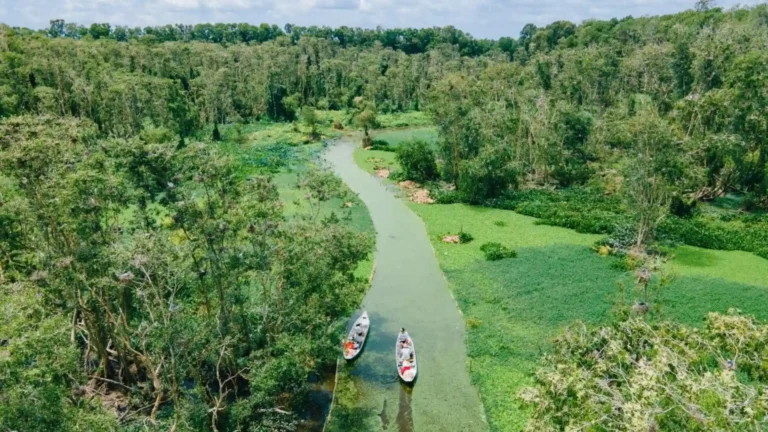
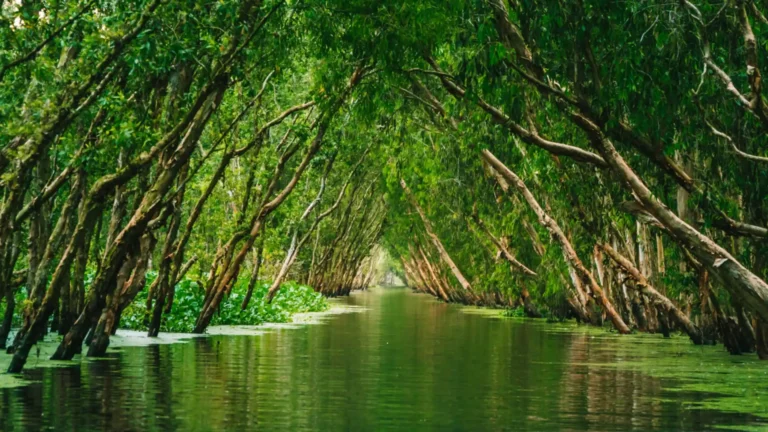

Tra Su Cajuput Forest is a seasonally flooded cajuput wetland in An Giang, around 20-30 km from central Chau Doc. Covering roughly 845-850 hectares, the area is made up of cajuput forest, narrow waterways, floating plants and wetland habitats that support around 140 plant species and more than 70 bird species.
But Tra Su is easier to understand once you are on the water.
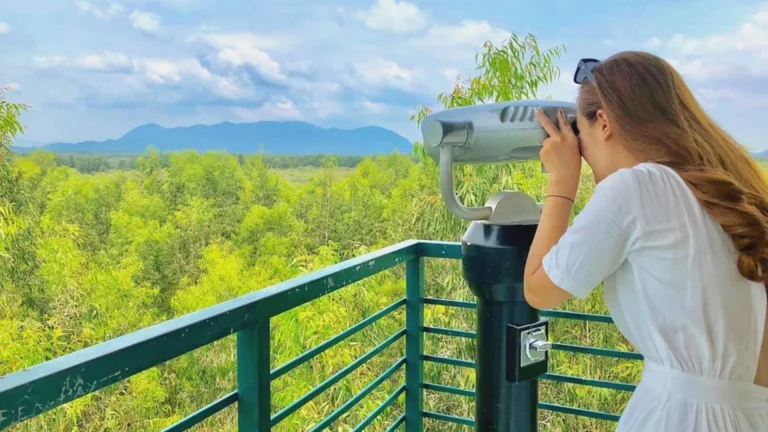
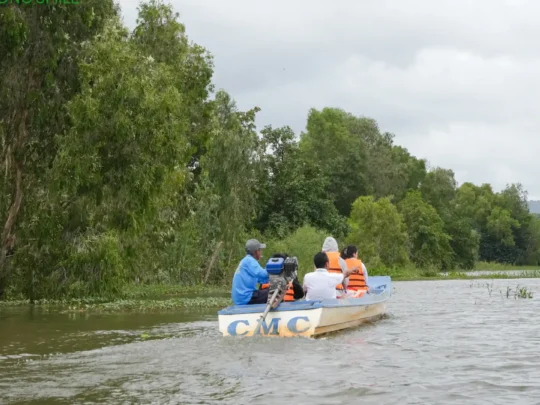
A typical visit starts on the wider channels by motorboat before slowing down on a small rowing sampan that moves between the trees. You can then explore parts of the forest on foot and see the wetland from observation areas above the canopy.
The scenery changes with the season. During the high-water period, sections of the waterways may be covered in green aquatic vegetation. At other times, the water and forest can look quite different.
If you are wondering whether Tra Su fits your trip, this guide covers what the forest is actually like, what you can see and do, when to visit, current ticket prices and how much time you should allow.
Tra Su Cajuput Forest at a Glance
| Practical information | Details |
| Location | Rừng tràm Trà Sư, ấp Văn Trà, xã An Cư, tỉnh An Giang, Việt Nam |
| Approximate area | About 845–850 hectares |
| From central Chau Doc | About 20–30 km / around 30–40 minutes |
| From Ninh Kieu Wharf, Can Tho | About 110–120 km / around 2.5–3 hours |
| From Ben Thanh Market, HCMC | Around 250 km / roughly 5–6 hours |
| High-water period | September–November |
| Green floating vegetation | October–November is worth considering |
| Useful time to visit | Around 7:00–9:00 AM or 3:00–5:00 PM |
| Time at Tra Su | Allow around 2–3 hours |
| Main experiences | Motorboat, rowing sampan, walking and observation areas |
| Entrance ticket | 120,000 VND |
| Motorboat | 80,000 VND/person |
| Rowing sampan | 60,000 VND/person |
Distances and driving times are approximate and can change with traffic, road conditions and your exact starting point.
What Kind of Place Is Tra Su?
Tra Su is a cajuput wetland forest, not a mangrove forest.
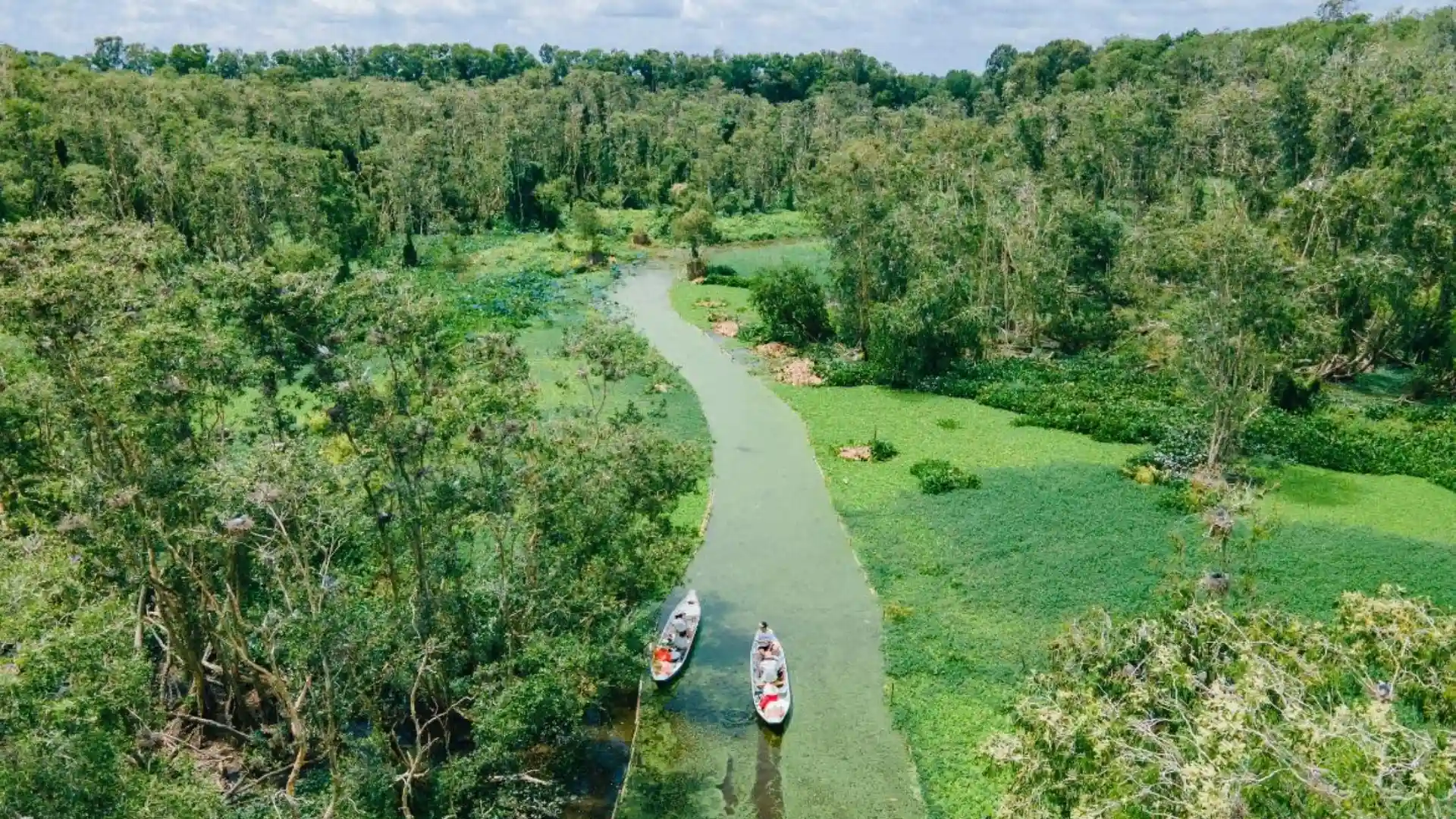
The landscape is shaped by seasonal flooding. Cajuput trees grow alongside shallow waterways, grasses, floating plants and other wetland vegetation. As the water level changes through the year, the appearance of the forest changes with it.
The cajuput trees are the most obvious feature, but they are only one part of the ecosystem. Around 140 plant species have been recorded here, including aquatic plants, grasses, shrubs and other vegetation adapted to wet conditions.
The forest also supports a wide range of wildlife. Records for the area include more than 70 bird species, along with fish, reptiles, amphibians and small mammals.
That does not mean you will see all of them during one visit.
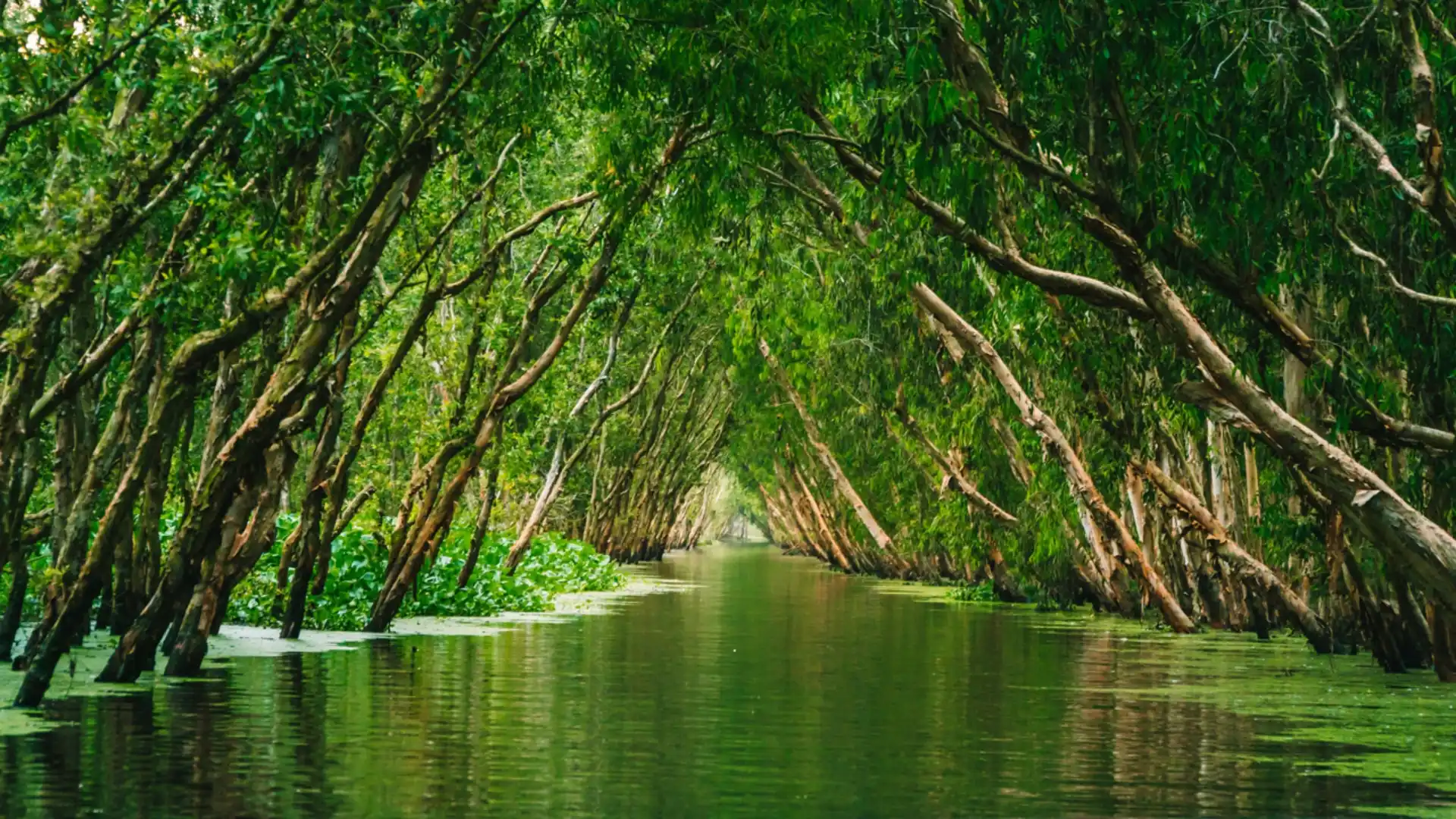
For most travelers, the things that stand out are much simpler: cajuput trees lining the channels, patches of floating green vegetation, birds moving above the wetland and the gradual change from wider waterways to quieter sections of forest.
Is Tra Su Cajuput Forest Worth Visiting?
Tra Su works particularly well for travelers who want a few hours focused on nature rather than another city attraction.
It is easy to add if you are already staying in Chau Doc, where the forest is close enough for a half-day visit.
From Can Tho, it requires more time but offers a very different experience from the waterways around the city. Cai Rang Floating Market is mainly about river trade and daily life. Tra Su is about wetlands, boats, vegetation and birdlife.
The main drawback is distance.
If you are staying in Ho Chi Minh City and only want to see Tra Su before returning the same day, much of your time would be spent on the road.
Tra Su is also not the place to visit solely because you want to reproduce one particular photo of completely green water. Water levels and floating vegetation change naturally throughout the year.
Come for the forest as a whole rather than one exact view.
When Is the Best Time to Visit Tra Su Cajuput Forest?
September to November: the high-water period
September-November is the main high-water period associated with Tra Su.
During these months, higher water levels can make the channels feel fuller and increase the amount of aquatic vegetation across parts of the wetland.
If the green floating vegetation seen in many Tra Su photographs is particularly important to you, October and November are worth considering.
| Period | What to expect |
| September–November | High-water period with fuller waterways |
| October–November | A useful period to consider for green floating vegetation |
| Other months | The forest remains visitable, but water levels and scenery vary |
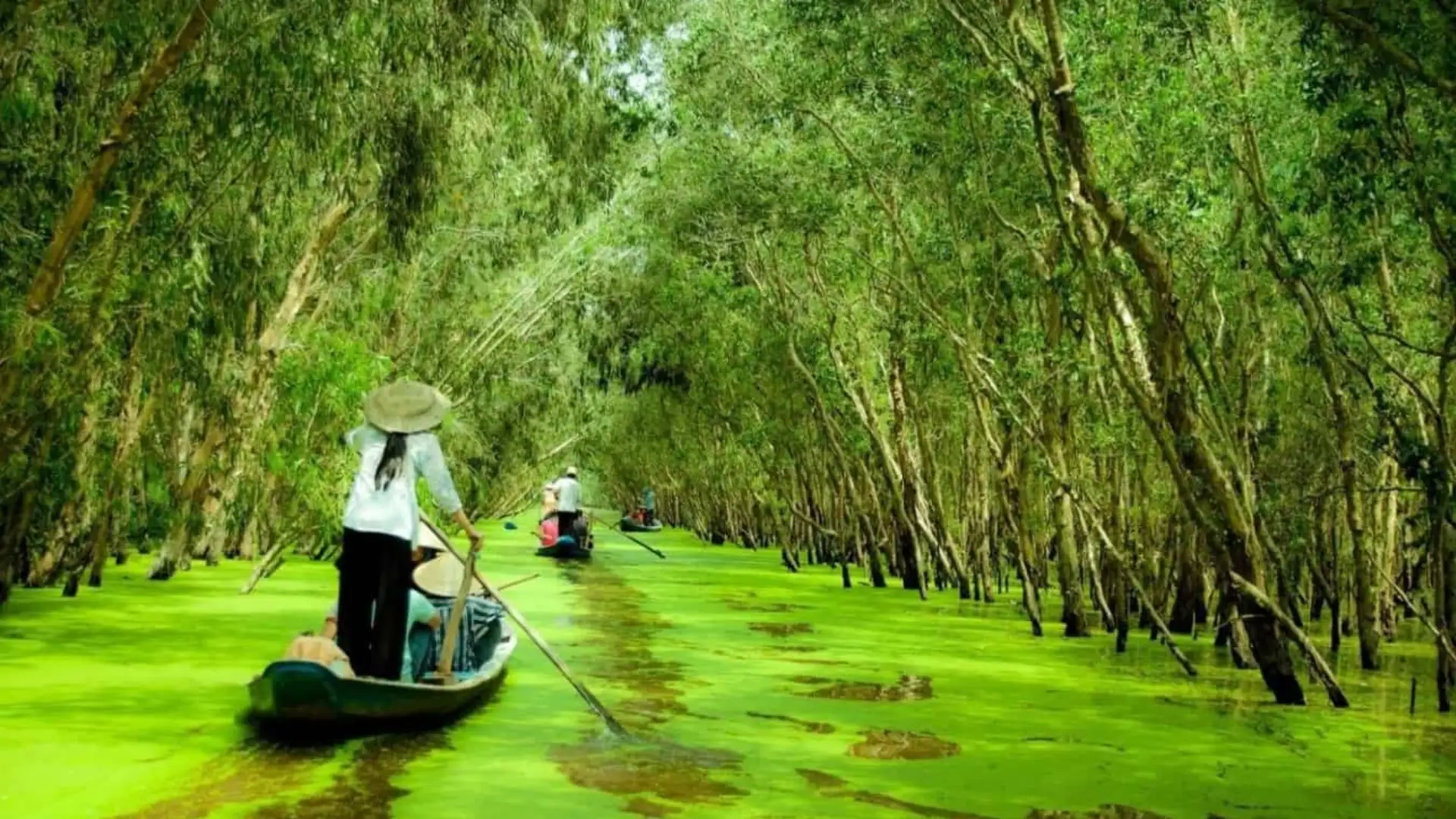
Rainfall and water levels differ from year to year, so no particular appearance can be guaranteed for a specific date.
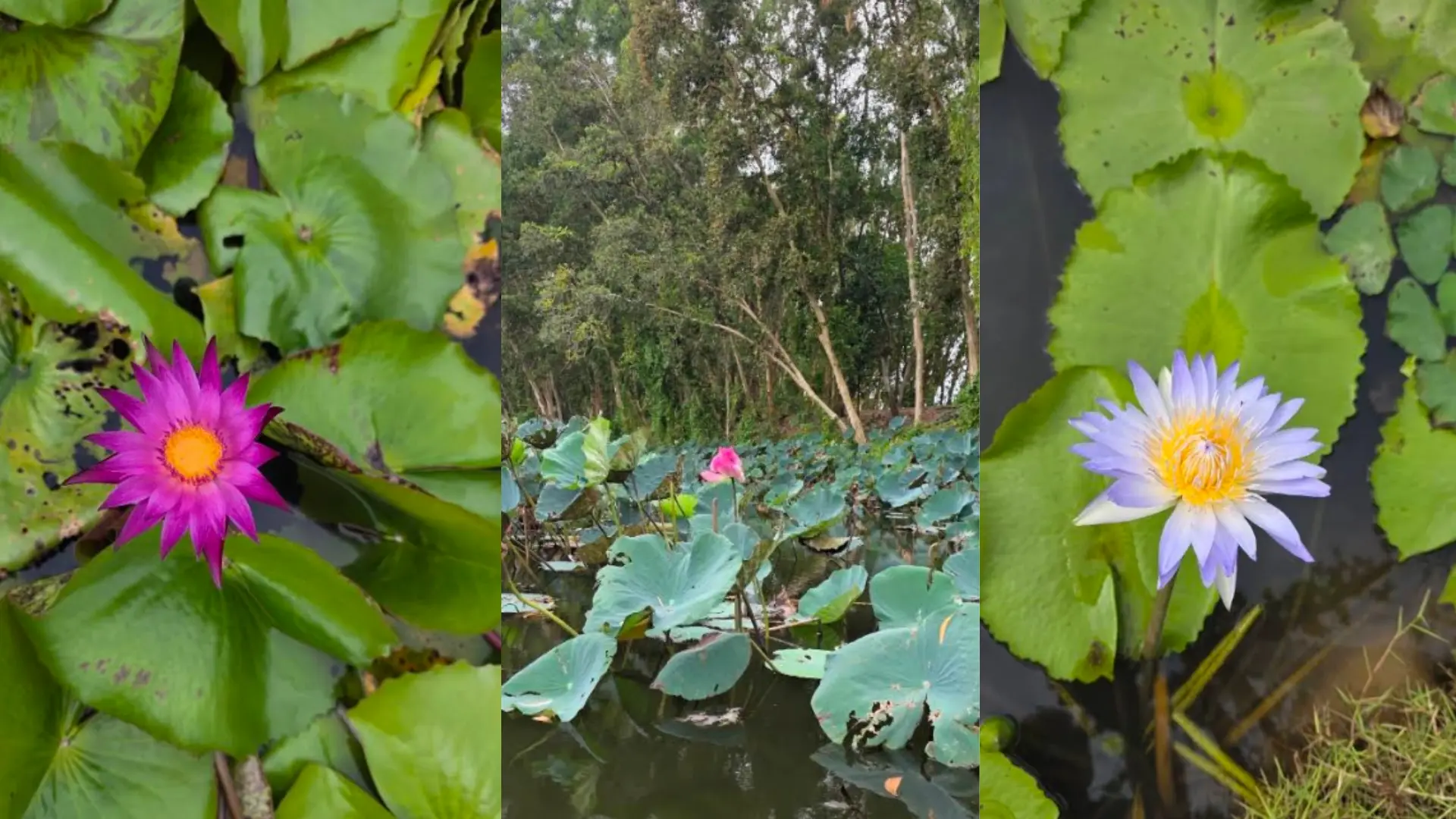
Tra Su follows its own wetland cycle, so its high-water period should not be applied to every destination in the region. See how seasonal water differs across the Mekong Delta.
Can you visit outside the high-water season?
Yes.
Tra Su remains open as a wetland destination outside September-November. The main difference is what the waterways and floating vegetation look like.
If your travel dates are fixed, there is usually no reason to remove Tra Su from your itinerary simply because you are outside the high-water period. Just expect a different version of the landscape.
Does Tra Su Look Green All Year?
Not in exactly the same way.
The green surface seen in many photos is created by aquatic plants covering sections of the waterways. Their density changes with water level, rainfall and season.
Even during the high-water period, every channel will not necessarily be covered by a continuous green layer.
This is worth knowing before you go because online photographs can make Tra Su appear more uniform than it actually is.
The forest is a changing wetland. Some sections may be densely green while others are more open water.
What Time of Day Should You Visit?
A useful target is:
7:00-9:00 AM or 3:00-5:00 PM
Morning is generally more comfortable for walking and boat travel because temperatures are lower and the light is softer.
Later afternoon can be useful if you are interested in birds, as activity often increases before they settle for the evening.
Specific wildlife sightings are never guaranteed, but avoiding the hottest part of the day also makes most outdoor sections more comfortable.
What Do You Actually Do at Tra Su?
A visit to Tra Su is not one long boat ride.
You move through the forest in stages, and each part shows you the wetland from a different perspective.
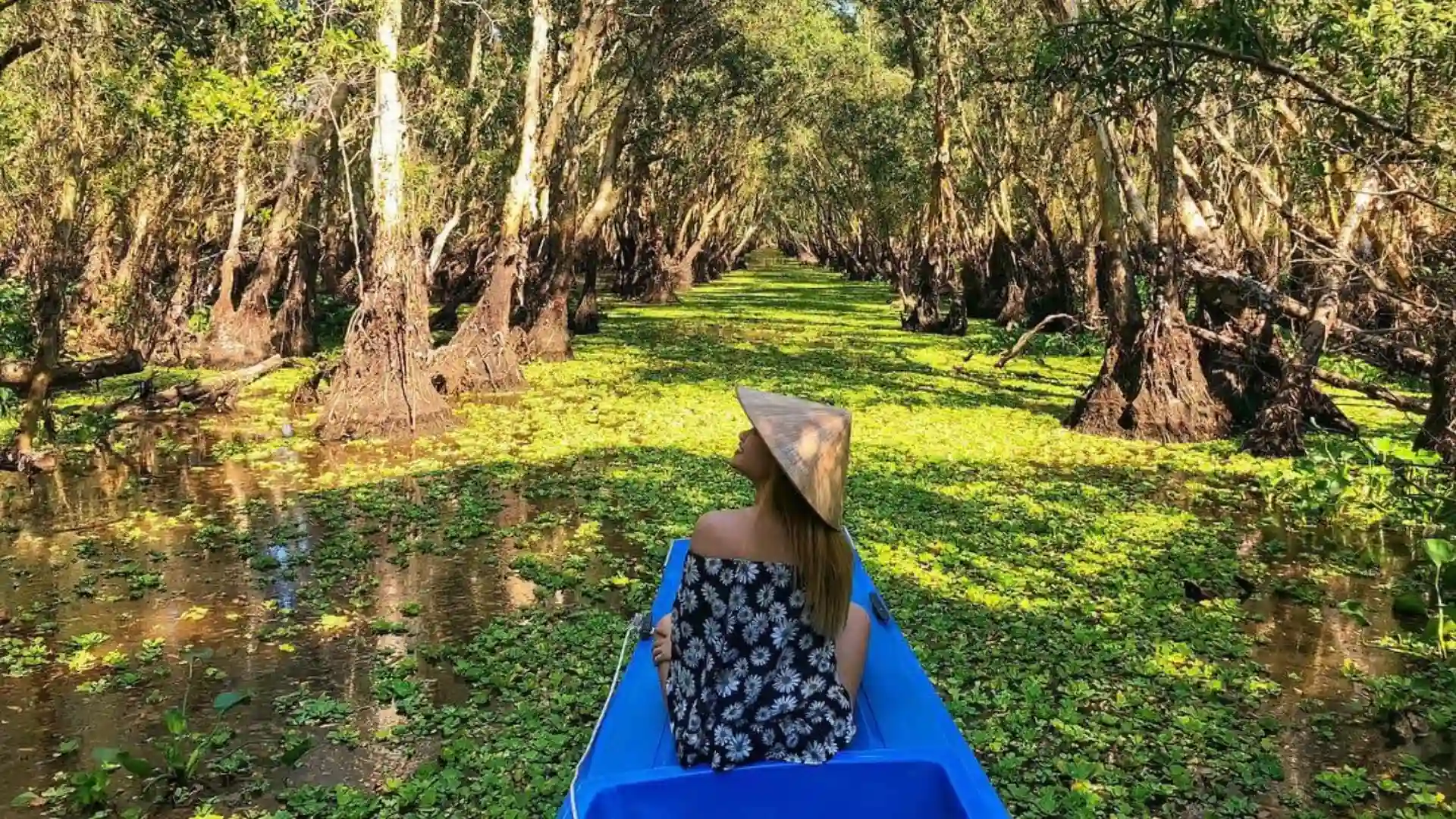
Start with the motorboat
The motorboat travels along wider waterways and carries you farther into the forest.
This is the quicker part of the visit. You pass stretches of cajuput trees, open water and patches of aquatic vegetation while getting a better sense of the size of the wetland.
The motorboat is useful for covering distance rather than creating the quietest experience.
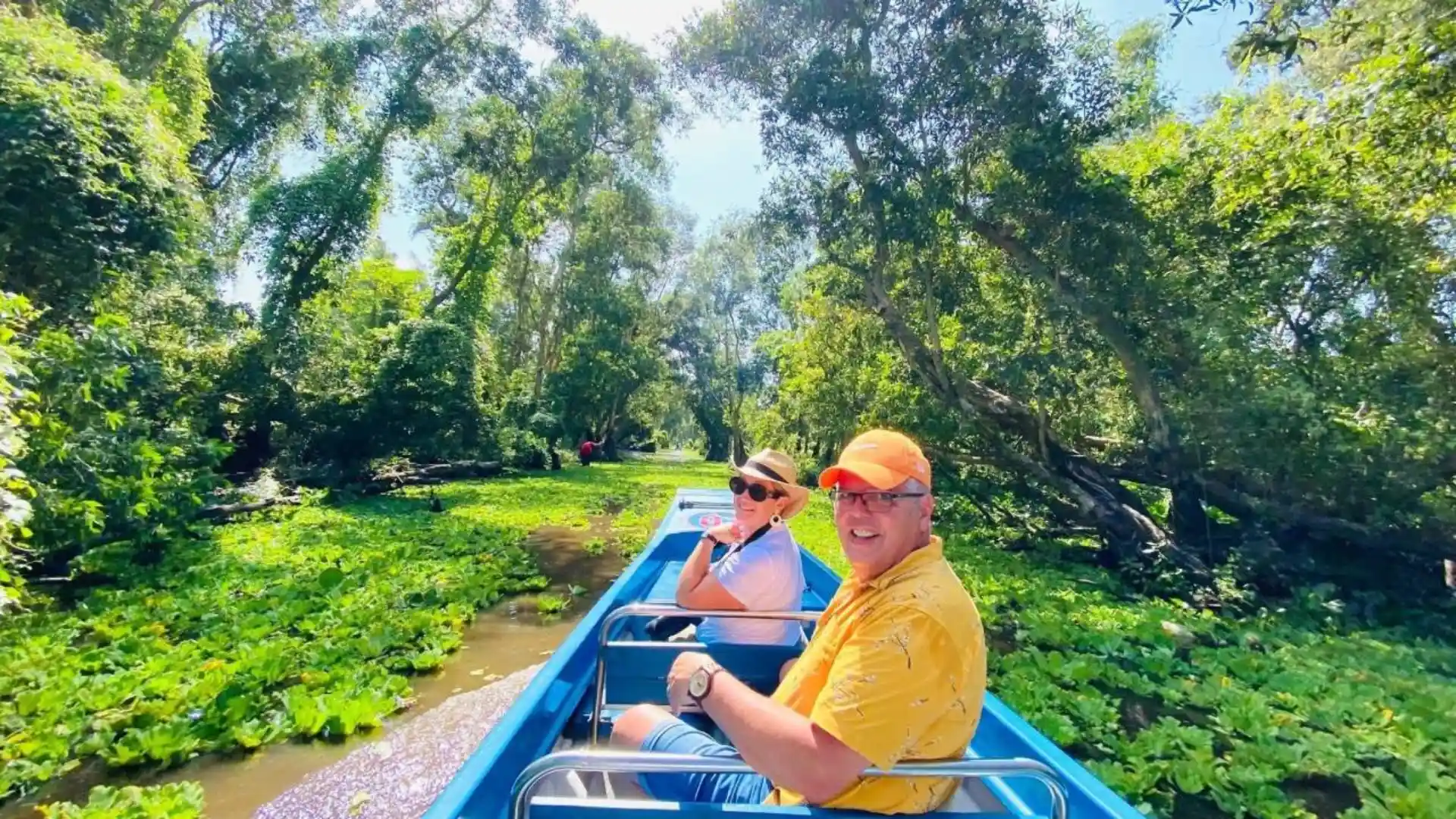
Slow down on the rowing sampan
The rowing sampan feels very different.
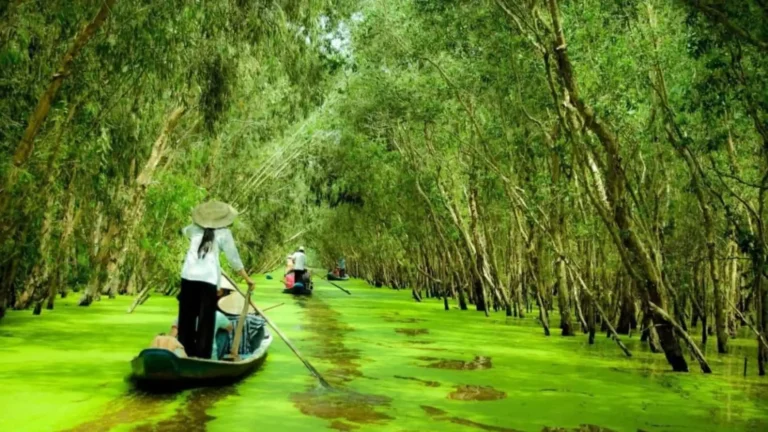
These smaller boats move slowly through narrower channels, where the trees and vegetation are much closer to the water.
Without an engine beside you, it becomes easier to notice bird calls, the movement of the paddle and details along the banks.
For many visitors, this is the part of Tra Su that feels most distinctive.
It is also where you are more likely to see the familiar scene of a small boat passing between cajuput trees over sections of water covered in floating plants.
The two boats are therefore not interchangeable:
-
Motorboat: covers more distance and wider waterways.
-
Rowing sampan: slower, quieter and closer to the vegetation.
If your time and budget allow, doing both gives you a more complete experience of the forest.
Walk through the wetland
Tra Su can also be explored on foot.
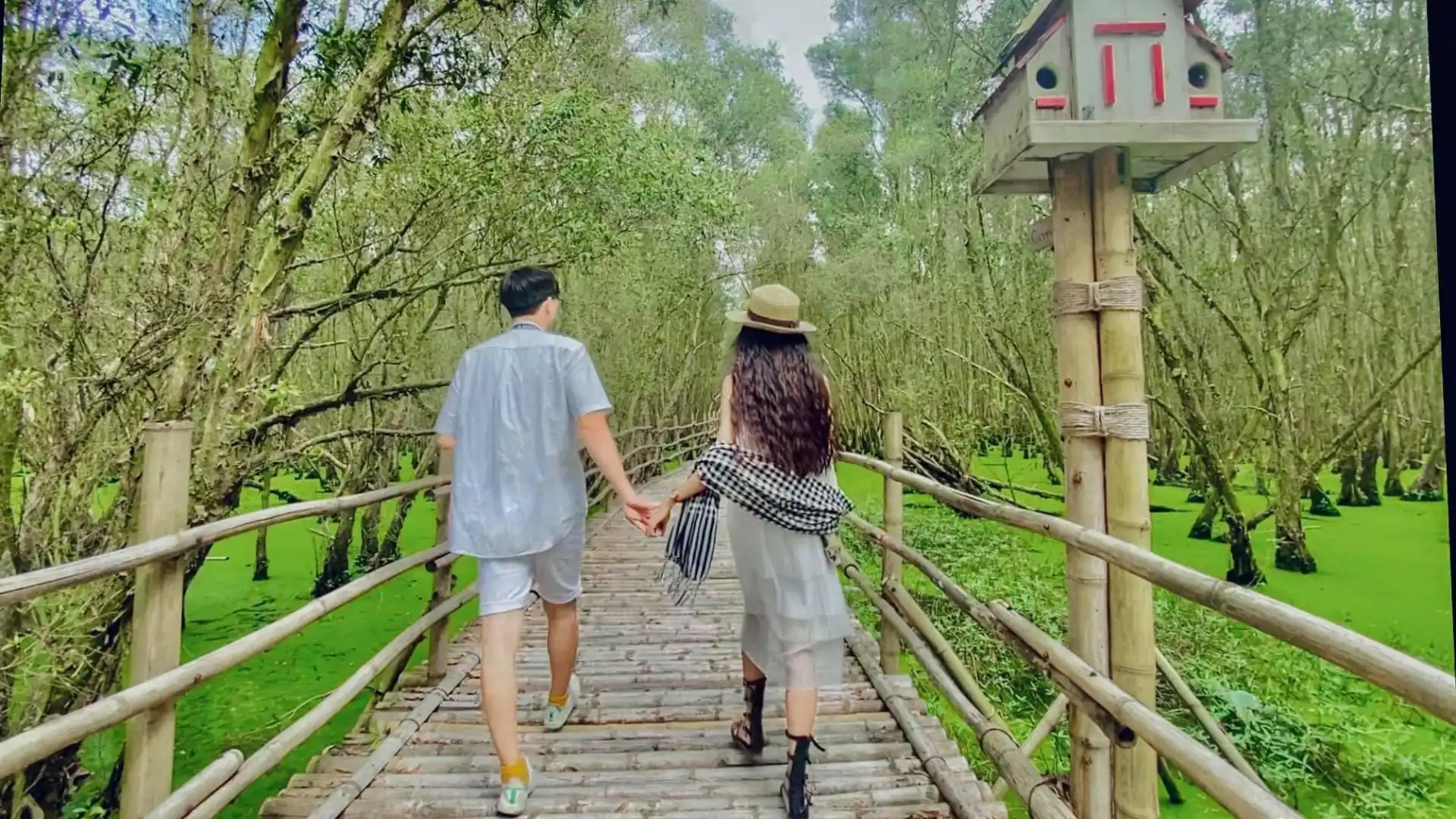
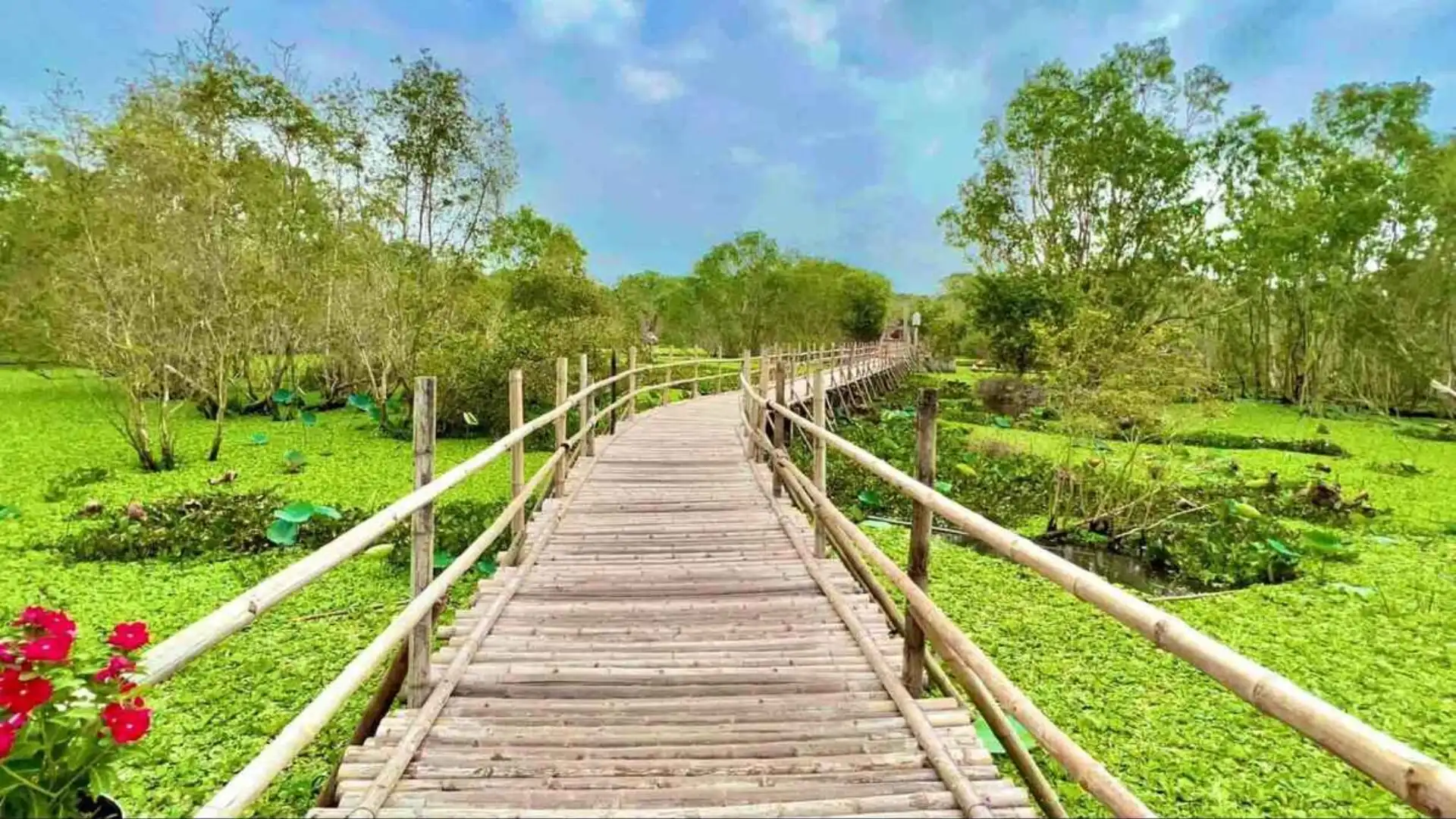
The visitor area includes walking sections and a bamboo route extending for roughly 2.2 km.
Walking changes the pace again. You can stop when something catches your attention, look into the vegetation and spend time outside the boat routes.
See the forest from above
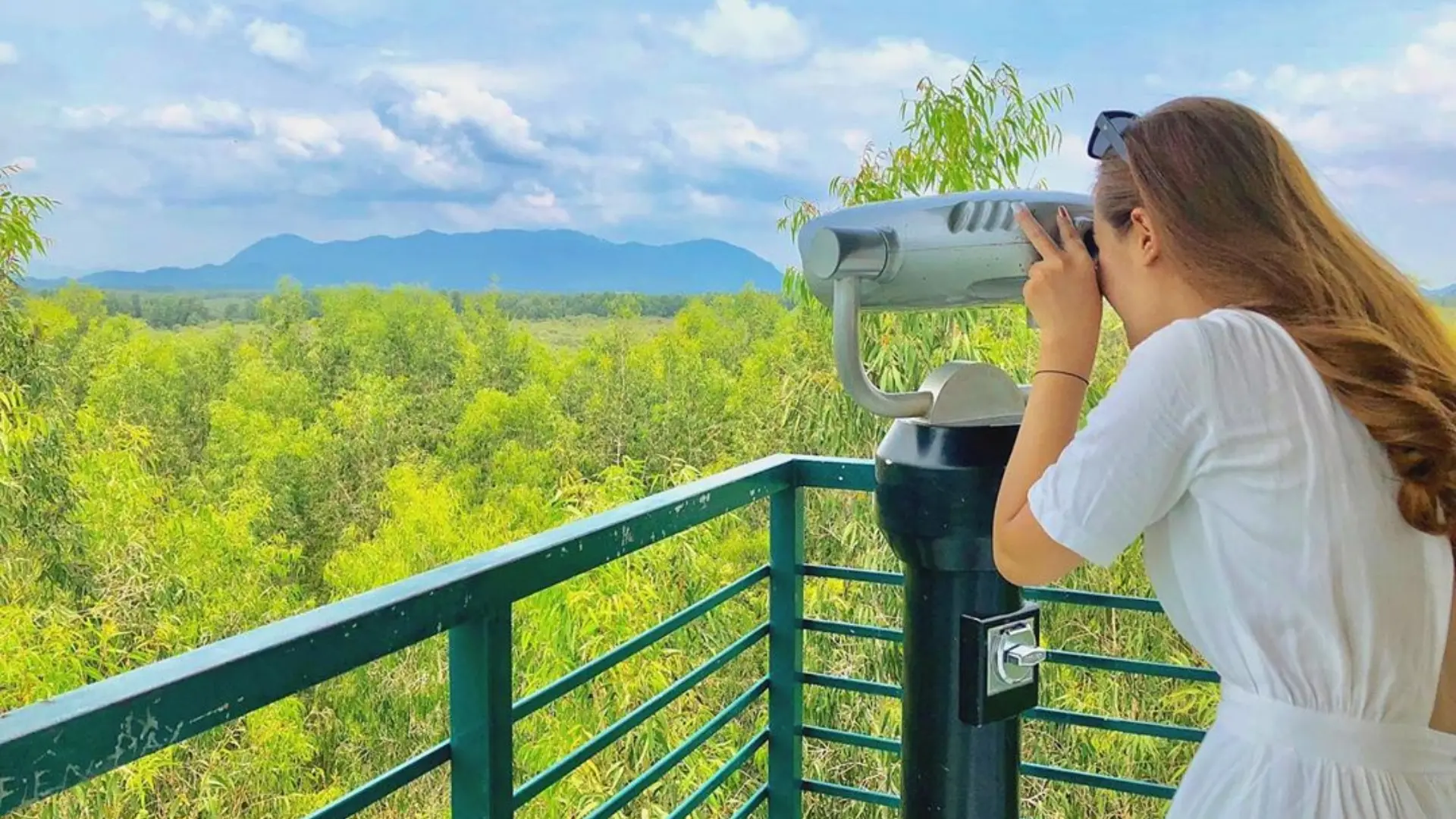
Observation areas provide a wider view over the wetland.
From the waterways, the forest can feel enclosed because the trees surround you. From above, the channels and cajuput canopy become easier to understand as one connected landscape.
These areas can also be useful for birdwatching.
What Can You See at Tra Su?
Cajuput forest and wetland vegetation
Cajuput trees dominate much of the landscape.
Closer to the water, you may also see floating plants, grasses and other aquatic vegetation.
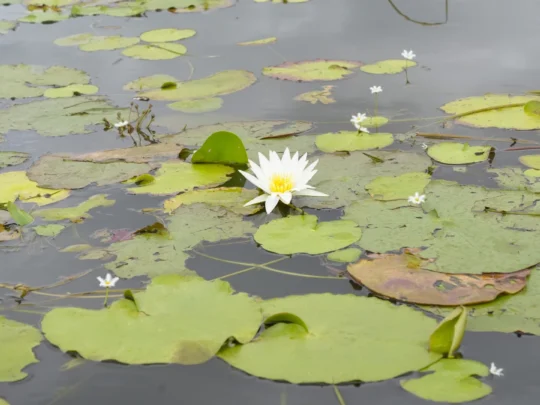
Depending on season and water conditions, lotus, water lilies and other wetland plants may also appear in different parts of the area.
What you see will not be identical throughout the year.
Birds
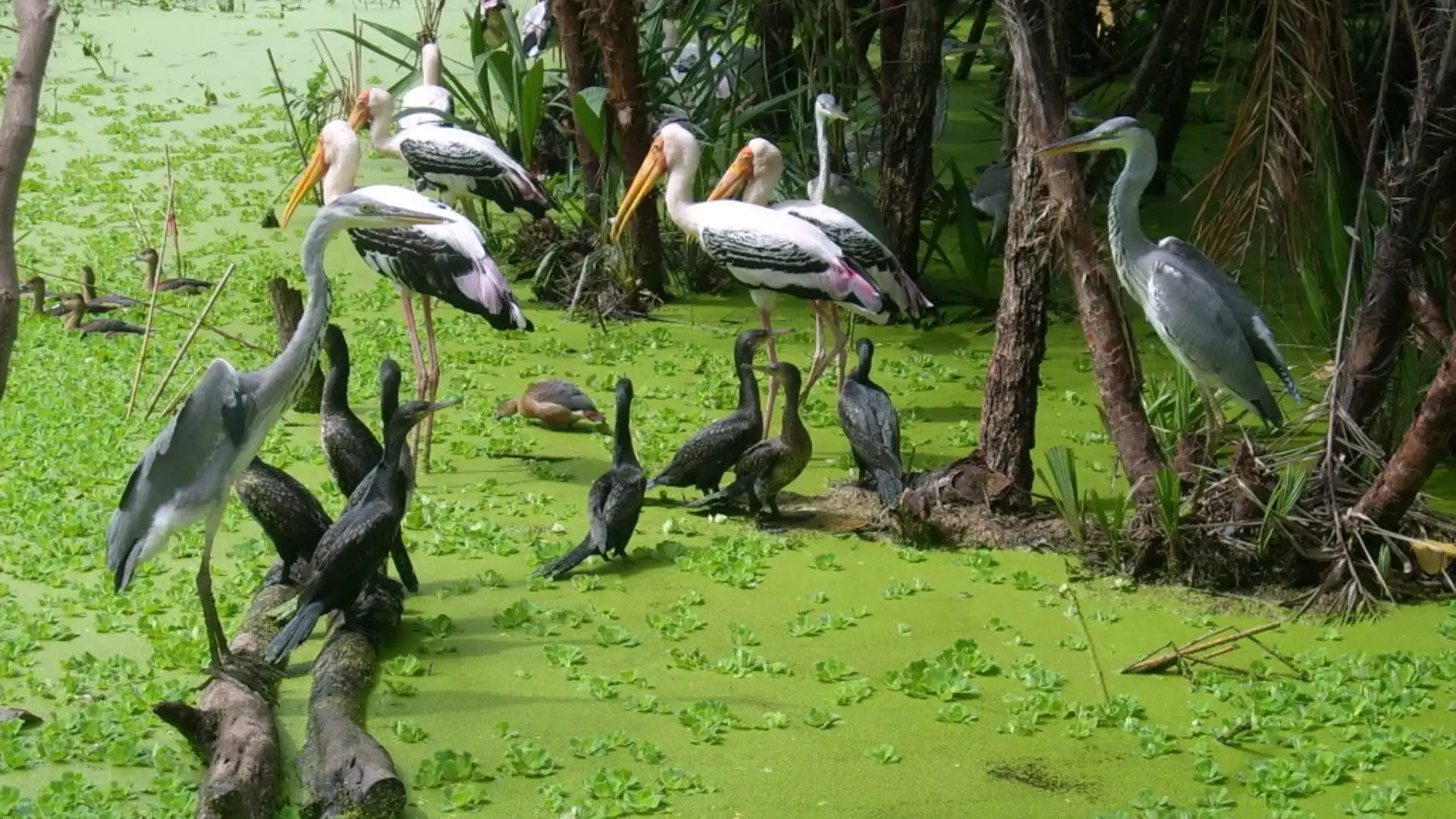
More than 70 bird species have been recorded in the Tra Su ecosystem.
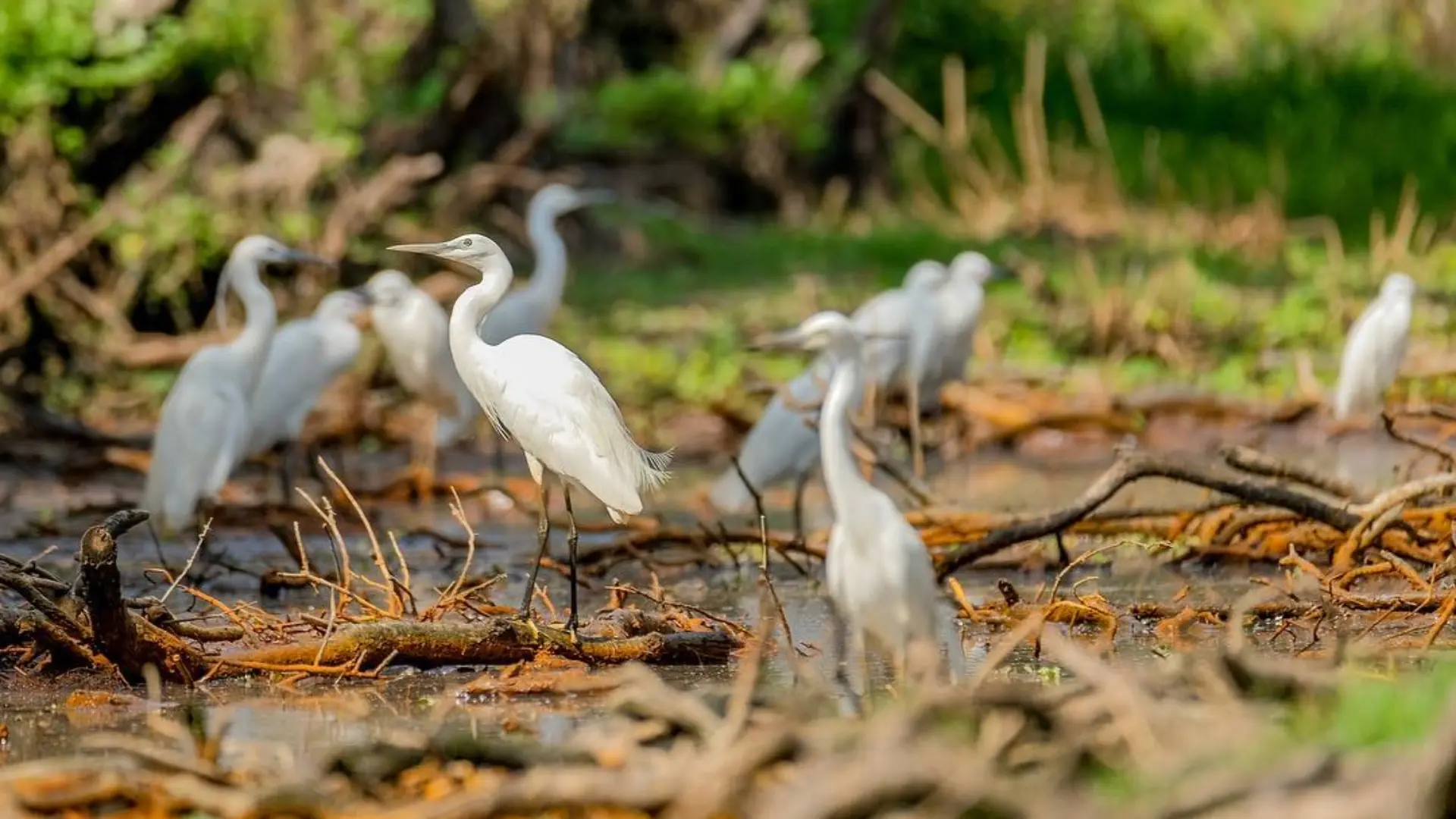
Water birds such as storks, egrets and other species associated with wetlands may be seen from boats, walking areas or observation points.
Tra Su is also home to less commonly seen species, including birds of conservation interest, but their presence in the ecosystem should not be treated as a promise that visitors will see them.
If birdwatching matters to you:
-
visit in the morning or later afternoon;
-
bring binoculars if possible;
-
spend time at observation areas;
-
move quietly during the sampan section;
-
allow more time than someone visiting mainly for sightseeing.
Other wildlife
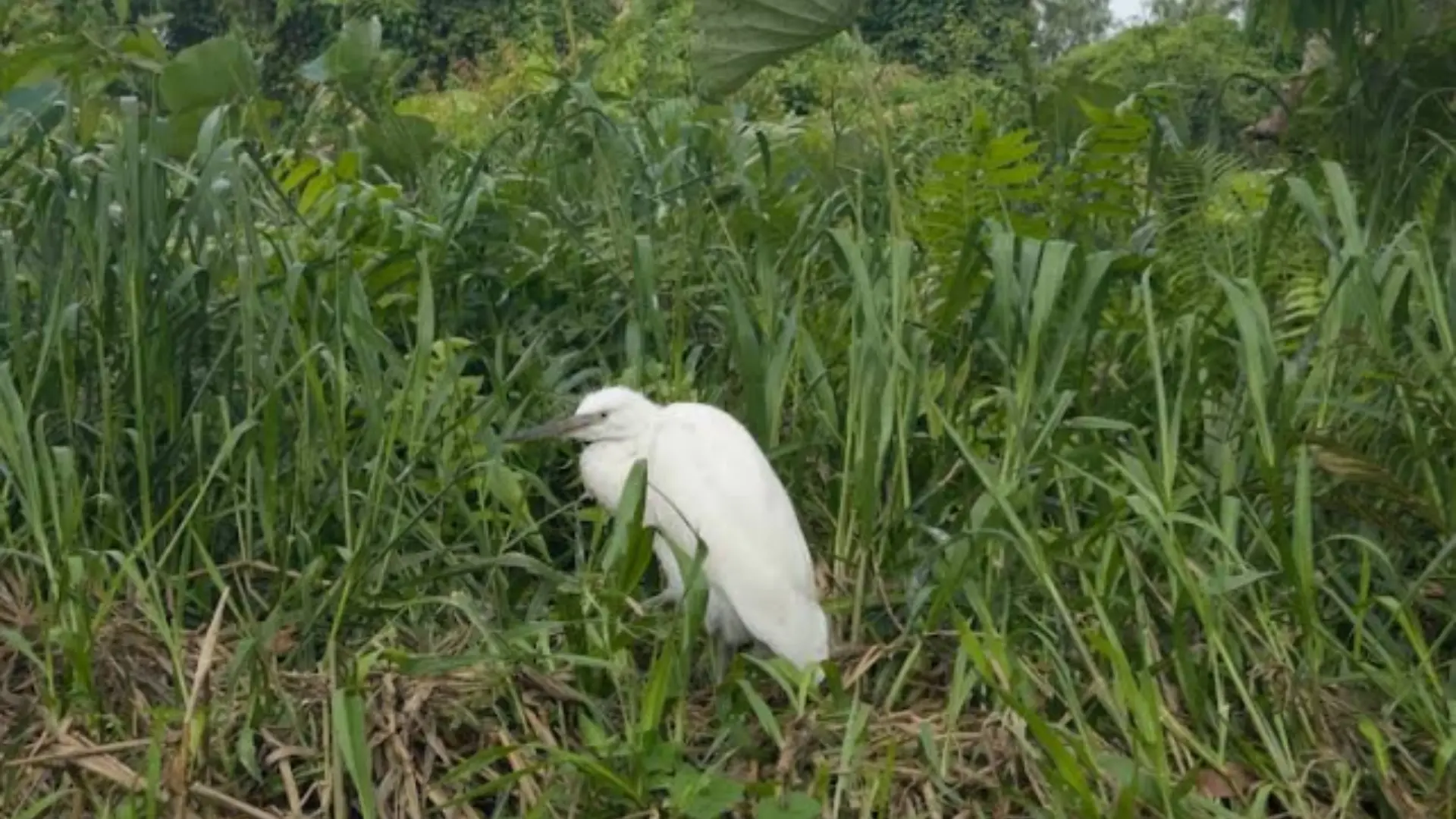
Fish, amphibians, reptiles and small mammals also form part of the wetland ecosystem.
Most visitors are much more likely to notice birds and aquatic life than mammals or reptiles.
Seeing wildlife depends on the season, weather, water level and natural movement of the animals.
Tra Su Cajuput Forest Ticket Prices in 2026
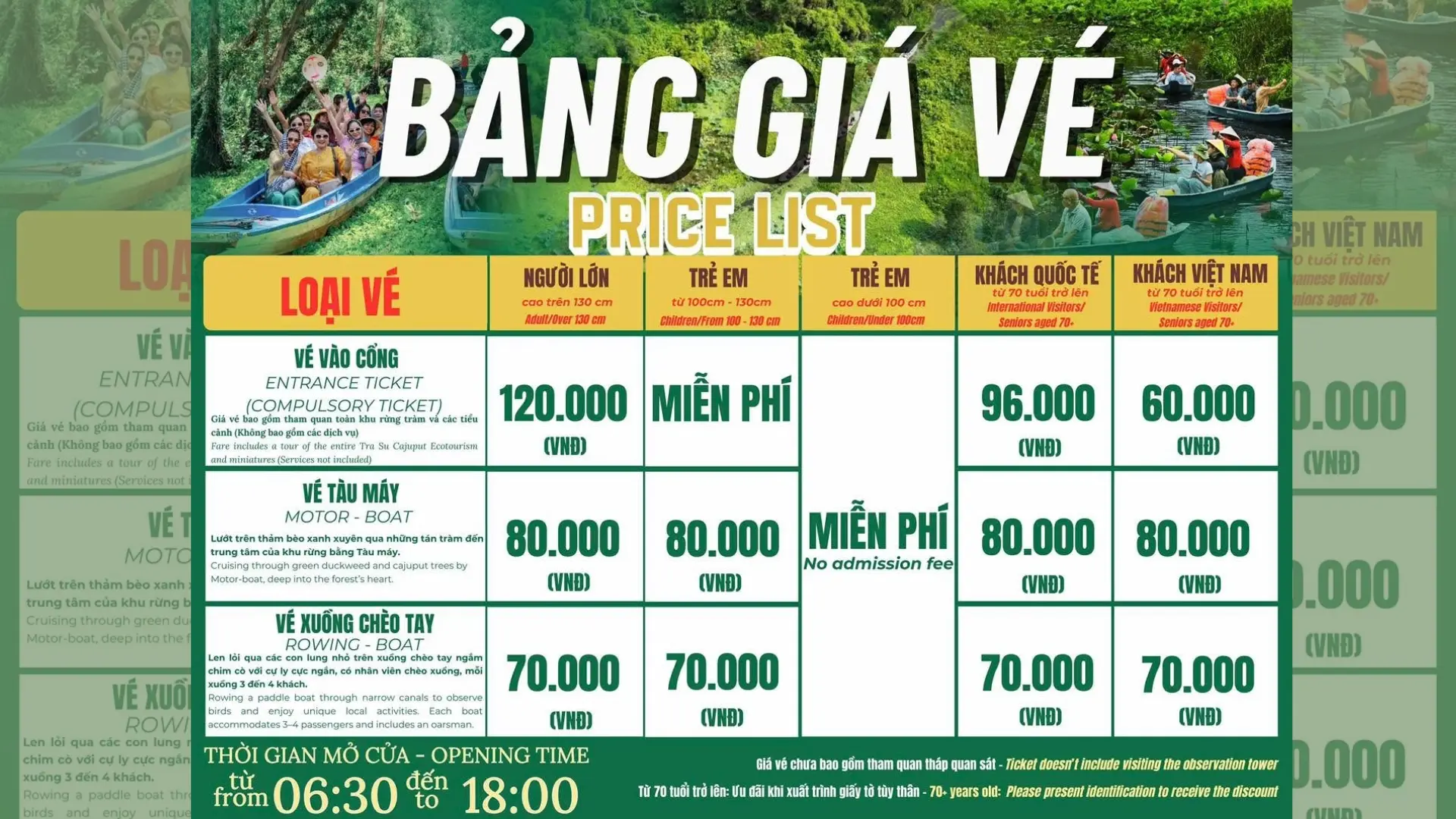
Tra Su charges separately for the entrance ticket, motorboat and rowing boat. For an adult doing all three, the total is 270,000 VND (about $10.80).
| Ticket / service | Adult | Children 100-130 cm | Children under 100 cm | International visitors 70+ | Vietnamese visitors 70+ |
| Entrance ticket | 120,000 VND ($4.80) | Free | Free | 96,000 VND ($3.84) | 60,000 VND ($2.40) |
| Motorboat | 80,000 VND ($3.20) | 80,000 VND ($3.20) | Free | 80,000 VND ($3.20) | 80,000 VND ($3.20) |
| Rowing boat | 70,000 VND ($2.80) | 70,000 VND ($2.80) | Free | 70,000 VND ($2.80) | 70,000 VND ($2.80) |
| Price note: Prices above are updated to August 17, 2026 and may change. Check the current rates before your visit. USD amounts are approximate, using 25,000 VND = US$1 for easy planning. | |||||
For most adult visitors, the simplest way to budget is:
-
Entrance only: 120,000 VND
-
Entrance + motorboat: 200,000 VND
-
Entrance + rowing boat: 190,000 VND
-
Entrance + both boat rides: 270,000 VND
The two boat rides are quite different. The motorboat covers the wider waterways and takes you farther into the forest, while the rowing boat moves through narrower channels at a slower pace. Each rowing boat carries around 3-4 passengers with a rower.
Children between 100 and 130 cm enter free but still pay for the boat rides. Children under 100 cm are free for the entrance and boat services.
Visitors aged 70 or older receive a discount on the entrance ticket. International visitors pay 96,000 VND, while Vietnamese visitors pay 60,000 VND. The boat prices remain the same, so bring identification if you want to use the senior discount.
Opening Hours
Tra Su is currently open from 6:30 AM to 6:00 PM.
This gives you enough flexibility to visit around 7:00-9:00 AM or 3:00-5:00 PM, which are also useful times if you want cooler conditions and more bird activity.
One Extra Cost to Keep in Mind
The standard entrance ticket does not include the observation tower. If you want to go up for the wider view over the forest, check the current tower fee when you arrive.
How Long Should You Spend at Tra Su?
Allow around 2-3 hours inside Tra Su for a normal visit.
That is enough time for the main boat experiences, walking areas and observation points without turning the trip into a quick photo stop.
Consider staying longer if:
-
you enjoy birdwatching;
-
photography is a priority;
-
you want to walk more of the site;
-
you plan to eat there.
The travel time to Tra Su is also important when deciding how much of your day to set aside.
From Chau Doc, it fits comfortably into half a day.
From Can Tho, the journey makes it a full-day trip.
How to Get to Tra Su Cajuput Forest
From Chau Doc
Using central Chau Doc as the reference point, Tra Su is roughly 20-30 km away.
Allow around 30-40 minutes by road.
This makes Chau Doc the easiest base if Tra Su is one of the main places you want to visit in An Giang.
Staying nearby also makes it easier to arrive around 7-9 AM or 3-5 PM rather than reaching the forest during the hottest part of the day.
From Ninh Kieu Wharf, Can Tho
From Ninh Kieu Wharf in central Can Tho, Tra Su is roughly 110-120 km away.
Allow around 2.5-3 hours each way depending on traffic and stops.
That makes Tra Su a full-day trip from Can Tho.
You can arrange the journey independently. If you prefer not to organise the long transfer and sightseeing route yourself, Mekong Smile also operates a Tra Su Forest Tour from Can Tho with pickup from hotels in central Can Tho.
A tour is not required to enter Tra Su; it is simply another option for travelers starting from Can Tho.
From Ben Thanh Market, Ho Chi Minh City
From Ben Thanh Market in central Ho Chi Minh City, Tra Su is around 250 km away.
Allow roughly 5-6 hours by road, depending on traffic, stops and route.
A same-day trip from Ho Chi Minh City and back would involve many hours in a vehicle.
If Tra Su is important to your itinerary, staying in Chau Doc or including the forest in a multi-day southern Vietnam route is generally more comfortable.
Tra Su Cajuput Forest Tours with Mekong Smile
If you prefer to visit Tra Su without arranging transport and local sightseeing separately, Mekong Smile offers tours that include Tra Su Cajuput Forest and other stops around Chau Doc and An Giang.
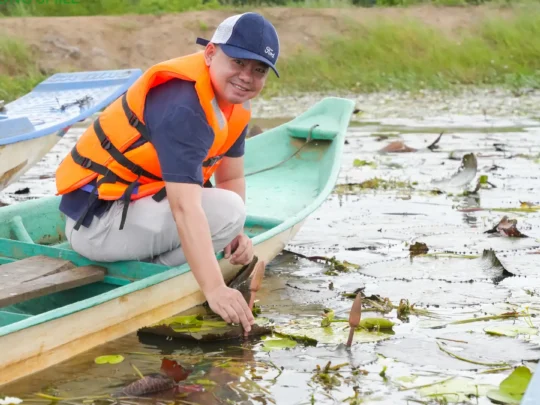
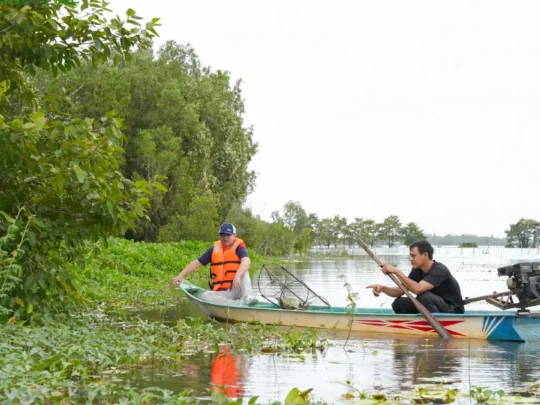
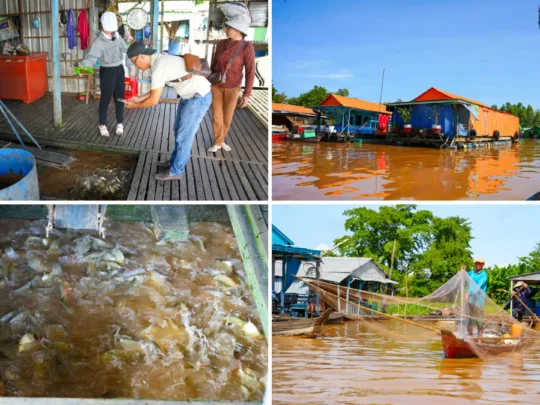



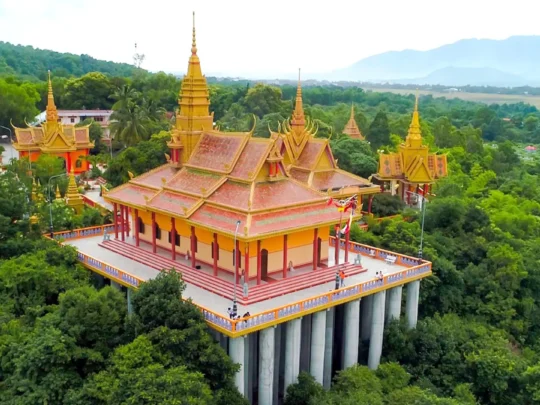
Attractions in Mekong Delta
Water Lily Harvesting Tour in Chau Doc – 2 Days 1 Night Floating Season Experience
From $16011,590,000₫
08:00 AM • 2 days 1 night (approx.) • Community-based tours
Can You Eat at Tra Su?
Yes.
Food is available within the Tra Su tourism area, so you do not necessarily need to leave the site for lunch.
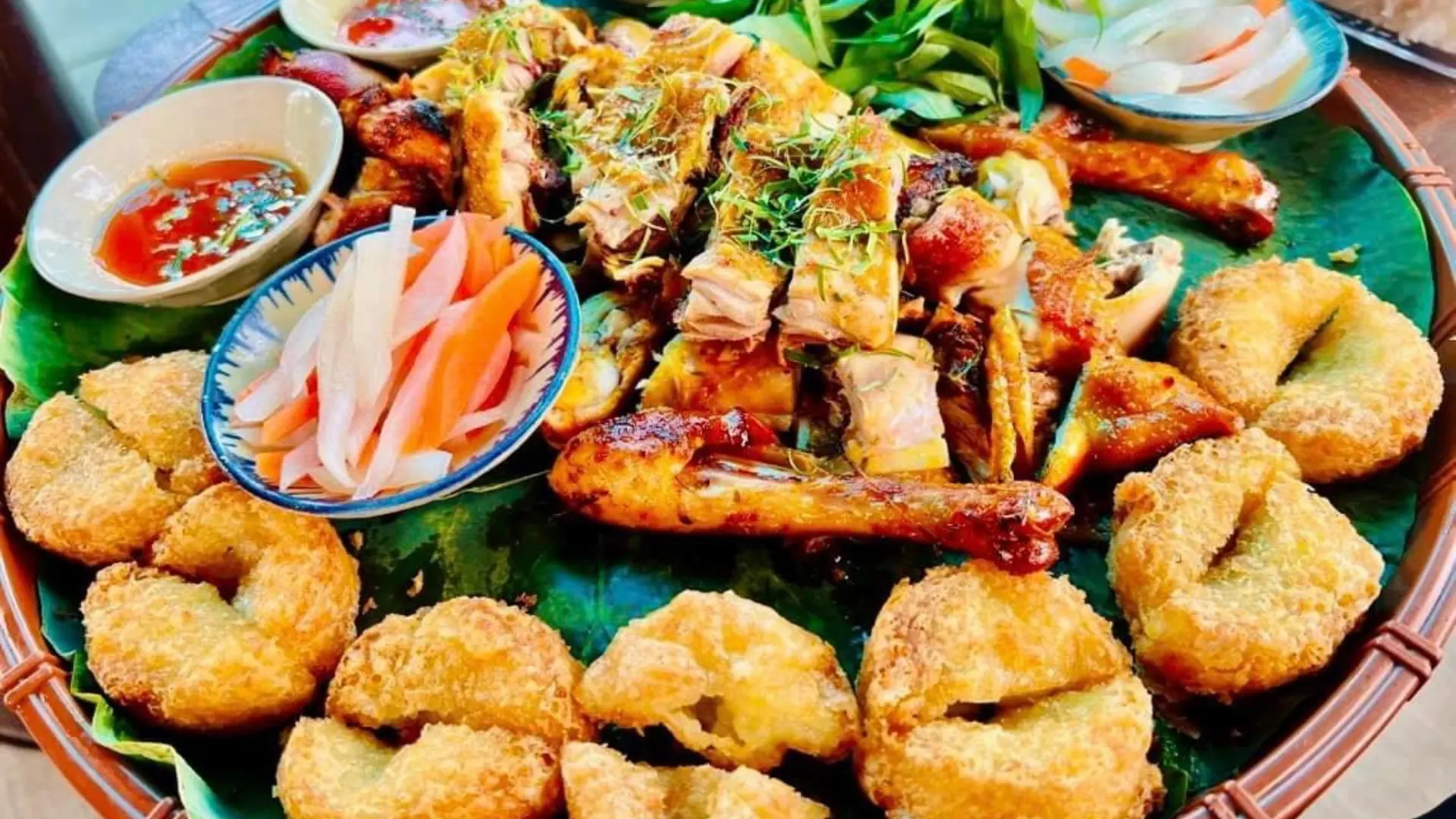
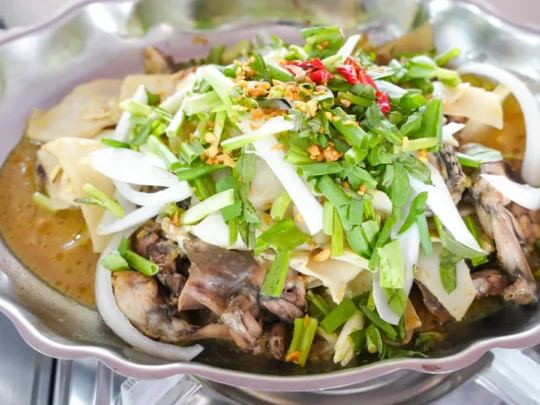
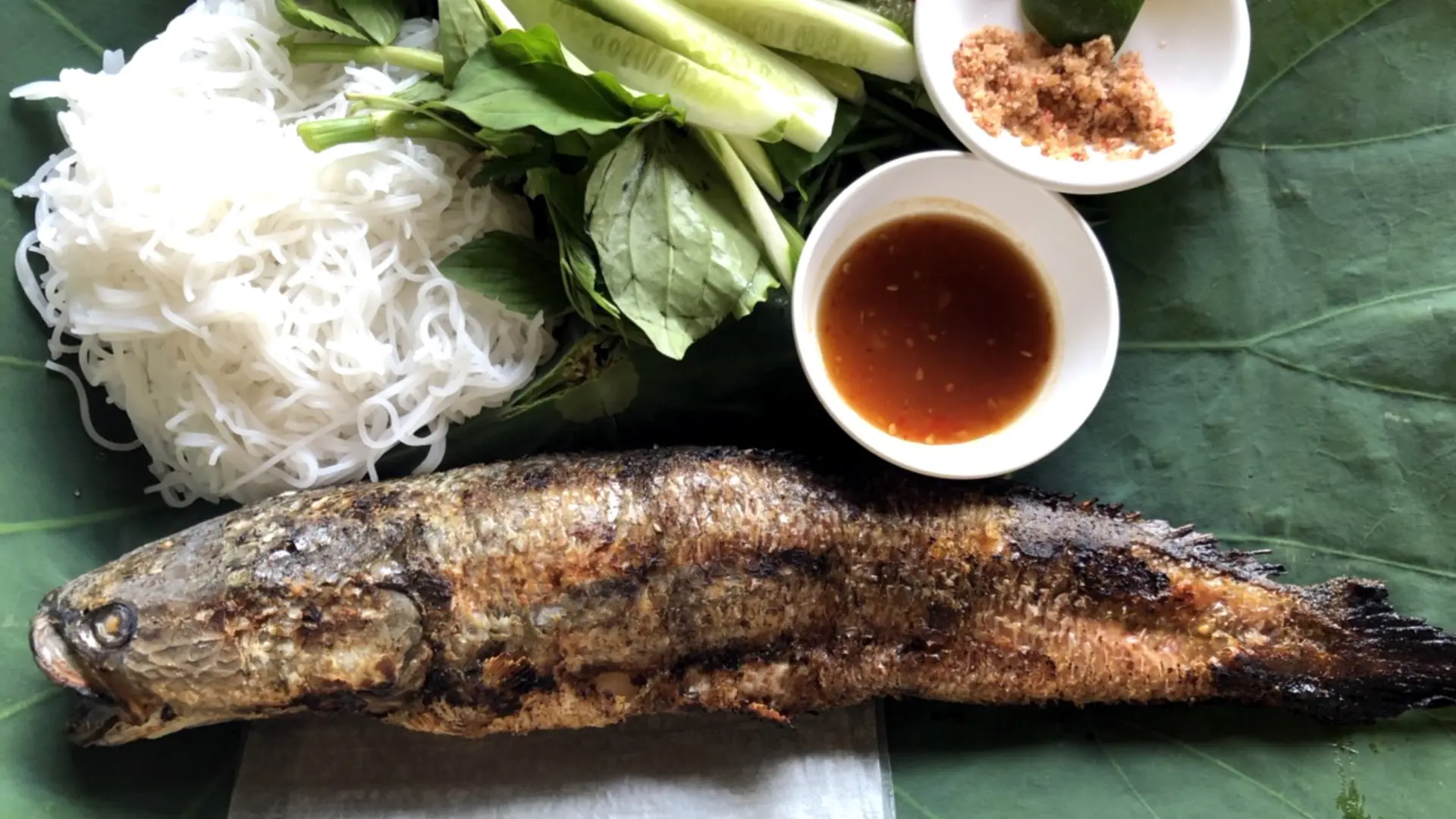
Meals in the area tend to focus on southern Vietnamese and An Giang-style food rather than international café dishes. Fish, chicken and ingredients associated with the wetlands and surrounding region commonly appear on local menus.
If you plan to eat at Tra Su, allow extra time beyond the 2-3 hours suggested for sightseeing.
What Should You Bring?
You do not need specialist outdoor equipment.
For most visitors, these are useful:
-
insect repellent;
-
sunscreen;
-
a hat;
-
drinking water;
-
comfortable shoes;
-
binoculars if you are interested in birds;
-
protection for your phone or camera during boat rides.
Check the weather before leaving, especially during the rainy season.
Things Worth Knowing Before You Visit
Tra Su is mostly an outdoor experience. Expect boats, walking, heat and humidity rather than air-conditioned indoor attractions.
The green waterways are seasonal. Do not assume the forest will look exactly like photos taken during the high-water period.
Wildlife sightings vary. The fact that a species lives in Tra Su does not mean you will see it during your visit.
The rowing sampans are small. Getting in and out may require some balance. Travelers with limited mobility should check current access arrangements beforehand.
Weather matters. Light rain does not necessarily stop a visit, but heavy rain can affect visibility, comfort and boat operations.
Do not rush the sampan section. Tra Su is more enjoyable when you have time to notice the forest rather than moving continuously from one photo point to another.
Practical Questions Before Visiting Tra Su
Do you need both the motorboat and rowing sampan?
No, but they offer different experiences. The motorboat covers more distance on wider waterways, while the rowing sampan is slower and takes you through narrower, quieter sections. If it is your first visit and your budget allows, doing both gives you a better sense of the forest.
Is Tra Su a mangrove forest?
No. Tra Su is a cajuput wetland forest. Mangrove forests are typically associated with coastal and estuarine environments, while Tra Su is an inland seasonally flooded wetland.
What happens if it rains?
Light rain does not automatically mean you need to cancel. Heavy rain can make walking less comfortable and may affect boat operations or visibility. Check the weather before travelling and ask about current conditions if the forecast is poor.
Is Tra Su suitable for children?
Children can visit, but much of the trip takes place around water and involves getting in and out of boats. Parents should supervise younger children closely and check current safety arrangements before boarding.
Can older travelers or people with limited mobility visit Tra Su?
It depends on individual mobility. Long walking is not required for every part of the visit, but boarding small boats may involve steps, uneven surfaces and some balance. Checking access conditions in advance is useful if mobility is a concern.
Do you need a guide?
No. Independent visitors can buy tickets and use the visitor services at Tra Su. A guide can be useful if you want more context about the wetland ecosystem, birdlife or nearby An Giang destinations.
Should you stay in Chau Doc or visit from Can Tho?
Stay in Chau Doc if Tra Su is one of your main priorities and you want easier access in the morning or late afternoon.
Visit from Can Tho if it is already your base and you are comfortable making Tra Su part of a full-day trip.
Is Tra Su mainly for birdwatchers?
No. Birdlife adds to the experience, but the main appeal is the combination of forest, waterways, boats and seasonal wetland scenery. You can enjoy Tra Su without knowing anything about birds.
Before You Go
Tra Su is not a destination with a long checklist of attractions.
Its appeal comes from seeing the same wetland at different speeds and from different angles.
The motorboat takes you deeper into the forest. The rowing sampan slows the journey down. Walking brings you closer to the vegetation, while the observation areas show how the waterways and cajuput forest fit together.
If you want the high-water scenery, look first at September-November, particularly October and November if green floating vegetation matters to you. For a normal visit, allow around 2-3 hours inside the forest.
Most importantly, keep your expectations flexible.
Water levels change. Floating plants move. Birds come and go.
Tra Su will not look exactly the same on every visit – and that is part of experiencing a living wetland.

