
 Can Tho
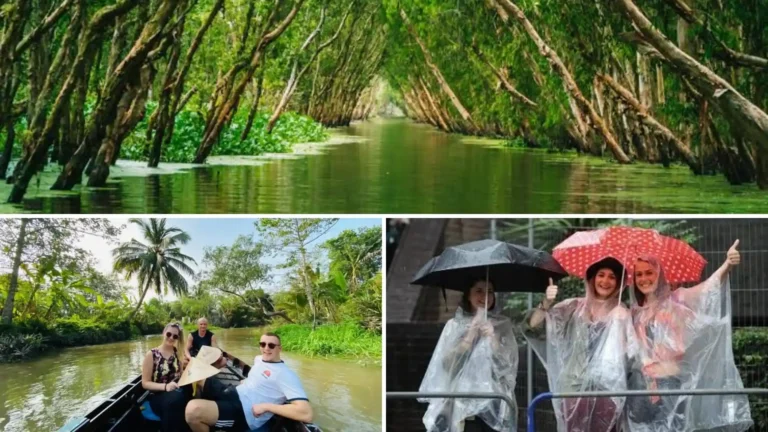


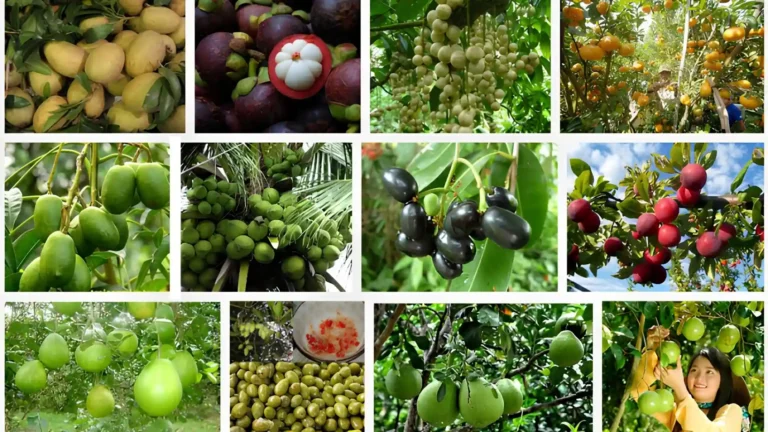

Choosing when to visit the Mekong Delta is not simply a matter of finding the driest month.
For a first trip, the broadly drier months are usually easier to plan around. But weather is only one part of the decision.
Water levels change through the year. Wetlands respond to seasonal flows. Fruit and farming cycles follow their own timing. Some experiences, such as Cai Rang Floating Market, depend more on the hour of the day than the month on the calendar.
That means the most useful question is not simply:
Which month has the best weather?
It is:
What do you want to experience, and what conditions matter for that experience?
If you are still deciding where to go, you can first explore the wider Mekong Delta.
When Should You Visit the Mekong Delta?
For general sightseeing, roughly December to April is usually the easier period to plan around.
Southern Vietnam is generally drier during these months, so there are fewer weather interruptions when combining outdoor activities, road travel and boat trips.
From around May into November, rain becomes more frequent and humidity increases. That does not mean the Mekong Delta becomes unsuitable for travel. It simply means outdoor plans benefit from more flexibility.
In some upstream areas, the later part of the wetter season can also bring higher seasonal water levels and different wetland conditions.
Mekong Delta seasons at a glance
| Period | General pattern | What it means for travelers |
| December-April | Broadly drier and sunny | Easier for short trips, cycling and fixed outdoor plans |
| May-July | Wetter, humid and greener | Travel remains practical; flexibility helps |
| August-October | Wet; seasonal water becomes more relevant in selected upstream areas | Check local wetland and water conditions |
| November | Often transitional | Conditions can vary between years and between early and late month |
These periods are useful for planning, but they are not a forecast for the exact day you will travel.
Weather, Water and Experience: Three Things That Change Through the Year
Most travel guides divide the Mekong Delta into only two periods: dry season and rainy season.
That is useful, but incomplete.
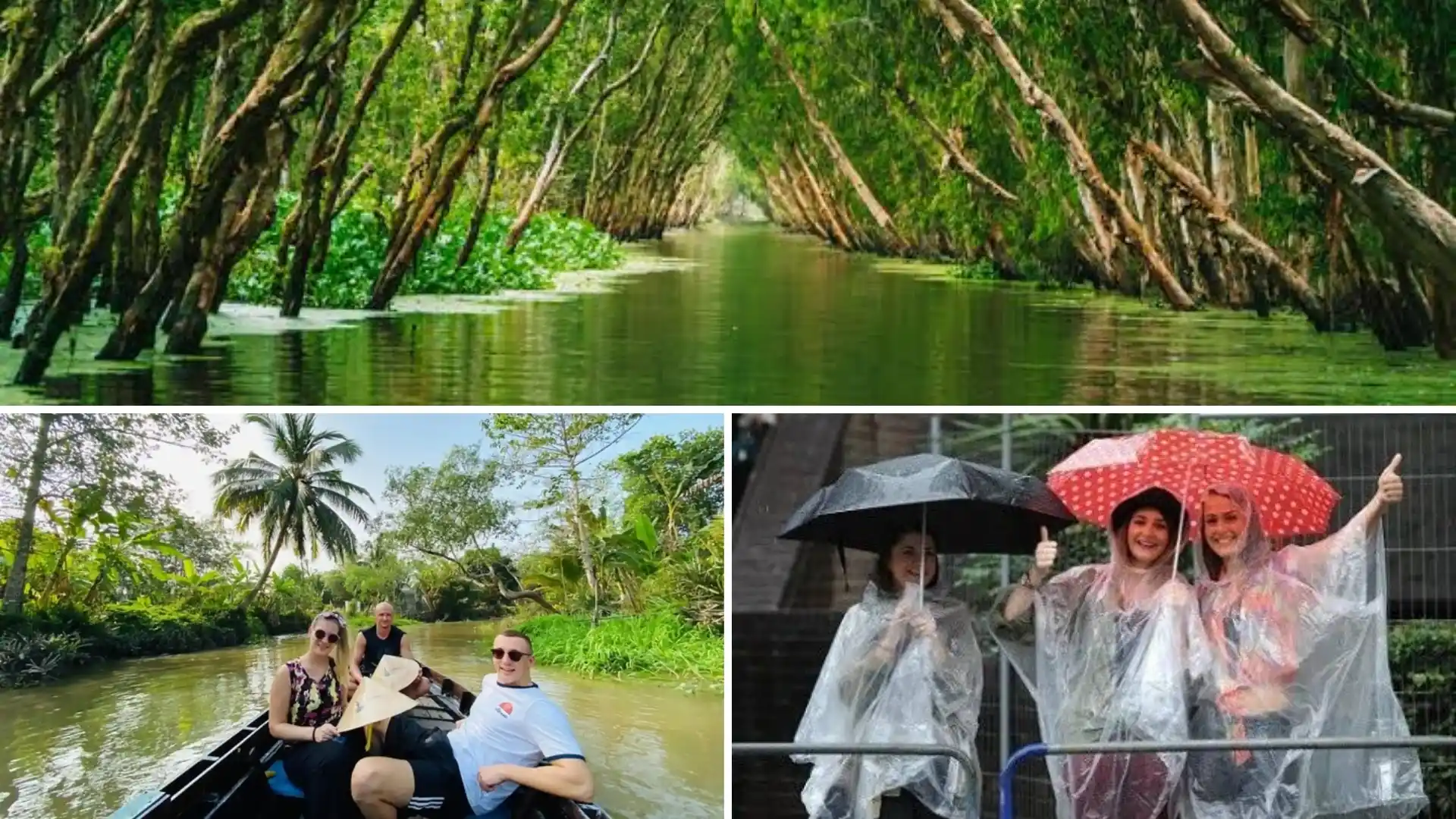
Weather
During the broadly drier months, travelers generally have fewer rain interruptions.
During wetter months, tropical rain becomes more frequent and humidity is higher.
How important that is depends on what you are doing.
Several hours of cycling are much more sensitive to rain and heat than a short morning boat trip.
Water
Rainfall and river conditions are related, but they are not the same thing.
The Mekong follows a strong seasonal water cycle. In some upstream areas, higher water changes floodplains, wetlands, agriculture and local livelihoods.
This is why the term “flood season” can be misleading if applied to the whole Mekong Delta.
Seasonal high water affects different places differently.
Experience
Some activities follow their own timing.
-
Cai Rang Floating Market depends heavily on arriving early.
-
Fruit gardens depend on crop cycles.
-
Wetlands depend on water levels.
-
Cycling depends on rain, heat and road conditions.
Before choosing a month, decide which experience matters most.
Dry Season vs Rainy Season: What Actually Changes?
The broadly drier months are usually easier for travelers with limited time.
If you only have one or two days and your itinerary includes several outdoor activities, fewer rain interruptions give the schedule more room to work as planned.
That does not mean the dry season is automatically more comfortable.
March and April can often feel particularly hot around midday. A long cycling route under clear skies may be more tiring than a shorter ride during a cloudy wet-season morning.
The rainy season has a different trade-off.
Rain becomes more common, but everyday life continues. Markets operate, boats move along rivers and canals, and tourism does not simply stop for several months.
For visitors, the real difference is often how flexible the itinerary needs to be.
A traveler with one tightly scheduled day is more affected by rain than someone staying for three nights and able to move an activity from afternoon to morning.
If your dates already fall between roughly May and November, there is usually no reason to remove the Mekong Delta from your itinerary simply because it is the wetter part of the year.
Does Rain Usually Last All Day?
Not necessarily.
Tropical weather can vary considerably from one day to another.
Some days may bring a relatively short shower. Other weather systems can bring heavier or more persistent rain.
Instead of asking only:
Will it rain?
ask:
When is the rain expected, and what will I be doing at that time?
A late-afternoon shower may have little effect on an early-morning floating-market trip.
The same weather matters much more if your priority is an afternoon cycling route.
Use seasonal patterns when planning months ahead. Use the short-term forecast when your departure is approaching.
Mekong Delta Weather by Month
Seasonal changes are gradual, so this table should be used as a planning reference rather than an exact prediction.
| Month | General pattern | What travelers should consider |
| January | Generally drier | Good for outdoor-heavy itineraries; check Tet dates if relevant |
| February | Usually dry and warm | Straightforward for road and river activities |
| March | Often dry and hotter | Earlier starts become more useful |
| April | Often hot, with the wetter transition approaching | Midday heat can matter more than rain |
| May | Wetter pattern generally begins | Leave more flexibility around outdoor activities |
| June | Generally wetter and humid | Countryside becomes greener; crops vary locally |
| July | Wet-season conditions usually established | Avoid packing too many weather-sensitive activities into one day |
| August | Wet; water levels become more relevant in some areas | Start checking destination-specific water conditions |
| September | Wet; higher-water landscapes may become more noticeable upstream | Relevant for selected wetland experiences |
| October | Wetter conditions generally continue | Destination matters more than a single regional label |
| November | Often transitional | Conditions vary between years and within the month |
| December | Drier pattern usually more established | Easier for short, fixed itineraries |
The difference between two destinations in September can sometimes matter more than the difference between September and October on a generic weather chart.
Some Experiences Follow Their Own Calendar
Not every Mekong Delta experience should be planned around the same season.
Cai Rang Floating Market: the hour matters more
If Cai Rang Floating Market is one of the main reasons for your trip, time of day matters more than time of year.

Activity varies by day, but roughly 5:00 AM to 8:00 AM is generally the most useful period for visitors before the market becomes quieter.
That is why staying overnight in Can Tho can make sense if Cai Rang is a priority.
You can plan the rest of your stay in Can Tho separately and use the early morning for the market.
Before going, it is also worth knowing what to expect at Cai Rang Floating Market, because the number of trading boats and daily activity can vary.
Mekong Smile also operates a guided early-morning Cai Rang route that currently starts at around 6:00 AM from central Can Tho hotels.
Wetlands: water levels matter more
Seasonal high water is particularly relevant in selected parts of An Giang and Dong Thap.
Around Chau Doc, higher-water conditions are commonly associated with roughly August to November, although timing and water levels vary from year to year.
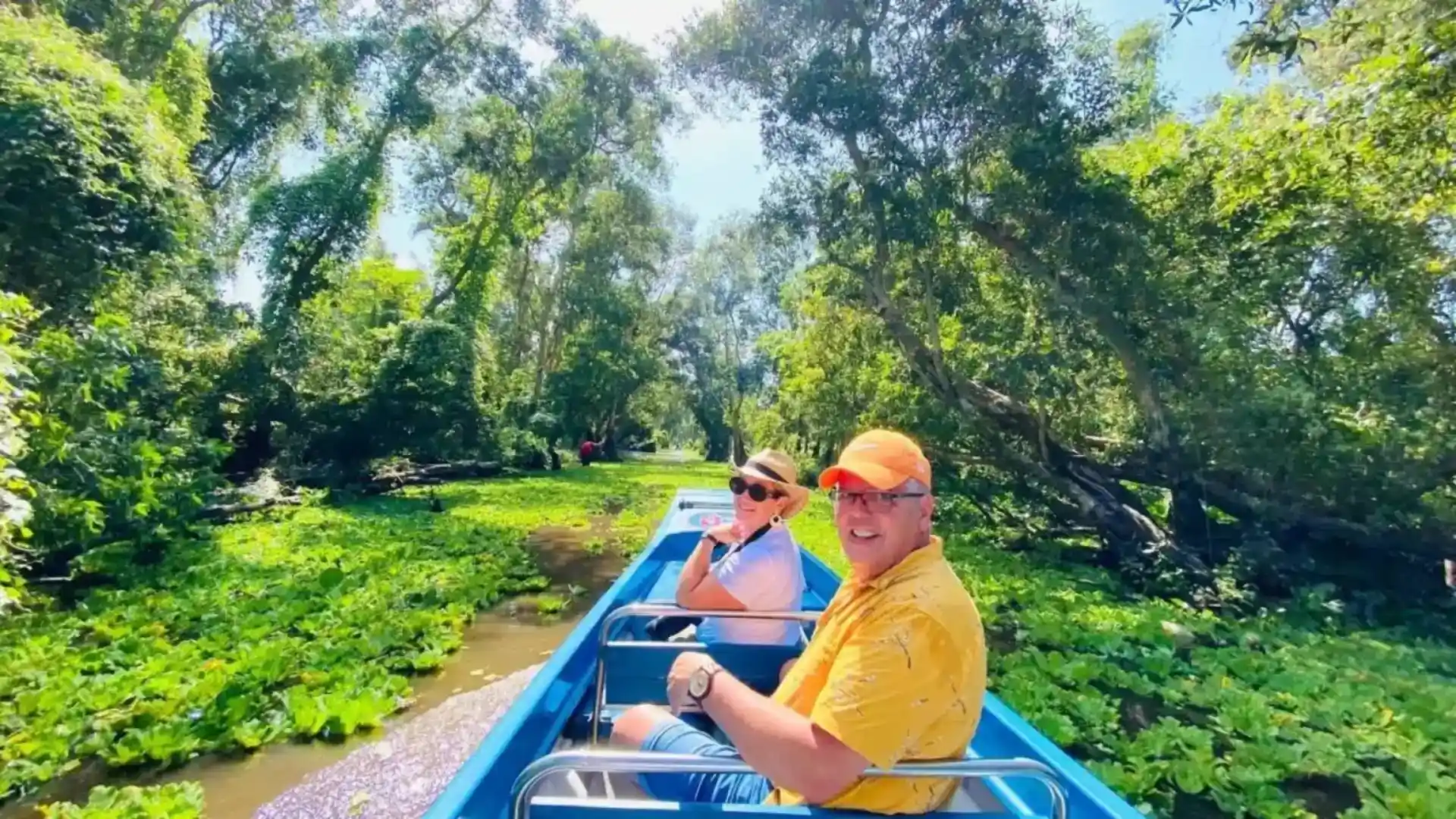
This does not mean the whole Mekong Delta experiences the same conditions.
If wetland scenery is important to your trip, check local conditions closer to departure.
You can see how this affects one specific destination in our guide to seasonal conditions at Tra Su Cajuput Forest.
Fruit gardens: the crop matters more
There is no single fruit season for the entire Mekong Delta.
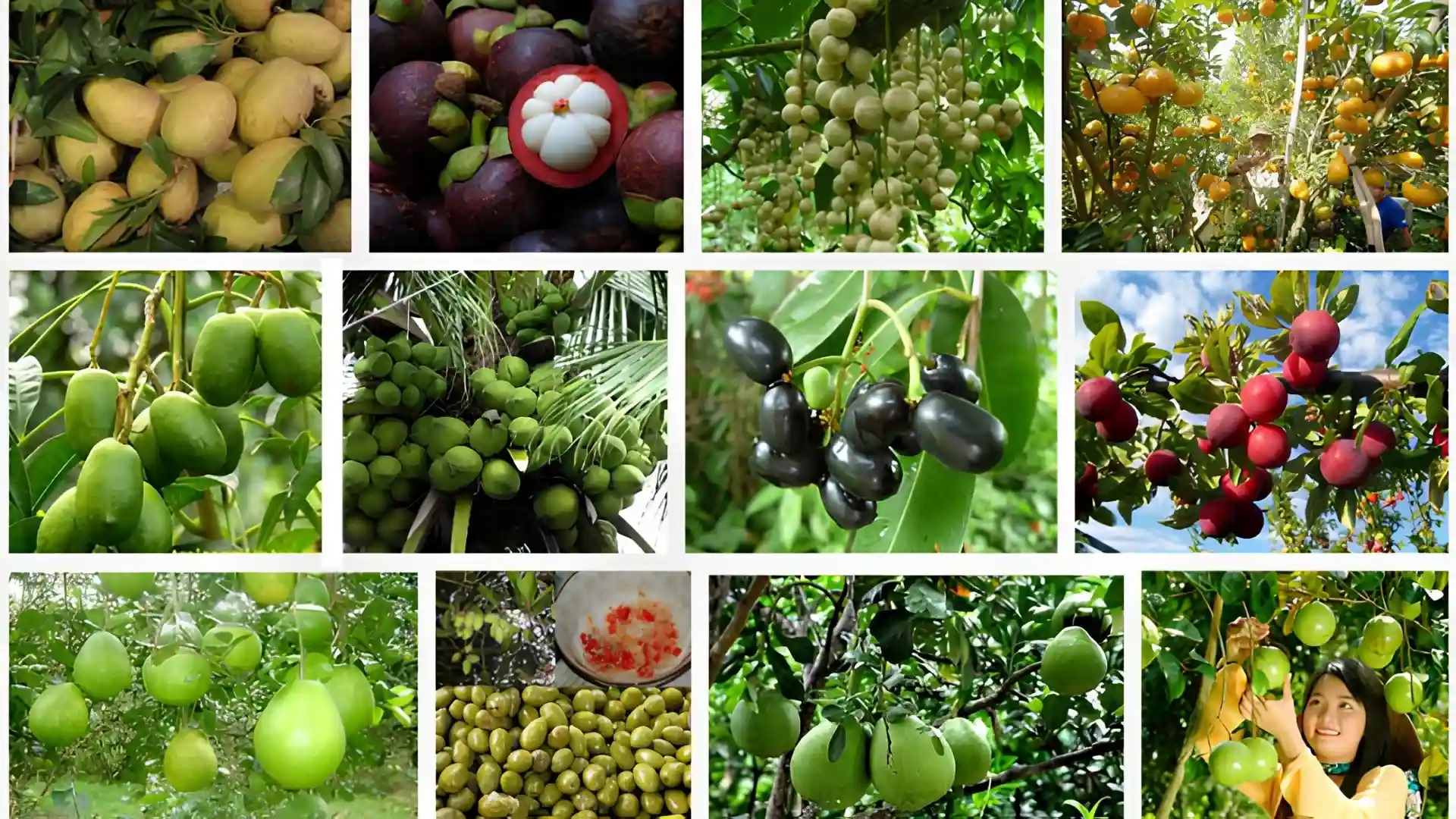
Around Can Tho, fruit activity often becomes more noticeable from around May, with many gardens seeing active harvest periods from roughly June to August.
But individual fruits follow different cycles.
If tasting one particular fruit matters to you, check the crop before visiting.
If you simply want to experience an orchard and try whatever is currently available, your dates can be much more flexible.
Cycling: weather matters more
Cycling is more sensitive to rain, heat and road conditions than a short boat trip.
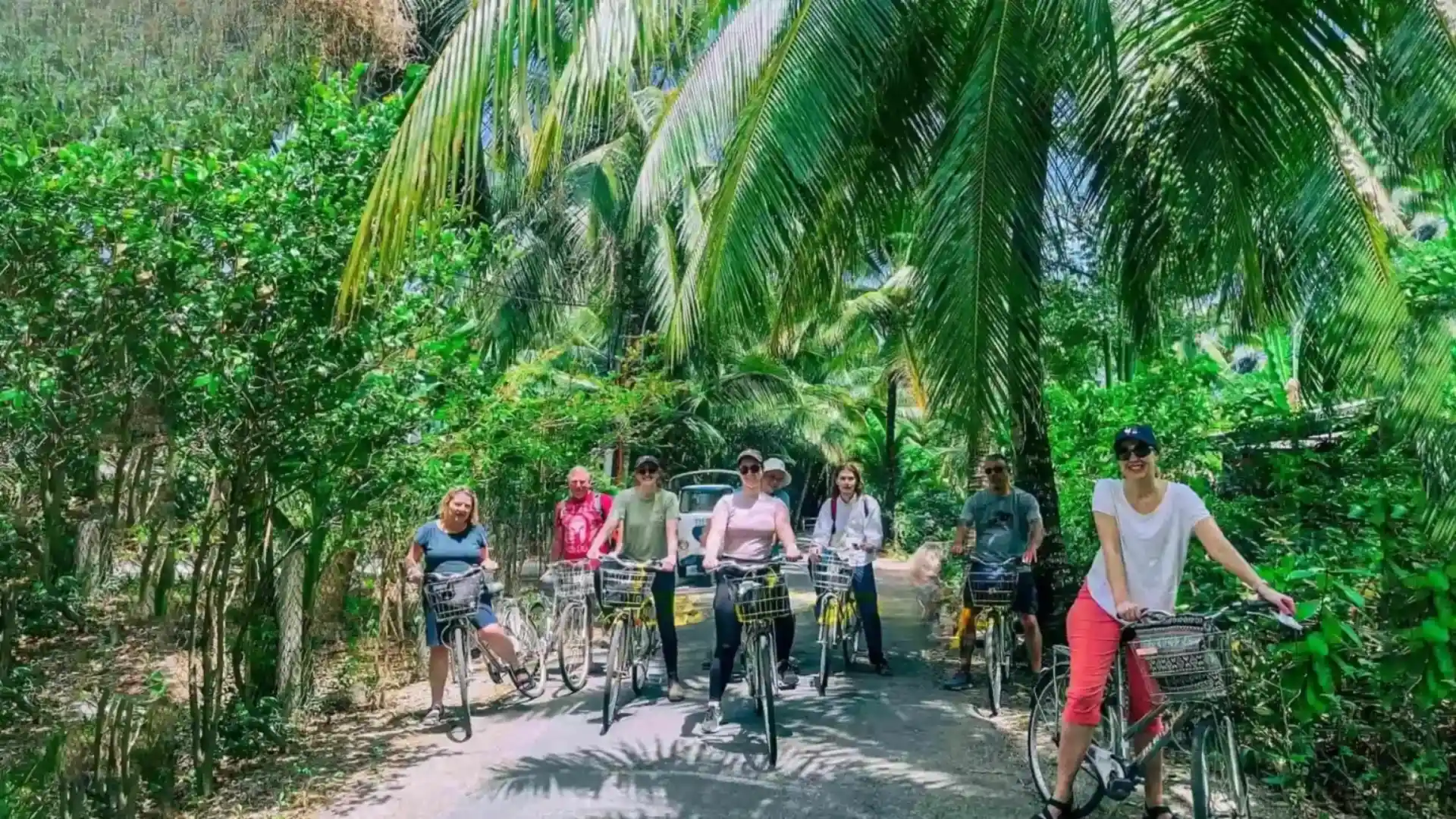
The broadly drier months are generally easier for longer rides, but rainy-season cycling is not automatically unsuitable.
Starting early, keeping the route flexible and checking the actual forecast close to departure often matters more than the month alone.
Where You Go Matters as Much as When You Go
The Mekong Delta is too large for one seasonal description to explain every itinerary.
My Tho and Ben Tre are commonly visited on shorter trips from Ho Chi Minh City, so weather predictability can matter more when travelers have only one day.
Can Tho is different. For Cai Rang Floating Market, early-morning access matters more than season. For cycling and countryside activities, heat and rain matter more.
Vinh Long has a strong agricultural character, so crop conditions can sometimes be as relevant as general weather. If it is part of your route, you can plan a trip to Vinh Long separately.
An Giang and Dong Thap deserve more attention to seasonal water when wetlands and high-water landscapes are central to the trip.
This is why a simple rule such as “dry season is always better” is not particularly useful.
What If Your Travel Dates Are Already Fixed?
If your flights are already booked, there is usually little value in worrying about whether another month would have been better.
Adjust the itinerary instead.
If you are traveling during the drier months, plan active outdoor experiences earlier when hot conditions are expected.
If you are traveling during the wetter period, avoid placing several weather-sensitive activities into one tightly packed day.
If Cai Rang is your priority, make sure you can arrive early.
If wetlands are your priority, check current water levels.
If fruit matters to you, check the actual crop.
If cycling is important, keep both route and departure time flexible.
This approach is more practical than redesigning an entire Vietnam trip around one monthly rainfall chart.
Choose Your Dates Based on What Matters Most
| Your priority | What to focus on |
| First visit with 1–2 days | Broadly drier conditions make planning easier |
| Fixed rainy-season dates | Keep the trip but leave room for adjustments |
| Cycling | Rain, heat, road conditions and departure time |
| Cai Rang Floating Market | Early-morning access |
| Wetlands / seasonal high water | Current local water levels |
| Fruit gardens | Actual crop and locality |
| Three or more days | Flexibility matters more than finding one ideal month |
The planning principle is simple:
Choose the experience first. Then decide how the season affects it.
So, When Does a Mekong Delta Trip Make the Most Sense?
If this is your first visit, your itinerary is short and you want several outdoor activities, roughly December to April is generally the easier period to work with.
That is not the same as saying every traveler should visit during those months.
During the wetter part of the year, the countryside may appear greener, while selected wetlands and high-water landscapes can offer a noticeably different experience.
If your priority is Cai Rang Floating Market, arriving early matters more than finding the driest month.
If your priority is cycling, weather and time of day deserve more attention.
If your priority is seasonal wetlands, water conditions may matter more than rainfall alone.
The Mekong Delta changes throughout the year.
A more useful question than:
Which month has the best weather?
is:
What do I want to experience, and when does that experience make sense?
Before You Finalize Your Travel Dates
Seasonal information is most useful when you are planning months ahead.
As the trip approaches, current conditions matter more.
Check the destination, because Can Tho and an upstream wetland may face different seasonal conditions.
Check the activity, because a floating market, cycling route and orchard each follow a different schedule.
And check the short-term weather close to departure.
If you are still choosing destinations, explore the wider Mekong Delta.
If your destinations are already chosen but the route is not, you can compare Mekong Delta routes by trip length.
Planning Your Mekong Delta Trip?
If your travel dates are fixed but you are unsure which route fits the season, Mekong Smile can help you compare current travel options and practical timing across the Mekong Delta.
Website: https://mekongsmile.com Hotline: +84 774 839 165 WhatsApp: +84 774 839 165 Email: contact@mekongsmile.com Office: No. 5 Tran Van Hoai Street, Ninh Kieu Ward, Can Tho City, Vietnam.
Questions Travelers Often Ask Before Choosing Their Dates
What is the best time to visit the Mekong Delta? There is no single period that suits every trip. Roughly December to April is generally easier for first-time visitors who want several outdoor activities, while wetter months can work well for travelers with more flexible schedules or an interest in seasonal landscapes.
When is the rainy season in the Mekong Delta? The wetter period generally runs from around May into November. Rain becomes more frequent and humidity increases, but the exact transition varies from year to year.
Is the rainy season a bad time to visit the Mekong Delta? Not necessarily. River, food and countryside experiences continue throughout much of the wetter period. The main difference is that weather-sensitive outdoor activities benefit from more flexibility.
Does it rain all day during the rainy season? Not always. Tropical rainfall can range from relatively short showers to longer periods of wet weather. A short-term forecast is more useful than assuming every rainy-season day will behave the same way.
When is the floating season in the Mekong Delta? There is no exact date that applies everywhere. Around Chau Doc and some upstream areas, higher-water conditions are commonly associated with roughly August to November, although timing and water levels vary each year.
Can I visit Cai Rang Floating Market during the rainy season? Yes. The market operates throughout the year, although weather and trading activity vary by day. For visitors, arriving early in the morning is generally more important than choosing one particular season.
When is fruit season in the Mekong Delta? There is no single season for every fruit. Around Can Tho, fruit activity often increases from around May, with many gardens having active harvest periods from roughly June to August. Individual crops and orchards follow different schedules.
