
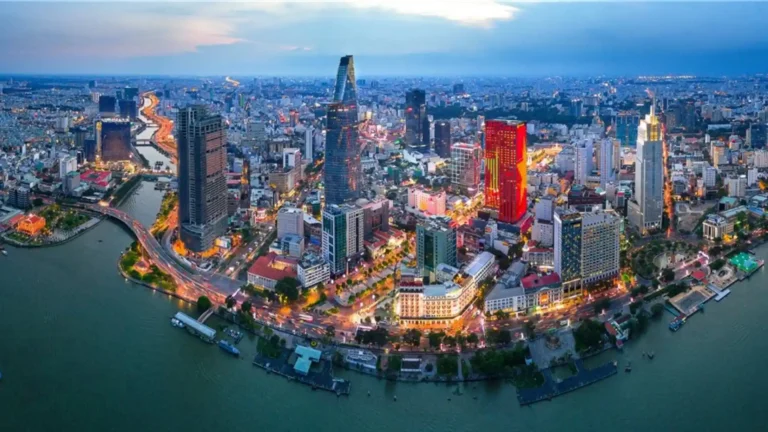

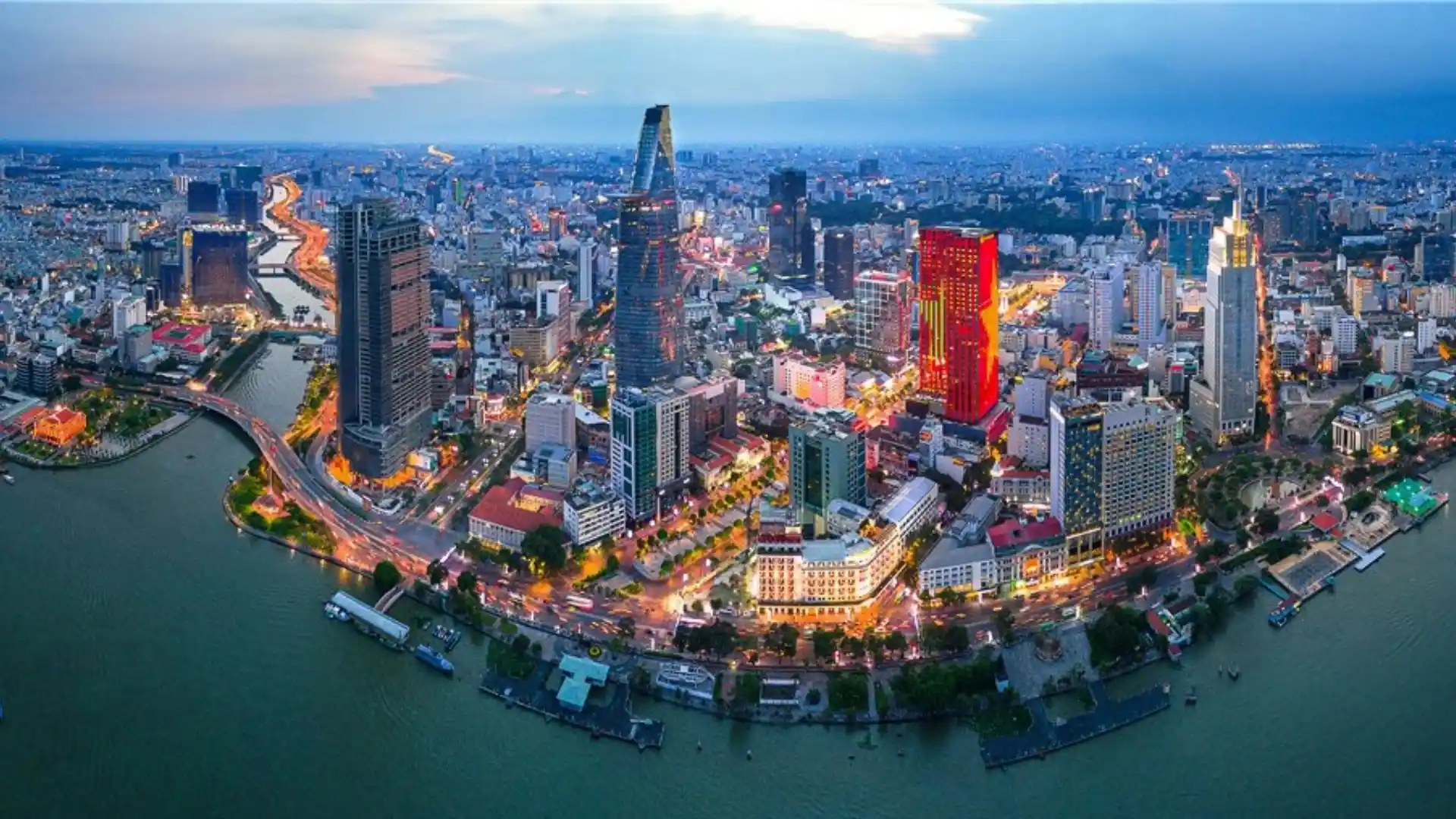
Ho Chi Minh City, still commonly called Saigon, is one of the main gateways to Southern Vietnam. A few days here can cover twentieth-century history, old commercial neighborhoods, markets, Southern Vietnamese food, coffee culture and newer areas along the Saigon River.
It is also the main starting point for the Cu Chi Tunnels and a convenient connection to My Tho, Ben Tre, Can Tho and the wider Mekong Delta.
This Ho Chi Minh City travel guide focuses on the decisions that matter most on a first trip: where to stay, how long to spend, how to get around and which places make sense to visit together.
Updated: August 2026
Information verified: August 21, 2026. Transport fares, admission prices, opening hours and operating arrangements were checked against official sources on this date. Prices and schedules may change, so confirm current details before travel.
Ho Chi Minh City Trip Planning at a Glance
| Question | Practical answer |
| How long should I stay? | 2-3 full days for the city |
| Best base for a first visit | Central Saigon |
| Drier months | Generally December to April |
| Rainier months | Generally May to November |
| Main airport | Tan Son Nhat International Airport (SGN) |
| Getting around | Walking, Metro Line 1 and Grab |
| Do I need a motorbike? | No |
| Budget | Roughly 600,000-1,000,000 VND/day at the budget end |
| Cu Chi | Practical as a half-day excursion |
| Mekong Delta in one day | My Tho-Ben Tre can work |
| Cai Rang Floating Market | Stay overnight in Can Tho if it is a priority |
| Currency | Vietnamese Dong (VND) |
A Note About District Names in 2026
Ho Chi Minh City’s administrative structure changed significantly in 2025.
Names such as District 1, District 3, Binh Thanh, Thao Dien and An Phu are still common in travel conversations, hotel listings and older maps, even though official addresses now use the new ward structure.
This article keeps those familiar names where they make a location easier for visitors to recognize.
Former Thao Dien is now part of An Khanh Ward, while the former An Phu area was divided between An Khanh and Binh Trung wards.
When this guide refers to the former Binh Thanh District area, it means the broader area travelers traditionally knew as Binh Thanh, not only today’s Binh Thanh Ward.
The article mainly covers central Saigon and the urban areas most visitors are likely to use rather than the entire administrative area of the expanded Ho Chi Minh City.
When to Visit Ho Chi Minh City
Ho Chi Minh City stays warm throughout the year. Rainfall changes more noticeably than temperature.
December to April
These are generally the drier months.
They are easier for long sightseeing days if you plan to walk between museums, markets and central landmarks.
December through February can also be busy, particularly around Christmas, New Year and Tet holidays, so accommodation and transport may require more planning.
May to November
Rain becomes more frequent, often arriving as a strong afternoon shower rather than lasting the entire day.
Carry a compact umbrella or light rain jacket and keep an indoor option in mind. Museums, markets and cafés make it fairly easy to adjust to a day when rain arrives.
Tet Holidays
Tet changes the normal rhythm of the city.
Some family-run restaurants and smaller businesses close temporarily, while flights, trains and buses become much busier as people travel home.
If your dates fall around Tet, book long-distance transport earlier than usual and check opening hours individually.
Other Dates Worth Checking
April 30 and May 1 form a major public-holiday period. Central areas can become busier and temporary traffic restrictions may affect roads around public events.
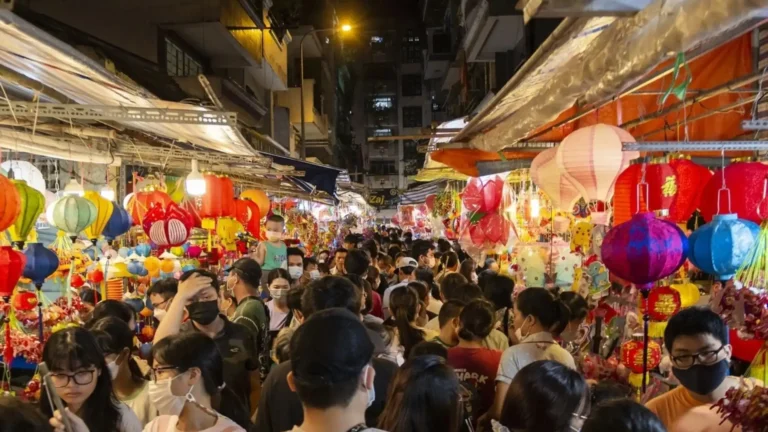
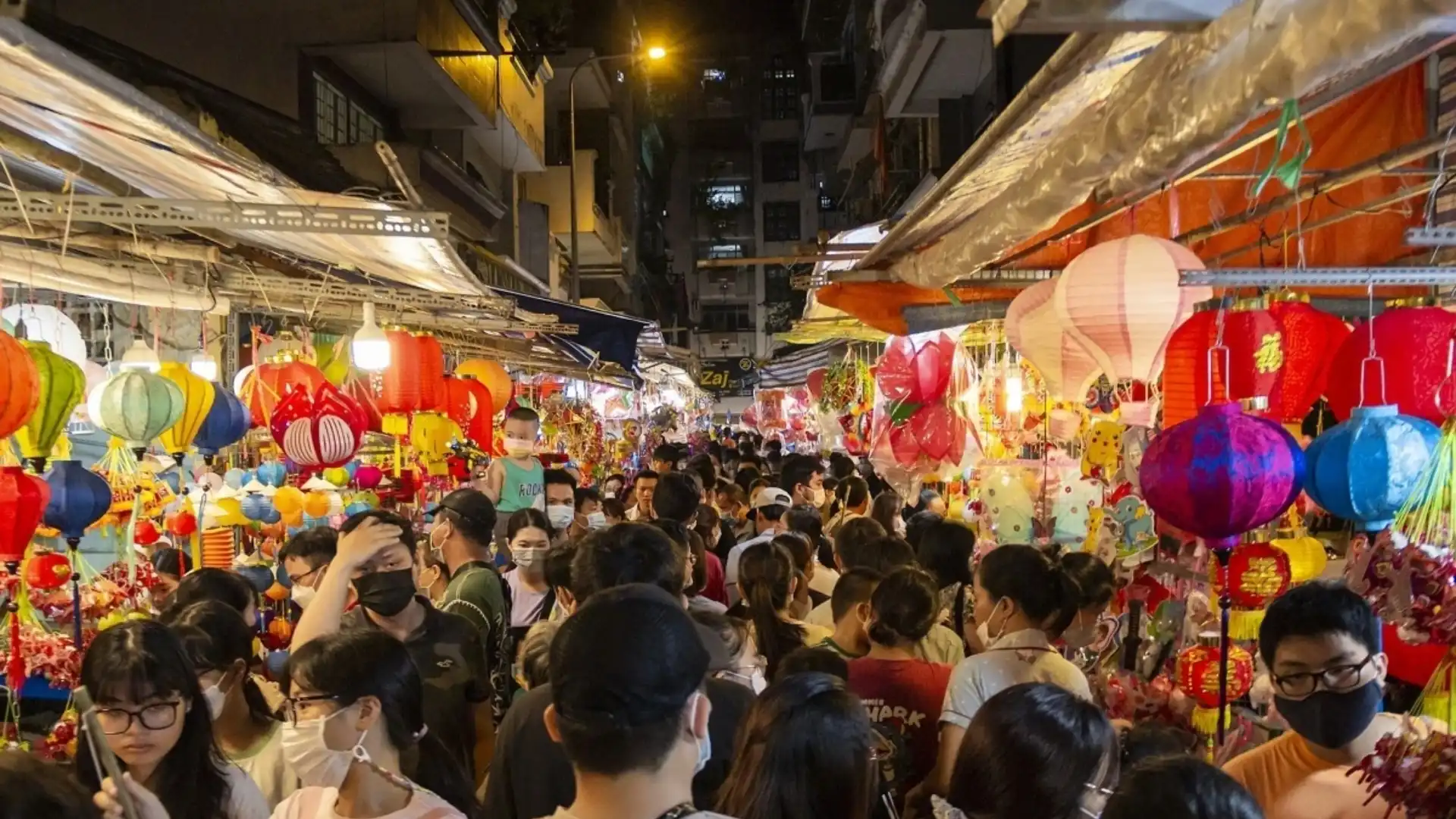
Mid-Autumn Festival follows the lunar calendar. Cho Lon is an interesting area during this period because of lanterns and seasonal activity.
Other festivals and city events change from year to year. Check the current Ho Chi Minh City event calendar shortly before travel rather than planning around an old annual schedule.
Before You Travel
Vietnam Visa and E-Visa
Visa rules depend on nationality and length of stay.
Vietnam’s official electronic visa can be valid for up to 90 days, with either single or multiple entry.
Some nationalities qualify for visa exemption and may not need an e-visa for shorter stays.
Check the current rule for your passport before submitting an application.
Currency and Payments
Vietnam uses the Vietnamese Dong (VND).
Cash is still useful for:
-
street food;
-
markets;
-
small cafés;
-
family-run shops;
-
low-value purchases.
Cards and digital payments are common in hotels, shopping centers and many restaurants.
ATMs are easy to find in central Ho Chi Minh City. Carrying some smaller notes is also useful for food stalls, markets and short purchases.
How Much Should You Budget?
There is no single daily budget that fits everyone, but these ranges are useful for initial planning:
| Travel style | Approximate daily budget | What it may cover |
| Budget | 600,000-1,000,000 VND | Hostel or simple room, local meals, public transport |
| Mid-range | 1,500,000-3,000,000 VND | Comfortable room, restaurants, Grab and paid sights |
| Higher comfort | 4,000,000+ VND | Upscale accommodation, higher-end dining and private transport |
These are planning estimates rather than official prices and exclude international flights and major private tours.
Accommodation is usually the largest variable, especially during holidays and busy travel dates.
Arriving in Ho Chi Minh City
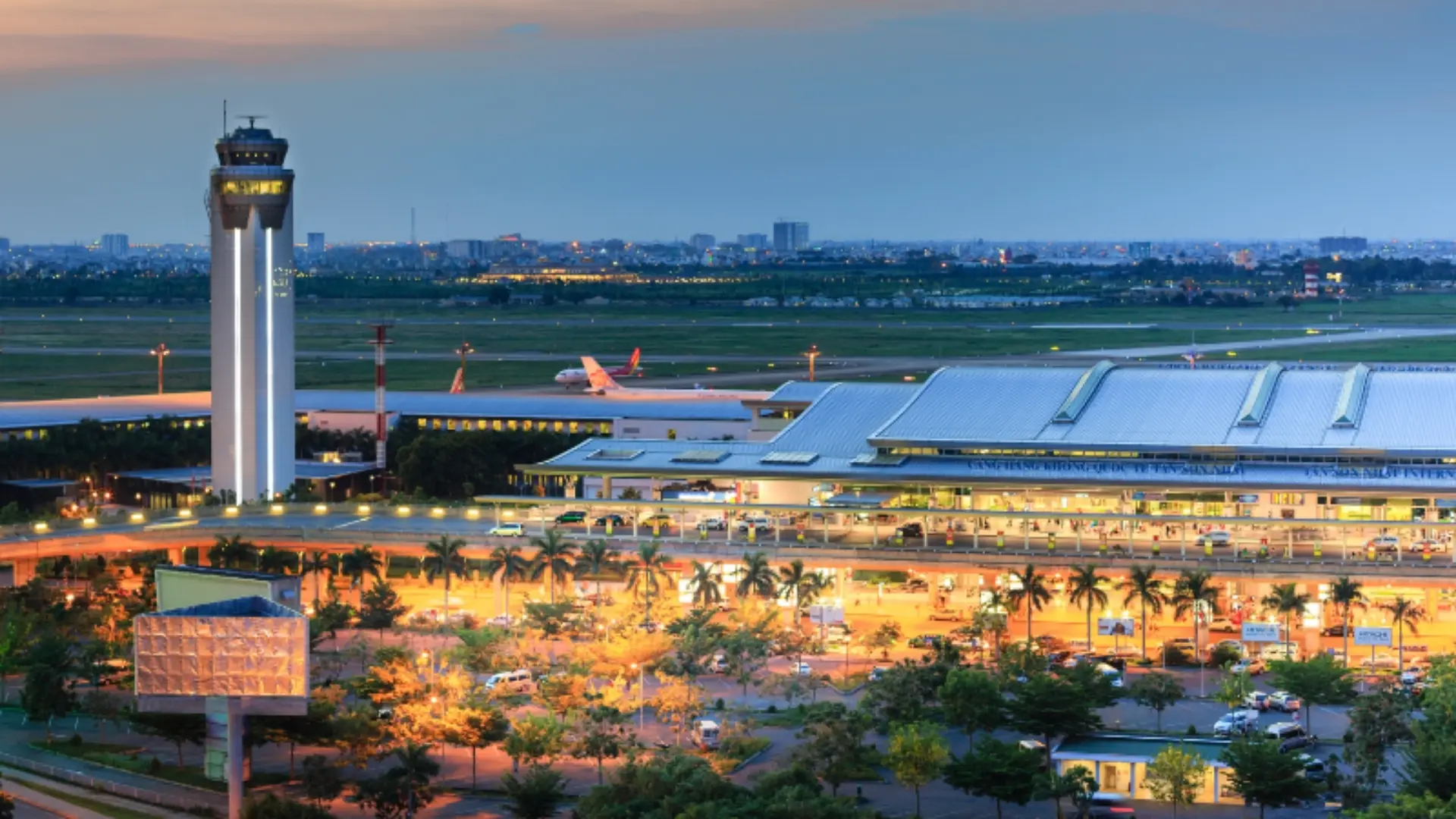
Tan Son Nhat International Airport
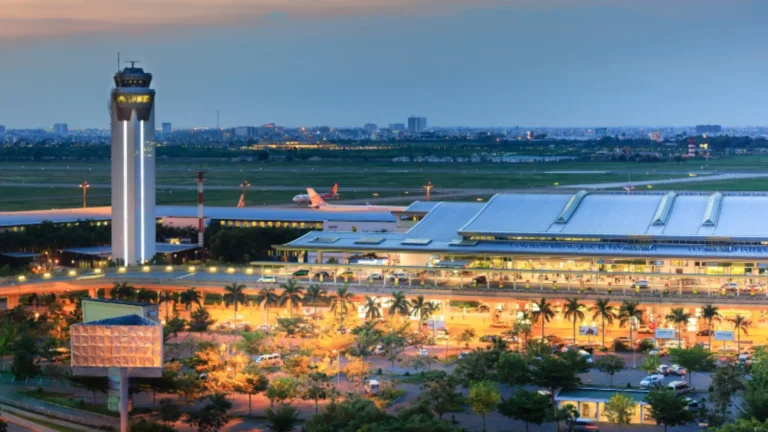
Tan Son Nhat International Airport has three passenger terminals.
As of August 2026:
-
T1 serves domestic operations;
-
T2 is the international terminal;
-
T3 serves domestic flights operated by several Vietnamese airlines.
Terminal assignments can change, so check the terminal shown by your airline before traveling to the airport.
A free shuttle connects the passenger terminals.
From Tan Son Nhat Airport to Central Saigon
Grab
Grab is straightforward for most first-time visitors.
Enter your hotel as the destination, follow the pickup instructions shown in the app and check the licence plate before getting into the vehicle.
Pickup areas differ by terminal, so follow the location shown in the app rather than assuming the driver can stop directly outside any exit.
Green SM
Green SM is a Vietnamese electric mobility service and another practical option from Tan Son Nhat Airport.
You can book a car through the Green SM app, while Green SM taxis are also available at designated airport pickup areas. The service currently operates at T1, T2 and T3.
If you have just arrived, check the pickup point shown in the app or follow the Green SM signs at your terminal, as airport pickup locations can change.
Green SM is worth considering if you prefer an electric taxi or want an alternative to Grab and conventional taxi companies.
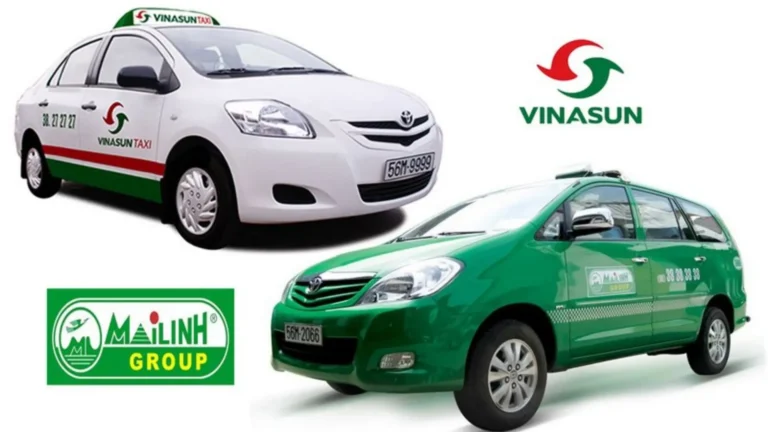
Vinasun and Mai Linh
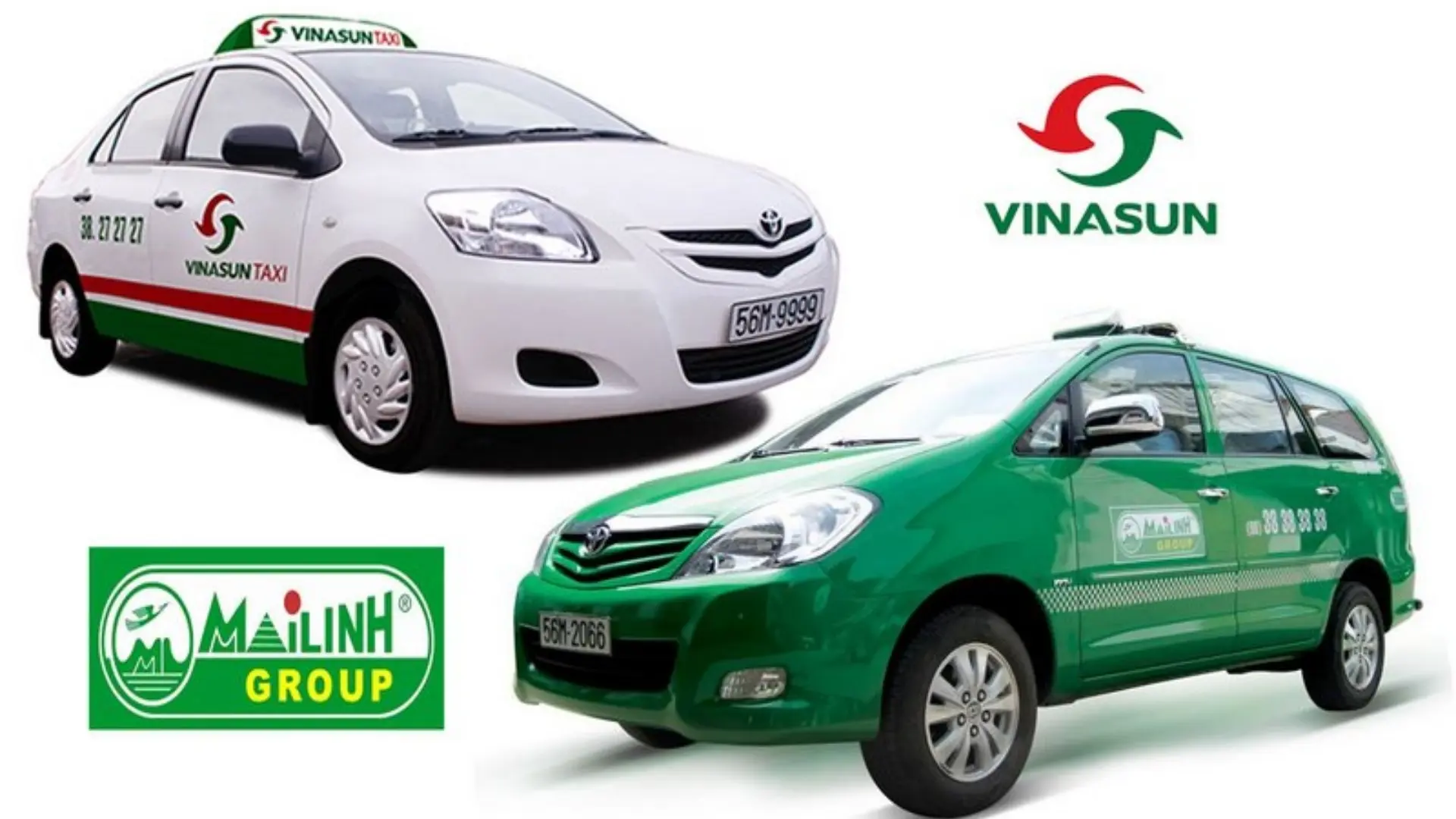
If you prefer a conventional taxi, Vinasun and Mai Linh are two established names worth recognizing in Ho Chi Minh City.
Use the airport’s designated taxi area or an official booking channel rather than accepting an unsolicited ride.
Fake taxis using branding similar to legitimate operators have been reported in Ho Chi Minh City, so check the company name and vehicle before boarding.
Which Airport Transfer Should You Choose?
| Situation | Practical choice |
| First visit with luggage | Grab, Green SM or conventional taxi |
| Prefer an electric taxi | Green SM |
| Prefer a conventional taxi | Vinasun or Mai Linh |
| Family or larger group | Pre-arranged transfer can be convenient |
| T1/T2 arrival using public transport | Check the current bus route before leaving the terminal |
Getting to Ho Chi Minh City by Train
Saigon Railway Station connects the city with Vietnam’s north-south railway.
Overnight trains can be useful if you are traveling between Ho Chi Minh City and destinations such as Nha Trang, Da Nang or Hue.
They are slower than flying, but an overnight service can replace a night’s accommodation and avoids another airport transfer.
Getting to Ho Chi Minh City by Intercity Bus
Intercity buses are widely used between Ho Chi Minh City, the Mekong Delta and Da Lat.
One operator foreign travelers will see often is FUTA Bus Lines, commonly known as Phuong Trang.
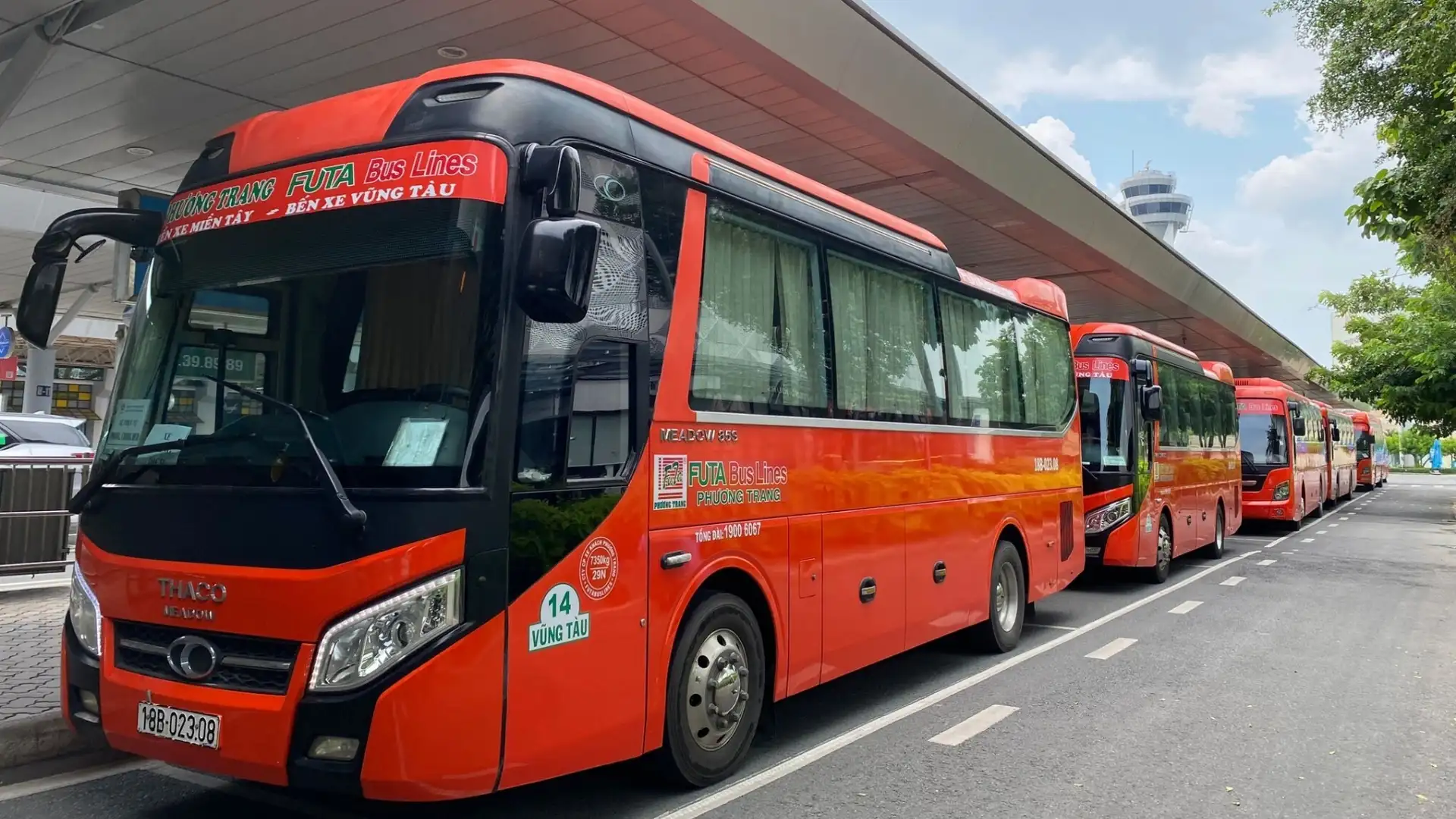
FUTA operates routes from Ho Chi Minh City to destinations including:
-
Can Tho;
-
Da Lat;
-
several other cities in Southern Vietnam and the Mekong Delta.
Phuong Trang is one option rather than automatically the right bus company for every route.
Before booking, compare:
-
actual pickup point;
-
arrival point;
-
departure time;
-
vehicle type;
-
recent passenger reviews;
-
whether a local shuttle is included.
A ticket saying “Ho Chi Minh City” does not necessarily mean the bus leaves from the city center.
Depending on the route and operator, departure may be from:
-
Mien Tay Bus Station;
-
Mien Dong New Bus Station;
-
an operator’s own office;
-
a separate shuttle pickup point.
Always check the exact address shown on the ticket.
Getting Around Ho Chi Minh City
For most visitors, the easiest approach is to combine several forms of transport.
Walk when attractions are close, use Metro Line 1 when it follows your route, and use Grab or Green SM for places that do not connect conveniently.
Metro Line 1
Metro Line 1 runs between Ben Thanh and Suoi Tien.
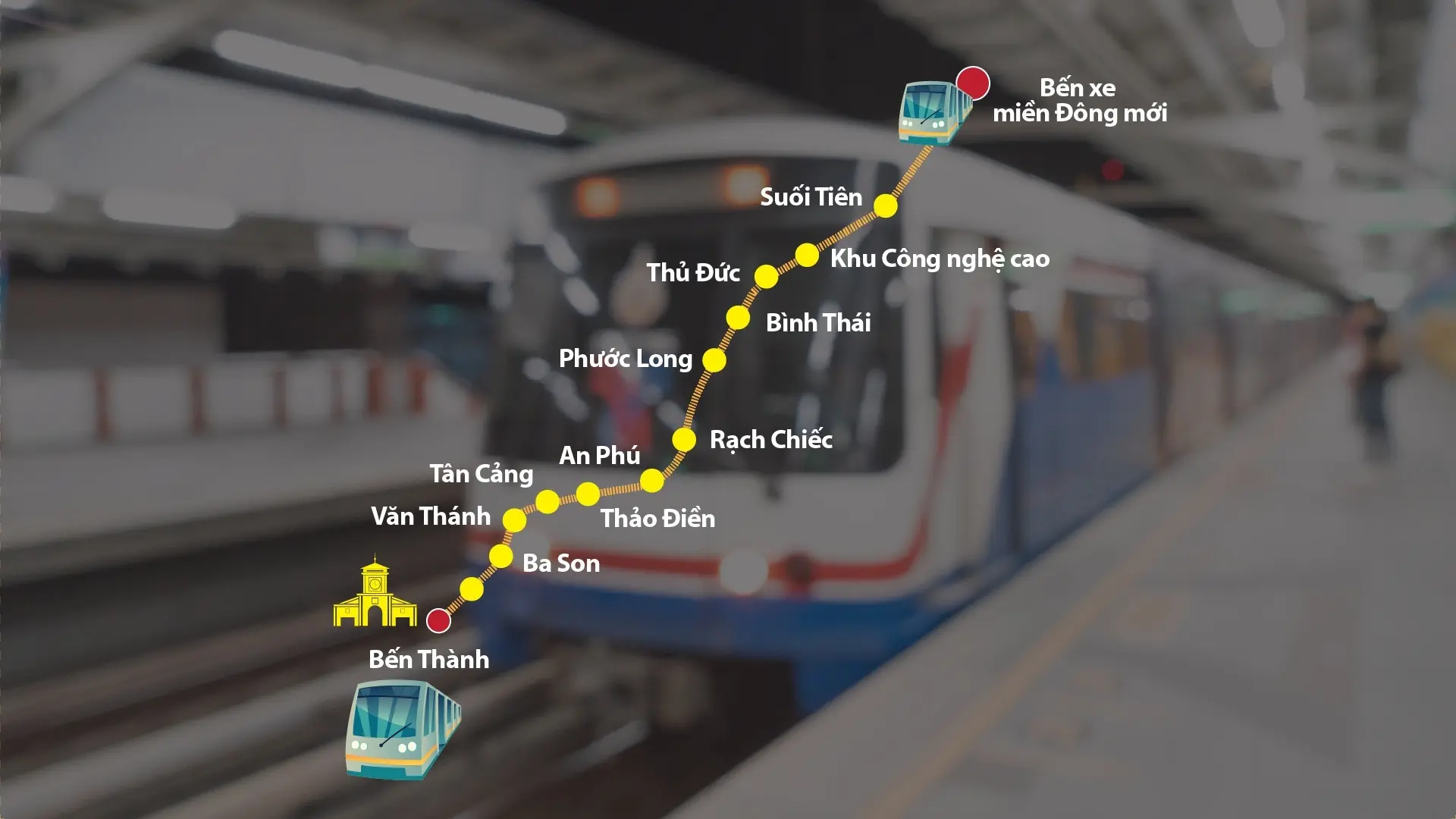
The 19.7-kilometre route has 14 stations:
-
Ben Thanh;
-
Opera House;
-
Ba Son;
-
Van Thanh;
-
Tan Cang;
-
Thao Dien;
-
An Phu;
-
Rach Chiec;
-
Phuoc Long;
-
Binh Thai;
-
Thu Duc;
-
High-Tech Park;
-
National University;
-
Suoi Tien Bus Station.
For visitors, the most useful section is usually between central Saigon and eastern areas such as Thao Dien and An Phu.
Cash single fares currently range from 7,000 to 20,000 VND, depending on distance.
A one-day unlimited ticket costs 40,000 VND, while a three-day ticket costs 90,000 VND.
Grab and Taxis
Grab is useful when a destination is too far to walk or does not sit conveniently on the metro route.
For conventional taxis, Vinasun and Mai Linh are two recognizable operators for first-time visitors.
Always check the vehicle before boarding.
Green SM

Green SM is a Vietnamese electric mobility service that can be used for getting around Ho Chi Minh City.
The Green SM app allows travelers to book both electric cars and electric motorbikes, making it another option alongside Grab and conventional taxis such as Vinasun or Mai Linh.
For most visitors, Green SM Car works much like other app-based ride services: enter your destination, check the trip details and follow the pickup information shown in the app.
Green SM can be useful if you:
-
prefer traveling by electric vehicle;
-
want another app-based option when comparing pickup times or fares;
-
need a car for short trips between neighborhoods;
-
prefer a motorbike ride for shorter journeys.
The app supports several payment methods, including cash, bank cards and electronic payments.
For airport arrivals, Green SM also operates at Tan Son Nhat Airport. Check the pickup instructions for your terminal rather than assuming the vehicle can stop at any exit.
Public Buses
Ho Chi Minh City has a large bus network.
Buses are inexpensive, but visitors staying only one or two days may find that repeated transfers cost more sightseeing time than they save in money.
Saigon Waterbus
Saigon Waterbus operates along the Saigon River between Bach Dang and Linh Dong.
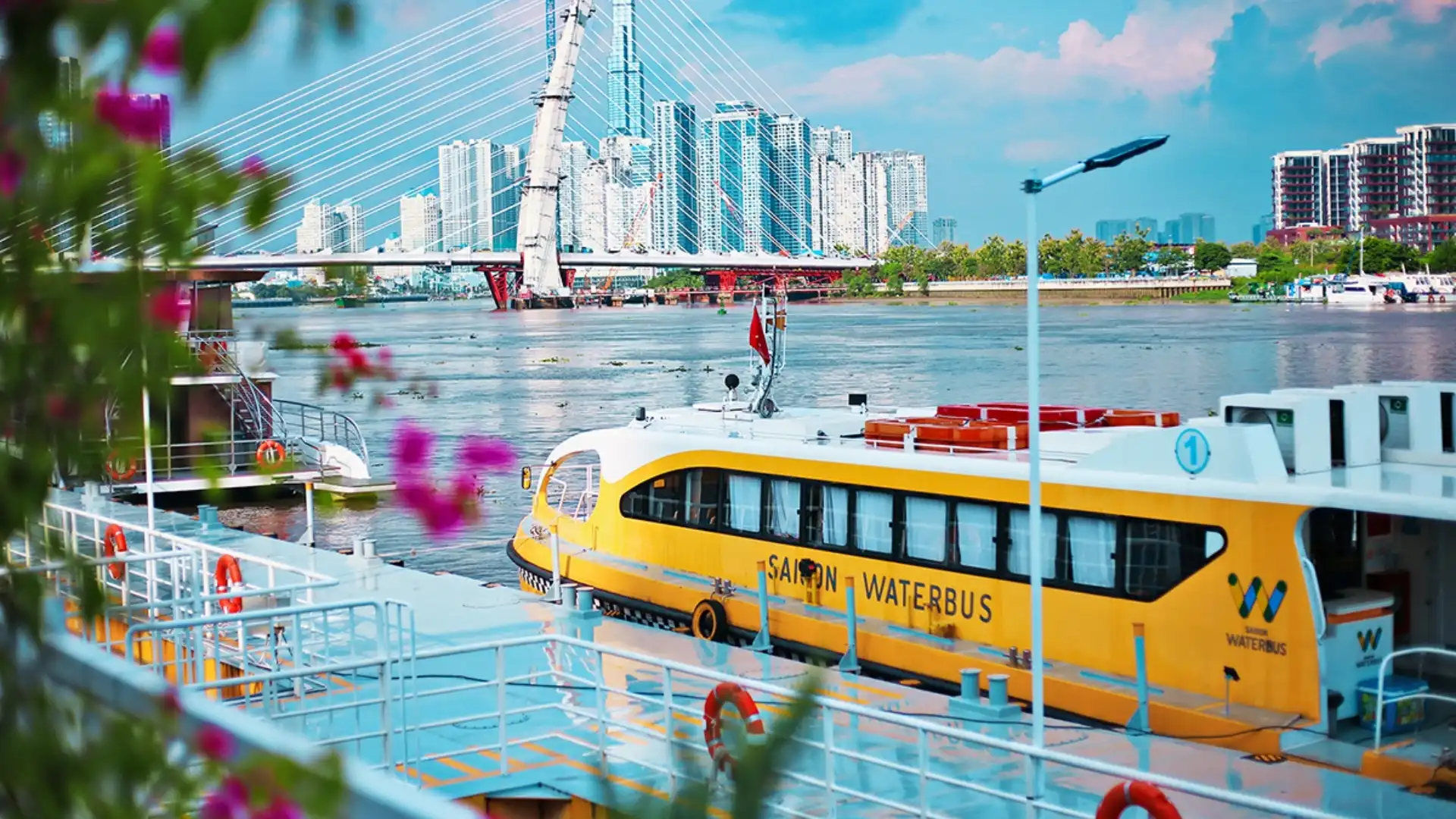
The standard fare is currently 15,000 VND per person per journey.
The route includes riverfront stops around areas such as Ba Son, Binh An and Thao Dien.
It is not the fastest way to make every journey, but it can fit naturally into a day if your route follows the river and you want to see the city from the water without booking a separate sightseeing cruise.
Check the current timetable before going to the pier.
Walking
Central Saigon becomes much easier when you think in clusters instead of individual attractions.
One practical route is:
War Remnants Museum → Independence Palace → Central Post Office → Notre-Dame Cathedral area → Nguyen Van Binh Book Street → Nguyen Hue
You do not need a separate car between every stop.
Midday heat can still make a short taxi ride worthwhile.
Should You Rent a Motorbike?
You do not need a motorbike for a first visit.
Traffic can be demanding if you have never ridden in a large Vietnamese city.
If you decide to rent one, make sure your licence, vehicle category, International Driving Permit where applicable and travel insurance actually cover motorcycle use in Vietnam.
Otherwise, walking, Metro Line 1, Grab, Green SM, taxis and buses cover most first-time visitor needs.
Where to Stay in Ho Chi Minh City
Choose the area before choosing the hotel.
Central Saigon – Former District 1
Good for: first-time visitors and short stays.
This is the easiest base for:
-
Ben Thanh Market;
-
Nguyen Hue;
-
Dong Khoi;
-
Opera House;
-
Central Post Office;
-
Saigon River.
Restaurants, cafés, shopping and nightlife are also easy to reach.
Trade-off: accommodation can cost more than in surrounding areas and some streets stay active late at night.
Former District 3 and Xuan Hoa Area
Good for: central access with a more residential feel.
The War Remnants Museum and Independence Palace are close, while streets around Vo Van Tan and Nam Ky Khoi Nghia have cafés, restaurants and residential areas.
Trade-off: not everything will be within walking distance.
Thao Dien and An Phu – Familiar Neighborhood Names
Thao Dien remains a common travel and real-estate name even though former Thao Dien is now part of An Khanh Ward.
The former An Phu area was also reorganized during the 2025 administrative changes.
Good for: longer stays, cafés, international dining and Metro Line 1.
Both Thao Dien and An Phu remain useful Metro station names for travelers.
Trade-off: if your priority is the War Remnants Museum, Independence Palace and central historical sights, staying in central Saigon remains more convenient.
Former Binh Thanh District Area
Here, “Binh Thanh” refers to the broader area travelers traditionally knew as Binh Thanh rather than only today’s Binh Thanh Ward.
Good for: modern apartments, Landmark 81 and riverfront areas.
Trade-off: sightseeing is more spread out and transport is usually necessary.
Cho Lon
Good for: markets, Chinese-Vietnamese heritage and food.
Binh Tay Market and Thien Hau Temple are in this part of the city.
For most first-time visitors, Cho Lon works well as a half-day area to explore rather than the default place to stay.
Which Area Should You Choose?
First visit + two or three days: Central Saigon.
Want central access with a slightly more residential setting: Former District 3/Xuan Hoa.
Longer stay + cafés + Metro Line 1: Thao Dien.
Markets and Chinese-Vietnamese heritage are the priority: Cho Lon.
Modern apartments and riverfront areas: Former Binh Thanh District area.
Places to Prioritize on a First Visit
The aim is not to visit every landmark on a long “top things to do” list.
Choose places that add something different to the trip and group nearby stops together.
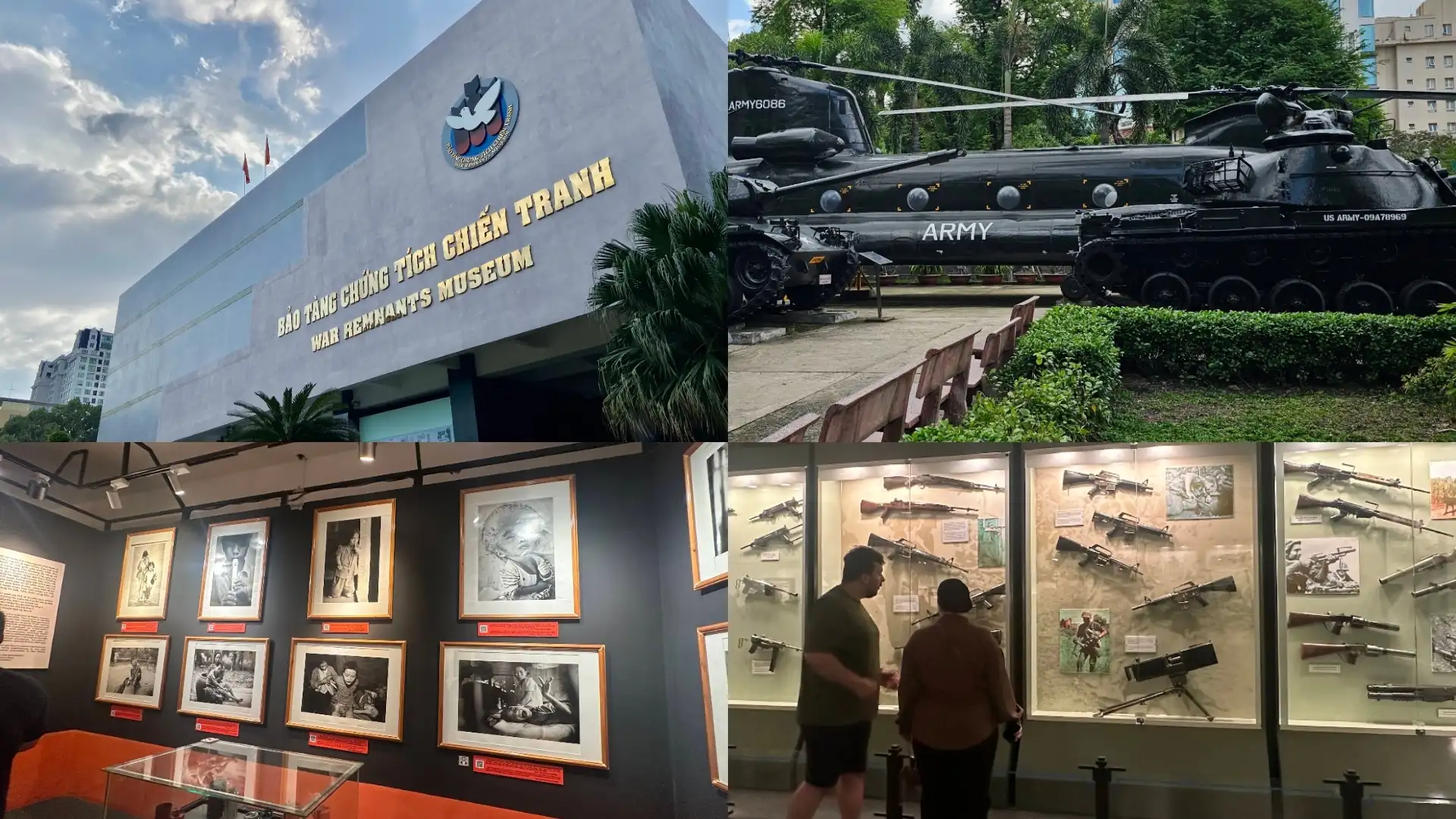
War Remnants Museum
Address: 28 Vo Van Tan Street, Xuan Hoa Ward, Ho Chi Minh city. Opening hours: 7:30 AM-5:30 PM daily Adult ticket: 40,000 VND
The museum covers the wars in Vietnam through photographs, documents, military equipment and exhibitions.
Some displays are graphic.
Allow around 1.5-2 hours if you intend to read the exhibits rather than walk through quickly.
The Independence Palace is close enough to visit during the same half-day.
Independence Palace
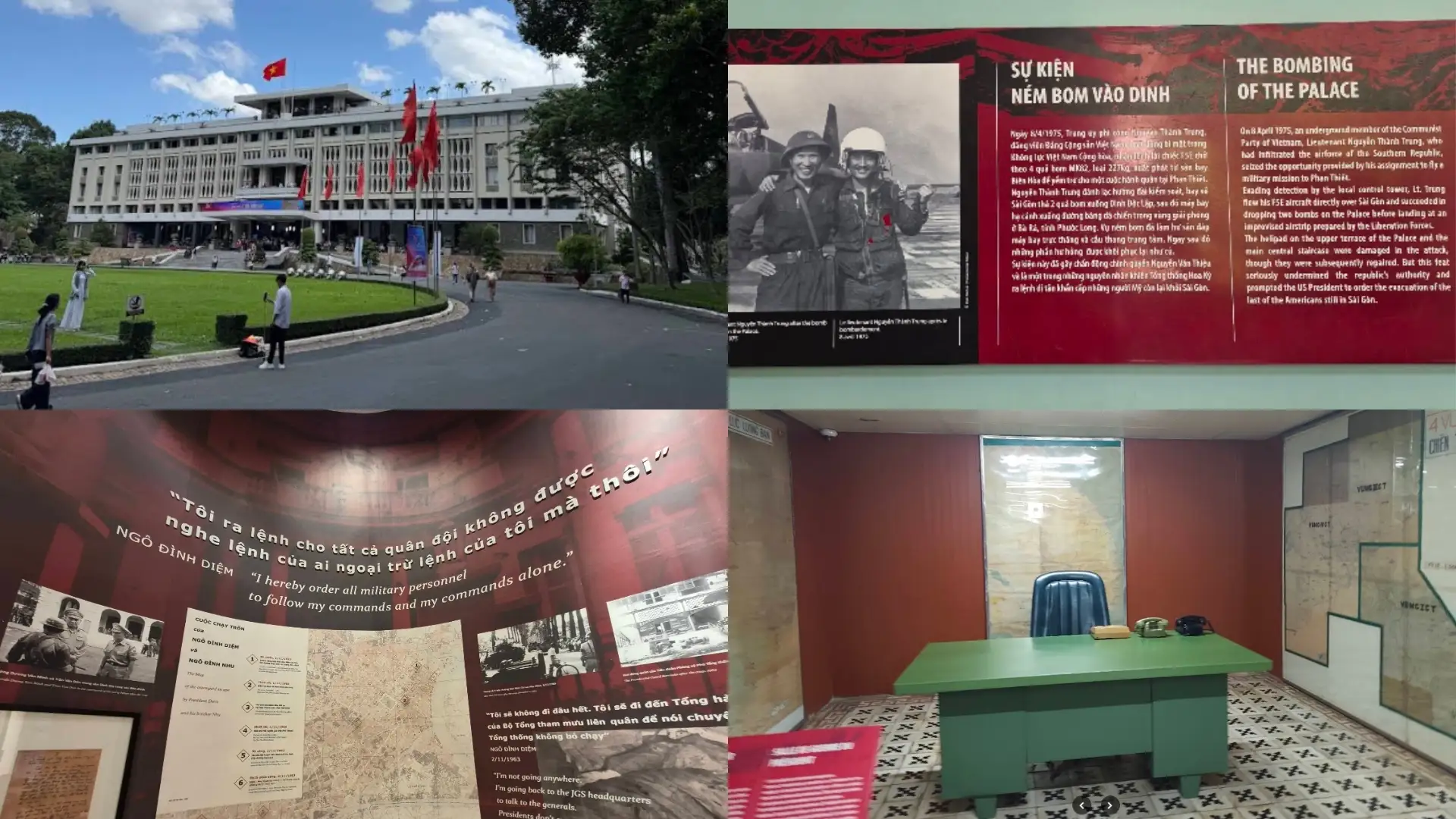
Address: 135 Nam Ky Khoi Nghia Street, Ben Thanh Ward, Ho Chi Minh city. Opening hours: 7:00 AM-6:00 PM daily Adult ticket: 80,000 VND
The palace is closely connected with the events of April 30, 1975.
Many reception rooms, offices and command spaces remain preserved, and the building itself is worth seeing for its architecture.
Visit it together with the War Remnants Museum rather than returning to the area twice.
Notre-Dame Cathedral, Central Post Office and Book Street
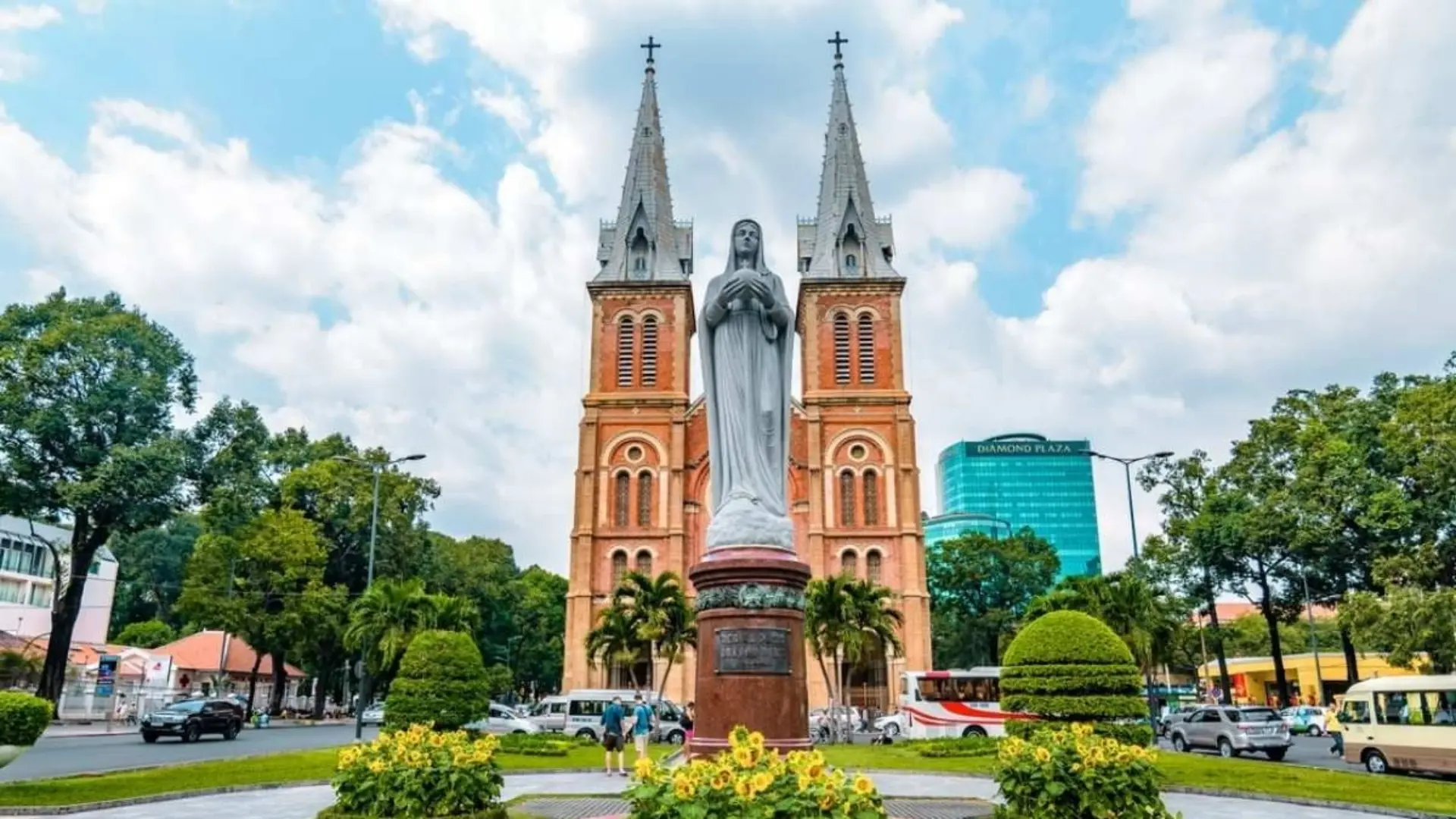
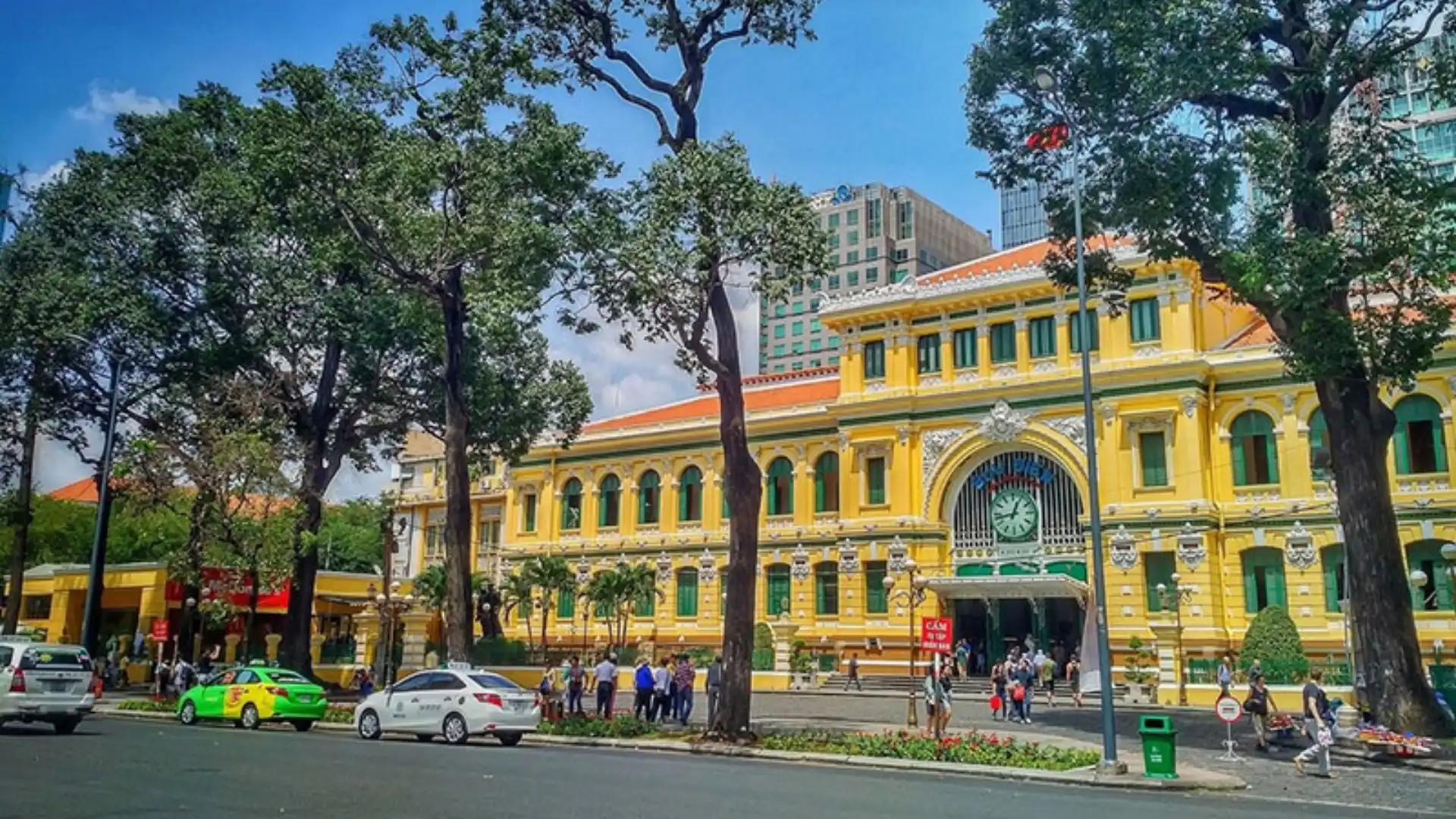
These three stops sit close together and should be treated as one cluster.
The cathedral has been undergoing restoration, so construction conditions and access may vary.
The Central Post Office remains a functioning postal building as well as a historic landmark.
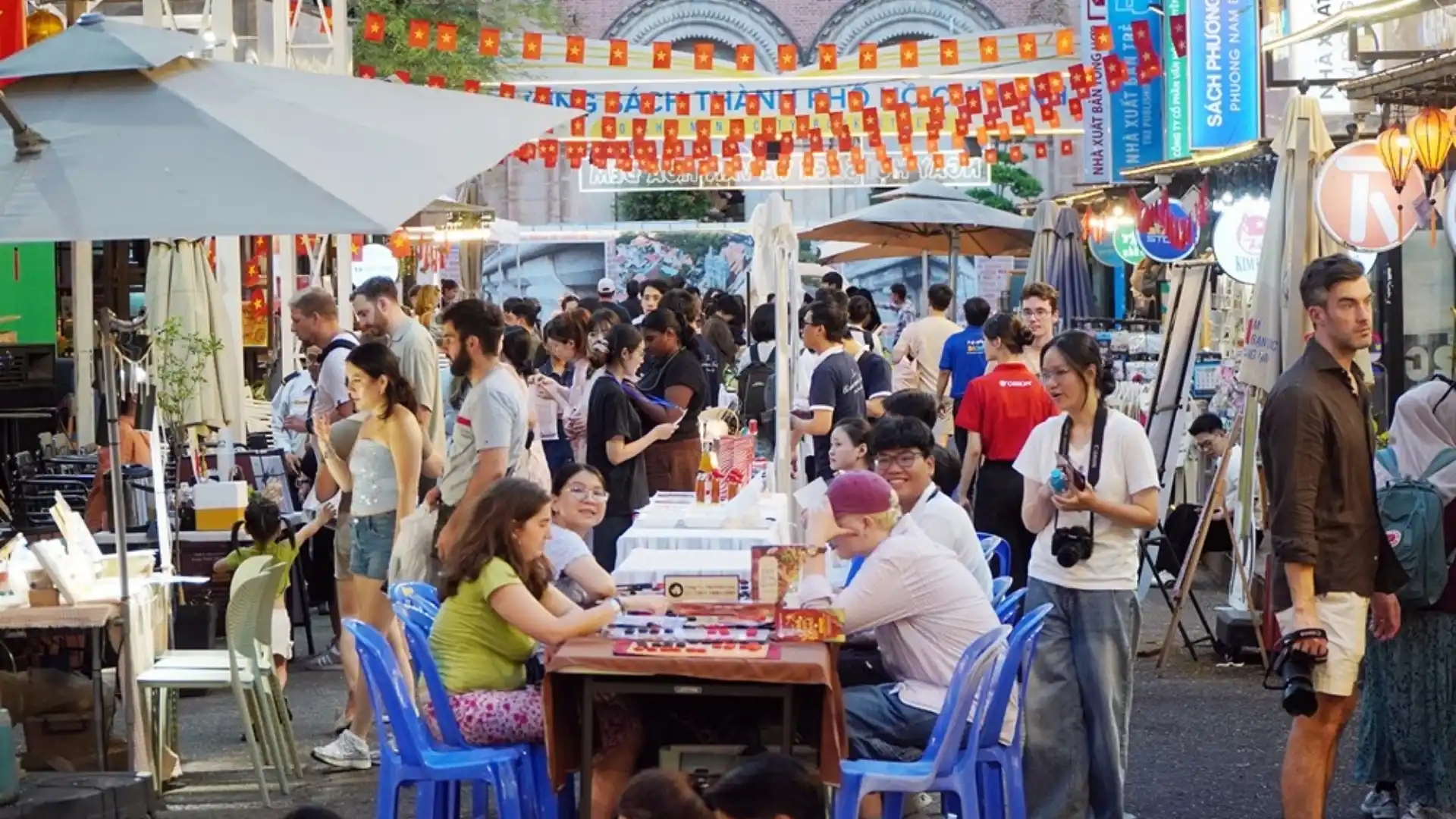
Nguyen Van Binh Book Street sits beside the cathedral and post office and adds bookstores, publisher stalls and cafés without requiring another transfer.
A practical order is:
Notre-Dame Cathedral → Central Post Office → Nguyen Van Binh Book Street
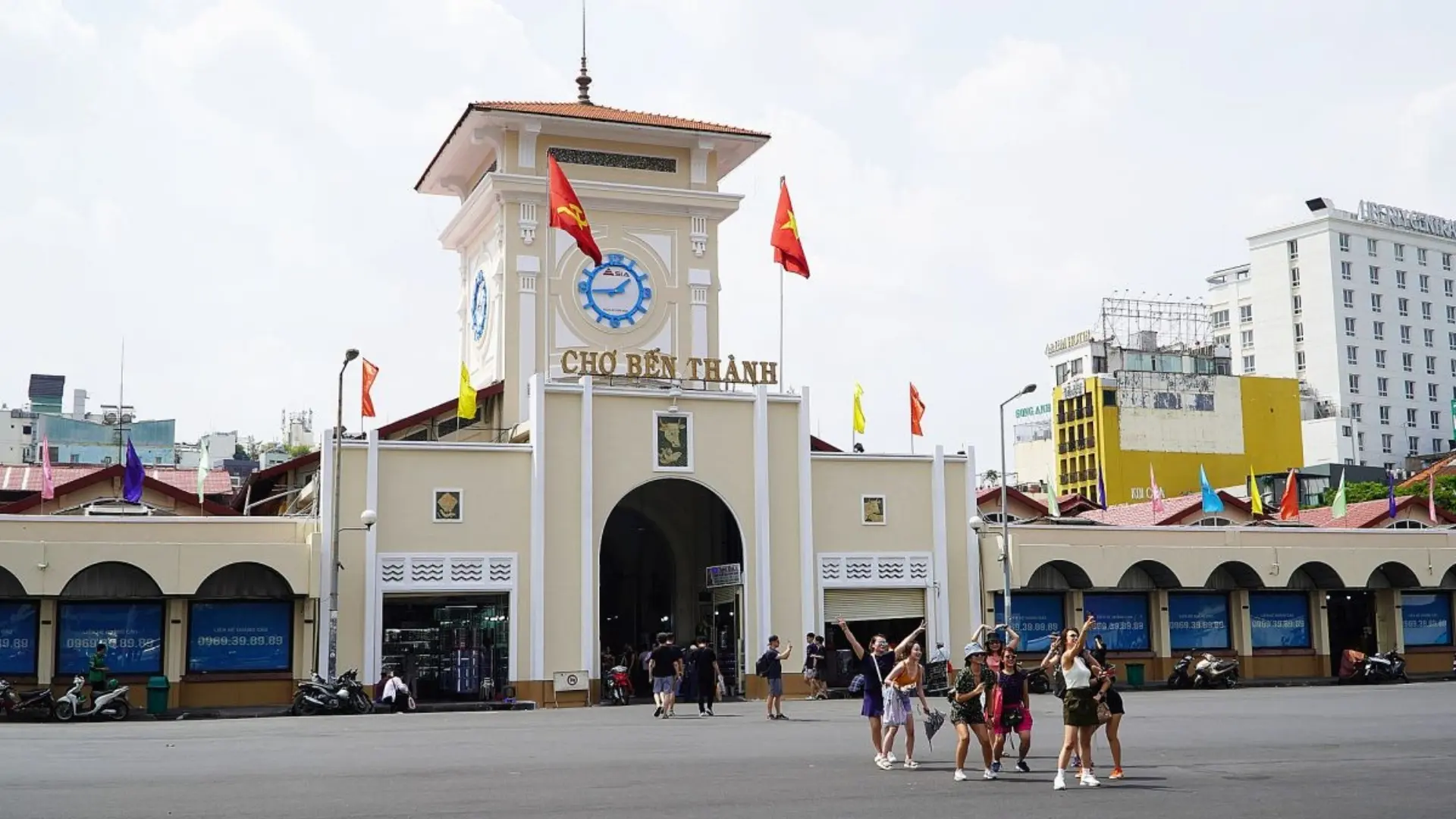
Ben Thanh Market
Ben Thanh works well as a central market stop for food, souvenirs and browsing.
It is heavily used by visitors, so compare prices before buying rather than assuming the first quoted price is fixed.
Ben Thanh Metro station also makes this area useful as a transport point.
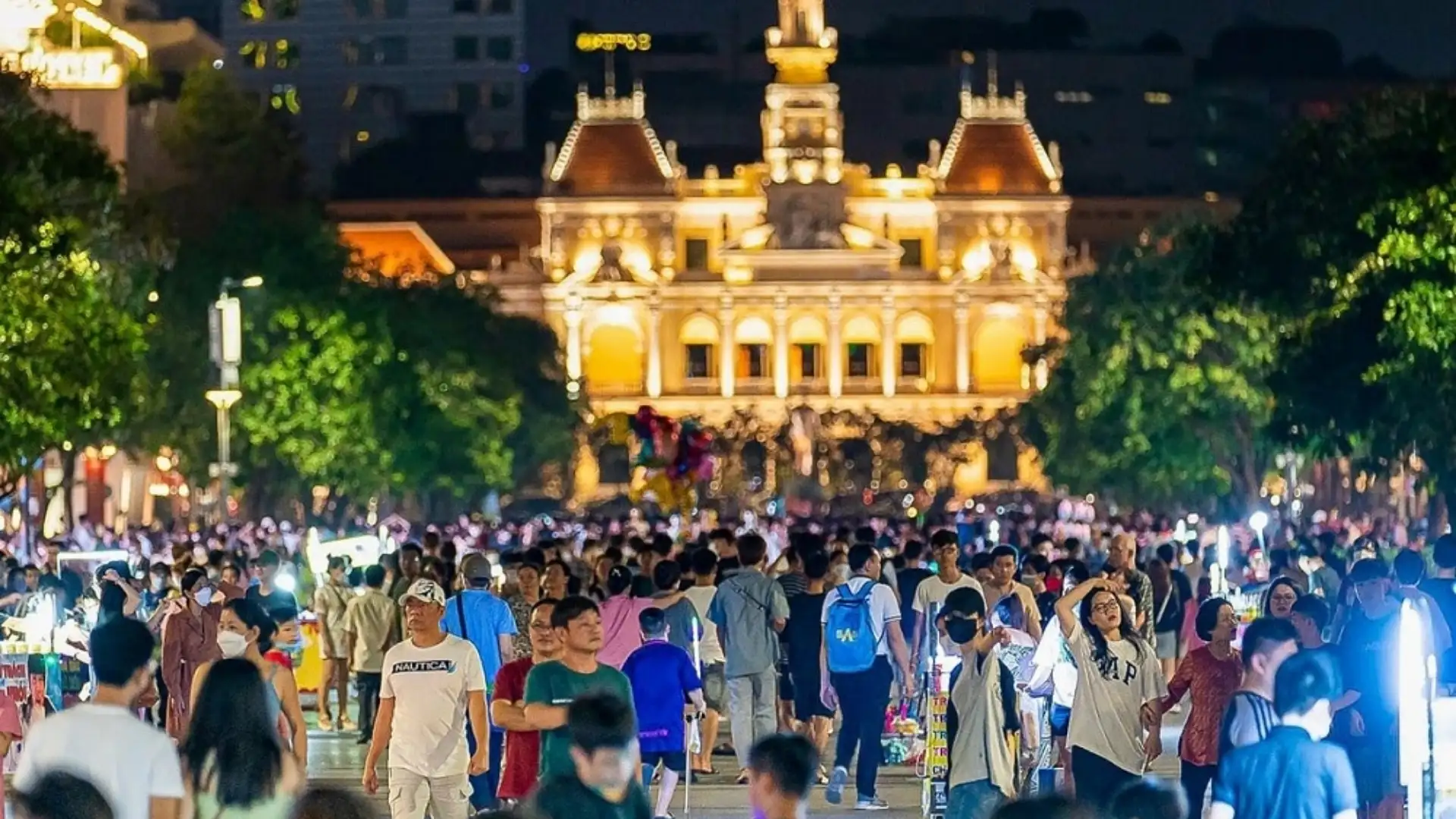
Nguyen Hue and the Opera House Area
Nguyen Hue is more comfortable in the late afternoon and evening.
From here you can walk between:
-
City Hall exterior;
-
Dong Khoi;
-
Saigon Opera House;
-
Bach Dang riverfront.
Opera House Metro station is nearby.
If you want to attend a performance rather than simply see the building, check the current program before going.
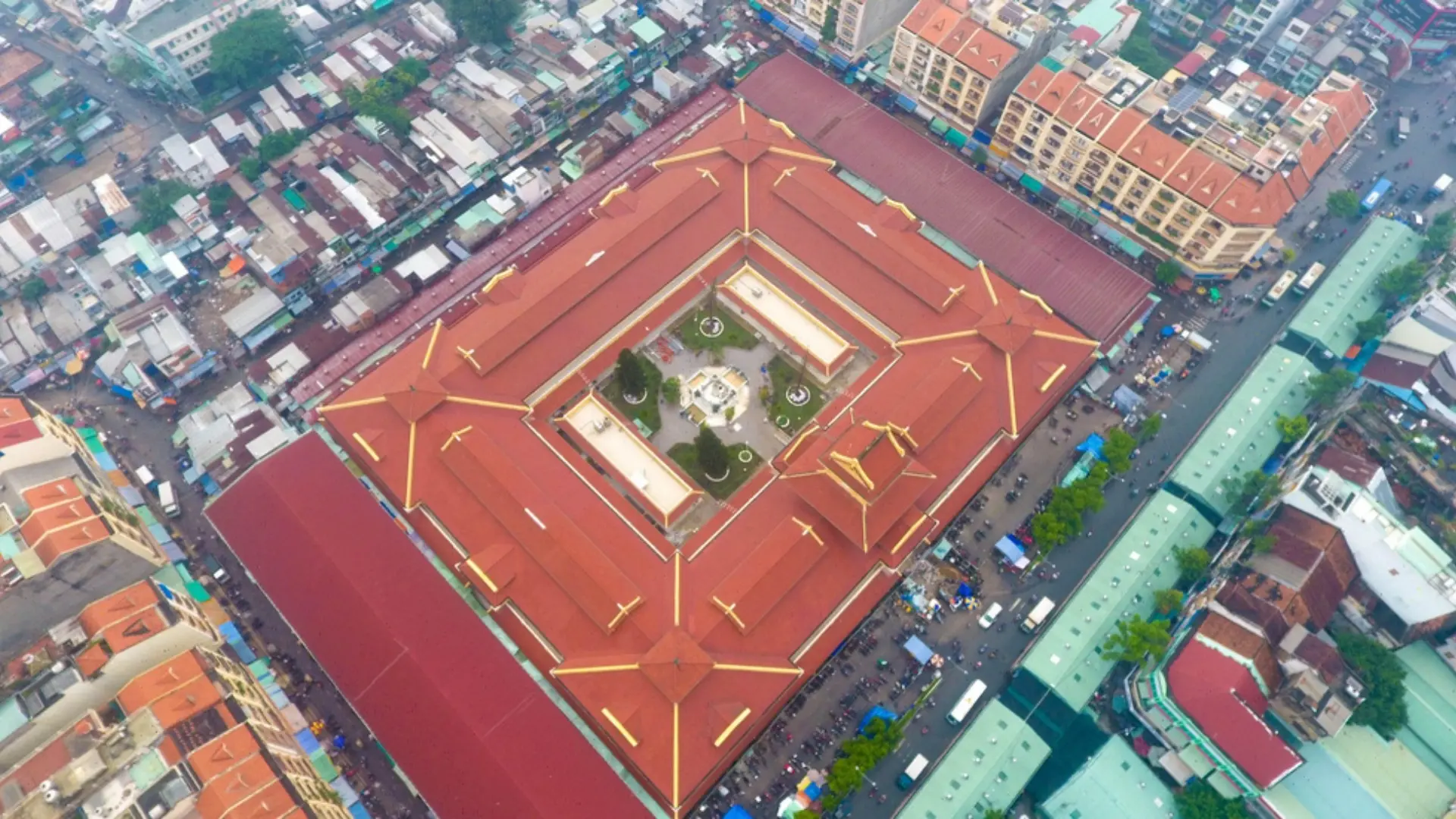
Cho Lon, Binh Tay Market and Thien Hau Temple
Set aside several hours for Cho Lon – can be understood as a “Big Market”.
Binh Tay (Cho Lon) is closely connected with wholesale commerce, while Thien Hau Temple adds the area’s Chinese-Vietnamese religious heritage.
Visiting them together makes more sense than making separate trips from central Saigon.
Travelers who prefer a slower street-level route can explore this part of the city on Mekong Smile’s Ho Chi Minh Cyclo Tour.
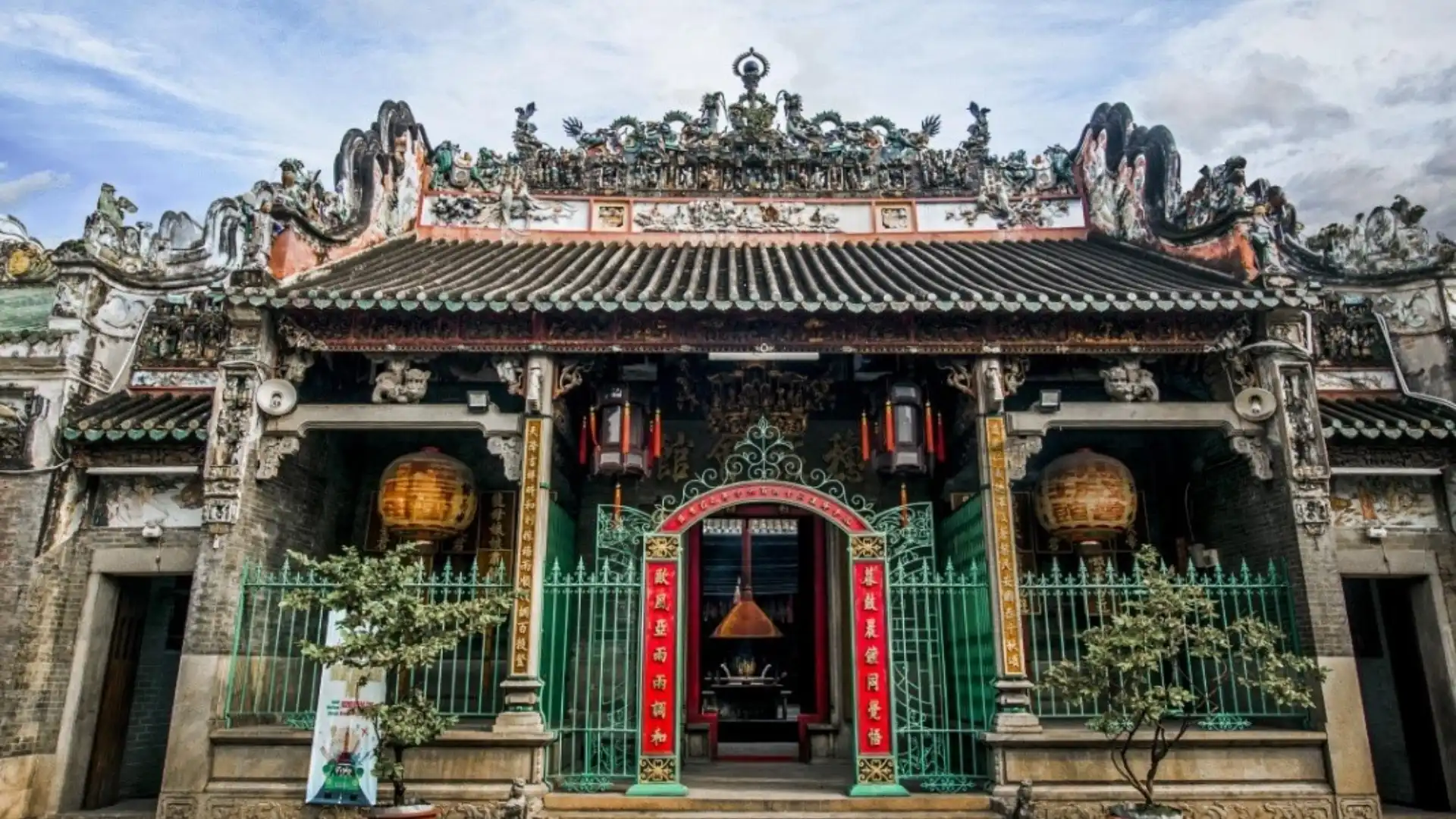
Jade Emperor Pagoda
Jade Emperor Pagoda adds a religious and spiritual stop to a trip that might otherwise consist mainly of museums and civic architecture.
It is worth considering if temples, religious architecture or local spiritual practices interest you.
Landmark 81 and the Riverfront
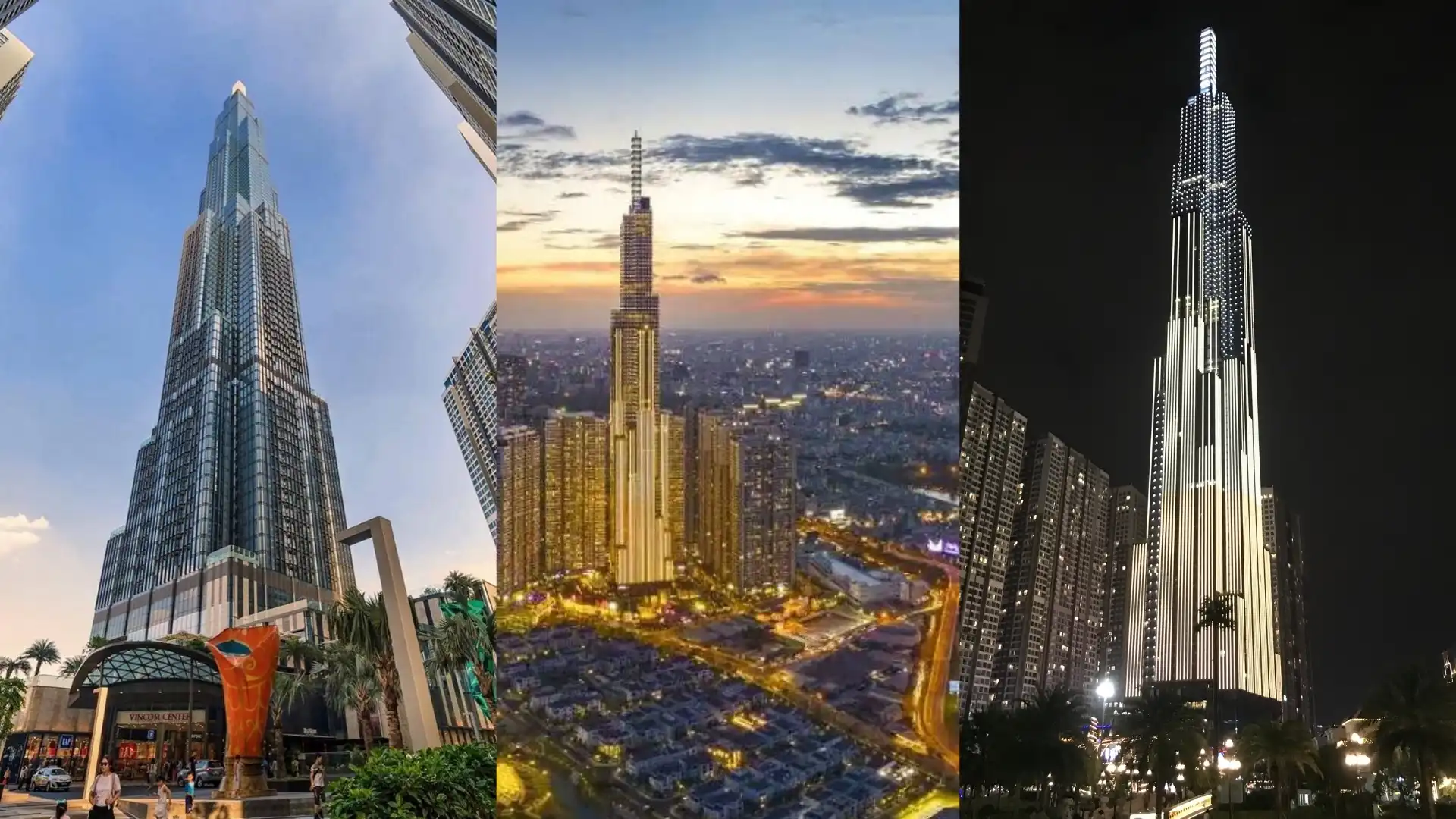
Landmark 81 is not a priority if you only have one day.
It makes more sense after you have already seen the historic center and want a look at modern Ho Chi Minh City.
The nearby riverfront and park area provide a very different setting from Ben Thanh or Cho Lon.
Explore Beyond the Main Landmarks
If you have more time, consider places that match a specific interest rather than simply adding more famous names.
Markets and neighborhood life: Tan Dinh Market and Ho Thi Ky Flower Market.
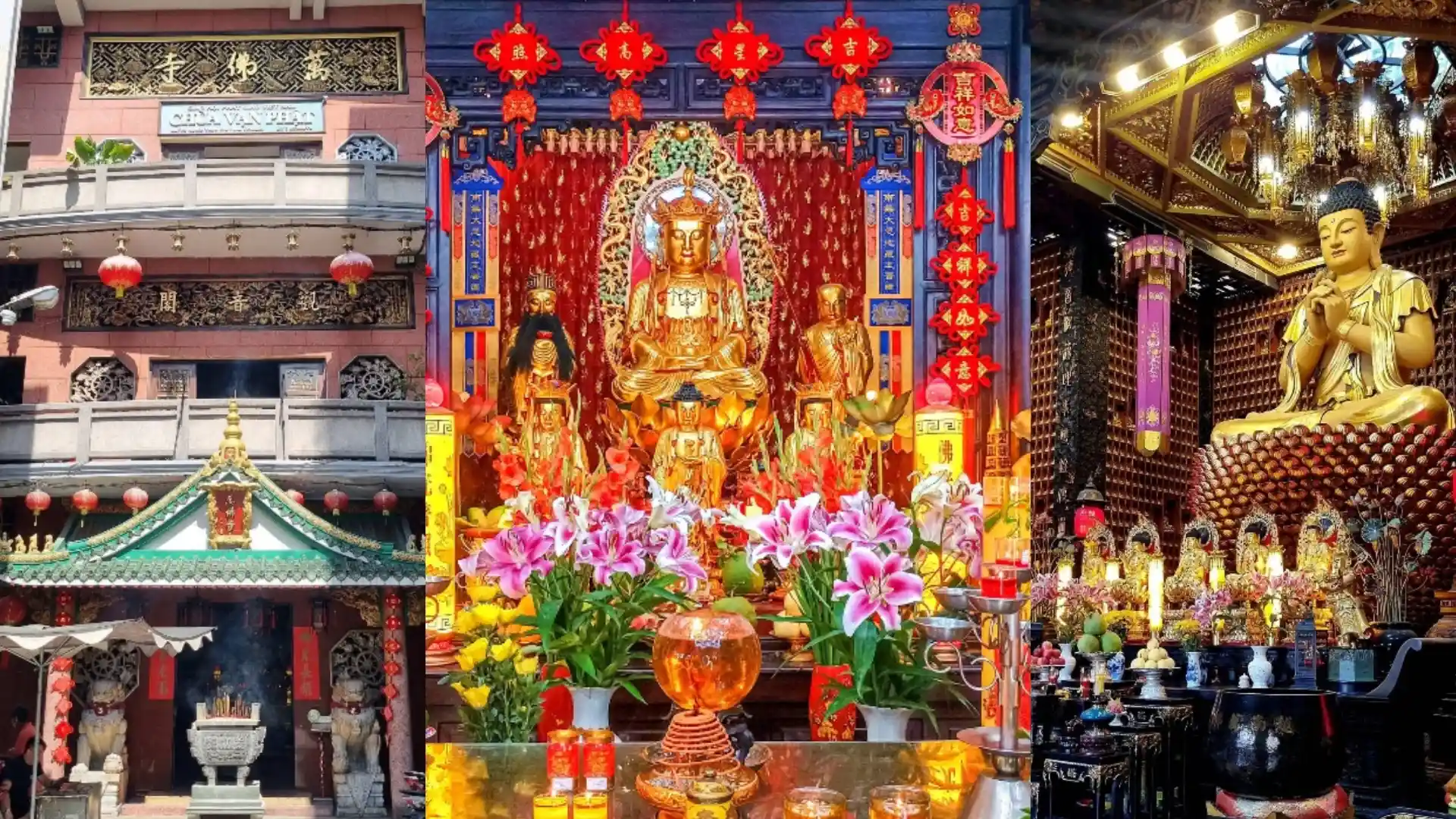
Religious architecture: Jade Emperor Pagoda, Thien Hau Temple or Ten Thousand Buddha Pagoda.
Books and a quiet central stop: Nguyen Van Binh Book Street.
Modern city views: Landmark 81 and the Saigon River.
Mekong Smile’s Ho Chi Minh City Motorbike Tour covers several local markets, temples and city neighborhoods for travelers who prefer to explore beyond the main central landmarks.
What to Eat in Ho Chi Minh City
You do not need a long restaurant checklist to eat well in Saigon.
Start with dishes that are part of everyday food in the city.
Cơm Tấm
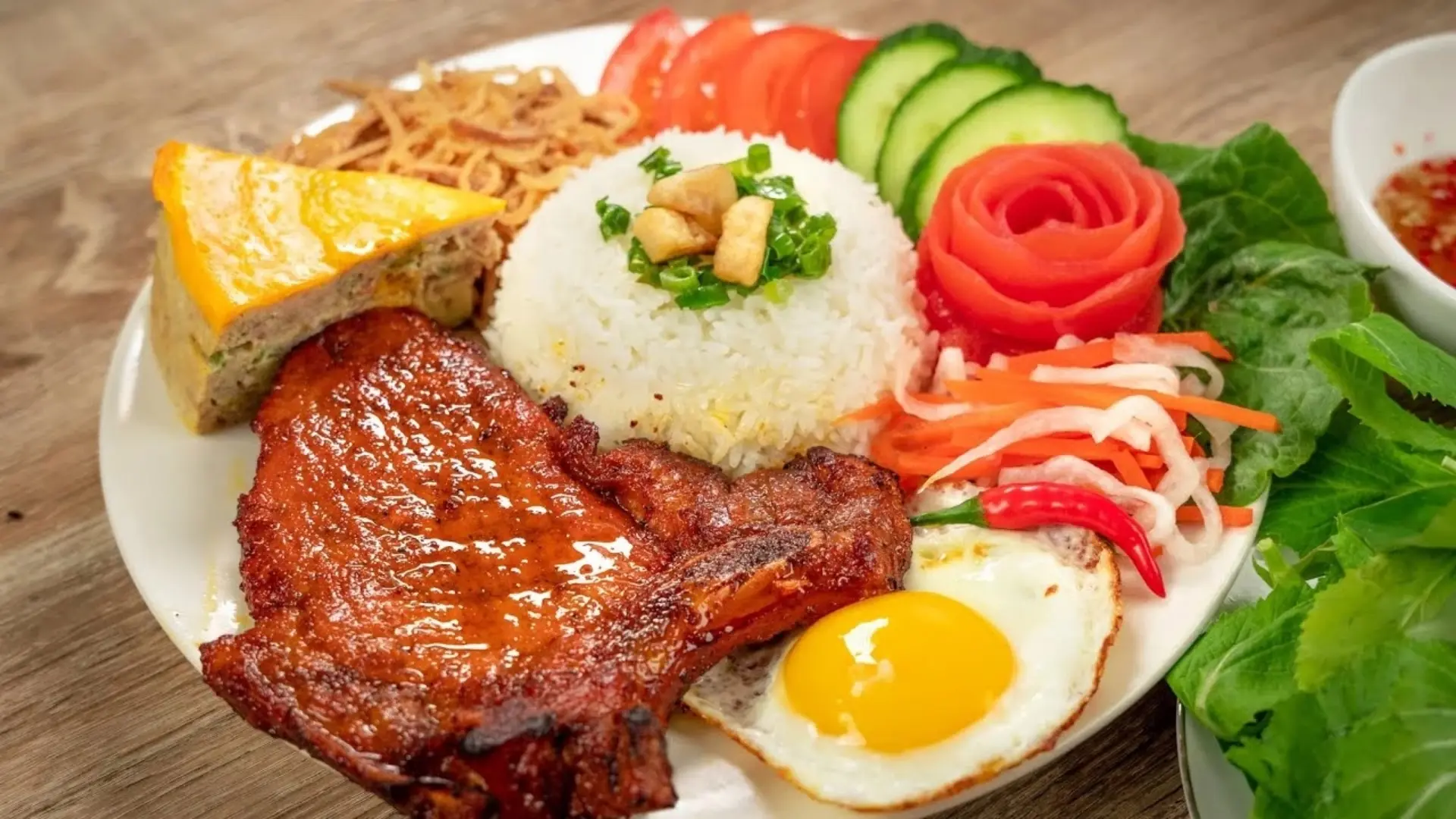
Broken rice is strongly associated with Saigon.
A common plate includes grilled pork, egg, pickled vegetables and fish sauce.
It can be eaten for breakfast, lunch or dinner.
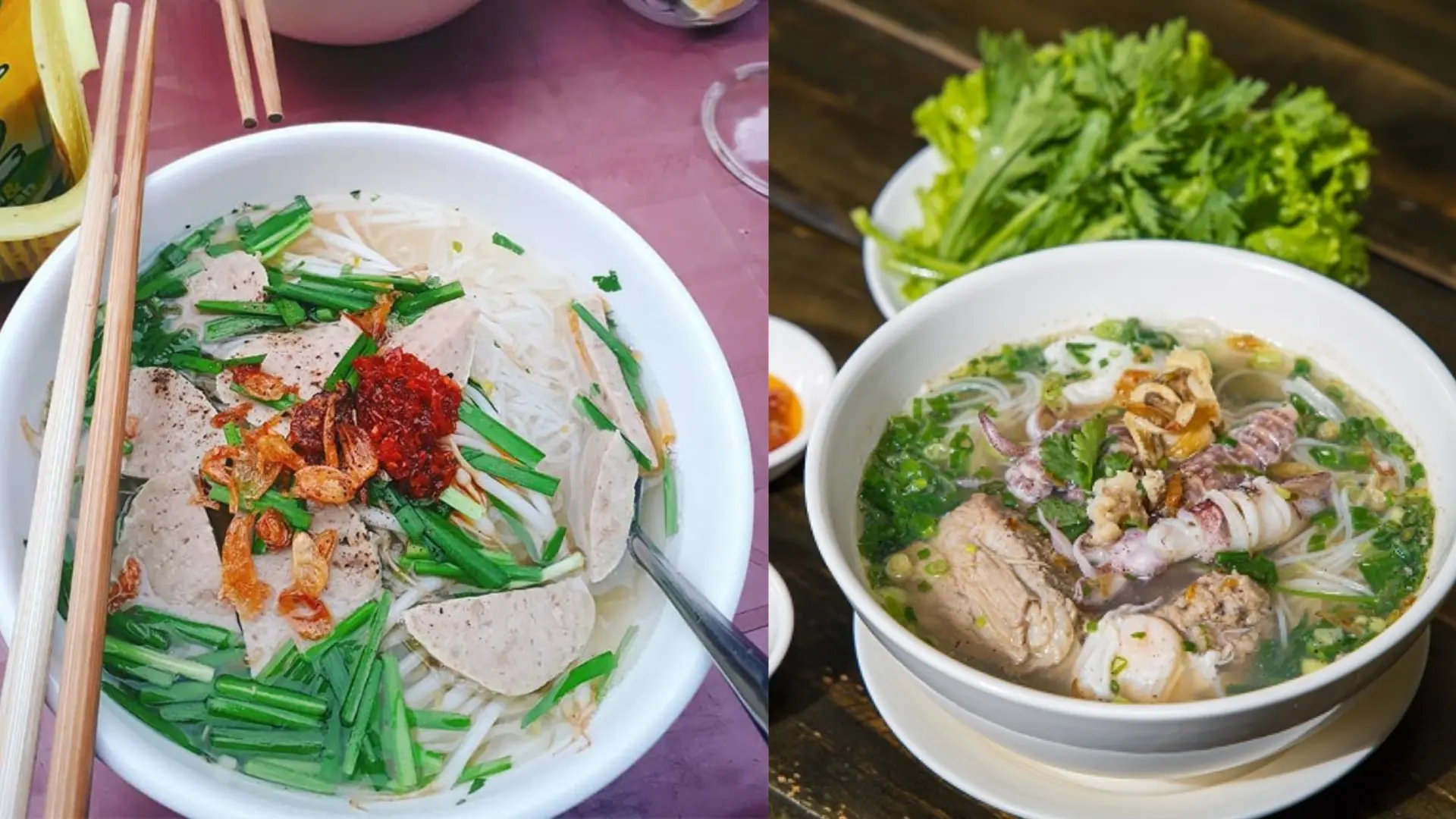
Hủ Tiếu
Hủ tiếu is a southern noodle dish served either with broth or dry with sauce.
Toppings vary between shops, so two bowls can be quite different.
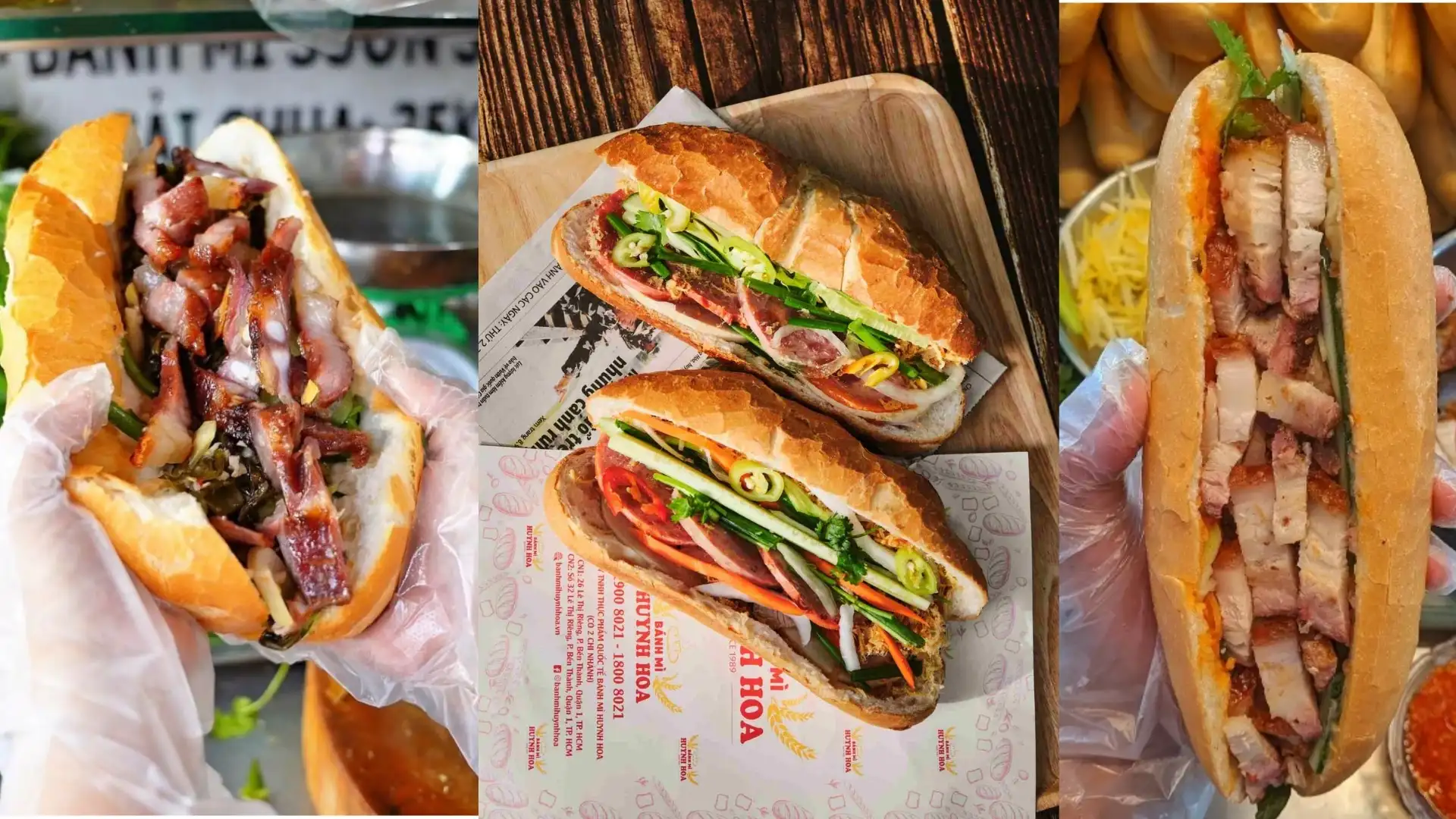
Bánh Mì
Bánh mì shops range from street carts to established storefronts.
Fillings may include pâté, pork, cold cuts, meatballs, herbs and pickled vegetables.
Phở
Phở is easy to find throughout the city.
Southern-style bowls commonly come with herbs and condiments, although the exact style varies from shop to shop.
Bánh Xèo
Bánh xèo is a crisp rice-flour pancake commonly filled with shrimp, pork and bean sprouts.
It is eaten with herbs and dipping sauce.
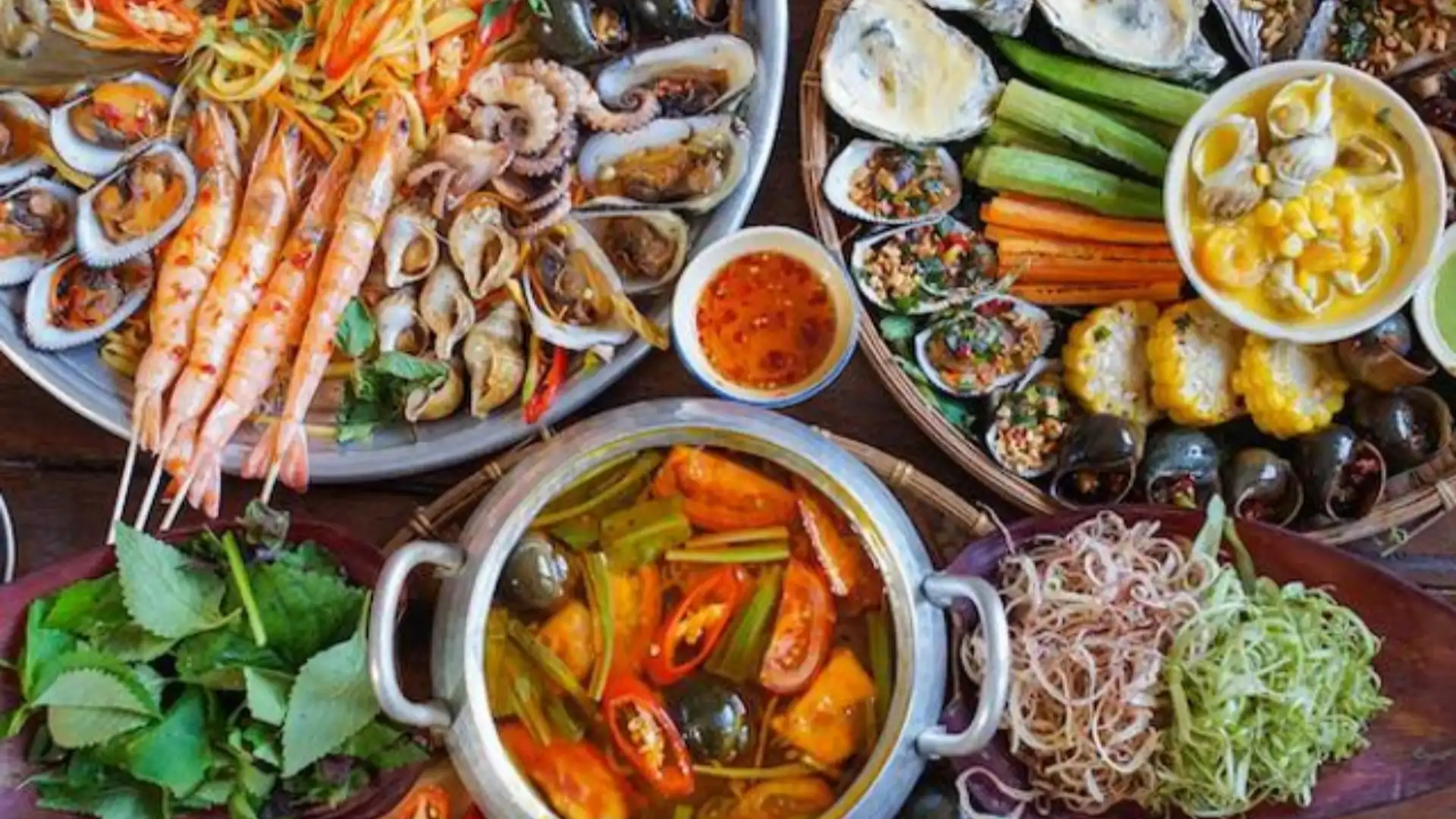
Ốc and Seafood
Snails, shellfish and seafood are common evening food.
The Vinh Khanh area is associated with this style of eating, although similar restaurants can be found across the city.
Where to Look for Food
Central Saigon: the widest choice within a small area.
Cho Lon: Chinese-Vietnamese food and markets.
Vinh Khanh area: ốc and evening seafood.
Residential neighborhoods: local rice, noodle and breakfast shops away from the busiest visitor streets.
For street food, look for stalls with regular customer turnover and food being cooked fresh.
Coffee in Saigon
Coffee is part of everyday life in the city.
Common drinks include:
-
cà phê sữa đá – iced coffee with condensed milk;
-
cà phê đen đá – iced black coffee;
-
bạc xỉu – a milkier coffee drink.
The city also has a growing specialty coffee scene using Vietnamese-grown beans.
There is no need to search for one supposedly “best” café. A simple neighborhood coffee shop and a modern specialty café will show two very different sides of Saigon’s coffee culture.

How Many Days Do You Need in Ho Chi Minh City?
One Full Day
Keep the route compact.
A practical first day is:
War Remnants Museum → Independence Palace → Central Post Office and cathedral area → Book Street → Nguyen Hue
Do not try to add both Cu Chi and the Mekong Delta.
Two Full Days
Use the first day for central Saigon.
On the second day, move outside the historical core:
Cho Lon → Binh Tay Market → Thien Hau Temple
or spend more time around local markets and neighborhoods.
Three Full Days
Use roughly two days for the city and one for an excursion.
Cu Chi Tunnels is easier to fit into a short stay because it can be done as a half-day program.
Four Days or More
You now have enough time to move into the Mekong Delta without rushing the city.
My Tho and Ben Tre can be visited in one day.
If Cai Rang Floating Market is important, stay overnight in Can Tho.
Cu Chi or the Mekong Delta?
They are different trips, so the better choice depends on what you want from the extra day.
Choose Cu Chi If You Want
-
twentieth-century military history;
-
to see the tunnel system;
-
an excursion that fits into roughly half a day;
-
more free time in Ho Chi Minh City on the same day.
For background before deciding, read the Cu Chi Tunnels Travel Guide.
Mekong Smile’s Cu Chi Tunnels Tour is the relevant half-day option from Ho Chi Minh City.
Choose My Tho and Ben Tre If You Want
-
Mekong River scenery;
-
smaller waterways;
-
sampan rides;
-
local workshops;
-
a one-day introduction to the Delta without changing hotels.
Mekong Smile’s Mekong Delta Tour 1 Day travels from Ho Chi Minh City through My Tho and Ben Tre.
Choose Can Tho If You Want
-
Cai Rang Floating Market;
-
more time inside the Mekong Delta;
-
an overnight route rather than a quick introduction.
Cai Rang is active early in the morning.
Leaving Ho Chi Minh City late in the morning and trying to turn Can Tho into a normal floating-market day trip misses the reason many travelers go there.
Mekong Smile’s Mekong Delta 2 Day Tour from Ho Chi Minh City includes an overnight stay before the early floating-market visit.
My Tho-Ben Tre or Can Tho?
Only one free day from Ho Chi Minh City: choose My Tho-Ben Tre.
Cai Rang is a priority: choose Can Tho and stay overnight.
Want canals and local workshops without changing hotels: My Tho-Ben Tre is simpler.
Want to spend more time in the Delta: continue to Can Tho.
The Mekong Delta is a large region. A “Mekong Delta tour” does not refer to one single experience.
Safety and Practical Tips
Keep Phones Away from the Road
Phone snatching can occur.
Step farther onto the pavement before stopping to check maps or messages rather than holding your phone loosely beside moving traffic.
Keep Bags Closed
Crowded markets and busy streets are not good places to leave valuables exposed.
Carry bags securely and keep them away from the street-facing side when walking.
Check Your Vehicle
For Grab, match the driver’s name, vehicle and licence plate with the information shown in the app.
For regular taxis, use a recognized operator or designated taxi point.
Crossing the Road
Use pedestrian crossings and traffic lights where available.
Do not assume all traffic will stop completely. Move predictably and keep watching approaching vehicles.
Heat
A route that looks short on a map can feel much longer in midday heat.
Carry water, use sun protection and avoid putting every outdoor stop between noon and mid-afternoon.
Mobile Data
A local SIM or eSIM is useful for:
-
Grab;
-
maps;
-
translation;
-
bus and metro information;
-
checking opening hours;
-
contacting accommodation.
Not Sure Which Route Fits Your Trip?
Cu Chi, My Tho-Ben Tre and Can Tho suit different schedules.
If you are still unsure which route makes sense, tell Mekong Smile your travel dates, available time and what you want to experience. The team can help narrow down the practical options before you book.
Planning Your Mekong Trip?
Get a free, personalized itinerary from our local experts in under 120 minutes.

Instant WhatsApp Support
Itinerary Tailored to Your Needs
Get a Free Consultation Leave your contact, we handle the rest.
You can also compare:
Frequently Asked Questions About Visiting Ho Chi Minh City (FAQ)
How many days should I spend in Ho Chi Minh City?
Two to three full days is enough for many first-time visitors to see the main central areas and spend time outside the historic center. Add another day for Cu Chi or more time for the Mekong Delta.
Are Ho Chi Minh City and Saigon the same place?
Ho Chi Minh City is the official name. Saigon remains widely used in everyday conversation, particularly when people refer to the historic central urban area.
Is District 1 still an official district?
The administrative structure changed in 2025, so the former District 1 no longer exists in the same official form. The name remains widely used in travel conversations, accommodation listings and directions to describe central Saigon.
Is Thao Dien still an official ward?
No. Former Thao Dien was incorporated into An Khanh Ward during the 2025 administrative reorganization. The name Thao Dien remains widely used for the neighborhood and Metro station.
Where should a first-time visitor stay?
Central Saigon is usually the easiest base if you only have a few days and want to walk to major landmarks. Thao Dien can make more sense for some longer stays.
When is the drier season in Ho Chi Minh City?
December to April is generally drier. May to November has more frequent rain, often arriving as afternoon showers.
Can tourists use Metro Line 1?
Yes. Metro Line 1 runs between Ben Thanh and Suoi Tien and is useful for central Saigon, Ba Son, Thao Dien, An Phu and other eastern areas.
Which taxi companies should visitors recognize?
Green SM, Vinasun and Mai Linh are three transport brands visitors may see around Ho Chi Minh City. Grab is also widely used for app-based rides. Check the vehicle and booking details before boarding.
Which intercity bus company can I use to Can Tho?
FUTA Bus Lines, commonly called Phuong Trang, operates Ho Chi Minh City-Can Tho services. Check the exact terminal or pickup point before booking because not every service leaves from the city center.
Should I choose Cu Chi or the Mekong Delta?
Choose Cu Chi if wartime history is the priority. Choose My Tho-Ben Tre if you would rather spend the day around waterways, workshops and rural scenery.
Can I visit the Mekong Delta from Ho Chi Minh City in one day?
Yes. My Tho and Ben Tre are practical for a one-day trip from Ho Chi Minh City.
Can I visit Cai Rang Floating Market from Ho Chi Minh City in one day?
Travel between Ho Chi Minh City and Can Tho is possible in one day, but staying overnight in Can Tho is more practical if Cai Rang is the main reason for going because the market is active early.
Do I need to rent a motorbike?
No. Walking, Metro Line 1, Grab, taxis and buses cover most needs on a first visit.
