
 Can Tho
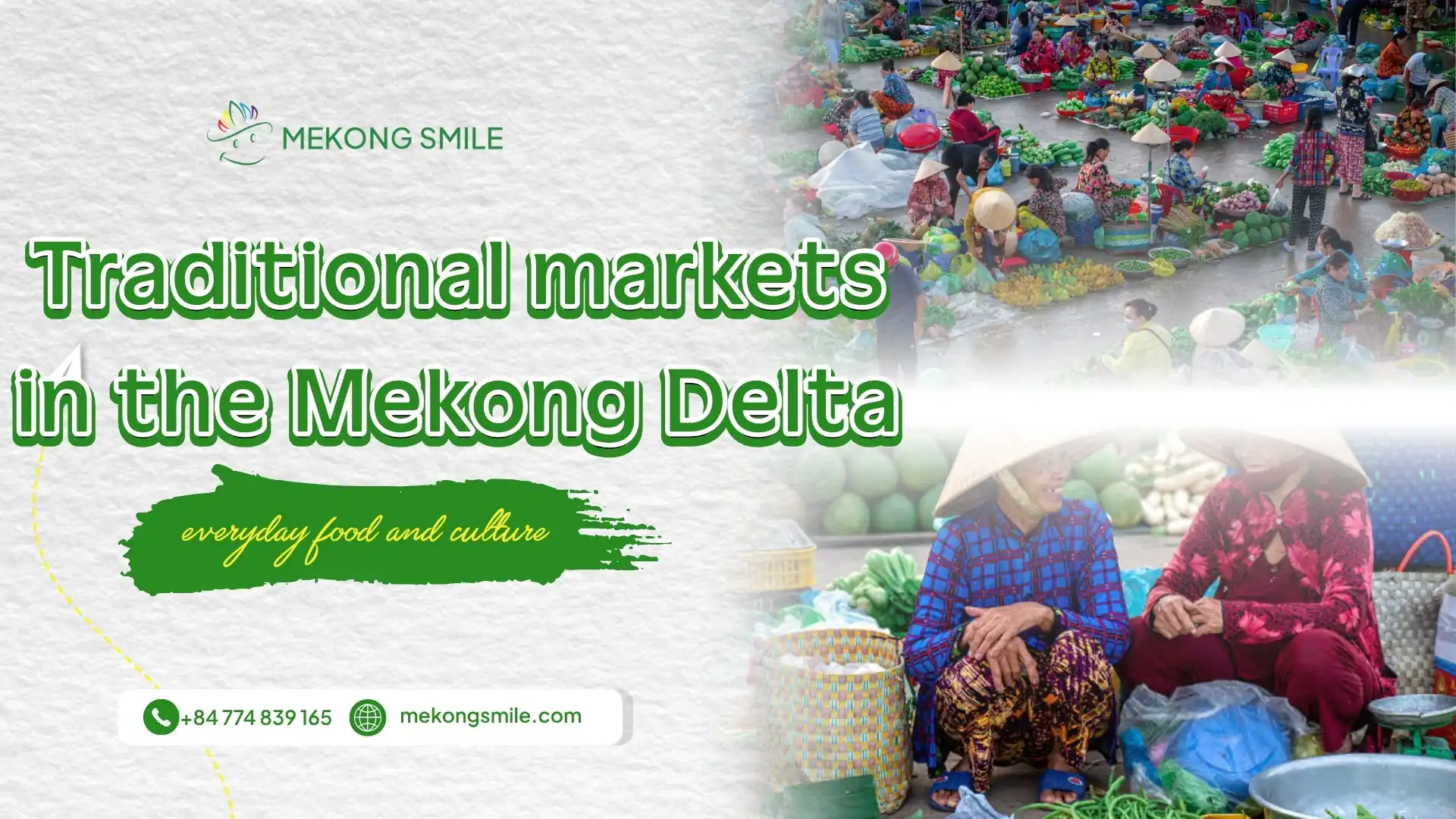
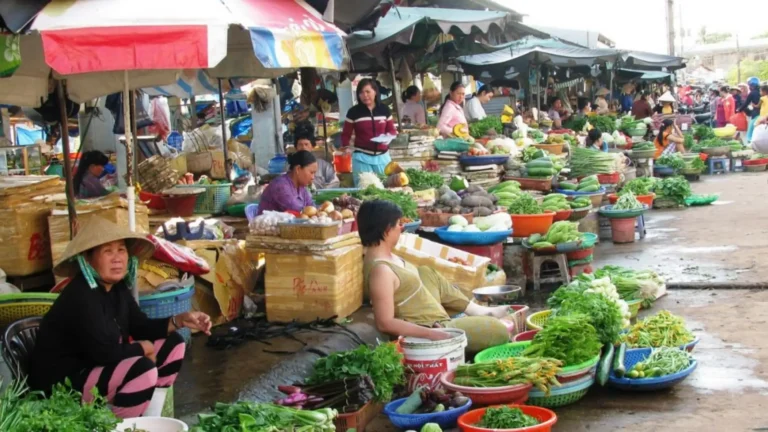
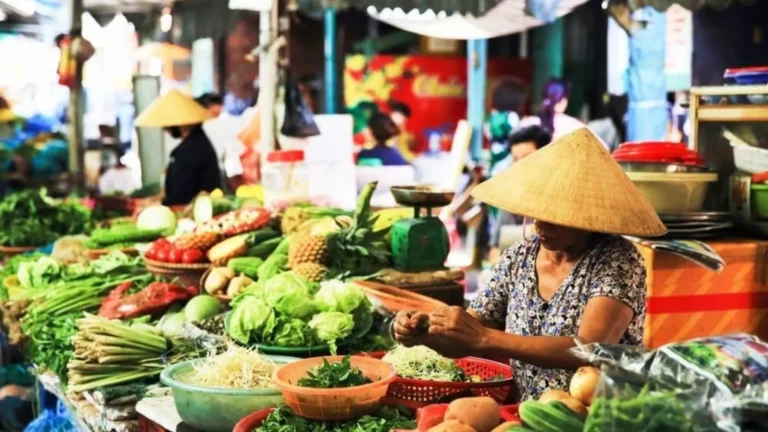
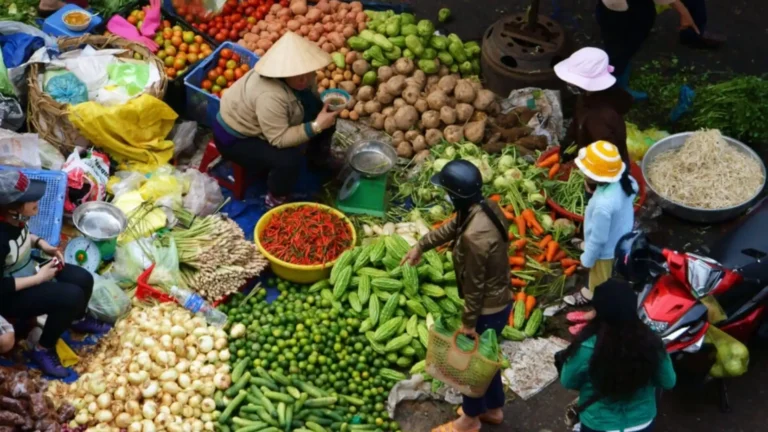
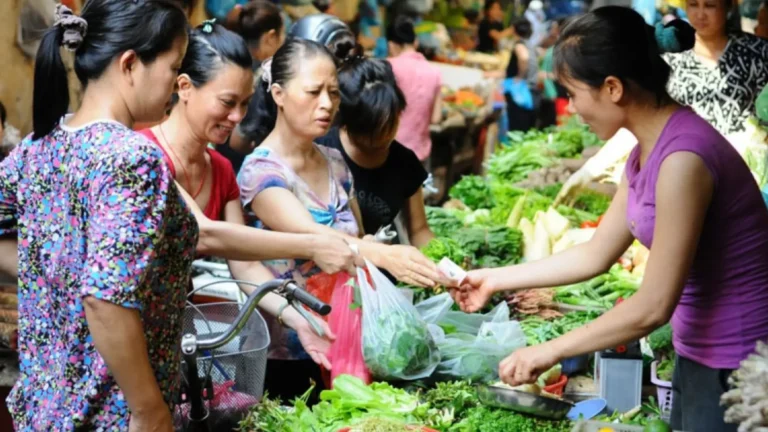

The Mekong Delta is famous for its floating markets, but much of the region’s daily shopping takes place on land.
Visit a traditional market in the morning and you may find baskets of fresh vegetables, bundles of herbs, seasonal fruit and ingredients that later appear in familiar Vietnamese dishes. Shoppers choose what they need, vendors prepare orders, and food stalls serve breakfast to people passing through.
These markets are part of everyday life in southern Vietnam. They are also interesting places for travelers who want to learn more about local food, shopping habits and the agricultural products of the Mekong Delta.
A market visit does not have to take up your entire morning. With a little curiosity and a few useful Vietnamese phrases, even a short stop can add something memorable to your journey.
What makes a traditional market in the Mekong Delta different?
In Vietnamese, chợ simply means market. Traditional markets bring together individual sellers offering groceries, fresh ingredients, prepared food and household essentials.
Some operate in covered buildings with permanent stalls. Others include open spaces where vendors arrange their goods on tables, mats or in baskets.
The layout depends on the location. A neighborhood market in Can Tho may look quite different from a rural produce market in Vi Thanh. The variety of goods, trading hours and number of vendors can also change throughout the day.
Fresh food is a major part of many markets. Vegetables, meat, fish and herbs are sold alongside products used in everyday cooking. Some markets also have stalls serving noodles, drinks or ready-made dishes.
What makes these places worth visiting is the opportunity to see ingredients and shopping routines that are familiar to local residents but may be new to international travelers.
What a morning at a local market looks like
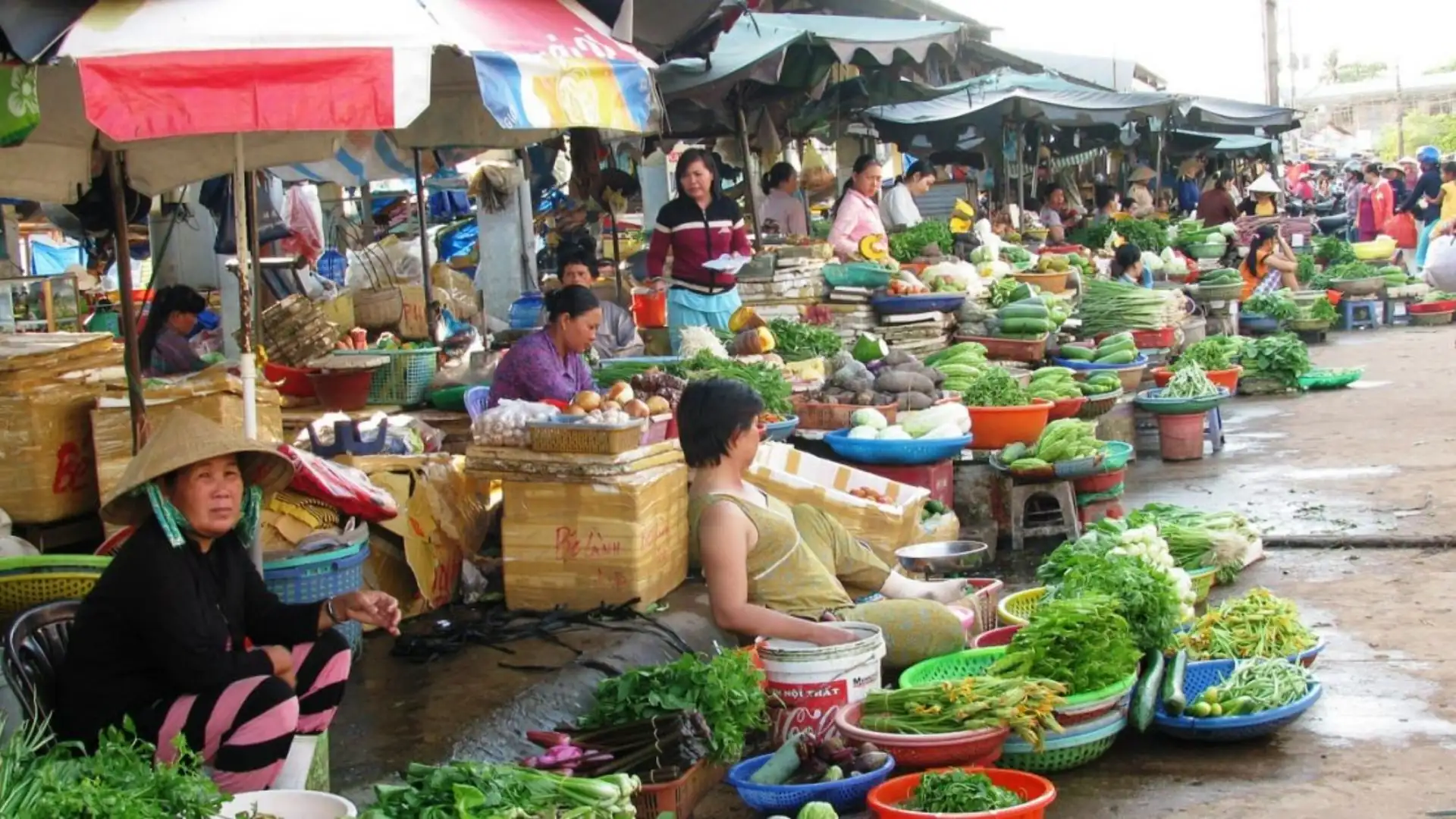
Morning is often a convenient time to explore a traditional food market.
Shoppers arrive to buy ingredients for meals, and vendors organize their stalls as business gets underway. Depending on the market and the season, you might find leafy vegetables, gourds, tropical fruit, freshwater fish and herbs used in southern Vietnamese cooking.
There is plenty to notice beyond the produce itself.
Watch how different ingredients are grouped together. Take a closer look at vegetables you have not seen before. If a stall is not busy and the seller is comfortable speaking with you, try asking about something that catches your attention.
The selection of goods varies by market. Some vendors sell products from their own gardens or farms, while others obtain supplies through traders or wholesalers.
Morning trading hours also differ. A small produce market may finish early, while a larger market can continue operating well into the day. Checking the schedule beforehand is useful if you are visiting a particular location.
Discover the ingredients behind Mekong Delta cooking
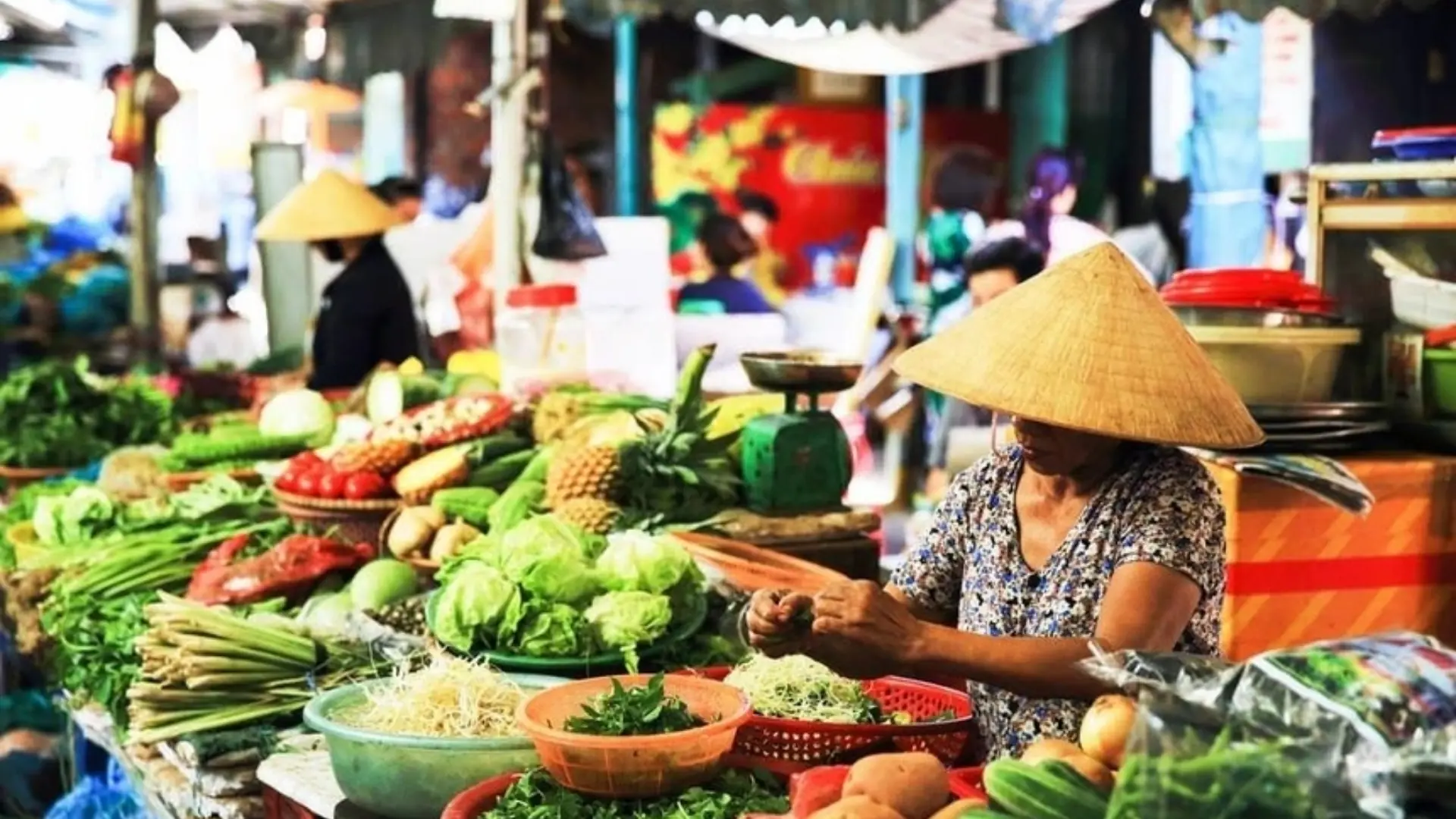
One of the pleasures of visiting a local market is recognizing the ingredients that appear in Vietnamese meals.
Take rau muống, commonly called water spinach. It is used in soups, boiled vegetable dishes and stir-fries. Banana blossoms can be sliced for salads or served alongside noodle dishes. Fresh herbs are another familiar part of Vietnamese cooking, bringing different aromas and flavors to each meal.
You may also come across vegetables that are less familiar outside Vietnam. Their names, preparation methods and availability can vary.
Fish is another important ingredient in the Mekong Delta. Rivers, canals and aquaculture contribute to the region’s food supply, and different freshwater species are used in local dishes.
If you enjoy Vietnamese food, spending some time looking at the ingredients can make your next meal more interesting.
You might recognize the herbs served alongside a bowl of noodles or discover what goes into a dish you tried the previous evening.
For more ideas about local dishes and ingredients, explore our guide to what to eat in Vietnam.
The people and routines that keep markets running
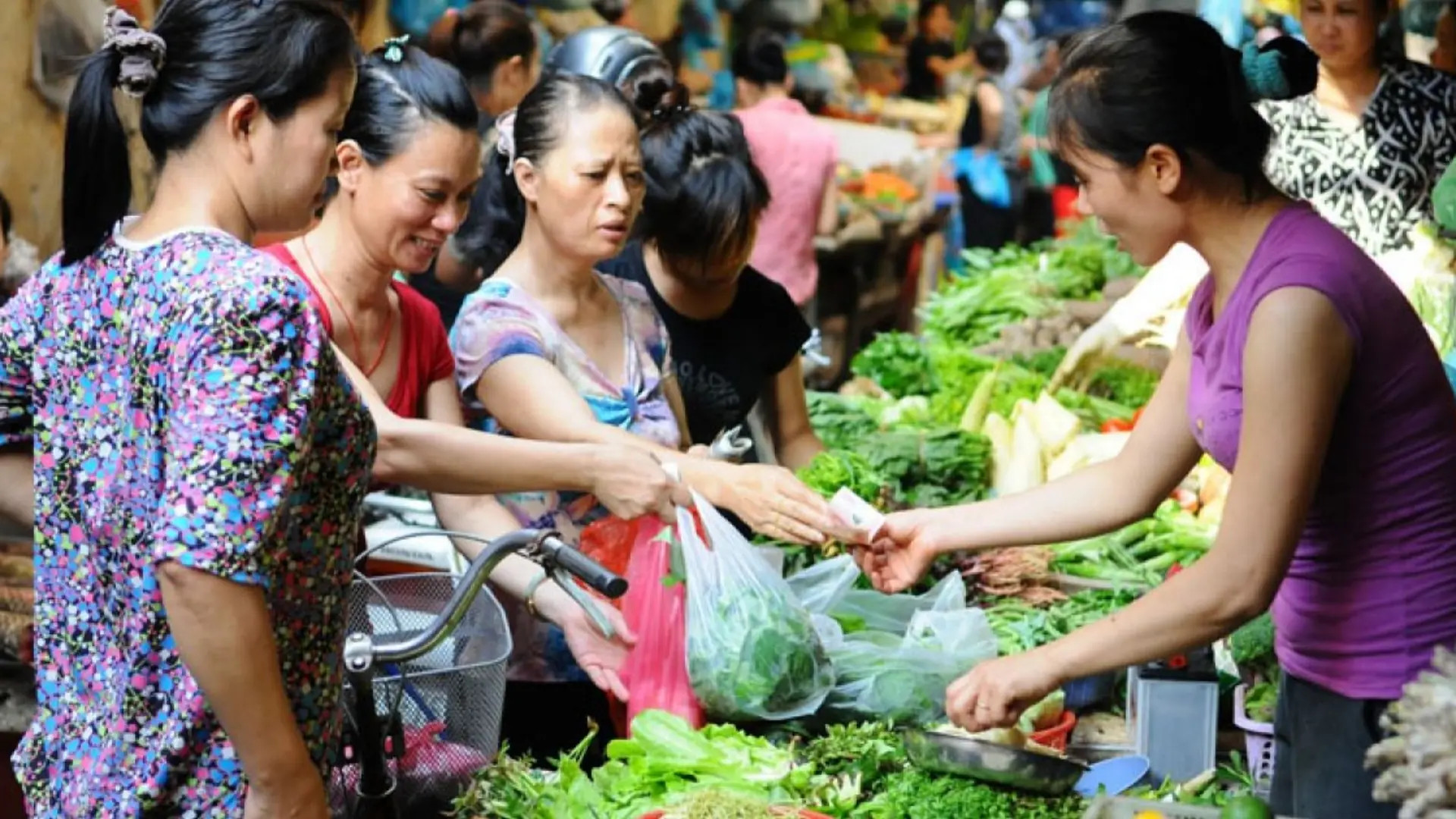
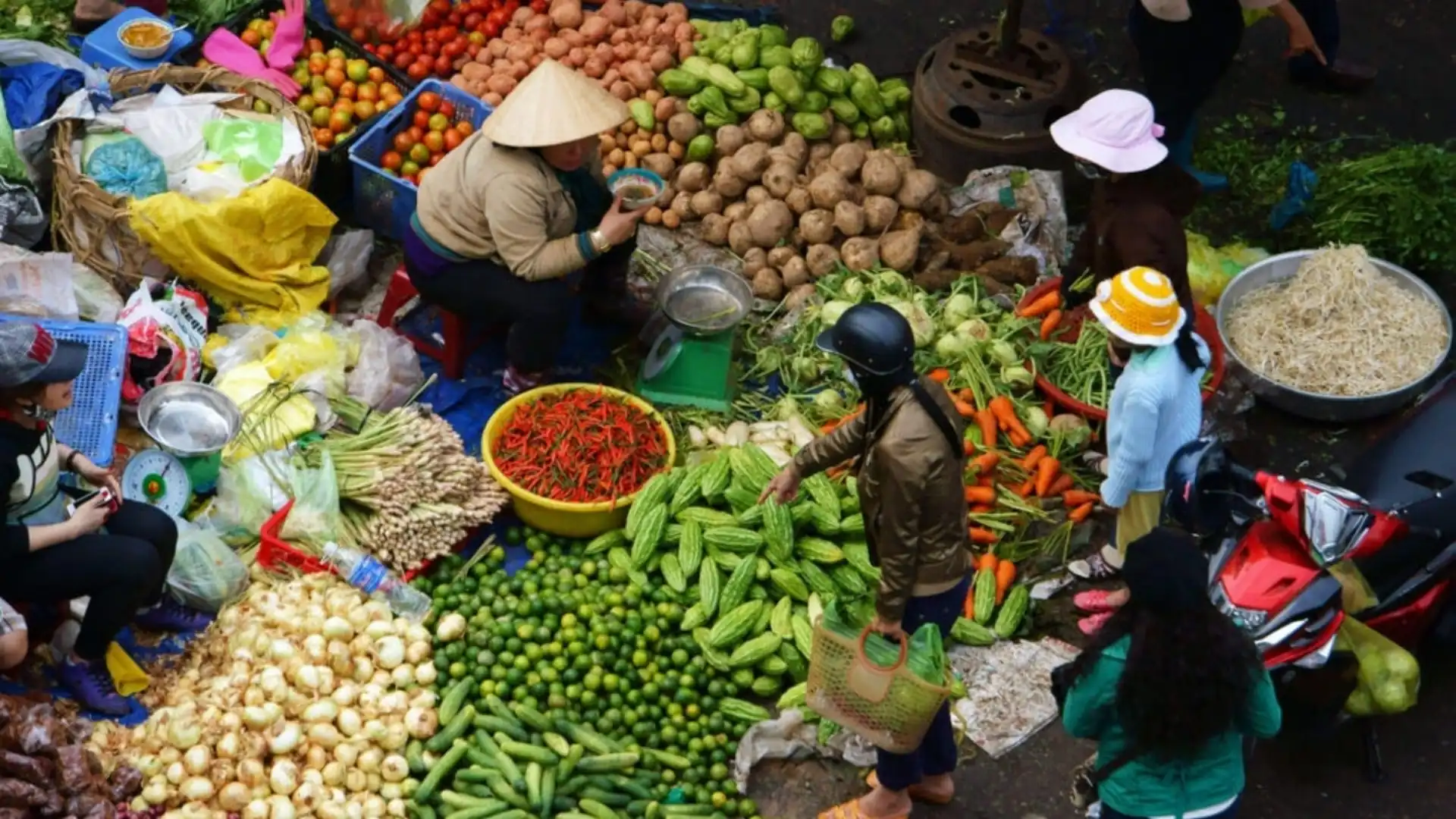
A traditional market brings together people with different reasons for being there.
Sellers prepare their goods, serve customers and arrange deliveries. Shoppers compare products, ask about prices and choose ingredients for their households.
Some customers return to familiar stalls, while others shop wherever they find what they need. Conversations can be brief or longer, depending on the people involved and how busy the market is.
For visitors, even a simple purchase can be an opportunity to learn.
If you see a fruit you would like to try, ask its name and price. If you are curious about a vegetable, a translation app may help you understand how it is used.
There is no need to approach every stall. Market visits are usually more comfortable when you allow people to continue their work without interruption.
Photography is another point worth considering. Market scenes can make interesting travel pictures, but ask permission before taking close-up photographs of vendors or customers. A polite conversation is always preferable to assuming someone wants to be photographed.
Vi Thanh’s chợ chồm hổm and its distinctive market stalls
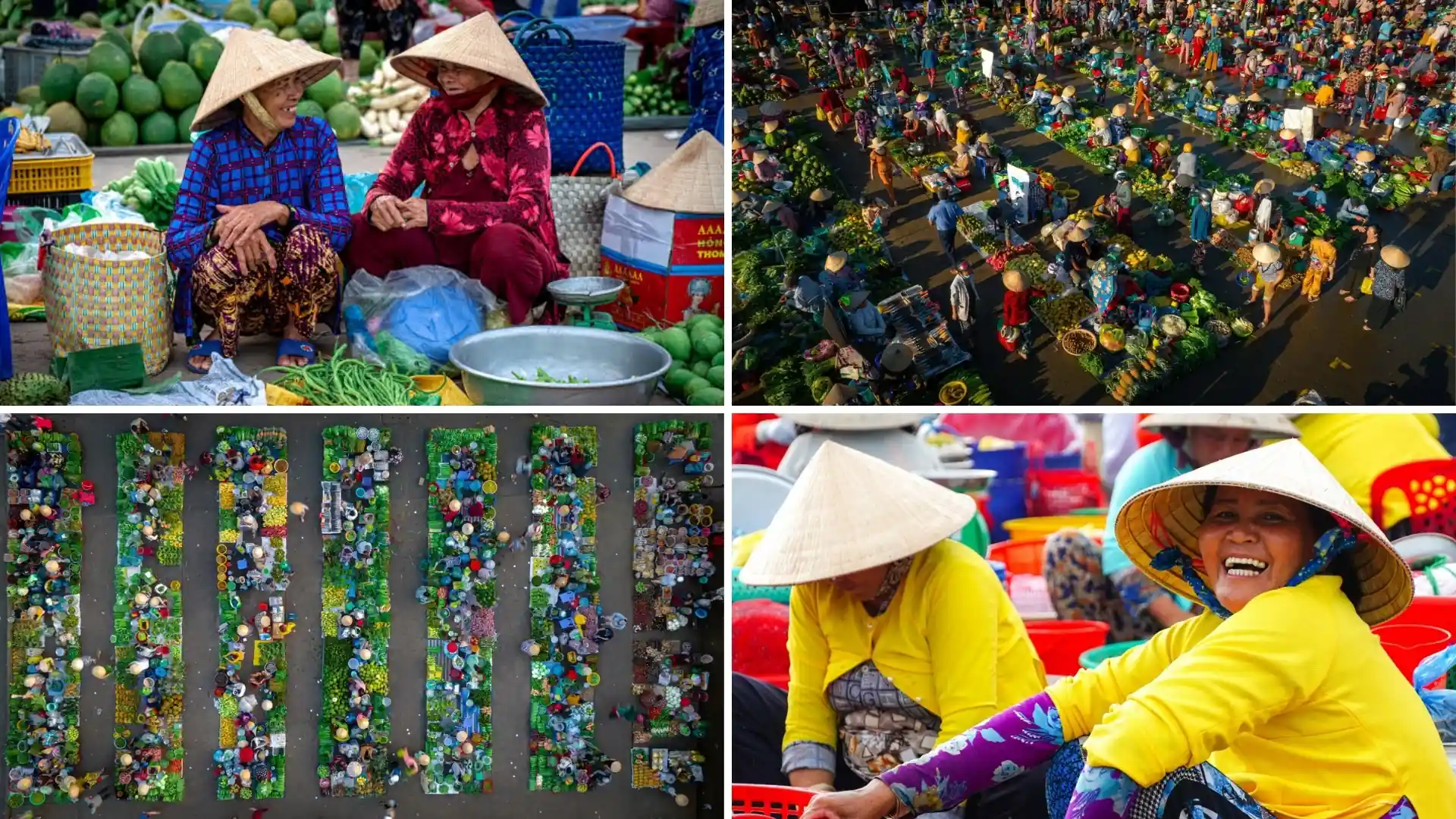
One traditional market with a particularly recognizable layout is chợ chồm hổm Vị Thanh.
The market is located in Vi Thanh Ward, Can Tho City. Older articles may identify the location as Hau Giang Province, reflecting the administrative boundaries before the changes introduced in July 2025.
The Vietnamese name chợ chồm hổm refers to the low sitting or squatting posture associated with the way many vendors sell their goods.
Instead of using raised counters, sellers often sit on small stools or close to the ground, with produce arranged in baskets, trays or on mats nearby.
Vegetables, fruit and other agricultural products form an important part of the market. Some sellers bring products they have grown or collected locally, while the selection varies between vendors and trading days.
The low displays and compact selling spaces give the market its distinctive appearance.
Vi Thanh is also associated with the term tự sản, tự tiêu, which describes the practice of producing goods and selling them directly. This is one of the aspects of local agriculture and commerce that visitors may find interesting.
The market is known for its early trading activity, so it is worth checking current conditions before planning a visit.
Vi Thanh is outside central Can Tho, some distance from the tourist area around Ninh Kieu Wharf. Travelers should allow for a separate journey rather than assuming it is within walking distance of central attractions.
Traditional markets and floating markets in the Mekong Delta
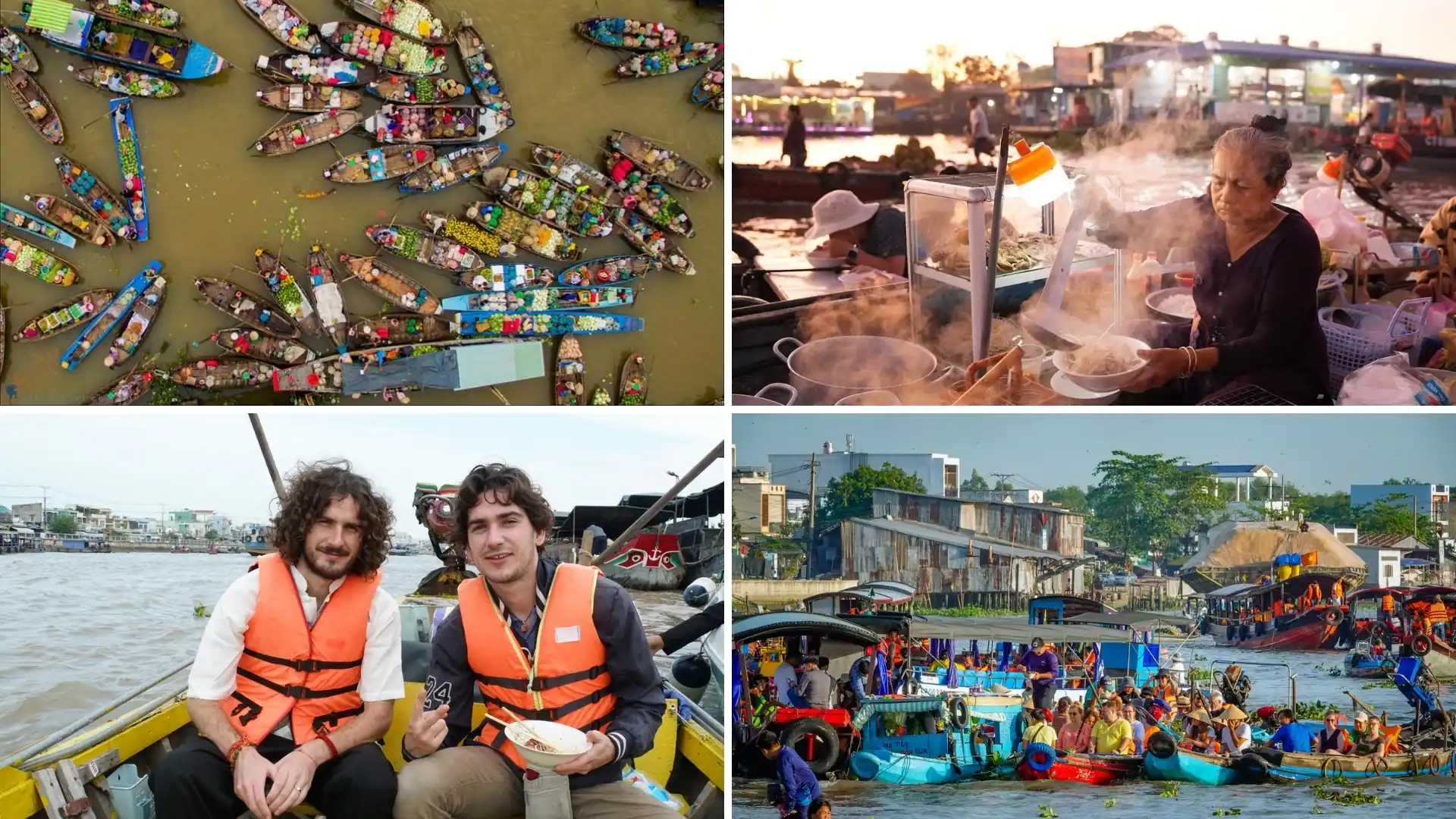
Markets on land and floating markets have both contributed to trade in the Mekong Delta.
The main difference is how goods are displayed, transported and purchased.
At a traditional market on land, customers walk between stalls. At a floating market, boats are used for trading and transporting products along rivers and canals.
Waterways have long played an important role in moving agricultural goods around the region. Over time, roads and changes in distribution have influenced commercial activity on the rivers.
Cai Rang Floating Market in Can Tho remains an example of river-based trade, although its scale and activities have changed over the years.
Some trading boats display samples of their produce on a cây bẹo, a pole that helps other traders recognize the goods available on board.
A traditional market on land offers a different experience, particularly for visitors interested in ingredients, local food stalls and everyday shopping.
If you are curious about the role of boats in the region’s history and daily activities, our article on traditional boats of the Mekong Delta explores several types of local watercraft.
Enjoying breakfast around a local market
Food can be a pleasant part of a morning market visit.
Depending on the location, you may find small stalls serving noodle soups, bánh mì, coffee or other dishes popular with local customers.
In southern Vietnam, hủ tiếu is a familiar noodle dish with several variations. The noodles, broth and toppings can differ from stall to stall.
If you decide to eat at the market, take a moment to look at what is being prepared. You may recognize ingredients from the produce stalls nearby.
Checking the price before ordering is helpful, especially where menus are not displayed. Travelers with allergies or dietary restrictions should also ask about ingredients.
You do not need to sample unfamiliar foods to enjoy a market visit. Choosing something that suits your taste and taking time to enjoy breakfast can be just as rewarding.
Visiting traditional markets with consideration for local customs
Traditional markets are public shopping spaces, but visitors should remain mindful of the people who work and shop there.
Arriving in the morning is often a good choice for produce markets, although operating hours vary. Comfortable shoes are useful because some market floors may be wet, and pathways can become busy.
Small Vietnamese dong banknotes are convenient for purchases. Some sellers may offer electronic payments, but it is sensible to have cash available.
When photographing market scenes, avoid blocking aisles or interrupting transactions. Ask before taking close-up pictures of individuals, and respect anyone who declines.
Prices may depend on the product, quantity and seller. Asking politely before making a purchase is a practical way to avoid misunderstandings.
A few Vietnamese phrases can make shopping easier.
- Xin chào: Hello
- Cái này là gì? What is this?
- Bao nhiêu tiền? How much is it?
- Cảm ơn: Thank you
A translation app may also help with more detailed questions.
Where to explore local market life in Can Tho
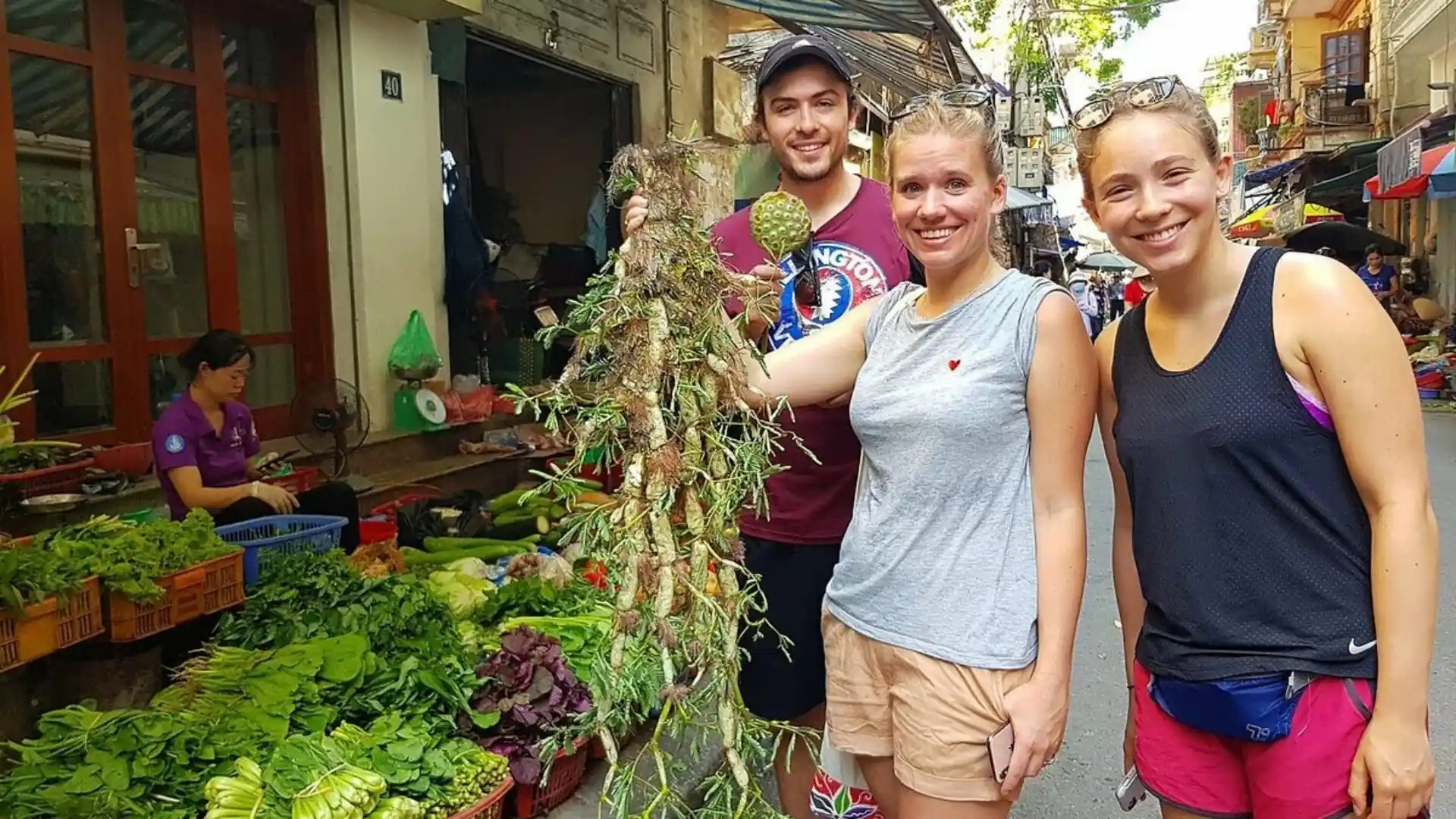
If you are staying near Ninh Kieu Wharf, consider asking your accommodation about a traditional morning market nearby.
This can be a convenient way to experience local food shopping without arranging a long journey.
You can choose a market based on your interests. A produce market is suitable if you want to learn about vegetables, herbs and everyday ingredients. Markets with prepared food stalls may appeal more to visitors looking for breakfast.
Central Can Tho also has evening food and shopping areas. Our guide to Can Tho Night Market provides information about that experience, which differs from visiting a morning produce market.
For travelers with more time, Vi Thanh’s chợ chồm hổm offers another option, particularly for those interested in agricultural products and local trading practices.
Our Can Tho travel guide can help you plan other activities and destinations around the city.
Planning Your Mekong Trip?
Get a free, personalized itinerary from our local experts in under 120 minutes.

Get a Free Consultation Leave your contact, we handle the rest.
Bring a little market curiosity into your Mekong Delta trip
A visit to a traditional market can add context to the food you eat throughout your journey.
Seeing familiar ingredients before they reach the kitchen is a simple way to learn more about Vietnamese cooking. It can also help you appreciate the range of agricultural products grown and traded in the region.
Markets are only one part of the experience. The Mekong Delta is also home to orchards, villages, waterways and communities with different food traditions.
If you are planning a longer trip, our Mekong Delta travel guide introduces more places to explore.
Travelers particularly interested in local dishes can also consider Mekong Smile’s Can Tho Food Tour, which focuses on evening food experiences rather than a traditional morning produce market.
Whatever you choose, a little curiosity about the food and ingredients around you can make a journey through the Mekong Delta more rewarding.
Planning a visit to a Mekong Delta market? A few useful answers
What time should I visit a traditional food market in Can Tho?
Early morning is often a good time to see fresh produce trading, but each market has its own schedule. Ask locally or check updated information for the market you plan to visit.
Where can I find a local produce market near Ninh Kieu Wharf?
There are traditional shopping areas in Can Tho, but the most convenient option depends on where you are staying and what you would like to see. Ask your accommodation to recommend a nearby morning produce market rather than assuming the evening market offers the same experience.
Is Vi Thanh’s chợ chồm hổm within walking distance of central Can Tho?
No. Vi Thanh is outside the central tourist area around Ninh Kieu Wharf. Visiting the market requires separate transportation, and an early departure may be useful if you want to see morning trading.
Can I take photographs of vendors and their stalls?
You can ask to photograph a stall or its products, but always request permission before taking close-up pictures of people. Avoid interrupting transactions or blocking busy walkways.
Can I visit a traditional market without speaking Vietnamese?
Yes. Basic Vietnamese phrases and a translation app can help with simple purchases. Some sellers may speak limited English, so keeping questions short and clear is useful.
Is visiting a traditional market similar to visiting Cai Rang Floating Market?
The two offer different experiences. Cai Rang involves trade on the river, while traditional markets on land allow you to walk between stalls and explore everyday food shopping. Both can fit into a trip depending on your interests.
