
 Can Tho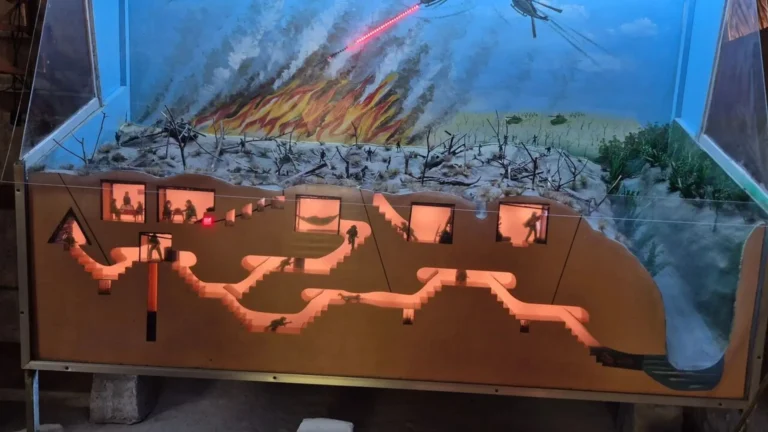

The Cu Chi Tunnels are an extensive underground network northwest of central Ho Chi Minh City. Developed over decades of conflict, the tunnels included shelters, meeting rooms, kitchens, medical facilities, storage spaces, fighting positions and concealed routes connecting different parts of the Cu Chi area.
Today, the historical tunnel system is preserved for visitors at two main locations: Ben Dinh and Ben Duoc. Both are officially recognised historical locations within the wider Cu Chi Tunnels network, although they served different wartime functions and offer different visitor experiences today.
This guide explains how Ben Dinh and Ben Duoc differ, what the current entrance fees and opening hours are, how to reach the sites, what happens during a typical visit and what to consider before entering the underground passages.
Information note: Official entrance-fee and opening-hour details were last checked on August 6, 2026. Prices, operating arrangements and optional activity charges may change.
Cu Chi Tunnels at a Glance
| Planning detail | Current information |
| Main visitor sites | Ben Dinh Tunnels and Ben Duoc Tunnels |
| Location | Northwest of central Ho Chi Minh City |
| Official opening hours | 7:00 AM - 5:00 PM daily |
| Published foreign visitor fees | 35,000 VND admission fee + 100,000 VND visitor service and guidance ticket |
| Published combined amount | 135,000 VND per foreign visitor |
| Recommended time on site | Allow approximately 2-3 hours |
| Tunnel entry | Optional |
| Typical trip format | Half-day or full-day excursion from Ho Chi Minh City |
| Current Mekong Smile tour site | Ben Dinh Tunnels |
| Additional costs | Shooting-range ammunition, food, drinks and separately ticketed attractions where applicable |
The official Cu Chi historical-site notice states that the revised visitor service and guidance charge for foreign visitors took effect on February 1, 2026. The official site also lists daily operating hours from 7:00 AM to 5:00 PM.
What Are the Cu Chi Tunnels?
The first tunnels recorded in Cu Chi were dug in 1948 in Tan Phu Trung and Phuoc Vinh An. These early structures were relatively short and were used to hide documents and weapons and shelter personnel operating in the area.
The system expanded considerably during the following decades. Separate shelters were extended, connected and developed into a network of main routes and smaller branches. By 1967, the wider network had reached a total length of approximately 250 kilometres.
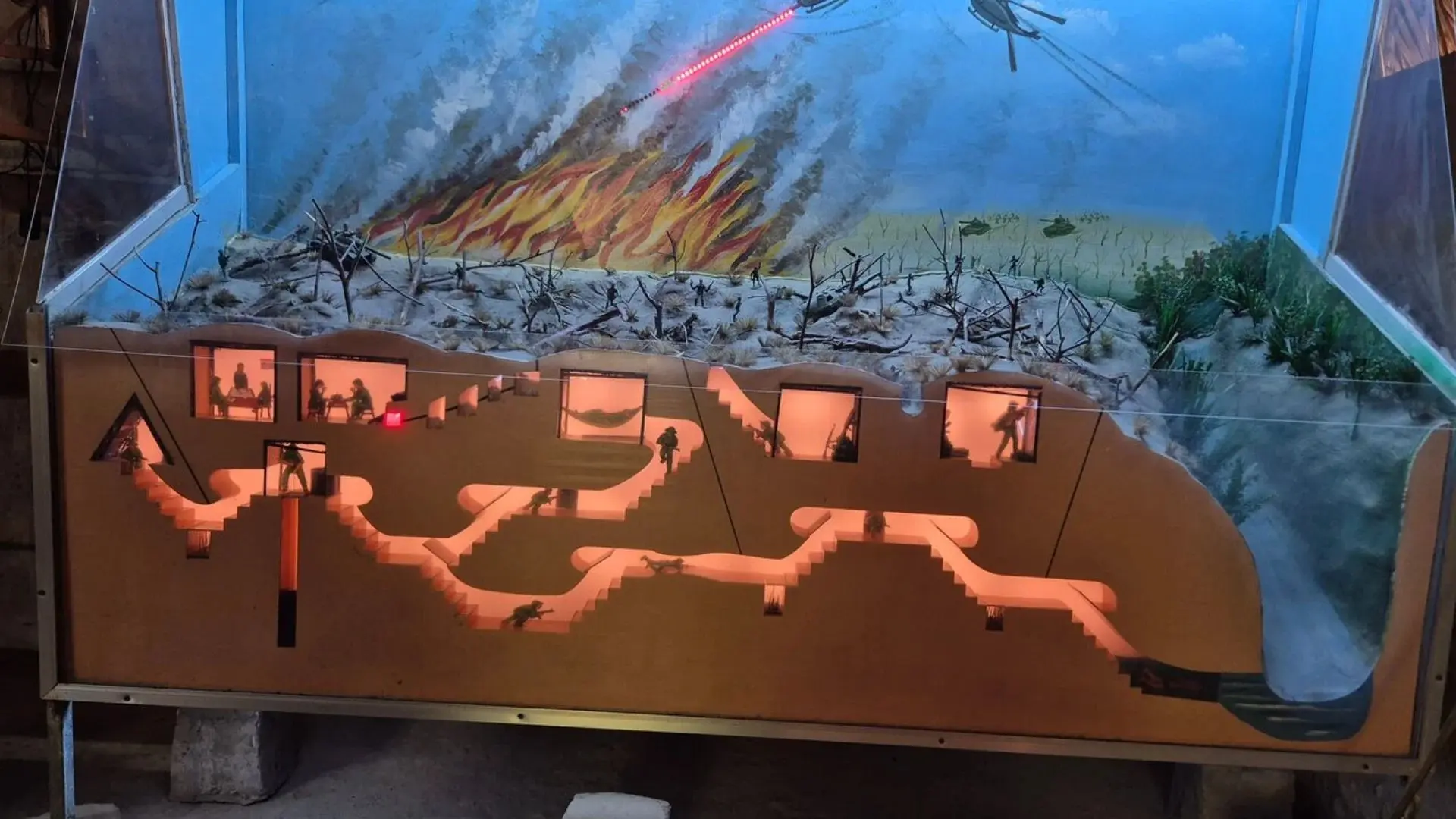
The underground system included living and sleeping spaces, meeting and command rooms, medical and surgical areas, food and weapons storage, wells and ventilation openings, kitchens designed to disperse smoke, workshops and supply areas, fighting positions, concealed entrances, and escape routes connecting different parts of the area.
The tunnels did not operate independently from the surface. They formed part of a larger defensive landscape that included trenches, bunkers, fighting positions and concealed access points.
The official historical-site account states that some tunnel branches extended toward the Saigon River, creating possible escape and movement routes during dangerous situations.
Are the tunnels open to visitors unchanged from wartime?
Not every section seen during a modern visit should be interpreted as remaining completely unchanged. The visitor experience may include preserved tunnel structures, reinforced passageways, sections widened for visitor access, reconstructed underground rooms, above-ground historical displays, and educational recreations of wartime activities.
This distinction matters. The wider Cu Chi Tunnels network was substantially larger than the sections currently accessible to visitors, and tourist-accessible passages may have been adjusted for safety.
Ben Dinh vs Ben Duoc: Which Site Should You Visit?
Ben Dinh and Ben Duoc are both officially recognised historical locations within the Cu Chi Tunnels network.
Their main differences relate to their historical roles, surrounding attractions and the amount of time normally required for a visit.
| Comparison | Ben Dinh Tunnels | Ben Duoc Tunnels |
| Historical role | Former base associated with the Cu Chi District Party Committee | Former base associated with the regional committee and military command of the Saigon-Cho Lon-Gia Dinh area |
| Travel from central HCMC | Generally the shorter journey | Generally requires more travel time |
| Typical trip style | Commonly included in organised half-day programmes | Better suited to a longer history-focused itinerary |
| Main focus | Compact tunnel-site experience and wartime displays | Tunnel complex within a broader historical and memorial setting |
| Additional context | Visitor tunnel route, displays and optional activities | Ben Duoc Memorial Temple and the reconstructed Cu Chi liberated-area attraction |
| Suitable for | First-time visitors and travellers with limited time | Travellers allowing more time for historical and memorial sites |
| Mekong Smile's standard tour | Currently visits Ben Dinh | Not included in the current standard half-day programme |
| Map | Open Ben Dinh in Google Maps | Open Ben Duoc in Google Maps |
The official Cu Chi historical site identifies Ben Dinh as a former Cu Chi district leadership base. Ben Duoc is associated with the regional leadership and military command of the Saigon-Cho Lon-Gia Dinh area and includes access to a wider memorial complex.
Choose Ben Dinh if you:
-
Have approximately half a day available
-
Prefer an organised tour from central Ho Chi Minh City
-
Are visiting the Cu Chi Tunnels for the first time
-
Want a compact introduction to the tunnel system
-
Prefer morning or afternoon departure options
-
Want to return to Ho Chi Minh City on the same half-day schedule
Mekong Smile’s current Cu Chi Tunnels programme visits Ben Dinh and is scheduled for approximately six hours, including transportation from central Ho Chi Minh City.
Choose Ben Duoc if you:
-
Want to spend more time examining the historical context
-
Plan to visit the Ben Duoc Memorial Temple
-
Want to include the reconstructed Cu Chi liberated-area attraction
-
Prefer a broader historical complex rather than a compact half-day itinerary
-
Are arranging private transportation or a specialised tour
-
Have enough time for a longer return journey
Ben Duoc includes underground facilities associated with regional wartime leadership, a memorial temple and a reconstructed area illustrating life in the Cu Chi liberated zone between 1961 and 1972.
Quick recommendation
Choose Ben Dinh when convenience and a standard half-day schedule are your priorities.
Choose Ben Duoc when you have more time and want to place the tunnels within a broader historical and memorial setting.
Crowd levels can vary by departure time, tour schedule, holiday and event. Avoid choosing solely on claims that one site is always quiet or that one is universally more “authentic.”
Cu Chi Tunnels Entrance Fee
The official January 2026 notice lists the following charges for foreign visitors:
| Ticket component | Published price |
| Historical-site admission fee | 35,000 VND |
| Visitor service and guidance ticket | 100,000 VND |
| Published combined amount | 135,000 VND per person |
The revised charge took effect on February 1, 2026.
What may cost extra?
The published visitor ticket may not include every available activity or separately operated attraction. Additional expenses may include shooting-range ammunition, food and drinks, souvenirs, private transportation, independent guide services, special programmes, and separately ticketed reconstructed or exhibition areas.
The reconstructed Cu Chi liberated-area attraction at Ben Duoc has previously operated with a separate entrance charge. Confirm whether it is included in your selected ticket or tour before visiting.
Tour participants should also check whether the standard entrance fees are already included in their booking.
Cu Chi Tunnels Opening Hours
The official historical site lists the following hours:
7:00 AM – 5:00 PM daily
The sites operate throughout the week, but schedules can change during maintenance, public events, severe weather or special programmes.
Arriving earlier in the day can provide more time for the visit and reduce the risk that traffic delays affect your itinerary.
How to Get to the Cu Chi Tunnels from Ho Chi Minh City
Travel time depends on your departure point, whether you visit Ben Dinh or Ben Duoc, traffic conditions, the selected route, rest or workshop stops, and your type of transportation.
Rather than planning only from the distance shown on a map, allow a substantial travel buffer in both directions.
Transport comparison
| Option | Best suited to | Main advantage | Main limitation |
| Organised group tour | First-time visitors | Transport, guide and tickets can be arranged together | Fixed itinerary and shared vehicle |
| Private car | Families and small groups | More control over timing and stops | Higher cost than shared transport |
| Taxi or ride-hailing vehicle | Independent travellers | Flexible departure | Return transport and waiting time must be arranged |
| Public transport | Budget travellers with flexible schedules | Lower transport cost | Transfers, longer journey and changing routes |
| Motorbike | Experienced riders | Independent route and departure time | Long ride through busy traffic |
| Speedboat tour | Travellers seeking a different journey | River approach instead of road-only travel | Limited providers and fixed schedules |
1. Join an organised tour
A guided tour is usually the simplest option for first-time visitors.
Before booking, check: whether the tour visits Ben Dinh or Ben Duoc, whether entrance fees are included, the pickup area, the vehicle type, the departure and expected return times, whether the itinerary includes a workshop or shopping stop, whether the shooting range is optional, whether ammunition is excluded, and child and cancellation policies.
2. Hire a private car
A private vehicle may suit families, small private groups, travellers with limited mobility, photographers, visitors choosing Ben Duoc, and travellers combining Cu Chi with another destination.
Confirm whether the quoted price includes round-trip transportation, waiting time, parking, tolls, the driver’s meal, additional stops, and hotel pickup and return.
3. Travel by speedboat
Some operators offer Cu Chi Tunnels programmes travelling along the Saigon River. This option provides an alternative to spending the entire outward journey on the road.
Schedules, destinations and inclusions depend on the operator. Confirm whether the boat trip reaches Ben Dinh or another access point before booking.
4. Use public transport
Public transportation can be used to travel toward Cu Chi, but the journey may require transfers and additional transportation between Cu Chi town and the selected tunnel site.
Because route numbers and transfer arrangements can change, check the current Ho Chi Minh City public transport system, confirm the final destination, identify whether you are visiting Ben Dinh or Ben Duoc, and allow extra time for transfers.
5. Travel by motorbike
Motorbike travel provides flexibility but involves a long journey through urban traffic and outer districts. This option is more appropriate for experienced riders who hold the required licence, understand local traffic conditions, have appropriate insurance, can navigate safely, are prepared for heat or rain, and avoid riding back after dark where possible.
What to Expect During a Cu Chi Tunnels Visit
The exact sequence varies by site and tour, but a typical visit may include the following stages.
1. Historical introduction
Visitors may begin with a film, exhibition or guide briefing explaining how the network developed, how entrances were concealed, how underground spaces were organised, how people communicated and moved, and how the tunnels formed part of the wider defensive system.
2. Concealed entrances
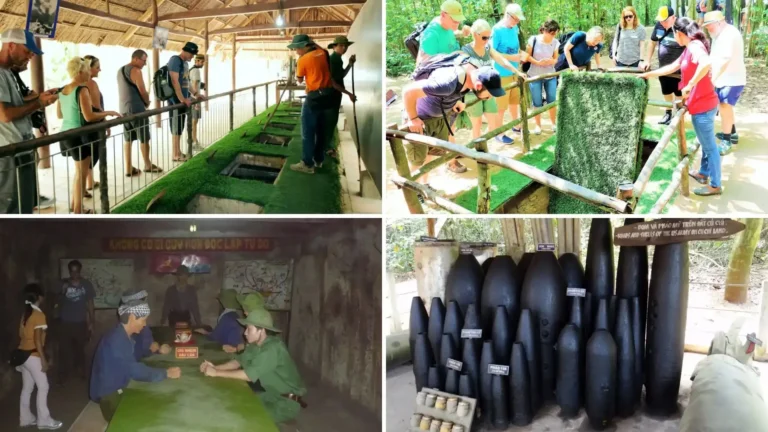
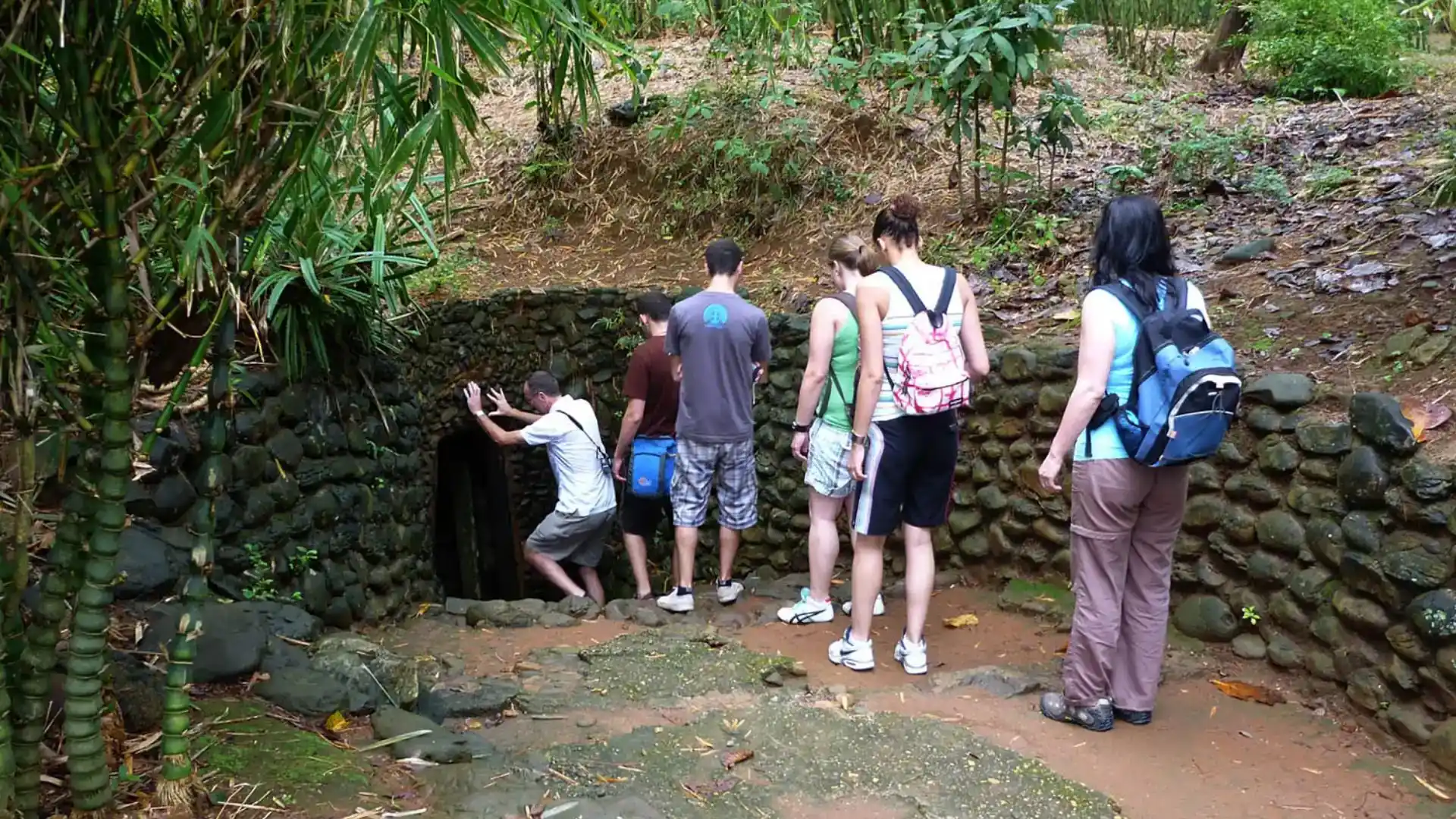
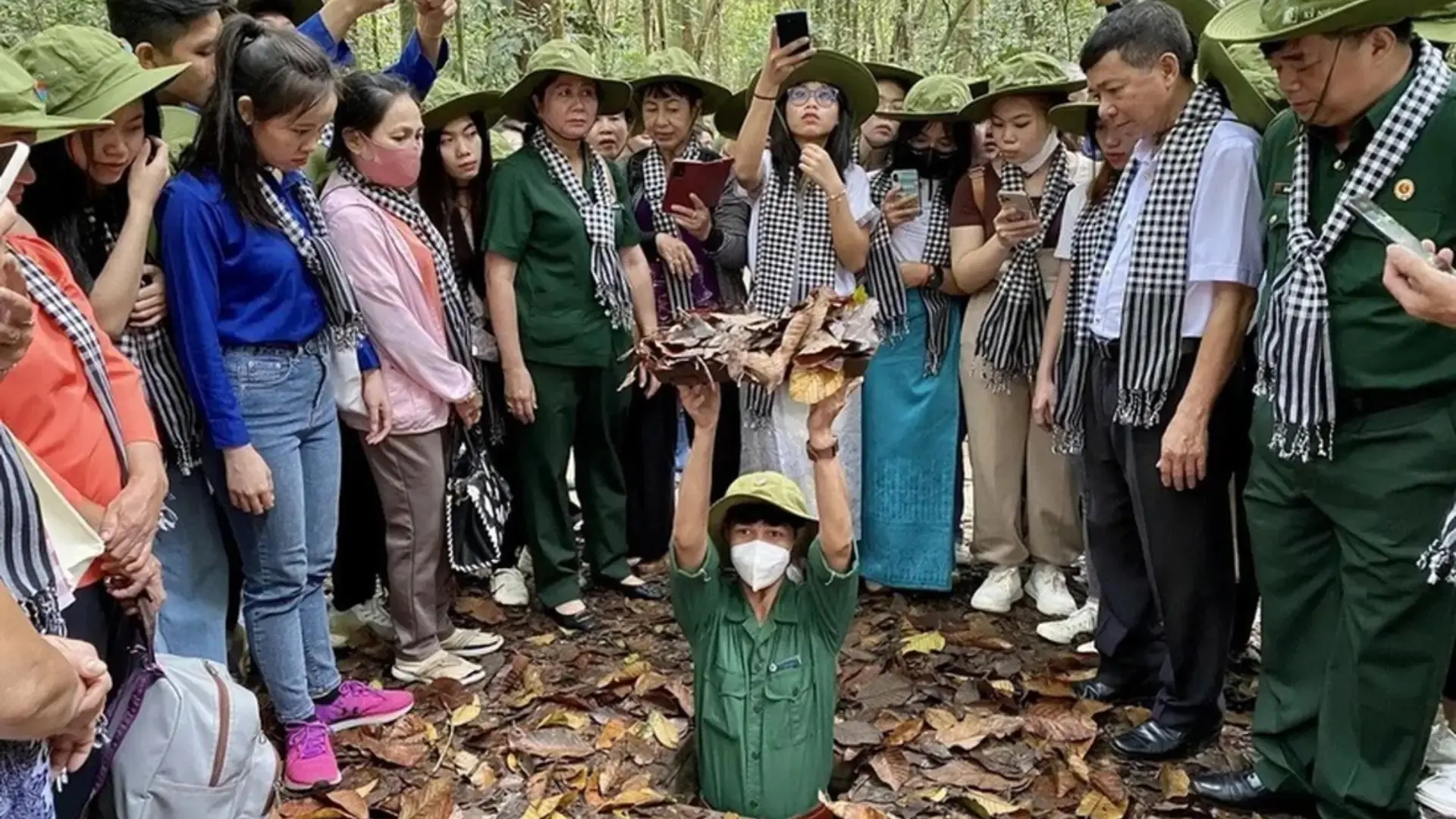
Guides may demonstrate small trapdoors hidden beneath leaves and forest ground. Some demonstrations allow visitors to try entering a narrow opening. Participation is optional.
3. Trap and defensive-system displays
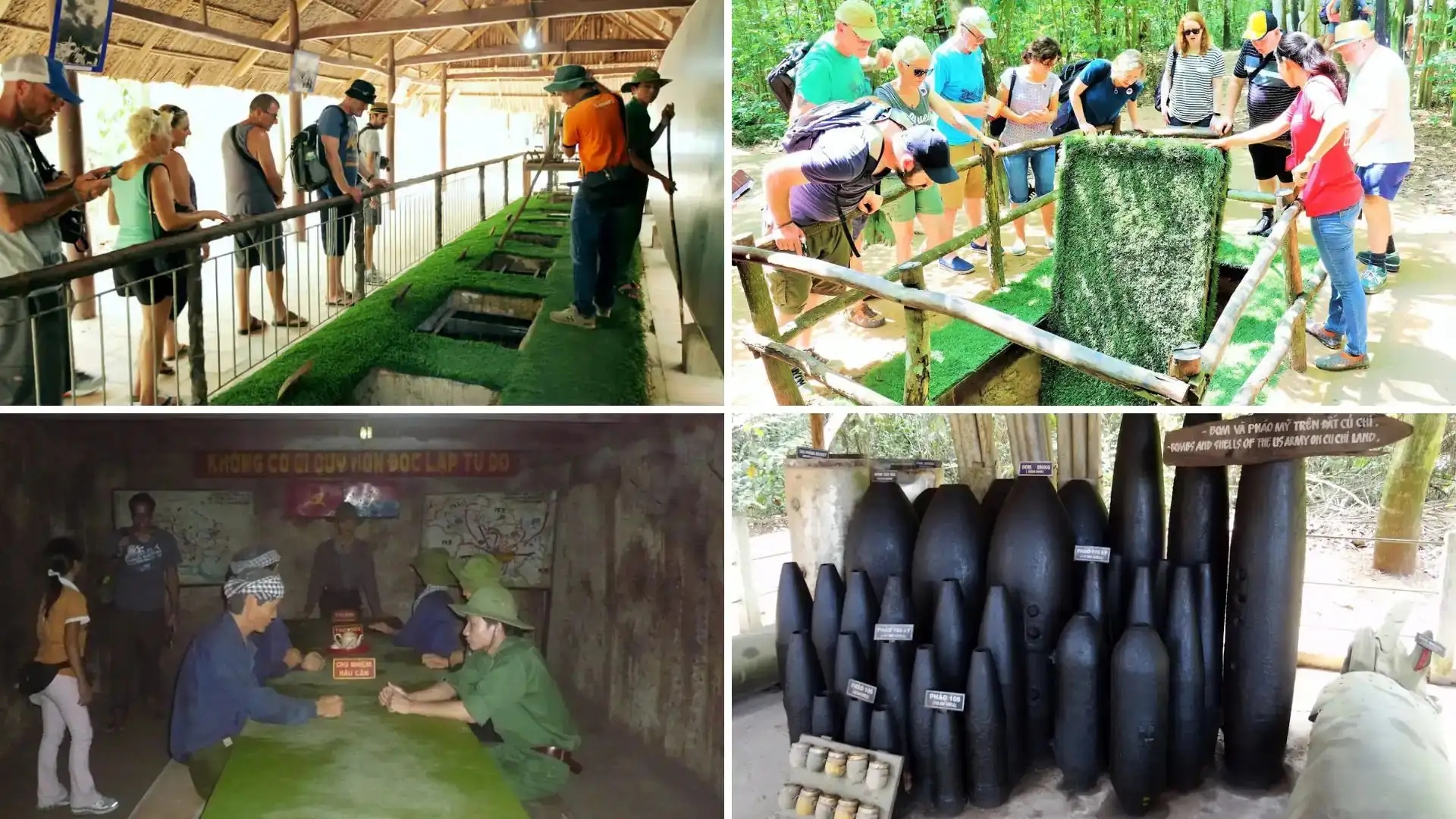
Above-ground exhibits demonstrate traps and defensive mechanisms associated with the wartime site. These are educational displays. Remain on the marked route and do not operate or touch mechanisms unless staff instruct you to do so.
4. Underground rooms and facilities
Depending on the site and route, visitors may see representations or preserved examples of meeting rooms, sleeping areas, kitchens, medical spaces, storage chambers, ventilation systems, fighting positions, workshops, wells, and concealed access points.
At Ben Duoc, the official visitor description includes leadership rooms, meeting spaces, a surgical bunker, food and weapon storage, ventilation openings, a well, a Hoang Cam kitchen and wartime workshops.
5. Optional tunnel experience
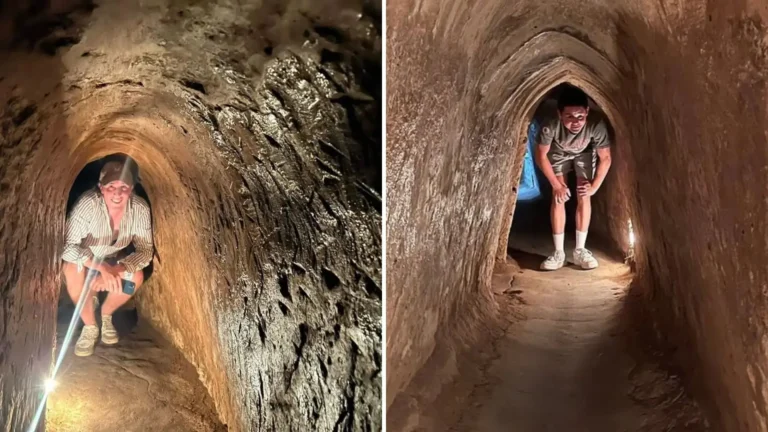
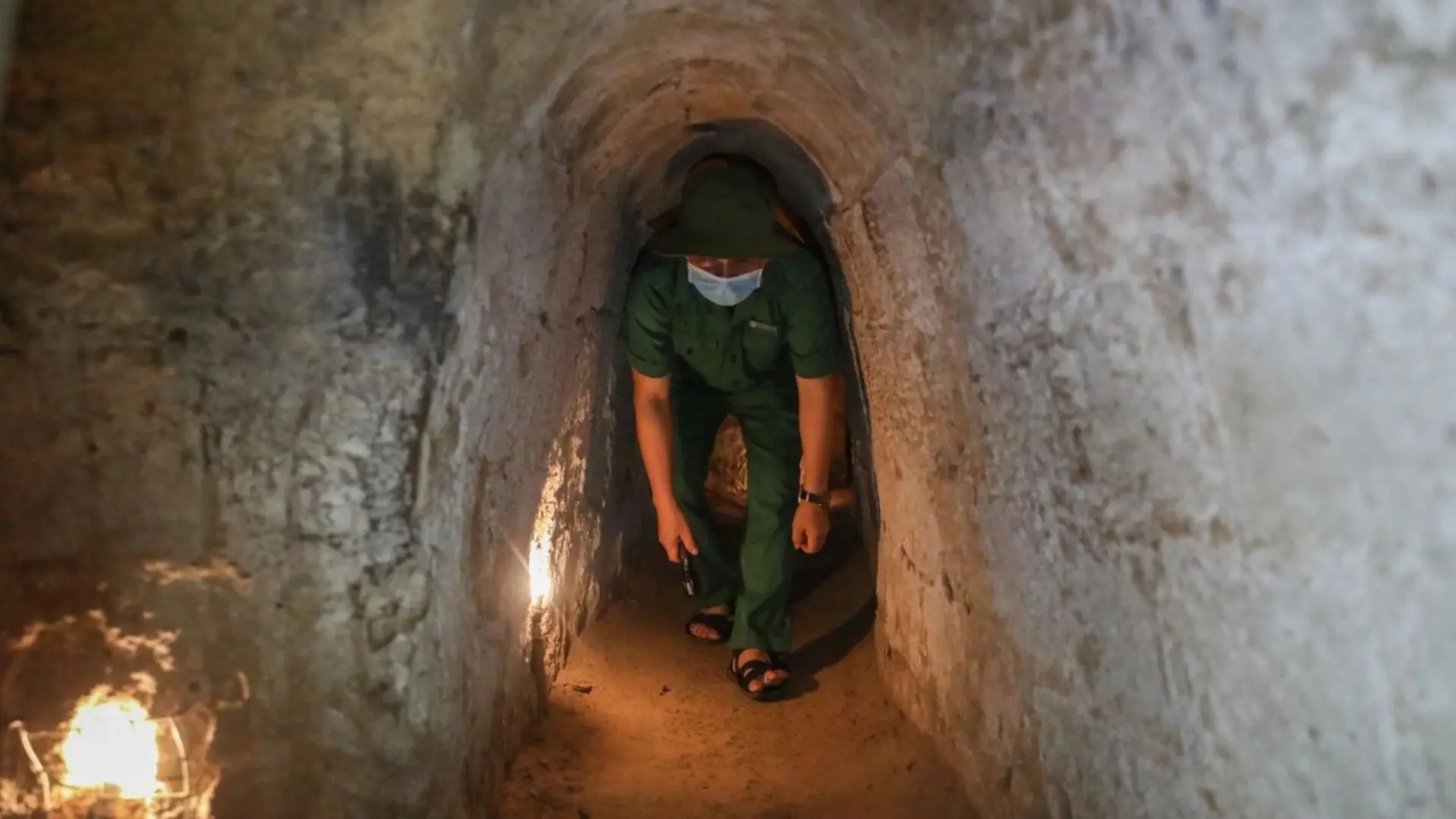
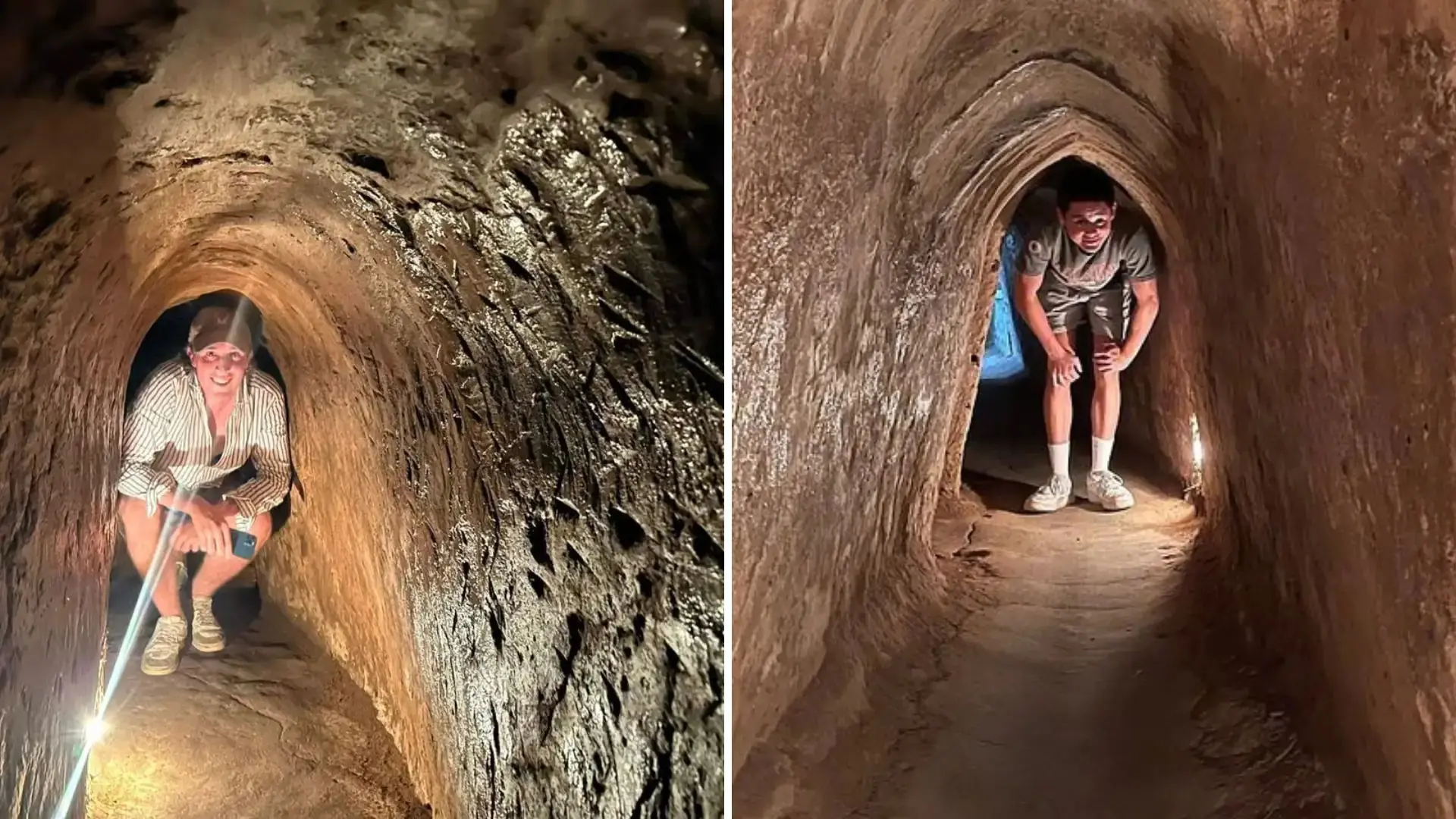
Some visitor routes provide access to a tunnel section adapted for public access. Even where a passage has been widened or reinforced, it can remain low, narrow, dark, warm, and physically demanding. You may need to crouch deeply, move slowly and occasionally use your hands for balance.
6. Cassava and tea
Some visits include boiled cassava or tapioca served with a peanut and salt mixture, accompanied by tea. The food is presented as an example of the simple meals associated with life at the site during wartime.
7. Optional shooting range
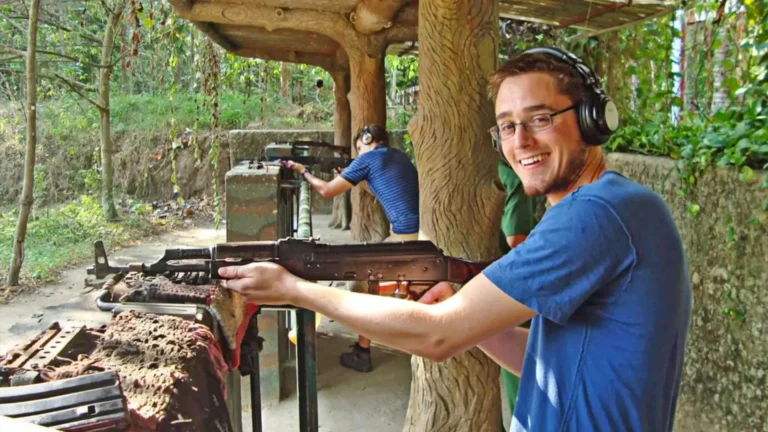
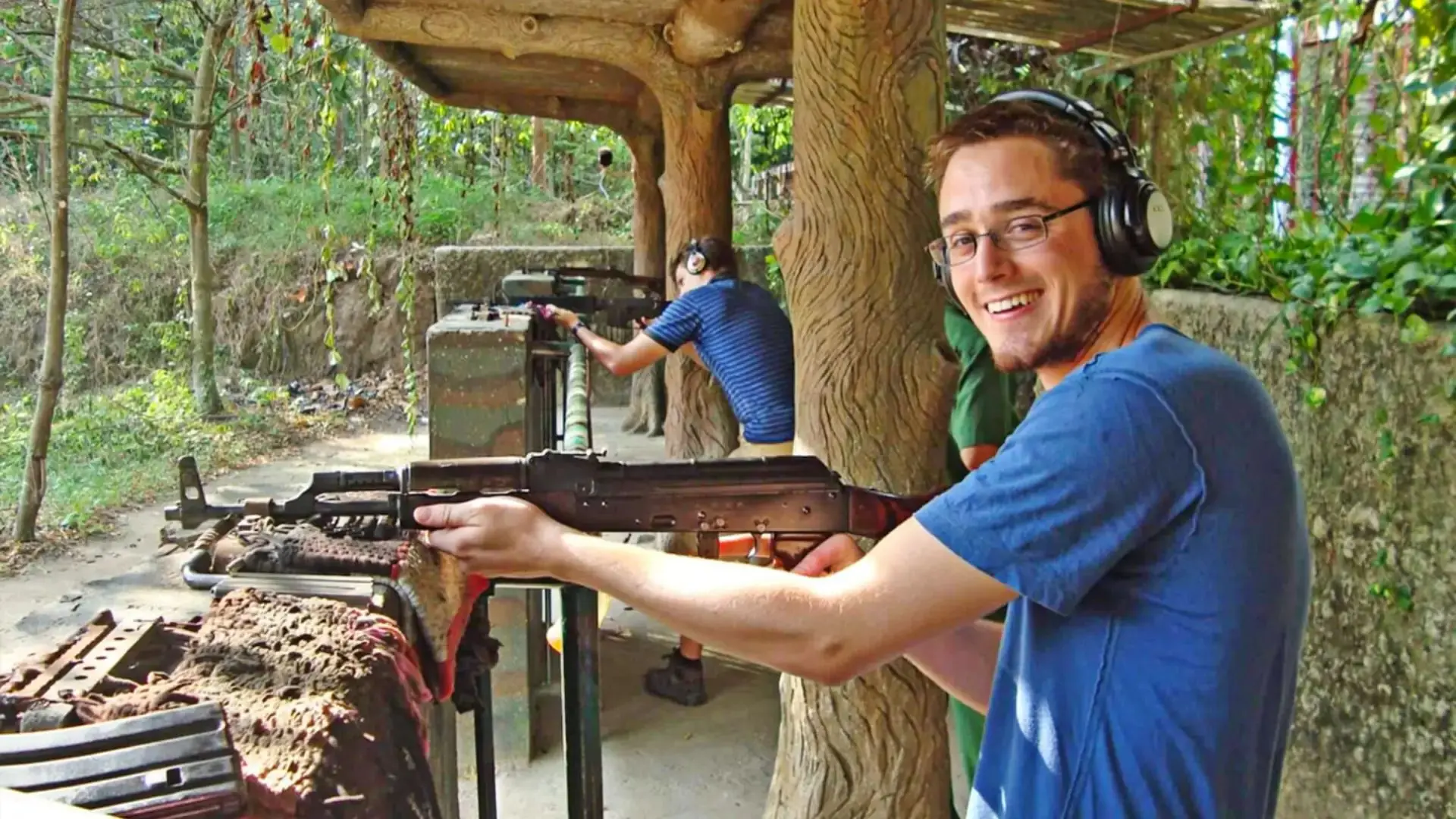
Some visitor routes provide access to a shooting range where ammunition can be purchased separately. The activity is optional. Before participating, confirm current pricing, minimum-age rules, available equipment, safety requirements, and what protective equipment is provided.
The sound from the range can be heard in surrounding areas. Visitors sensitive to loud noise may prefer to avoid this part of the site.
8. Memorial and reflection areas
Ben Duoc includes a memorial temple dedicated to those who died during the conflicts associated with the region. Treat these areas as memorial spaces rather than simply photo locations.
Do You Have to Enter the Tunnels?
No. Entering the underground passages is entirely optional.
Visitors who remain above ground can still see historical exhibitions, concealed entrances, bunker displays, reconstructed rooms, trap demonstrations, forest paths, military exhibits, memorial areas, and food demonstrations.
Tell your guide before reaching the tunnel section when you experience claustrophobia, have difficulty crouching, have limited mobility, feel unwell in hot or confined spaces, have a health condition that may be aggravated by physical exertion, or are uncertain whether the passage is suitable for you.
Mekong Smile’s current tour information advises travellers with claustrophobia, high blood pressure, heart conditions or mobility limitations to avoid entering narrow tunnel sections.
Skipping the tunnel does not mean missing the entire experience.
Safety, Health and Accessibility
A Cu Chi Tunnels visit involves more than entering an underground passage. The wider site may include outdoor walking, uneven ground, steps, narrow entrances, low ceilings, heat and humidity, dust or mud, and loud noise near the shooting range.
Travellers requiring mobility assistance should contact the site or tour operator before booking and ask about walking distance, surface conditions, steps, rest areas, toilet access, vehicle drop-off points, whether the itinerary can be adjusted, and whether they can remain above ground.
Who may prefer to skip the tunnel crawl
The underground section may not be suitable for people who have severe claustrophobia, cannot crouch safely, have significant mobility limitations, become dizzy in dark or enclosed spaces, have a health condition affected by heat or exertion, or feel uncertain about their ability to exit independently.
When in doubt, remain above ground or seek medical guidance before participating.
Visiting with children
Children can visit the above-ground areas, but tunnel participation should be decided individually. Parents should consider the child’s comfort with darkness, their ability to follow instructions, their ability to crouch and move independently, heat and hydration, noise from the shooting range, and the total road journey.
Do not pressure a child to enter a tunnel to complete the experience.
Visiting as an older traveller
Age alone does not determine suitability. Mobility, balance, cardiovascular health and comfort with enclosed spaces are more relevant. Older visitors can still experience the above-ground exhibitions while skipping the underground section.
What to Wear to the Cu Chi Tunnels
Recommended clothing
Lightweight long trousers are recommended because they offer better protection from dust, insects, scratches and rough tunnel surfaces. Shorts may be possible, but they provide less protection.
-
Comfortable closed-toe shoes
-
Breathable shirt
-
Clothing that can become dusty
-
Hat or cap
-
Light rain protection when needed
What to bring
-
Drinking water
-
Insect repellent
-
Sunscreen
-
A small amount of Vietnamese cash
-
Personal medication
-
Tissues or wet wipes
-
Charged phone
-
Compact bag
Avoid carrying a large backpack into a tunnel section. Keep your hands free for balance.
When Is the Best Time to Visit?
The historical site opens at 7:00 AM. An early visit may suit travellers who prefer cooler conditions, want more buffer for traffic, plan to spend several hours at the site, want to continue elsewhere in the afternoon, or are travelling independently.
Afternoon tours are useful for travellers with morning commitments, but the return journey may overlap with heavier traffic entering central Ho Chi Minh City.
Rain does not necessarily prevent a visit, although outdoor surfaces can become wet or slippery. Check weather and operating conditions during periods of heavy rain.
How Long Should You Spend at the Cu Chi Tunnels?
Allow approximately two to three hours at the site for a visit that includes historical introduction, surface displays, underground rooms, cassava and tea, time for questions, and optional shooting range.
Including transportation from central Ho Chi Minh City, a half-day trip commonly requires approximately 5.5-7 hours.
Mekong Smile’s current programme is listed as approximately six hours, but actual timing depends on pickup arrangements, traffic and the pace of the group.
Suggested Cu Chi Tunnels Itineraries
Half-Day Ben Dinh Itinerary
Suitable for first-time visitors or travellers with limited time.
-
Depart central Ho Chi Minh City
-
Travel toward Ben Dinh
-
Receive an introductory briefing
-
View concealed entrances and surface displays
-
Explore underground rooms and wartime exhibits
-
Try an optional visitor tunnel section
-
Have cassava and tea
-
Visit or skip the optional shooting range
-
Return to Ho Chi Minh City
Check whether your selected tour includes a workshop or shopping stop during the journey.
Full-Day Cu Chi and Ho Chi Minh City History Itinerary
Suitable for travellers interested in the wider historical context.
Morning: Visit the Cu Chi Tunnels. Explore the surface and underground displays. Return to central Ho Chi Minh City.
Afternoon: Visit Reunification Palace. Visit the War Remnants Museum. Join a guided historical walk where time permits.
Confirm museum opening hours before finalising the schedule.
Ben Duoc History and Memorial Itinerary
Suitable for visitors who want a longer, more focused visit.
-
Travel from Ho Chi Minh City to Ben Duoc
-
Explore the tunnel complex
-
Visit leadership and underground working areas
-
Visit the Ben Duoc Memorial Temple
-
Explore the reconstructed liberated-area attraction
-
Have lunch or rest near the site
-
Return to Ho Chi Minh City
Ask which areas require separate tickets before arriving.
Cu Chi and Tay Ninh Itinerary
A private full-day itinerary can combine Cu Chi with a Cao Dai site in Tay Ninh. This involves substantial road travel and should not be compressed into a short half-day programme.
Confirm destination order, ceremony time where relevant, lunch arrangements, which Cu Chi site is included, and expected return time.
Cu Chi and the Mekong Delta in One Day
Some itineraries combine the Cu Chi Tunnels and the Mekong Delta in one day. However, this creates a long schedule with substantial travel. Travelers who prefer a more in-depth experience should normally visit the two areas on separate days.
Are the Cu Chi Tunnels Worth Visiting?
The Cu Chi Tunnels can be worthwhile for travellers who want to understand how underground construction, local geography and wartime organisation shaped conflict around Saigon.
The site may appeal to travellers interested in Vietnamese history, military history, underground engineering, memorial sites, wartime daily life, and a half-day trip outside central Ho Chi Minh City.
The experience may be less suitable when you strongly dislike confined spaces, are sensitive to loud firearm noise, have significant mobility limitations, prefer destinations unrelated to war, have too little time for the return journey, or expect every visitor structure to remain unchanged since wartime.
A meaningful visit does not depend on entering the tunnels or using the shooting range. Historical context, site layout and respectful observation are more important than completing every available activity.
Visiting the Cu Chi Tunnels Responsibly
The Cu Chi Tunnels are both a visitor attraction and a site connected to significant human loss.
During your visit: follow staff and guide instructions, stay on designated paths, do not operate displays without permission, avoid climbing on historical objects, keep noise low in memorial areas, follow photography restrictions, ask questions when an explanation is unclear, avoid treating traps and weapons only as entertainment, and recognise that wartime history can be interpreted from different perspectives.
The historical interpretation at the site is presented primarily from a Vietnamese perspective. Travellers seeking broader context can combine Cu Chi with museums, archival material and accounts representing different civilian and military experiences.
Plan a Cu Chi Tunnels Tour with Mekong Smile
Mekong Smile currently operates a half-day Cu Chi Tunnels tour to Ben Dinh.
Current tour details
| Detail | Current programme |
| Destination | Ben Dinh Cu Chi Tunnels |
| Duration | Approximately 6 hours |
| Departure options | Morning or afternoon |
| Current listed group price | From 975,000 VND or USD 39 per adult |
| Transport | Shared air-conditioned minivan |
| Pickup | Selected central Ho Chi Minh City hotels |
| Language | Vietnamese-English-speaking guide |
| Entrance fees | Included |
| Tunnel crawl | Optional |
| Shooting range | Optional; ammunition excluded |
Tour price and inclusions last checked on August 6, 2026. Check the product page for current availability and pricing.
Current inclusions
-
Central hotel pickup and drop-off
-
Shared air-conditioned minivan
-
Vietnamese-English-speaking guide
-
Entrance fees
-
Bottled drinking water
-
Boiled cassava or tapioca and tea
-
Travel insurance
-
VAT
The current itinerary also includes a brief stop at a lacquerware workshop during the outward journey.
Book at mekongsmile.com or via WhatsApp: +84 774 839 165.
Frequently Asked Questions About the Cu Chi Tunnels
Which is better, Ben Dinh or Ben Duoc?
Ben Dinh is generally more practical for an organised half-day programme. Ben Duoc suits travellers who have more time and want to include a broader historical and memorial complex. Both are officially recognised Cu Chi Tunnels locations.
How much is the Cu Chi Tunnels entrance fee?
The official notice lists a 35,000 VND historical-site admission fee and a 100,000 VND visitor service and guidance ticket for foreign visitors. The published combined amount is 135,000 VND per person from February 1, 2026. Optional activities and separately operated attractions may cost extra.
What are the Cu Chi Tunnels opening hours?
The official site lists daily opening hours from 7:00 AM to 5:00 PM. Check for temporary changes before travelling.
How far are the Cu Chi Tunnels from Ho Chi Minh City?
The official historical-site introduction describes the Cu Chi Tunnels as approximately 70 kilometres northwest of central Ho Chi Minh City. Actual road distance and travel time depend on your starting point, selected site and route.
How long does a Cu Chi Tunnels trip take?
Allow approximately two to three hours at the site. Including transportation from central Ho Chi Minh City, a half-day programme commonly takes approximately 5.5-7 hours.
Do I have to crawl through the tunnels?
No. Visitors can remain above ground and still see the historical displays, concealed entrances, reconstructed rooms and memorial areas.
Can children visit the Cu Chi Tunnels?
Children can visit the above-ground areas. Tunnel participation should depend on the child’s comfort with darkness, confined spaces, crouching and loud noise. Parents should assess suitability individually.
Are the Cu Chi Tunnels suitable for older visitors?
Older travellers can visit the surface areas, but the tunnel crawl may not suit people with limited mobility or health conditions affected by heat, exertion or enclosed spaces. Contact the operator beforehand when assistance is required.
Can I visit without a tour?
Yes. Travellers can arrange private transportation, public transport or a motorbike journey. A guide remains useful because many structures require historical explanation to understand their function within the wider network.
What should I wear?
Wear lightweight clothing and comfortable closed-toe shoes. Long trousers are recommended for additional protection from dust, insects, rough surfaces and scratches.
Can I take photographs?
Photography is generally possible in designated visitor areas. Follow posted signs and staff instructions, particularly around memorial spaces and controlled activities.
Is the shooting range included in the ticket?
The shooting range is an optional activity. Ammunition is charged separately, and current age, pricing and safety requirements should be confirmed before participating.
Is Ben Dinh an original part of the Cu Chi Tunnels?
Ben Dinh is an officially recognised historical site associated with the former Cu Chi District Party Committee base. Ben Duoc is also an officially recognised site and served a different regional leadership and military function.
Are all tourist tunnel sections original?
The visitor experience can include preserved structures, reinforced passages, widened visitor sections and educational reconstructions. The modern accessible route should not be presented as though every visible section remains completely unchanged from wartime.
Continue Exploring
-
Ho Chi Minh City Travel Guide – Complete guide to HCMC
-
Reunification Palace – Key historical site in central HCMC
-
Vietnam Itinerary Guide – Plan your Vietnam trip
