
 Can Tho

Wondering what to eat in Vietnam? Phở and bánh mì are familiar starting points, but the country’s food traditions go well beyond these internationally recognized favorites.
In Hanoi, grilled pork and noodle soups are part of everyday life. Central Vietnam has its own specialties, from the spicy broth of bún bò Huế to the chewy noodles of cao lầu. Farther south, broken rice, crispy pancakes, freshwater fish and shared hotpots become increasingly familiar.
For first-time visitors, phở, bánh mì, bún chả, bún bò Huế, mì Quảng, cao lầu, cơm tấm and bánh xèo are good places to begin.
This guide introduces 30 Vietnamese dishes worth trying, including local specialties from Can Tho and the Mekong Delta. Each dish is explained through its ingredients, flavors and regional connections, helping you recognize what to order as you travel across Vietnam.
A Note About This Food Guide
Vietnamese cuisine is far more diverse than any single list can capture. The 30 dishes featured here are just a selection of foods worth exploring, not an exhaustive guide or a ranking of the country’s best dishes. Every region has many more specialties, each with its own traditions and local character.
Even the same dish can taste different from one place to another. Recipes may vary according to local ingredients, seasonal availability, family traditions and individual preferences. There is no single version that represents every way a dish is prepared or enjoyed.
Think of this guide as a starting point for discovering Vietnamese food, rather than a definitive list of what you should eat. What you enjoy most will ultimately depend on your own tastes and experiences.
What Makes Traditional Vietnamese Cuisine Special?
Rice is one of the foundations of Vietnamese cooking. It appears as steamed rice, noodles, rice paper, sticky rice and many kinds of savory and sweet cakes.
Fresh herbs, vegetables, fish sauce, grilled meats and carefully prepared broths also play important roles. The way these ingredients are combined often matters as much as the ingredients themselves.
A serving of bánh xèo, for example, is usually eaten with fresh leaves and dipping sauce. Bún chả brings grilled pork, soft noodles and herbs together in one meal. Even a simple bowl of phở can taste different depending on the broth and accompanying condiments.
Vietnamese food also varies considerably between regions. Northern dishes often highlight aromatic broths and balanced seasoning. Central Vietnam is known for distinctive noodle preparations, seafood and savory rice cakes. Southern cooking frequently makes use of freshwater fish, coconut, herbs and sweet-sour flavors.
These are general characteristics, not fixed rules. Recipes change between localities and households, and many regional specialties are now enjoyed throughout the country.
Vietnamese Food at a Glance
If you are unfamiliar with Vietnamese food, this table can help you decide what to try first.
| If you enjoy... | Vietnamese dishes to try |
|---|---|
| Noodle soups | Phở, bún bò Huế, bún riêu cua, hủ tiếu |
| Grilled meat and rice | Bún chả, cơm tấm |
| Crispy savory dishes | Nem rán, bánh xèo, bánh khọt, bánh cống |
| Regional noodle specialties | Mì Quảng, cao lầu, bún thang |
| Fresh herbs and vegetables | Gỏi cuốn, bánh xèo |
| Rich, fermented flavors | Lẩu mắm, vịt nấu chao |
| Sticky rice and sweet dishes | Xôi, chè |
The dishes below are grouped by the regions with which they are particularly associated. This does not mean they are found exclusively in those places.
Popular Vietnamese Foods Found Across the Country
Some Vietnamese foods are so familiar that you may encounter them in several regions, often with different fillings, toppings or preparation styles.
These four are a useful introduction to everyday Vietnamese eating.
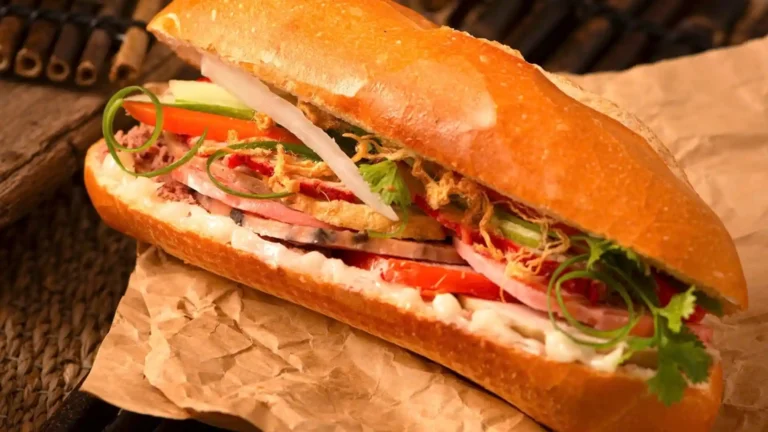
1. Bánh Mì: Vietnamese Baguette Sandwich
Bánh mì is a Vietnamese sandwich made with a light baguette that has a thin, crisp crust.
A common filling includes pâté, pork, cucumber, pickled carrot and daikon, coriander and chili. Other versions use grilled meat, eggs, Vietnamese sausage or tofu.
The contrast between the crunchy bread, savory filling, tangy pickles and fresh herbs gives bánh mì its distinctive taste.
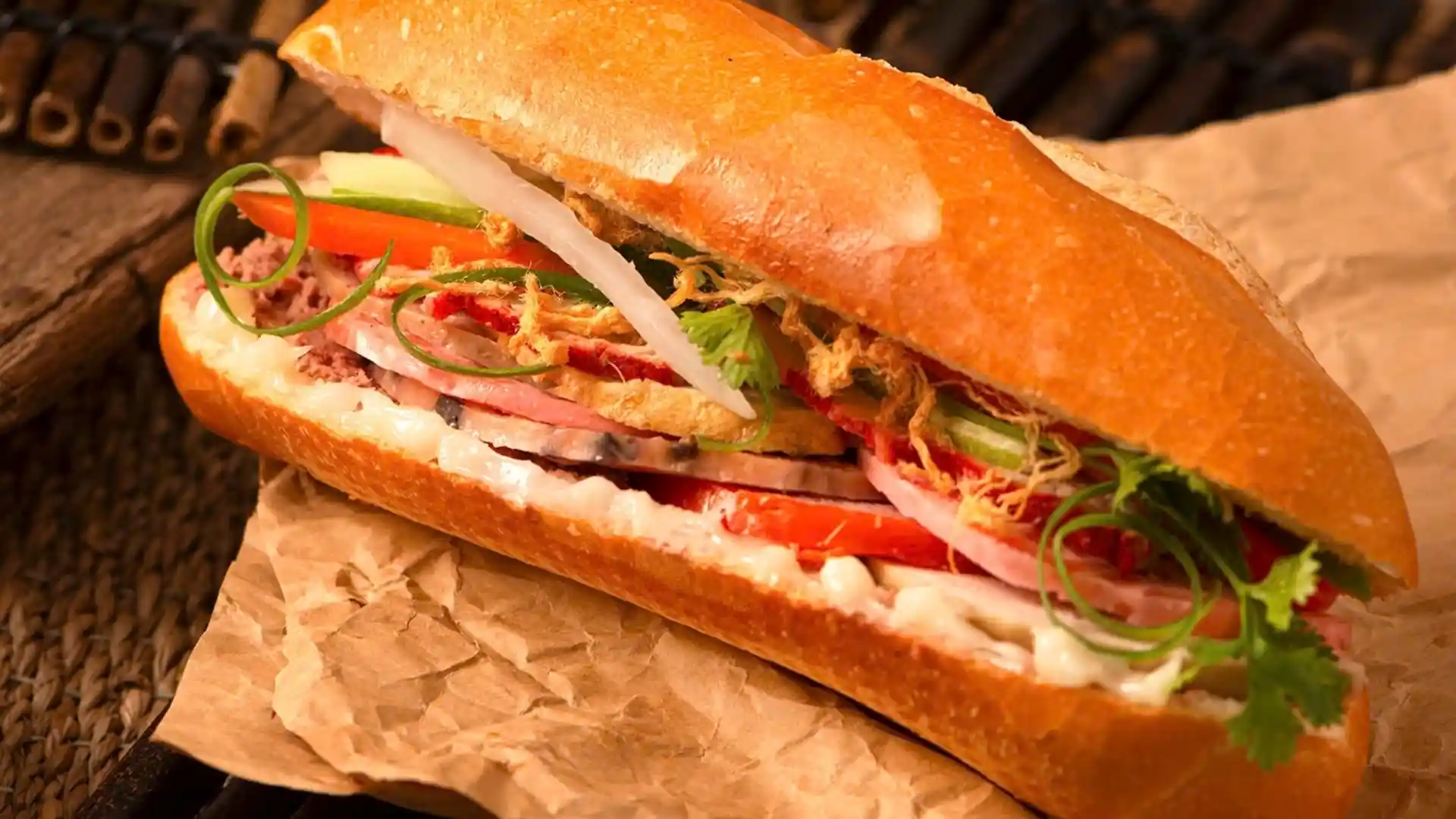
Bread was introduced to Vietnam during the French colonial period, but the sandwich developed into something closely associated with Vietnamese food culture, with its own fillings, seasonings and regional variations.
Bánh mì is convenient for breakfast, lunch or a quick meal during a day of sightseeing.
The fillings vary, so check the ingredients if you avoid meat or have dietary restrictions.
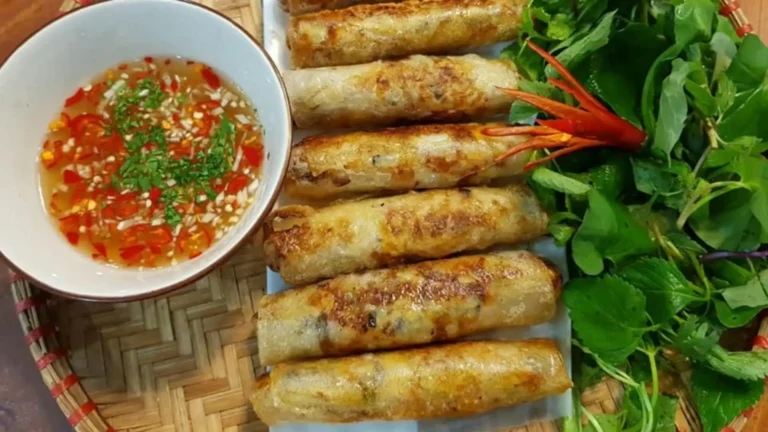
2. Nem Rán / Chả Giò: Vietnamese Fried Spring Rolls
Fried spring rolls are enjoyed throughout Vietnam, although the names, wrappers and fillings vary.
In northern Vietnam, they are commonly called nem rán. In the south, chả giò is the more familiar name.
The filling typically combines minced pork, mushrooms, glass noodles and vegetables. Shrimp or crab may also be included. The mixture is wrapped in thin sheets and fried until the outside becomes crisp.
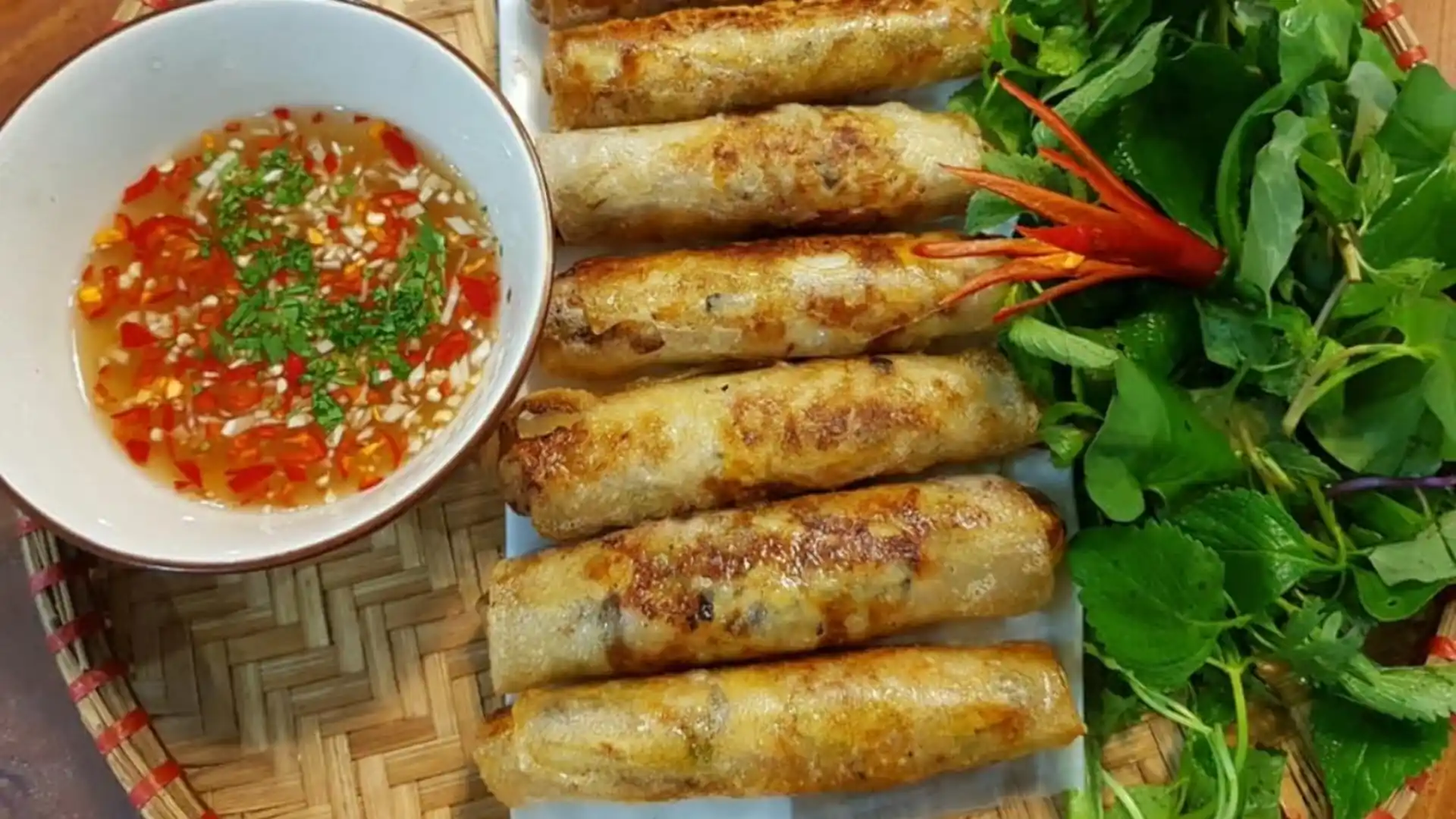
Fried spring rolls are commonly eaten with herbs, lettuce and a seasoned fish sauce-based dip. They may also be served with rice vermicelli as part of a larger meal.
Do not confuse them with gỏi cuốn, the fresh rice paper rolls served without frying.
Trying both is a simple way to experience two very different styles of Vietnamese rolls.
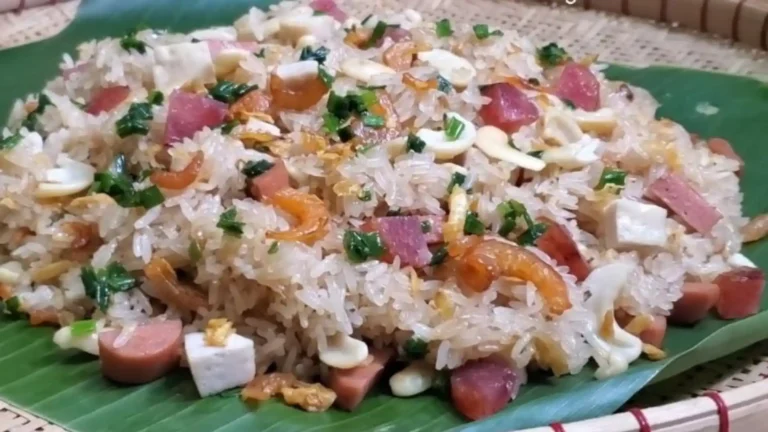
3. Xôi: Vietnamese Sticky Rice
Xôi is made from glutinous rice, which develops a dense, tender and pleasantly chewy texture when cooked.
It comes in savory and sweet varieties.
Savory xôi may be served with Vietnamese sausage, shredded meat, eggs, fried shallots or other toppings. Sweet versions often contain mung beans, coconut, peanuts or natural plant flavorings.
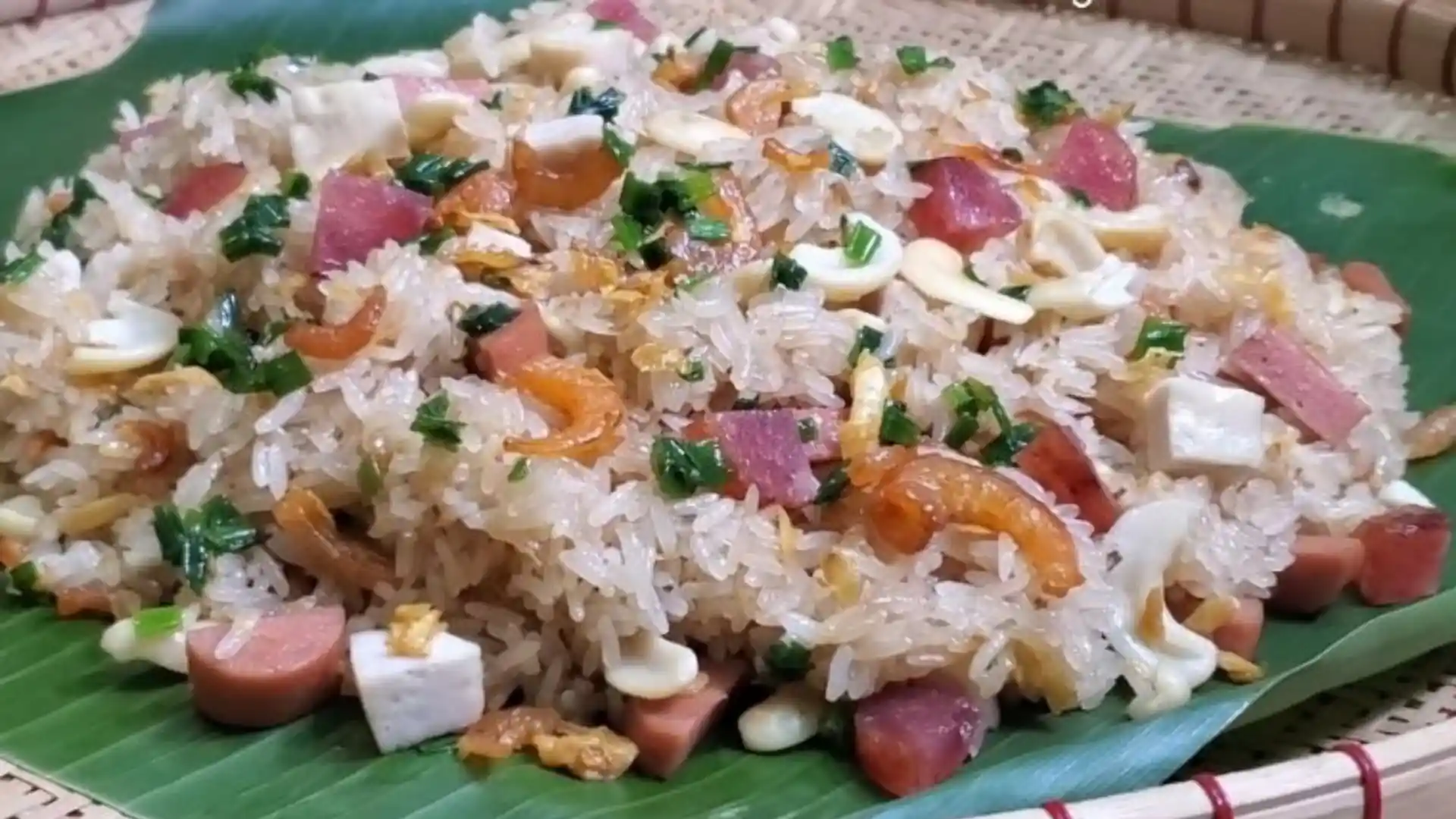
In northern Vietnam, xôi ngũ sắc is a colorful variation traditionally associated with several ethnic communities. Its five colors are commonly produced using natural plant ingredients.
Xôi is a familiar breakfast or snack, but sticky rice also has an important place in family gatherings, festivals and ceremonial meals.
Compared with ordinary steamed rice, xôi is more cohesive and filling. Even a modest portion can be substantial.
4. Chè: Vietnamese Sweet Desserts
Chè is a broad category of Vietnamese desserts rather than one specific recipe.
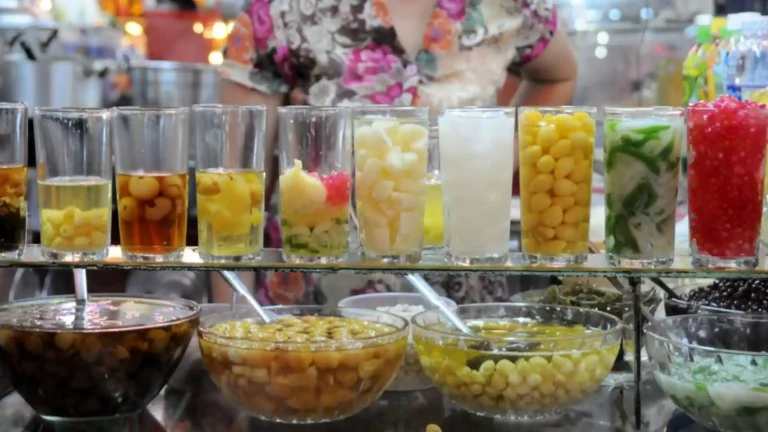
Some varieties are served warm as sweet soups, while others are served cold with ice. Ingredients may include beans, mung beans, lotus seeds, tapioca pearls, jelly, fruit and coconut milk.
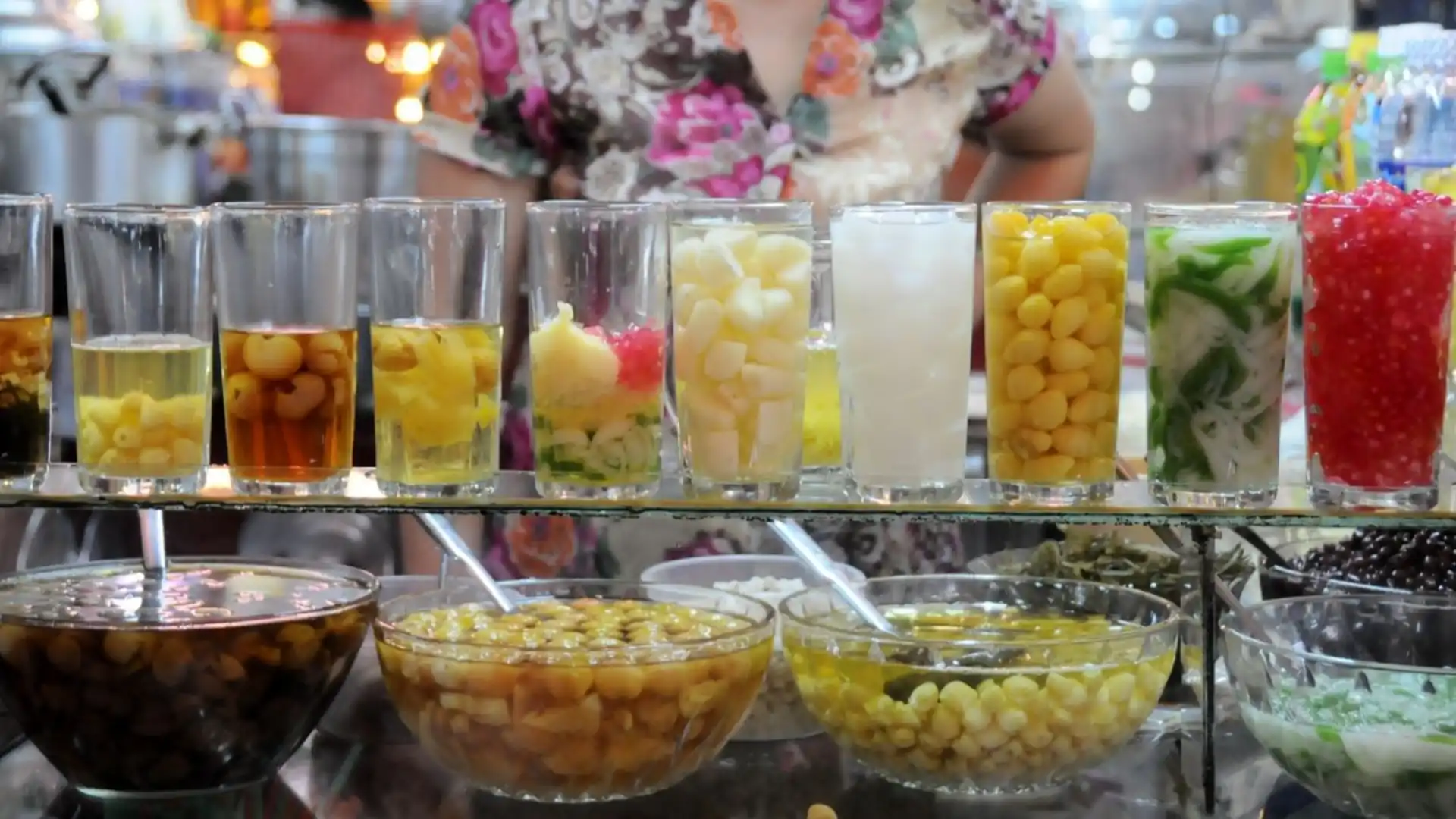
One recognizable variation is chè ba màu, often made with layers of beans, jelly and coconut milk.
Texture is an important part of the experience. A serving can combine soft beans, chewy tapioca, smooth coconut milk and crushed ice.
Different regions have their own traditional chè recipes, including both simple everyday desserts and more elaborate preparations.
For visitors interested in Vietnamese sweets, chè is an easy starting point after a savory meal.
Must-Try Food in Northern Vietnam
Northern Vietnam has a rich tradition of rice noodles, aromatic soups, grilled meats and steamed rice cakes.
Hanoi is particularly associated with many of these dishes. Although some are now available throughout Vietnam, their connection to the capital remains an important part of their identity.
5. Phở: Vietnamese Noodle Soup
Phở is one of Vietnam’s most internationally recognized dishes.
A typical bowl combines flat rice noodles with beef or chicken and an aromatic broth. Beef phở is commonly prepared using bones, ginger, onion and spices such as star anise and cinnamon. Chicken phở has its own lighter flavor.
The accompaniments vary between regions.
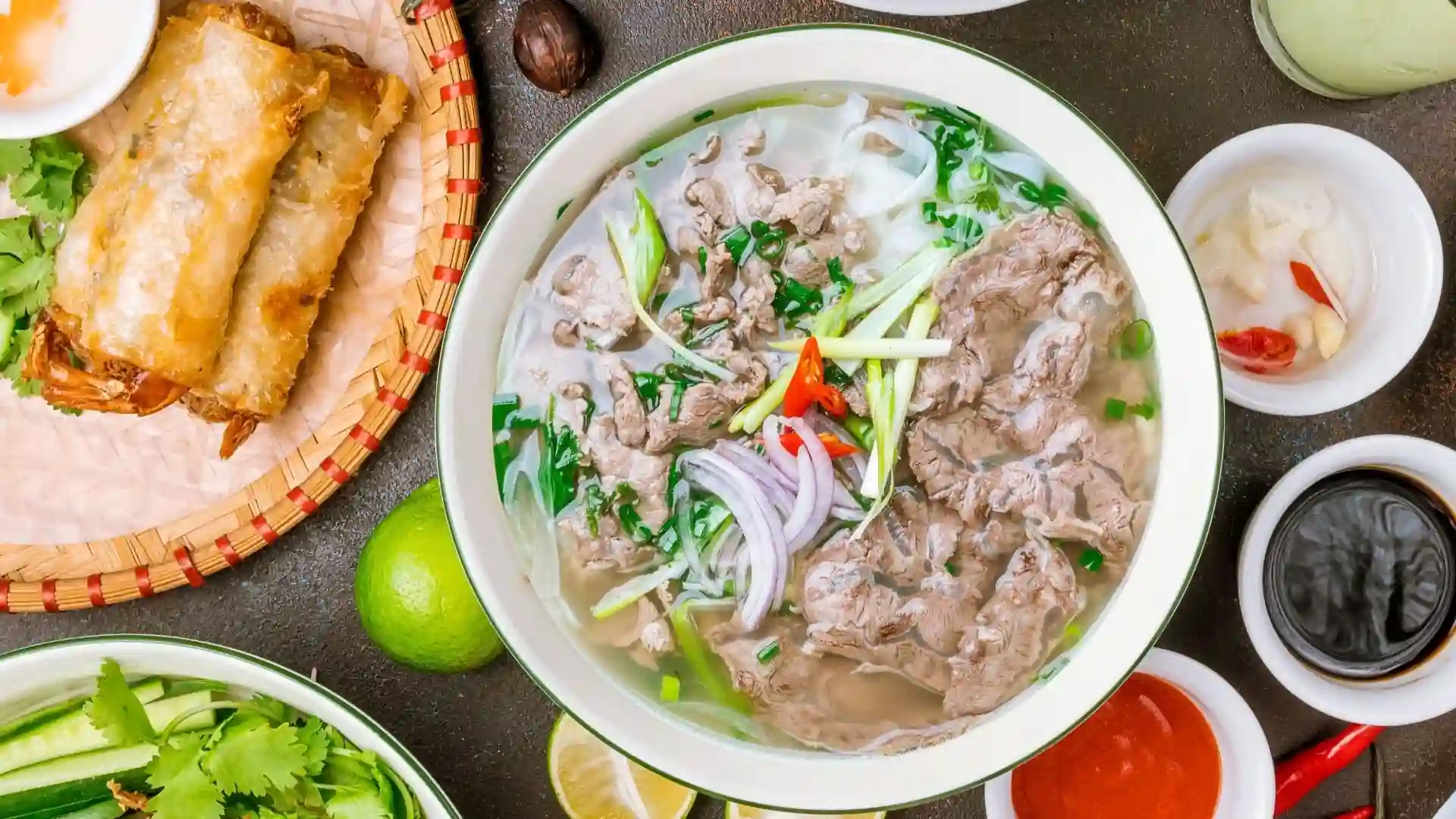
In Hanoi, phở is often served with a relatively simple selection of herbs and seasonings. Southern versions commonly arrive with bean sprouts, basil, lime and additional sauces.
The broth is central to the dish. Taste it before adding condiments to appreciate the flavor developed during cooking.
Although phở is often associated with breakfast, it is enjoyed at other times of day as well.
6. Bún Chả: Hanoi Grilled Pork with Rice Vermicelli
Bún chả is one of Hanoi’s characteristic everyday dishes, particularly popular at lunchtime.
It combines grilled pork, rice vermicelli, fresh herbs and a bowl of seasoned fish sauce-based dipping liquid.
The pork commonly includes thin slices of pork belly and small patties made from minced meat. Cooking over charcoal gives the meat a smoky aroma, while the dipping liquid adds sweetness and acidity.
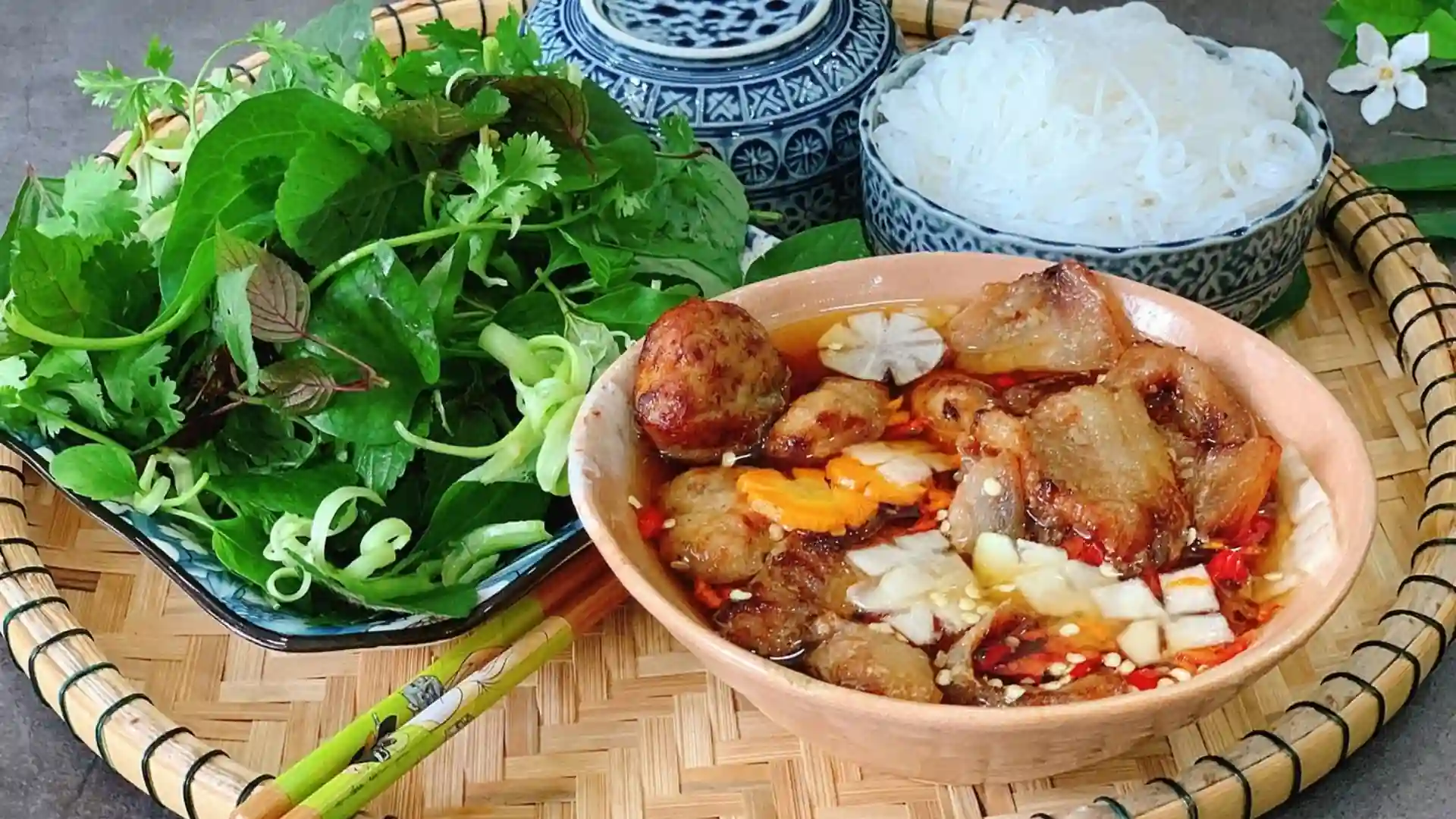
Unlike phở, the noodles are not served in a large bowl of broth. Diners take portions of noodles, pork and herbs, then combine them with the dipping liquid as they eat.
The result is a balance of warm grilled meat, cool noodles, fresh greens and savory sauce.
Bún chả is a good choice for visitors who prefer grilled meat to noodle soup.
7. Bánh Cuốn: Steamed Rice Rolls
Bánh cuốn is made by spreading a thin layer of rice batter over a steaming surface, then carefully lifting and folding the cooked sheet.
The familiar northern version often contains minced pork and wood-ear mushrooms.
Fried shallots, herbs and Vietnamese pork sausage may be served alongside, together with a light fish sauce-based dip.
The rice sheets are delicate, soft and slightly chewy. Their texture is quite different from fried spring rolls, which have crisp wrappers.
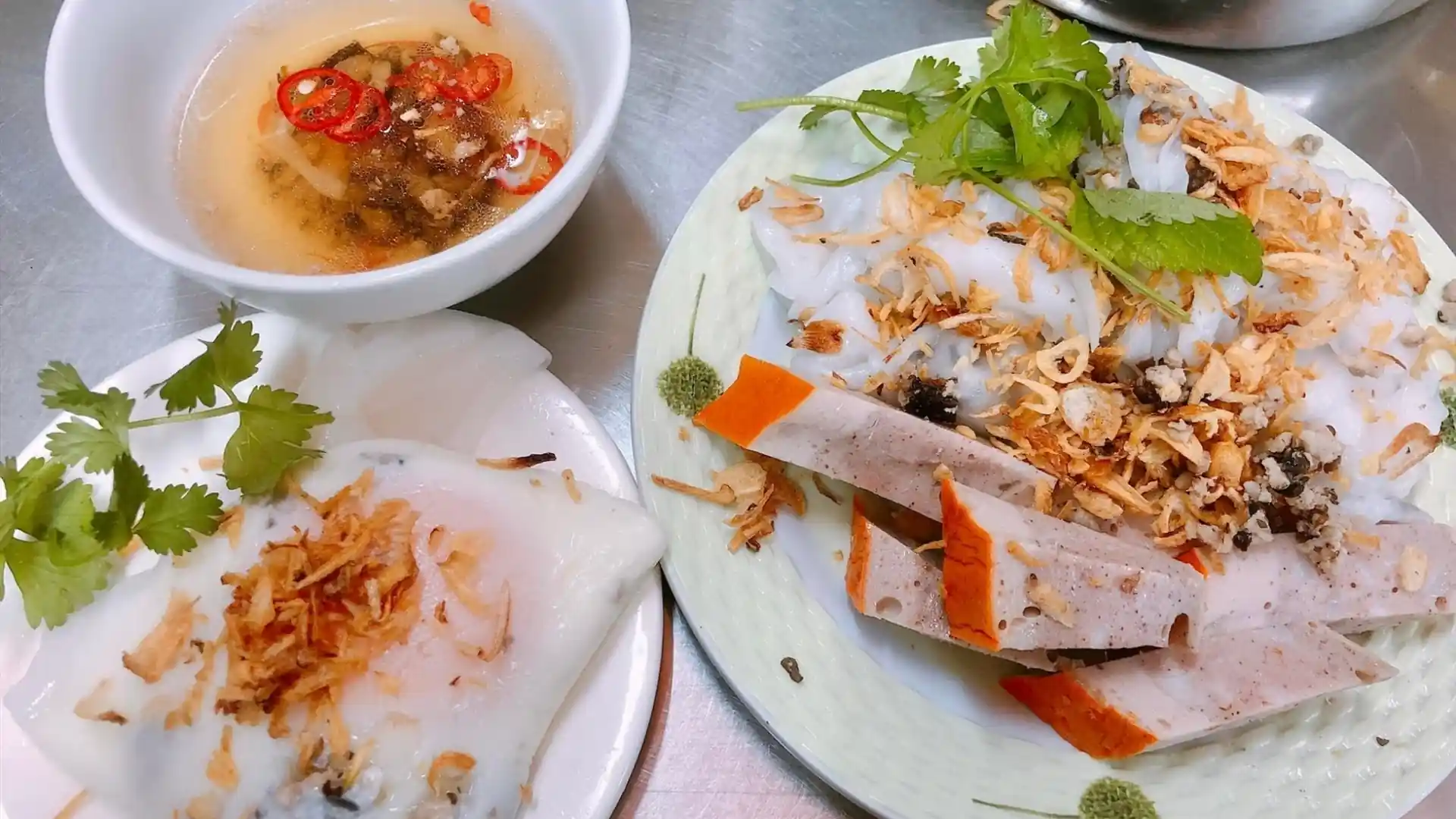
Bánh cuốn is commonly eaten for breakfast, although it is also available at other times.
Much of the skill lies in producing thin, even sheets that can be lifted without tearing. The preparation is simple in appearance but requires careful handling.
8. Chả Cá: Turmeric Fish with Dill
Hanoi-style chả cá is prepared with pieces of fish seasoned with turmeric and other ingredients, then cooked with dill and spring onions.
The fish is commonly served with rice vermicelli, herbs, peanuts and dipping sauce. Fermented shrimp paste, known as mắm tôm, may also be provided.
Turmeric gives the fish a yellow color, while dill contributes a distinctive aroma.
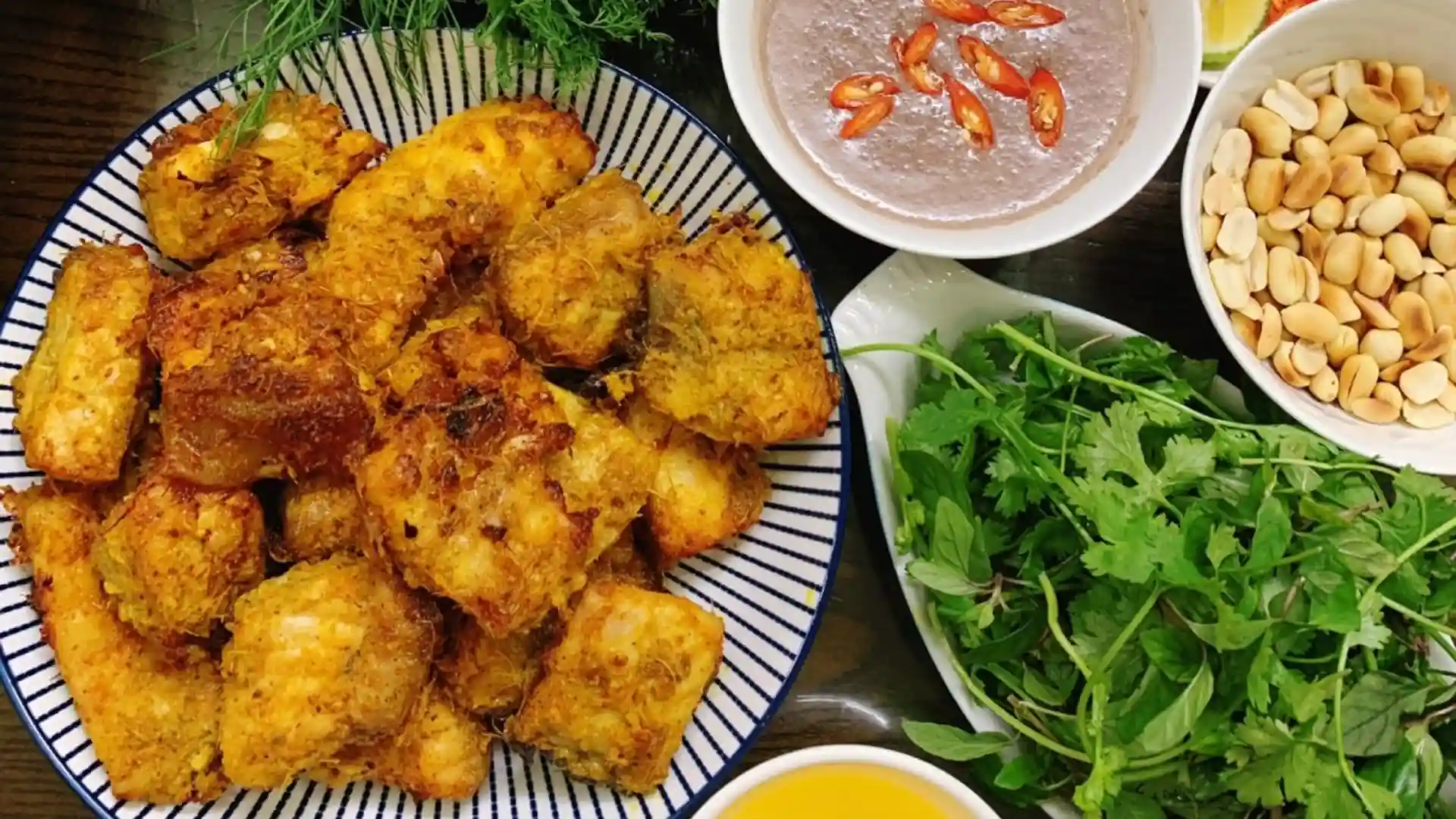
The name chả cá can be confusing because it refers to different fish preparations elsewhere in Vietnam. In many other regions, chả cá means fish cakes rather than the turmeric-seasoned fish associated with Hanoi.
The combination of hot fish, aromatic herbs and noodles makes this dish quite different from an ordinary fish soup.
Check the dipping sauce if you have a shellfish allergy or prefer to avoid fermented shrimp paste.
9. Bún Riêu Cua: Crab and Tomato Noodle Soup
Bún riêu cua is a rice vermicelli soup known for its tomato-based broth and freshwater crab ingredients.
A traditional preparation may contain crab mixtures, tofu, tomatoes and herbs. Some regional versions also include pork, eggs, snails or other seafood.
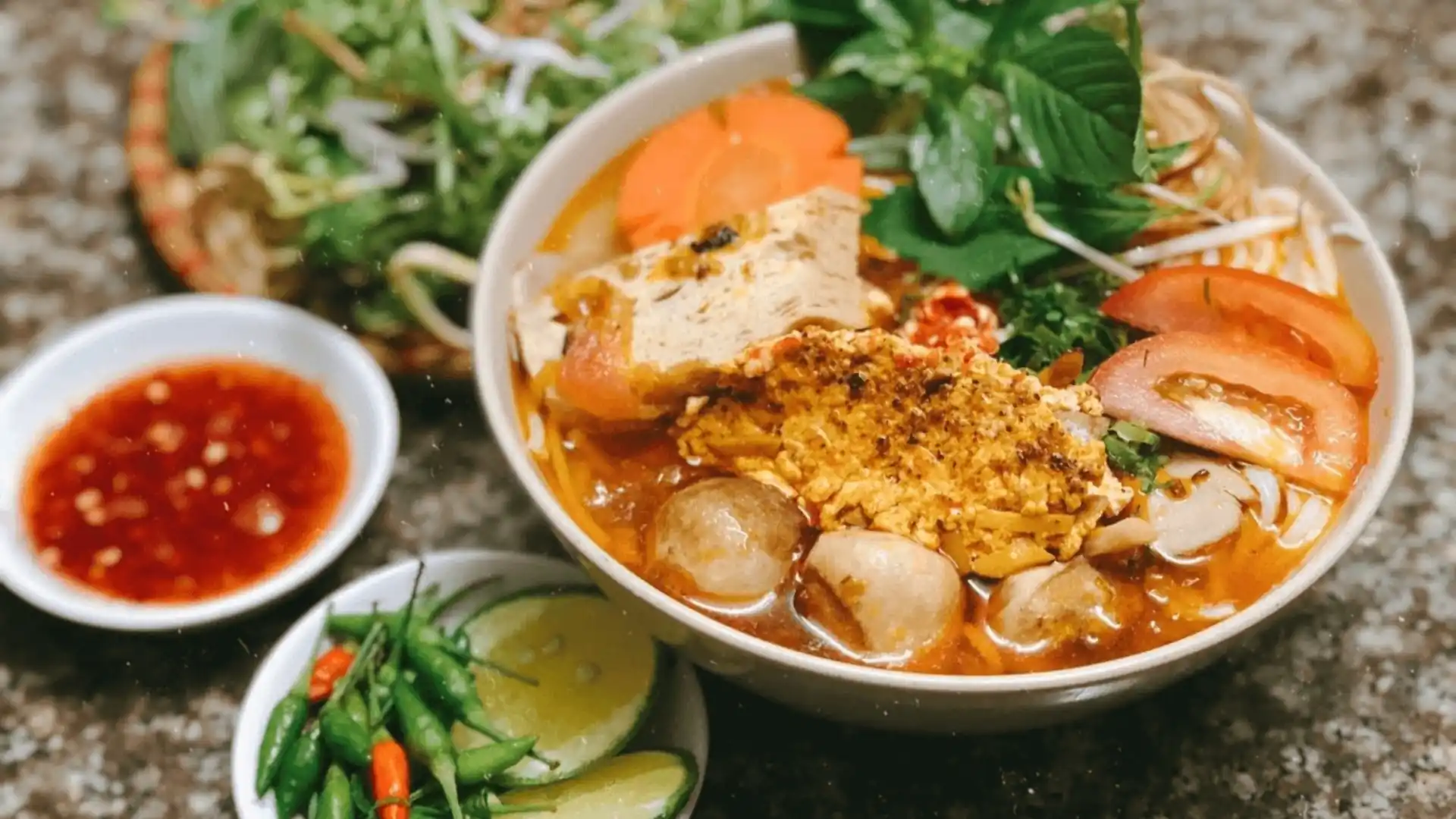
The broth is usually tangier than phở, with tomatoes providing acidity and crab contributing savory flavor.
Bún riêu is widely eaten across Vietnam, and the toppings can differ considerably between localities.
It is worth trying if you enjoy tomato-based soups or want to discover another style of Vietnamese noodle broth.
Because recipes vary, ask about the toppings if you do not eat particular types of meat or seafood.
10. Bún Thang: Hanoi Chicken Noodle Soup
Bún thang is a traditional Hanoi noodle soup known for its clear broth and carefully prepared toppings.
A typical bowl includes fine rice vermicelli, shredded chicken, thin strips of egg and Vietnamese pork sausage.
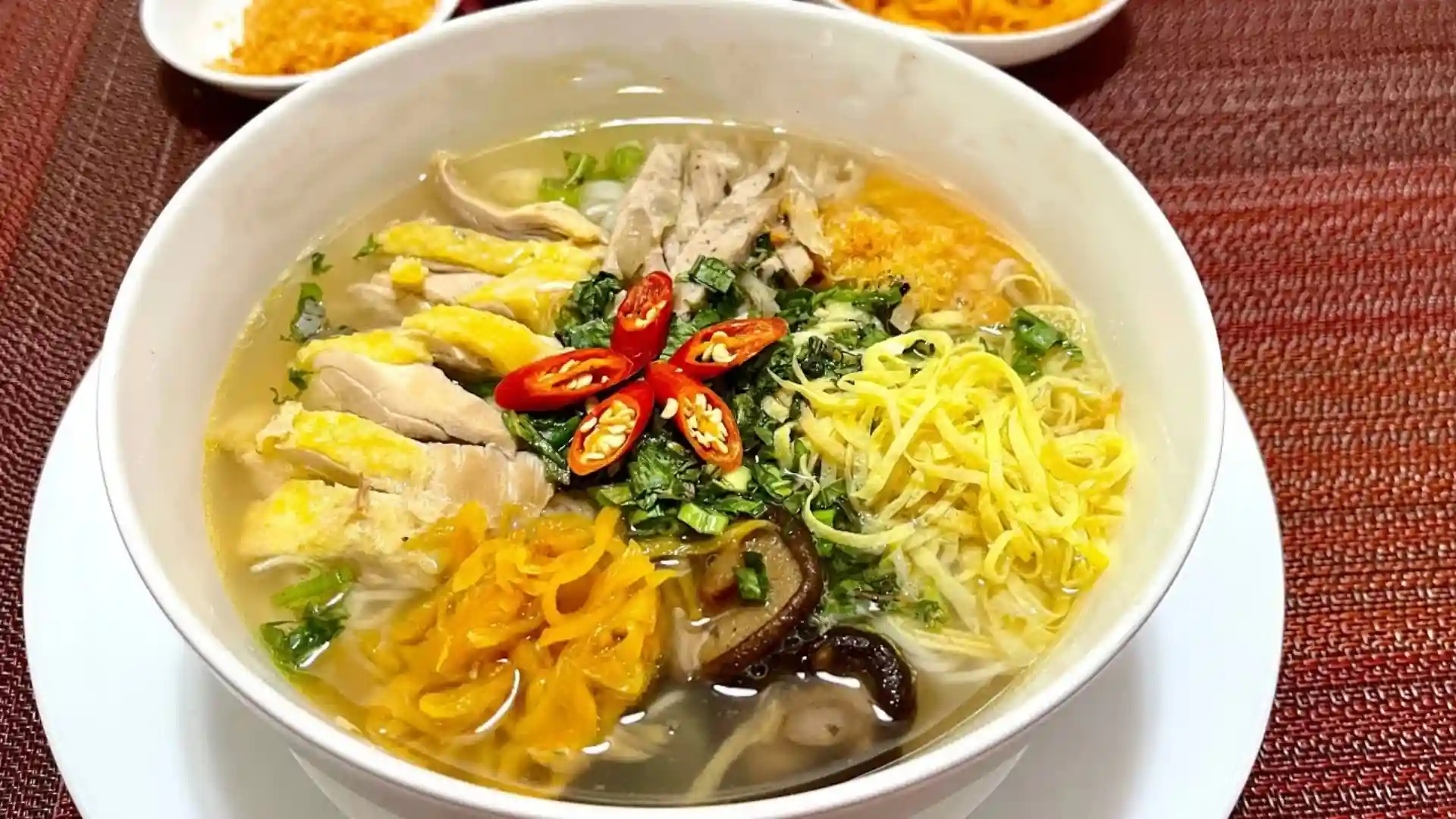
Dried shrimp, mushrooms and herbs may also contribute to the broth and seasonings.
The ingredients are usually prepared separately before being arranged together, creating several textures within a single bowl.
Unlike the strongly seasoned broth of bún bò Huế or the tomato-based flavor of bún riêu, bún thang is generally appreciated for its delicate savory character.
Some versions include a small amount of fermented shrimp paste as an additional seasoning.
Bún thang offers another side of Hanoi’s noodle tradition for visitors who have already tried phở.
Must-Try Food in Central Vietnam
Central Vietnam has some of the country’s most distinctive regional foods.
Hue is closely associated with richly seasoned noodle soups and small savory cakes. Quang Nam and Hoi An are known for their own noodle and rice specialties, while the south-central coast has a tradition of preparing small rice cakes in heated molds.
The eight dishes below illustrate the variety found across this part of Vietnam.
11. Bún Bò Huế: Hue Beef Noodle Soup
Bún bò Huế is a signature noodle soup associated with Hue.
The broth is prepared with beef bones and lemongrass, which gives the dish one of its most recognizable aromas. Fermented shrimp paste may provide additional depth, while chili oil or spicy seasonings can give the broth a reddish appearance.
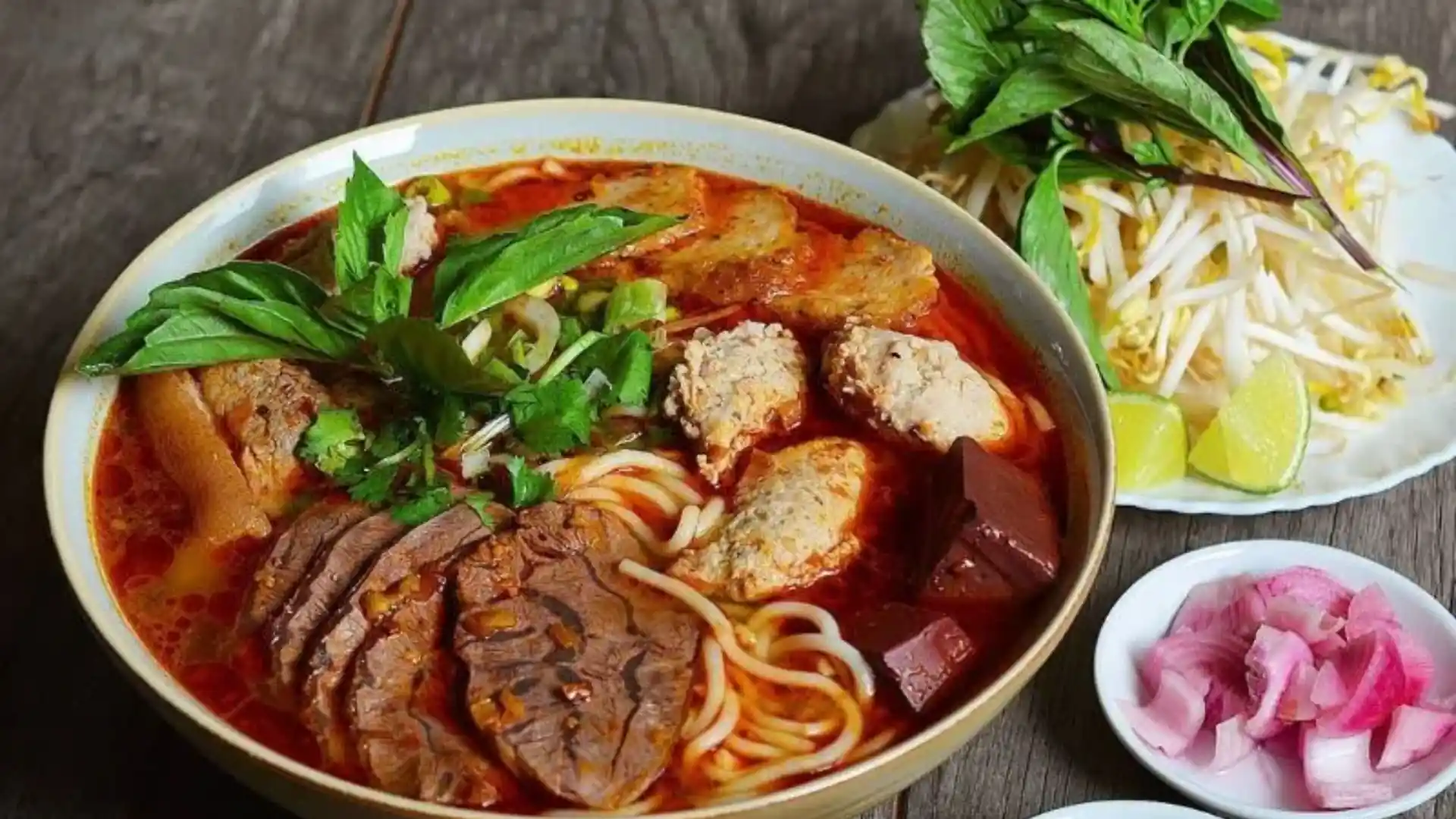
Unlike the flat noodles used in phở, bún bò Huế normally contains thick, round rice noodles.
Beef, pork hock and Vietnamese pork sausage are among the possible toppings.
The broth has a richer, more assertive flavor than many versions of phở, especially when lemongrass and chili are prominent.
Heat levels vary, so visitors who prefer mild food should ask whether chili has already been added to the broth.
12. Mì Quảng: Quang Nam-Style Noodles
Mì Quảng is closely associated with the cooking traditions of Quang Nam in central Vietnam.
The dish features wide rice noodles served with ingredients such as shrimp, pork, chicken or fish. Herbs, vegetables, peanuts and toasted sesame rice crackers are common accompaniments.
One of its defining characteristics is the amount of liquid.
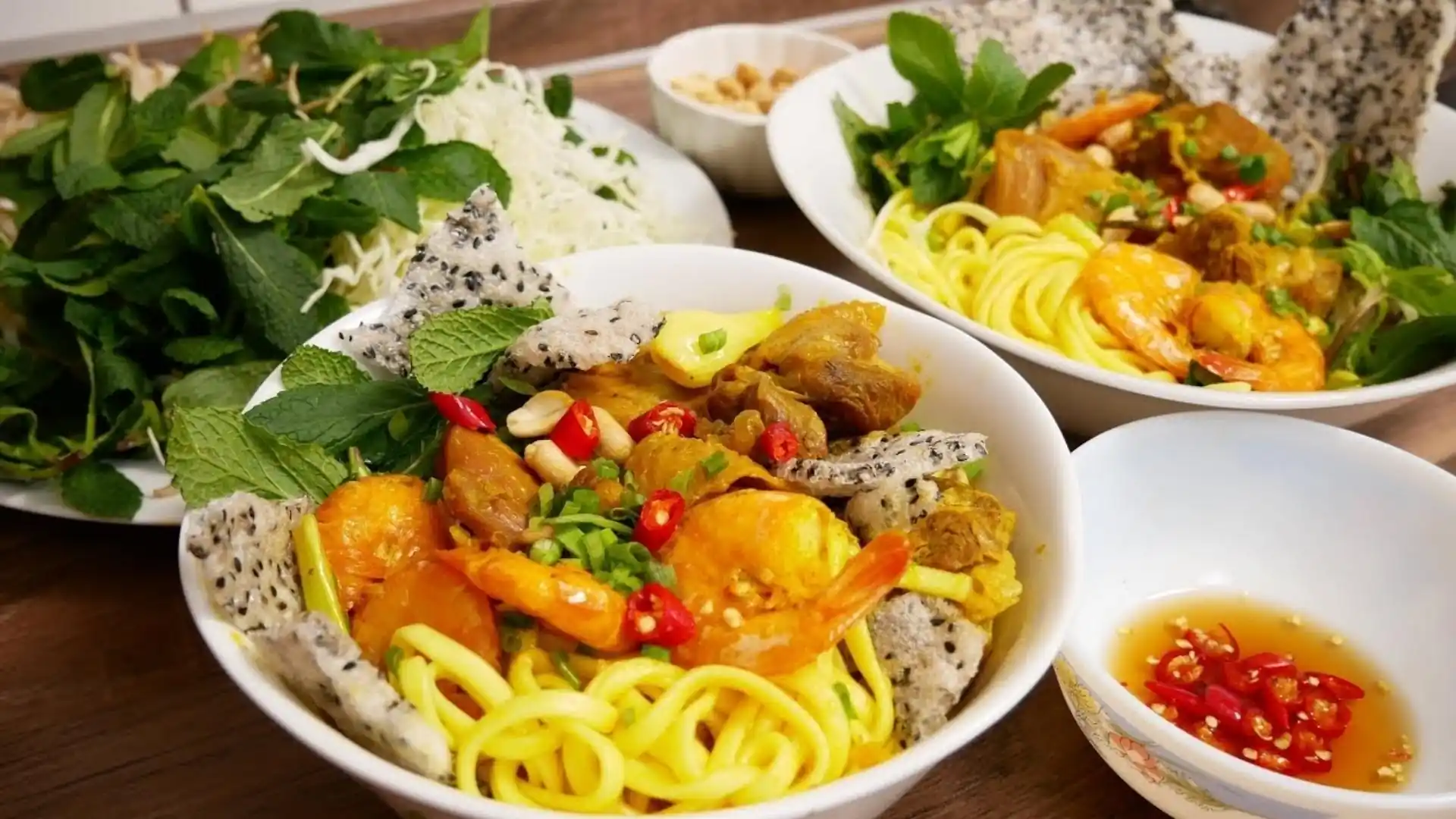
Instead of filling the bowl with broth, the cook usually adds a relatively small amount of concentrated broth or sauce to season the noodles.
Some preparations have yellow noodles or turmeric-colored broth, although recipes vary.
Mixing the ingredients brings together soft noodles, crisp rice crackers, fresh herbs and savory toppings.
If you have already tried phở, mì Quảng is a particularly good example of how differently Vietnamese noodle dishes can be prepared.
13. Cao Lầu: Hoi An’s Signature Noodles
Cao lầu is closely associated with Hoi An, the historic trading town in central Vietnam.
It consists of thick, chewy noodles topped with seasoned pork, fresh greens and crispy ingredients.
Only a modest amount of savory liquid is added, so the dish is not eaten like a conventional noodle soup.
The noodles are its most distinctive element. Their firm, substantial texture makes cao lầu different from both phở and mì Quảng.
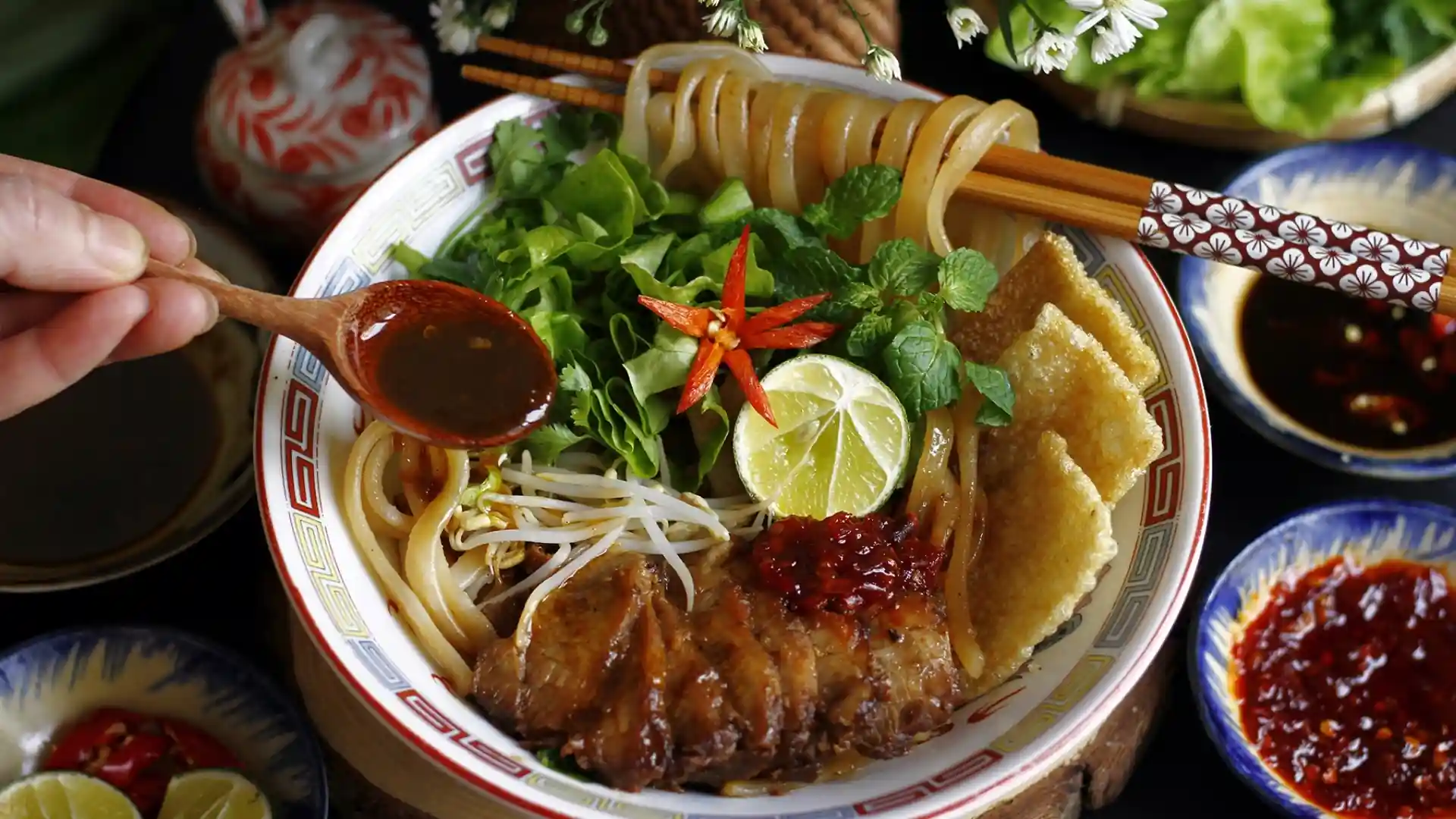
Traditional preparation methods are an important part of the dish’s identity. Various accounts connect the noodles to Hoi An’s longstanding local food-making practices, although some historical details remain difficult to verify.
Cao lầu is especially worth trying while visiting Hoi An, where it remains closely connected to the town’s culinary heritage.
14. Cơm Hến: Hue Rice with Baby Clams
Cơm hến is a traditional Hue specialty combining rice with small freshwater clams.
The dish also includes herbs, vegetables and a range of crunchy or savory ingredients.
Depending on the preparation, peanuts, pork cracklings, chili and fermented shrimp paste may be added.
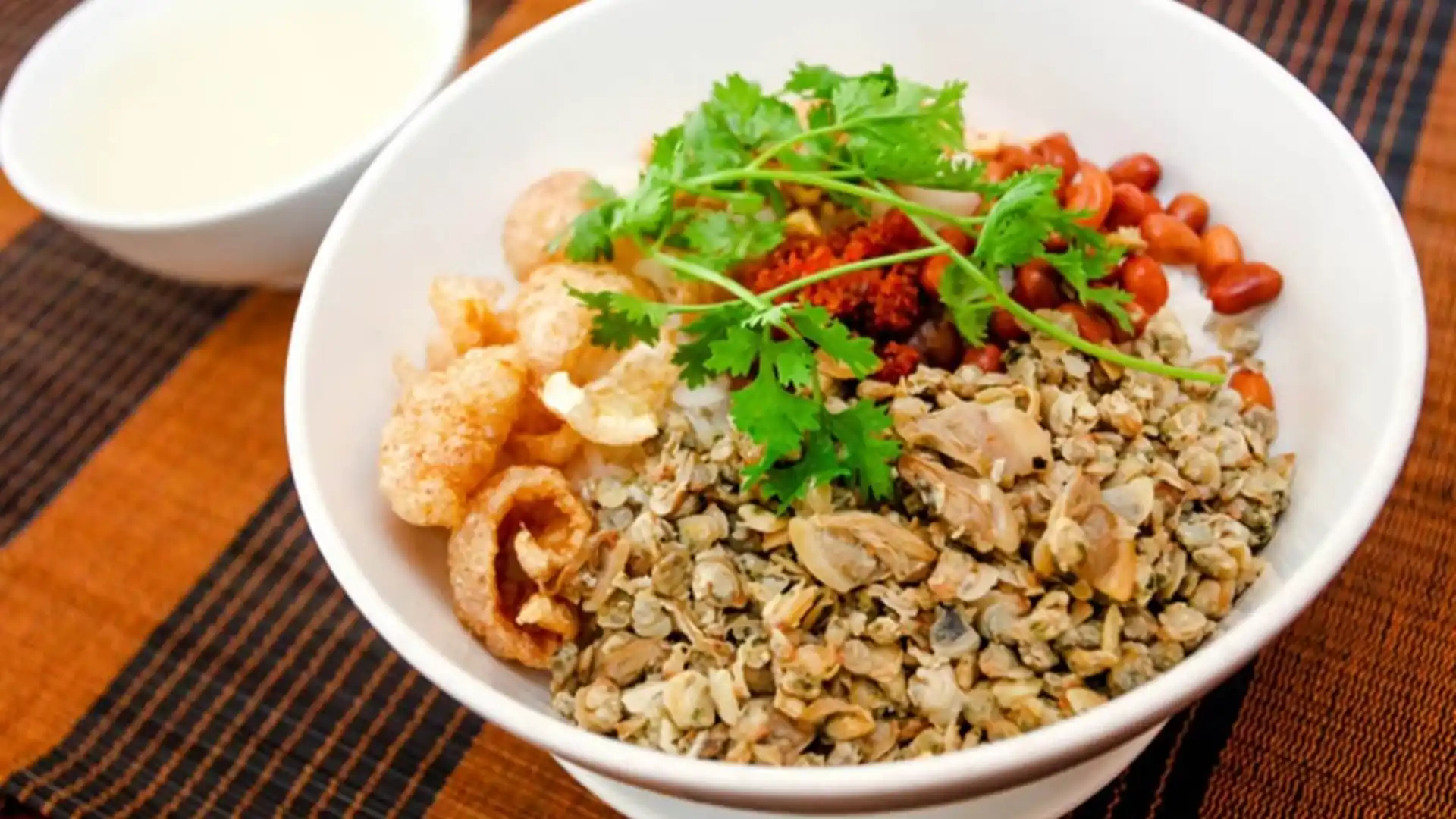
The clams contribute a gentle sweetness, while the herbs, seasonings and crispy toppings produce contrasting flavors and textures.
Some versions are notably spicy.
Rather than focusing on one large piece of meat, cơm hến brings numerous small ingredients together in a single bowl.
If you have allergies to shellfish or peanuts, check the ingredients carefully before eating.
15. Bánh Bèo: Steamed Rice Cakes
Bánh bèo consists of small steamed rice cakes, commonly served in individual shallow dishes.
The cakes have a soft texture and a mild rice flavor. Dried shrimp, scallion oil, mung beans or crispy toppings may be added, depending on the regional preparation.
A seasoned fish sauce-based dipping liquid usually completes the dish.
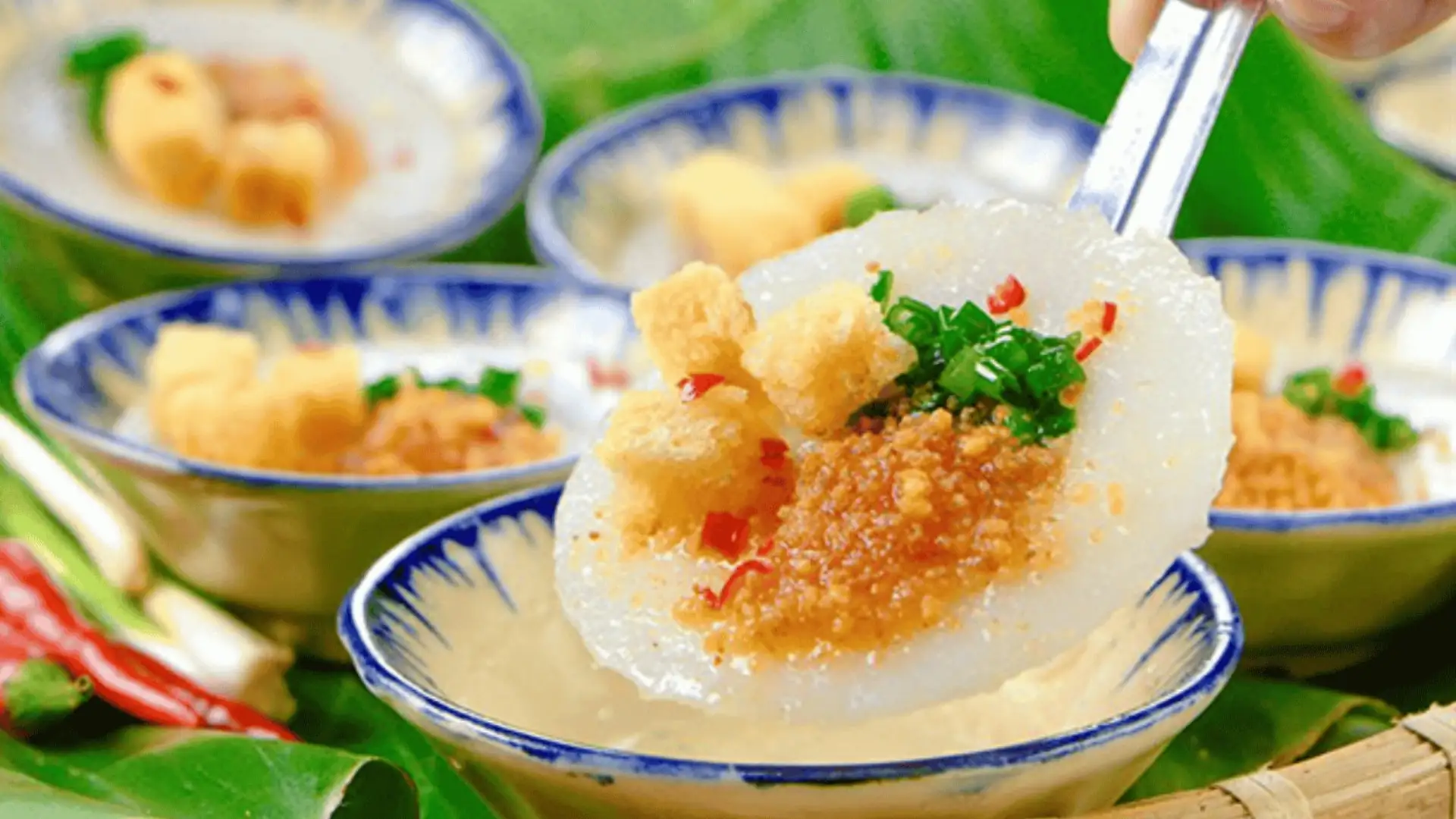
Bánh bèo is particularly associated with Hue and central Vietnamese food culture, where it is often enjoyed as a snack or alongside other small savory dishes.
Each cake is relatively small, so the experience is different from ordering a complete rice or noodle meal.
The simple rice base allows the toppings and dipping sauce to provide much of the flavor.
16. Bánh Bột Lọc: Vietnamese Tapioca Dumplings
Bánh bột lọc is known for its translucent, chewy wrapper made from tapioca starch.
The filling commonly includes shrimp, pork or both.
Some versions are wrapped in banana leaves and steamed, while others are prepared without a leaf wrapper. Once cooked, the dough becomes slightly transparent, allowing the filling to show through.
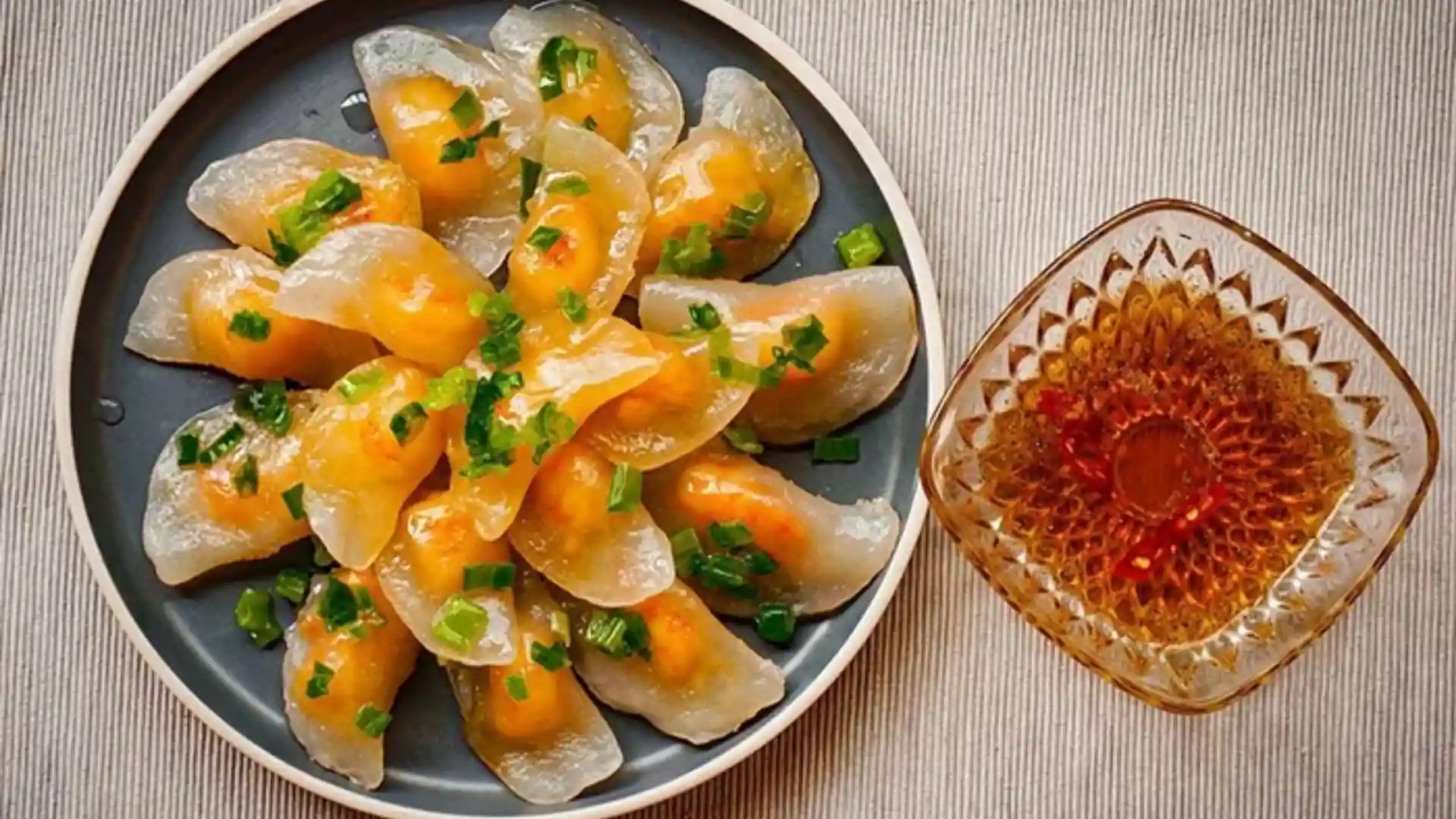
Bánh bột lọc is closely associated with Hue, although variations are enjoyed in other parts of Vietnam.
Its springy texture is noticeably different from the soft rice cakes used for bánh bèo.
The dumplings are generally served with a fish sauce-based dip, sometimes with chili.
For travelers interested in traditional Vietnamese cakes and dumplings, these two Hue specialties provide an interesting contrast.
17. Cơm Gà Hội An: Hoi An Chicken Rice
Cơm gà Hội An combines fragrant rice with chicken, herbs and vegetables.
The rice is commonly cooked using chicken broth and seasonings. Turmeric may be added to give it a yellow color.
The chicken is often shredded and mixed with onions, herbs and a light dressing. Pickled vegetables or accompanying sauces can add acidity.
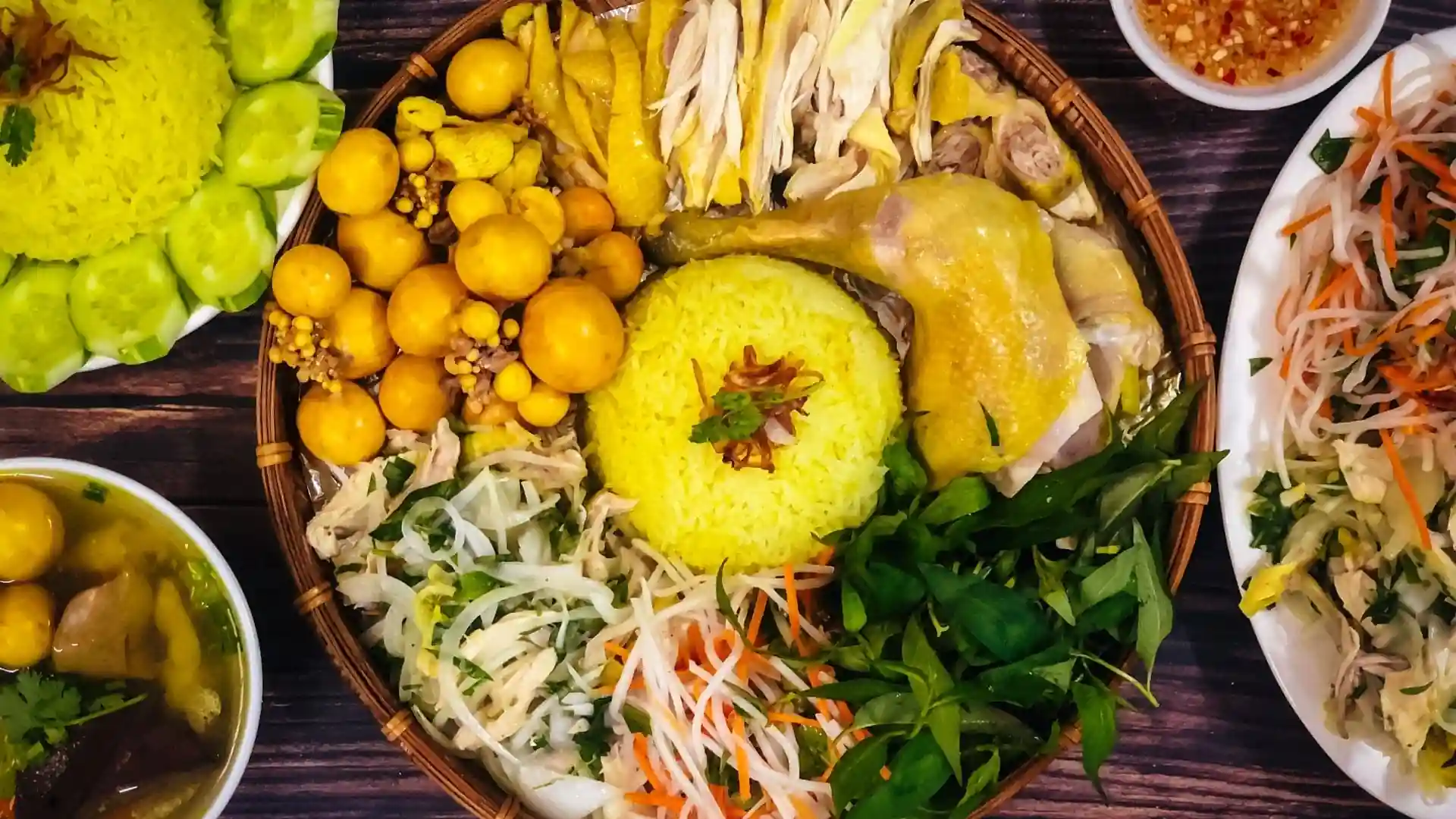
Although chicken rice is found in many countries, the Hoi An version has a recognizable combination of seasoned rice, tender chicken and fresh herbs.
Compared with noodle dishes such as cao lầu, cơm gà offers a different kind of local meal.
It is also a suitable choice for visitors who prefer rice-based dishes over soups.
18. Bánh Căn: South-Central Vietnamese Rice Cakes
Bánh căn is particularly associated with the south-central coast, including places such as Nha Trang and Phan Rang.
These small, round cakes are made by pouring rice batter into individual heated molds. The cakes are cooked with heat from below, often under lids, rather than deep-fried in oil.
Depending on the preparation, they may be topped with quail eggs, shrimp, squid or other ingredients.
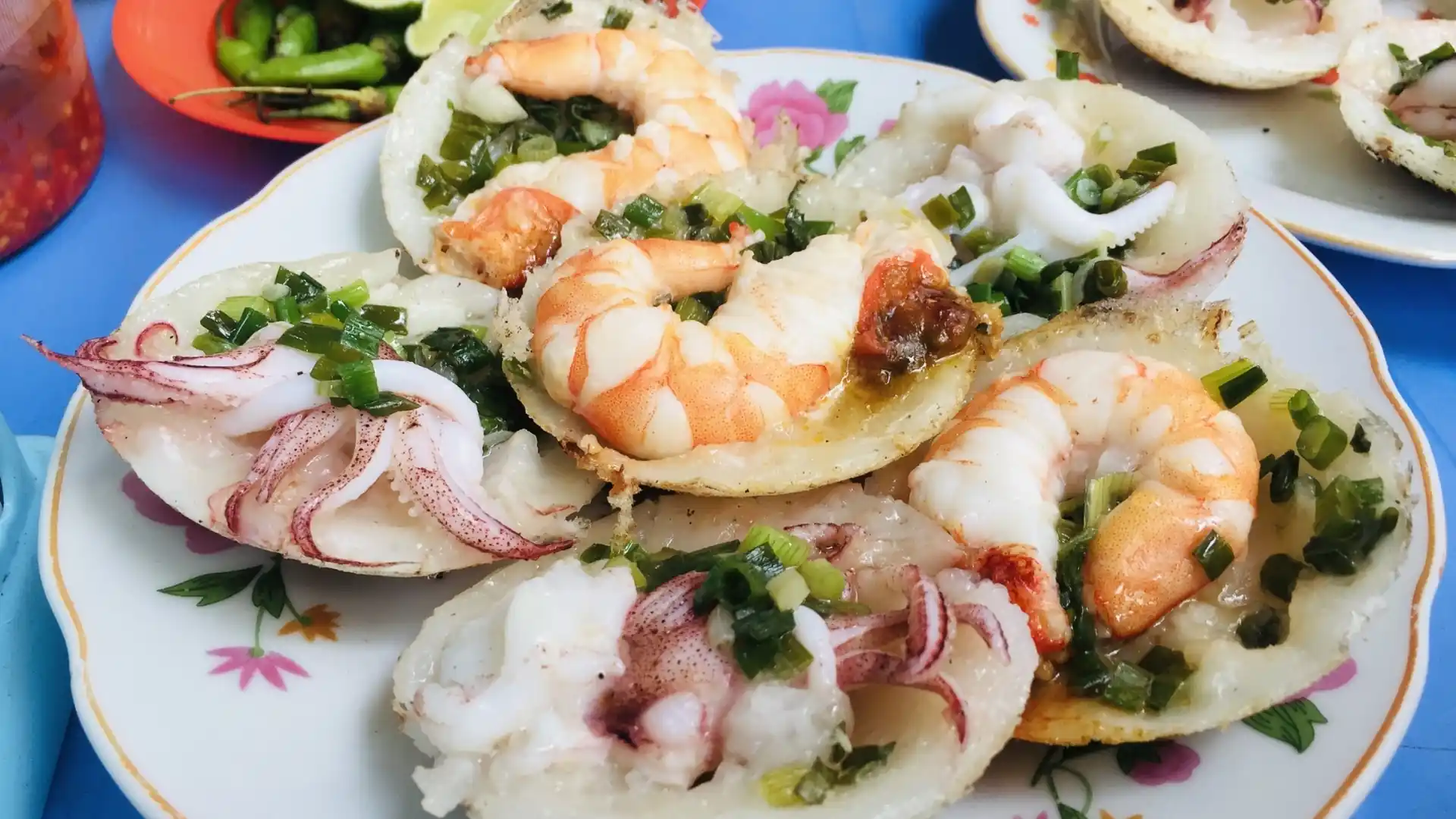
Although bánh căn looks somewhat like bánh khọt, the cooking method and texture are different. Bánh căn is generally softer, while bánh khọt is commonly cooked with more oil to create crisp edges.
The dipping sauces vary by locality. Some preparations are eaten with scallion oil, herbs, vegetables or a savory dipping liquid.
Trying bánh căn is a good way to explore the food traditions of Vietnam’s south-central coast beyond Hue and Hoi An.
Must-Try Food in Southern Vietnam
Southern Vietnamese cooking includes rice meals, noodle dishes, grilled meats, savory pancakes and shared soups.
Ho Chi Minh City is closely associated with cơm tấm and several southern-style noodle dishes. Along the coast and in the Mekong Delta, seafood, freshwater fish, herbs and vegetables contribute to other local specialties.
19. Cơm Tấm: Vietnamese Broken Rice with Grilled Pork
Cơm tấm is one of the most familiar everyday meals in southern Vietnam, particularly in Ho Chi Minh City.
The name refers to broken rice grains, which are shorter than ordinary whole grains.
A typical plate includes grilled pork, often a pork chop, with optional additions such as shredded pork skin, steamed egg meatloaf or a fried egg.
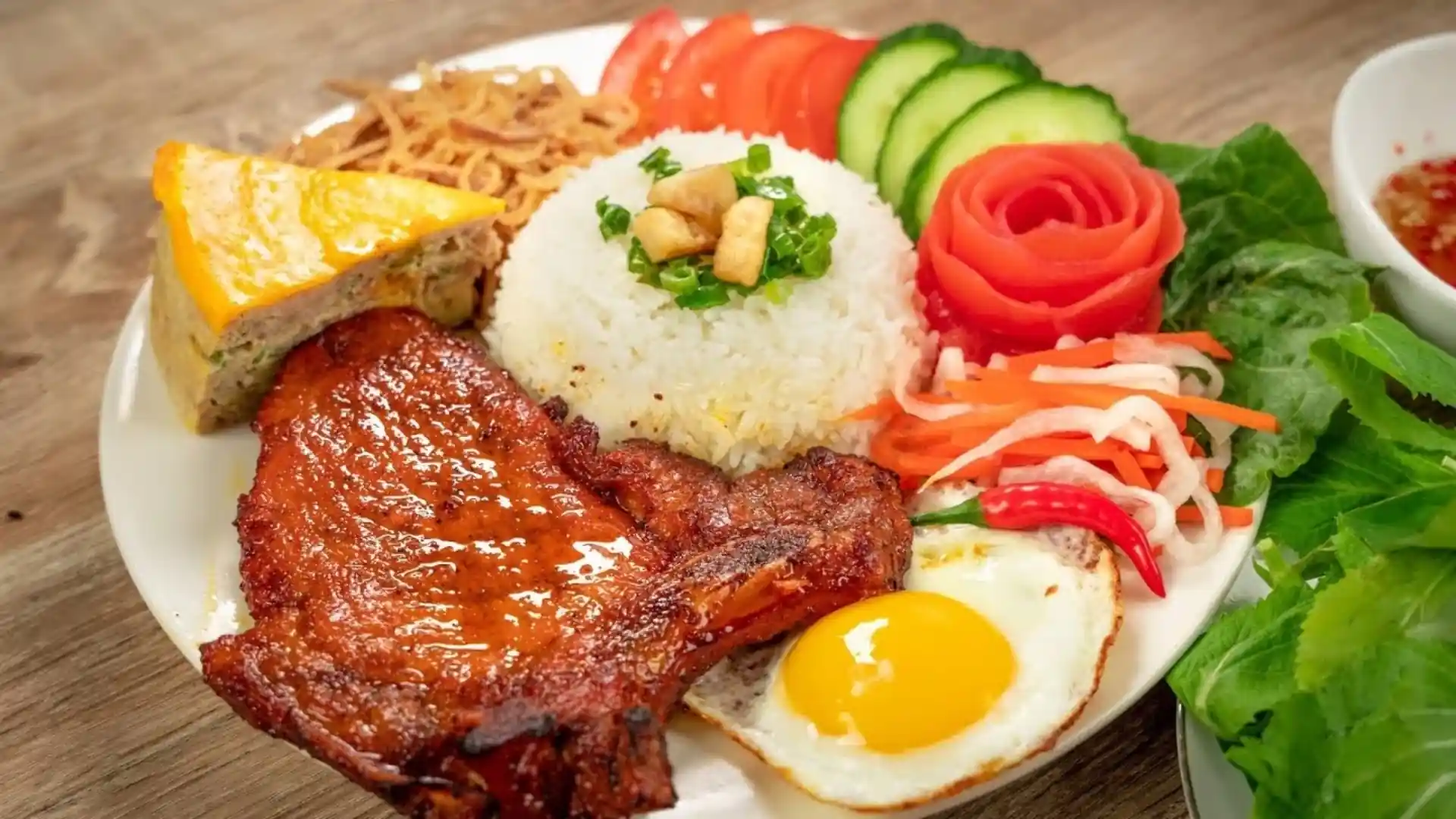
Pickled vegetables, cucumber, scallion oil and seasoned fish sauce commonly accompany the rice.
The grilled pork provides a smoky, savory flavor, while the vegetables and dipping sauce balance its richness.
Cơm tấm is substantial enough for lunch or dinner, though it is also a popular breakfast.
If Ho Chi Minh City is part of your itinerary, our Ho Chi Minh City travel guide covers local food, neighborhoods and practical tips for exploring the city.
20. Hủ Tiếu: Southern Vietnamese Noodles
Hủ tiếu refers to a family of noodle dishes widely enjoyed in southern Vietnam.
The noodles may be served in broth or dry, with sauce and a separate bowl of soup.
Common toppings include pork, shrimp, minced meat, quail eggs and sometimes organ meats.
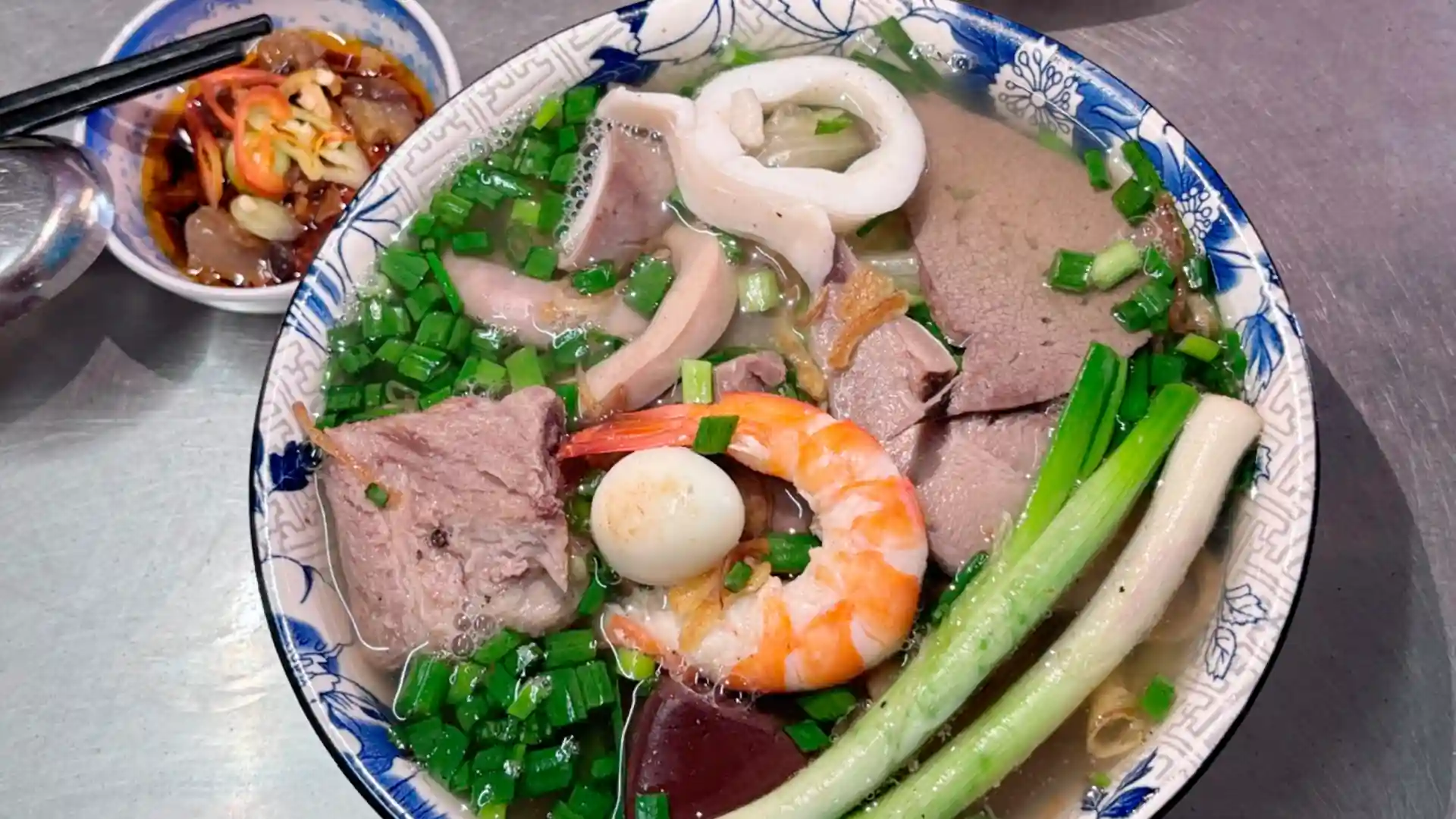
One familiar version is hủ tiếu Nam Vang, which reflects culinary connections between southern Vietnam and Cambodia.
Compared with phở, hủ tiếu has a wider variety of noodle types and toppings.
If you have already tried a bowl of hủ tiếu nước, or soup-style hủ tiếu, consider the dry version, known as hủ tiếu khô.
The noodles are mixed with sauce, while broth is served separately.
For another regional variation, see our My Tho travel guide, which introduces hủ tiếu Mỹ Tho and the area’s traditional rice noodle culture.
21. Gỏi Cuốn: Fresh Vietnamese Spring Rolls
Gỏi cuốn is made by wrapping fresh ingredients in softened rice paper.
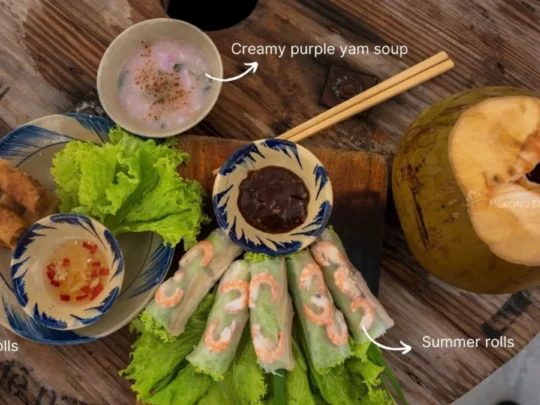
A familiar version includes shrimp, pork, rice vermicelli, lettuce and herbs. Other fillings may also be used.
Unlike nem rán or chả giò, these rolls are served without frying. The vegetables remain fresh, while the rice paper holds the filling together.
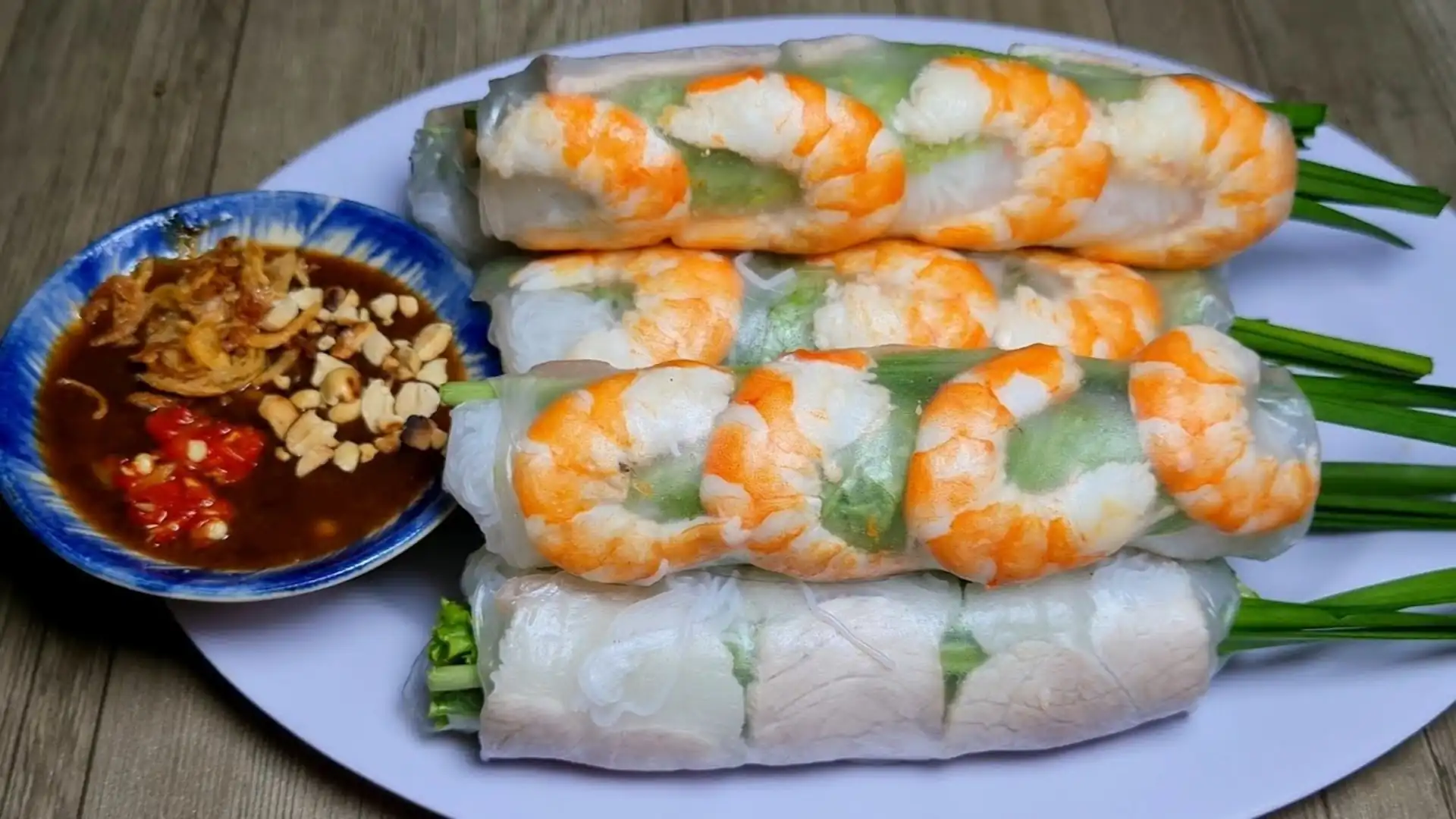
The dipping sauce is important. Some versions use a fish sauce-based dip, while others are served with a thicker sauce that may contain hoisin-style ingredients and peanuts.
Gỏi cuốn is often translated as fresh Vietnamese spring rolls.
It is a useful choice for travelers who enjoy herbs and vegetables, although the familiar shrimp-and-pork version is not vegetarian.
22. Bánh Xèo: Crispy Vietnamese Savory Pancake
Bánh xèo takes its name from the sizzling sound made when batter is poured into a hot pan.
The batter is usually based on rice flour and often colored with turmeric. Shrimp, pork, bean sprouts and other ingredients may be added before the pancake is folded.
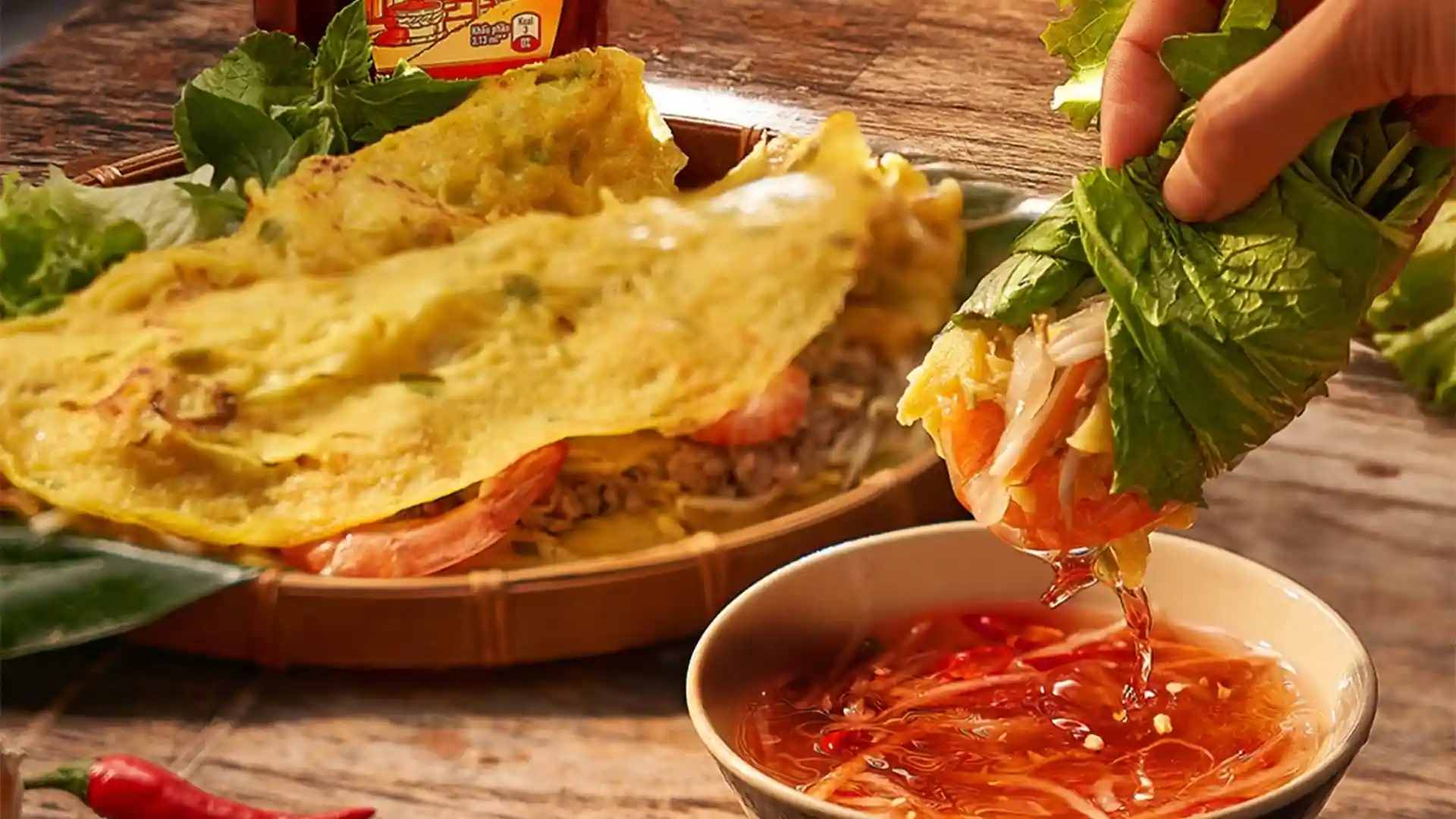
Regional versions vary in size and texture.
Southern bánh xèo is often large, thin and crisp, sometimes with coconut milk included in the batter.
The pancake is commonly eaten with fresh herbs, lettuce and fish sauce-based dipping liquid.
Break off a piece, wrap it in leaves and dip it into the sauce.
This combination of hot, crisp batter and fresh vegetables is an important part of the dish.
23. Bánh Khọt: Mini Savory Rice Pancakes
Bánh khọt is particularly associated with Vung Tau and southeastern Vietnam.
The cakes are prepared in small, round molds, creating individual portions with crisp edges and softer centers.
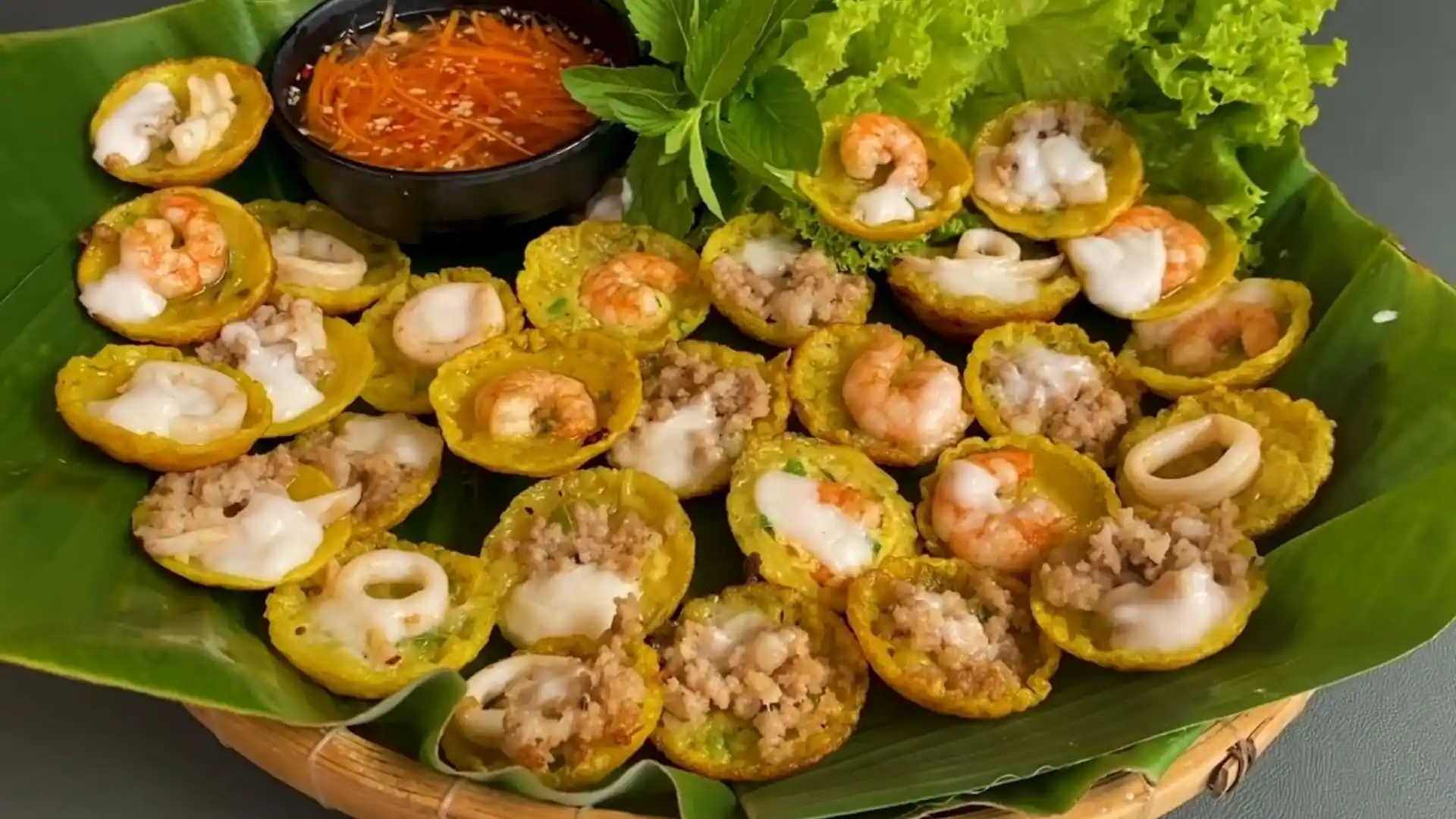
The batter commonly contains rice flour, while shrimp and scallions are familiar toppings.
Bánh khọt is usually served with lettuce, fresh herbs and a fish sauce-based dip.
Although it resembles bánh căn, the cooking technique is different. Bánh khọt generally uses more oil, producing a crispier exterior.
The small size makes the cakes convenient for sharing, particularly when trying several Vietnamese snacks during the same meal.
24. Canh Chua: Vietnamese Sweet and Sour Soup
Canh chua is a familiar part of southern Vietnamese home cooking, particularly in the Mekong Delta.
The soup commonly contains fish, although shrimp and other variations are also prepared.
Tamarind is frequently used to create its sour flavor. Pineapple, tomatoes, okra, bean sprouts and other vegetables may be included.
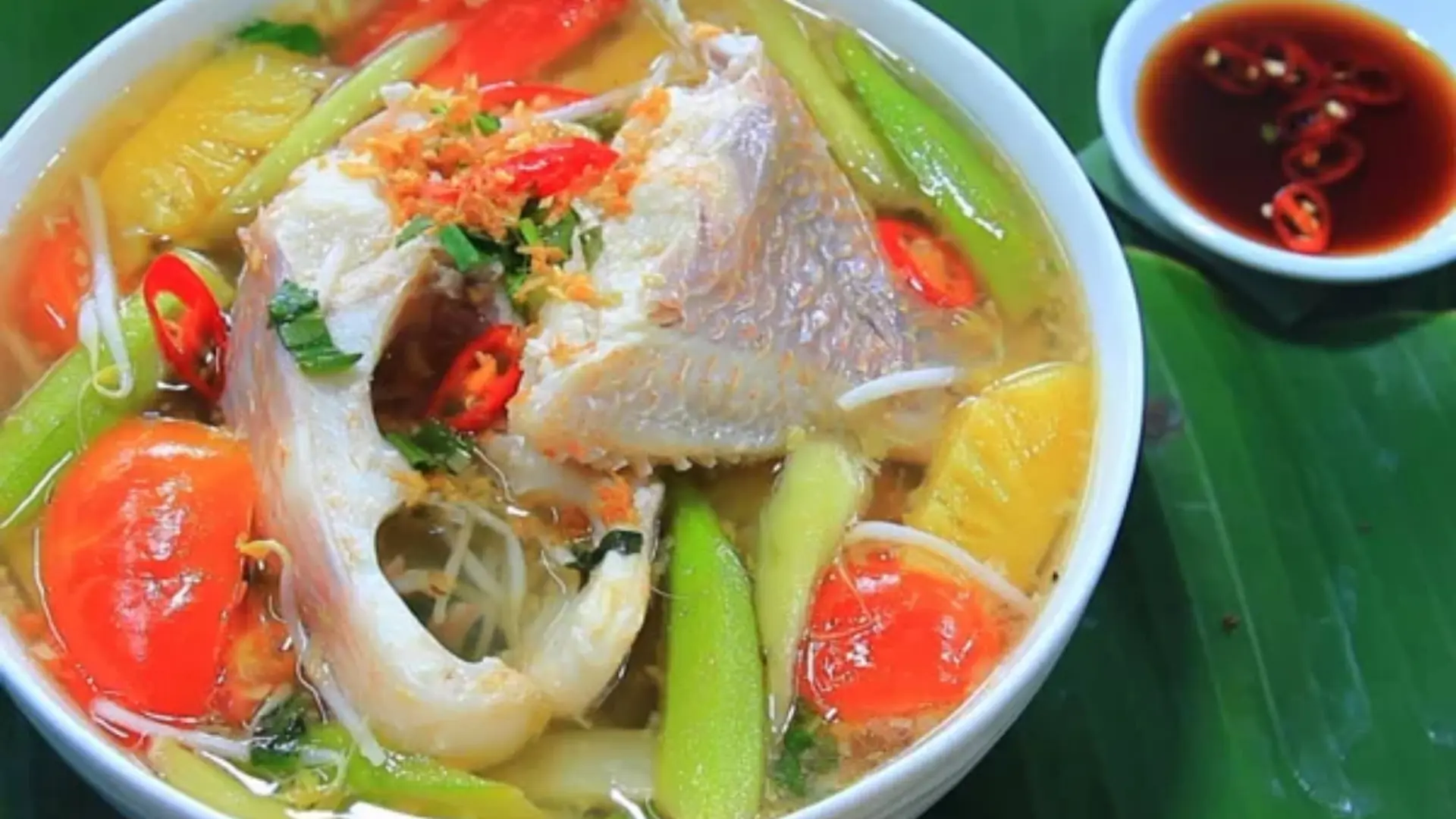
The finished broth balances sourness, sweetness and savory flavors.
Unlike phở or hủ tiếu, canh chua is generally not served as an individual noodle meal.
It is commonly eaten with steamed rice and other dishes at a shared table.
Canh chua is a good example of how freshwater fish and locally grown vegetables feature in everyday southern cooking.
What to Eat in Can Tho: Local Food and Mekong Delta Specialties
Can Tho is an excellent place to learn about the food traditions of the Mekong Delta.
The region’s rivers, canals, rice fields and farms have shaped a cuisine that uses freshwater fish, shrimp, rice, vegetables and fermented ingredients in many different ways.
Some specialties are strongly associated with Can Tho and its local communities. Others are enjoyed throughout the wider Mekong Delta.
The six dishes below offer an introduction to both.
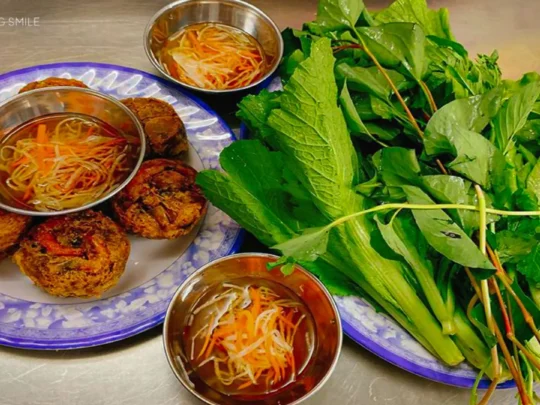
25. Bánh Cống: Crispy Shrimp and Mung Bean Cakes
Bánh cống, sometimes written bánh cóng, is a savory fried cake enjoyed in Can Tho and other parts of the Mekong Delta.
The name refers to the deep, cup-shaped mold used to prepare it.
The batter commonly contains rice flour, while mung beans, pork, shrimp and other ingredients may be added depending on the recipe.
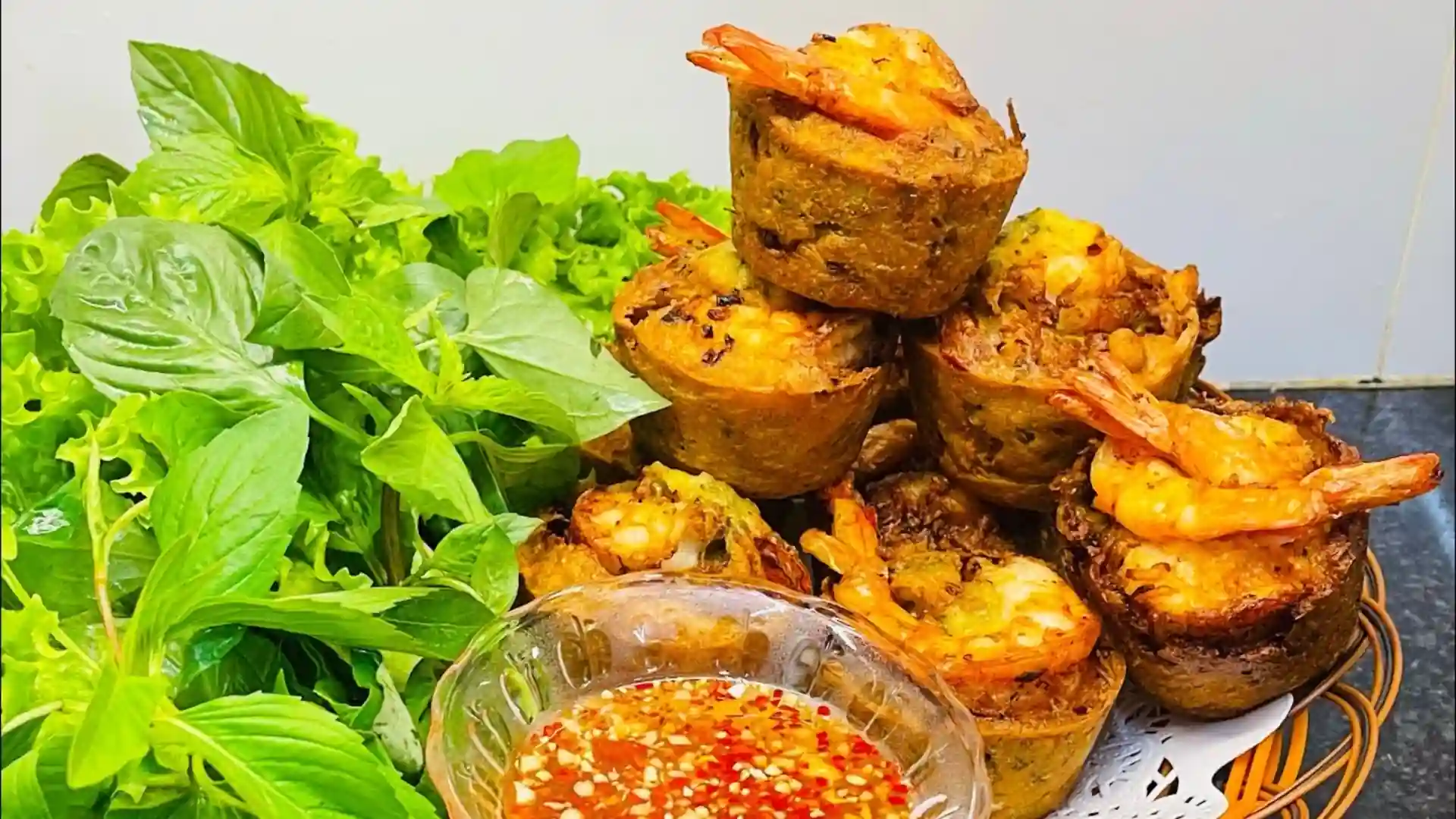
Once fried, the cake has a golden, crisp exterior and a softer filling.
Bánh cống is served with lettuce, fresh herbs and a sweet-sour fish sauce-based dip. The vegetables balance the richness of the fried cake.
The dish is particularly associated with the food traditions of the Mekong Delta, including Sóc Trăng. Different accounts explain its historical origins, reflecting the region’s long history of cultural exchange.
For visitors to Can Tho, bánh cống is a recognizable introduction to local savory snacks.
26. Bánh Tét Lá Cẩm: Purple Sticky Rice Cake
Bánh tét is a traditional cylindrical sticky rice cake associated with southern Vietnamese food culture and Lunar New Year celebrations.
Can Tho has a distinctive version known as bánh tét lá cẩm, particularly connected to the Binh Thuy area.
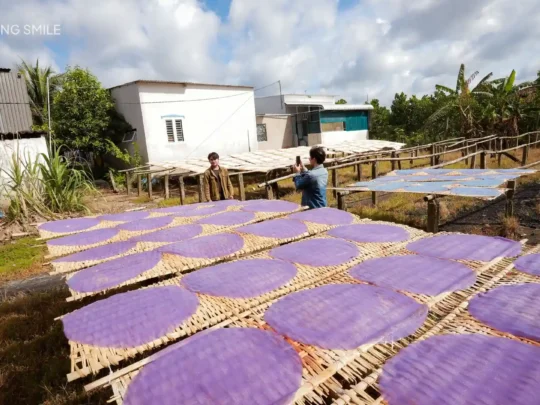
Its purple color comes from lá cẩm leaves, which are used to produce a natural coloring for glutinous rice.
Coconut milk may be added to enrich the rice, while a familiar savory filling combines mung beans, pork and salted duck egg yolk.
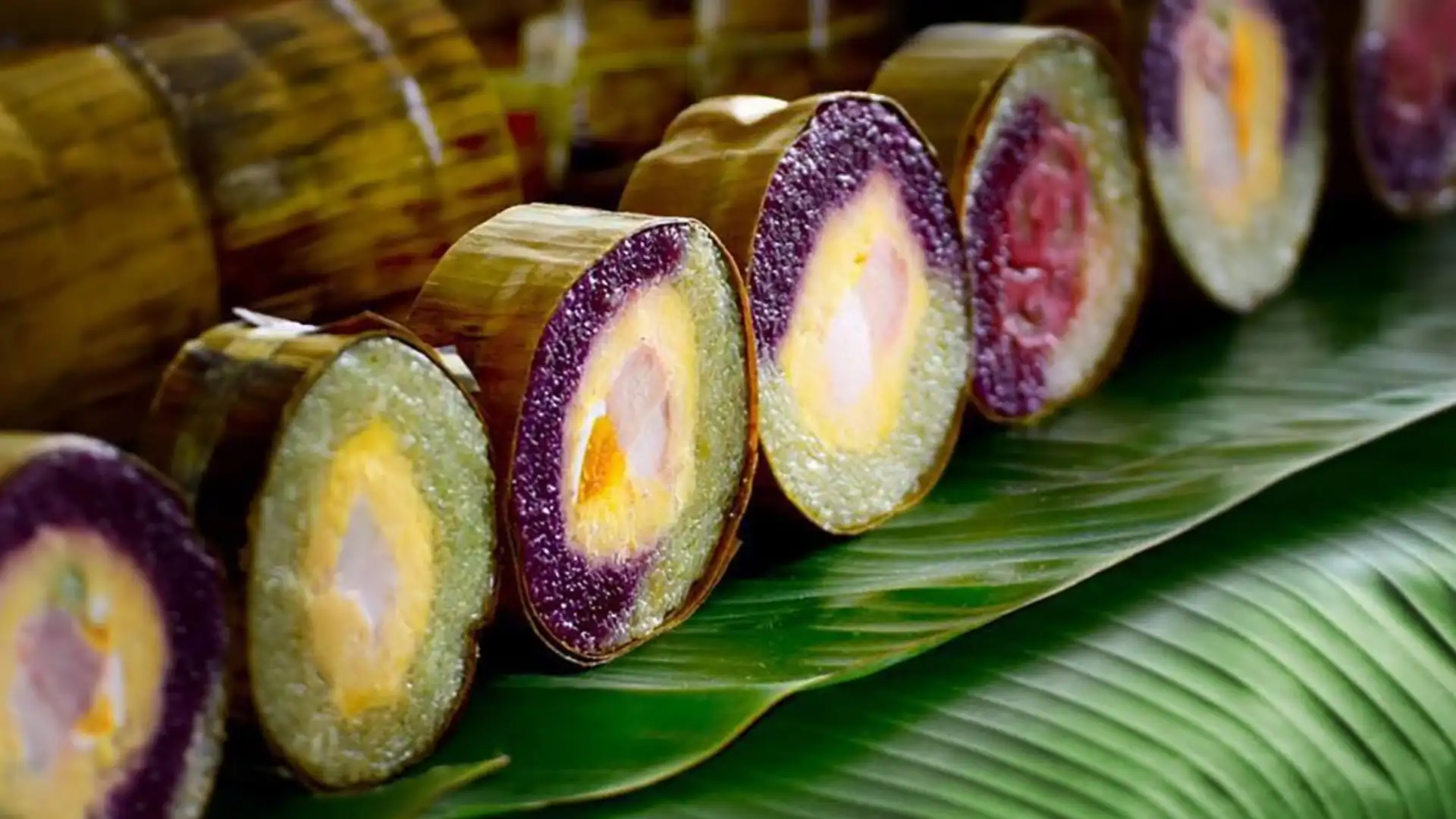
The ingredients are wrapped in banana leaves and cooked until the sticky rice becomes tender.
When sliced, the cake reveals purple rice surrounding its filling.
Despite being called a cake in English, the savory version is not a conventional dessert. It is a substantial sticky rice dish with a rich filling.
27. Vịt Nấu Chao: Duck with Fermented Tofu
Vịt nấu chao is a popular shared dish associated with Can Tho and the wider southern Vietnamese food tradition.
Its defining ingredient is chao, a type of fermented tofu with a rich, salty flavor.
Duck is cooked with seasonings and often taro, which softens during cooking and adds body to the broth.
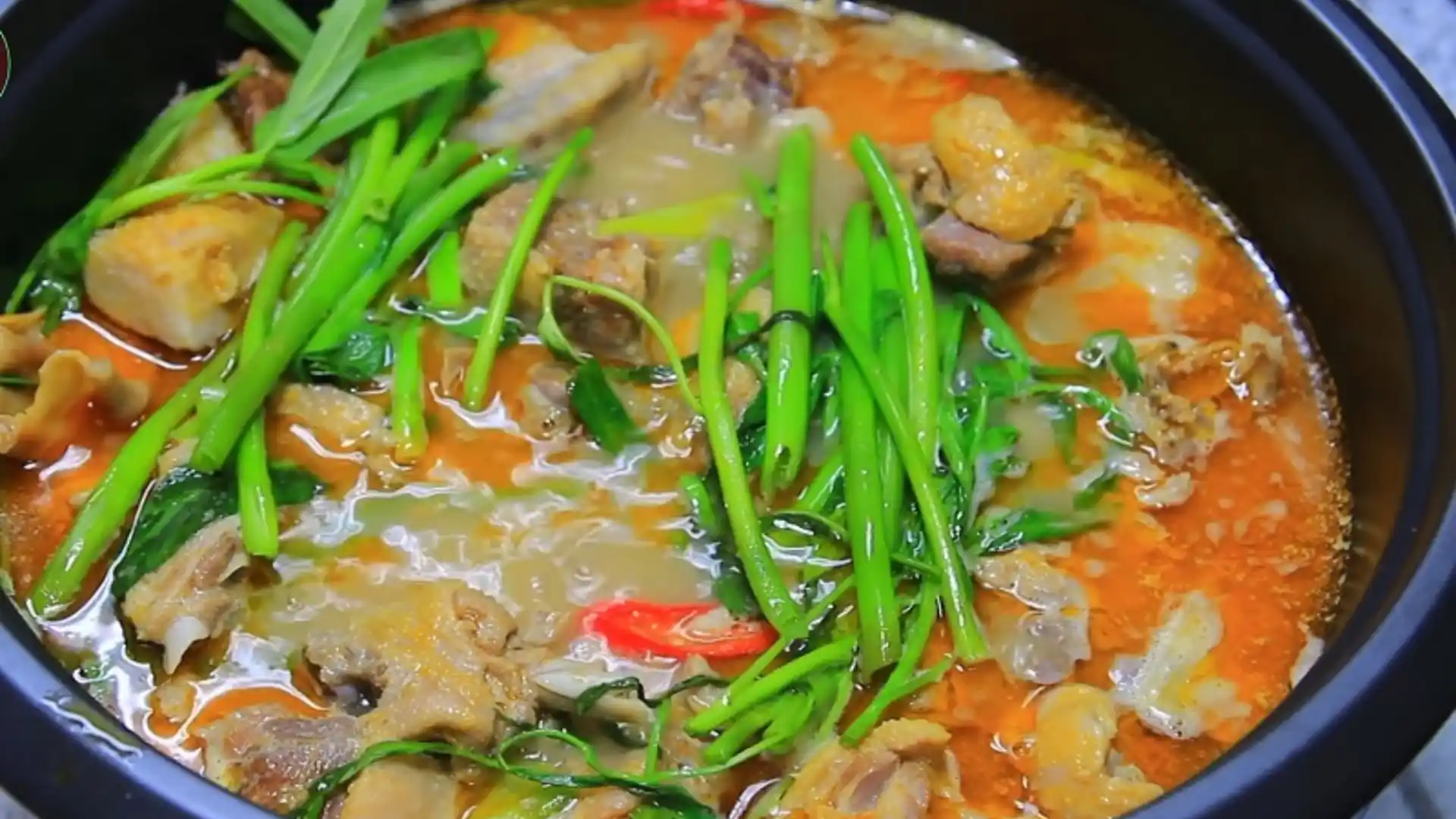
The dish is commonly served hotpot-style with vegetables and noodles.
Diners take portions of duck and vegetables from the shared pot, sometimes dipping the meat into an additional fermented tofu-based sauce.
The flavor is quite different from roasted duck or a simple duck soup.
For visitors interested in fermented ingredients and local shared meals, vịt nấu chao offers a distinctive introduction.
28. Lẩu Mắm: Mekong Delta Fermented Fish Hotpot
Lẩu mắm is closely connected to the Mekong Delta’s tradition of preserving fish through fermentation.
Fermented fish forms the foundation of the hotpot broth, creating a pronounced savory taste and aroma.
Depending on the preparation, the pot may contain fish, shrimp, squid, pork and seasonal vegetables.
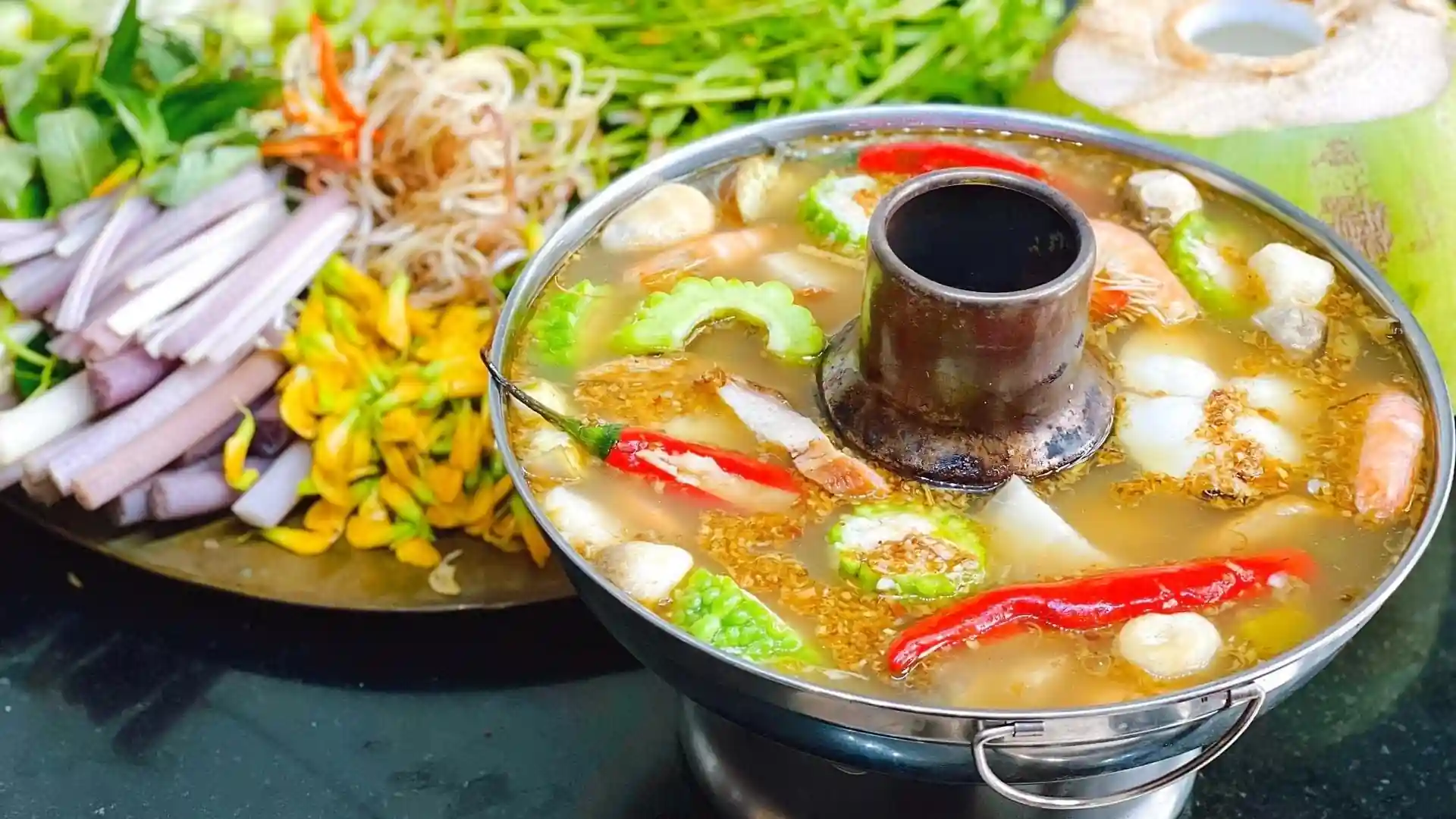
Water spinach, eggplant, banana blossom and water lily stems are among the ingredients associated with Mekong Delta-style hotpots.
The pot is served at the center of the table so diners can cook and share the ingredients.
Lẩu mắm is particularly interesting for travelers who want to experience regional food traditions beyond familiar noodle soups and rice dishes.
Its fermented flavor can be strong, and visitors with fish or shellfish allergies should check the ingredients carefully.
29. Cá Lóc Nướng Trui: Fire-Roasted Snakehead Fish
Cá lóc nướng trui is a traditional countryside dish associated with the Mekong Delta.
The fish, known in English as snakehead fish, is roasted whole.
In a traditional preparation, straw is used to build the fire, leaving the exterior charred while cooking the flesh inside. Other roasting methods are also used.
Once cooked, the fish is served with fresh herbs, vegetables and dipping sauce. Rice paper may also be provided for wrapping.
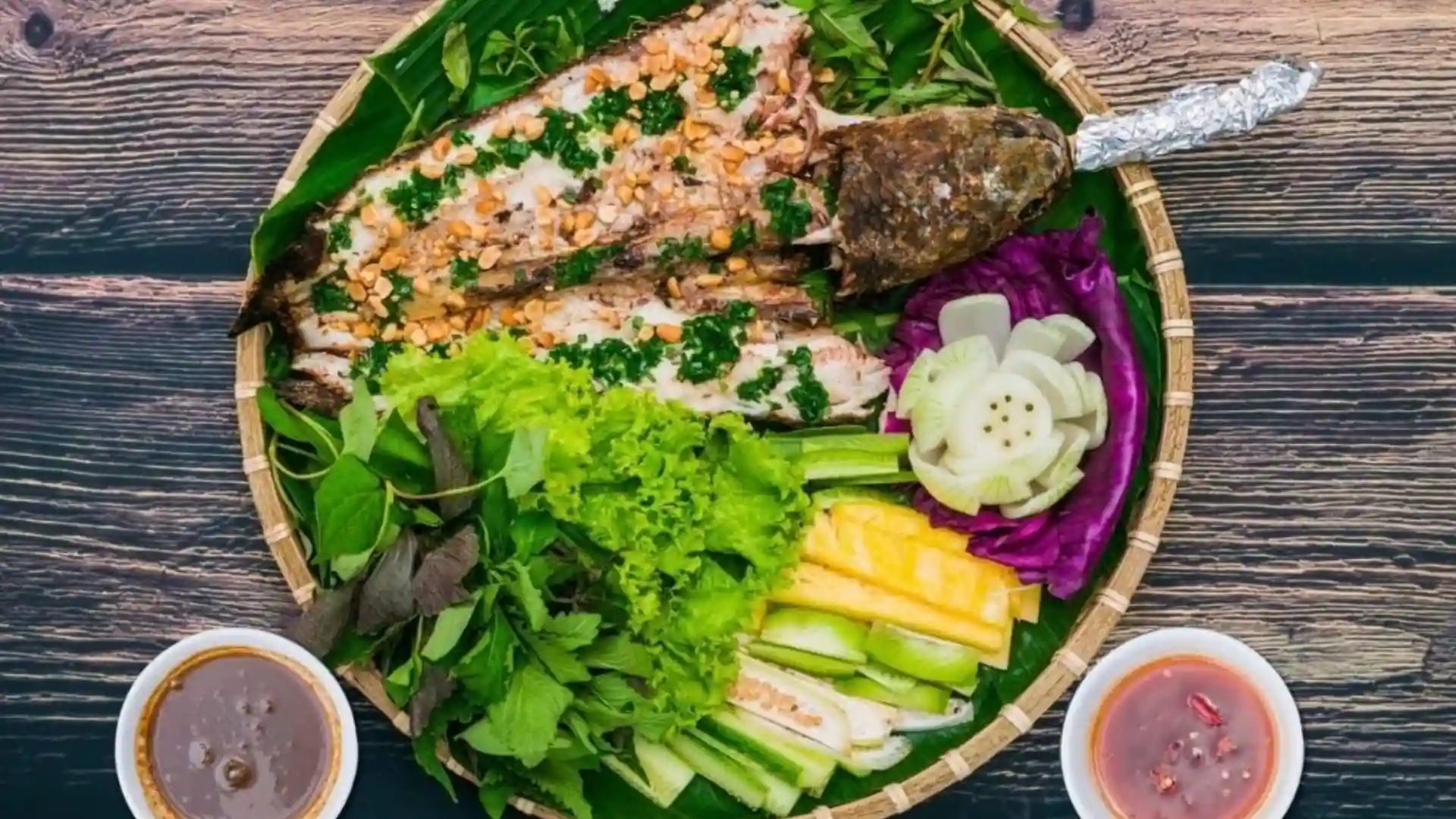
Diners carefully remove the flesh from the bones before combining it with the accompanying greens.
The relatively simple preparation allows the flavor of the freshwater fish to remain central.
Cá lóc nướng trui reflects the importance of fish and outdoor cooking traditions in the rural Mekong Delta.
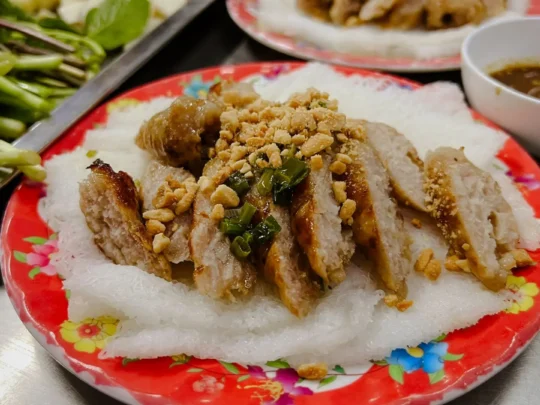
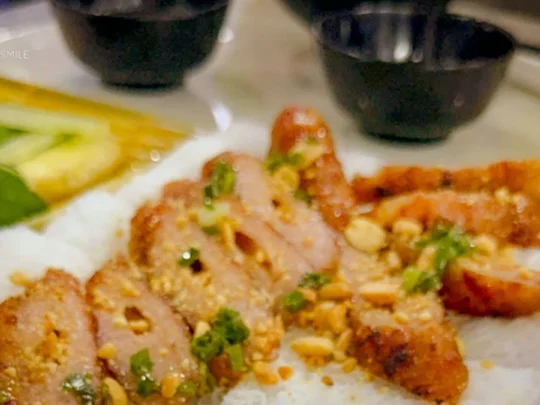
30. Bánh Hỏi Mặt Võng Phong Điền: Net-Pattern Rice Vermicelli
Bánh hỏi mặt võng is a traditional rice-based specialty associated with Phong Dien in Can Tho.
At first glance, it resembles ordinary bánh hỏi, which is made from fine strands of rice batter.
What makes this local variation different is its intricate, overlapping pattern, resembling the mesh of a hammock. This explains the name mặt võng.
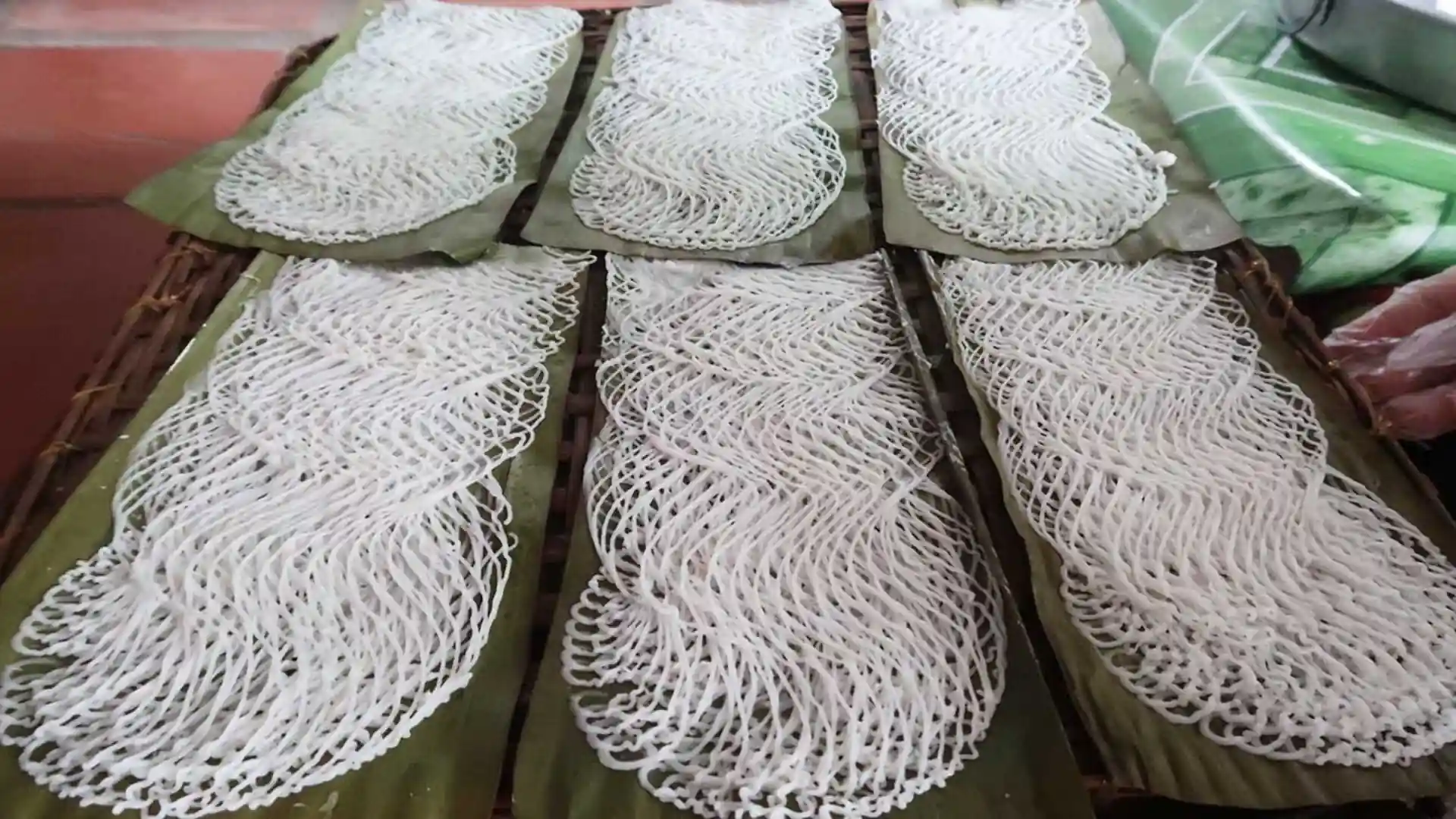
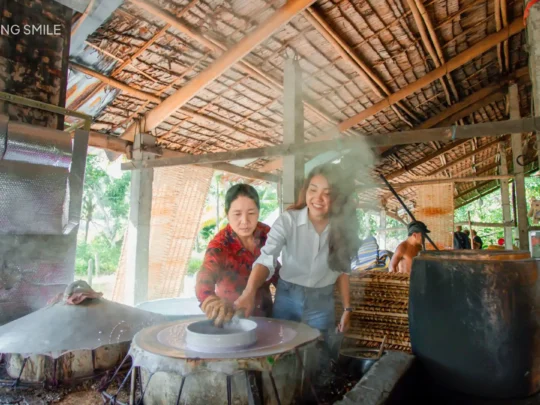
Preparing the delicate pattern requires considerable skill. The rice batter is pressed into fine strands, arranged into the net-like design and then steamed.
The finished bánh hỏi is soft and slightly chewy, with subtle sweet and savory notes that depend on the preparation.
It is commonly enjoyed with pork, herbs and dipping sauce.
Beyond its flavor, bánh hỏi mặt võng is an example of local food craftsmanship. The techniques involved in making it are an important part of its cultural identity.
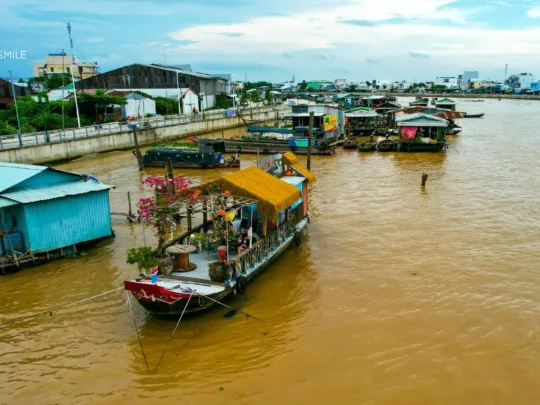
For more information about the city’s waterways, local attractions and cultural experiences, explore the Can Tho Travel Guide.
Explore Can Tho Through Its Food
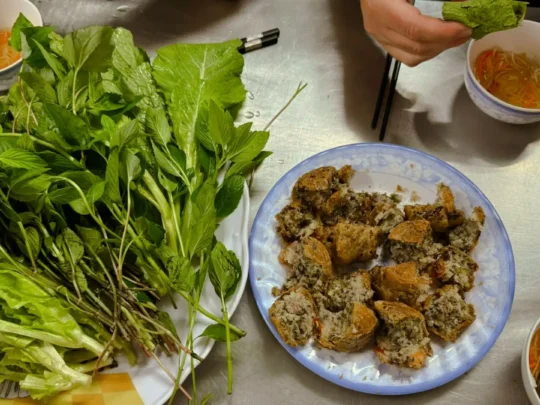
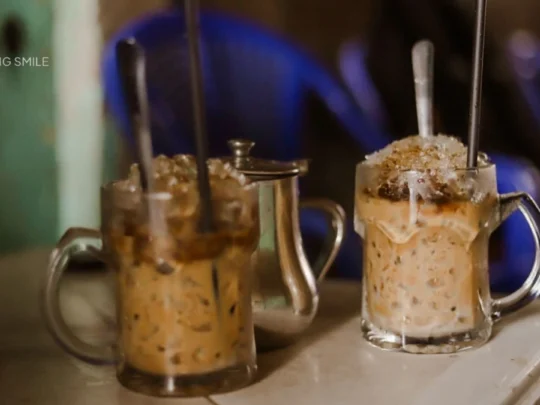
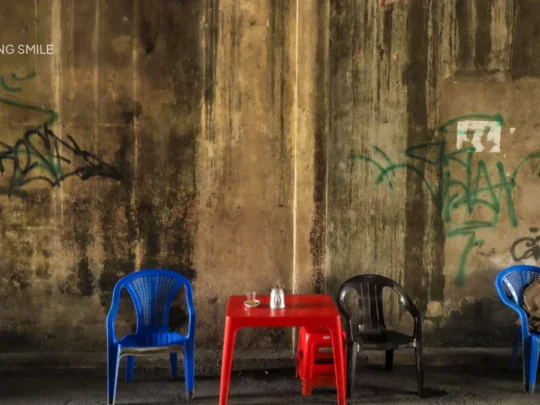
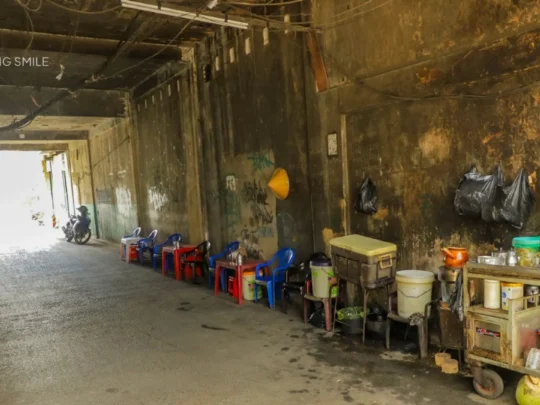
Learning about local dishes is a good starting point, but discovering how they are prepared and eaten can make a visit more meaningful.
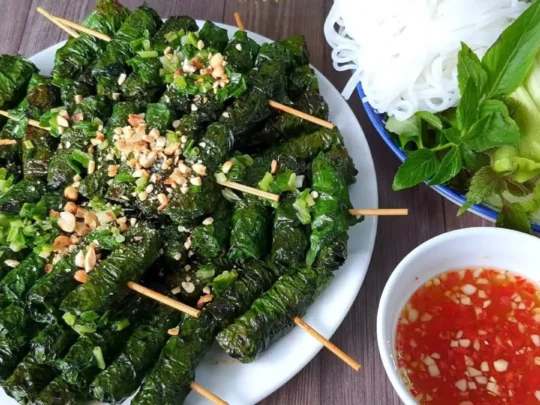
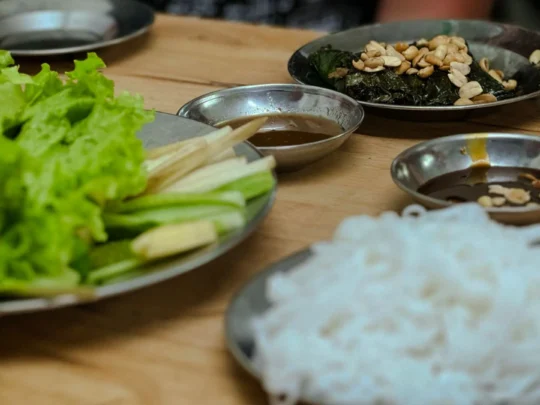
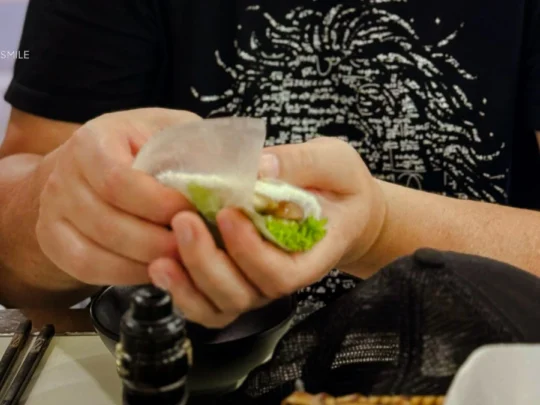
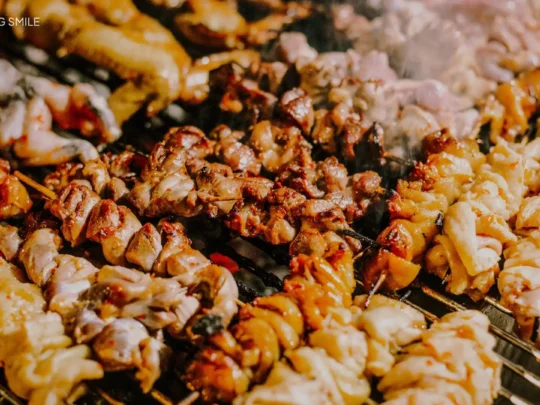
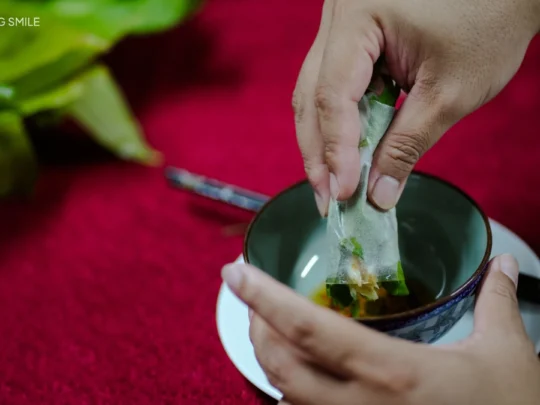
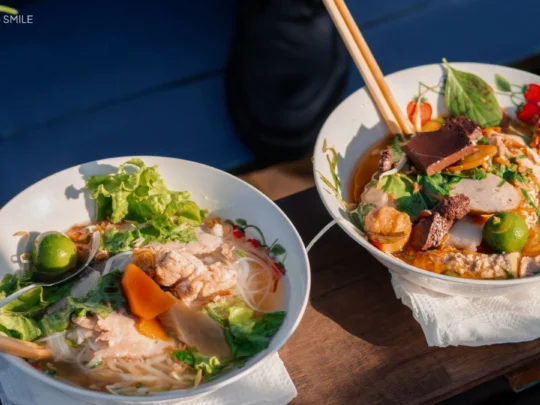
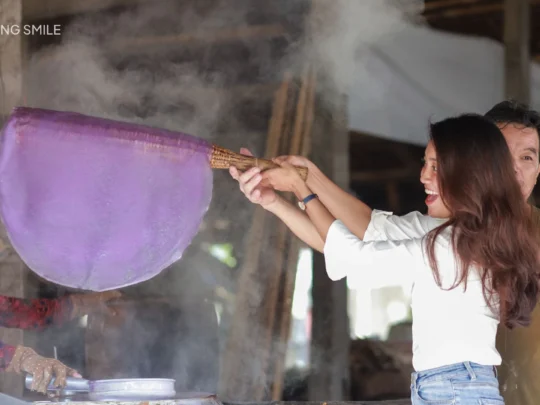
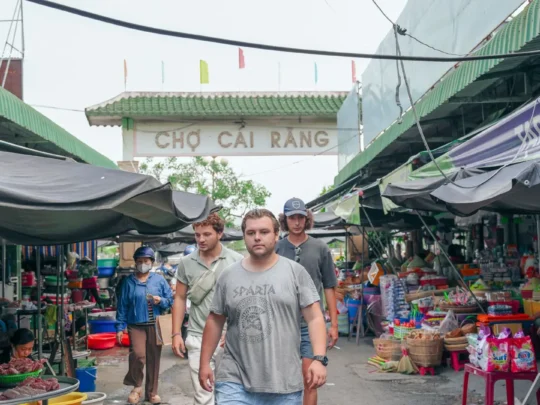
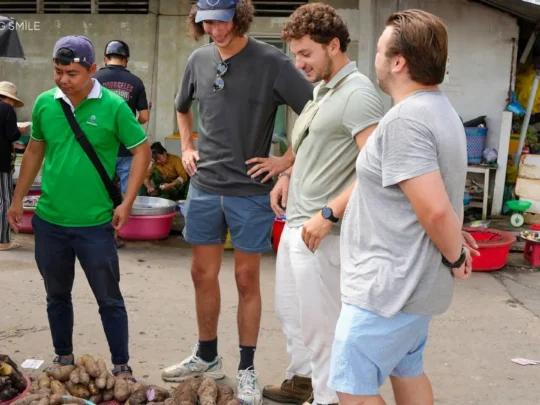
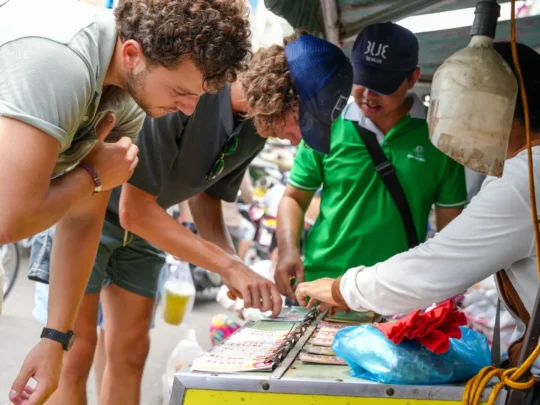
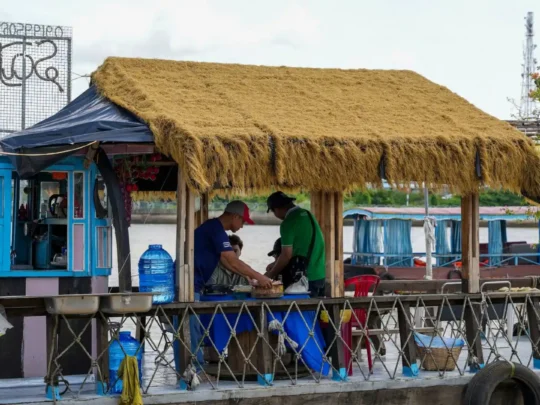
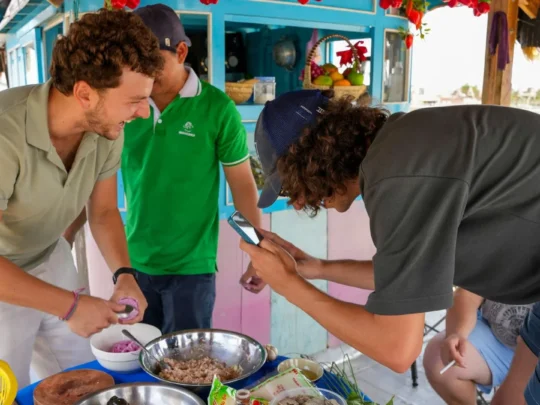
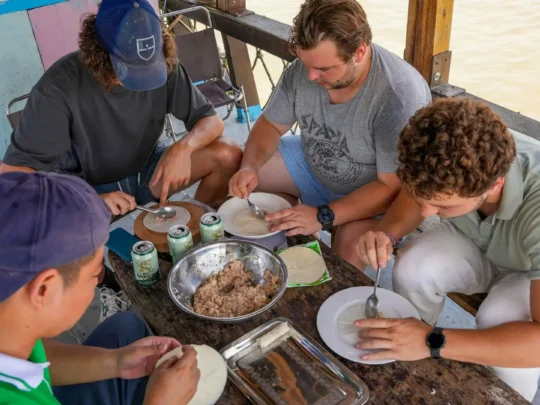
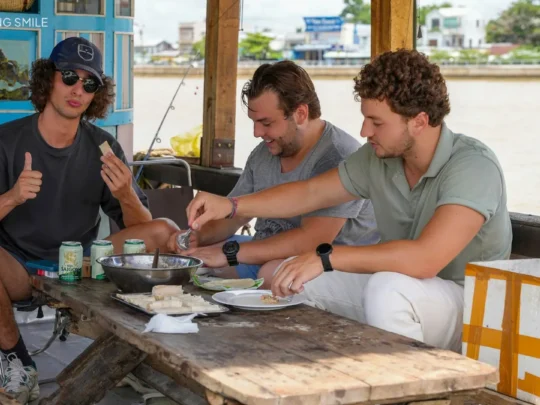
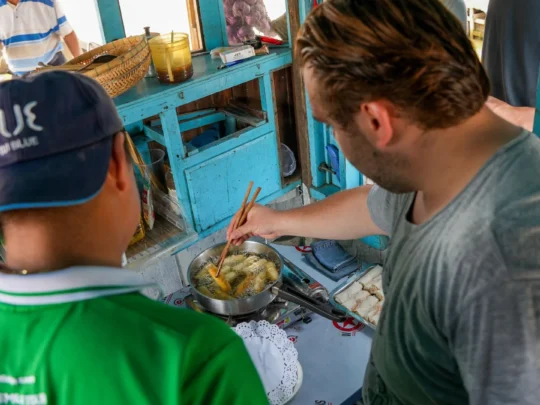
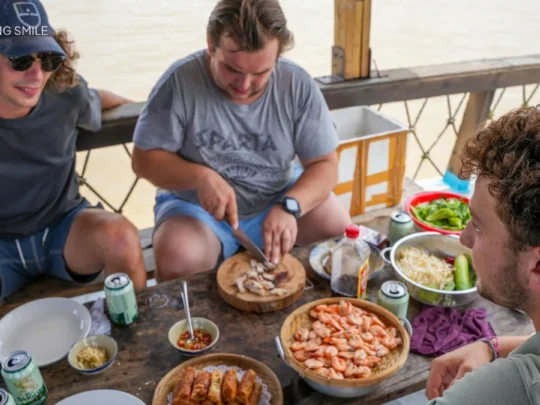
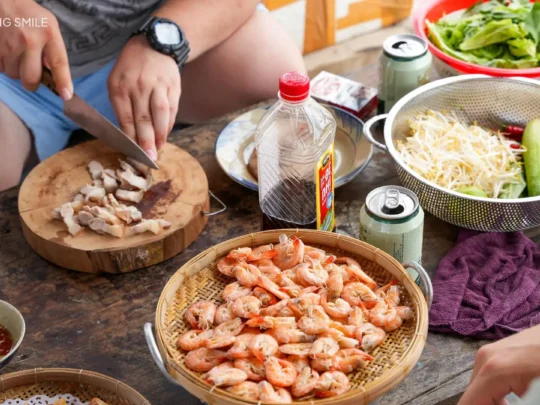
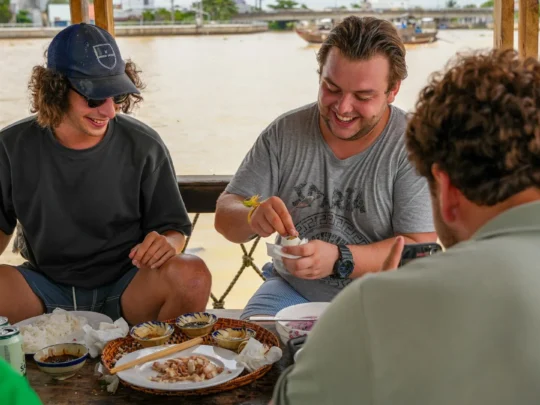
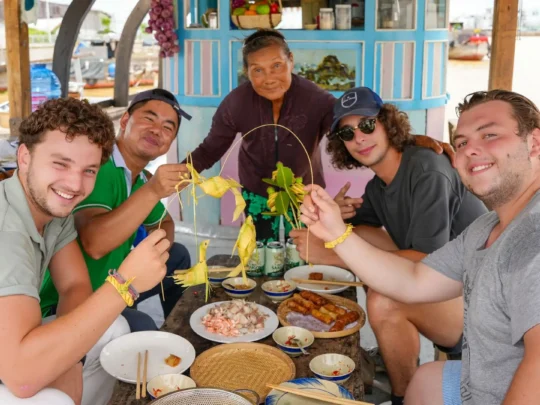
Mekong Smile offers guided culinary experiences in Can Tho, introducing travelers to local flavors and eating customs. The dishes and tastings included vary according to the selected tour.
Can Tho Food & Culinary Tours
Attractions in Mekong Delta
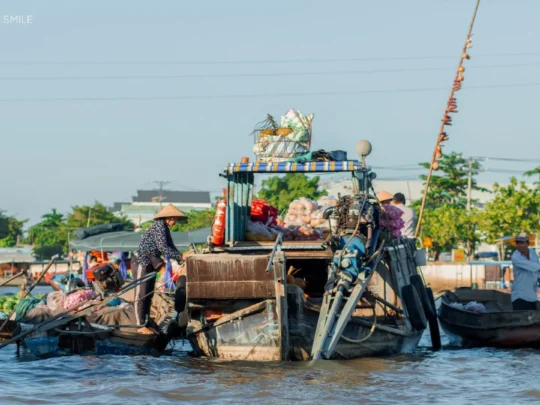
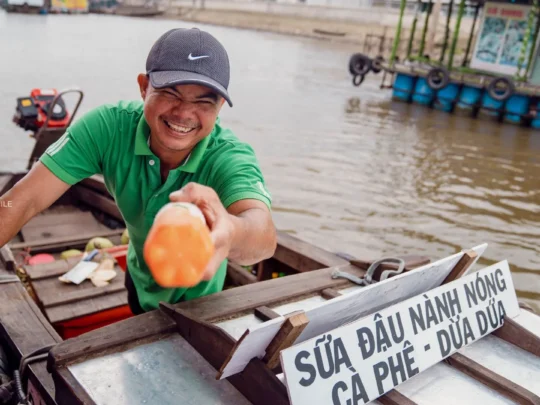
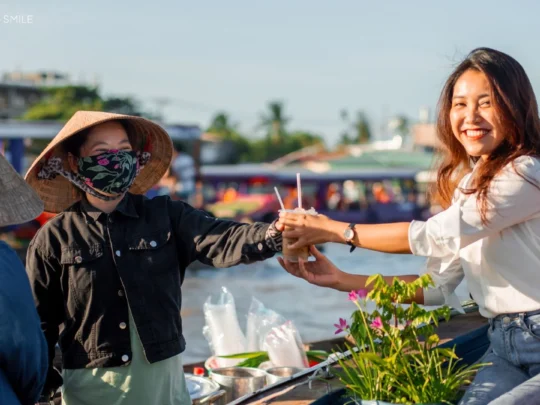
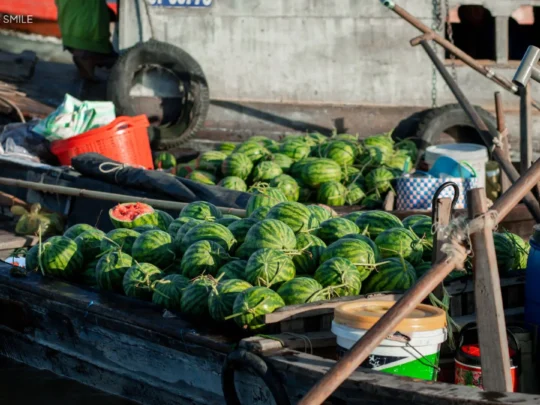
Attractions in Mekong Delta
Practical Tips for Trying Vietnamese Food
Learn a Few Vietnamese Food Words
Knowing a few common terms can make Vietnamese menus easier to understand.
| Vietnamese word | English meaning |
|---|---|
| Phở | Flat rice noodles, commonly served in soup |
| Bún | Round rice vermicelli |
| Mì | Noodles; the ingredients and styles vary |
| Cơm | Cooked rice |
| Bánh | A broad term covering breads, cakes, dumplings and other prepared foods |
| Bò | Beef |
| Gà | Chicken |
| Heo / Thịt lợn | Pork |
| Cá | Fish |
| Tôm | Shrimp |
| Chay | Vegetarian, although individual ingredients should still be confirmed |
Dish names can also refer to different regional preparations. Checking the main ingredients is often more reliable than depending entirely on a translated name.
Is Vietnamese Food Spicy?
Not all Vietnamese food is spicy.
Phở, bánh cuốn and many rice dishes can be relatively mild. Other dishes, including some versions of bún bò Huế and cơm hến, may contain more chili.
If you prefer less heat, you can say không cay, meaning “not spicy.”
This is most helpful when chili is added separately. It may not be possible to remove chili that has already been incorporated into a prepared broth or sauce.
Check Sauces and Allergens
Fish sauce, fermented shrimp paste, peanuts, shellfish, soy, eggs, pork and meat-based stocks are common in Vietnamese cooking.
These ingredients may be present in sauces, broths or toppings even when they are not immediately visible.
A fresh spring roll is not necessarily vegetarian, and a vegetable noodle dish may use meat-based stock.
Travelers with food allergies or strict dietary restrictions should ask about both the main ingredients and the preparation methods.
Shared cooking equipment may also create cross-contact risks.
Eat the Herbs and Dipping Sauces
Fresh vegetables and herbs are often essential parts of a Vietnamese dish rather than decoration.
Bánh xèo is commonly eaten wrapped in leaves. Bún chả brings noodles, grilled pork and dipping liquid together. Gỏi cuốn is typically served with a sauce that complements its fresh filling.
If a dish arrives with several separate components, they may be intended to be combined as you eat.
Expect Regional Differences
The same dish can taste different from one Vietnamese city to another.
Phở in Hanoi is not always prepared or served like phở in southern Vietnam. Bánh xèo varies in size, ingredients and texture. Hủ tiếu has numerous local and regional versions.
These differences are part of Vietnam’s food culture.
Rather than expecting every dish with the same name to be identical, consider trying regional variations as you travel.
Frequently Asked Questions About Vietnamese Food
What are the most popular Vietnamese dishes?
Phở, bánh mì, nem rán or chả giò, bún chả, bún bò Huế, cơm tấm, gỏi cuốn and bánh xèo are among Vietnam’s widely recognized foods. Regional dishes such as mì Quảng, cao lầu and bánh cống are also worth trying. Their availability and popularity vary by destination.
What is traditional Vietnamese cuisine?
Traditional Vietnamese cuisine includes rice-based meals, noodles, soups, grilled meats, seafood, fresh herbs, vegetables and a wide range of savory and sweet cakes. Local ingredients, family recipes and regional customs contribute to the differences between northern, central and southern Vietnamese cooking.
What is Vietnam’s most famous dish?
Phở is one of Vietnam’s most internationally recognizable dishes. It is a rice noodle soup commonly served with beef or chicken, with regional variations across the country. Bánh mì is another widely known Vietnamese food. However, no single dish represents all of Vietnam’s regional food traditions.
What are five popular Vietnamese street foods?
Five familiar examples are bánh mì, phở, bún chả, bánh xèo and gỏi cuốn. They represent different ways of eating, including sandwiches, noodle soups, grilled pork with vermicelli, savory pancakes and fresh rice paper rolls. Street food options differ considerably between destinations.
What is the difference between northern, central and southern Vietnamese food?
Northern Vietnam is particularly associated with dishes such as phở and bún chả. Central Vietnam has specialties including bún bò Huế, mì Quảng and cao lầu. Southern cooking includes cơm tấm, hủ tiếu, savory pancakes, freshwater fish and shared dishes such as canh chua and lẩu mắm. These are broad regional patterns rather than strict distinctions.
What local food should visitors try in Can Tho?
Visitors to Can Tho can explore bánh cống, bánh tét lá cẩm, vịt nấu chao, lẩu mắm, cá lóc nướng trui and bánh hỏi mặt võng Phong Điền. Some have strong local connections to Can Tho, while others are traditional dishes enjoyed throughout the Mekong Delta.
Discover Vietnam Through Its Regional Food
Vietnamese food reflects the ingredients, traditions and communities of each region.
From Hanoi’s noodle dishes and Hue’s savory rice cakes to Hoi An’s specialties and the freshwater fish dishes of the Mekong Delta, there is plenty to discover beyond the foods already familiar to international visitors.
You do not need to try all 30 dishes in one journey. Start with those that appeal to you, learn their Vietnamese names and make room for regional specialties as you travel.
Plan a Vietnam Trip Around Your Interests
Food can be an important part of a journey, especially when combined with local culture, traditional markets, countryside visits and experiences that introduce travelers to everyday life.
Mekong Smile helps travelers explore personalized itineraries based on their interests, available time and preferred travel style, with particular expertise in Can Tho and the Mekong Delta.
Interested in including local food experiences in your trip? Share your travel dates, destinations, culinary interests and any dietary preferences using the form below. Our team can discuss suitable options and help you plan an itinerary around your interests.
Planning Your Mekong Trip?
Get a free, personalized itinerary from our local experts in under 120 minutes.

Get a Free Consultation Leave your contact, we handle the rest.
