
 Can Tho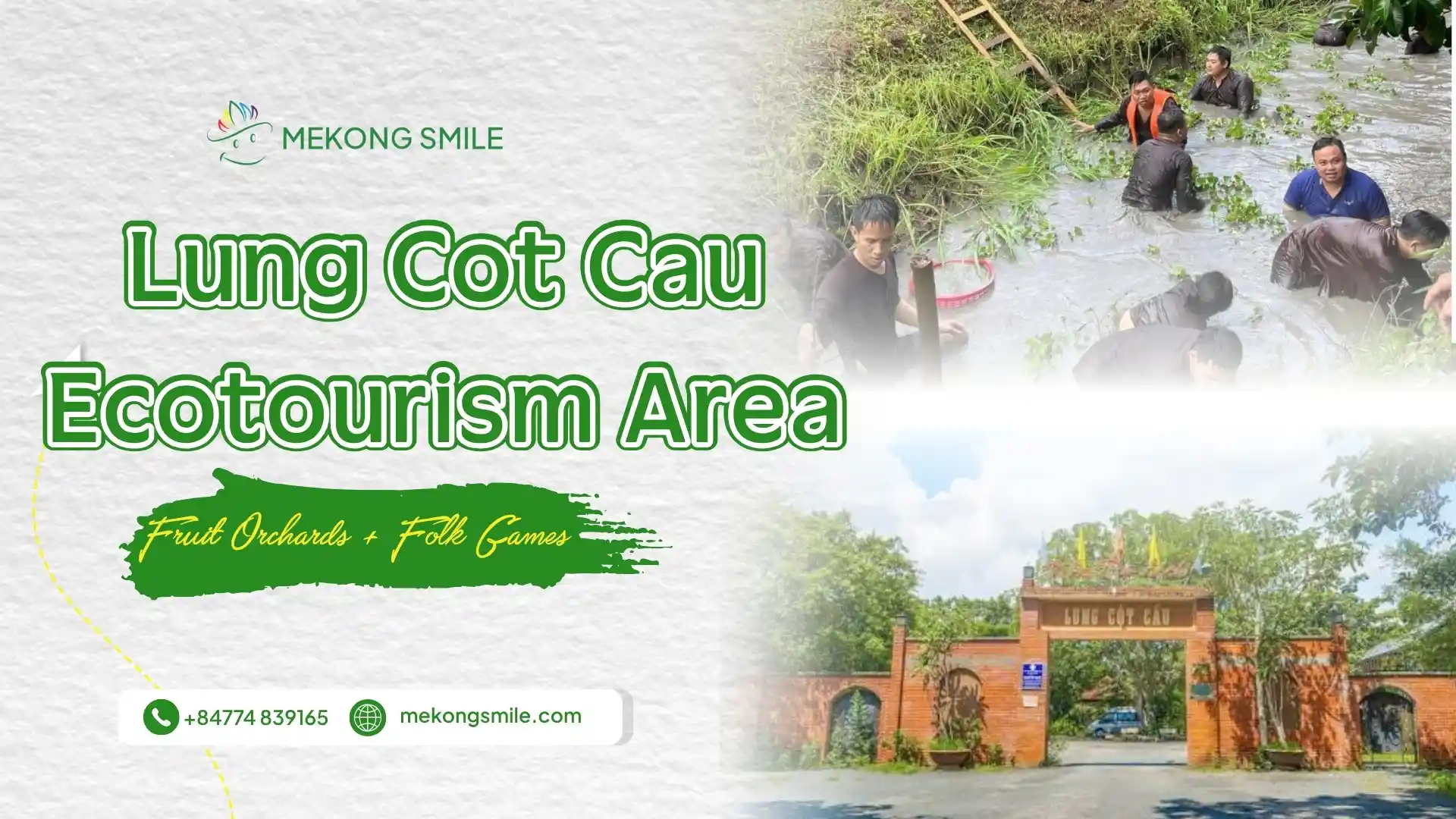
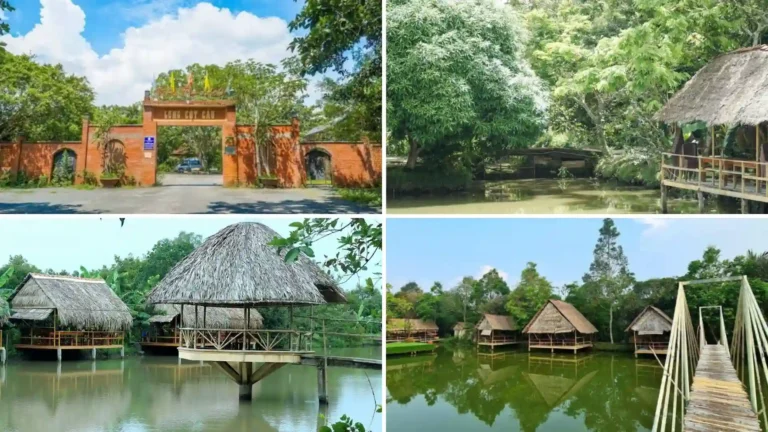
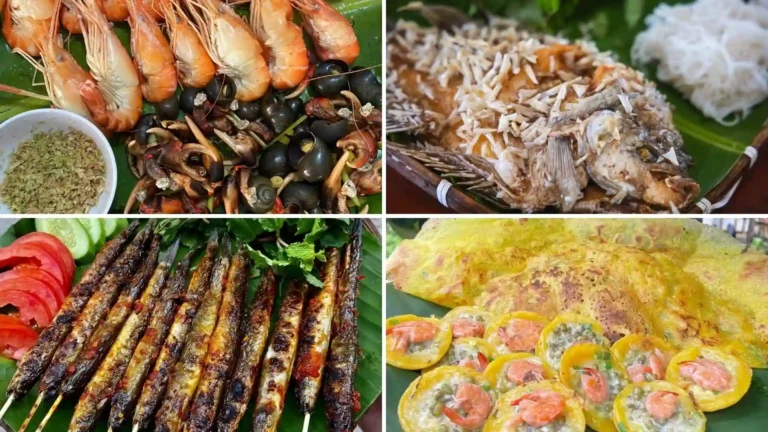

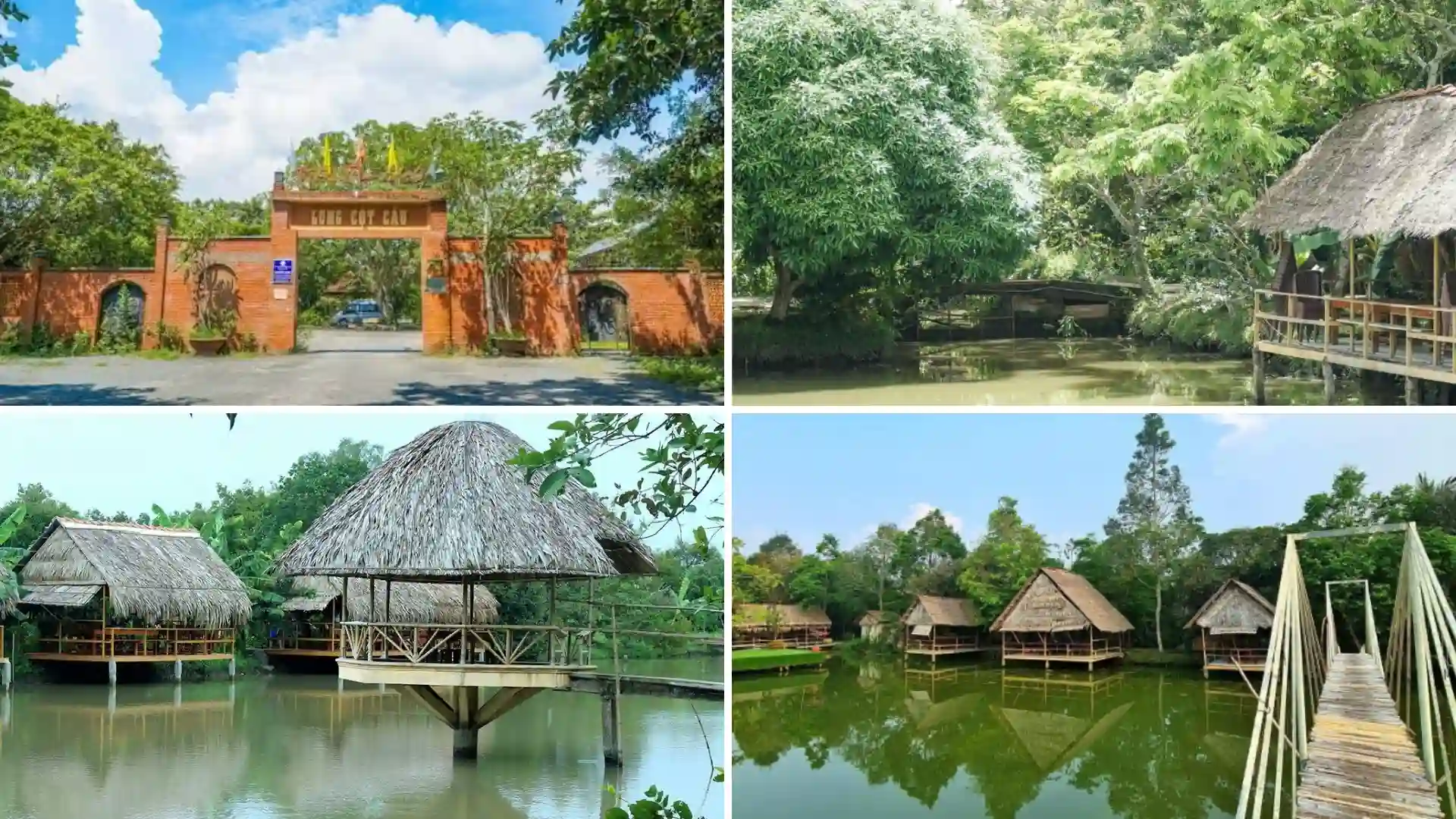
Lung Cot Cau Ecotourism Area (Khu du lịch sinh thái Lung Cột Cầu) is a countryside attraction in Can Tho where visitors can explore tropical fruit orchards, take part in traditional Mekong Delta games, and enjoy local food made with seasonal ingredients.
Located in the former Phong Dien district, the area is especially known for its water-based activities, mangosteen and durian gardens, and mangosteen chicken salad. It also has an interesting history linked to archaeological discoveries in the surrounding countryside.
For visitors interested in seeing a different side of Can Tho beyond its floating markets, Lung Cot Cau offers a mix of outdoor recreation, local food, and rural traditions.
Discover Lung Cot Cau in the Can Tho Countryside
Lung Cot Cau opened to visitors in 2015 in an area known for fruit growing and small waterways. The site includes orchards, ponds, canals, and garden pavilions where people can gather for meals and recreational activities.
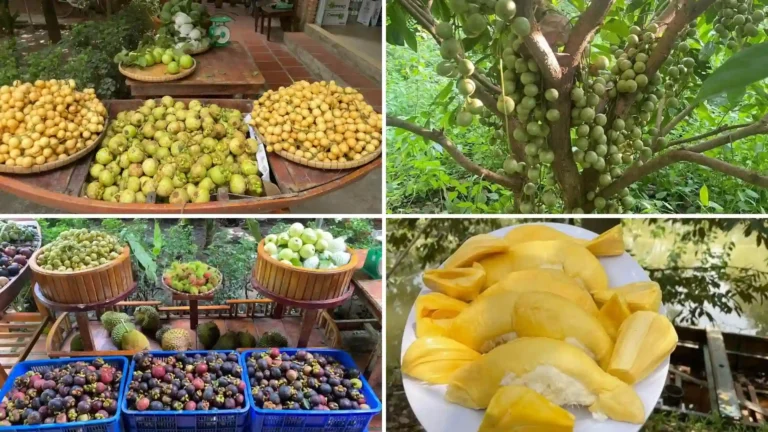
Mangosteen and durian are two of its main crops. The gardens also feature other tropical fruits grown in the Mekong Delta, including rambutan, longan, pomelo, and Ha Chau langsat (dâu Hạ Châu).
Unlike a typical fruit garden where visitors mainly walk among the trees and sample seasonal produce, Lung Cot Cau also offers traditional countryside games and group activities.
The destination has received recognition from the Mekong Delta Tourism Association as a representative tourism attraction in the region. Its combination of orchards, recreation, and local food has made it a familiar name in Can Tho’s countryside tourism.
Traditional Folk Games and Water Activities
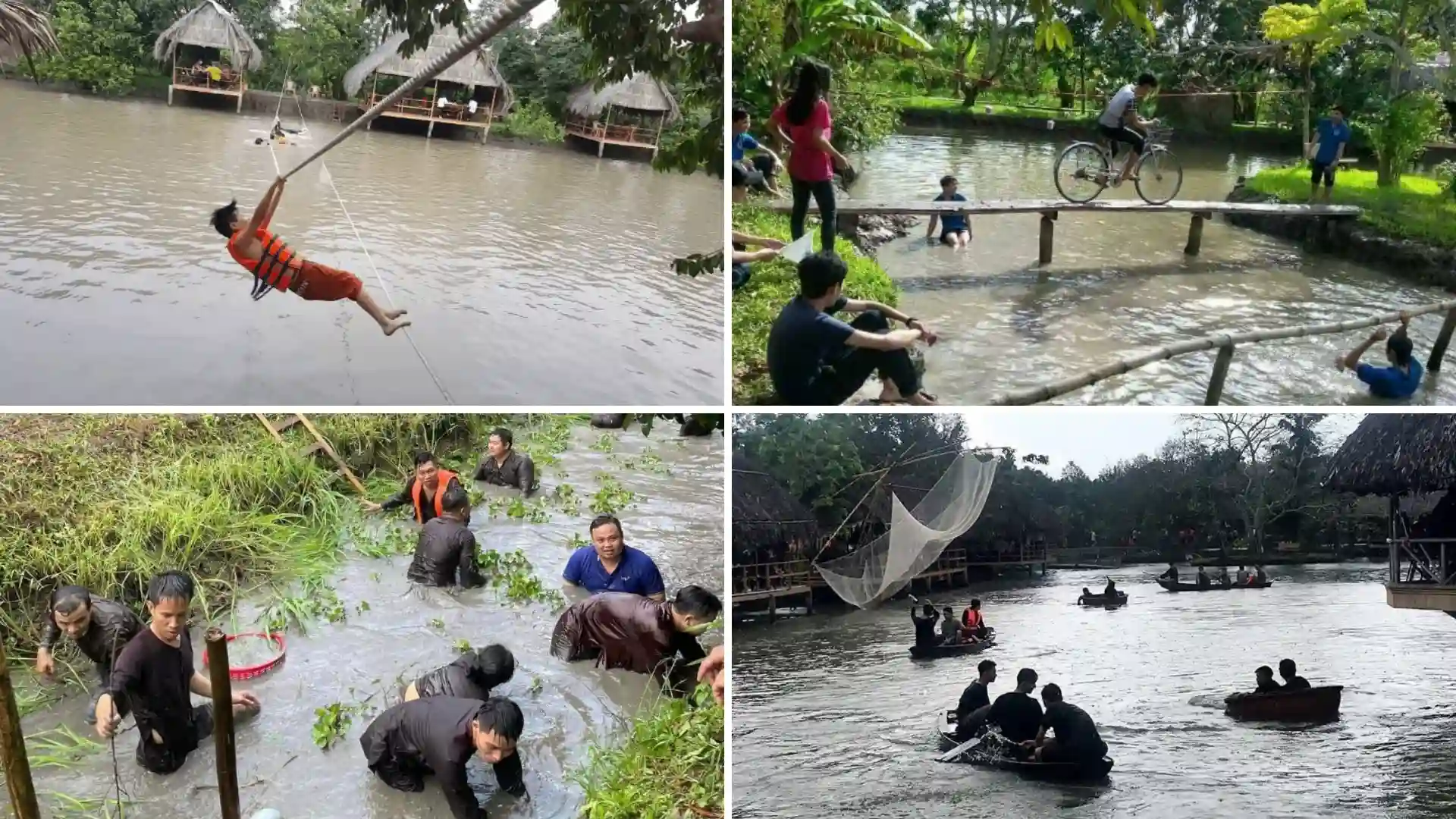
One of the main attractions at Lung Cot Cau is its collection of folk games inspired by everyday life in the Mekong Delta.
Many of these activities take place around the site’s ponds and waterways. Some recreate traditional rural skills, while others turn familiar countryside features into recreational challenges.
Crossing Bamboo Bridges and Water Challenges
In rural Southern Vietnam, narrow bamboo or wooden bridges have long been used to cross small canals and irrigation ditches.
Known as cầu khỉ, or monkey bridges, these simple structures require careful balance, especially when there are no handrails.
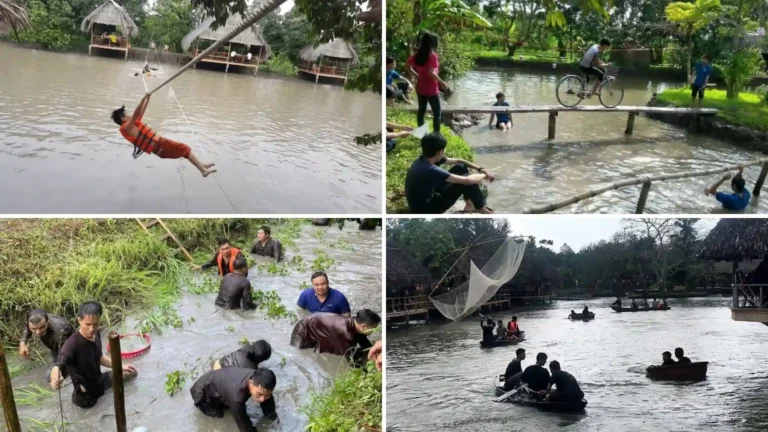
At Lung Cot Cau, bridge-crossing activities have been adapted into games. Visitors can try balancing on narrow walkways, crossing ropes above the water, and riding bicycles along wooden planks.
These games are particularly popular with groups, where participants can challenge one another while friends watch from the sidelines.
The activities involve water and slippery surfaces, so visitors should follow staff instructions and check the available safety equipment.
Catching Fish and Paddling Small Boats
Another activity associated with Lung Cot Cau is tát mương bắt cá, a traditional way of catching fish in small ditches and canals.
In the Mekong Delta, this practice developed alongside farming and the seasonal use of waterways. Water is drained or removed from a ditch, making it easier to catch fish using hands or simple tools.
At countryside tourism sites, the activity has been adapted into an opportunity for visitors to try something different from conventional sightseeing.
Lung Cot Cau has also offered small-boat paddling, recreational fishing, and group challenges on the water.
The selection of games can change, and some activities may require separate fees or group arrangements. Visitors interested in particular activities should confirm their availability in advance.
Explore the Tropical Fruit Orchards
Fruit growing is a central part of Lung Cot Cau’s identity.
The surrounding Phong Dien countryside has long been associated with orchards, particularly those producing durian, mangosteen, and other tropical fruits.
At Lung Cot Cau, mangosteen trees are especially important. Some have been growing for decades, providing fruit for both fresh consumption and dishes served at the attraction.
Durian is another characteristic crop, along with fruits such as rambutan, pomelo, and Ha Chau langsat, a local variety particularly associated with Phong Dien.
The gardens change with the seasons. During fruiting periods, visitors may see branches carrying ripe or developing fruit. At other times, the attraction is more about the garden setting and recreational activities.
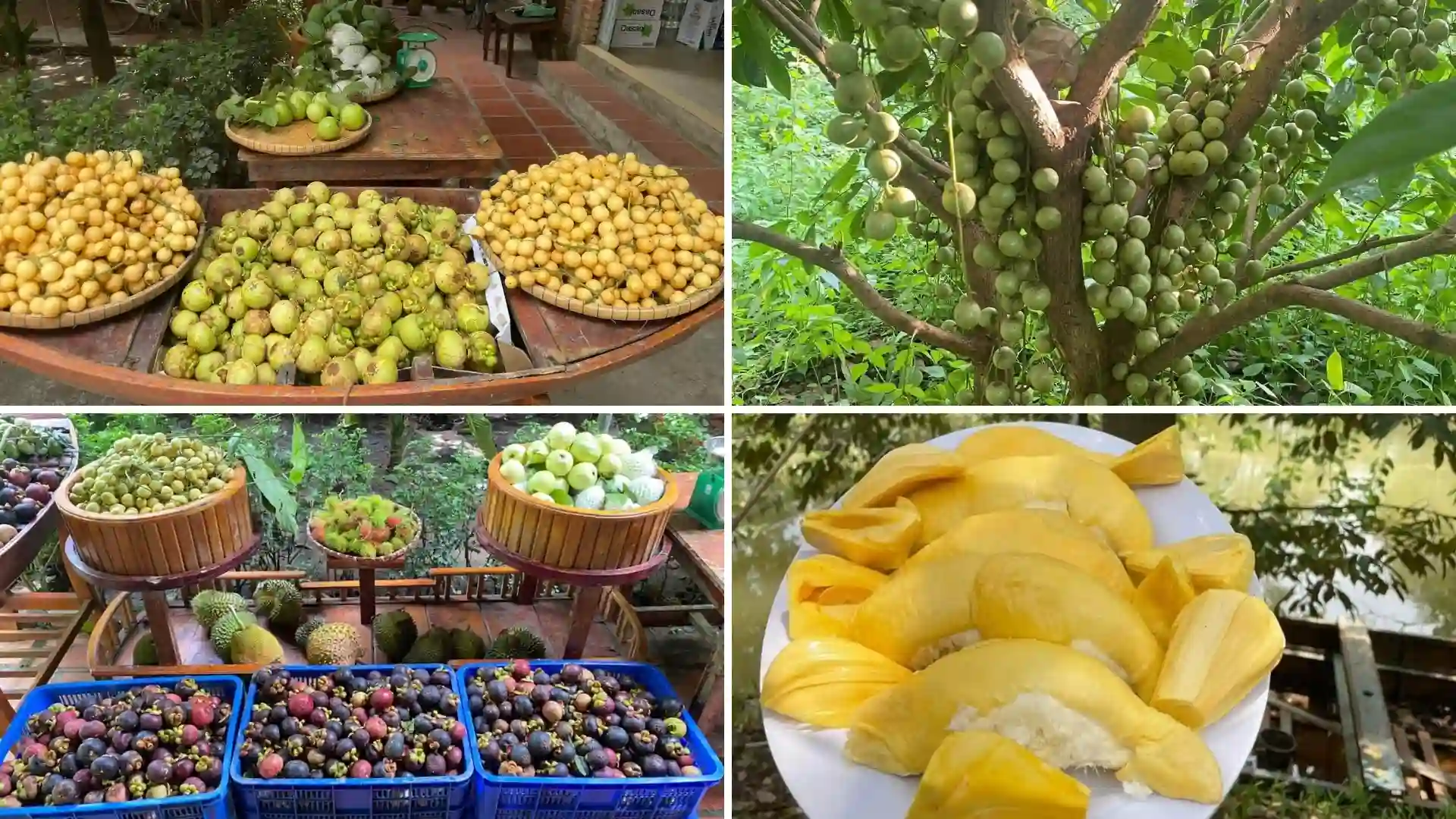
Fruit picking and tasting depend on the harvest and the services available on the day of the visit.
For travelers interested in exploring other orchards, Mekong Smile’s Can Tho Fruit Gardens Guide introduces more places associated with the region’s fruit-growing traditions.
Mangosteen Chicken Salad and Southern Vietnamese Food
Food is an important part of the Lung Cot Cau experience, particularly during mangosteen season.
The attraction is closely associated with gỏi gà măng cụt, or mangosteen chicken salad, a dish that combines locally grown fruit with the flavors of Southern Vietnamese cooking.
Mangosteen Chicken Salad
Mangosteen is usually enjoyed when fully ripe, with soft white segments and a sweet flavor. For this salad, however, cooks use mature fruit that has not completely ripened.
The firm flesh is carefully peeled, sliced, and mixed with chicken, herbs, fried shallots, and a sweet-and-sour dressing.
The mangosteen gives the salad a crisp texture and a mildly tart flavor that balances the savory chicken.
Mangosteen chicken salad has been part of Lung Cot Cau’s food offerings since 2014. The attraction’s long-established mangosteen orchard provides an important connection between the fruit growing on the property and the food served to visitors.
Preparing the fruit also takes considerable care. Unripe mangosteen has a thick rind containing sticky sap, which must be removed without damaging the white flesh inside.
The dish is especially associated with the warmer months when mangosteen is in season. Availability varies, so visitors hoping to try it should check with the restaurant before arriving.
Other Local Dishes
Alongside mangosteen salad, Lung Cot Cau has featured a range of Southern Vietnamese dishes, including:
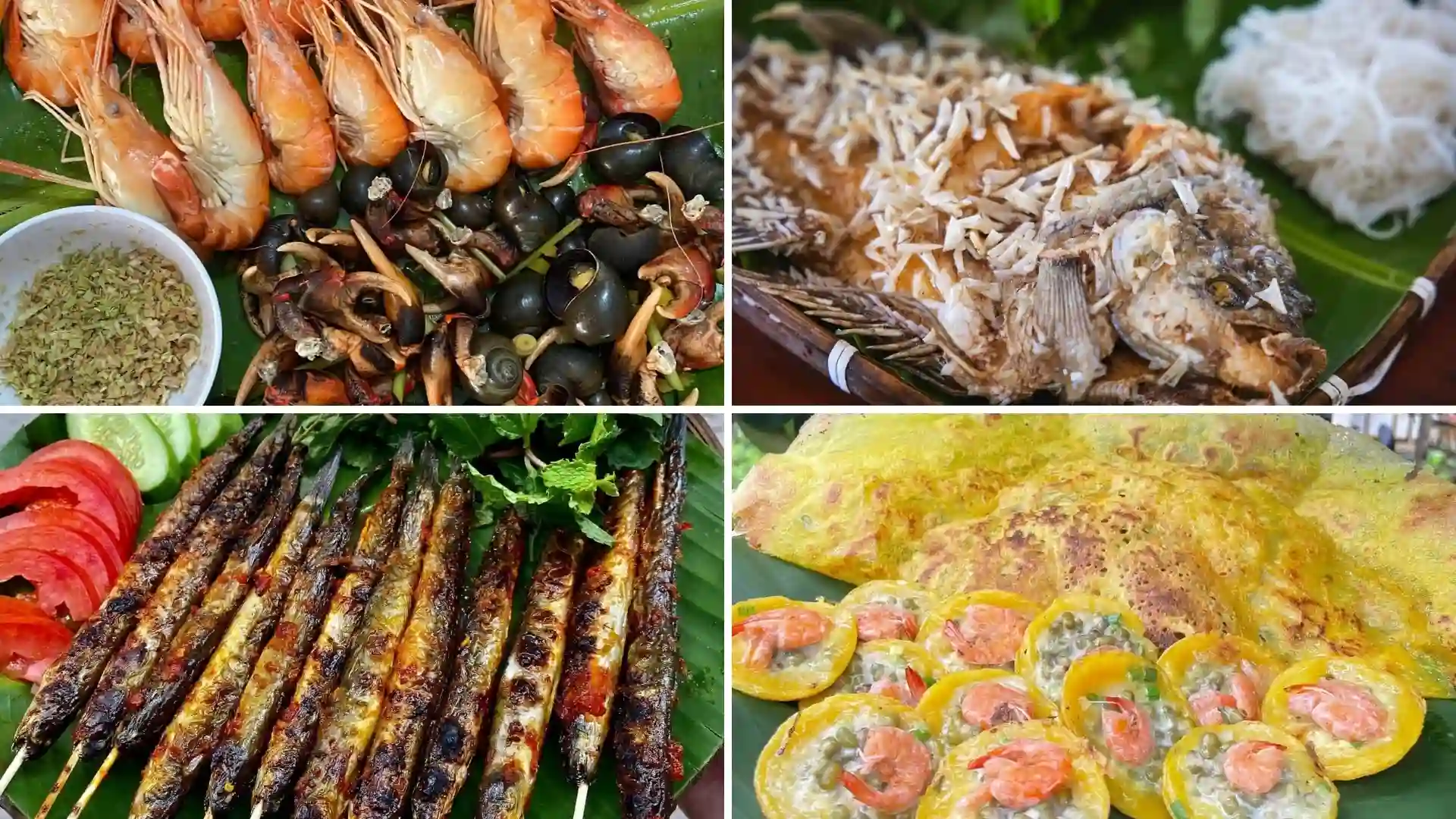
- Cá lóc nướng trui: Whole grilled snakehead fish, traditionally cooked over an open fire.
- Lẩu mắm: A rich hotpot made with fermented fish, vegetables, and other ingredients.
- Lẩu cua đồng: Freshwater crab hotpot.
- Gà hấp củ lùn: Chicken steamed with an edible tuber used in Southern Vietnamese cooking.
- Gỏi măng cụt tôm thịt: Mangosteen salad with shrimp and pork.
These dishes reflect the use of ingredients commonly found in the Mekong Delta’s farms, gardens, and waterways.
Menus may change with the season, and not every dish is necessarily available every day.
The Story Behind the Name Lung Cot Cau
Lung Cot Cau is more than the name of a modern recreational attraction. It comes from a local landscape with a much older history.
In the Southern Vietnamese dialect, lung refers to low-lying, waterlogged land. The nearby name Bưng Đá Nổi is also associated with the area’s wetland environment.
Local accounts describe the discovery of large wooden posts buried beneath layers of mud and soil. These posts were believed to be remains of an old bridge, giving rise to the name Lung Cột Cầu, which refers to a wetland associated with bridge posts.
Stone blocks discovered in the surrounding area also contributed to the name Bưng Đá Nổi.
Traces of the Ancient Óc Eo Culture
The wider area is associated with the Nhon Thanh archaeological site, where researchers have uncovered evidence of the Óc Eo culture.
This ancient culture flourished in southern Vietnam during the first millennium CE and is closely connected with the history of the Funan kingdom.
Archaeological discoveries in the area include pottery, stone objects, jewelry, and evidence of ancient settlement and craft activities.
These findings offer a glimpse into the communities that lived in the region long before modern Can Tho developed.
The archaeological history adds an interesting dimension to the name Lung Cot Cau. However, the ecotourism area should not be confused with an archaeological museum, and public access to excavation areas or original artifacts is not guaranteed.
Visitors interested in learning more about Óc Eo history can explore Can Tho Museum, which has exhibits covering the region’s archaeological and cultural heritage.
Is Lung Cot Cau Worth Visiting?
Lung Cot Cau is a good option for visitors who enjoy outdoor activities, tropical fruit gardens, and local food.
Its main appeal lies in the variety of experiences available within a countryside setting. Visitors interested in recreational games can try activities inspired by rural life, while food lovers may be particularly interested in the seasonal mangosteen dishes.
Families, groups of friends, and travelers looking for active countryside experiences are likely to find the attraction appealing.
It is worth keeping expectations realistic, however. Lung Cot Cau is primarily a garden-based recreational attraction, rather than a protected nature reserve or a dedicated archaeological exhibition.
Those who prefer quiet sightseeing or cultural monuments may find other attractions in Can Tho better suited to their interests.
Essential Visitor Information
Location: Nhon Ai Commune, Can Tho City, Vietnam.
Google Maps: https://maps.app.goo.gl/WnjAkXFEnFgsgxSt7
Former address: Nhon Nghia Commune, Phong Dien District, Can Tho.
Getting there: Lung Cot Cau is located near National Highway 61C, southwest of central Can Tho. Visitors can travel by taxi or private car. Search for “Khu Du Lịch Lung Cột Cầu” on a navigation app to find the location.
Opening hours: 7:00 AM to 5:00 PM, as listed on the Can Tho tourism portal. Confirm current hours before visiting.
Entrance fees: Earlier visitor information described free general admission, with separate charges for some activities and services. Current admission fees and activity prices have not been confirmed.
Fruit season: Late spring and summer are particularly interesting for seasonal fruits such as mangosteen, although harvest times vary each year.
If you plan to participate in water games, bring suitable footwear and a change of clothes. It is also worth checking the weather and confirming which activities are operating.
Planning Your Mekong Trip?
Get a free, personalized itinerary from our local experts in under 120 minutes.

Get a Free Consultation Leave your contact, we handle the rest.
Nearby Places to Explore Around Lung Cot Cau
Lung Cot Cau is located in a part of Can Tho with several other countryside and cultural attractions. Depending on your interests, you can combine your visit with one or two additional stops.
Gian Gua Relic
Located in the wider Nhon Ai area, the Gian Gua Relic is known for its remarkable network of intertwined tree trunks and branches.
The site also has historical significance and is associated with local religious traditions. It offers a different experience from Lung Cot Cau’s orchard activities and folk games.
Lung Tram Ecotourism Area
Lung Tram Ecotourism Area is another garden attraction along National Highway 61C in Nhon Ai.
The property is known for its melaleuca trees, fruit gardens, ponds, and waterways. It offers an alternative for travelers interested in more countryside scenery and garden-based recreation.
As activities and operating arrangements may change, check the current visitor information before going.
Truc Lam Phuong Nam Zen Monastery
Truc Lam Phuong Nam Zen Monastery offers a cultural stop in the former Phong Dien area.
The monastery is known for its Buddhist architecture, landscaped grounds, and quiet atmosphere. It can be an interesting contrast to the recreational activities at Lung Cot Cau.
My Khanh Tourist Village
For another countryside attraction, consider My Khanh Tourist Village.
The larger tourism complex features fruit gardens, traditional activities, and experiences related to Southern Vietnamese culture.
Some activities overlap with those at Lung Cot Cau, so visitors with limited time may prefer to choose between the two.
These attractions are spread across the former Phong Dien area and are not all within walking distance. Check their locations before planning a combined visit.
Frequently Asked Questions about Lung Cot Cau Ecotourism Area (FAQ)
What is Lung Cot Cau Ecotourism Area known for?
Lung Cot Cau is known for tropical fruit orchards, traditional Mekong Delta games, and local dishes such as mangosteen chicken salad. The surrounding area also has historical connections to the Óc Eo culture.
Can visitors pick fruit at Lung Cot Cau?
Fruit picking and tasting may be available during certain seasons. The experience depends on the harvest and the activities offered by the attraction.
Is Lung Cot Cau suitable for children?
The garden setting and recreational activities can appeal to families. However, some games involve water, narrow bridges, and slippery surfaces. Parents should check which activities are suitable for their children.
Is Lung Cot Cau the same as the Nhon Thanh archaeological site?
No. Lung Cot Cau Ecotourism Area is a recreational destination associated with the wider archaeological landscape. It is not a museum or a guaranteed public excavation experience.
Discover More of Can Tho
Lung Cot Cau brings together fruit growing, traditional games, local cooking, and a little-known part of Can Tho’s history.
For more attractions across the city and surrounding countryside, explore Can Tho’s destinations and discover other places worth adding to your visit.
