
 Can Tho
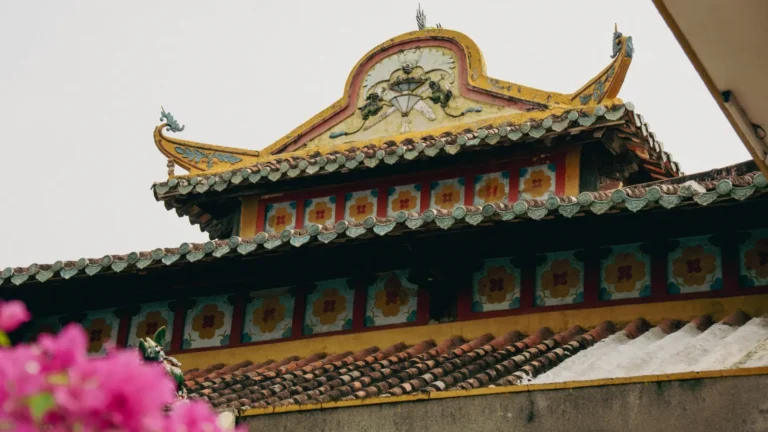
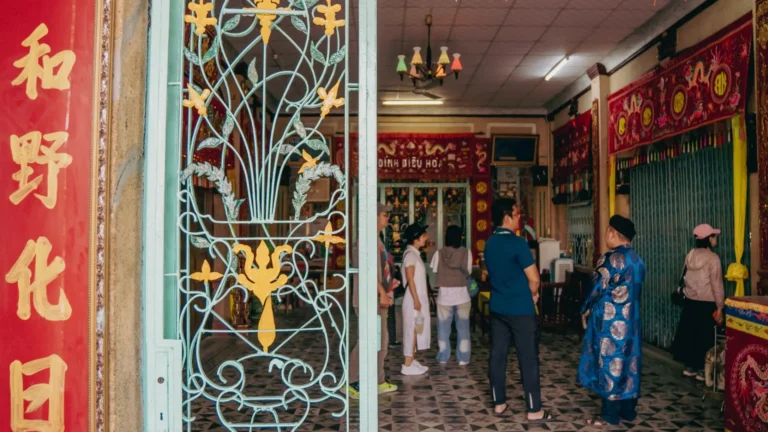
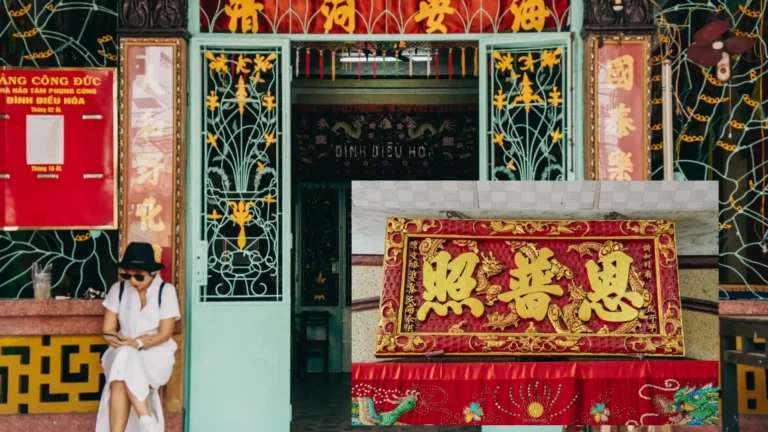
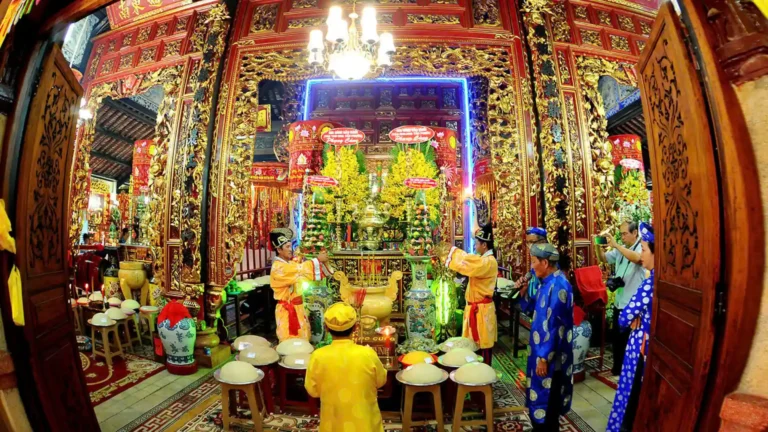

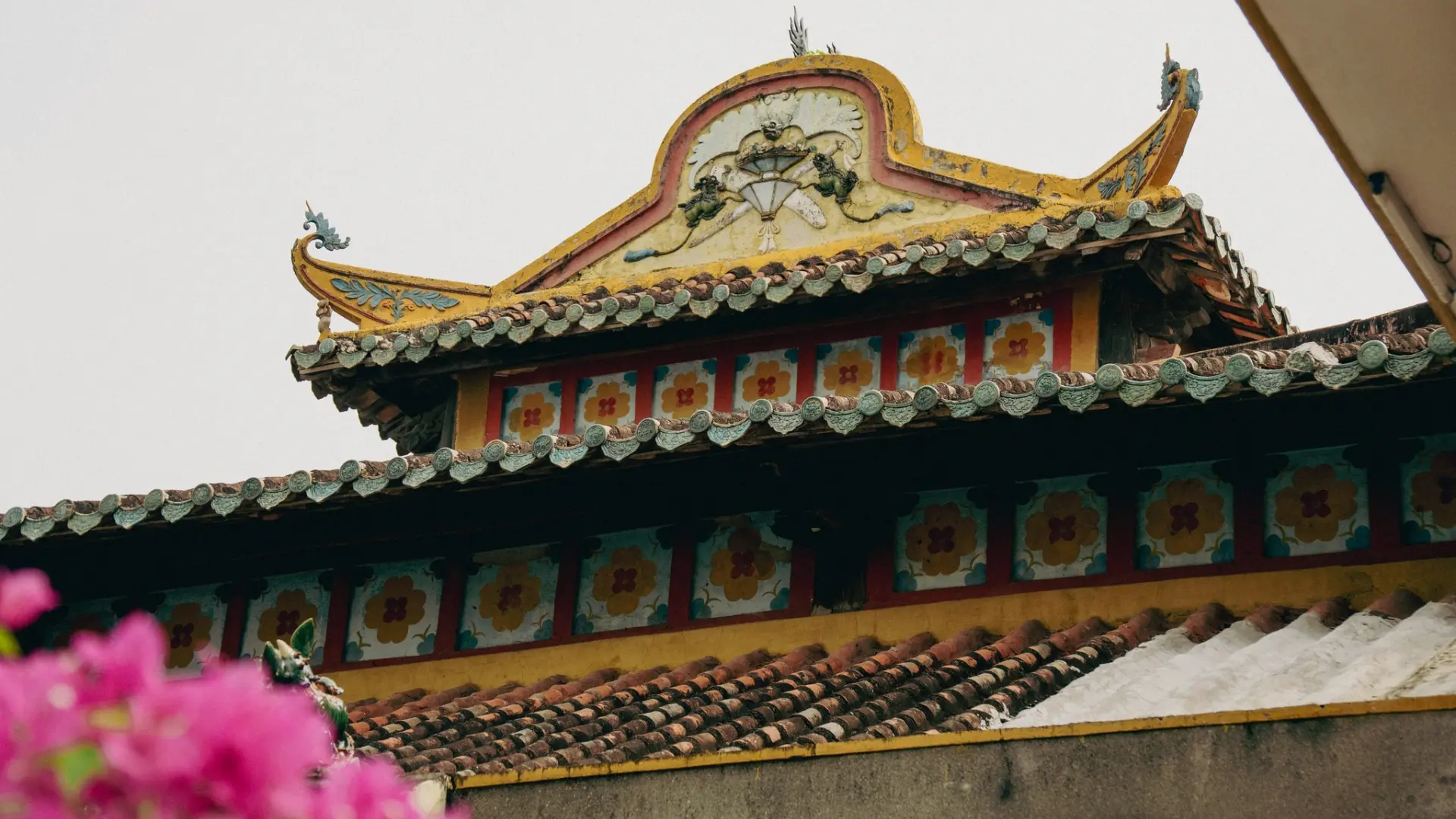
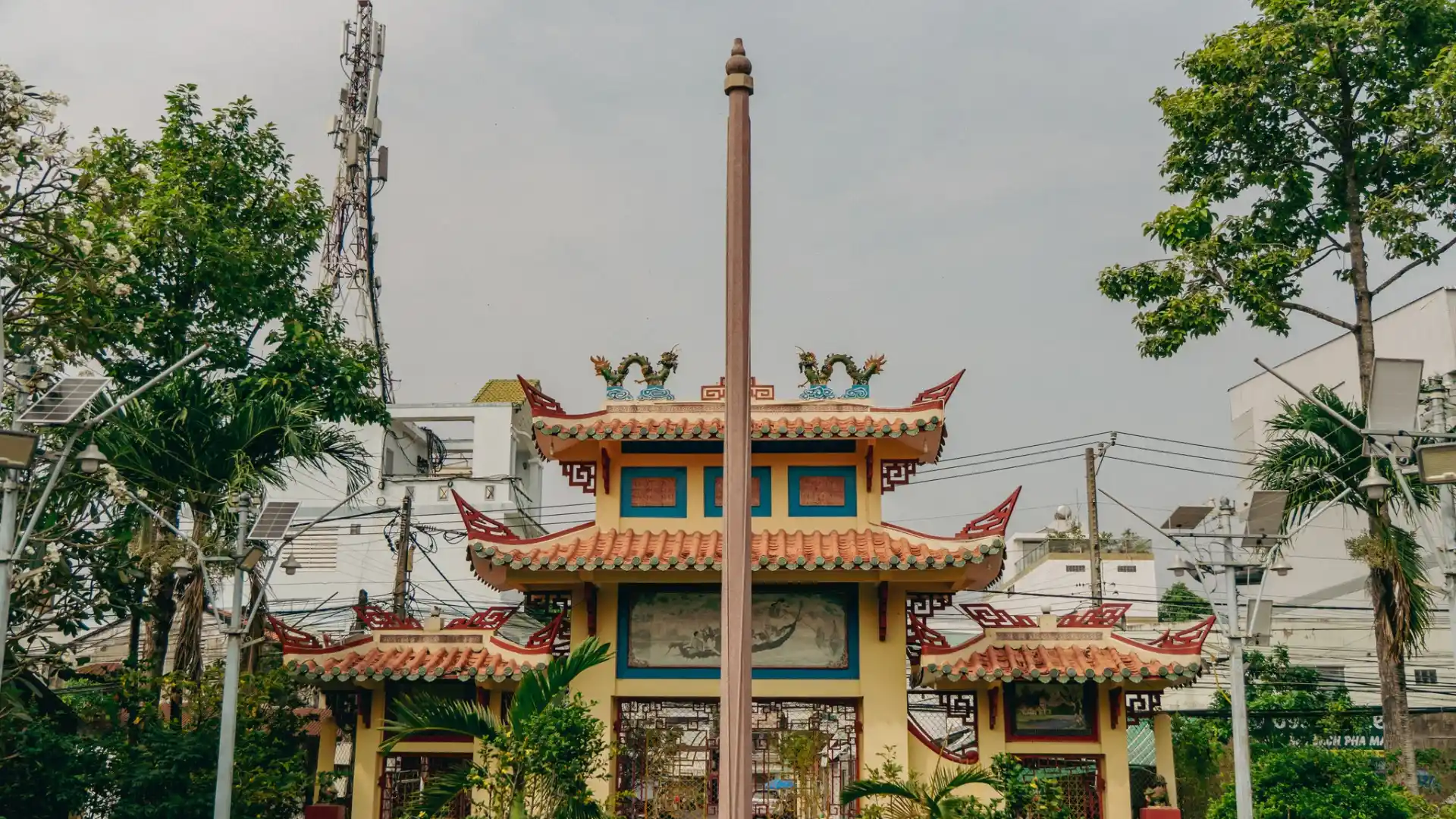
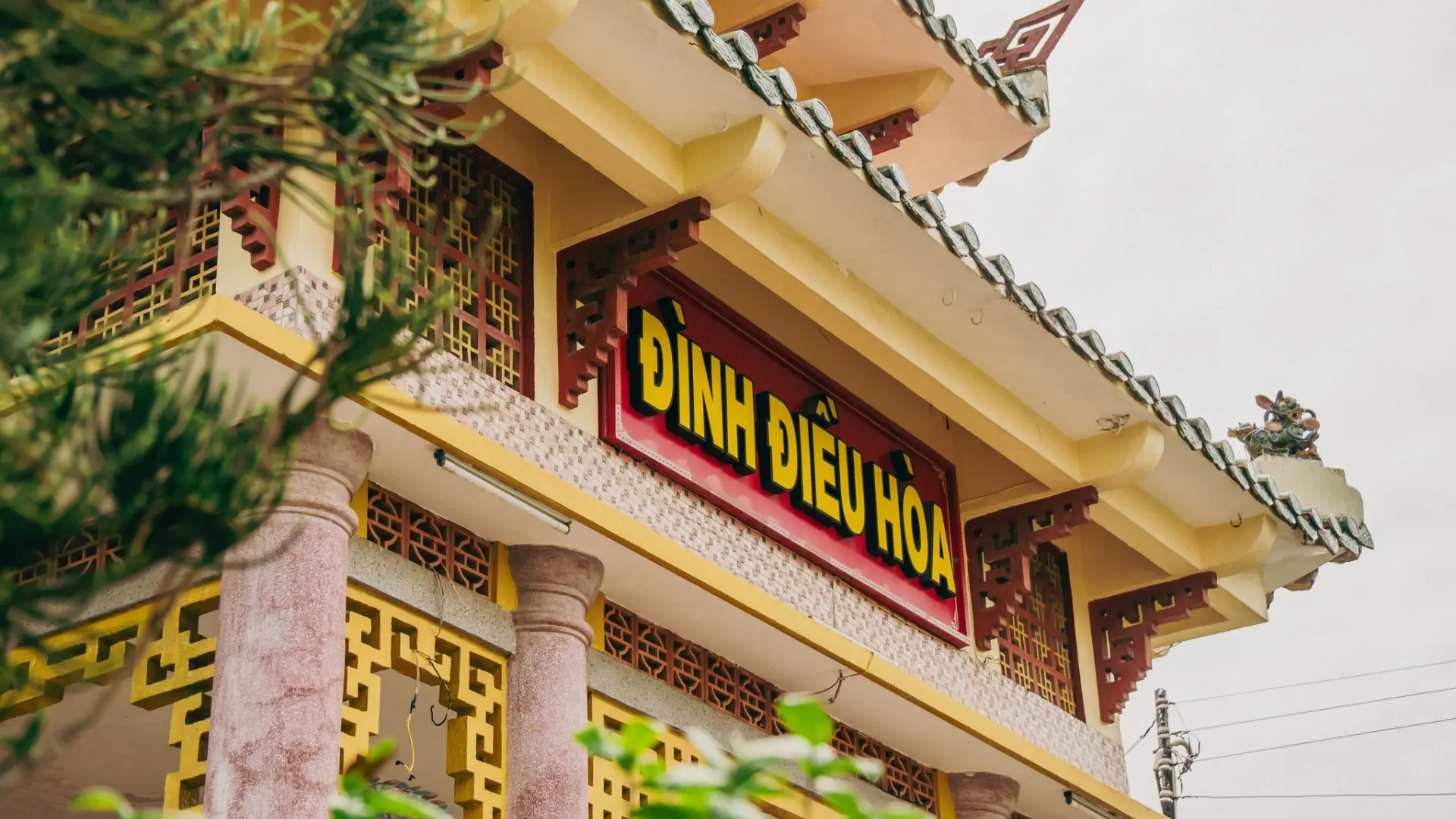
Just a short 5-minute walk from the bustling My Tho Market and the central riverfront, Dieu Hoa Temple welcomes travelers to discover a unique communal house and National Historical-Cultural Relic. Originally built in 1792 as a worship site and rest stop for Nguyen Dynasty mandarins, this deeply nostalgic sanctuary is renowned for its traditional tiled roofs, massive collection of 18th-century antiquities, and vibrant Hát Bội (classical opera) heritage.
In this complete Dieu Hoa Temple travel guide, you’ll discover everything you need to plan your visit with confidence: how to get there, the best time to experience its serene atmosphere, the fascinating biannual Ky Yen festival, and how to include this cultural deep-dive in your My Tho itinerary.
Lastest update by Hai Yen Nguyen at Mekong Smile | Official Tien Giang Travel Guide
Overview of Dieu Hoa Temple
A Glance at Dieu Hoa Temple
- Location: 101 Trinh Hoai Duc Street, Ward 2, My Tho City, Tien Giang Province.
- Site Type: Communal House and National Historical-Cultural Relic.
- Significance: A unique temple formed by the merging of Dieu và Hoa villages, known for its rare collection of antiquities and Hát Bội heritage.
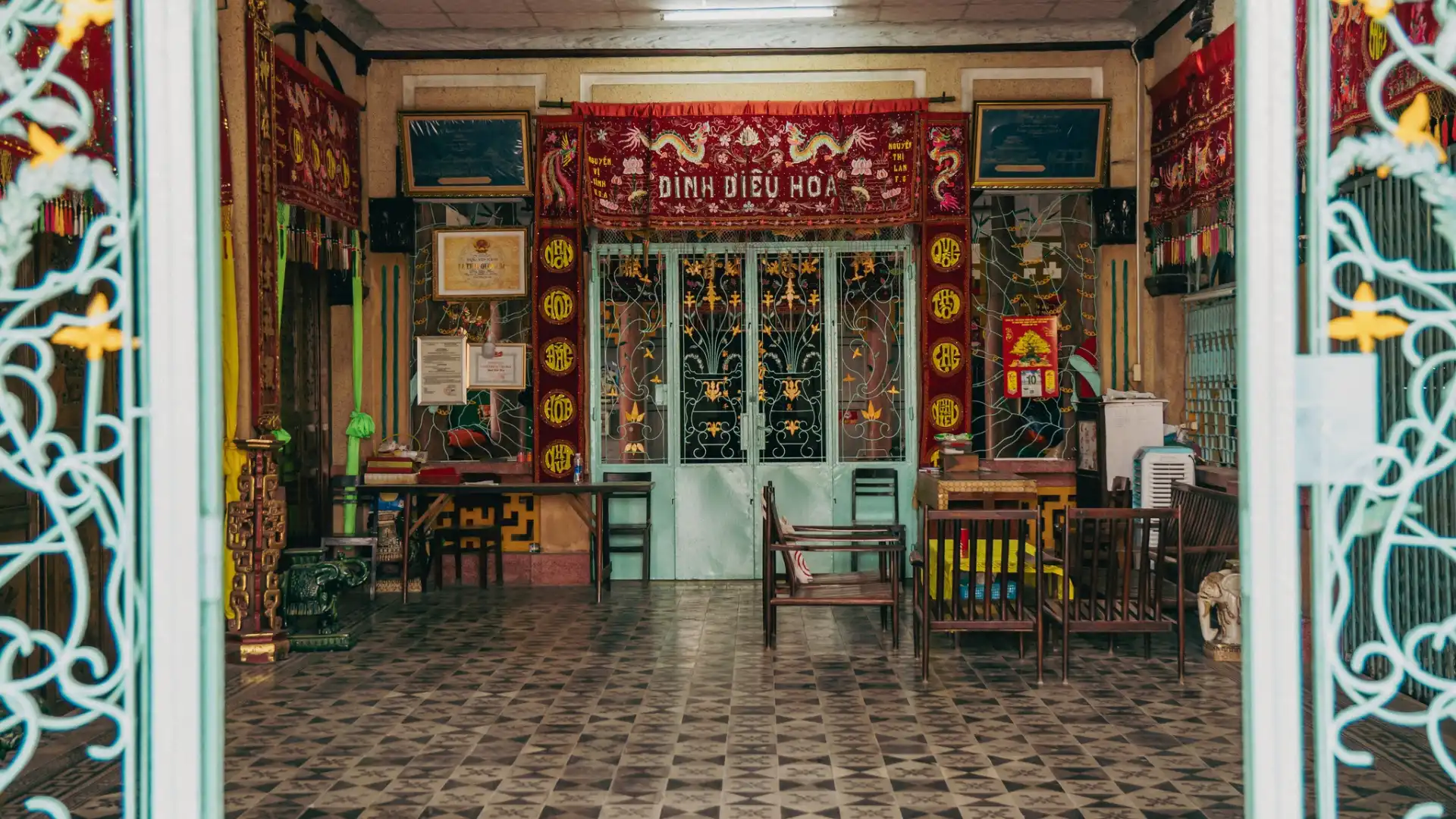
- Atmosphere: Deeply nostalgic and ornate, characterized by vibrant red and gold altars and traditional tiled roofs.
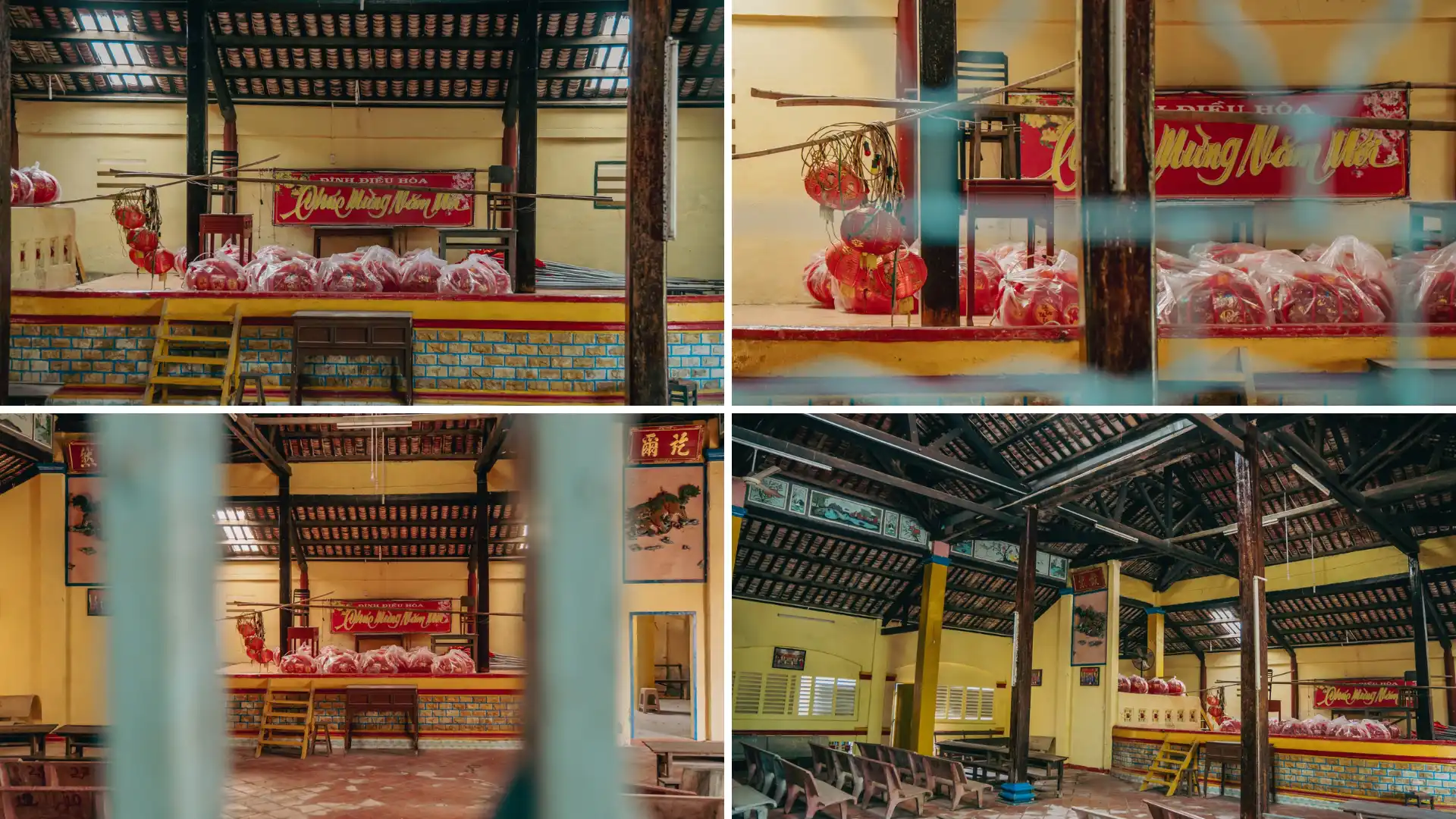
- Key Highlights: The ornate main sanctuary, historical artifacts from the Nguyen Dynasty, and the performance area for traditional theater.
- Opening Hours: 07:30 AM – 11:30 AM and 01:30 PM – 05:30 PM (Daily).
- Entrance Fee: Free (Donations welcome).
- Average Visit Duration: 45 minutes – 1 hour.
History of Dieu Hoa Temple
- Establishment (18th – 19th Century): Built around 1792 near the Tien River, it initially served a dual purpose as a rest stop for Nguyen Dynasty mandarins and a place to worship the tutelary god and village pioneers. By the mid-19th century, it functioned exclusively as a worship site.
- Relocation & Role in Resistance (20th Century): After being heavily damaged by a typhoon and riverbank erosion in 1904, the temple was relocated to its current, higher ground by 1913. Later, it became an administrative headquarters during the anti-French resistance and underwent a major architectural restoration in 1967.
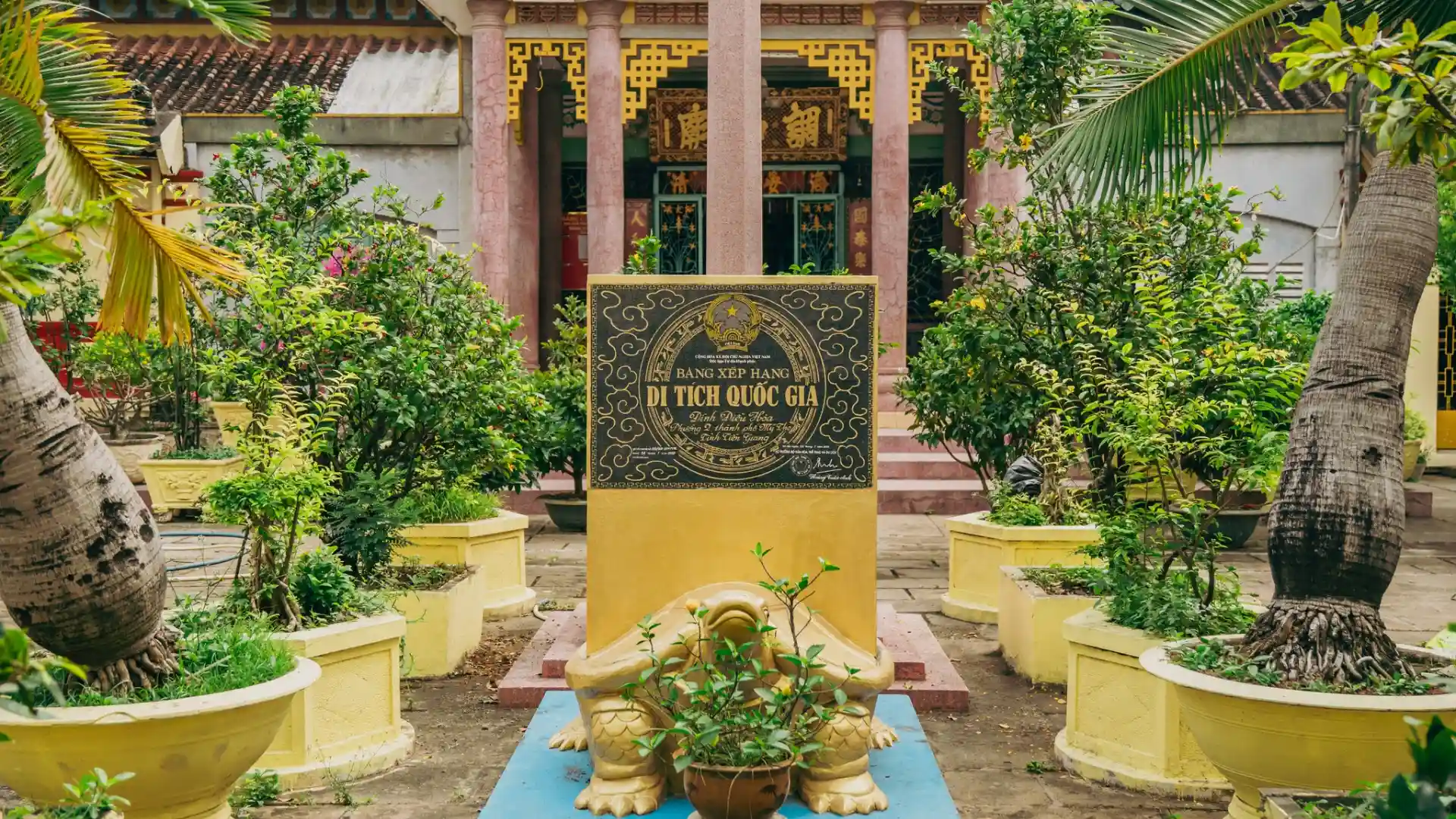
- National Recognition (21st Century): Having successfully preserved its traditional architecture and historical artifacts for over two centuries, Dieu Hoa Temple was officially recognized as a national relic in 2009.
Video of Dieu Hoa Temple
To witness the Ky Yen Festival, watch our short cinematic tour:
What Makes Dieu Hoa Temple Special?
Dieu Hoa Temple is special for its rich history, intricate architecture, and vibrant traditions:
- Unique History: Established around 1792, it uniquely served as both a place of worship and a designated rest stop for traveling Nguyen Dynasty mandarins. It also acted as a local administrative base during the anti-French resistance.
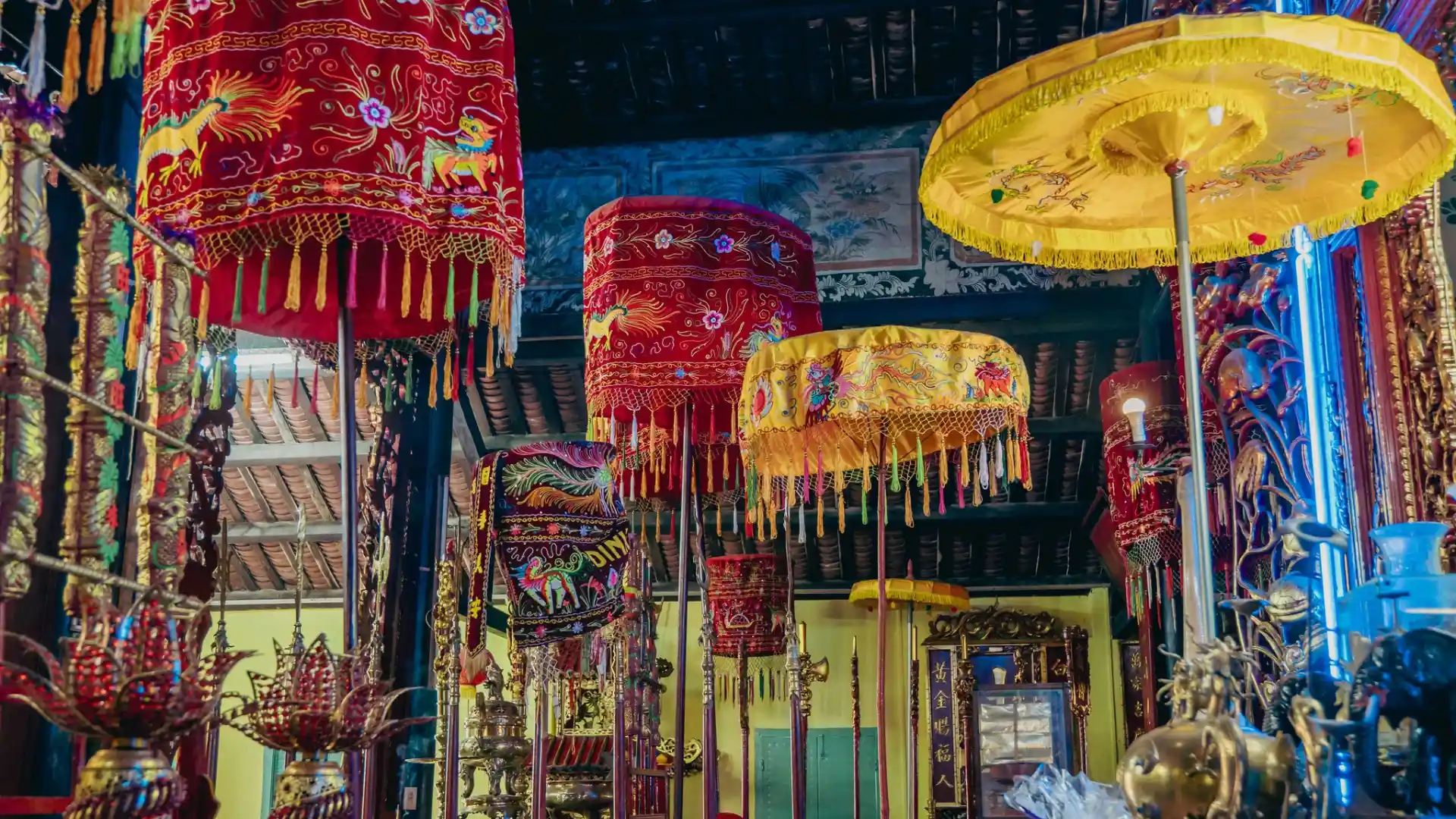
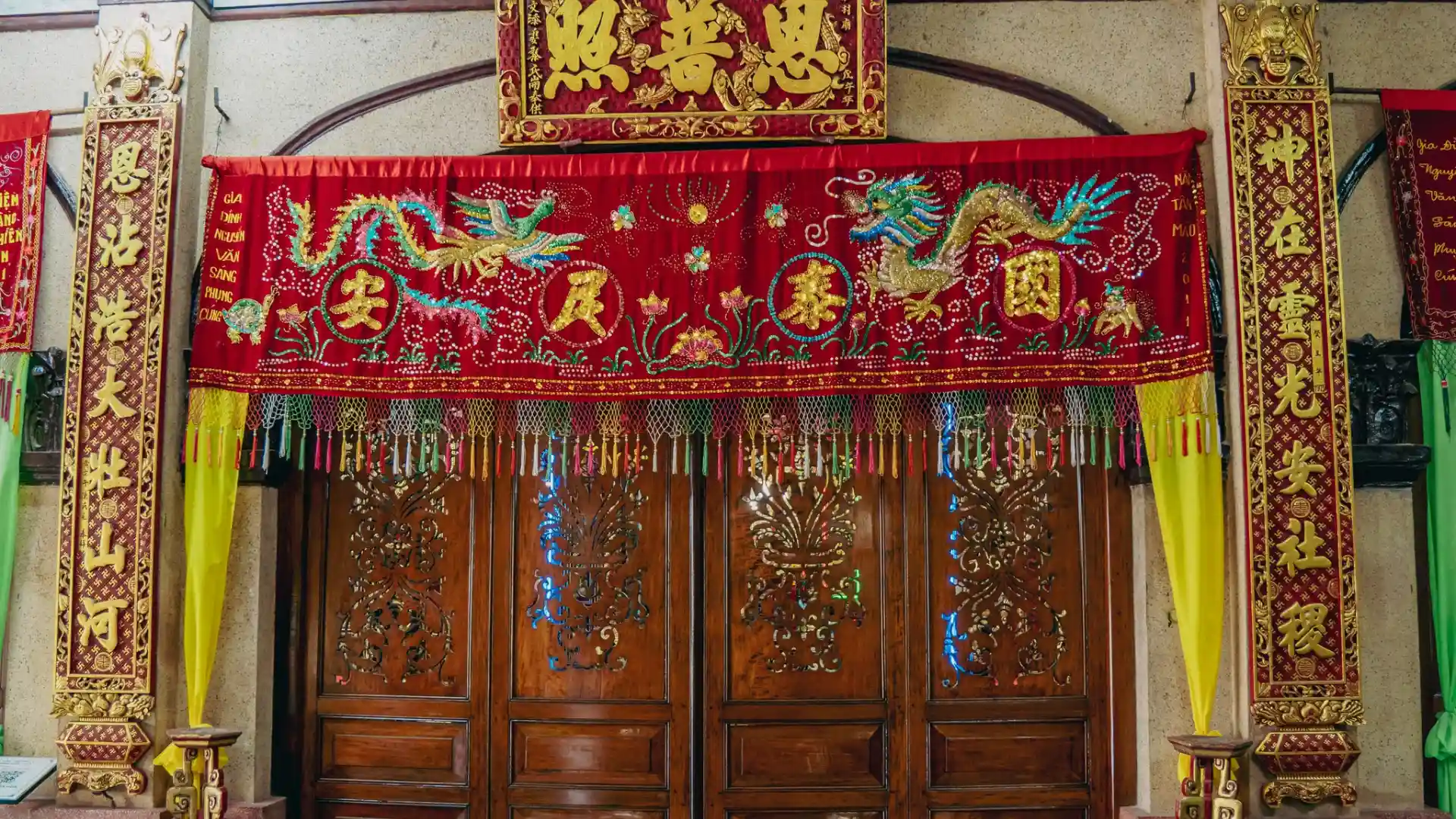
- Art & Antiquities: Built in the traditional “Tam” (≡) style, it features highly sophisticated woodcarvings and preserves a massive collection of 18th and 19th-century artifacts, including bronze urns, ceremonial weapons, and antique Chinese ceramics.
- Living Culture: It remains an active spiritual hub hosting the biannual Ky Yen festival, which features community rituals, cake-making contests, and traditional Hat Boi opera performances.
“With Mekong Smile experts, you will discover that Dieu Hoa is a sacred stage. We decode for you the Hát Bội artifacts and how the temple became a guardian protecting an art form that is technically demanding and spiritually profound, ensuring it remains an essential pulse of the Southern soul.” – Mr Jimmy, Senior Culture Guide at Mekong Smile
Planning Your Visit to Dieu Hoa Temple
Location on map
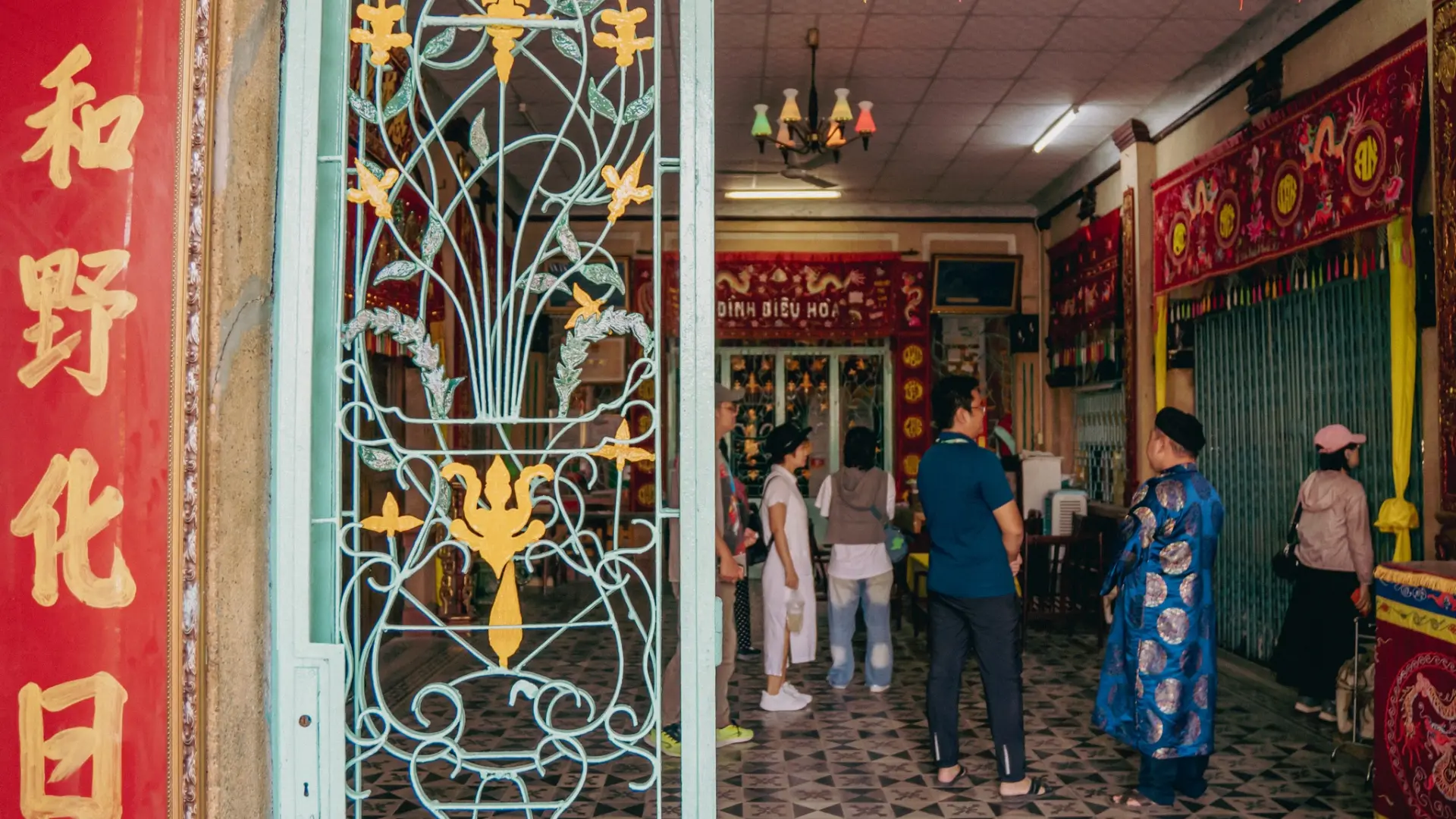
- Exact Address: 101 Trinh Hoai Duc Street, Ward 2, My Tho City, Tiền Giang Province.
- Proximity: The temple is perfectly situated in the historic core of My Tho, just a short 5-minute walk from the My Tho Market and the bustling riverfront. Its central location makes it an ideal stop during a walking tour of the city.
- Distance: Approximately 70km from Ho Chi Minh City and 100km from Can Tho.
How to get to Dieu Hoa Temple?
- By Car/Private Transfer: From HCMC, follow the Trung Luong Expressway into My Tho. Since Trinh Hoai Duc is a central street, parking is available nearby, though a walking approach allows you to feel the “rhythmic life” of the old quarter.
- By Motorbike: The temple is easily accessible from any part of My Tho center. The ride through the old administrative district offers a glimpse of French-era architecture and local street life.
- The Mekong Smile Way: We can integrate Dieu Hoa Temple as an add-on cultural deep-dive in our My Tho Mekong Delta Tour. We also provide private transfers that connect this site with the nearby Phoenix Island.
Opening Hours and Entrance Fee
- Opening Hours: 07:30 AM – 11:30 AM and 01:30 PM – 05:30 PM (Daily).
- Entrance Fee: Free. Like most communal temples, entry is free of charge. Mekong Smile encourages visitors to leave a small contribution in the donation boxes to help maintain the delicate wooden structures and silk artifacts.
Best Time to Visit
- Golden Hour: 08:30 – 10:00 AM is perfect for seeing the elderly guardians of the temple tending to the altars and catching the incense smoke curling through the sunlight.
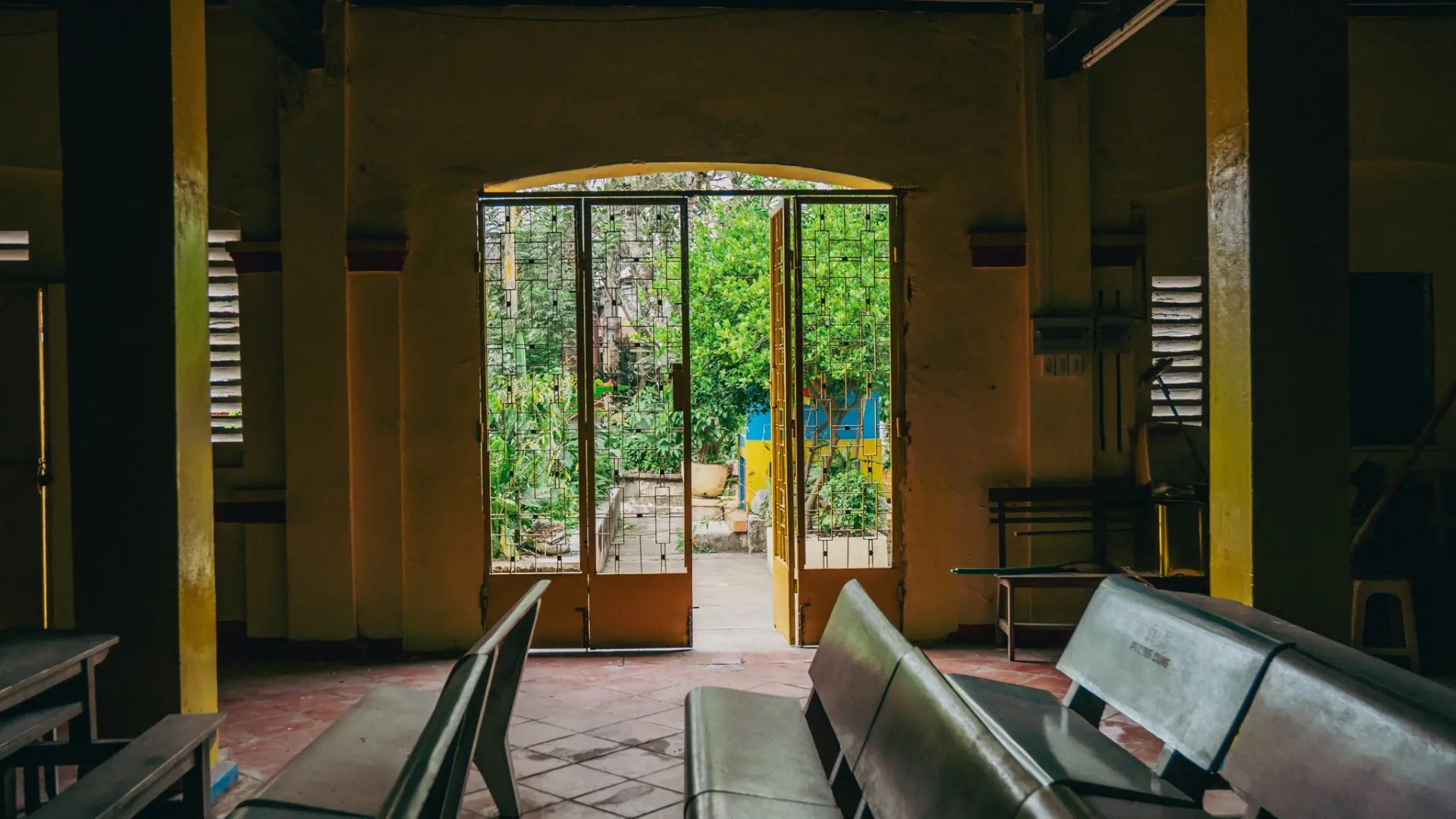
- Cool Breezes: The temple’s traditional design with open courtyards provides a natural “mindful stillness” retreat in the early afternoon, away from the humid city streets.
The Experience at Dieu Hoa Temple
The Biannual Ky Yen Festival
The most significant cultural highlight of Dieu Hoa Temple is the Ky Yen Festival, which takes place twice a year on the 16th, 17th, and 18th of the 2nd and 10th lunar months. Spanning three days and three nights, this festival is a major communal gathering where thousands of locals come to pray for the village’s peace and prosperity.
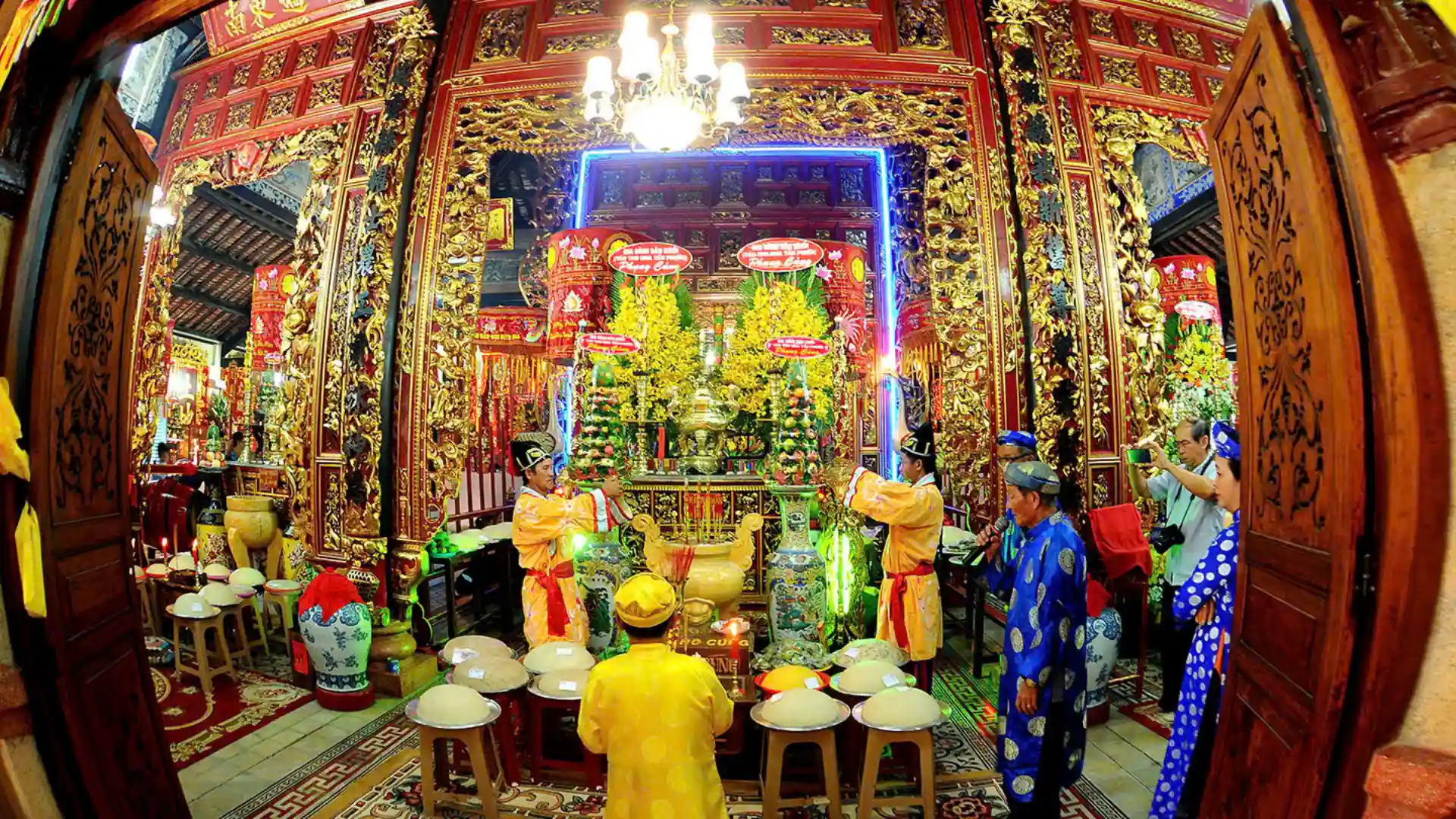
The Sacred Altars of the Sages
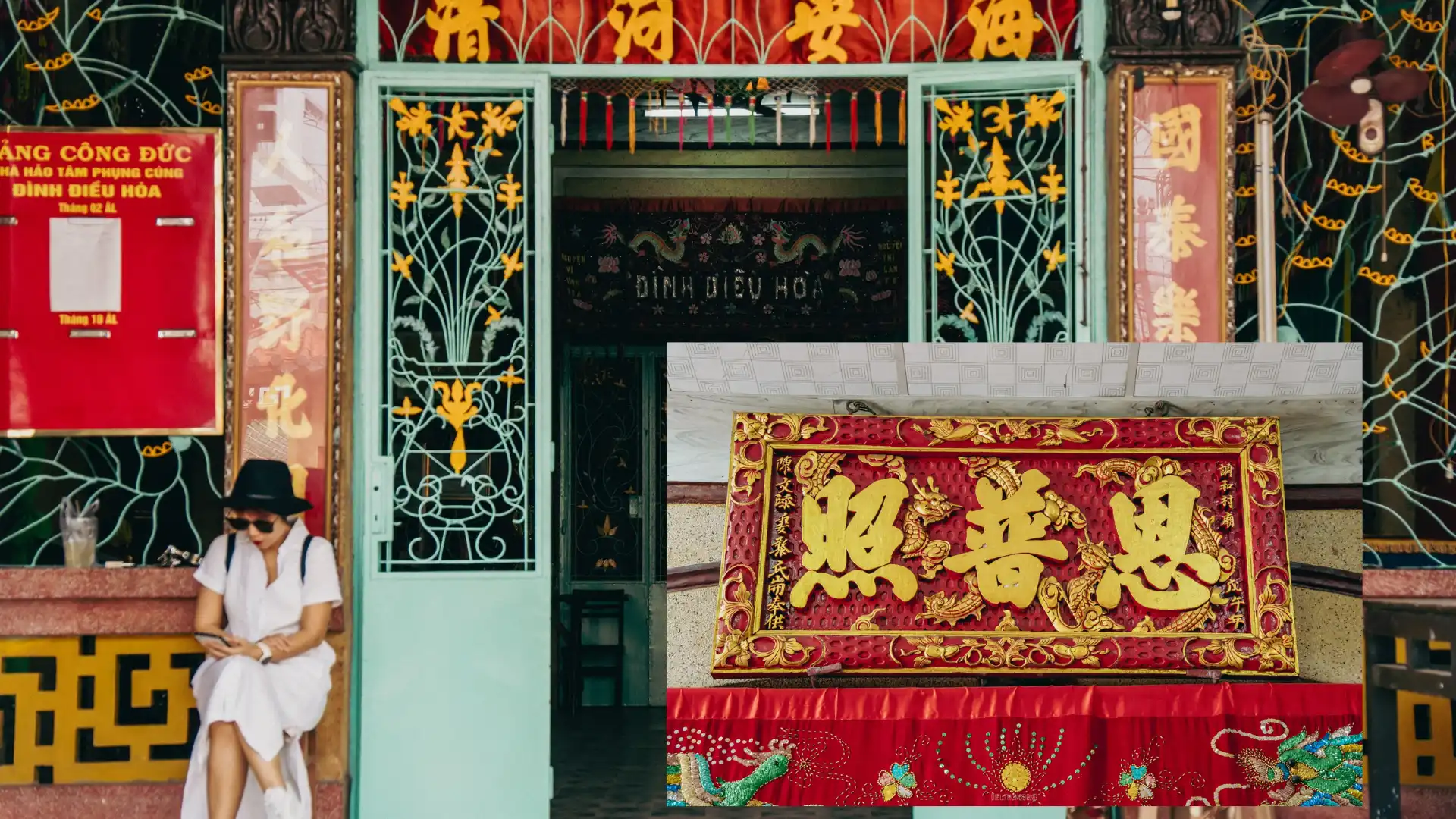
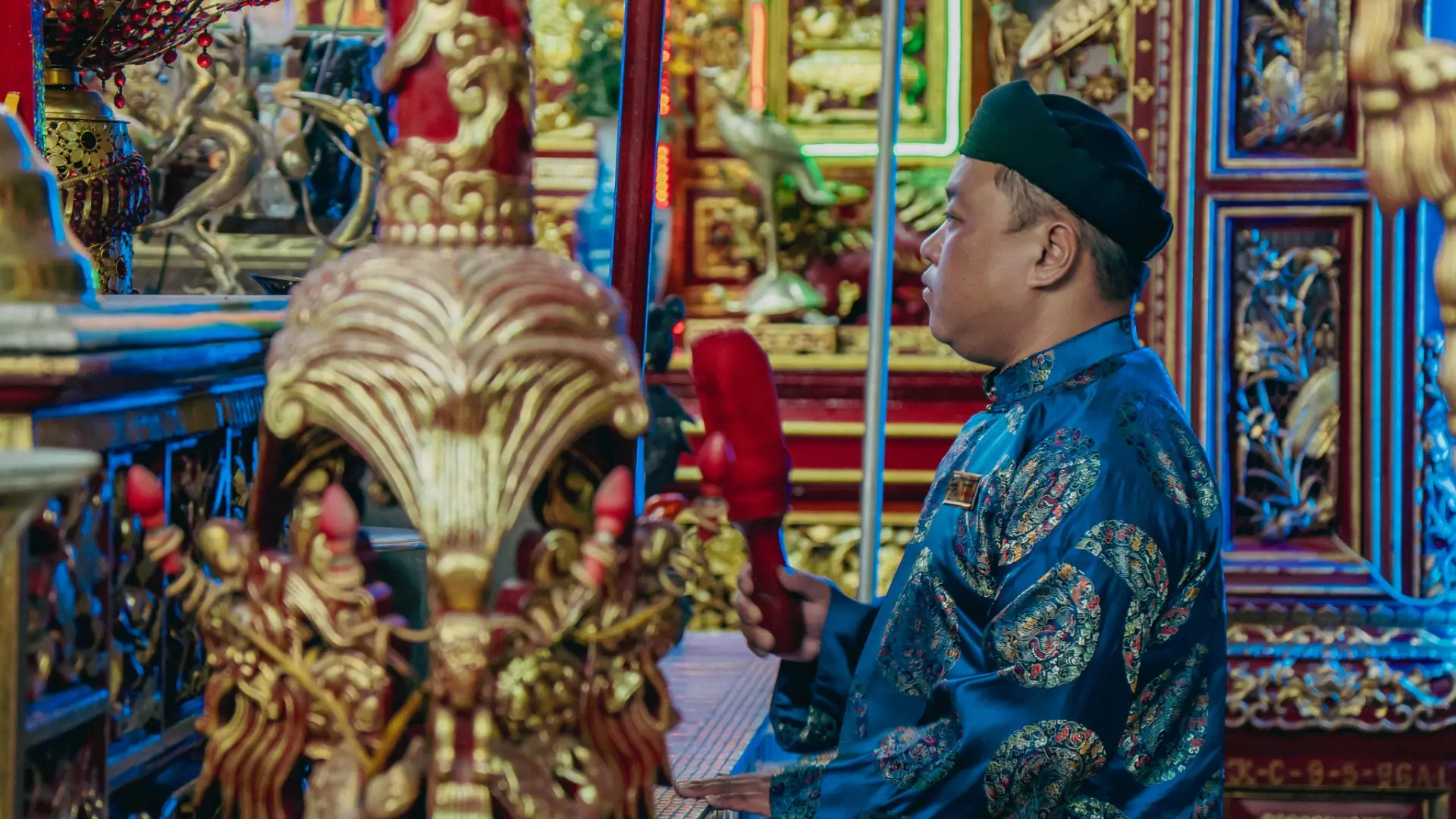
The temple’s worship practices reflect the rich and diverse spiritual life of the Mekong Delta. It primarily serves as a place to worship Thanh Hoang Bon Canh (the tutelary god) alongside the village pioneers (Tiền hiền, Hậu hiền)—such as Nguyen Van Kien, Nguyen Van Truoc, and Truong Van An—who first reclaimed the land and founded the village. This highlights the profound Vietnamese cultural value of showing gratitude to one’s ancestors.
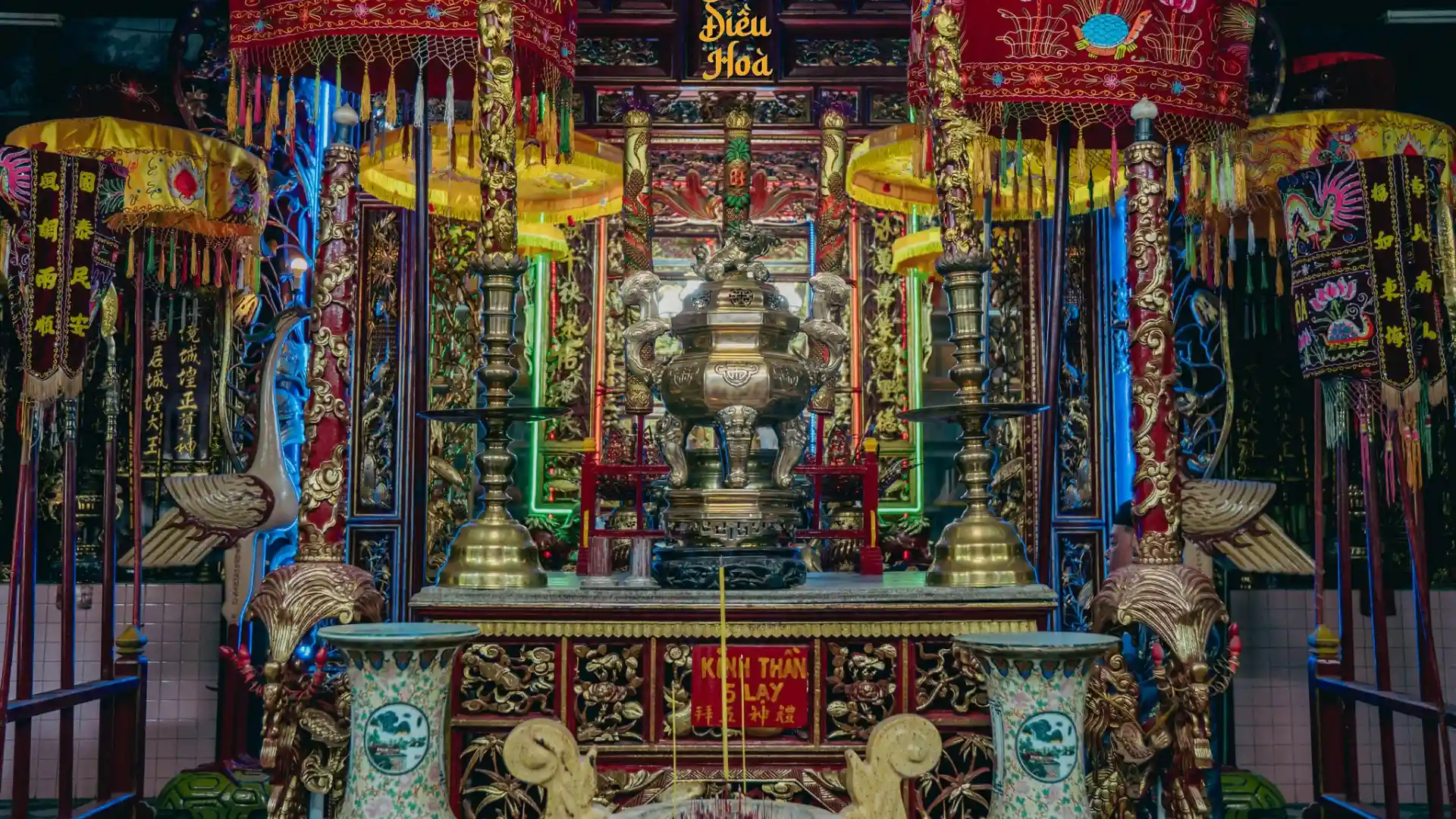
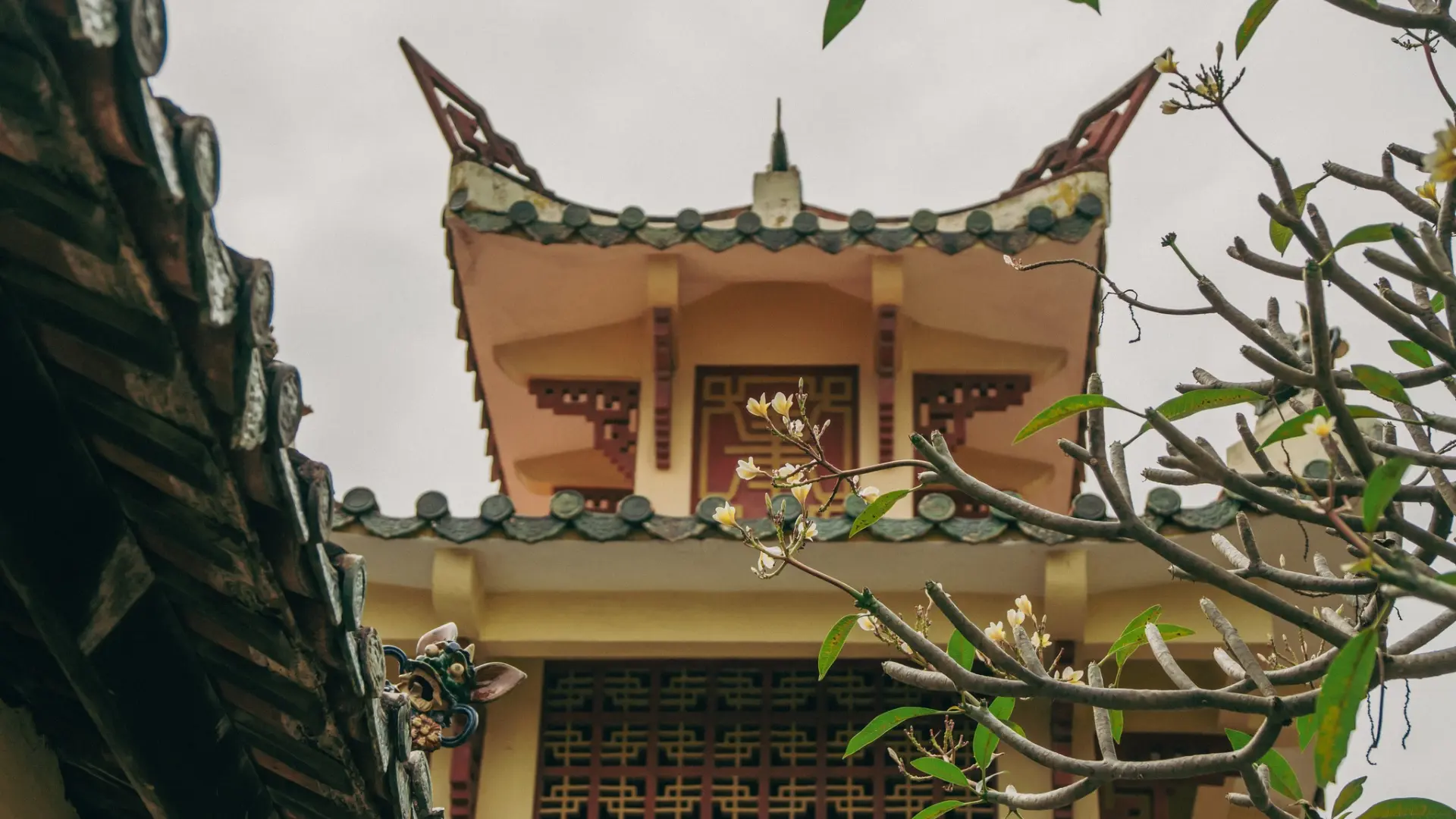
The Kinh-Hoa Architectural Fusion
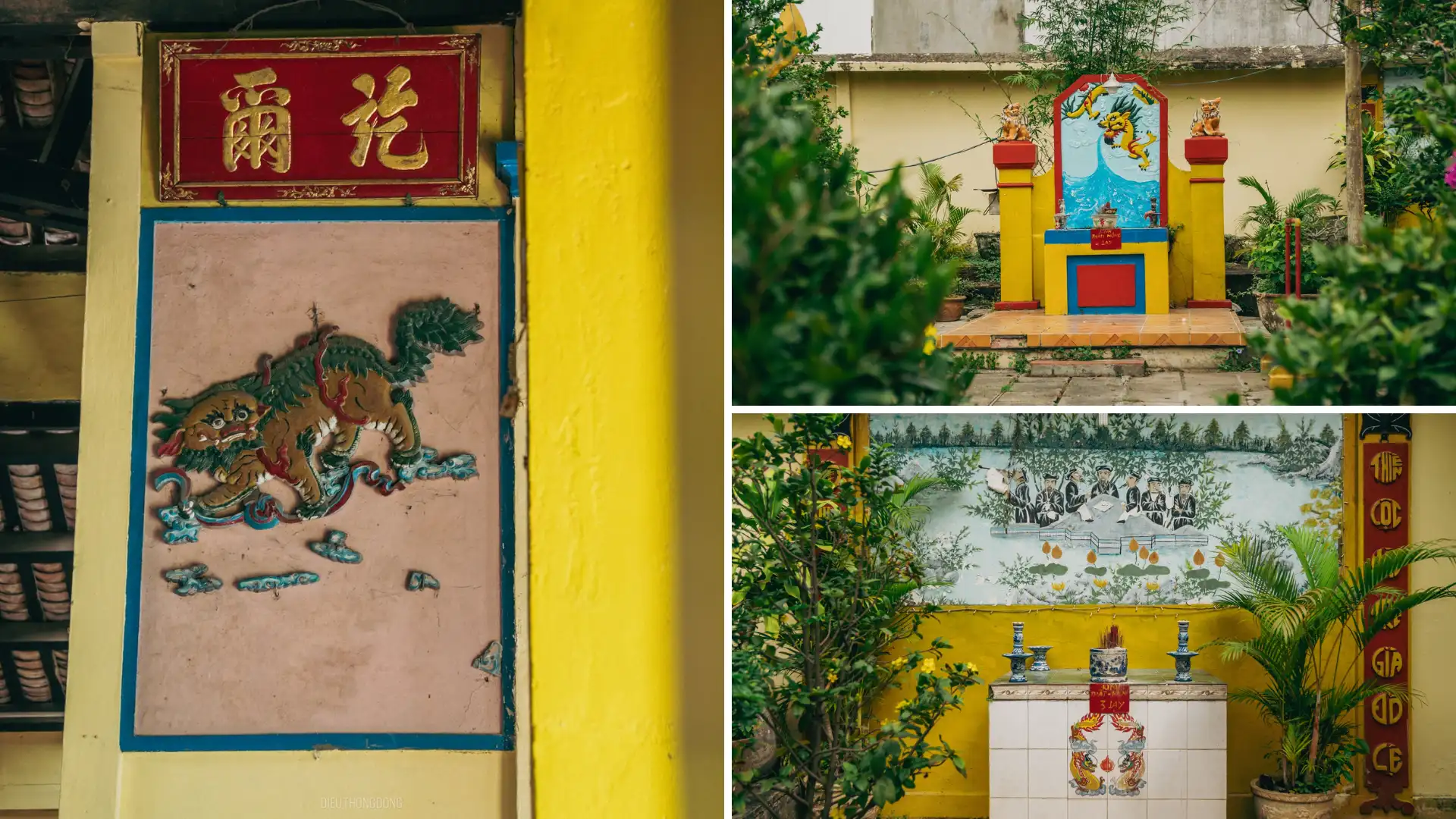
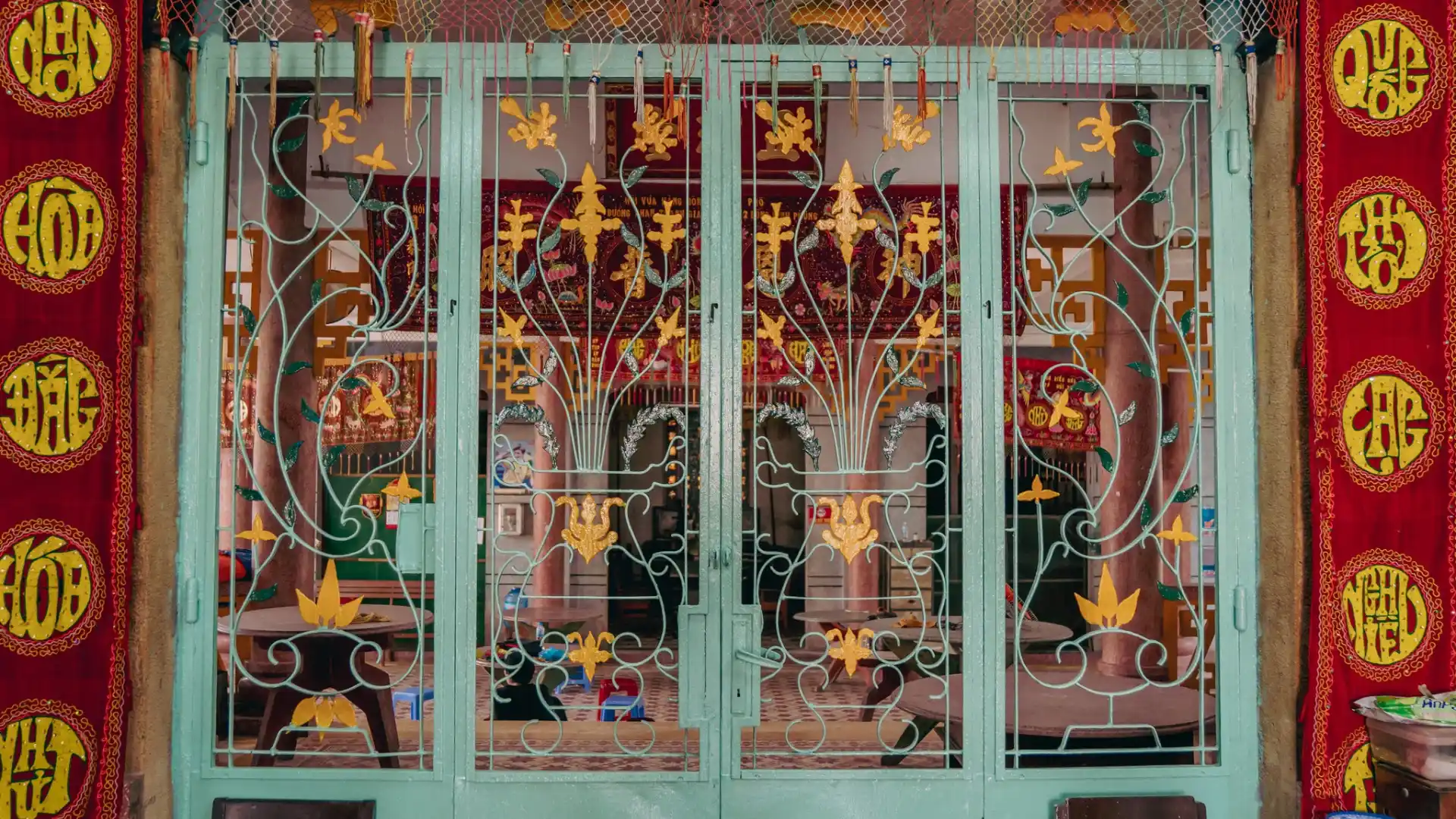
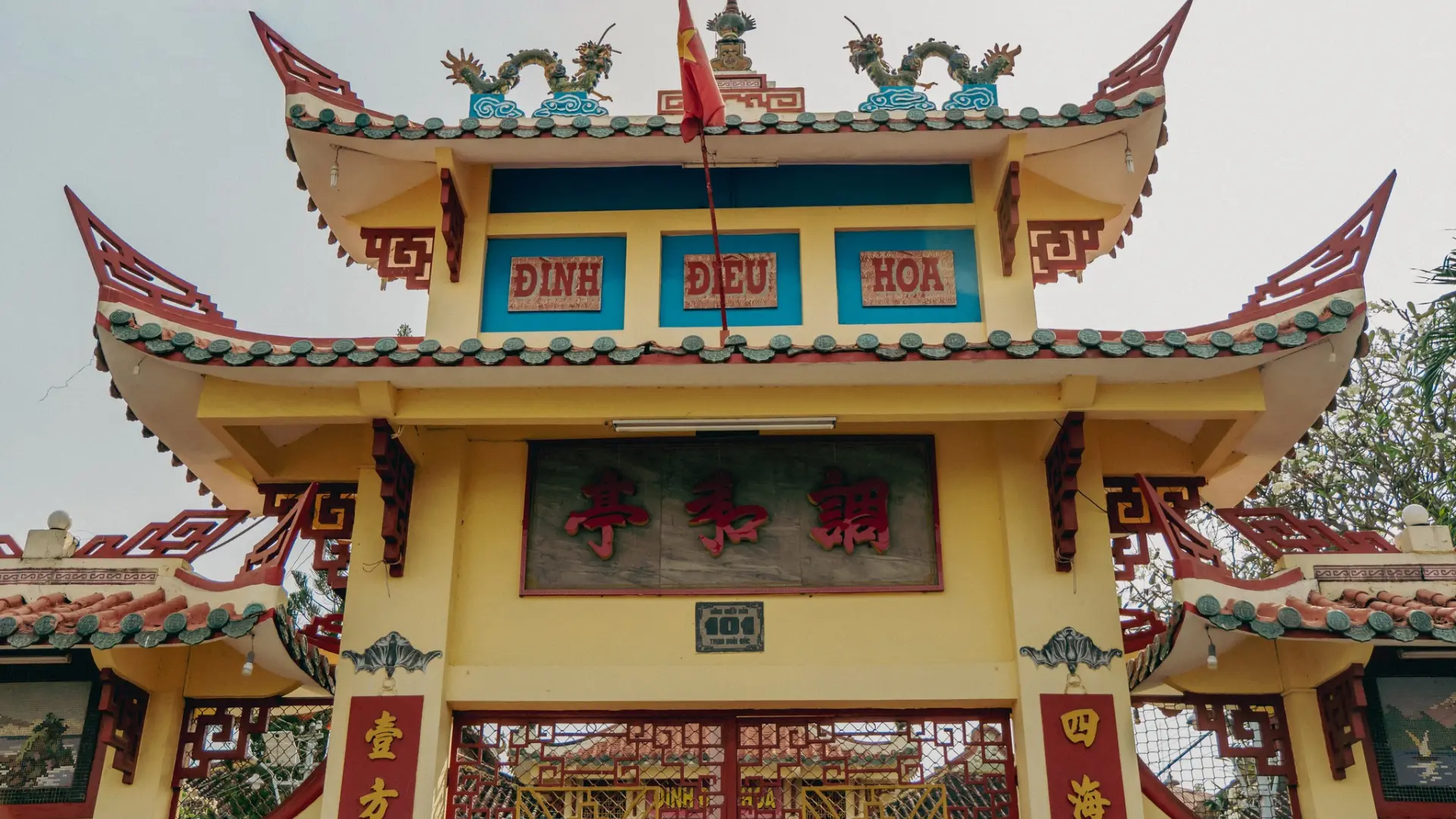
Experience the aesthetic balance of a multi-ethnic past. Admire the “double-layered” tiled roofs and the ironwood pillars that have stood for two centuries. The layout facilitates a flow of air that keeps the sanctuary cool, embodying the “rhythmic life” of traditional Southern design.
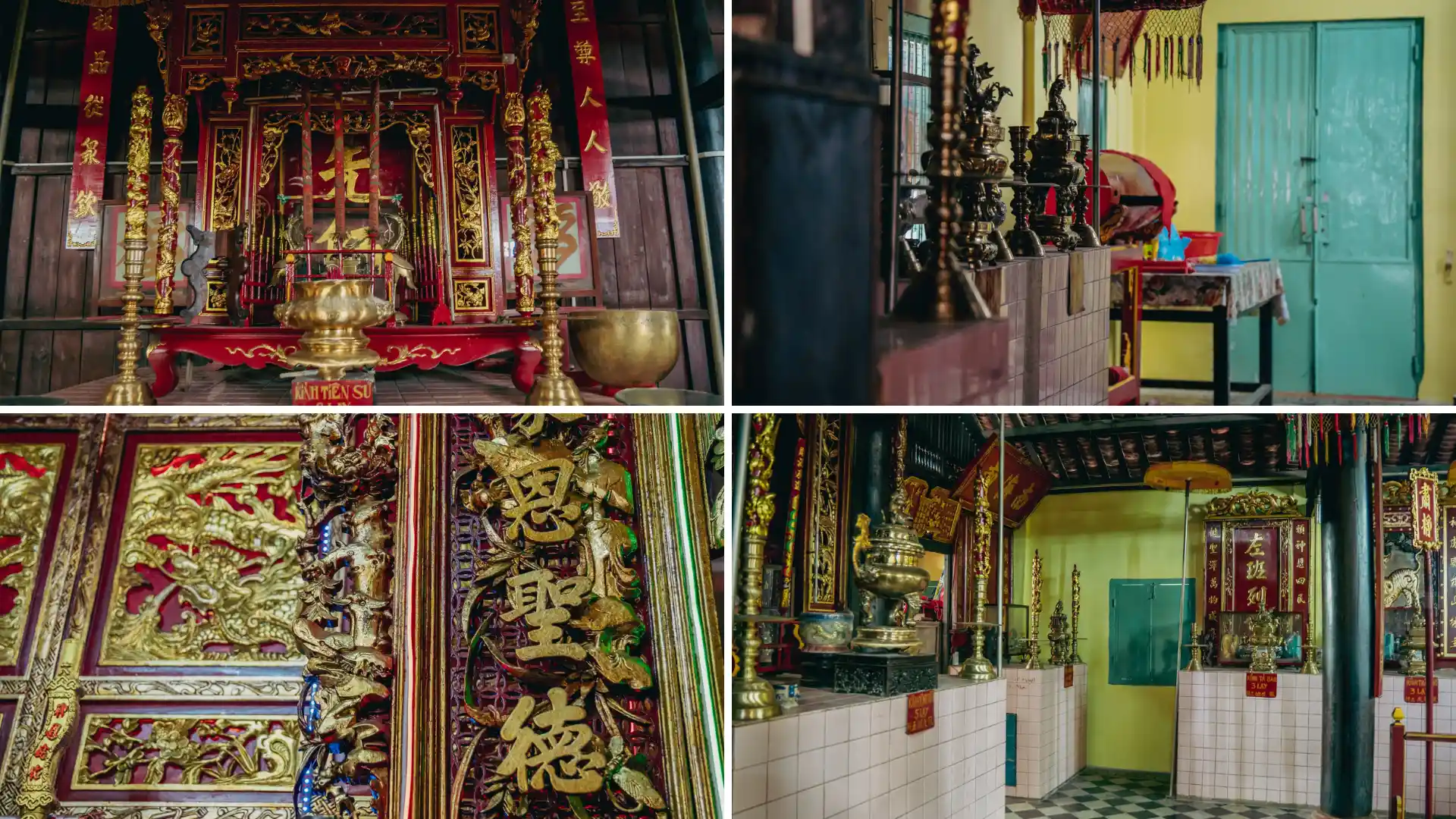
Tangible Cultural Heritages and Artistry
The cultural essence of Dieu Hoa is heavily embedded in its physical preservation. The temple is a sanctuary for tangible cultural heritages of Tien Giang, housing rare 18th and 19th-century artifacts, including collections of bronze urns, ancient Chinese ceramics, and ceremonial worshiping weapons.
The Hát Bội Heritage Room
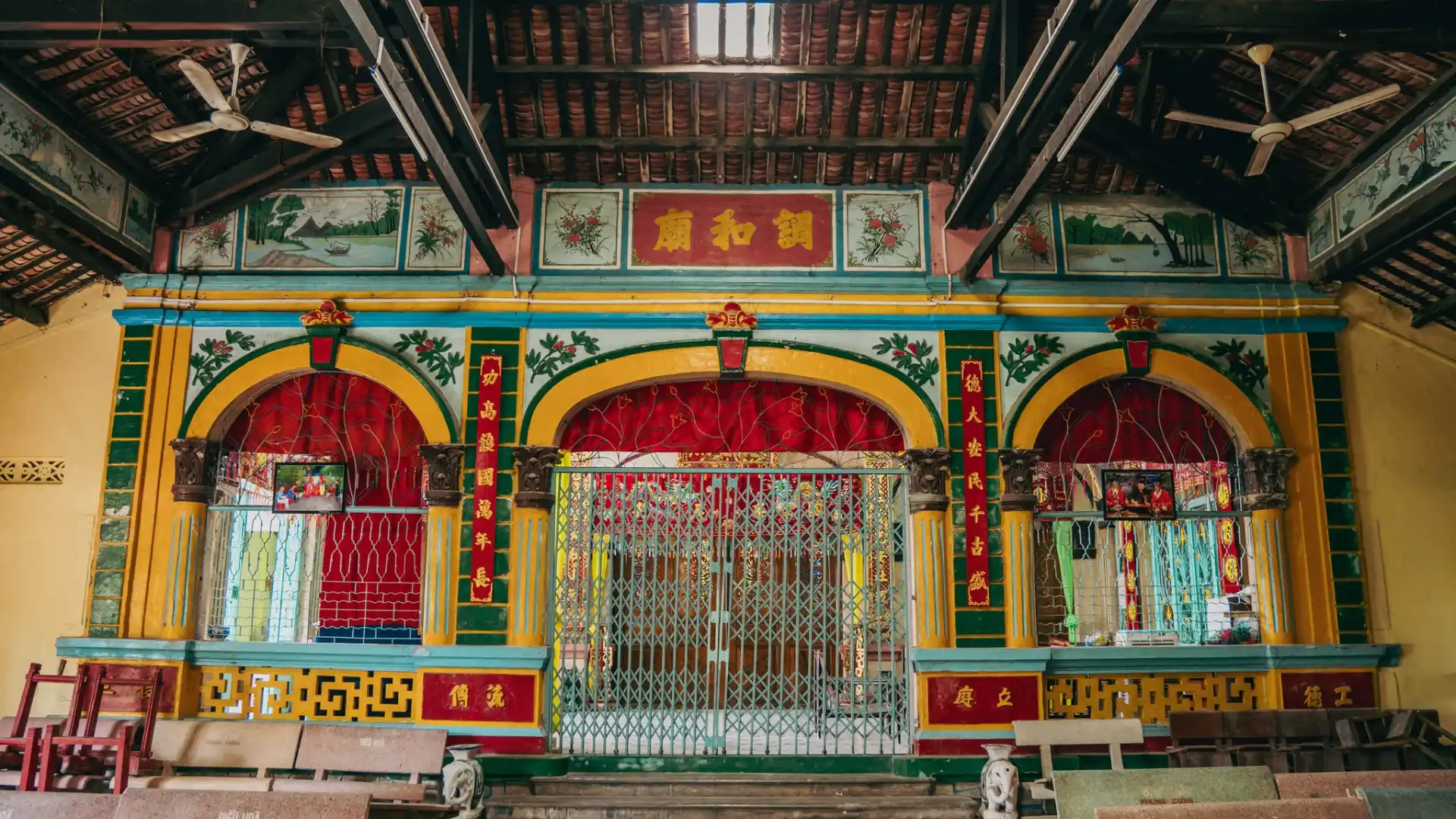
The front hall of the temple, historically known as the Vo ca, serves as a dedicated space for traditional performing arts. During the biannual Ky Yen festival, this specific area transforms into a lively stage for Hat Boi (classical Vietnamese opera). These vibrant nightly performances vividly recount ancient legends, serving a dual purpose: they entertain thousands of gathered locals and act as sacred cultural offerings to the deities.
Mindful Stillness in the Old Quarter
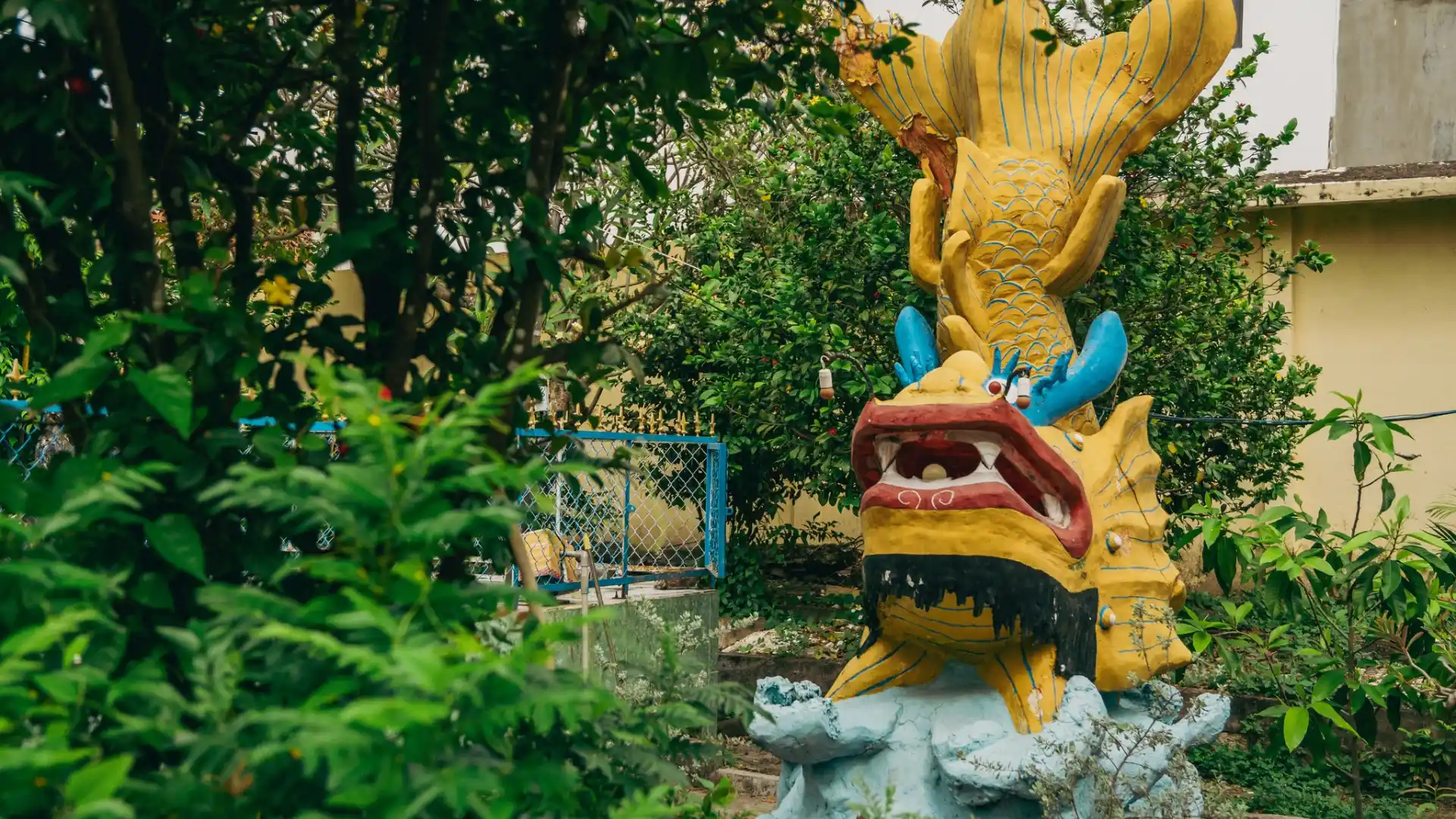
After exploring the interior, take a moment in the temple’s quiet front courtyard. Listening to the distant sounds of the My Tho Market while surrounded by ancient walls provides a unique moment of “mindful stillness,” allowing you to reflect on the layers of history beneath your feet.
Real Images of Dieu Hoa Temple from Mekong Smile
Combining Dieu Hoa Temple with Tien Giang’s Hidden Gems
Dieu Hoa Temple is a central piece of the My Tho heritage puzzle, surrounded by cultural and natural treasures. After your visit, take a 5-minute walk to the bustling My Tho Market to experience the “rhythmic life” of a traditional trade hub. For an architectural contrast, head to the 19th-century My Tho Cathedral, a majestic Gothic masterpiece. Explore the Tien Giang Museum right next door to understand the region’s historical evolution.
Continue your journey to the architectural “stars” of the city: the antique Buu Lam Pagoda or the world-famous Vinh Trang Pagoda, both showcasing the “vibrant living heritage” of Southern Buddhism. For a nature-filled afternoon, take a boat trip to the Four Islets (Dragon, Unicorn, Turtle, Phoenix) or visit the Dong Tam Snake Farm to witness local wildlife conservation. Spiritual seekers should not miss the Indian-style stupas of Truc Lam Chanh Giac Zen Monastery.
Our Signature Mekong Delta Tours
Experience the spiritual and riverine heart of the Delta through our curated journeys:

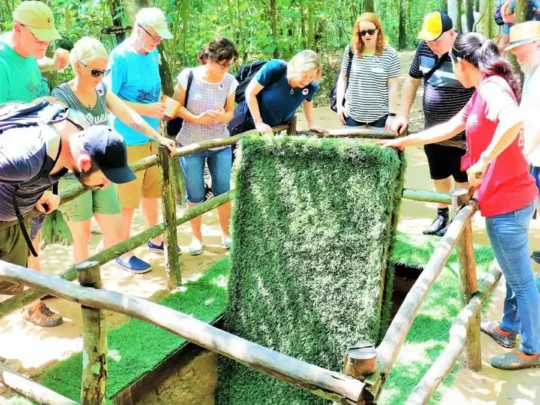
Attractions in Mekong Delta
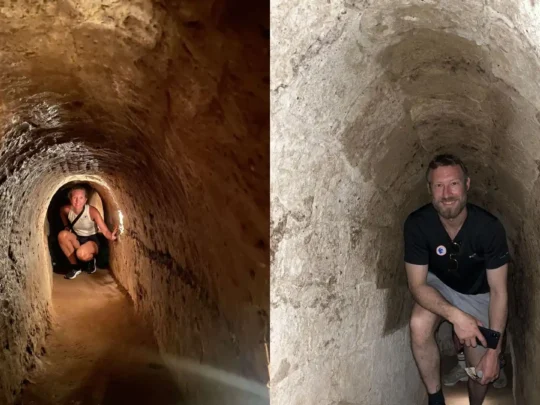
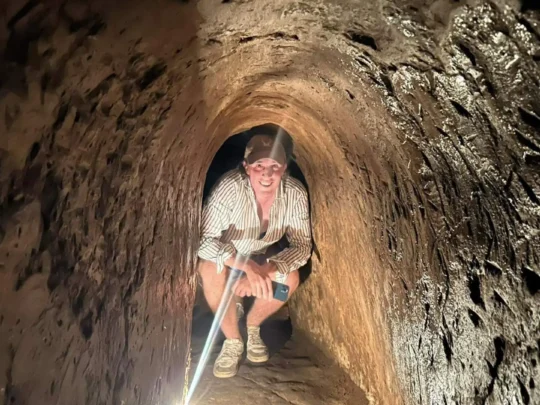
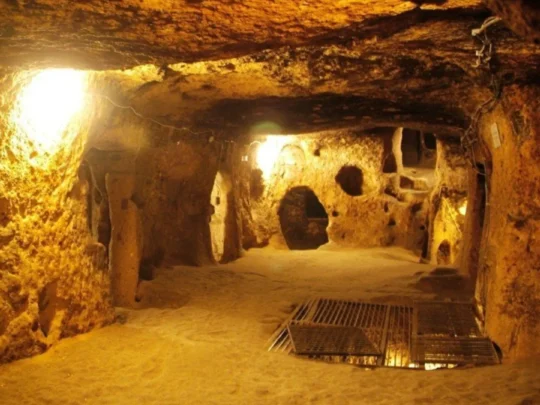
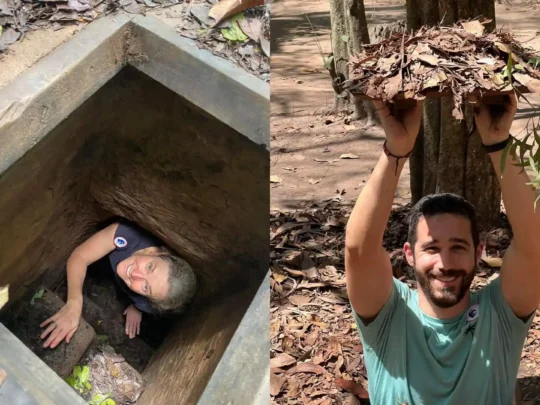
Half-day Cu Chi Tunnels Tour | Vietnam Underground History Expedition
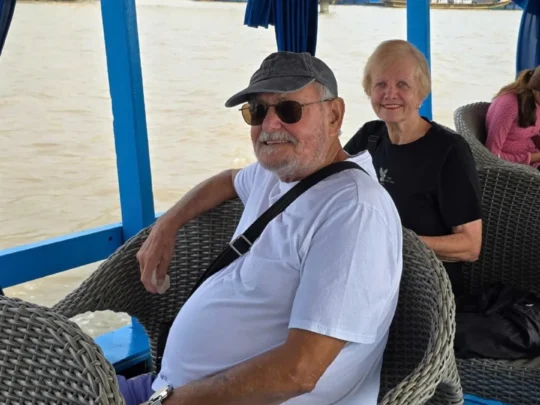
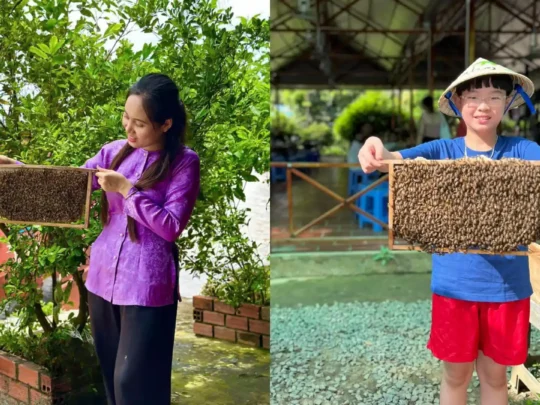
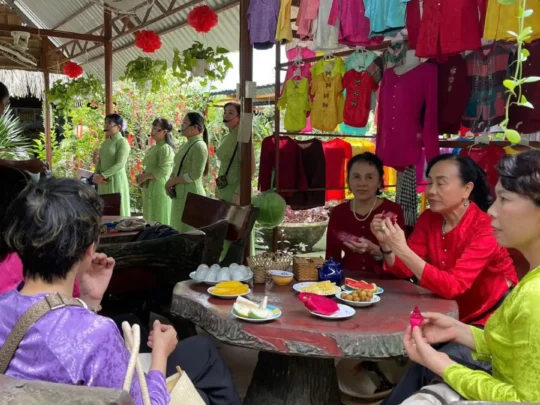
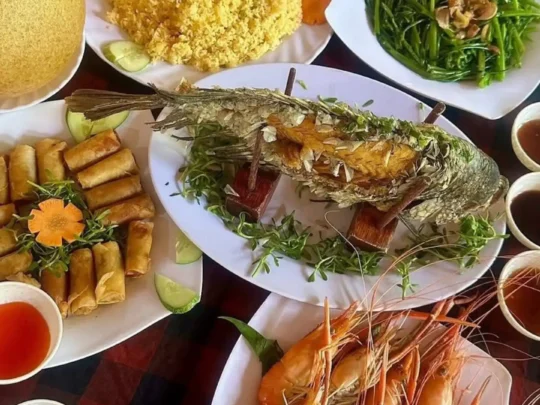
Attractions in Mekong Delta
Authentic My Tho Mekong Delta Tour: Two Islands for Half a Day
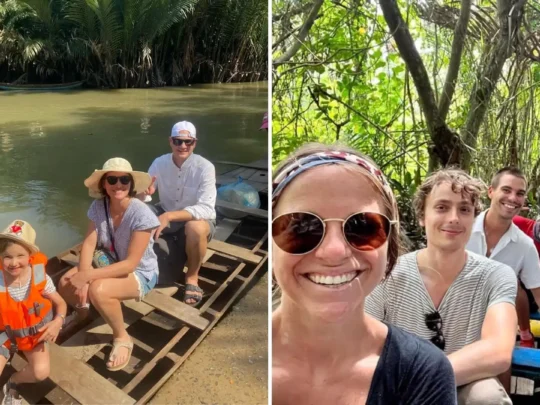
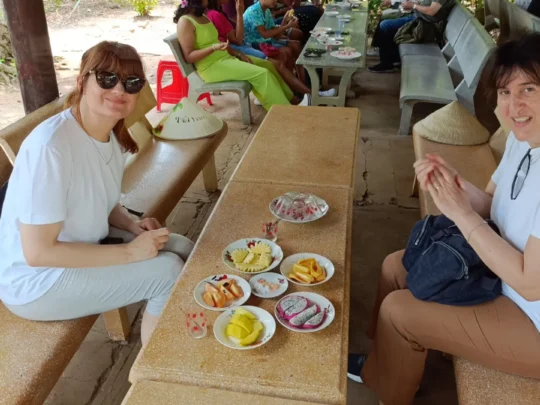
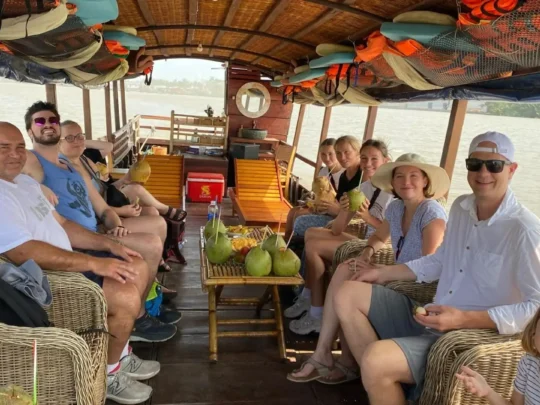
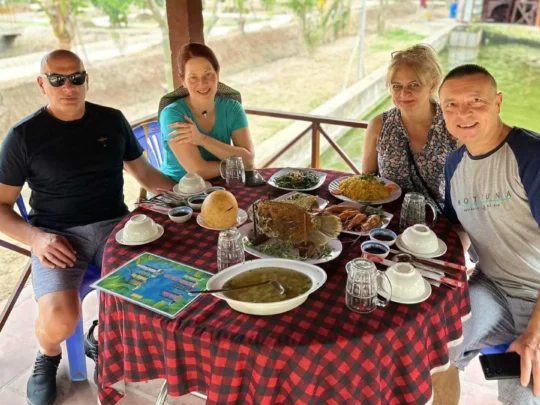
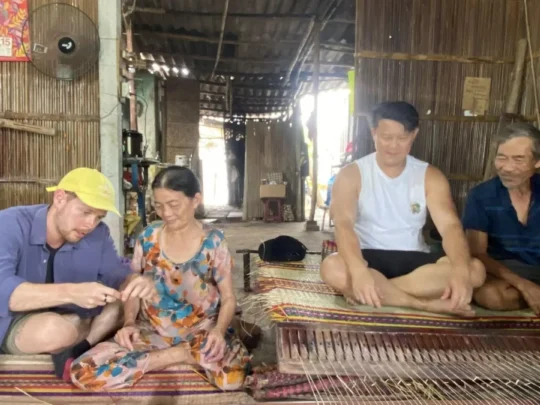

Attractions in Mekong Delta
Mekong Delta 2 Day Tour from Ho Chi Minh City: My Tho – Ben Tre – Can Tho
Attractions in Mekong Delta

Attractions in Mekong Delta
Attractions in Mekong Delta
An Binh Islet Tour | A Scenic Mekong River Escape from Can Tho
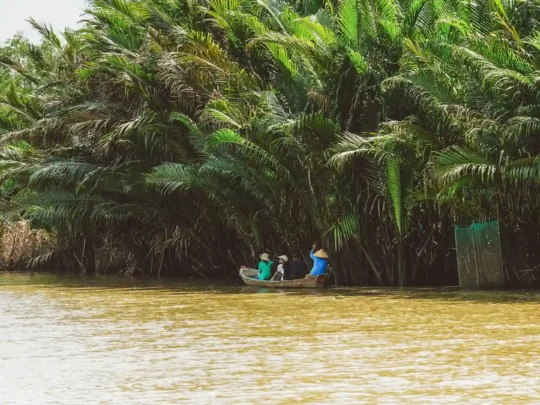
Attractions in Mekong Delta
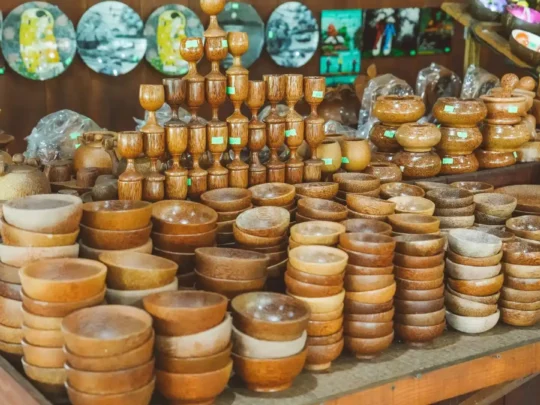
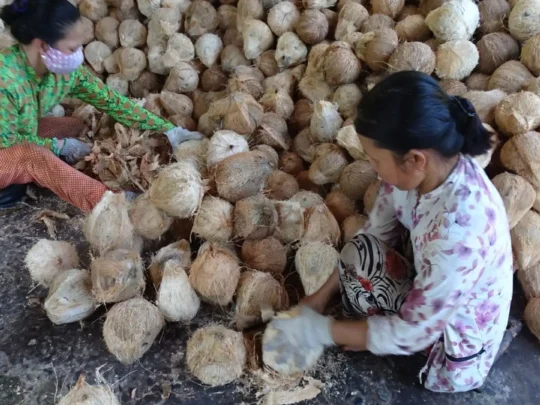
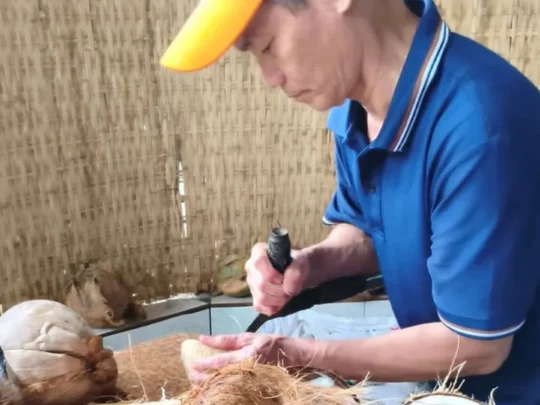
Ben Tre Tour from Can Tho: River Life, Coconut Workshops & Village Crafts
Our top 5 best authentic Mekong Delta Tours: My Tho Mekong Delta Tour, Ben Tre Tour, Cu Chi Tunnels Tour, Mekong Delta Tour 1 Day, Mekong Delta Tour Cai Be
Ready for the Real Mekong? Book Your Authentic Tour Today
Planning Your Mekong Trip?
Get a free, personalized itinerary from our local experts in under 120 minutes.

Get a Free Consultation Leave your contact, we handle the rest.
Frequently Asked Questions about Dieu Hoa Temple
Where is Dieu Hoa Temple located?
The temple is at 101 Trinh Hoai Duc Street, Ward 2, My Tho City. It’s a central 5-minute walk from My Tho Market. Mekong Smile provides private transfers that connect this historic site with nearby riverfront attractions for a seamless walking tour.
Who is worshipped at Dieu Hoa Temple?
The temple primarily worships the Tutelary God (Thanh Hoang Bon Canh) and the village pioneers (Nguyen Van Kien, Nguyen Van Truoc, and Truong Van An). Mekong Smile experts will guide you through the altars to explain the Vietnamese tradition of honoring those who reclaimed the land and founded the community.
What is the most significant event held at the temple?
The biannual Ky Yen Festival (16th-18th of the 2nd and 10th lunar months) is the highlight. Mekong Smile guides can take you there to witness community rituals and traditional Hát Bội (classical opera) performances that bring the temple’s history to life.
Can I see Hát Bội (Classical Opera) performances anytime?
Hát Bội is typically performed during the Ky Yen festivals. However, the temple houses a dedicated Hát Bội heritage room where you can see costumes and artifacts year-round. Mekong Smile can arrange specialized tours that focus on this “vibrant living heritage” for art enthusiasts.
Why is Dieu Hoa Temple considered unique?
It was originally both a worship site and a rest stop for Nguyen Dynasty mandarins. Experts from Mekong Smile help you decode the rare 18th-century artifacts and the Hát Bội heritage room, showcasing a cultural pulse found nowhere else in the city.
What are the opening hours and entrance fees?
It is open daily from 07:30 AM – 11:30 AM and 01:30 PM – 05:30 PM. Entry is free. Mekong Smile recommends visiting in the early morning to catch the “mindful stillness” of the temple before the city gets busy.
Is there a dress code for visiting Dieu Hoa Temple?
As this is a sacred communal house, visitors should wear modest attire (covering shoulders and knees). Your Mekong Smile guide will ensure you are briefed on local etiquette to maintain the “resilient spirit” and respect required within the sanctuary.
How long does a typical visit take?
A visit usually lasts about 45 minutes to 1 hour. Mekong Smile often integrates Dieu Hoa as a cultural deep-dive within our broader My Tho itineraries, balancing it with visits to Vinh Trang Pagoda or Phoenix Island.
Can I combine this visit with other My Tho landmarks?
Yes. It is very close to the My Tho Museum and My Tho Cathedral. Mekong Smile specializes in heritage circuits that allow you to explore these “hidden gems” of the old quarter alongside the more famous river islets.
