
 Can Tho
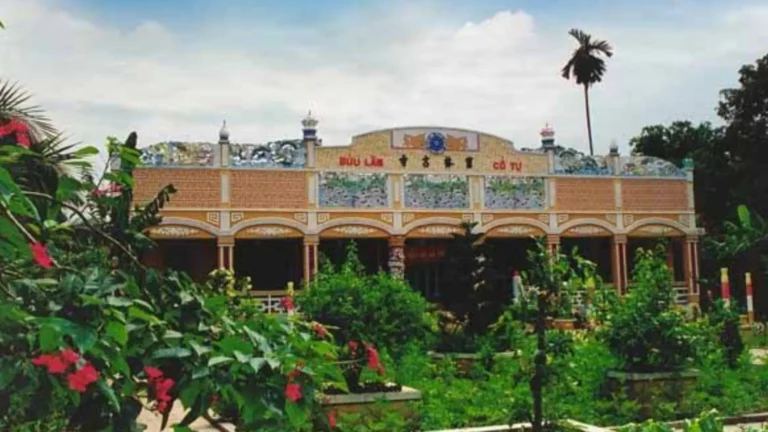
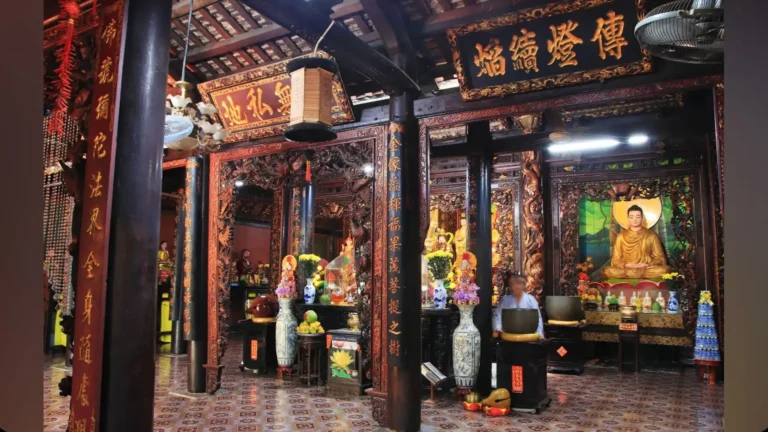
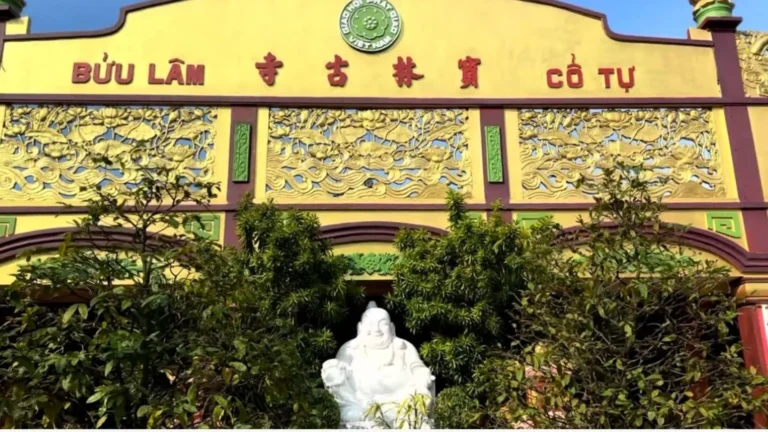

Just about 2km from the bustling My Tho Market and the central riverfront, Buu Lam Pagoda welcomes travelers to step back in time at one of Tien Giang’s oldest and most historically significant Buddhist sanctuaries. Dating back to 1803, this deeply nostalgic and sacred temple offers a remarkable blend of 19th-century architectural beauty and profound patriotic history, featuring intricate century-old wood carvings and a peaceful Lumbini garden.
In this complete Buu Lam Pagoda travel guide, you’ll discover everything you need to plan your visit with confidence: how to get there, the best time to experience its serene morning rituals, the unique “Nội Công Ngoại Quốc” layout to admire, and how to include this uncrowded retreat in your Mekong Delta itinerary.
Lastest update by Hai Yen Nguyen at Mekong Smile | Official Tien Giang Travel Guide
Overview of Buu Lam Pagoda
A Glance at Buu Lam Pagoda
- Location: 22 Nguyen Trung Truc Street, Ward 3, My Tho City, Tien Giang Province.
- Site Type: Ancient Buddhist Pagoda and National Historical-Cultural Relic.
- Significance: One of Tien Giang’s oldest and most historically significant pagodas, dating back to 1803.
- Atmosphere: Deeply nostalgic, quiet, and sacred, characterized by dark precious wood and the scent of aged incense.
- Key Highlights: The classical “Nội Công Ngoại Quốc” layout, a sacred collection of 40 ancient Buddha statues, and rare “Hoành Phi” (gold-leafed horizontal lacquered boards).
- Opening Hours: 07:30 AM – 11:30 AM and 01:30 PM – 05:30 PM (Daily).
- Entrance Fee: Free (Donations welcome).
- Average Visit Duration: 45 minutes – 1 hour.
The history of Buu Lam Pagoda
Originally established in the early 18th century by a Buddhist nun, the temple was expanded in 1742 to accommodate a growing number of followers. After a period of abandonment following the nun’s passing, it was restored in 1803 by Monk Tu Lam with funding from Mrs. Pham Thi Dat, a wealthy local Buddhist. The monk officially named it Buu Lam to promote the Rinzai Zen sect.
Beyond its religious importance, Buu Lam Pagoda holds significant historical value. From 1926 to 1945, it served as a secret revolutionary base for notable patriots, including Nguyen Sinh Sac (President Ho Chi Minh’s father). In 1945, the pagoda heroically donated its communal bell to the revolution to cast weapons for the resistance against French colonialists.
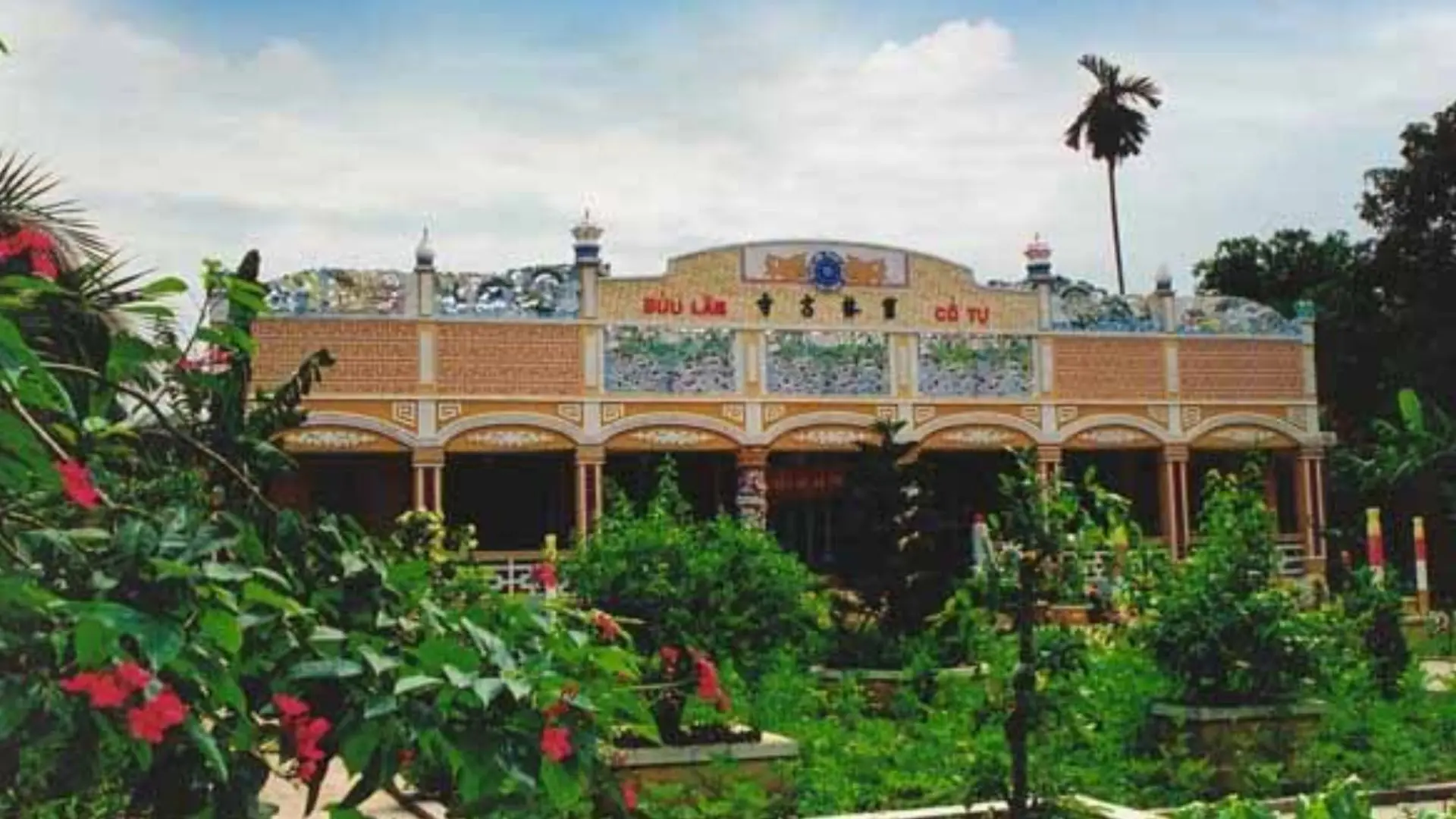
Video of Buu Lam Pagoda
To witness the delicate artistry of the gold-leafed carvings and the serene morning rituals, watch a short cinematic tour:
What Makes Buu Lam Pagoda Special?
What makes Buu Lam Pagoda truly special is its remarkable blend of 19th-century architectural beauty, deep spiritual tranquility, and profound patriotic history. Originally rebuilt with precious rosewood in 1803, the temple boasts a unique three-door gate designed like an ancient castle and is adorned with intricate, century-old wood carvings featuring the four spirits and dragon motifs.
Unlike more crowded tourist destinations, it provides a serene, uncrowded atmosphere surrounded by green coconut trees and a peaceful Lumbini garden, making it an ideal retreat for mindfulness and meditation
“With Mekong Smile experts, you will discover that Buu Lam is a library of ancient literature. We decode for you the Parallel Sentences, Lacquered Boards and why the use of Red and Gold here is technically different from Chinese styles” – Mr. Jimmy, Expert Guide in Mekong Smile
Planning Your Visit to Buu Lam Pagoda
Location on Map
- Exact Address: 162B Nguyen Van Giac, Ward 3, My Tho City, Tien Giang Province.
- Proximity: The pagoda is located in a quiet area of Ward 3, just about 2km from the bustling My Tho Market and the central riverfront.
- Distance: Approximately 70km from Ho Chi Minh City and 100km from Can Tho.
How to get to Buu Lam Pagoda from Ho Chi Minh City
- By Car/Private Transfer: From HCMC, take the Trung Luong Expressway. Once in My Tho, follow the city signs to Ward 3. Buu Lam is nestled in a residential street, offering a more “hidden gem” feel compared to larger sites.
- By Motorbike: The ride from the My Tho riverfront takes less than 10 minutes. The route passes through the older residential quarters of the city, allowing you to observe the “rhythmic life” of the local community.
- The Mekong Smile Way: We can integrate Buu Lam as a contemplative second stop in our Mekong 2 day Tour, following a visit to Vinh Trang Pagoda.
Opening Hours and Entrance Fee
- Opening Hours: 07:30 AM – 11:30 AM and 01:30 PM – 05:30 PM (Daily). Like many traditional sites, the monks rest during the midday hours, so we recommend arriving in the early morning for the most peaceful experience.
- Entrance Fee: Free. There is no ticket required. Mekong Smile suggests a small donation in the merit boxes to support the preservation of the 200-year-old wood structures.
Best Time to Visit
- Golden Hour: 08:00 – 10:00 AM is ideal for catching the light reflecting off the dark wood interiors and enjoying the morning chanting.
- Cool Breezes: The temple’s ancient layout provides a perfect “mindful stillness” retreat in the early afternoon, as the thick wood and stone keep the interior naturally cool.
The Architecture of Buu Lam Pagoda
Overall Architecture and the Three-Door Gate
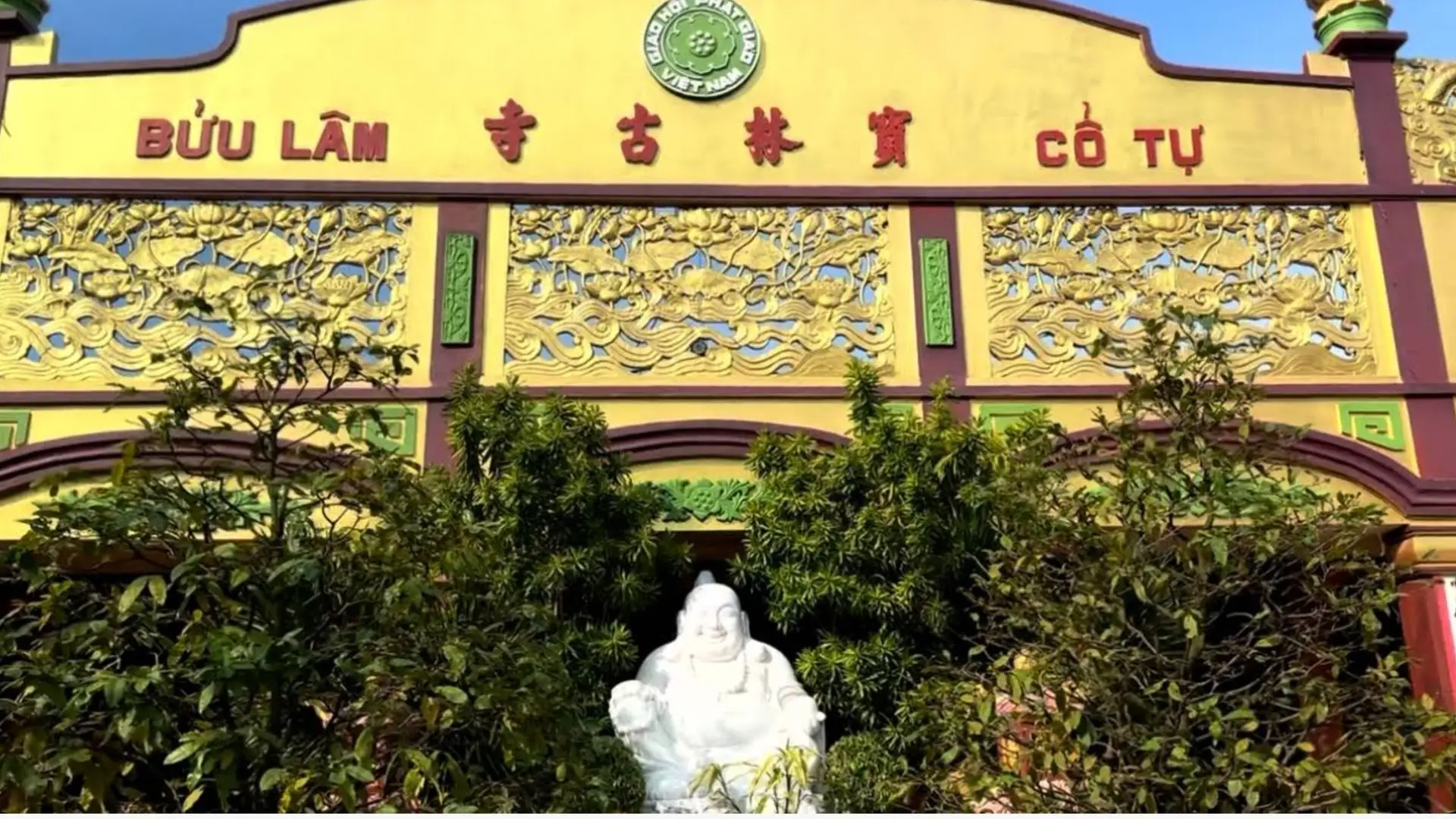
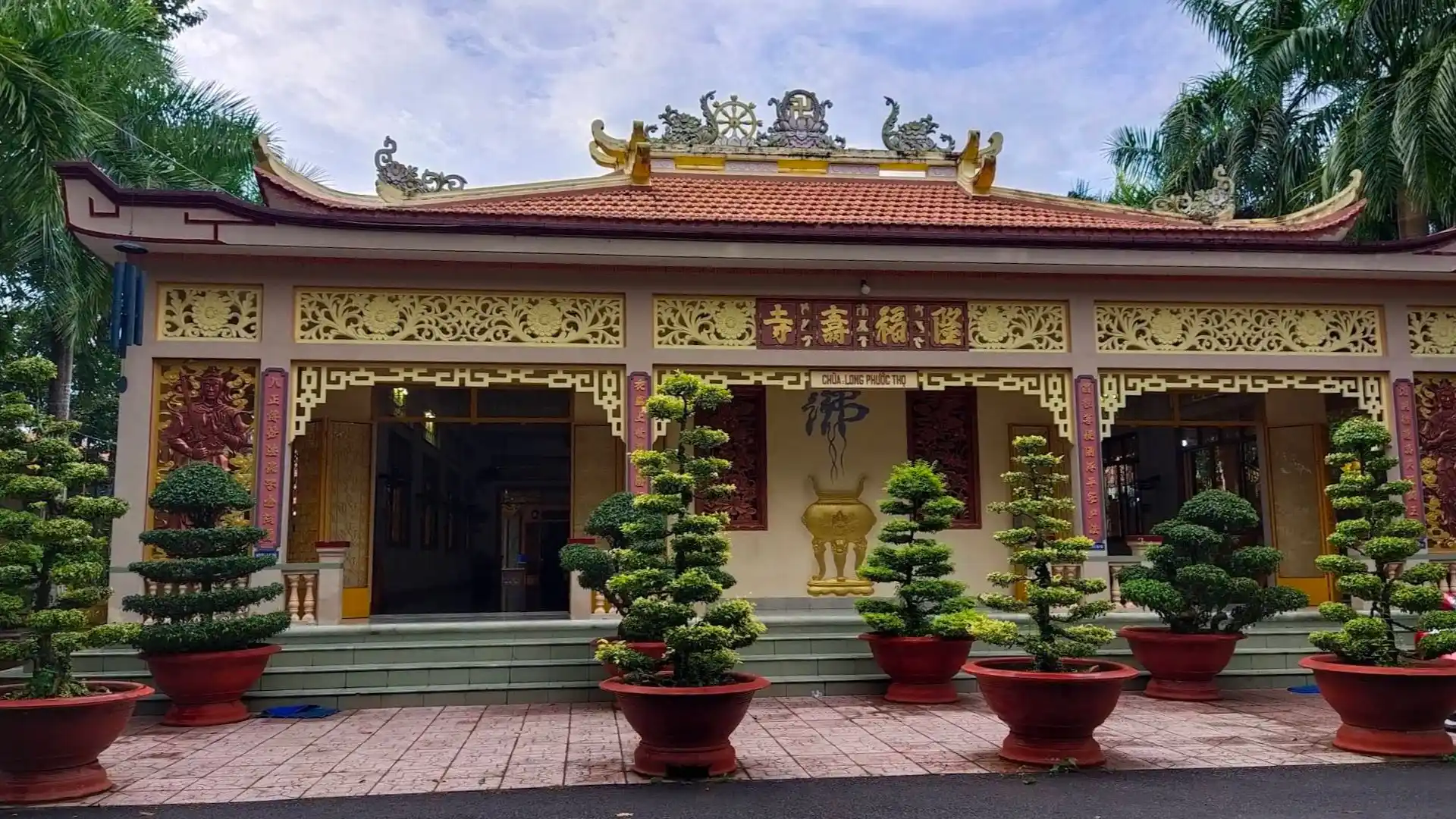
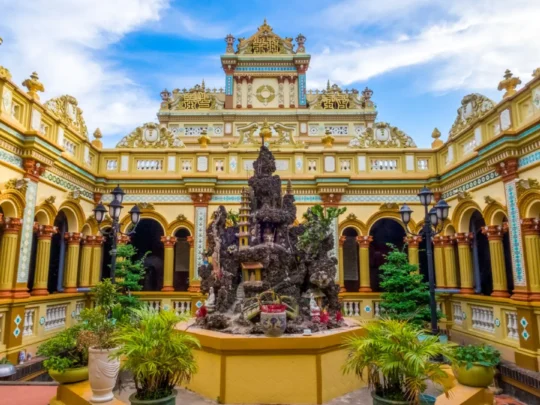
Buu Lam Pagoda was built in the Northern Buddhist style and uniquely designed in the shape of the Chinese character for “mouth”. The entrance features a three-door gate resembling an ancient castle, which symbolizes the three doors of Buddhism: the Void Gate, the Signless Gate, and the Liberation Gate.
The Courtyard and Lumbini Garden
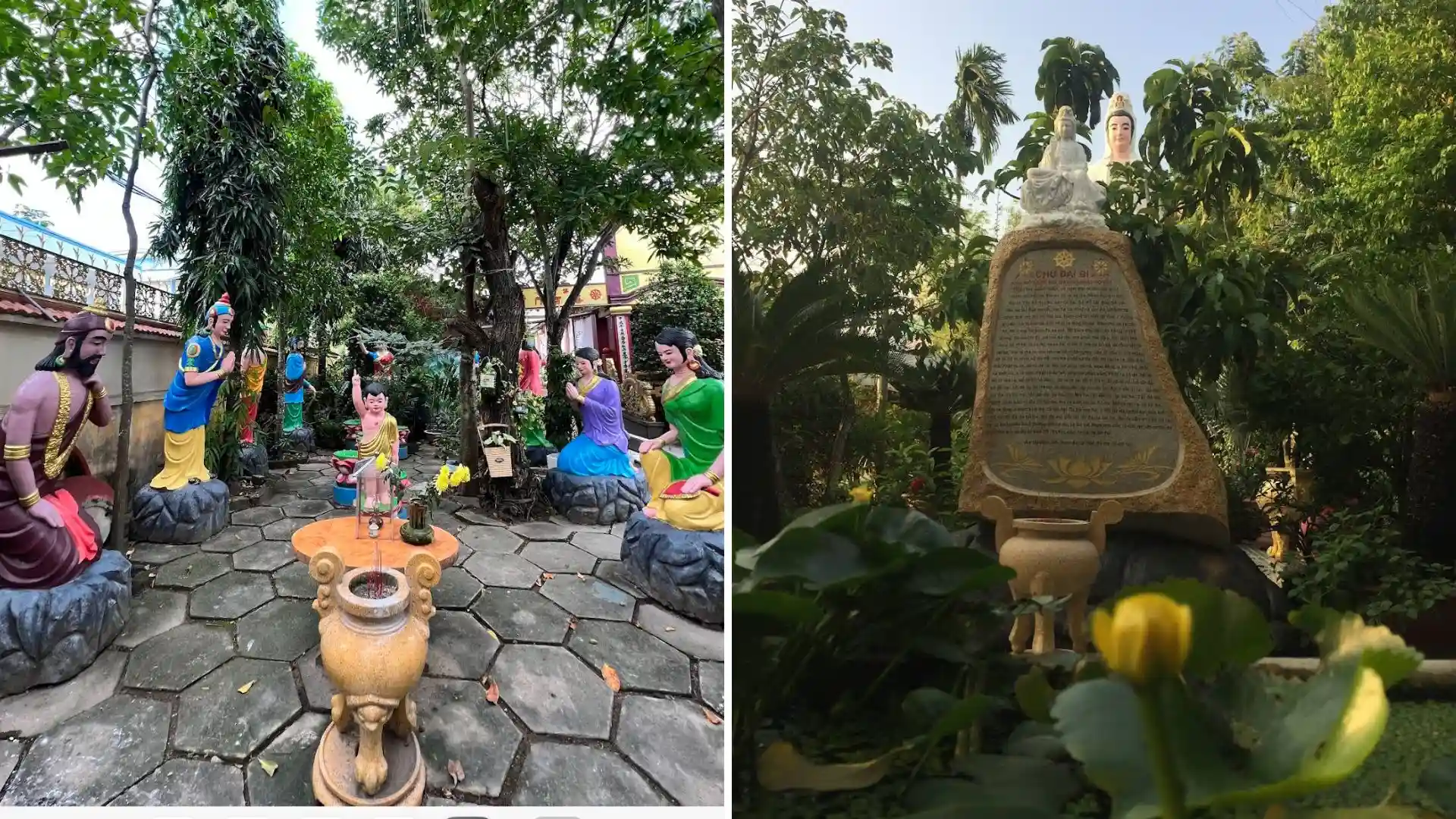
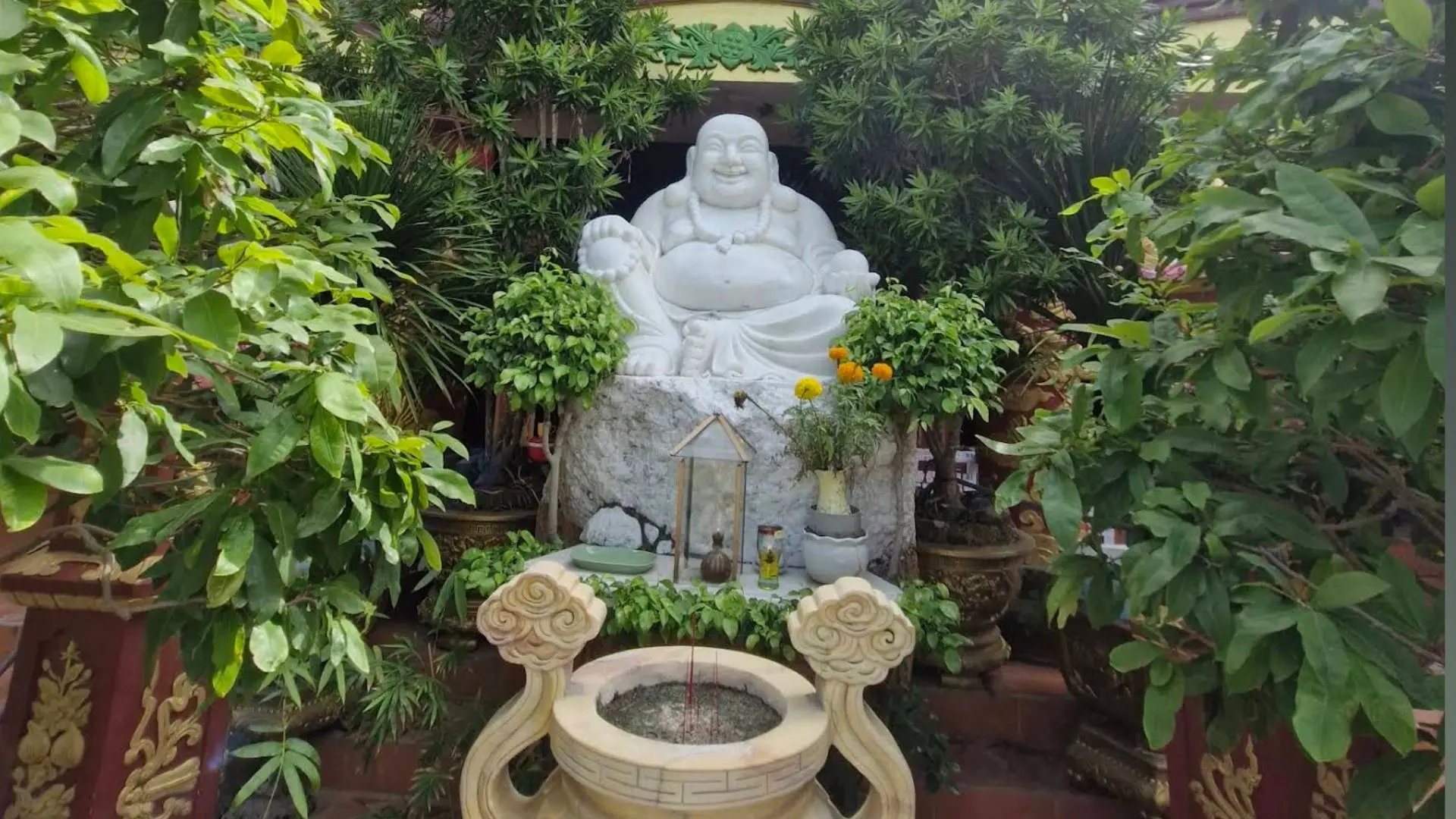
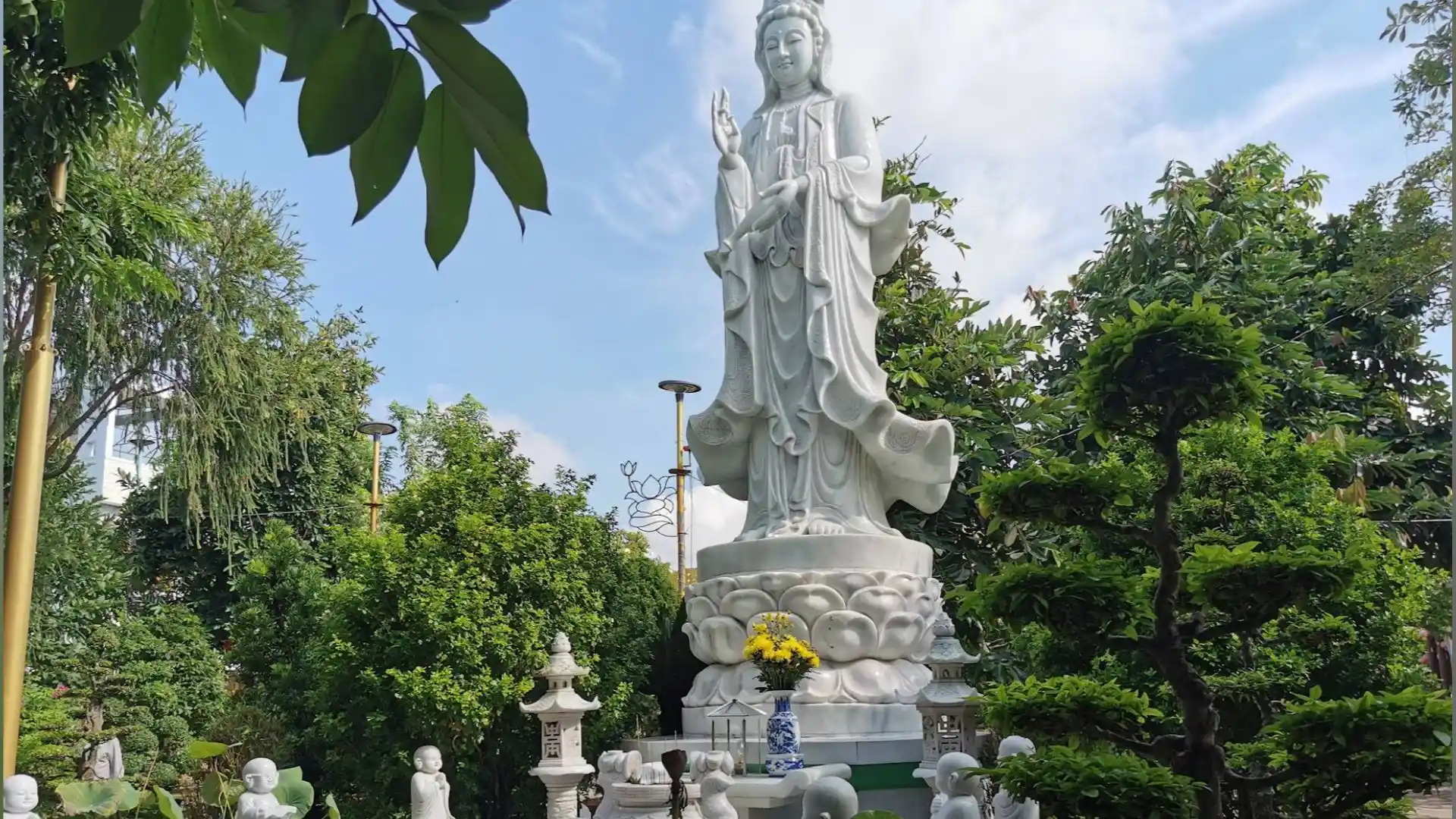
The spacious courtyard is shaded by ancient trees and houses the Lumbini garden, which recreates significant moments in the Buddha’s life. This peaceful area also features various solemn statues, most notably the statue of the Buddha when he passed away.
Structure and Design of the Main Hall
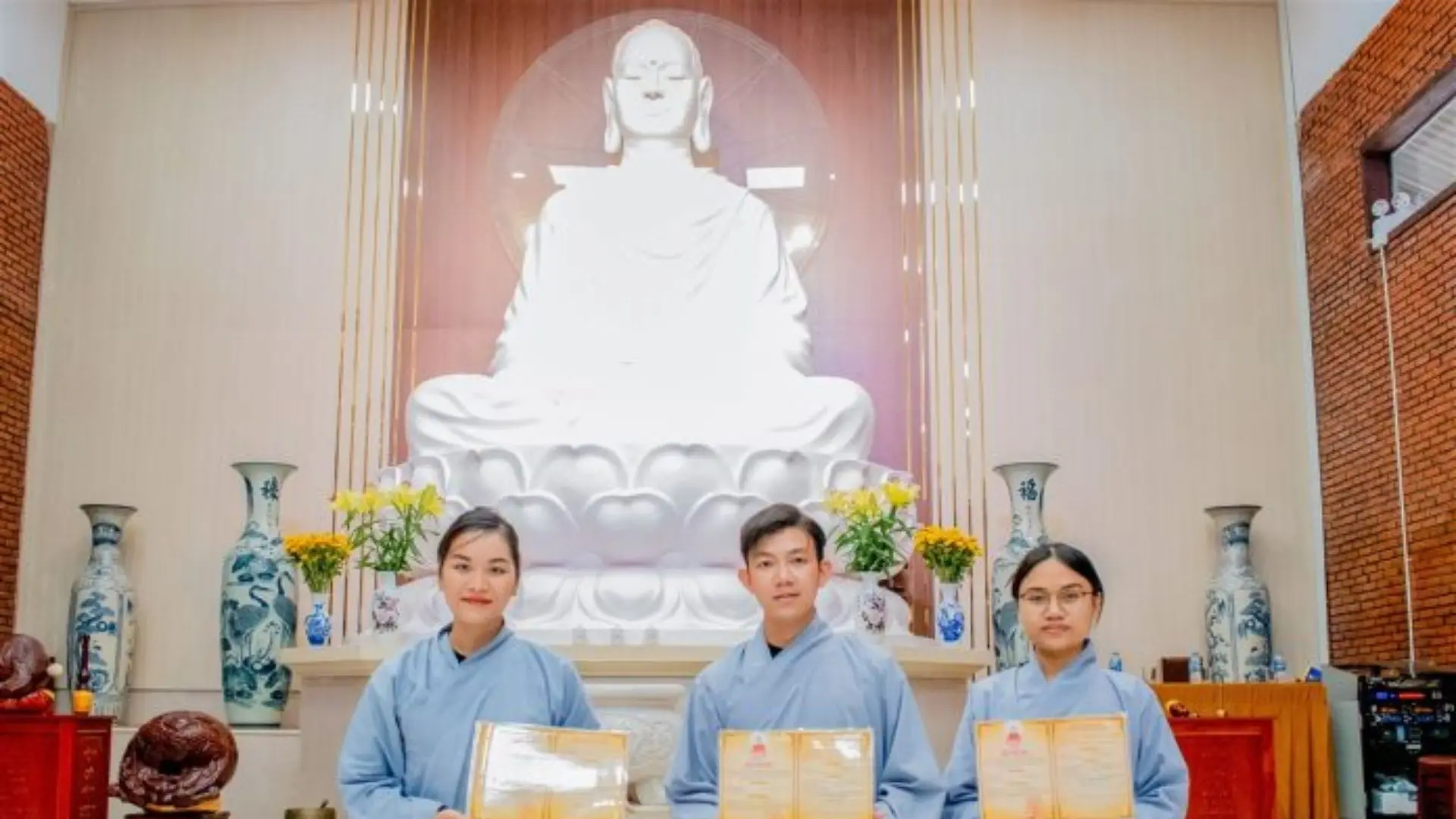
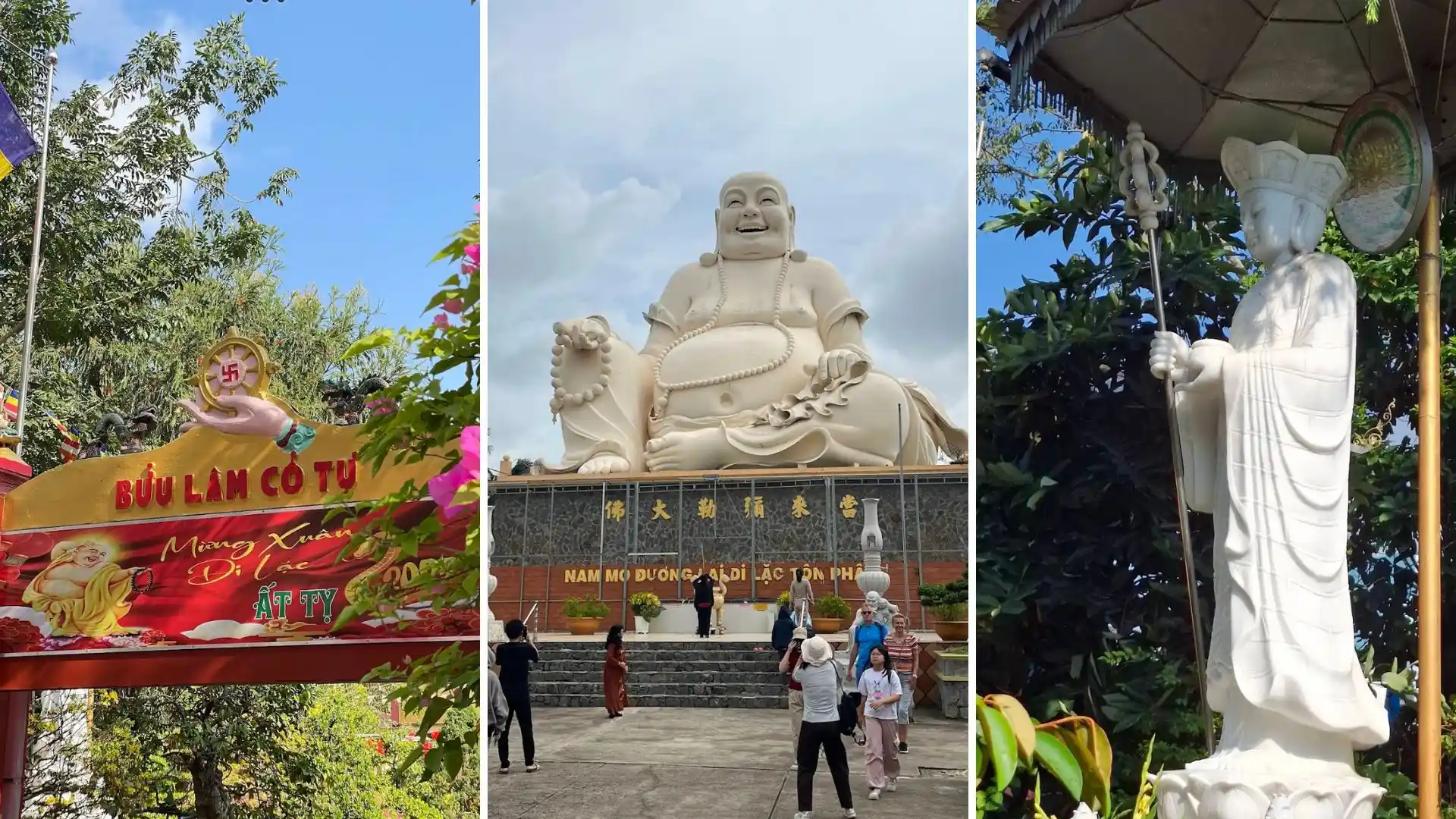
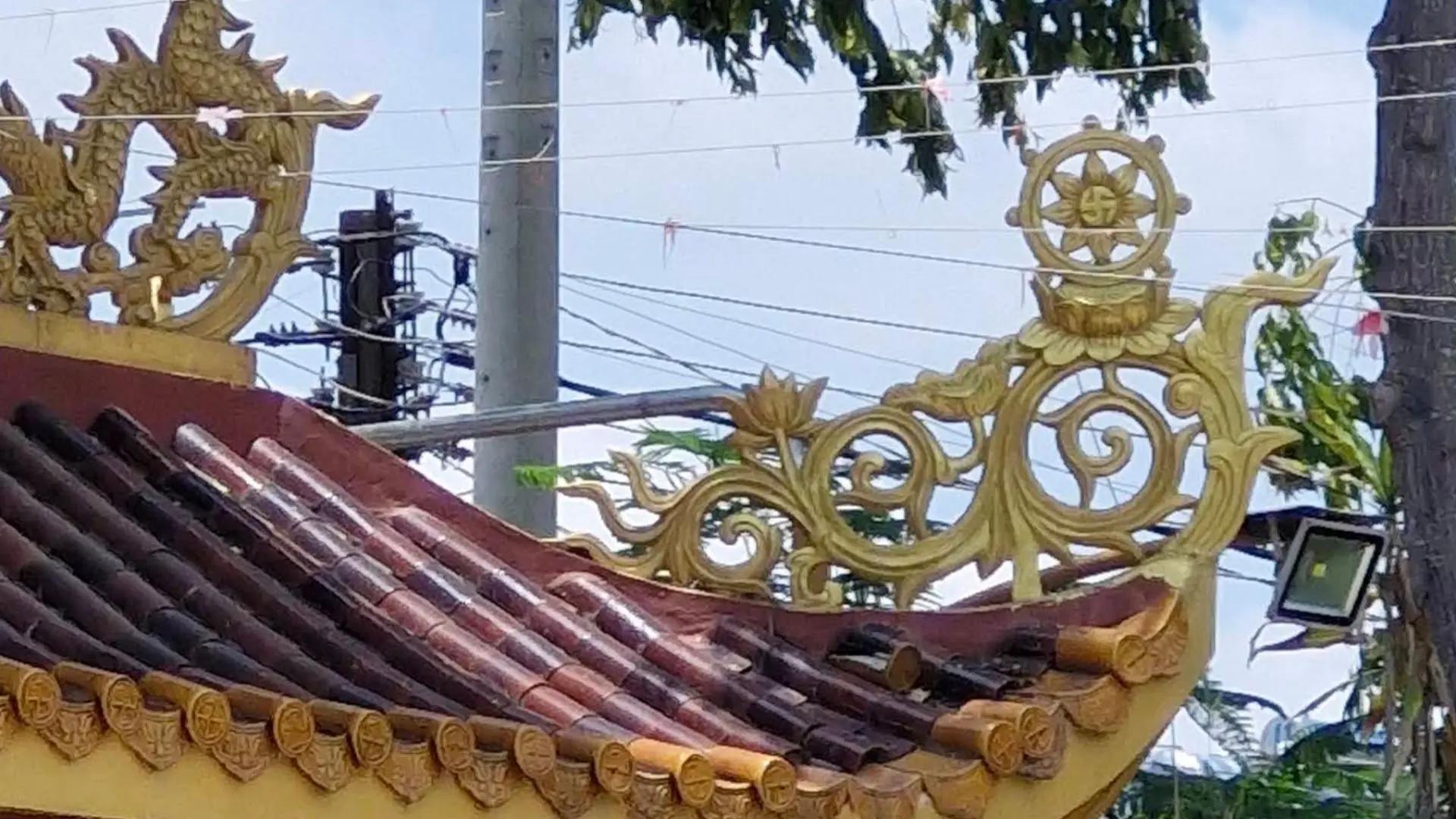
Set on a 1-meter-high platform spanning 987 square meters, the main building features a two-layered fish-scale tile roof. At the center of the main hall sits a kind-faced statue of Amitabha Buddha, surrounded by numerous statues of Buddhas, Bodhisattvas, and Arhats.
Wood Carving Art and Antiques
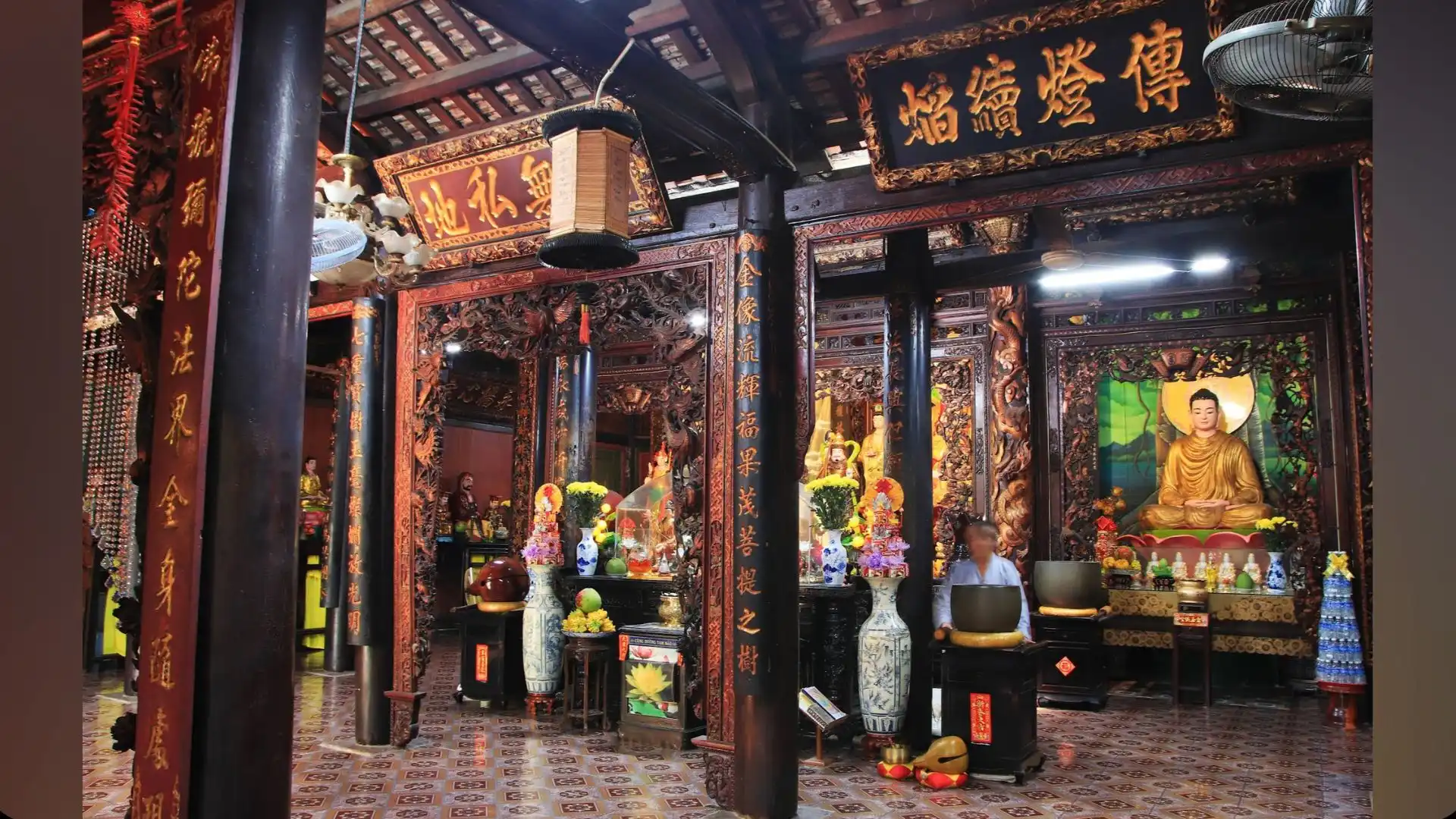
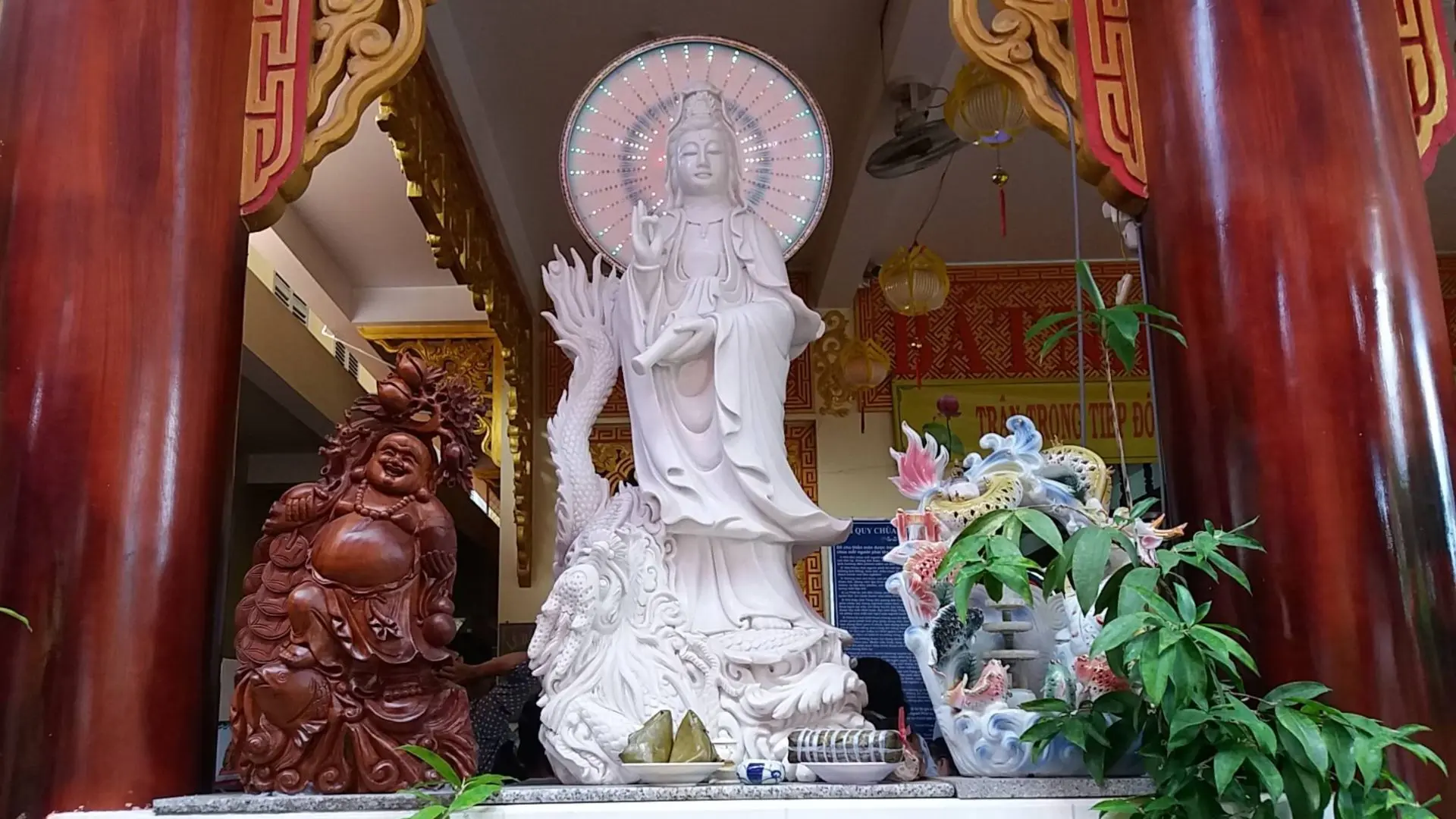
The interior is highly regarded for its elaborate wood carvings, including 9 sets of delicately crafted wooden covers and a vividly carved 20-centimeter-thick wooden background board created by artisans over 100 years ago. The pagoda also preserves priceless antiques, such as gilded Buddhist couplets, ancient Buddha statues from the 18th and 19th centuries (including one from 1802), and a horizontal lacquered board from 1909.
Real Images of Buu Lam Pagoda from Mekong Smile
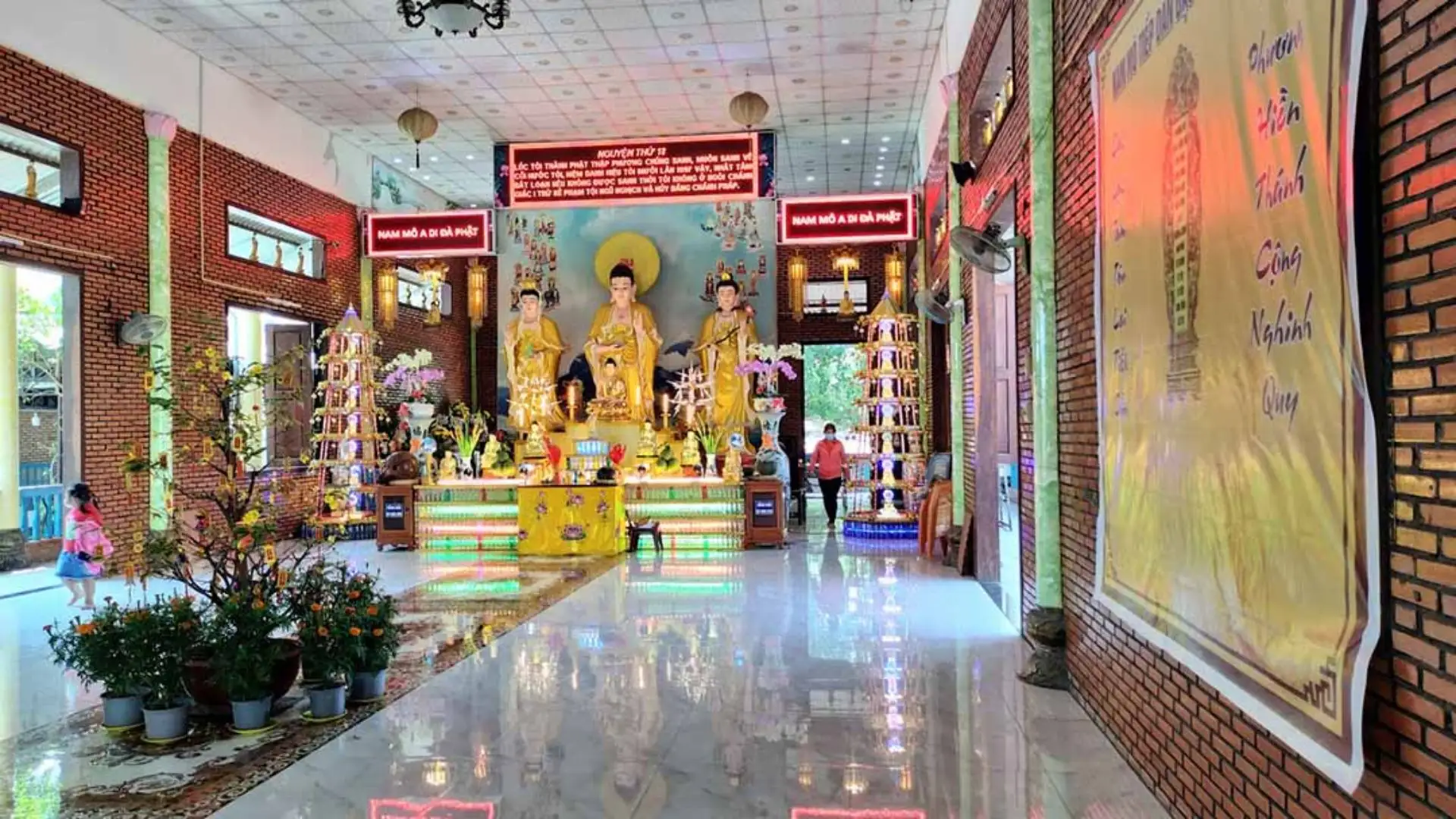
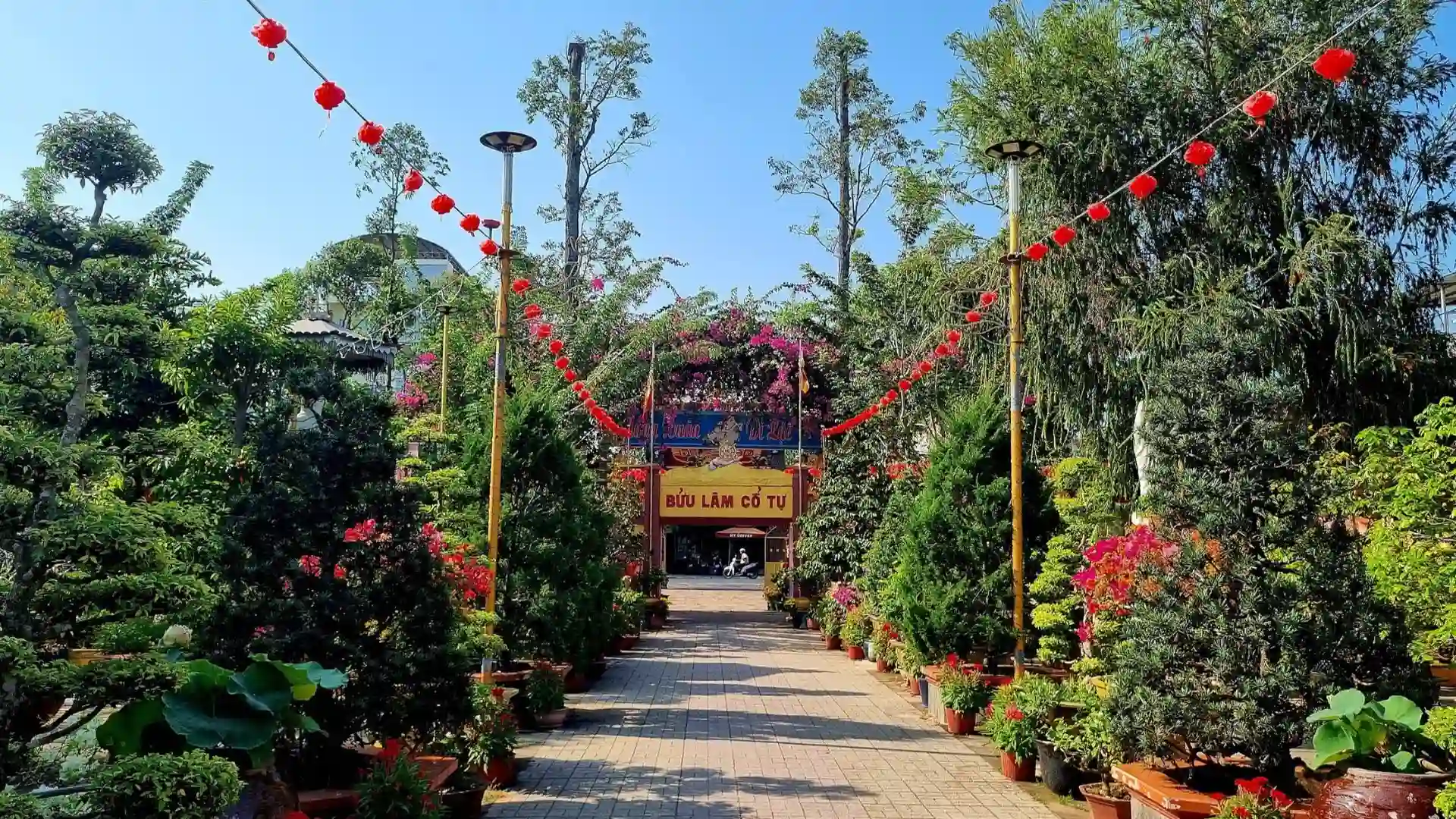
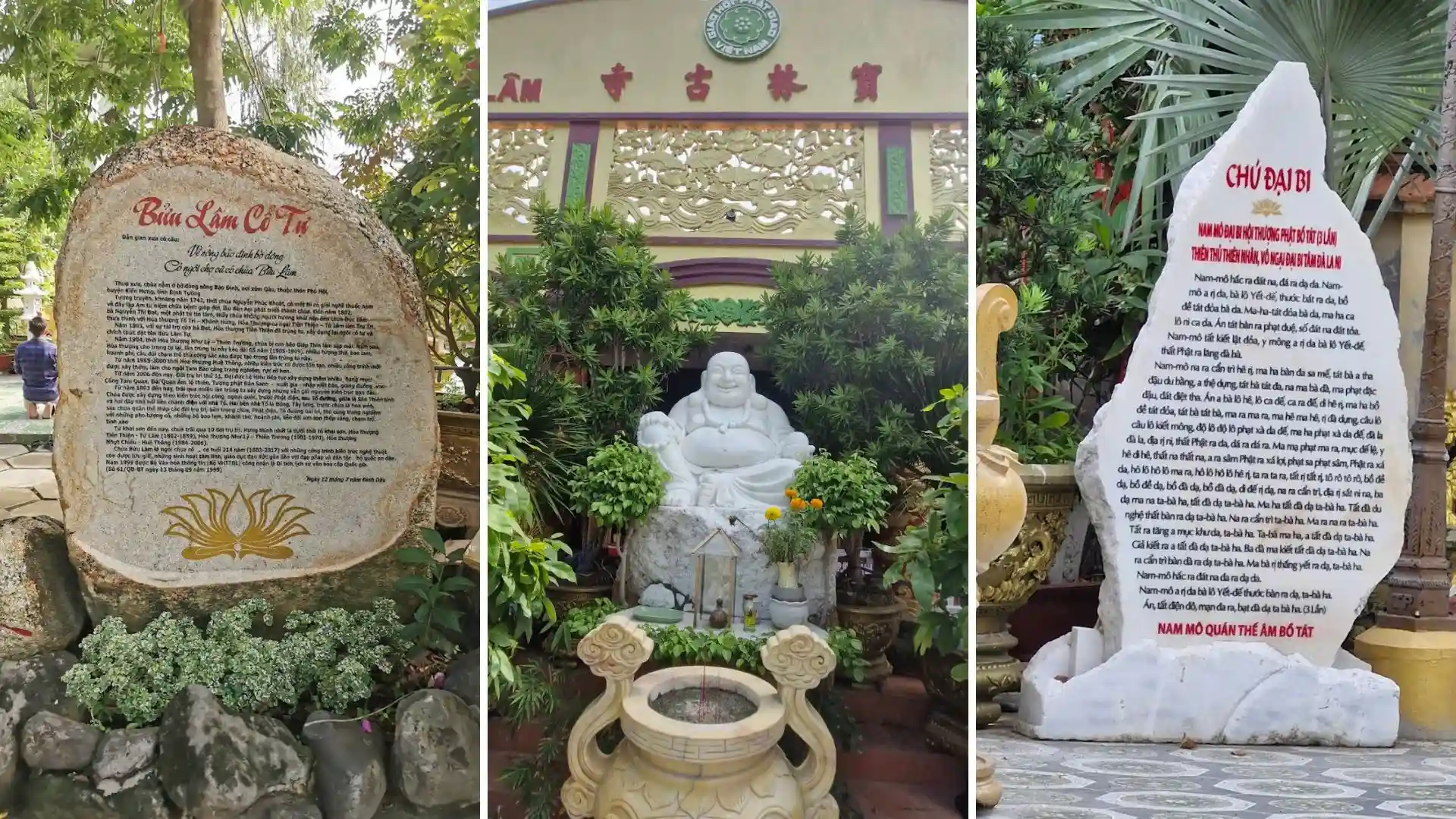
Combining Buu Lam Pagoda with Tien Giang’s Hidden Gems
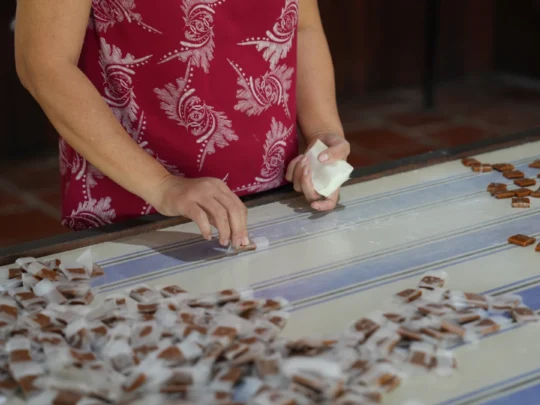
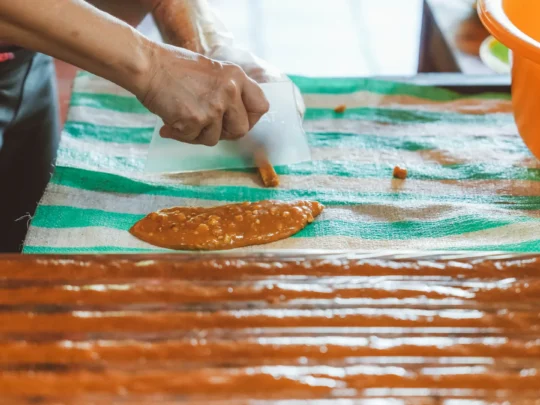
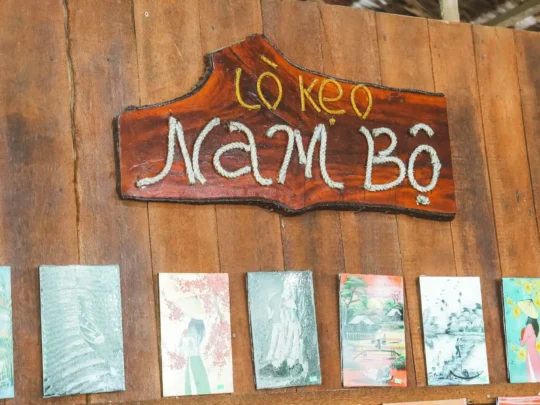
Buu Lam Pagoda is a central piece of the My Tho heritage puzzle, surrounded by cultural and natural treasures. After your visit, head to the architectural masterpiece of Vinh Trang Pagoda (only 5 minutes away) for a stunning East-West contrast. Take a boat trip to the Four Islets (Dragon, Unicorn, Turtle, Phoenix) to experience the “rhythmic life” of the riverside orchards. Explore the Coconut Candy Traditional Village in Ben Tre to witness artisanal mastery, or visit the Dong Tam Snake Farm for a look at local wildlife conservation.
For spiritual seekers, the majestic Truc Lam Chanh Giac Zen Monastery, famous for its stunning Indian-style stupa, is a must-visit. On the mainland, don’t miss the Tien Giang Museum to understand the region’s historical evolution or the Rach Gam – Xoai Mut Victory Monument for a lesson in historical “resilience and spirit.”
Our Signature Mekong Delta Tours
Experience the spiritual and riverine heart of the Delta through our curated journeys:



Attractions in Mekong Delta
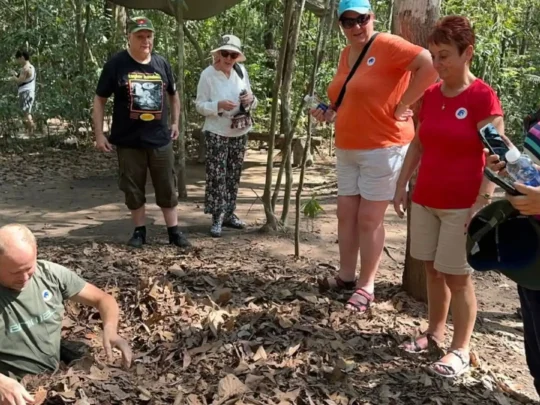
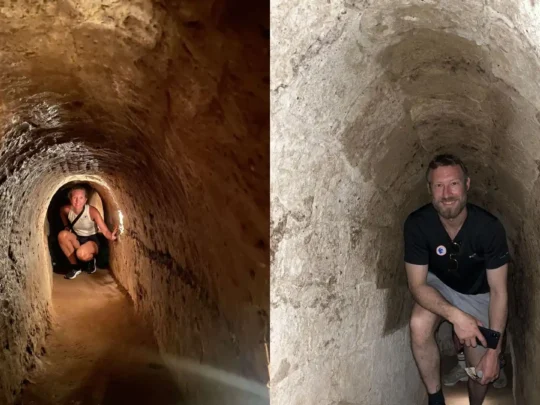
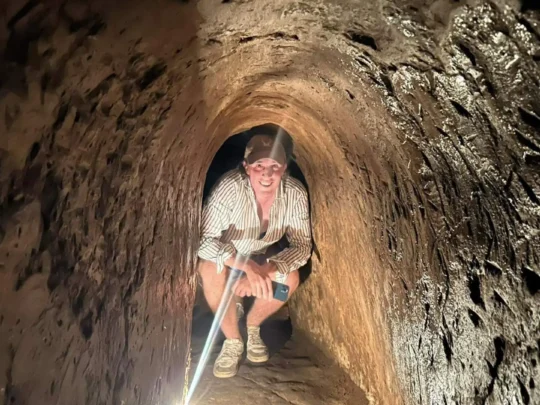
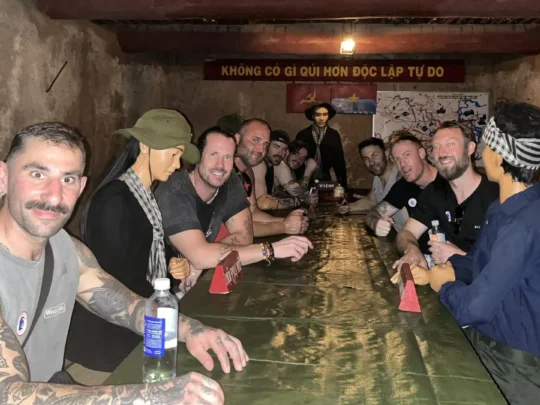
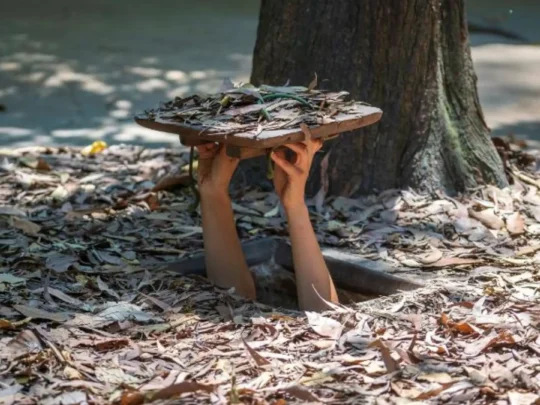
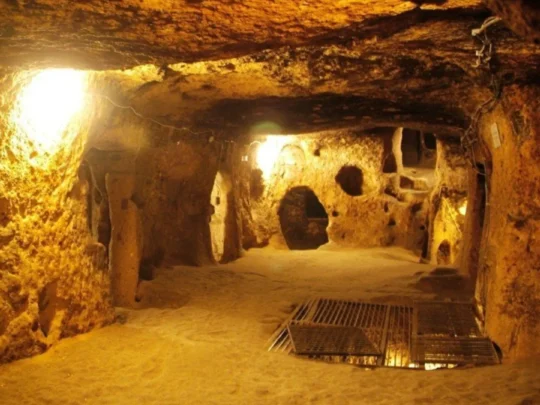
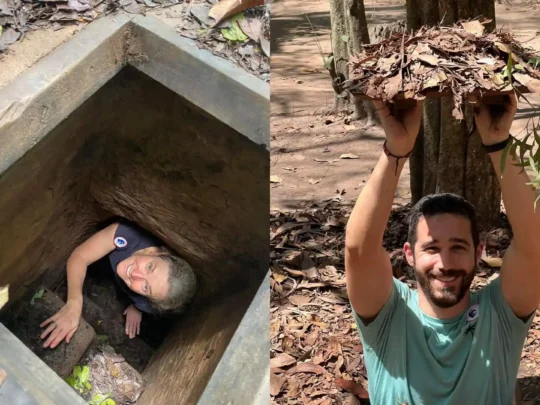
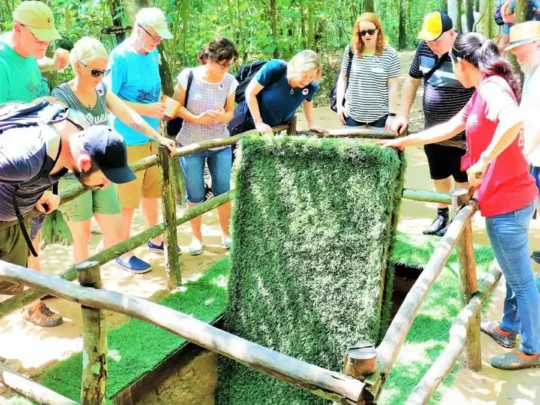
Half-day Cu Chi Tunnels Tour | Vietnam Underground History Expedition



Attractions in Mekong Delta
Authentic My Tho Mekong Delta Tour: Two Islands for Half a Day







Attractions in Mekong Delta
Mekong Delta 2 Day Tour from Ho Chi Minh City: My Tho – Ben Tre – Can Tho



Attractions in Mekong Delta


Attractions in Mekong Delta
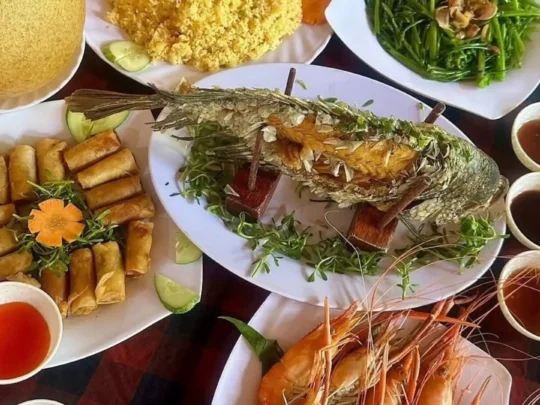
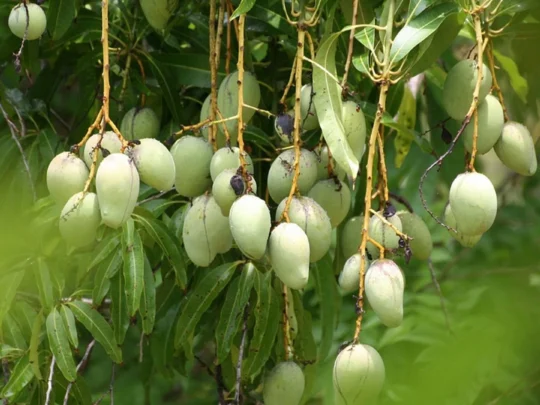
Attractions in Mekong Delta
An Binh Islet Tour | A Scenic Mekong River Escape from Can Tho
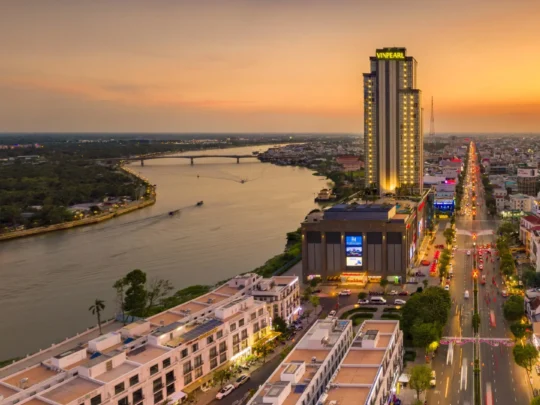

Attractions in Mekong Delta
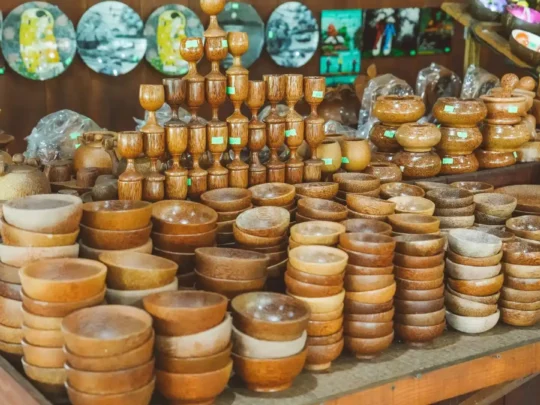
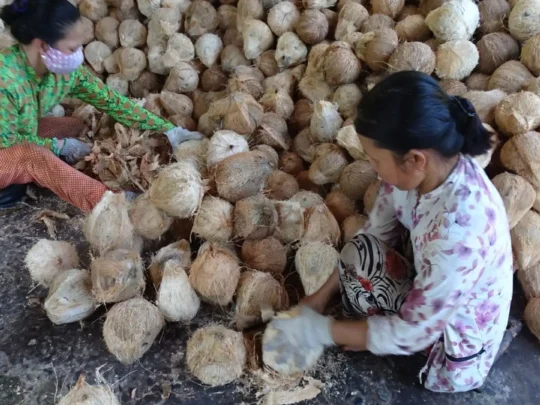
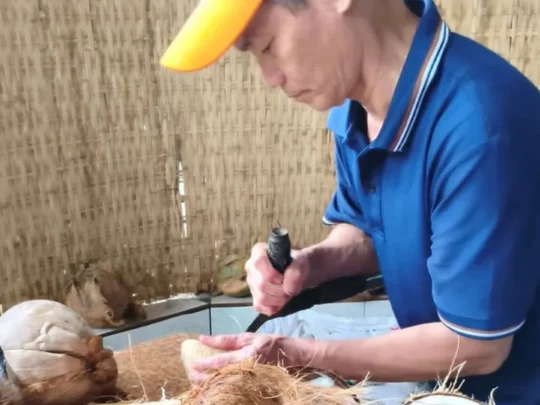
Ben Tre Tour from Can Tho: River Life, Coconut Workshops & Village Crafts
Our top 5 best authentic Mekong Delta Tours: My Tho Mekong Delta Tour, Ben Tre Tour, Cu Chi Tunnels Tour, Mekong Delta Tour 1 Day, Mekong Delta Tour Cai Be
Ready for the Real Mekong? Book Your Authentic Tour Today
Planning Your Mekong Trip?
Get a free, personalized itinerary from our local experts in under 120 minutes.

Get a Free Consultation Leave your contact, we handle the rest.
Frequently Asked Questions about Buu Lam Pagoda
Where is Buu Lam Pagoda and how do I get there?
The pagoda is located at 22 Nguyen Trung Truc Street, Ward 3, My Tho City—a quiet residential area just 2km from the riverfront. Mekong Smile provides private transfers that take you through the older quarters of the city, allowing you to observe the Buu Lam Pagoda.
What is the historical significance of Buu Lam Pagoda?
Founded in 1803, it is one of Tien Giang’s oldest sanctuaries. Beyond its religious role, it served as a secret meeting point for patriotic monks during the resistance against colonial rule. Mekong Smile guides share these stories of the temple’s pillars to Vietnam’s journey for independence.
What makes the architecture of Buu Lam Pagoda special?
It features the rare “Nội Công Ngoại Quốc” (Internal Work, External Enclosure) layout, a hallmark of royal Vietnamese design. During our tours, Mekong Smile experts explain how this structure creates a natural flow of air and light, and we decode the philosophical meanings behind the intricate dragon and phoenix woodcarvings on the ironwood pillars.
Are there any entrance fees or specific opening hours at Buu Lam Pagoda?
Entrance is free, though Mekong Smile suggests a small donation to support the preservation of the 200-year-old wood structures. The pagoda is open daily from 07:30 AM – 11:30 AM and 01:30 PM – 05:30 PM. We recommend the morning hours to witness the serene rituals and avoid the midday closure.
What should I look for inside the main sanctuary of Buu Lam Pagoda?
Don’t miss the collection of 40 ancient statues and the massive gold-leafed “Hoành Phi” (horizontal lacquered boards). Mekong Smile guides act as your “library of ancient literature,” translating the Han characters and explaining why the use of red and gold here is a unique reflection of Southern Vietnamese identity rather than Chinese influence.
Can I visit Buu Lam Pagoda and Vinh Trang Pagoda on the same day?
Yes, they are only 5 minutes apart.
Is there a dress code for visiting the Buu Lam Pagoda?
As with all sacred sites in Vietnam, modest clothing is required. If you are on a Mekong Smile tour, your guide will ensure you are prepared for the visit, helping you maintain a respectful presence while exploring the Revolutionary Heritage Room and the sacred altars.
