
 Can Tho
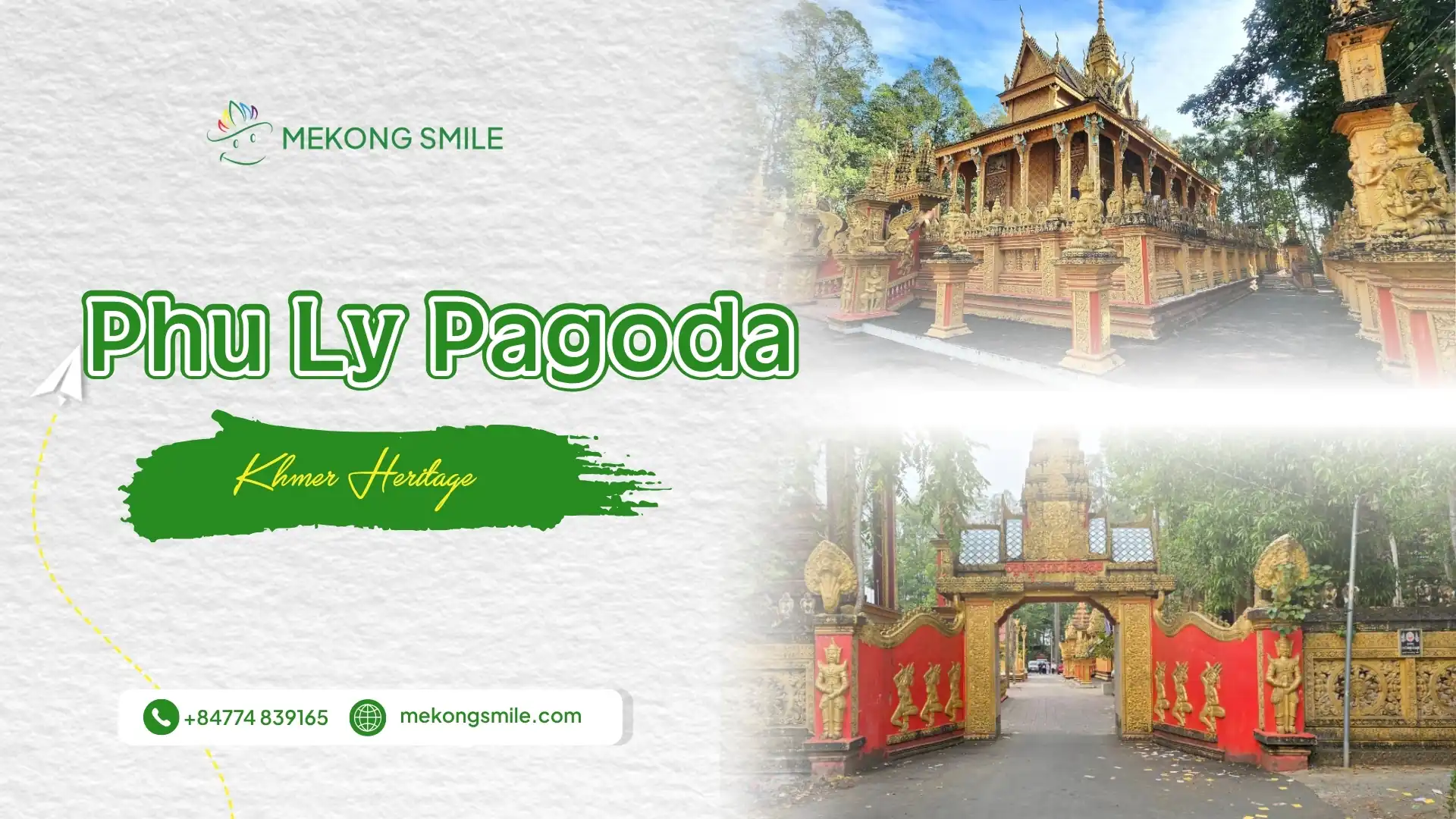
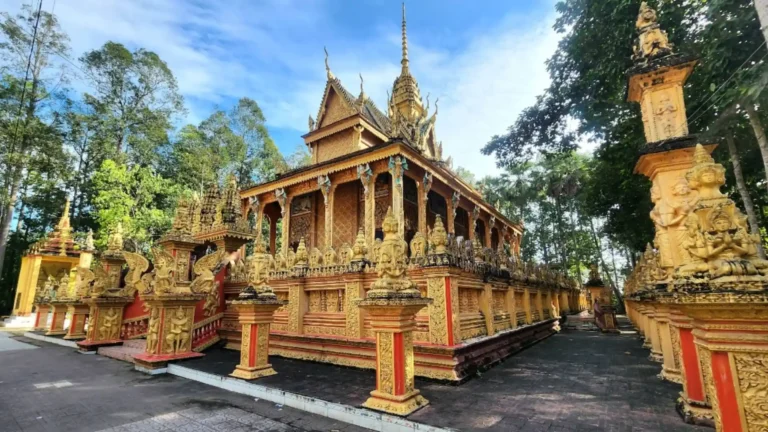
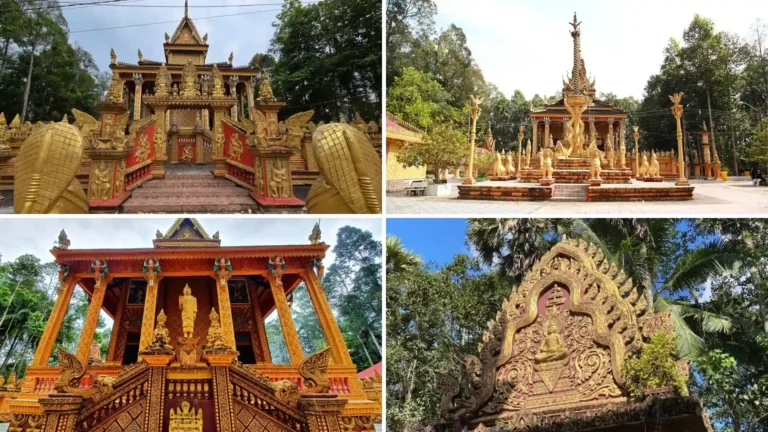

Phu Ly Pagoda, also known as Phu Ly 1 Pagoda, is a Khmer Theravada Buddhist temple in Vinh Long Province, Vietnam. Surrounded by mature trees and sugar palms in the former Binh Minh area, the pagoda is known for its golden main sanctuary, intricate Khmer sculptures, and deep connection to the local Buddhist community.
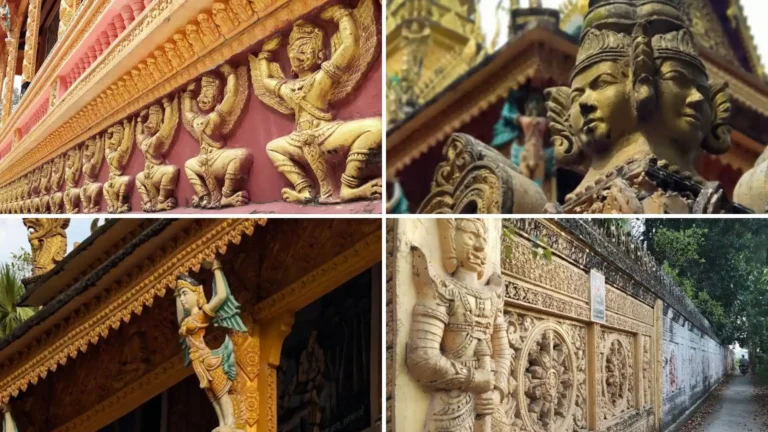
Look beyond its colorful architecture, and you’ll discover remarkable details: winged figures supporting the sanctuary roof, a ceremonial flagpole surrounded by mythical creatures, and murals illustrating stories from the Buddha’s life.
For travelers exploring the cultural heritage of the Mekong Delta, Phu Ly 1 offers a closer look at Khmer religious art and traditions that continue to shape community life today.
Phu Ly Pagoda at a Glance
| Information | Details |
| Official name | Phu Ly 1 Pagoda (Chùa Phù Ly 1) |
| Common name | Phu Ly Pagoda |
| Location | Dong Thanh Ward, Vinh Long Province, Vietnam |
| Former address | Phu Ly 1 Hamlet, Dong Binh Commune, Binh Minh Town, Vinh Long |
| Google Maps Phu Ly 1 Pagoda | https://maps.app.goo.gl/Av5M6Y3VMb39MxEj6 |
| Religion | Khmer Theravada Buddhism |
| Historical origin | Traditionally dated to 1672, according to the pagoda's abbot |
| Opening hours | Daytime visits recommended; exact official hours should be confirmed locally |
| Entrance fee | Generally reported as free |
| Suggested visit duration | 45-90 minutes |
| Best time to visit | Morning or late afternoon |
| Main highlights | Golden sanctuary, Khmer sculptures, ceremonial flagpole, Buddhist murals and tree-shaded grounds |
| Dress code | Modest clothing covering shoulders and knees |
Getting there: From the former Binh Minh town center, follow National Highway 54 toward Tra On. After reaching the entrance to the Phu Ly residential area, continue approximately 2 km along the local road to Phu Ly 1 Pagoda. When checking directions, search for Chùa Phù Ly 1 to avoid confusion with Phu Ly 2.
Google Maps Directions: Directions from Ninh Kieu Wharf, Can Tho to Phu Ly 1 Pagoda, Vinh Long
Why Is Phu Ly Pagoda Worth Visiting?
One of the main reasons to visit Phu Ly 1 is its distinctive Khmer architecture.
Across the temple grounds, visitors can find sculptures inspired by Buddhist beliefs, Khmer mythology, and earlier Brahmanical artistic traditions. These figures appear along the roofline, around the columns, and on the walls of religious buildings.
The golden main sanctuary is particularly striking, with its elevated structure and decorative roof. Nearby, a ceremonial flagpole complex features sculpted lions, female figures, dragons, and naga serpents.
The peaceful setting is another part of the experience. Covering more than two hectares, the pagoda grounds are shaded by mature trees, some of which have stood for over a century.
Beyond the architecture, Phu Ly 1 remains an important religious and cultural center for the local Khmer community. Its buildings, sculptures, and ceremonies reflect traditions passed down through generations.
What to See at Phu Ly Pagoda
Phu Ly 1 has several architectural features worth exploring, from its ornate main sanctuary to the smaller religious structures throughout the grounds.
The Golden Main Sanctuary
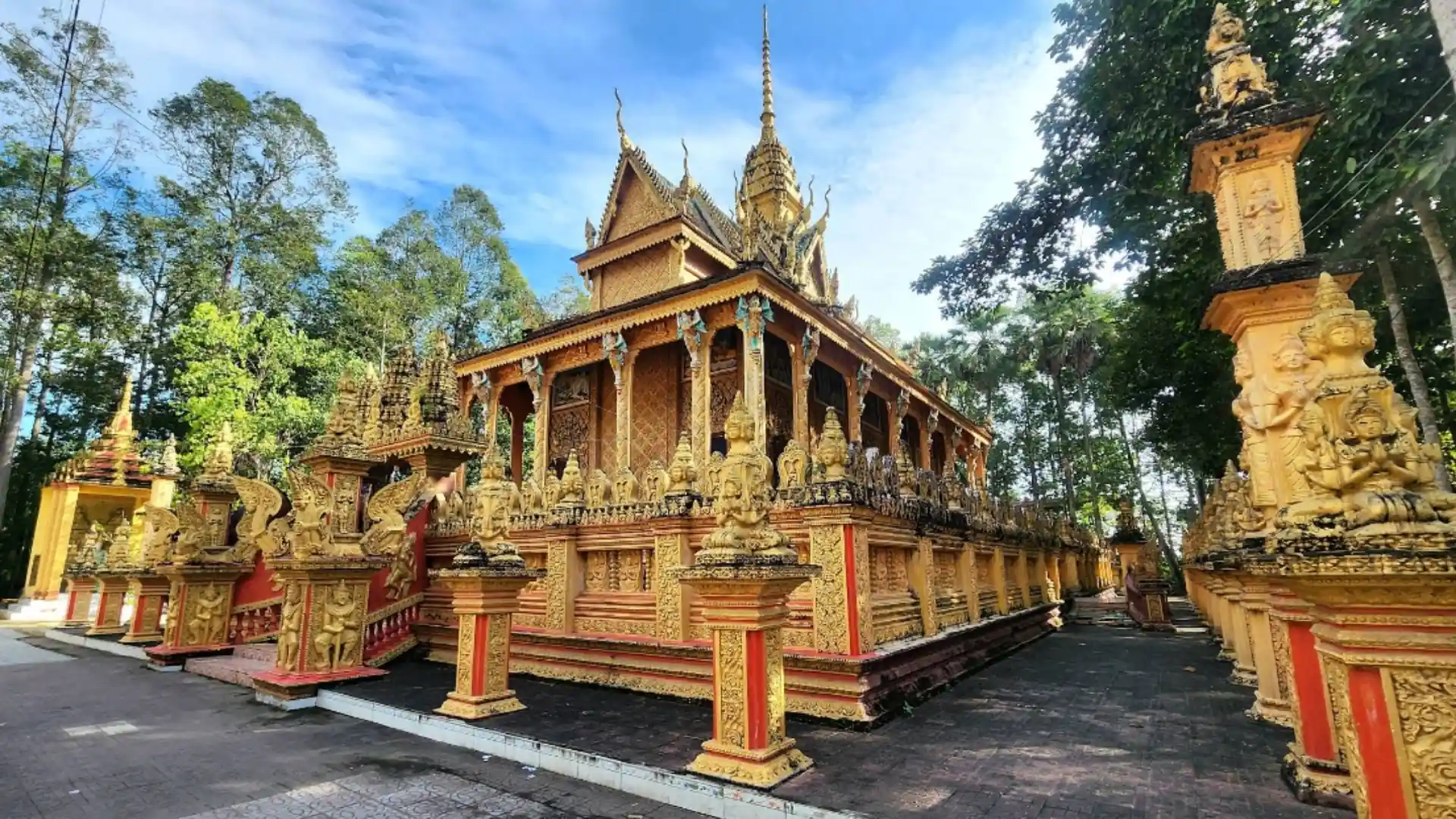
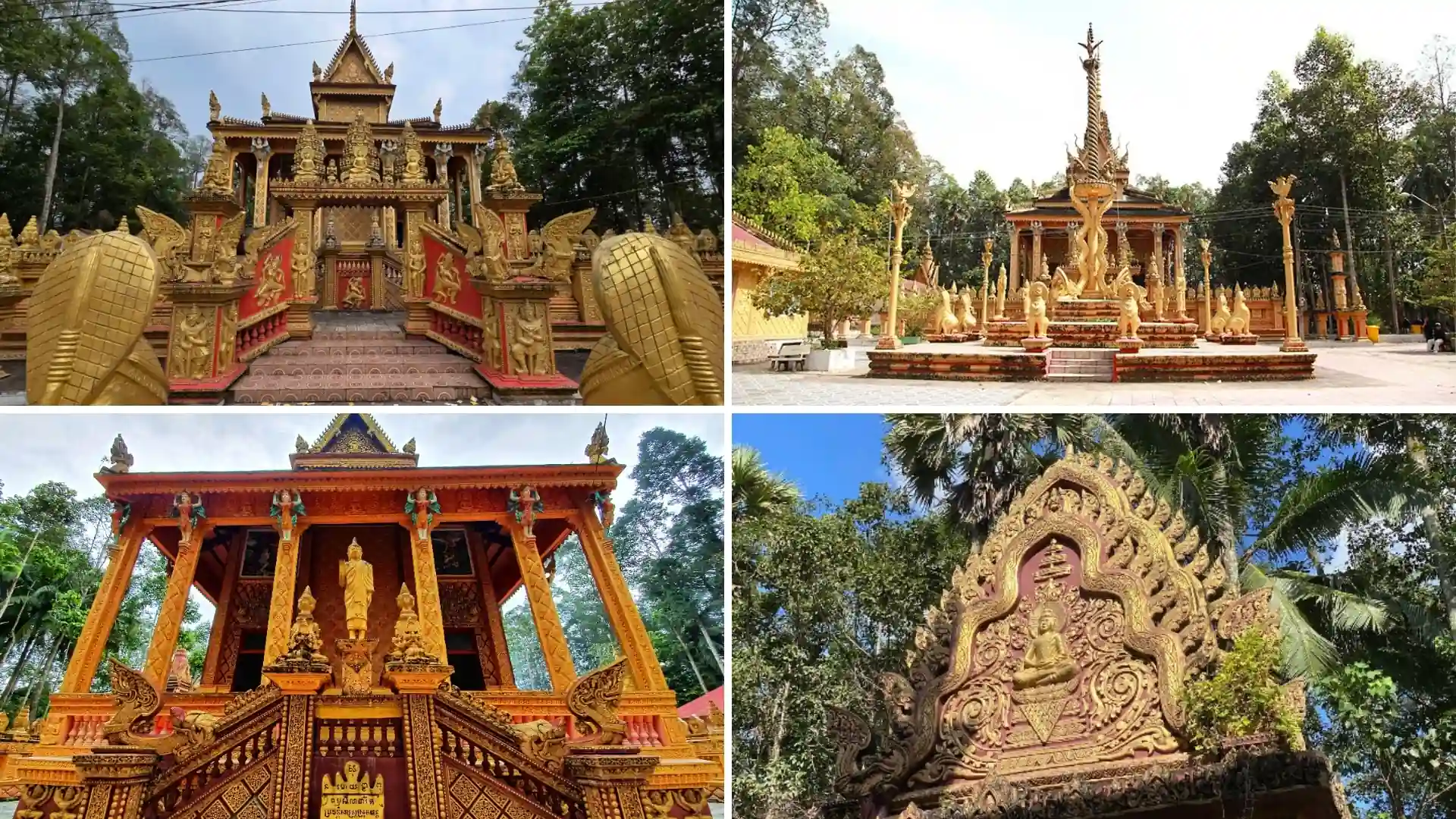
The main sanctuary, known locally as the chánh điện, is the architectural centerpiece of Phu Ly 1.
Built on a raised foundation, it features a golden exterior, an ornamented roof, and a central tower surrounded by smaller architectural elements.
The sanctuary’s design is associated with Mount Meru, a sacred mountain in Hindu and Buddhist cosmology. In Khmer religious architecture, the central sanctuary symbolizes the sacred mountain, while the surrounding stupas represent smaller mountains.
Look along the roofline, where sculpted dragons curve upward around the tower. Their bodies form flowing patterns that give the building a sense of movement.
The combination of its elevated foundation, decorative sculptures, and golden surfaces makes the main sanctuary one of the pagoda’s most recognizable features.
Khmer Sculptures: Kay No, Krut, Naga, and the Four-Faced Deity
The sculptures at Phu Ly 1 reveal the artistic traditions and religious symbolism of the Khmer community.
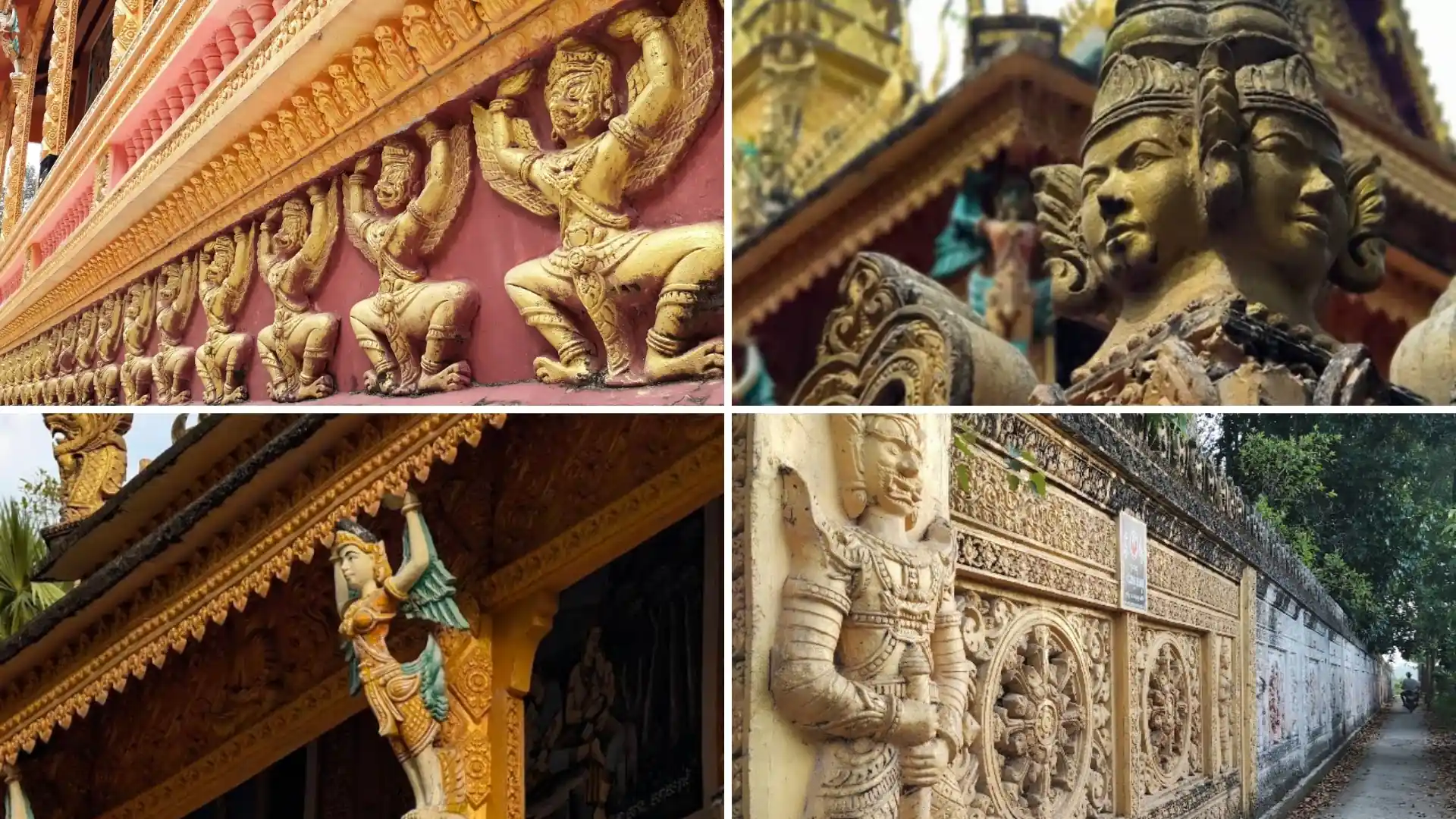
Among the most recognizable are Kay No figures, depicted with outstretched wings and raised arms beneath the sanctuary roof. Their graceful forms appear to support the eaves, connecting the roof to the columns below.
Visitors can also find Krut figures, associated with the mythical bird Garuda. Combining human and birdlike features, these sculptures appear around the sanctuary’s roof supports and exterior walls.
Another distinctive element is Kabil Maha Brum, the four-faced deity represented on the sanctuary columns. Each face looks toward a different cardinal direction. Local interpretations also connect this imagery with the Buddhist qualities of loving-kindness, compassion, appreciative joy, and equanimity.
Multi-headed naga serpents and other mythical creatures appear throughout the complex.
Together, these sculptures illustrate how Buddhist teachings, Khmer mythology, and earlier artistic influences have shaped the pagoda’s architectural identity.
The Three-Level Ceremonial Flagpole
The ceremonial flagpole complex is one of the most interesting features of Phu Ly 1.
Standing in the temple courtyard, the structure rises from three ascending levels decorated with religious and mythological figures.
The broadest lower level features eight lion statues arranged toward the four cardinal directions.
Above them are sculpted female figures, dragons, and naga serpents, forming an elaborate composition around the central flagpole.
The different levels create a balanced architectural arrangement, with each group of sculptures contributing to the overall design.
Visitors interested in Khmer craftsmanship should take a closer look at the individual figures and how they are positioned around the monument.
Inside the Sanctuary: Buddhist Statues and Murals
The interior of the main sanctuary offers another perspective on the pagoda’s religious art.
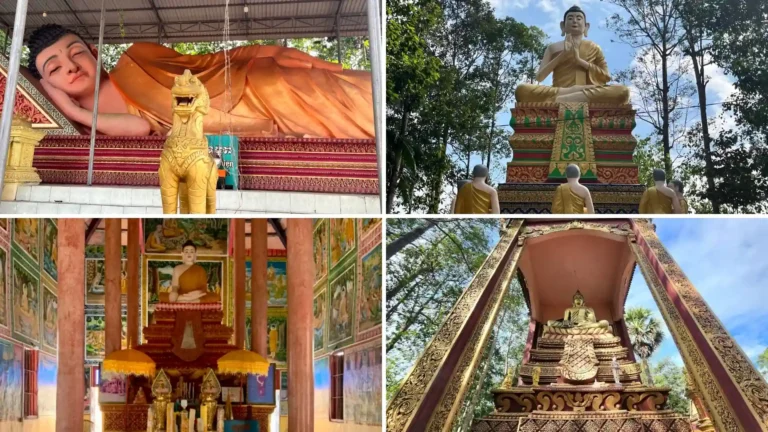
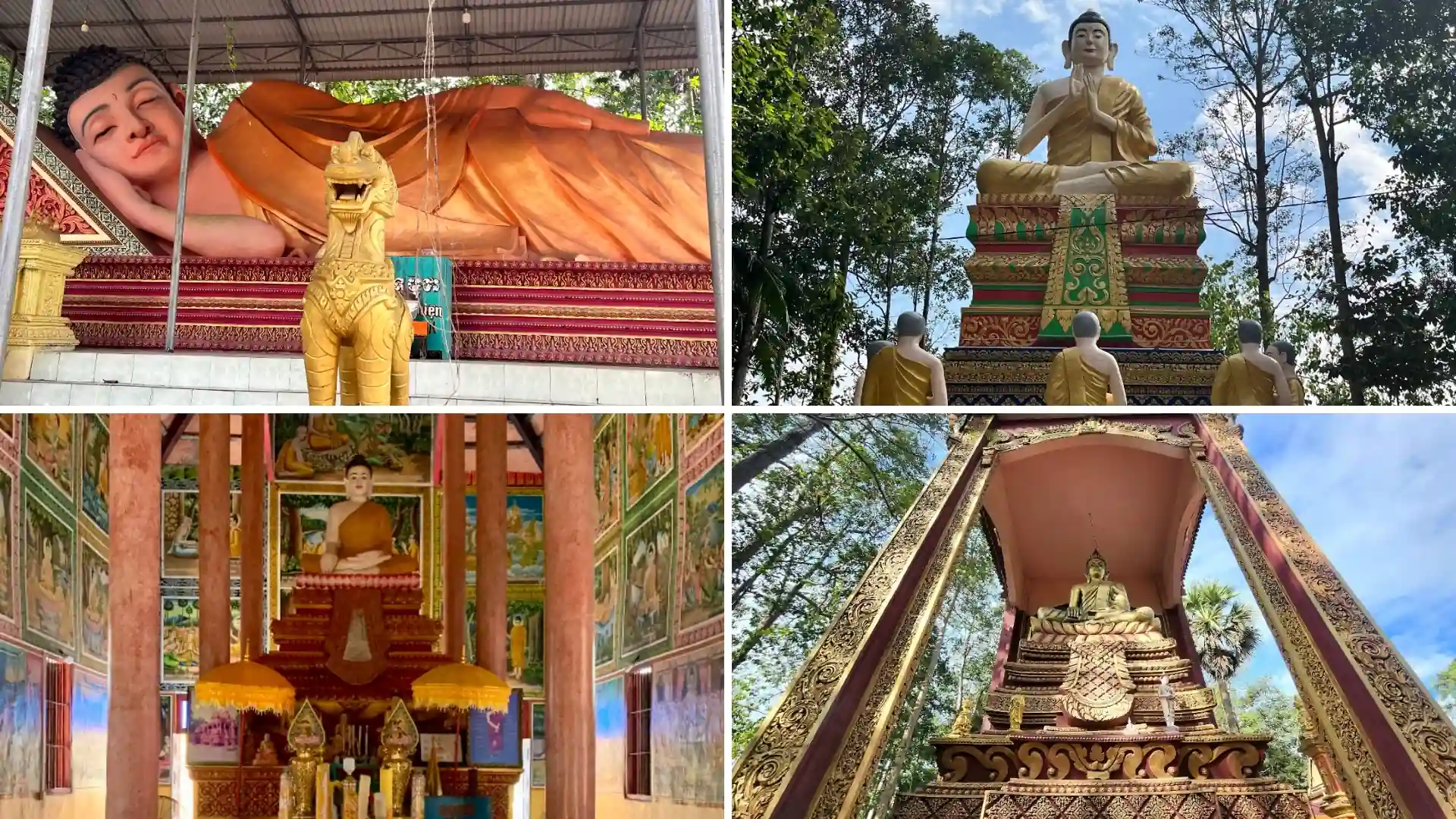
A large statue of the Buddha sits on a lotus throne in a teaching posture, occupying the central place of worship.
The walls and ceiling feature murals illustrating episodes from the Buddha’s life and the development of his teachings.
These paintings are an important part of the sanctuary’s religious setting, conveying Buddhist stories through images.
When entering the sanctuary, visitors should respect ongoing religious activities and follow guidance from the monks or temple representatives.
The Sala and Tree-Shaded Grounds
The pagoda’s architectural character extends beyond the main sanctuary.
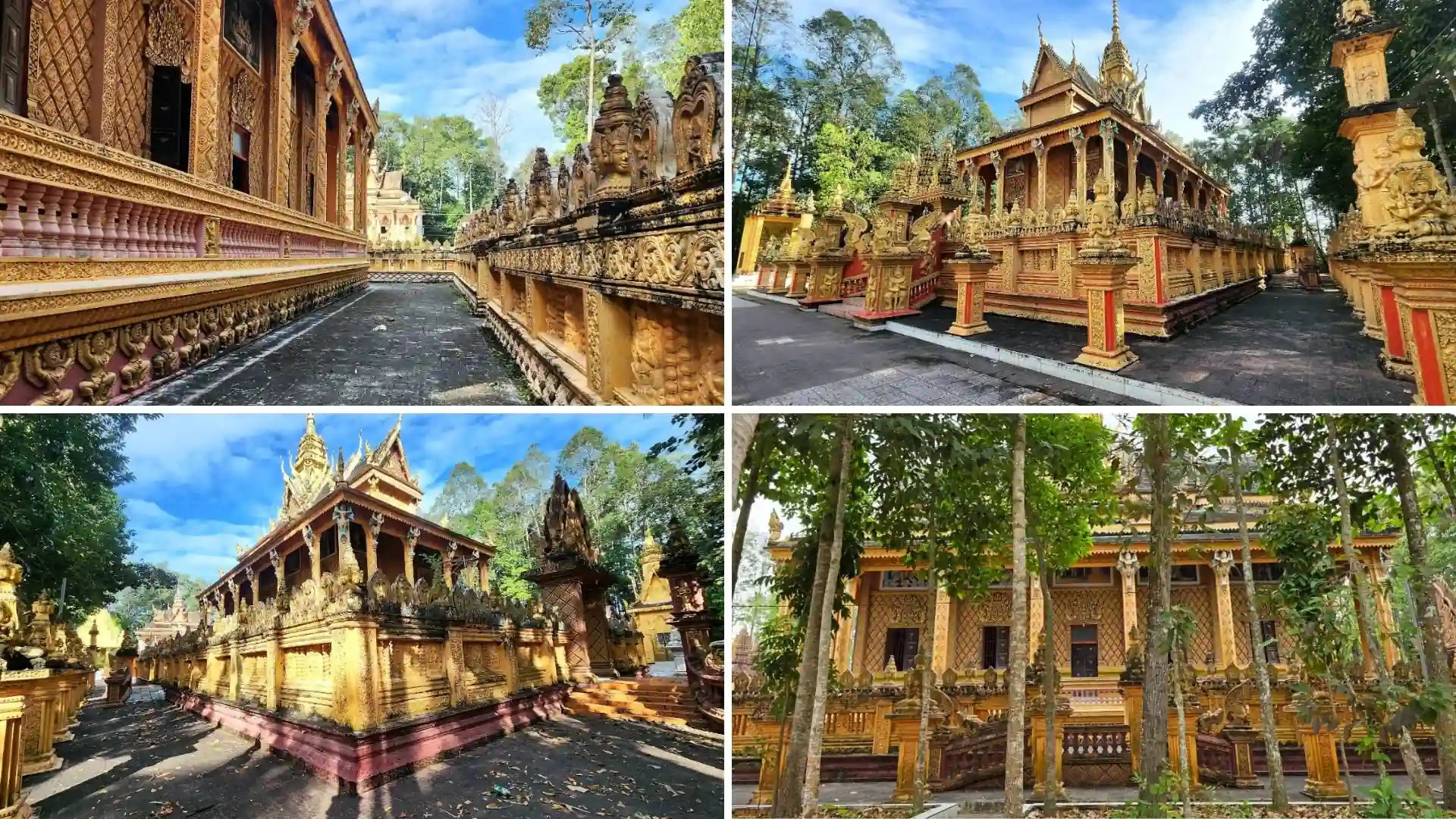
Its sala, or communal hall, is used for religious and community activities. Other structures include Buddhist stupas, statues, and ceremonial facilities.
The sala also features decorative Khmer motifs. One notable detail is a stylized bodhi-leaf design formed by two curving dragons, with religious imagery incorporated into the composition.
Throughout the grounds, tall sao and dầu trees stand alongside sugar palms. Some have been growing here for more than a century, creating shaded spaces around the temple buildings.
The combination of mature trees, golden religious structures, and Khmer sculptures gives Phu Ly 1 its distinctive atmosphere.
The History of Phu Ly Pagoda
Phu Ly 1 has a long history connected to the Khmer Theravada Buddhist community of the Mekong Delta.
According to Venerable Thach Thanh Tung (Sư cả Thạch Thanh Tùng), the abbot of Phu Ly 1 Pagoda, who shared the temple’s history with Vinh Long Newspaper, the pagoda was established in 1672, during the 17th century.
An introduction published by Vietnam’s Tourism Information Center places its construction in the 18th century, reflecting another account of the temple’s historical beginnings.
Today, the pagoda continues to preserve Khmer Buddhist architectural traditions while serving as a place of worship, learning, and cultural connection.
Phu Ly Pagoda and Khmer Community Life
For the Khmer community in southern Vietnam, a pagoda is more than a place of worship.
It is also a gathering place where religious traditions, community relationships, and cultural practices are maintained.
Phu Ly 1 plays a role in several important Khmer celebrations throughout the year.
These include Chol Chnam Thmay, the traditional Khmer New Year; Sen Dolta, a festival honoring ancestors; Ok Om Bok, associated with the Moon; and Kathina, the Buddhist robe-offering ceremony.
During these celebrations, the pagoda becomes a gathering place for monks, Buddhist followers, and local families.
For travelers, learning about these traditions adds meaning to the visit. The sculptures, ceremonial buildings, and religious spaces become easier to appreciate when viewed within the community’s cultural life.
Phu Ly 1 and Phu Ly 2: Understanding the Difference
Travelers searching for Phu Ly Pagoda may come across two similarly named temples: Phu Ly 1 and Phu Ly 2.
Both are Khmer Buddhist pagodas in Dong Thanh Ward, Vinh Long Province, and their histories are connected to an earlier monastery known as Wat Ô Tà Cuôn.
However, they are separate temples, each with its own grounds.
The sanctuary, sculptures, ceremonial flagpole, and visitor information described in this guide refer specifically to Phu Ly 1 Pagoda (Chùa Phù Ly 1).
When searching for directions, use the full Vietnamese name to find the correct location.
Where Is Phu Ly Pagoda and How to Get There?
Phu Ly 1 Pagoda is located in Dong Thanh Ward, Vinh Long Province, in the former Binh Minh Town area.
You may also encounter its former address: Phu Ly 1 Hamlet, Dong Binh Commune, Binh Minh Town, Vinh Long Province.
Travelers staying in Can Tho can reach the Binh Minh area by road and continue toward the pagoda.
From central Binh Minh, a route described by Vinh Long’s tourism information portal follows National Highway 54 toward Tra On before turning onto local roads leading to Phu Ly.
For navigation, search for Chùa Phù Ly 1 on your map to identify the intended temple.
A visit can also be combined with other cultural experiences in Vinh Long, including traditional workshops, local villages, and waterways.
Practical Tips for Visiting Phu Ly Pagoda
A few simple preparations can help make your visit more comfortable and respectful.
Clothing: Choose modest clothing that covers your shoulders and knees, as the pagoda remains an active religious site.
Photography: The sanctuary’s exterior, ceremonial flagpole, and courtyard sculptures are interesting subjects for photography. Ask permission before photographing monks, ceremonies, or indoor worship areas.
Temple etiquette: Speak quietly around religious spaces, avoid touching sacred objects, and follow instructions about footwear or access to particular buildings.
Weather: Southern Vietnam’s tropical climate can be warm, so bring drinking water and consider sun protection when exploring the outdoor grounds.
Visiting arrangements: For the latest information about access to the temple and its religious spaces, check with the pagoda or a local guide before your visit.
Daylight is useful for appreciating the architectural details, especially the sculptures beneath the sanctuary roof and around the flagpole complex.
Explore Khmer Culture in Vinh Long
Visiting Phu Ly 1 is an opportunity to discover the Khmer artistic and religious traditions that contribute to the cultural diversity of the Mekong Delta.
Beyond the pagoda, Vinh Long offers experiences connected to local waterways, traditional crafts, village life, and riverside communities.
Mekong Smile’s Vinh Long Tour: Khmer Culture and Traditional Villages brings together a boat journey, a traditional tofu-skin workshop, Khmer village experiences, and a temple visit listed as Phu Ly Pagoda.
The journey introduces travelers to different aspects of everyday life and cultural heritage in the region.
For more places to explore, see the Vinh Long Travel Guide.
Phu Ly Pagoda: Common Questions Before You Visit
What is Phu Ly Pagoda known for?
Phu Ly 1 is known for its golden Khmer-style sanctuary, intricate sculptures of mythical figures, three-level ceremonial flagpole, and connection to local Khmer Buddhist traditions.
Where is Phu Ly Pagoda located?
Phu Ly 1 Pagoda is located in Dong Thanh Ward, Vinh Long Province, Vietnam, in the former Binh Minh area.
Are Phu Ly 1 and Phu Ly 2 the same pagoda?
No. They are two separate Khmer Buddhist temples with connected historical origins. The architecture and visitor information in this guide focus on Phu Ly 1.
Can visitors enter the main sanctuary?
Visitors may be able to enter when access is permitted. Follow the instructions of monks or temple representatives, particularly during religious activities.
What should I wear when visiting Phu Ly Pagoda?
Wear modest clothing that covers the shoulders and knees. Follow local customs regarding footwear when entering religious buildings.
Can I visit Phu Ly Pagoda from Can Tho?
Yes. Travelers can arrange road transportation from Can Tho to the former Binh Minh area of Vinh Long. Use the full name Chùa Phù Ly 1 when checking directions.

