
 Can Tho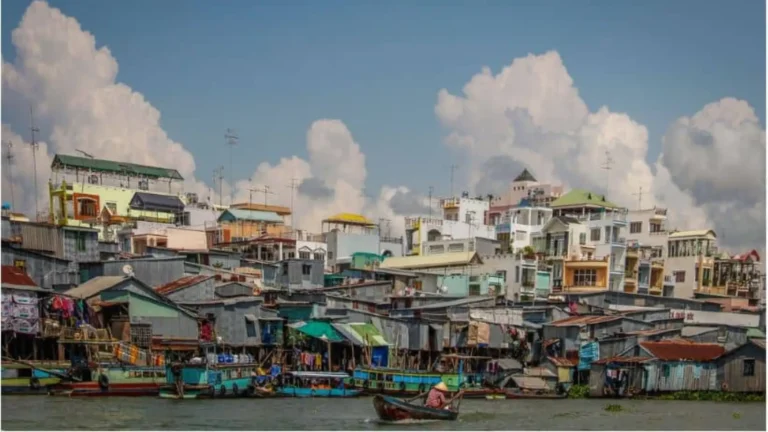
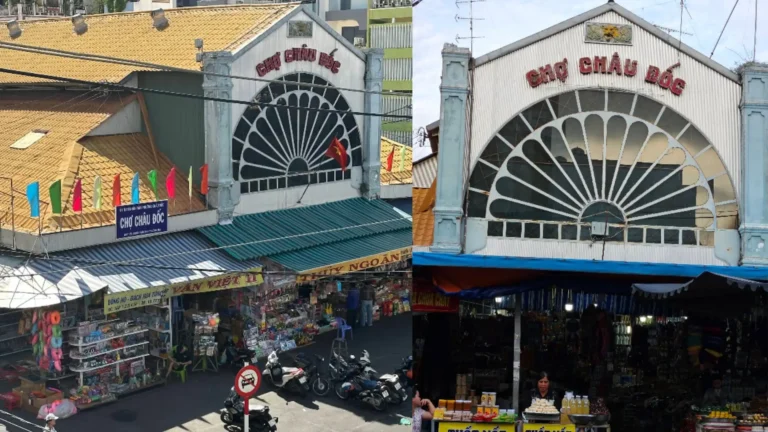

Chau Doc sits along the Hau River in An Giang, close to the Cambodian border. The river is still part of everyday life here: ferries cross between communities, boats pass floating fish farms, and houses line both sides of the water. Away from the river, the flat delta landscape rises around Sam Mountain, where temples and pilgrimage sites have developed over generations.
Cross the river and Chau Doc changes again. Cham communities around Chau Giang and Chau Phong maintain mosques, traditional houses, food traditions and brocade weaving. Travel a little farther and the river landscape gives way to the flooded cajuput forest of Tra Su.
This mix of river life, local culture, religious sites and wetland nature gives Chau Doc its character.
For most travelers, one night is enough to see central Chau Doc and the Sam Mountain area. Two days make more sense if you also want to visit Tra Su without rushing.
Chau Doc at a Glance
| Practical information | Details |
| Province | An Giang |
| Setting | Hau River, near the Cambodian border |
| Good for | River life, culture, food, religious sites and nature |
| Suggested stay | 1 night for Chau Doc; 2 days if adding Tra Su |
| From Can Tho | Around 3 hours by road |
| From Ho Chi Minh City | Around 250 km / roughly 6 hours by road |
| Chau Doc → Phnom Penh | Passenger speedboat available |
| Drier months | Generally November-April |
| Rainier months | Generally May-October |
| High-water experiences | Most relevant around August-November |
| Easy area for first-time visitors | Central Chau Doc around the market and riverfront |
Road times vary with traffic, stops and the exact departure point.
What Is Chau Doc Like?
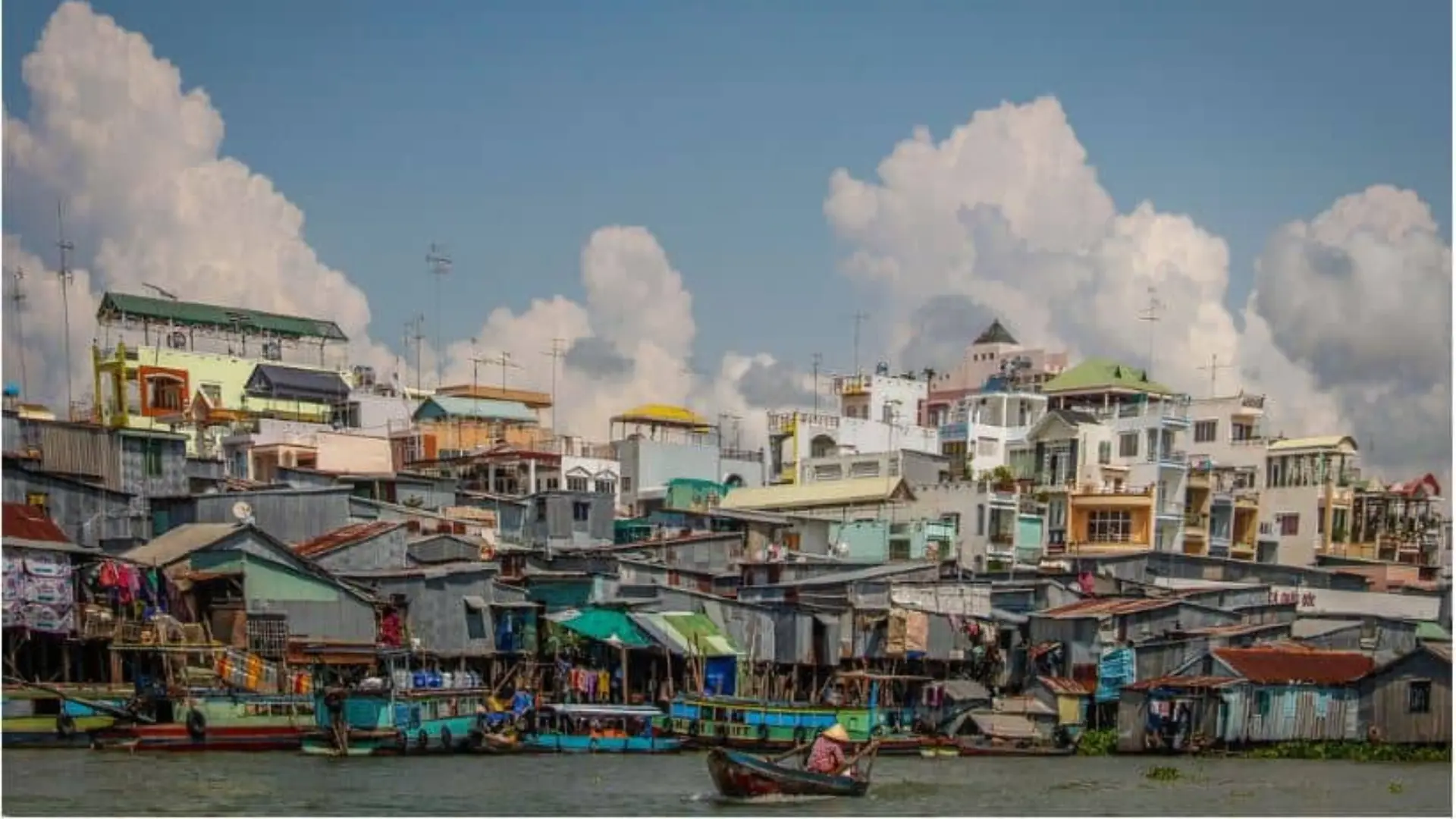
Chau Doc feels more like a working river town than a destination built around one major attraction.
Near the centre, the Hau River is busy with boats, ferries and floating fish farms. Along the market streets, fish, vegetables, fruit and fermented products connect the town with the river and surrounding agricultural areas.
The atmosphere changes around Sam Mountain. Temples and shrines cluster around its base and slopes, while higher points look across fields, waterways and the Vinh Te Canal area.
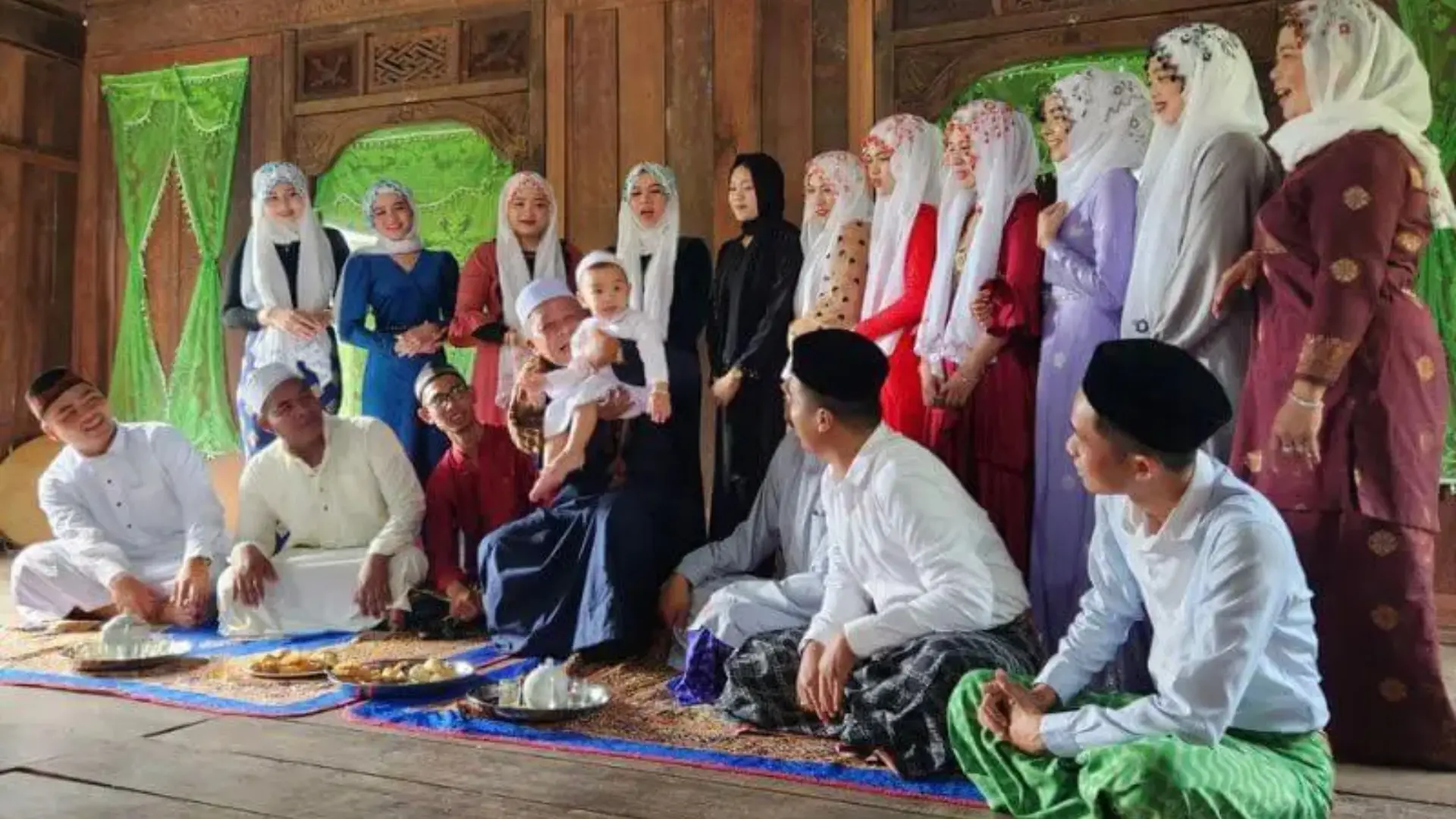
Across the river, Cham communities add another layer. Mosques, stilt houses, weaving and food traditions remain part of everyday community life rather than being confined to a museum or heritage park.
That variety is a large part of Chau Doc’s appeal.
Is Chau Doc Worth Visiting?
Chau Doc is worth considering if you enjoy places where local life is as important as individual attractions.
It fits especially well into a trip that already includes Can Tho, Tra Su or onward travel to Cambodia. One day can cover the river, a Cham community and Sam Mountain, while a second day gives you enough time for Tra Su.
The main trade-off is distance.
If you have only a few days in Vietnam and would need to travel from Ho Chi Minh City to Chau Doc and immediately return, much of the trip would be spent on the road. Chau Doc makes more sense as part of a wider southern Vietnam route.
It is also quite different from Can Tho.
Can Tho is a larger city with Cai Rang Floating Market and a stronger urban river setting. Chau Doc is smaller, closer to the border, and combines river communities with Cham culture, the religious landscape around Sam Mountain and access to Tra Su.
What to See and Do in Chau Doc
Start with the river
The river is a useful place to begin because it explains how Chau Doc developed.
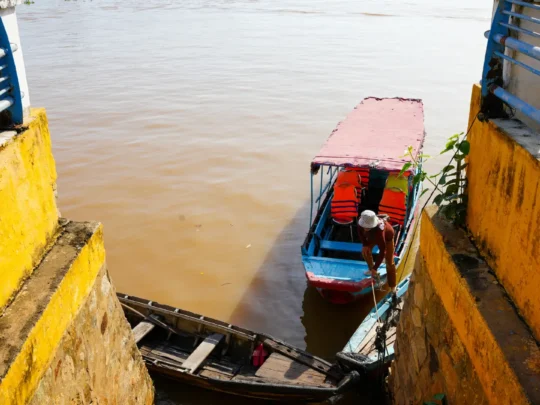
Boats still connect communities on different banks, while houses and fish-farming rafts sit directly on the water. A river trip lets you see these places together rather than visiting them as disconnected attractions.
Morning usually brings more working activity on the water. Late afternoon is quieter and can be a good time to watch the light change over the Hau River.
Visit Chau Doc Floating Village
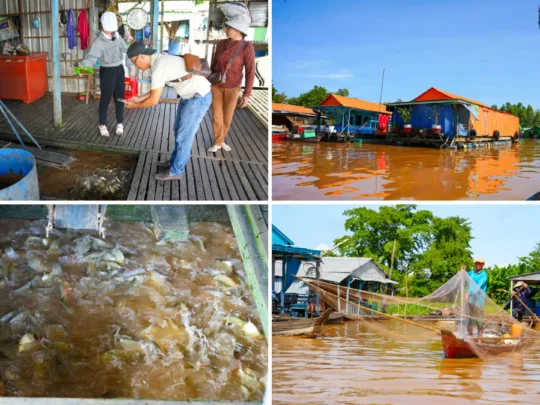
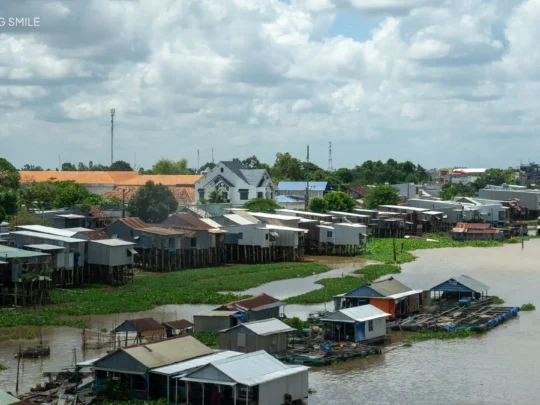
Chau Doc Floating Village lies a few kilometres from the central area and combines floating houses with fish-farming rafts.
Floating fish-farming communities have existed along this stretch of river since around the 1960s. Houses and fish cages share the same stretch of water, connecting living space with aquaculture.
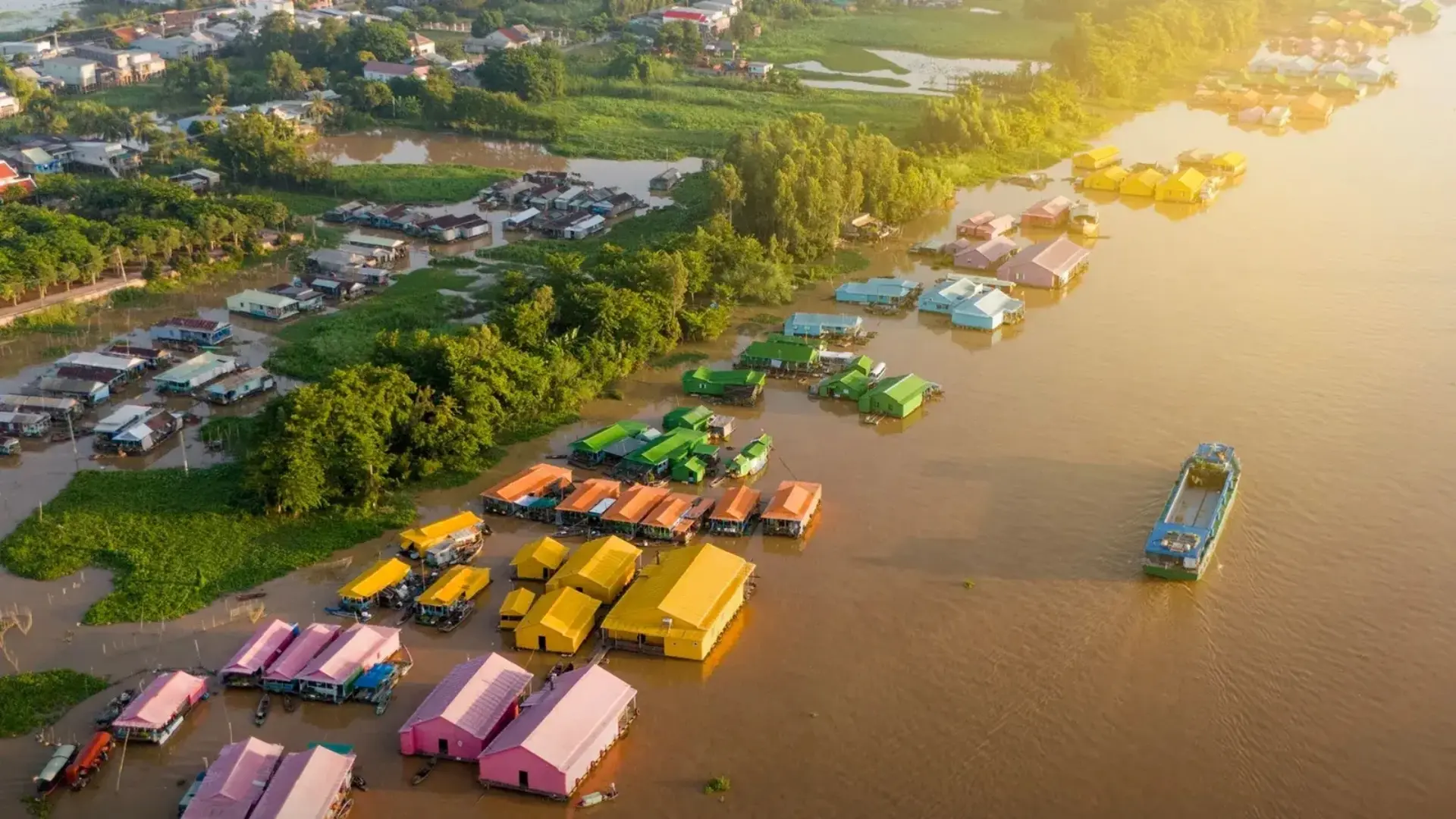
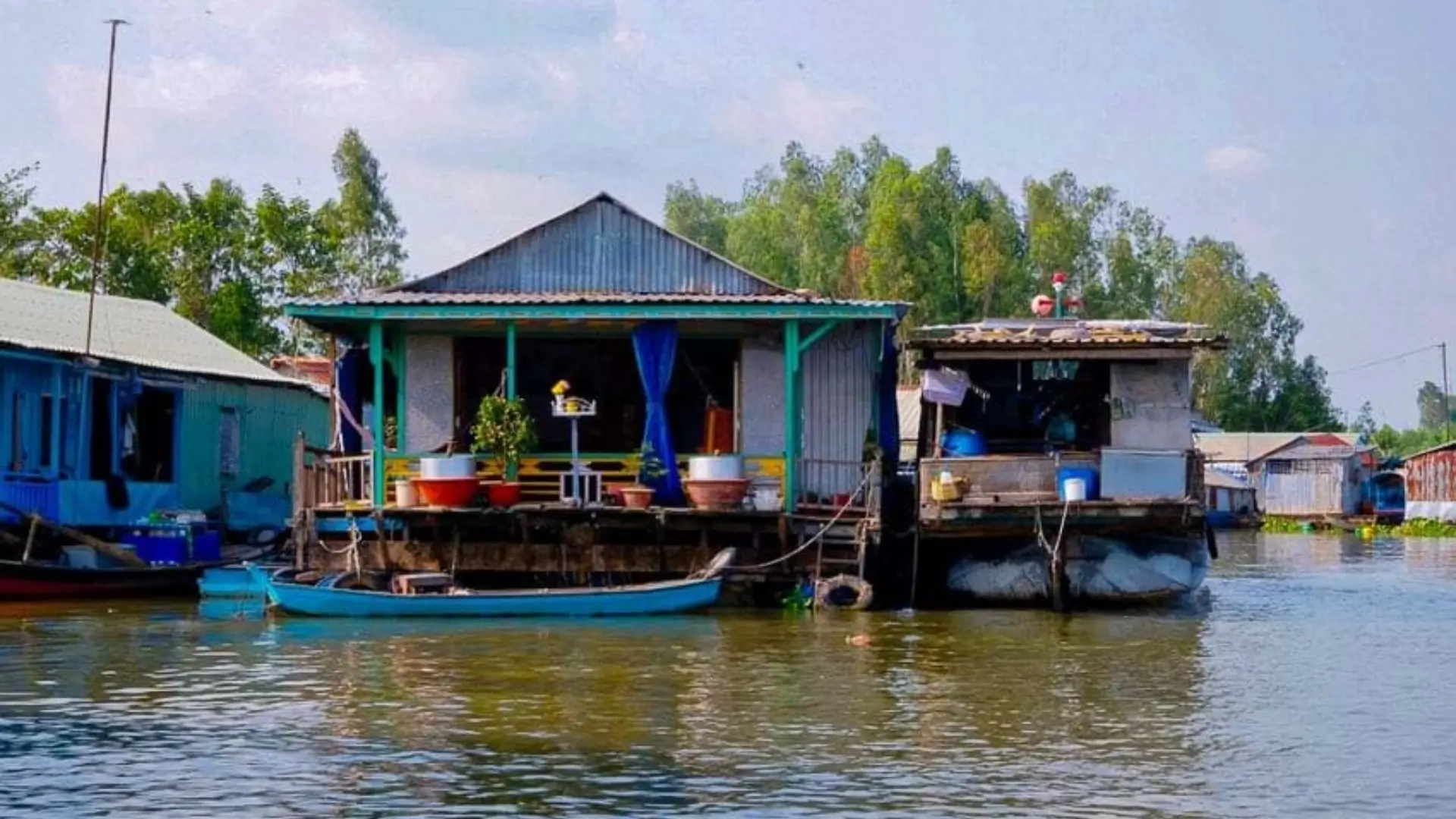
The brightly painted floating structures are easy to recognise today, but the more interesting part is seeing how people live and work around the river.
Depending on where your boat stops, you may see fish being raised in cages beneath floating houses or local supply boats moving between homes.
Do not expect this to feel like Cai Rang Floating Market.
River trading in Chau Doc is much smaller in scale. The floating village and fish farms are the more useful experiences to build a river visit around.
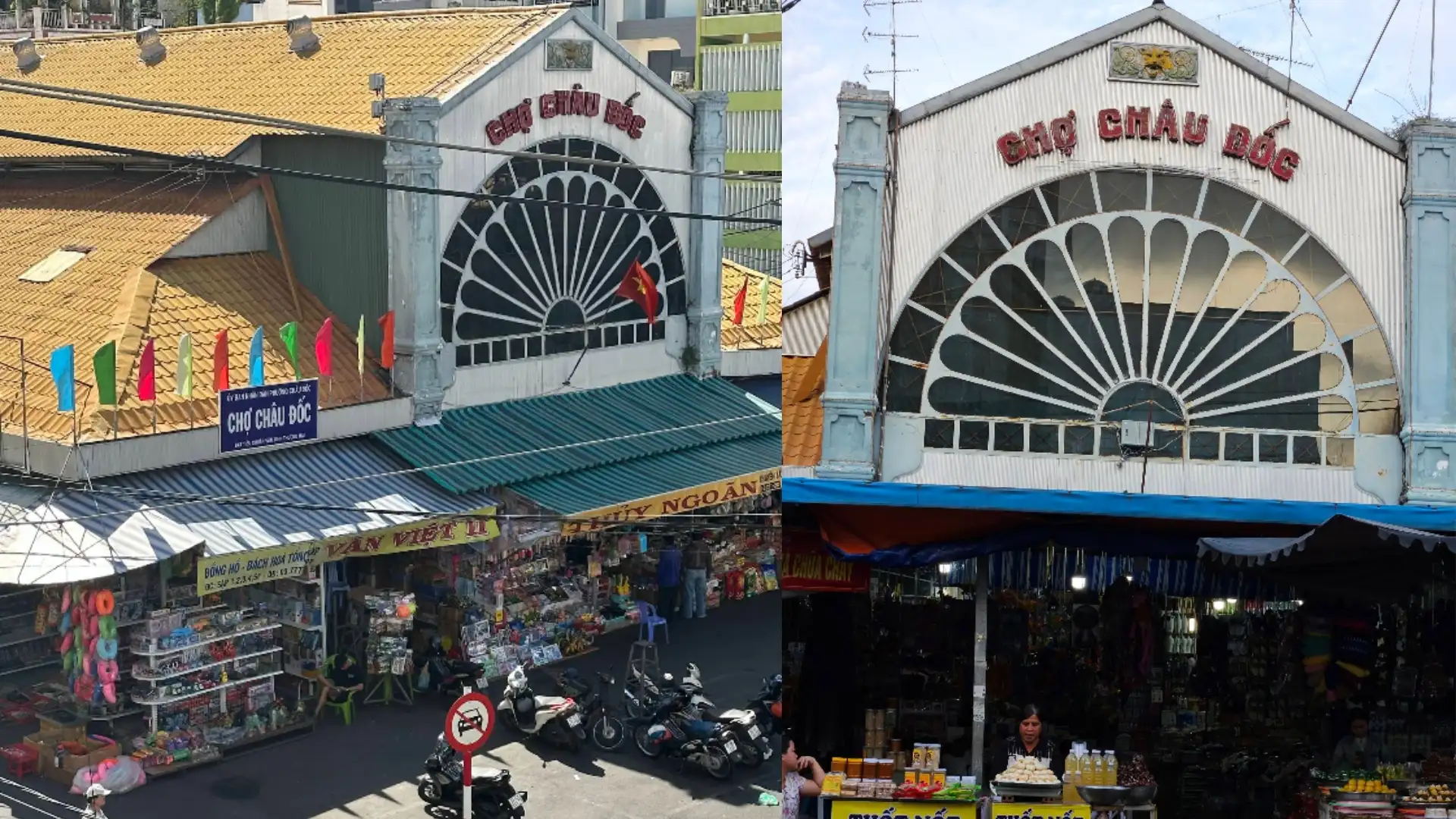
Walk through Chau Doc Market
Chau Doc Market is in the central area and is strongly associated with fish products, fermented fish, dried food, vegetables, fruit and local ingredients.
Even if you are not buying anything, the food sections are worth walking through.
Fermented fish products are especially visible, along with dried fish and ingredients used in soups, hotpots and everyday meals.
Morning is usually the better time to visit while shopping and food preparation are underway.
Explore Sam Mountain
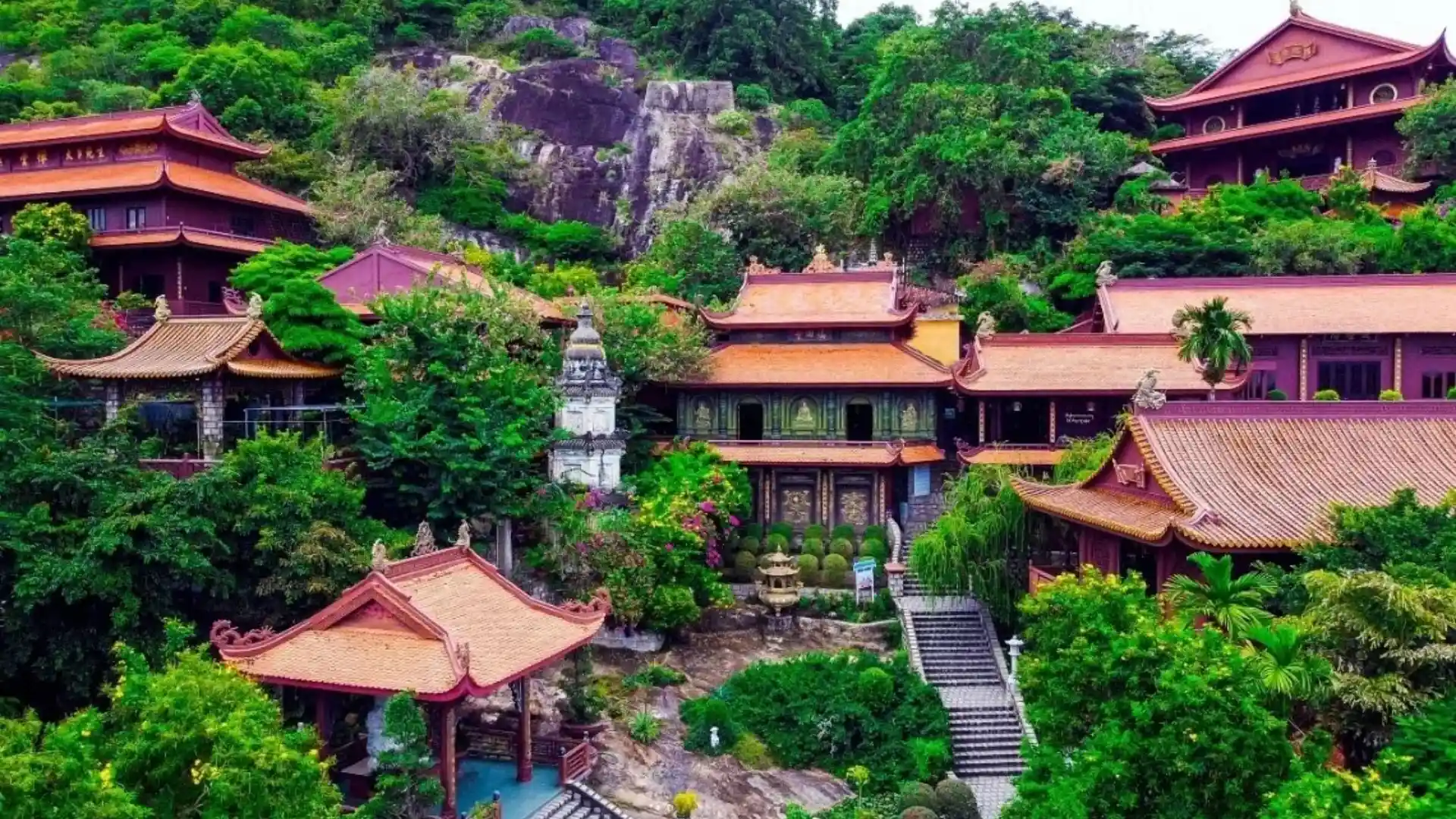
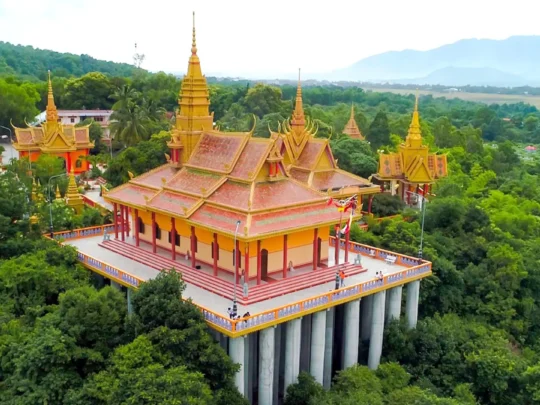
Sam Mountain brings together religious, historical and landscape experiences in one relatively compact area.
For a first visit, there is no need to stop at every temple. Choose a few places that match your interests.
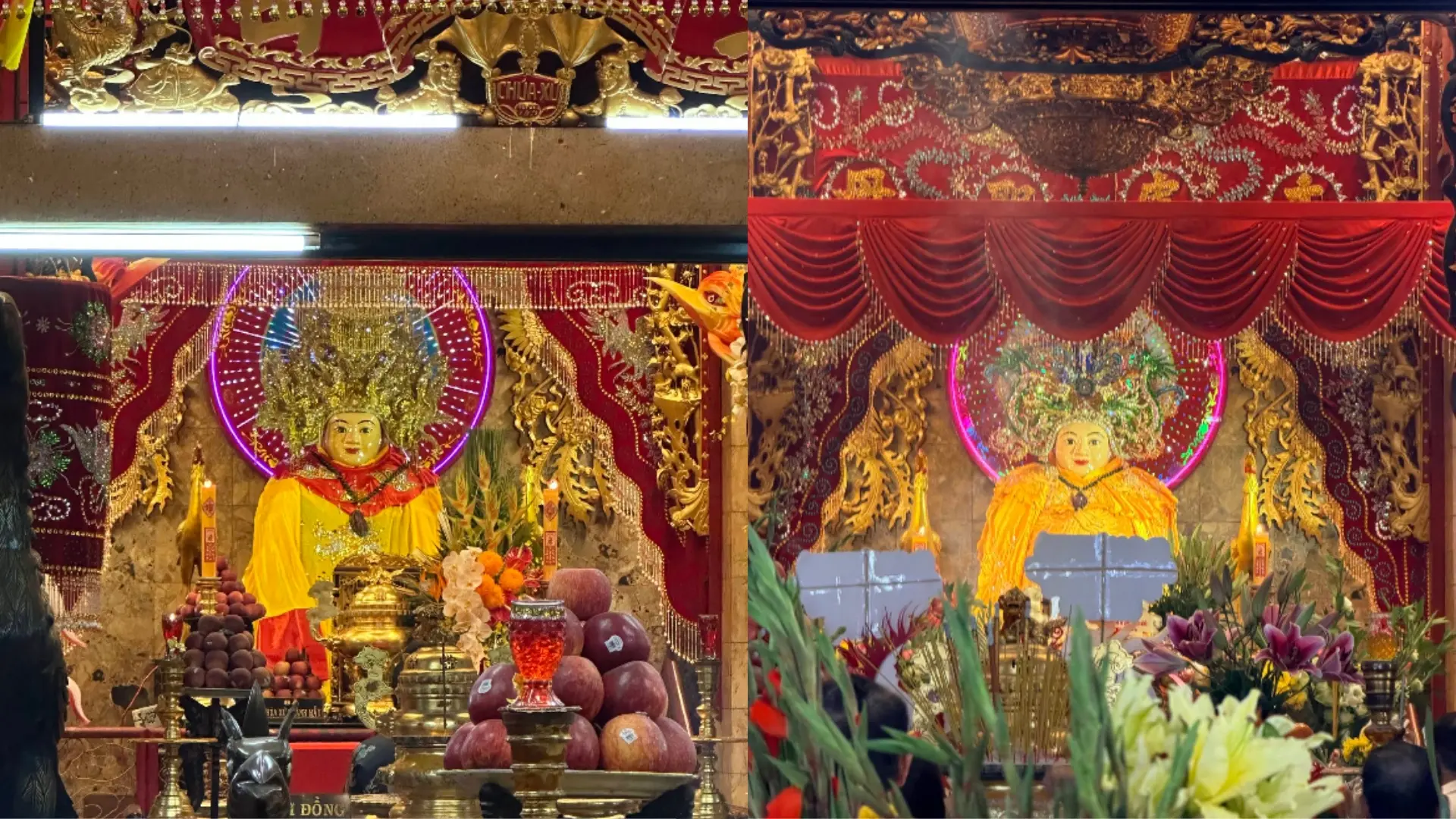
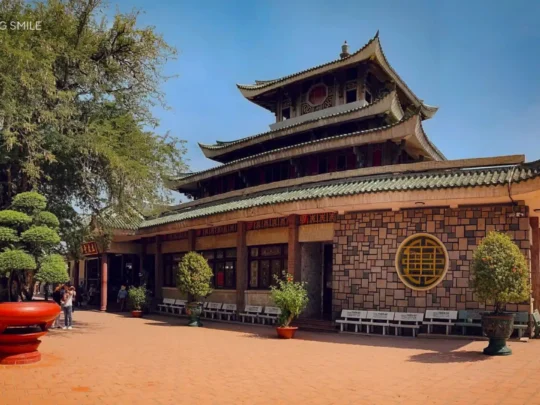
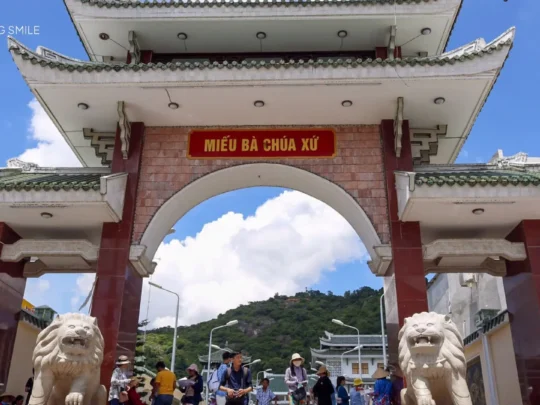
Ba Chua Xu Temple
Ba Chua Xu Temple is closely connected with the annual Festival of Bà Chúa Xứ Goddess at Sam Mountain.
The festival was added to UNESCO’s Representative List of the Intangible Cultural Heritage of Humanity in 2024. Its main ceremonial period traditionally falls from the 22nd to the 27th day of the fourth lunar month.
Outside the festival period, the temple is easier to experience at a slower pace.
During the festival, expect much larger crowds and busier roads around Sam Mountain.
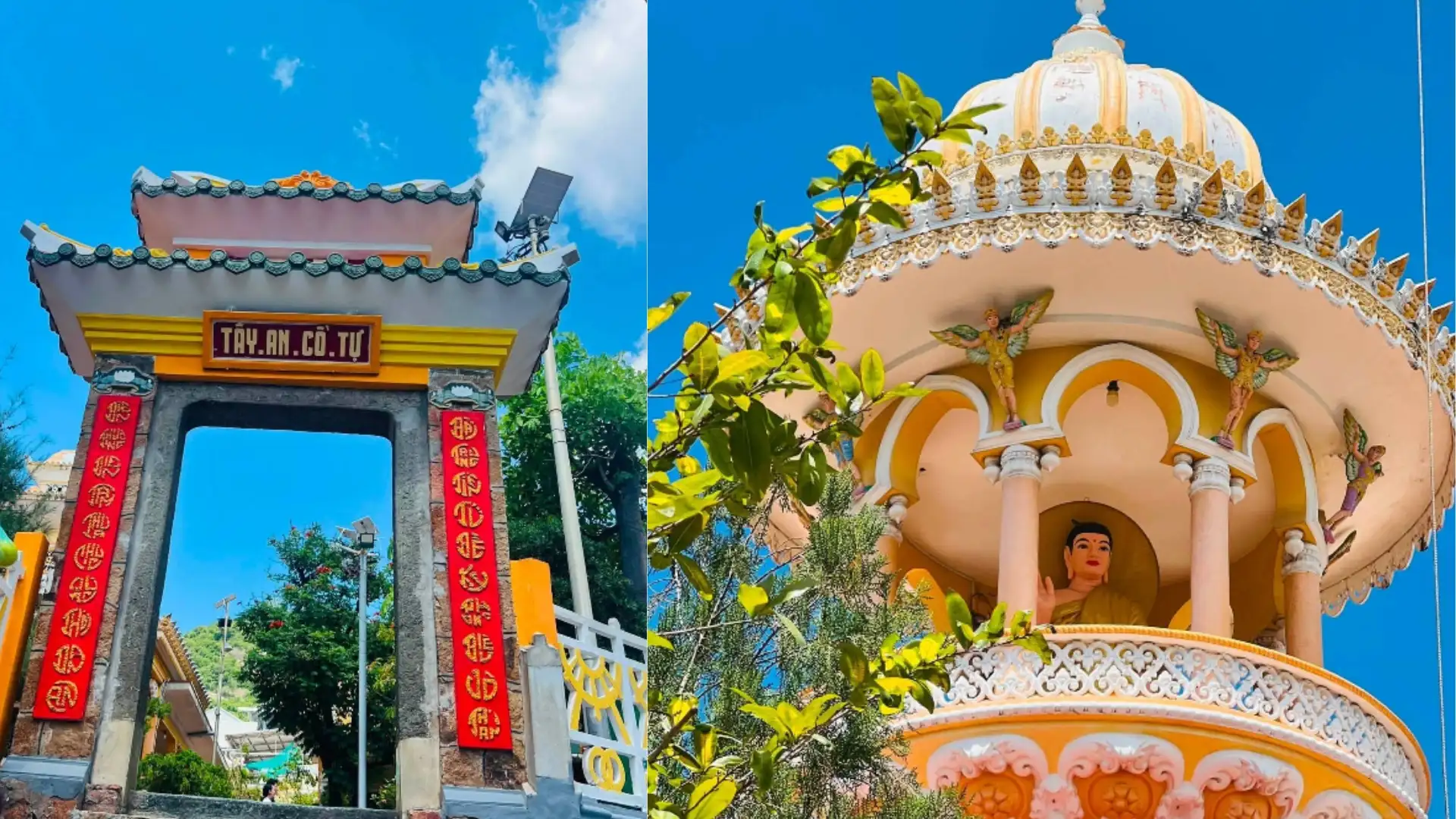
Tay An Pagoda
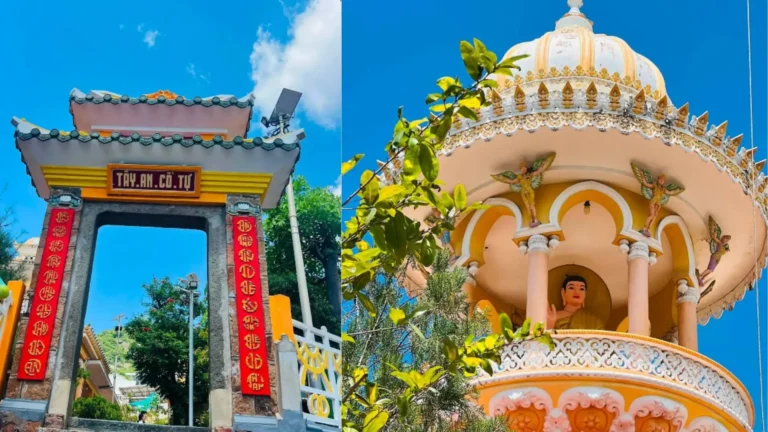
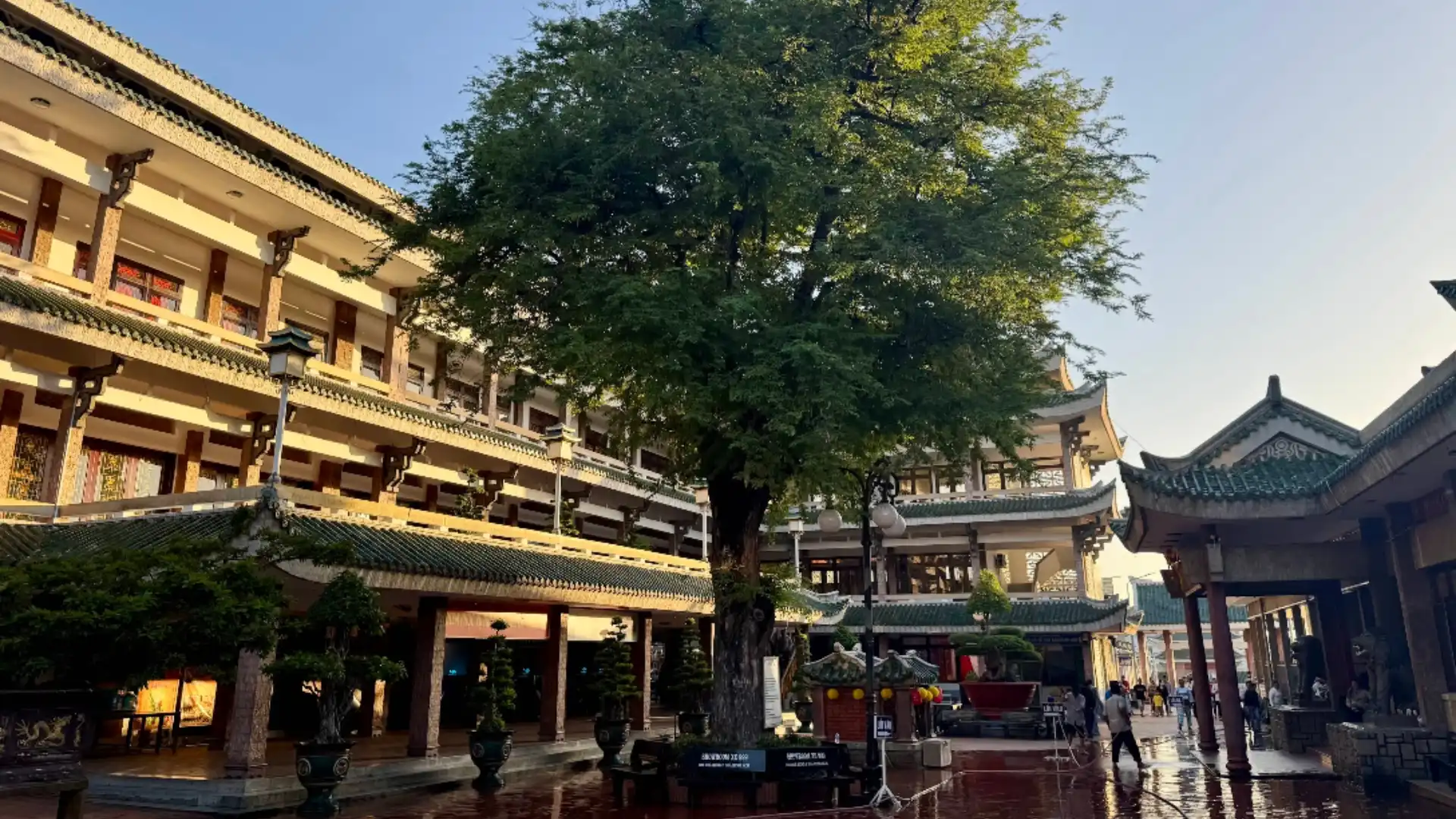
Tay An Pagoda stands near the foot of Sam Mountain.
The pagoda dates to 1847 and is recognised as a national architectural and artistic relic. Its architectural details differ noticeably from many other southern Vietnamese pagodas.
It is close to Ba Chua Xu Temple, so the two can be combined easily.
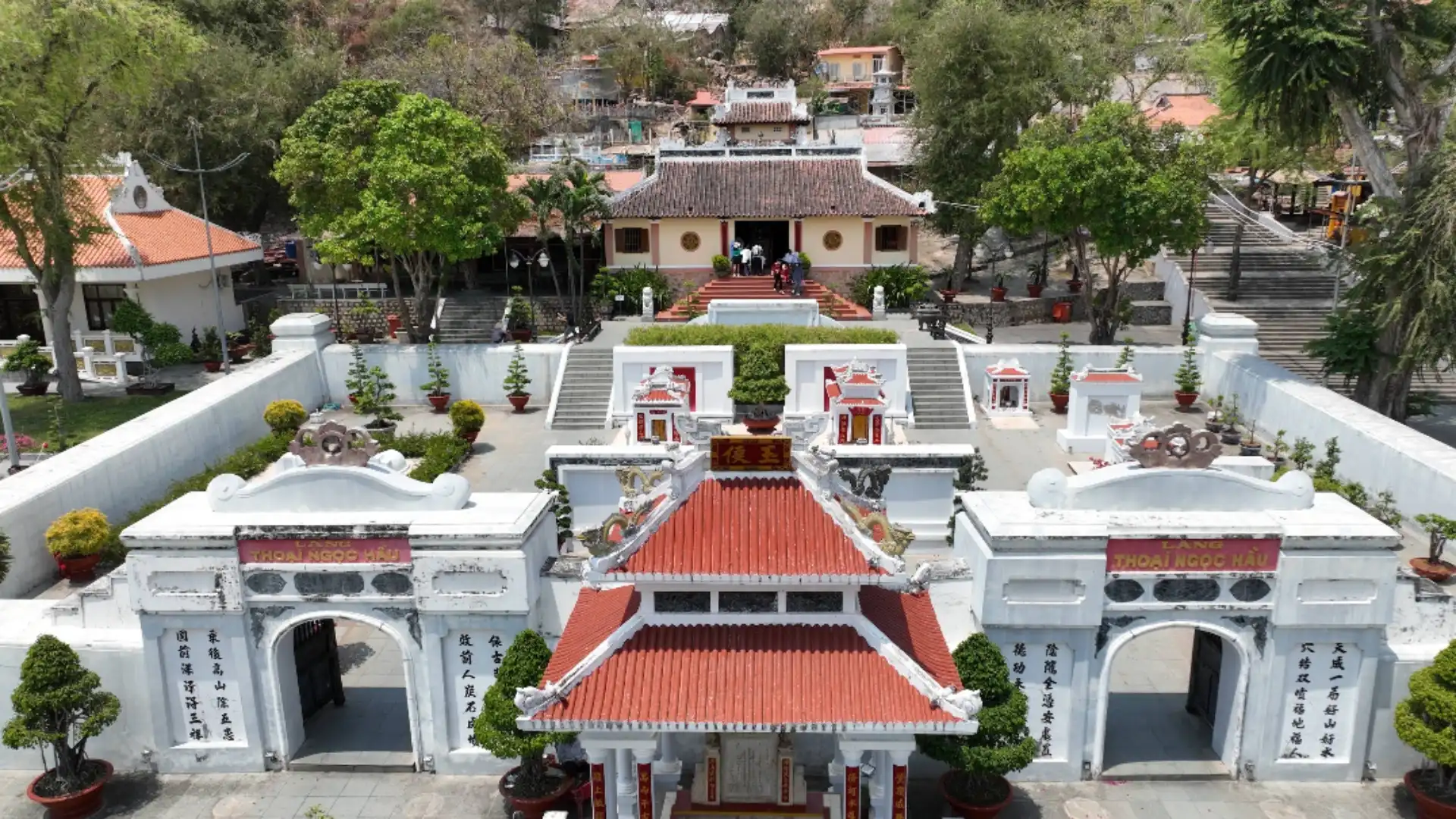
Thoai Ngoc Hau Tomb and Hang Pagoda
Thoai Ngoc Hau Tomb adds a historical element to the Sam Mountain area.
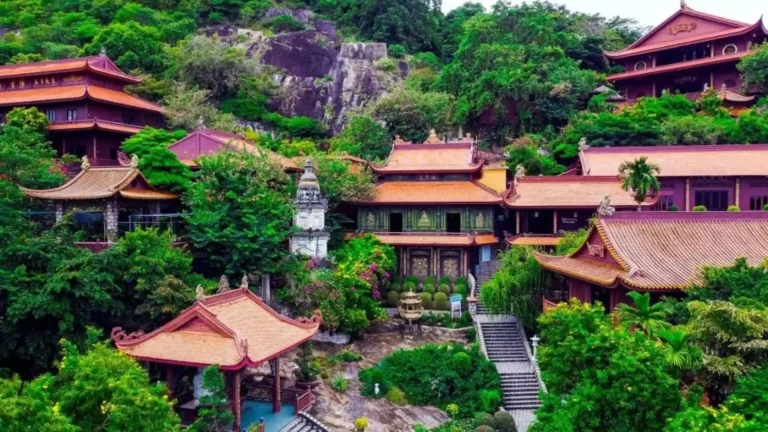
Hang Pagoda, also known as Phuoc Dien Temple, sits farther up the mountain slope and combines religious architecture with views over the surrounding landscape.
If time is limited, choose the tomb for history or Hang Pagoda for a combination of architecture and elevated scenery.
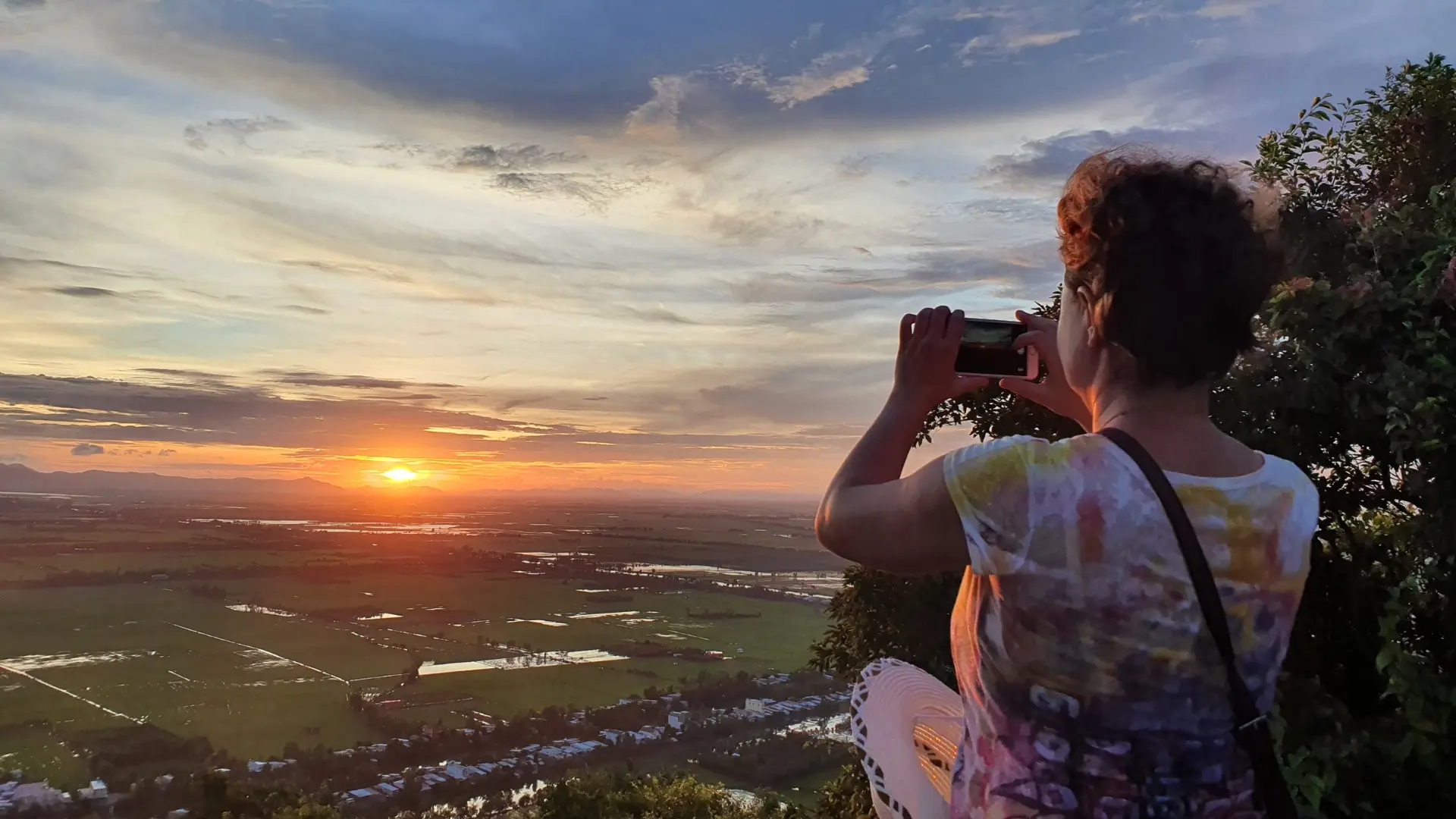
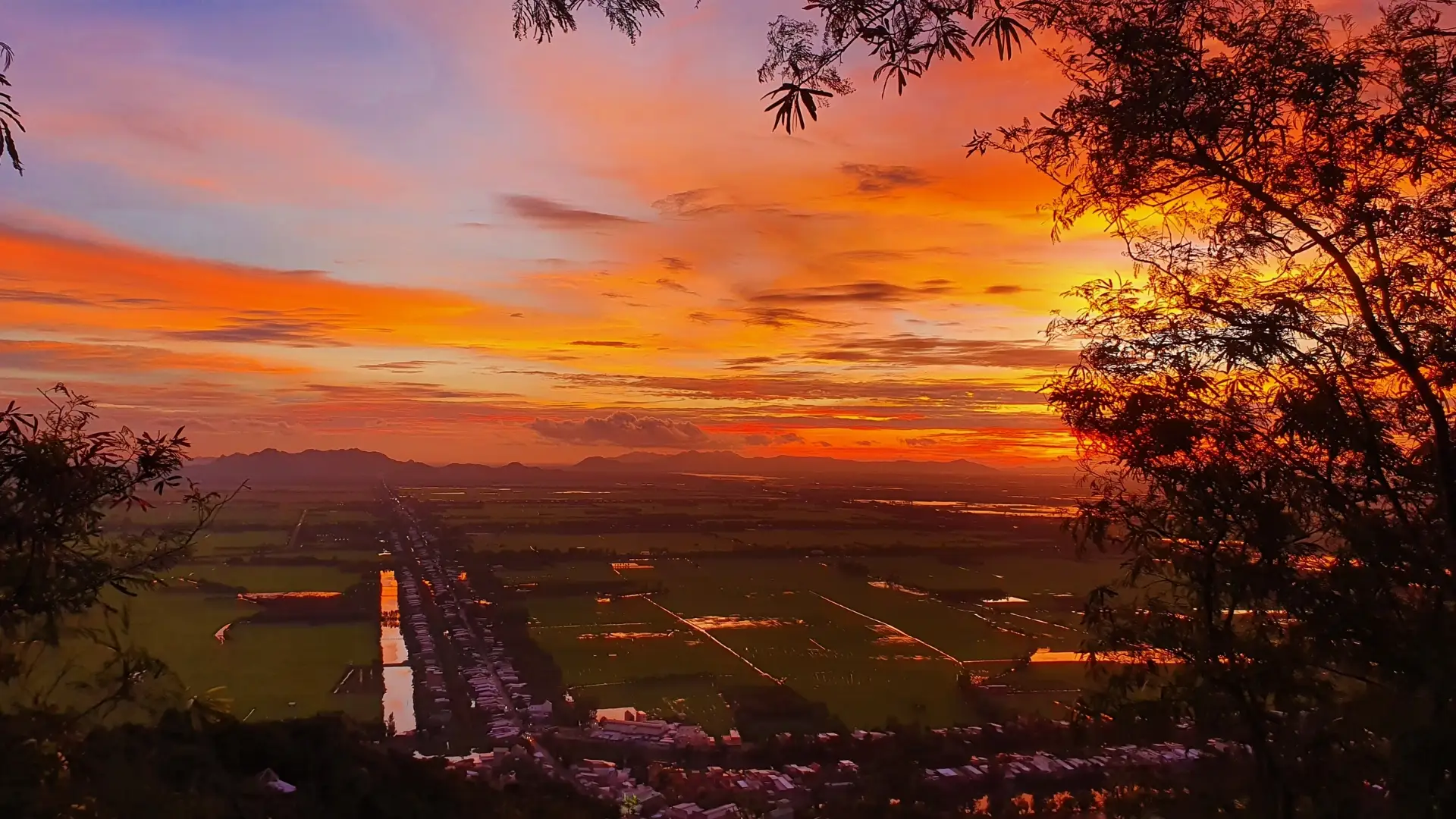
Take in the view from Sam Mountain
Higher areas around Sam Mountain look across rice fields, waterways and the Vinh Te Canal landscape.
Late afternoon often gives softer light, but visibility and sunset conditions depend on the weather.
Learn About Cham Culture Across the River
Chau Giang and Chau Phong are among the Cham communities around Chau Doc where visitors can learn more about Muslim Cham life in An Giang.
The experience is not simply about seeing a mosque.
Traditional houses, food, religious practice, family life and weaving all form part of the community.
Visit a mosque
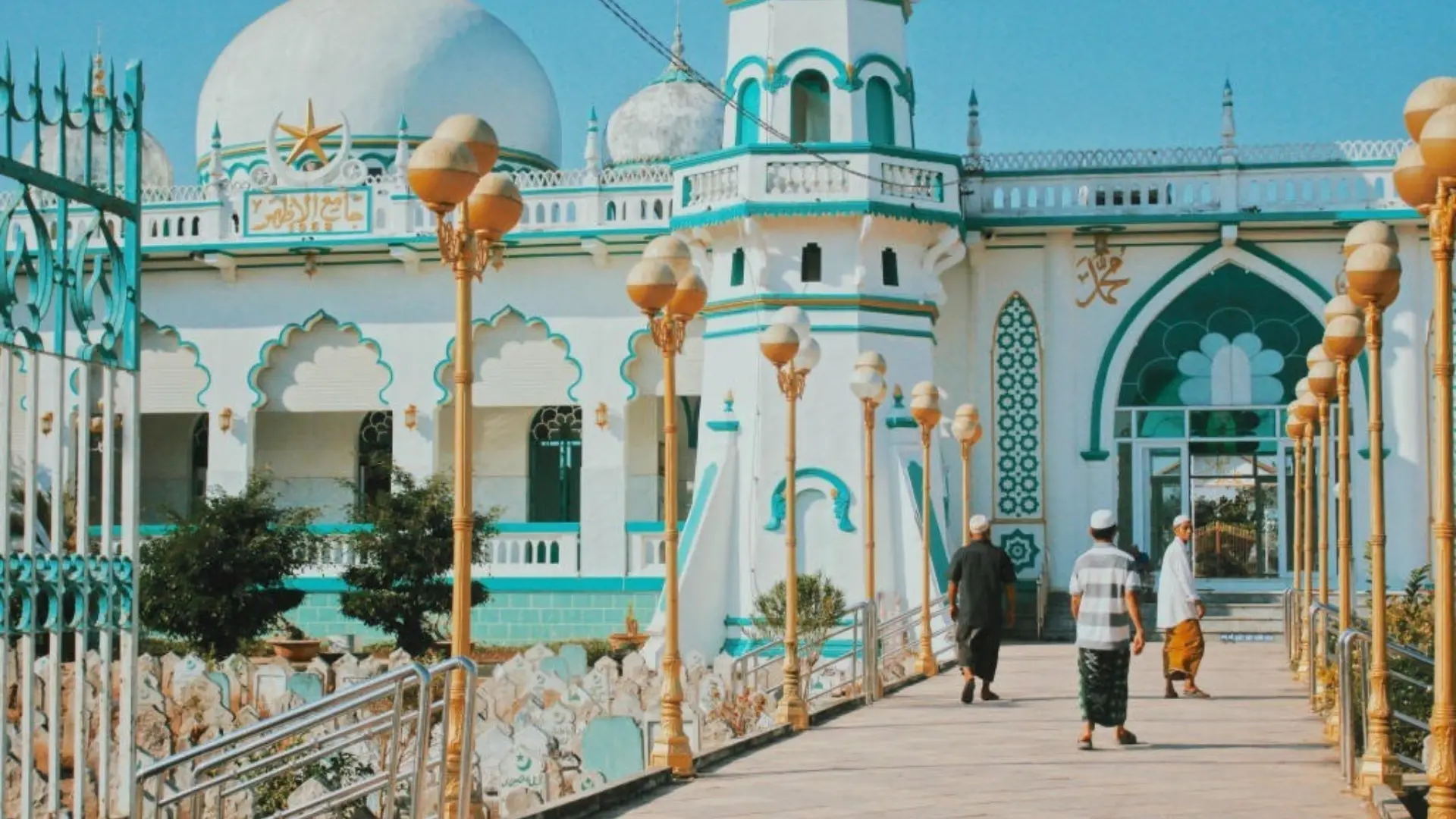
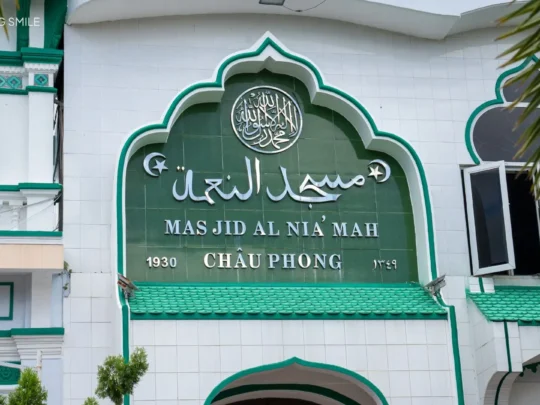
Mubarak Mosque is one of the recognisable mosques in the area and remains an active place of worship.
Dress with shoulders and knees covered, keep voices low and follow local guidance before entering prayer areas.
If prayers are taking place, give worshippers space.
See Cham brocade weaving
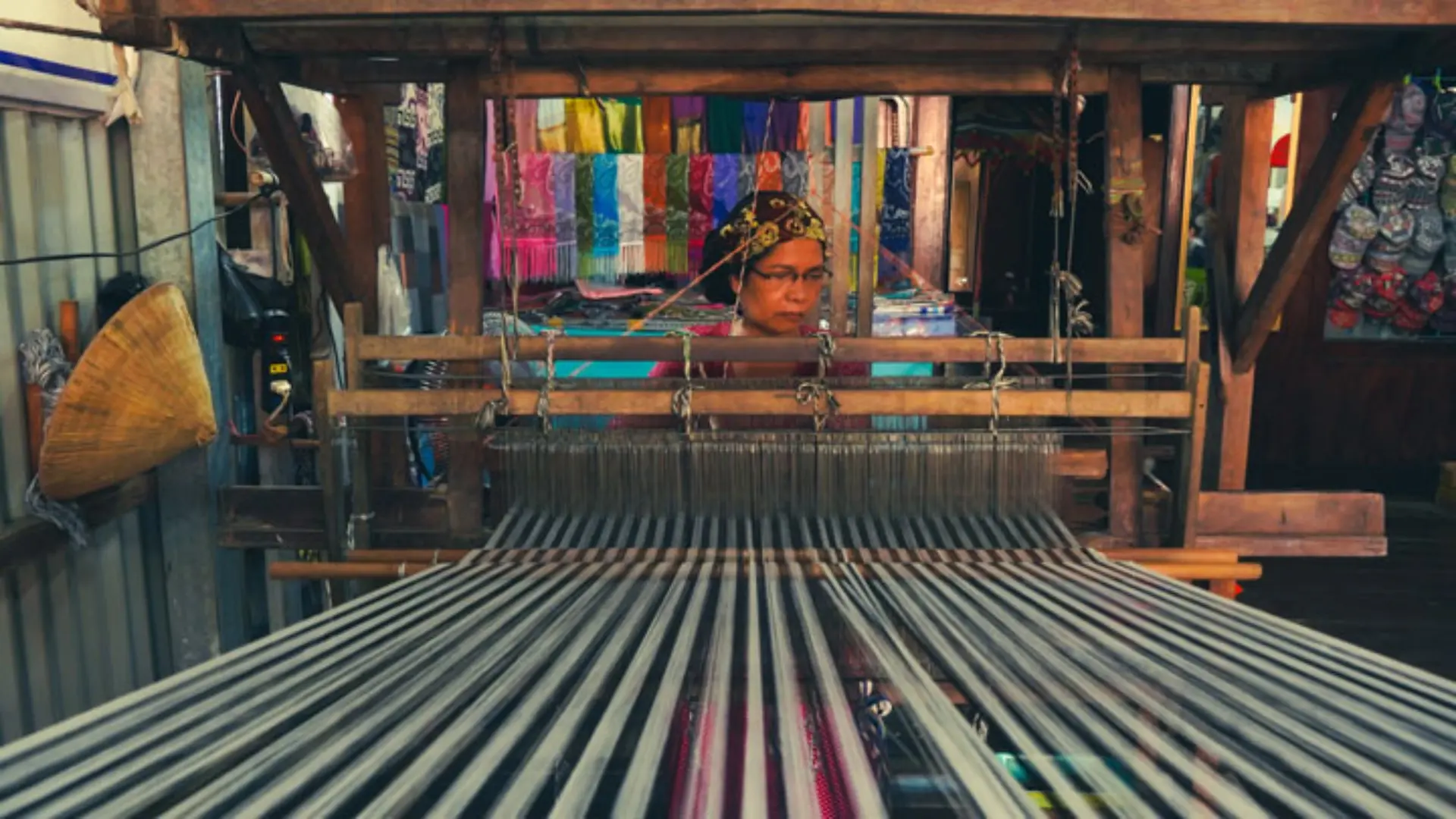
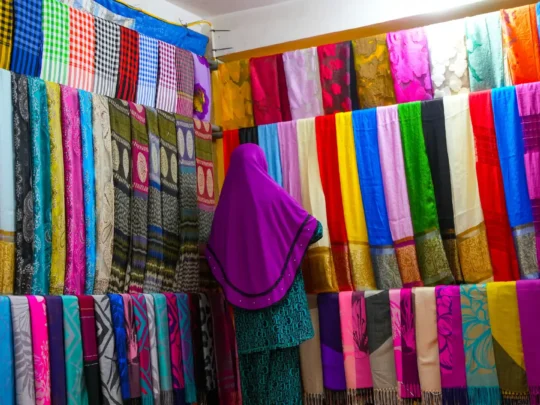
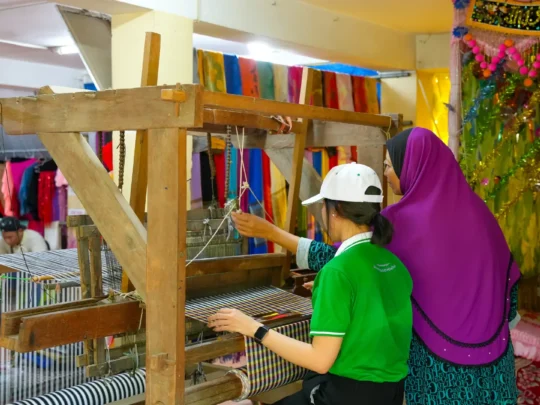
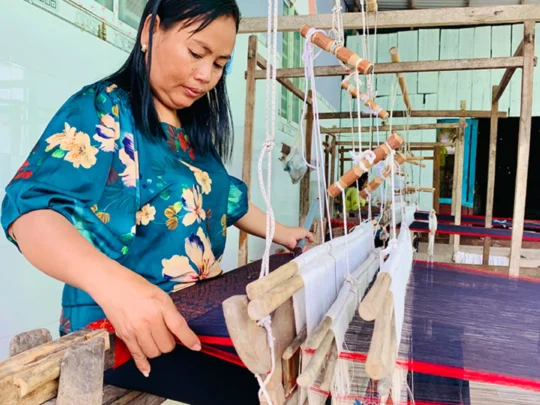
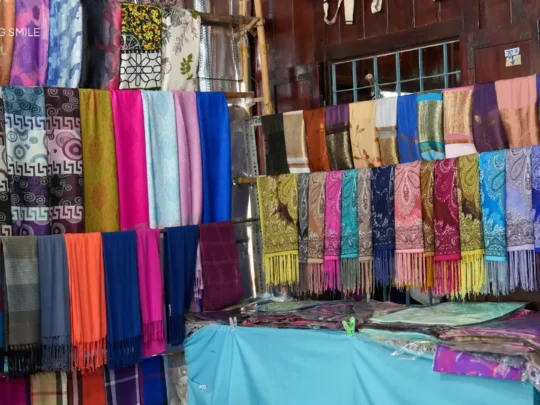
Brocade weaving continues within Cham communities such as Chau Phong.
At some households or workshops, visitors can see how fabric is made on traditional looms and learn more about the patterns and techniques involved.
Take time to watch the process rather than treating the visit only as a shopping stop.
Ask before photographing people, particularly inside homes.
Add Tra Su Cajuput Forest
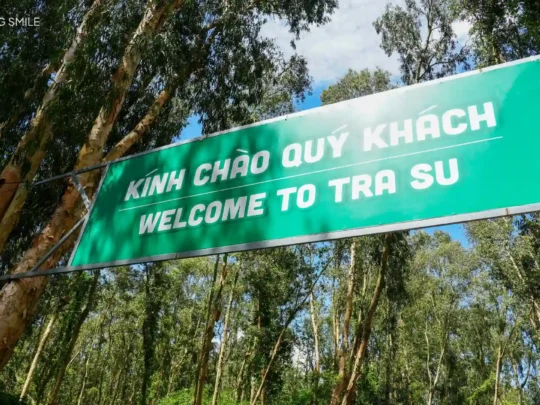
Tra Su is one of the easiest nature experiences to combine with Chau Doc.
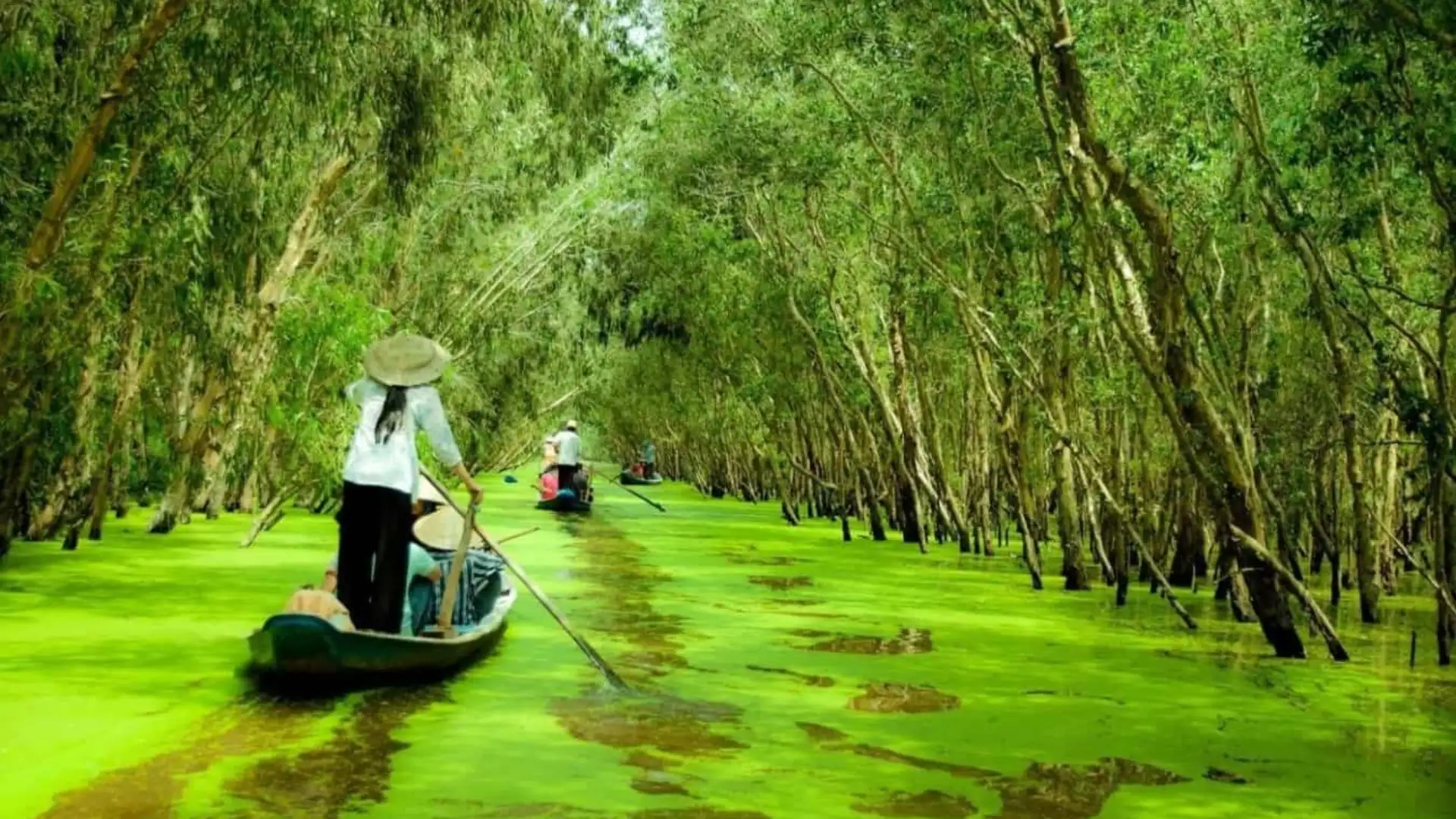
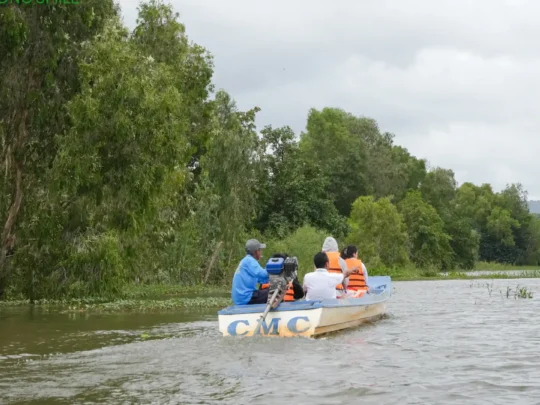
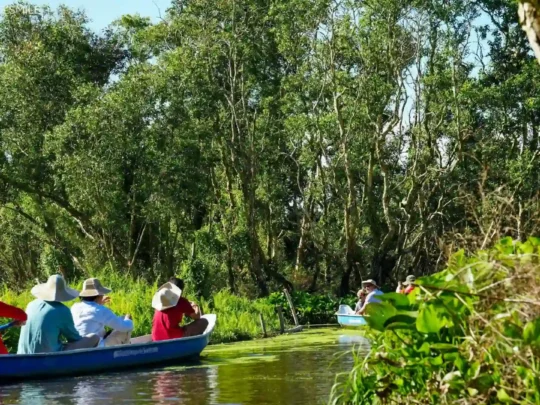
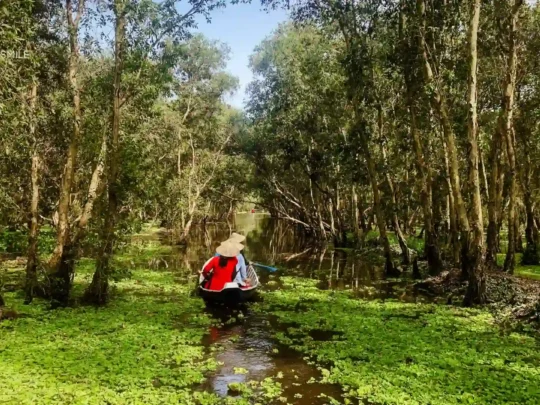
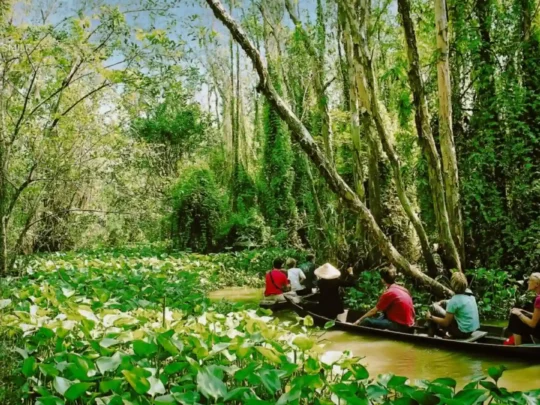
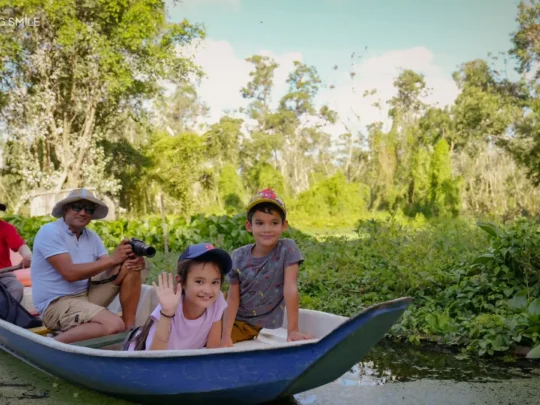
The forest is roughly 20-30 km from the Chau Doc area, depending on your starting point and route. Inside the wetland, visitors move between wider waterways by motorboat, quieter sections by rowing boat and walking areas through the forest.
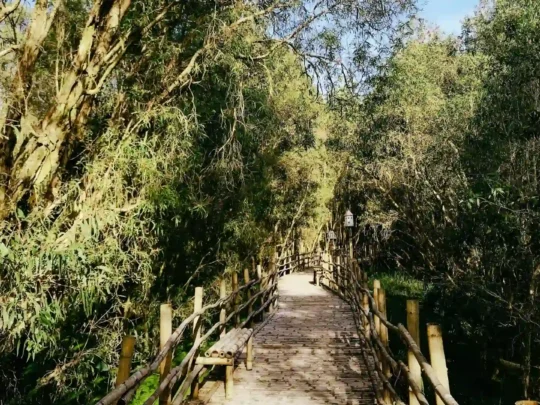
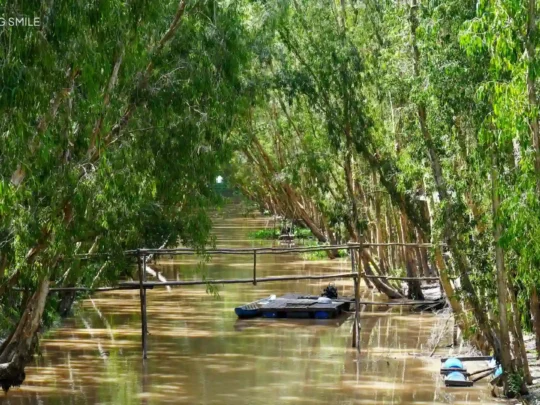
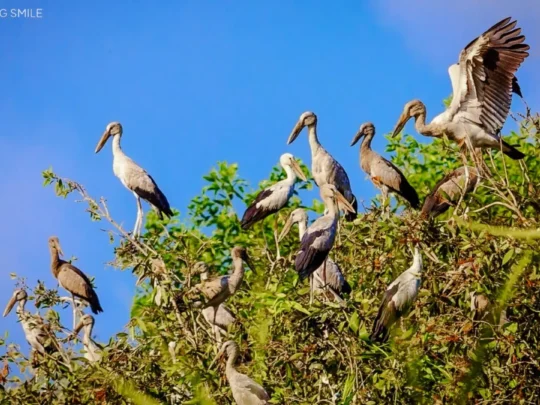
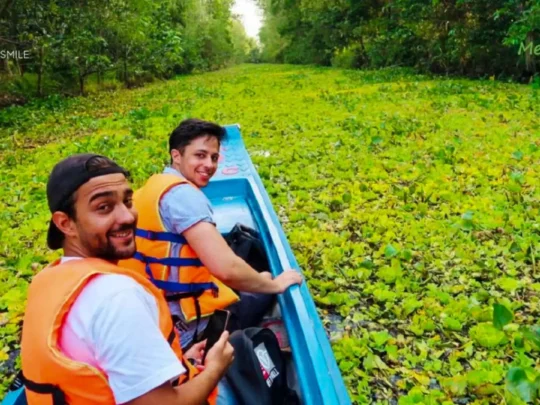
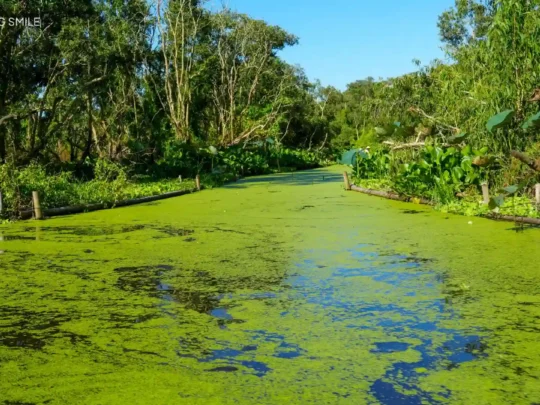
The experience feels very different from central Chau Doc. Houses, markets and fish farms give way to cajuput trees, waterways, aquatic vegetation and birdlife.
If Tra Su is part of your trip, see the full Tra Su Cajuput Forest guide for ticket prices, boats, timing and seasonal conditions.
If you prefer to have transport from Can Tho and the local itinerary arranged in advance, see the Tra Su Forest Tour.
Allow around half a day from Chau Doc instead of trying to squeeze the forest between several other stops.
Slow Down Along the Riverfront
Not every hour in Chau Doc needs to be attached to an attraction.
The riverfront works particularly well in the early morning and toward the end of the day. Ferries continue crossing the water, boats come and go, and the pace changes as the heat drops.
An hour here can be more useful for understanding Chau Doc than adding another distant attraction simply because it appears on a sightseeing list.
How Many Days Do You Need in Chau Doc?
One night
With one night, keep the trip focused on Chau Doc itself:
-
Chau Doc Market and riverfront
-
Floating village
-
A Cham community
-
Sam Mountain in the afternoon
This gives you several different sides of the destination without spending the entire day moving between attractions.
Two days
With two days, keep the first day around Chau Doc and use the second morning or afternoon for Tra Su.
This is the easier option if you want time on the river, a Cham community, Sam Mountain and the forest without rushing.
During the high-water period, other seasonal wetland experiences around An Giang may also become available.
When Should You Visit Chau Doc?
Chau Doc can be visited throughout the year, but the experience changes with rainfall and water levels.
| Period | What to consider |
| November-April | Generally drier conditions |
| May-October | More frequent rain |
| August-November | High-water conditions become more noticeable around wetlands and river landscapes |
| October-November | Particularly worth considering if Tra Su's greener wetland scenery matters to you |
| Ba Chua Xu Festival | Expect heavier crowds around Sam Mountain |
If Tra Su is important to your trip, water levels matter more than simply choosing the driest weather.
October and November are particularly useful months to consider for greener high-water scenery at Tra Su, although natural conditions vary from year to year.
For temples and walking, the drier months may be more comfortable.
For the Ba Chua Xu Festival, check the lunar-calendar dates for the year you plan to visit.
Where to Stay in Chau Doc
For a first visit, central Chau Doc around the market and riverfront is usually the easiest base. Restaurants, river access, local sightseeing and onward transport are relatively convenient from this area.
The Sam Mountain area makes more sense if temples, pilgrimage sites and landscape views are the main focus of your stay.
The four properties below are recommended options rather than a ranking.
Budget-friendly stays
Homestay Khoa Chaudoc
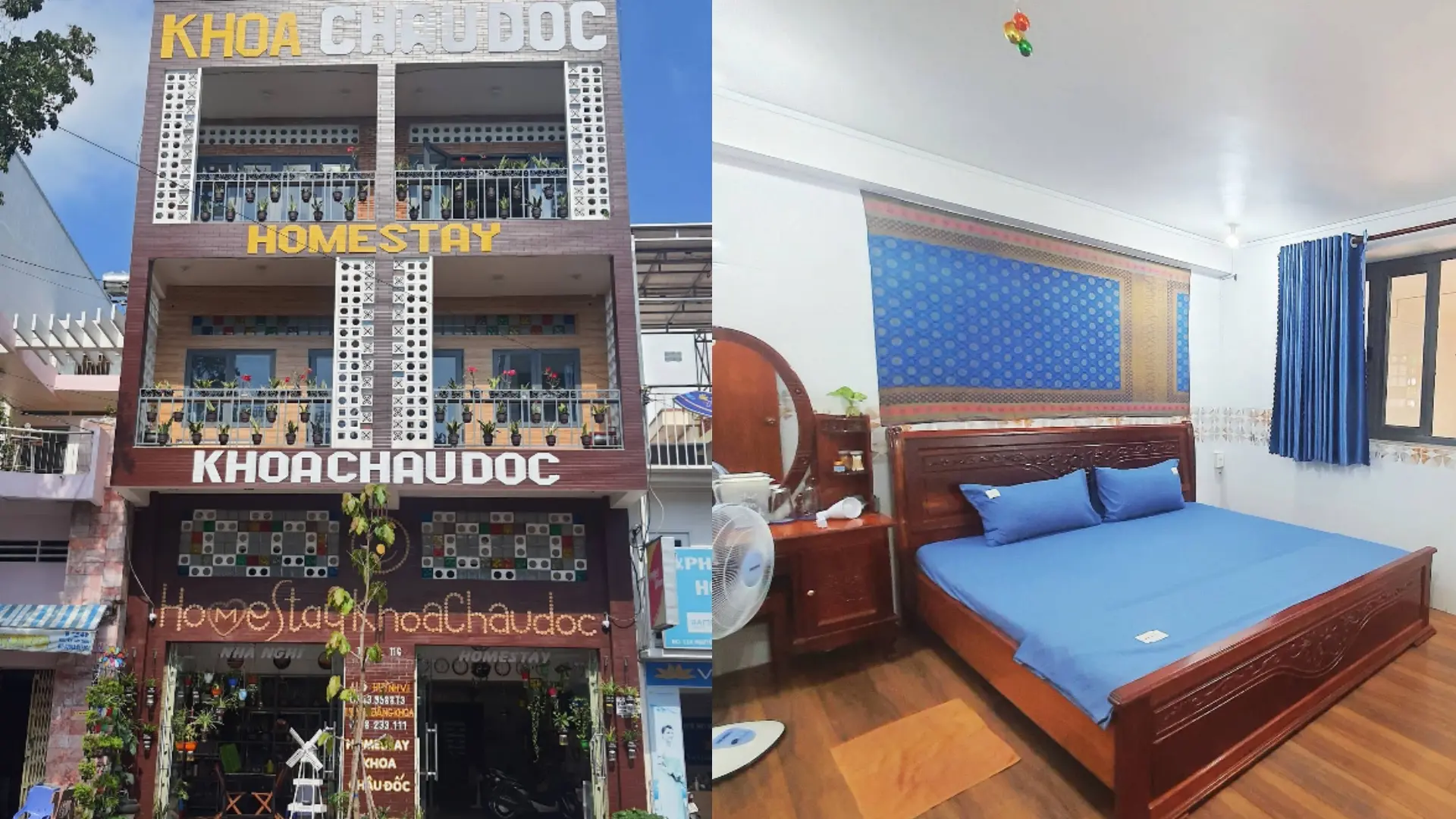
A simple option for independent travelers who want to stay in central Chau Doc without paying for a full-service hotel.
Rooms include air conditioning, private bathrooms and Wi-Fi. The central location is convenient for exploring the town and for travelers continuing toward Cambodia by passenger boat.
Good for: solo travelers, couples and independent travelers.
The Luxe Hotel – Chau Doc
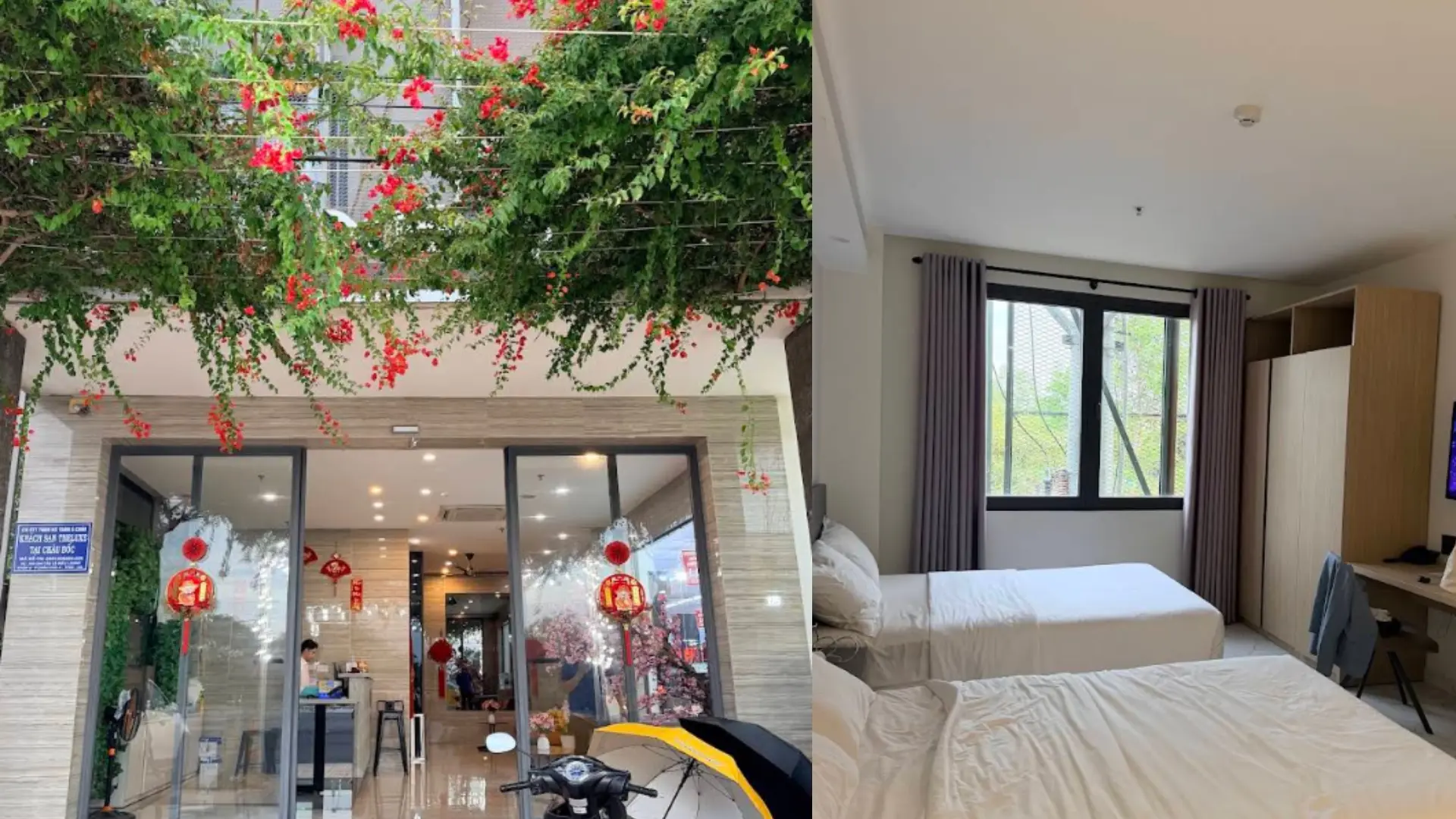
The Luxe is a 3-star hotel on Tan Lo Kieu Luong, offering a more conventional hotel setup while remaining below the premium properties in Chau Doc.
Rooms include air conditioning and private bathrooms, with family-room options available.
Its location can work well if you plan to move between central Chau Doc and the Sam Mountain area.
Good for: couples, families and travelers who prefer a standard hotel over a homestay.
Higher-comfort stays
Victoria Chau Doc Hotel
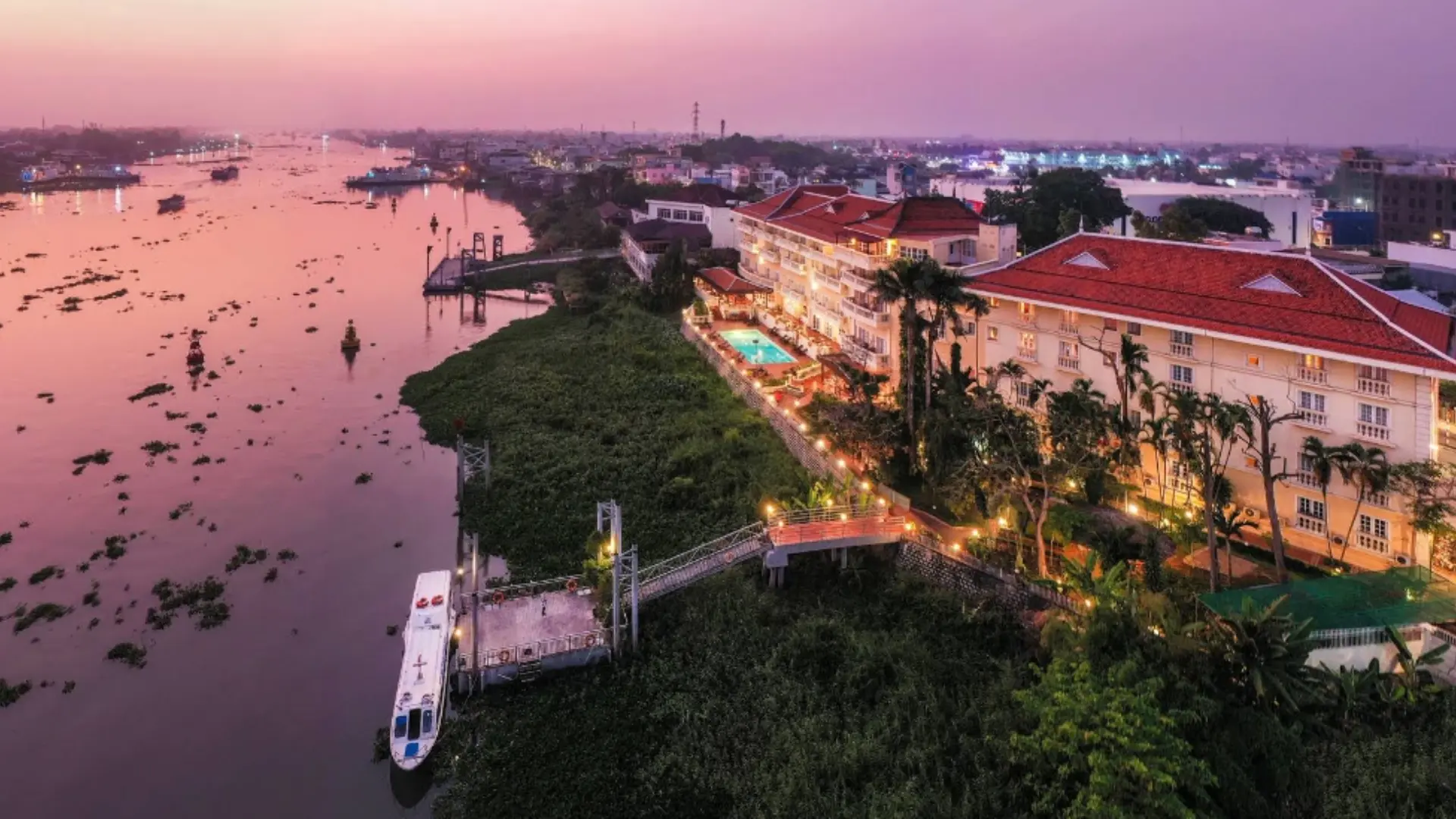
Victoria Chau Doc sits directly on the Hau River in central Chau Doc.
The hotel has 92 rooms, river-facing public areas, a restaurant and an outdoor pool.
Its location is particularly convenient for the riverfront and for travelers using the passenger boat between Chau Doc and Phnom Penh.
Good for: first-time visitors who want a higher-comfort stay in central Chau Doc.
Victoria Nui Sam Lodge
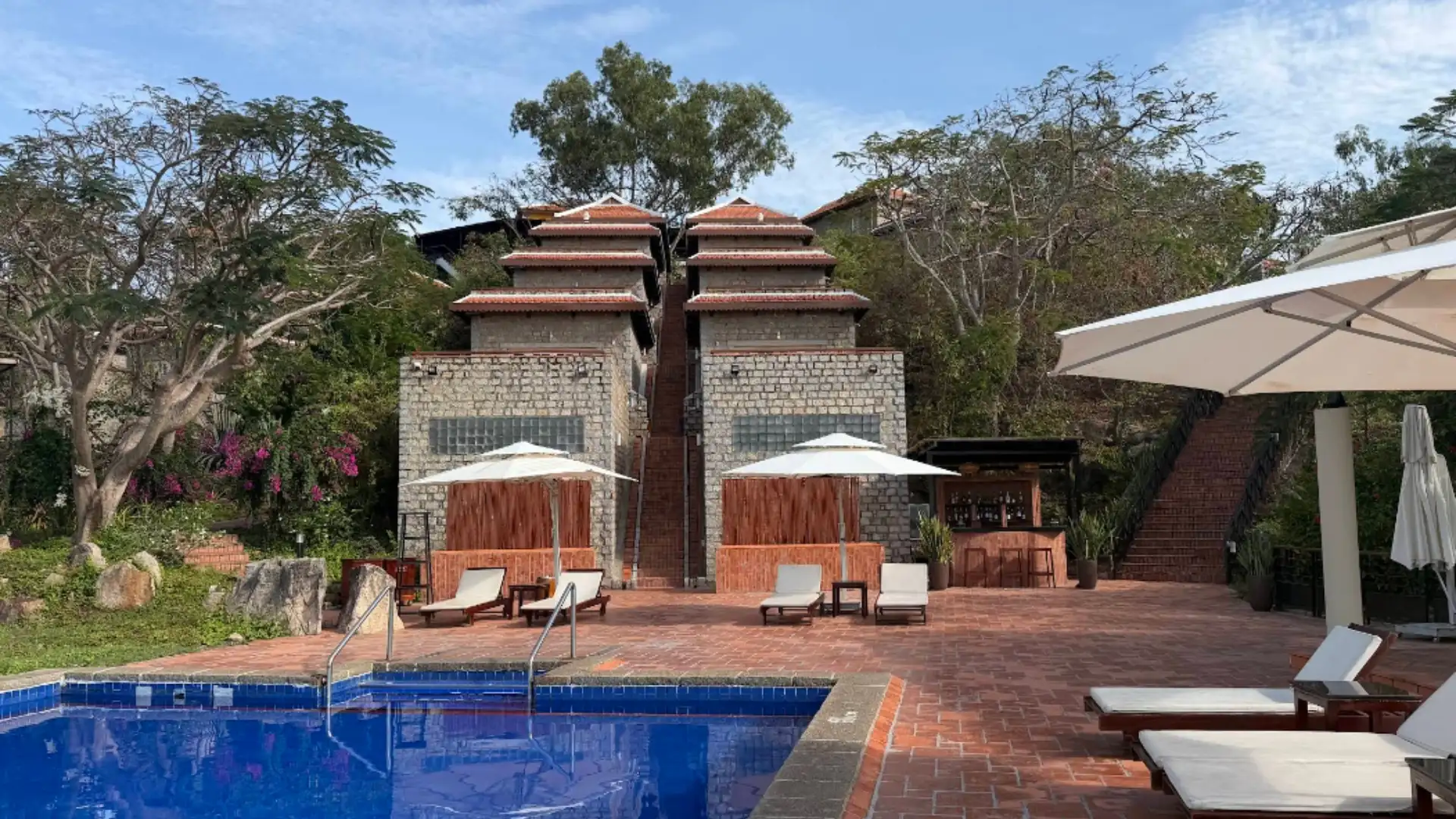
Victoria Nui Sam Lodge sits on Sam Mountain rather than in central Chau Doc.
The property has 40 bungalows, each with a private terrace or balcony overlooking the surrounding fields.
The experience is more about landscape and quiet surroundings than immediate access to the market and riverfront.
Good for: travelers prioritising Sam Mountain, views and a quieter stay.
Hotel rates vary considerably by room type, season and booking date, so check prices for your exact travel dates.
What to Eat in Chau Doc
Food is one of the easier ways to understand how Chau Doc connects river produce, local agriculture and different cultural communities.
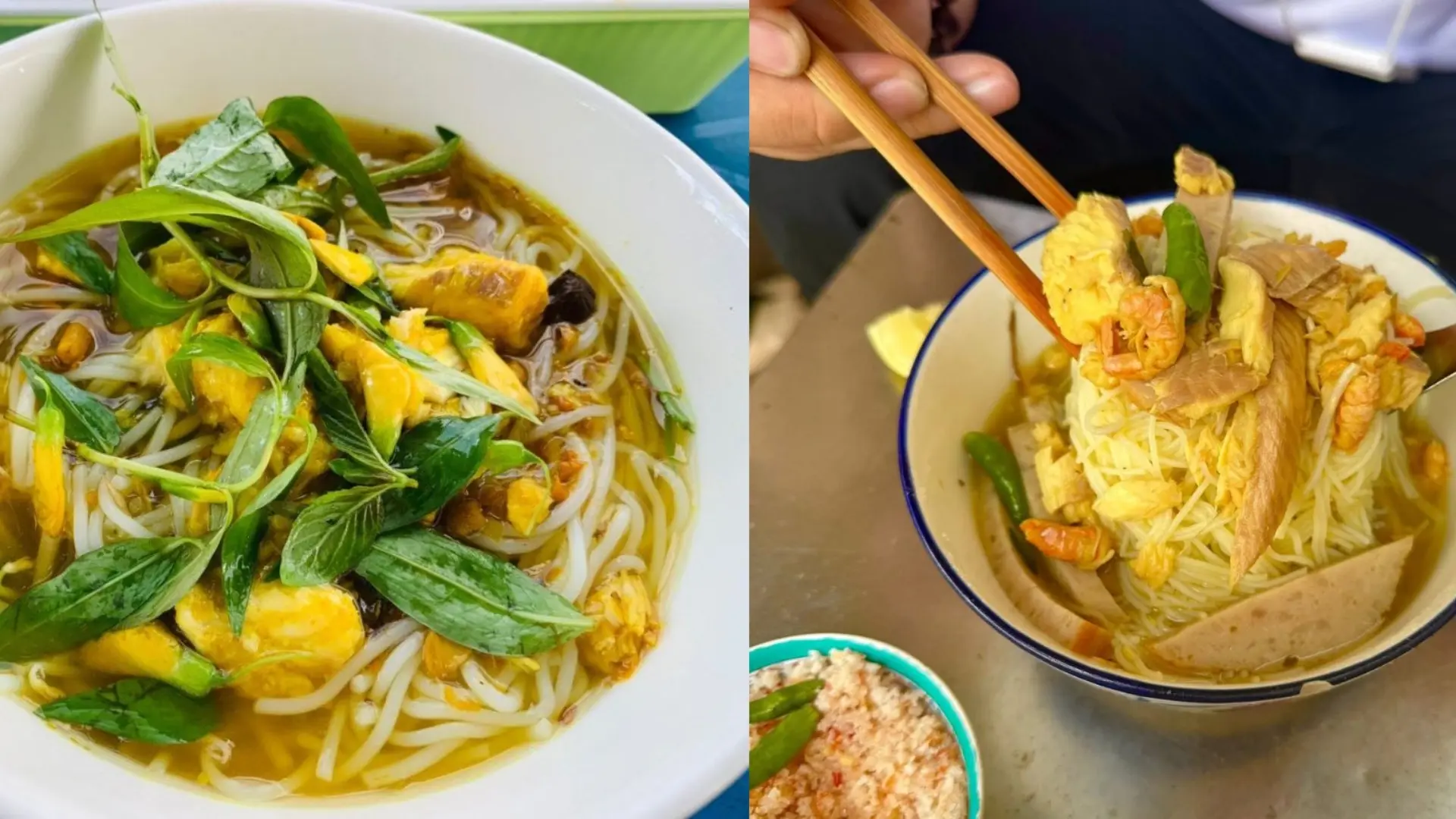
If you have only one morning in town, breakfast at a local bún cá shop followed by a walk through Chau Doc Market is an easy place to start.
Bun ca Chau Doc
Bun ca Chau Doc is a fish noodle soup commonly eaten for breakfast or lunch.
The local version developed with influences from neighboring Cambodia and is usually served with fish, noodles, herbs and vegetables.
The exact accompaniments vary by shop and season.
Mam and fish-based dishes
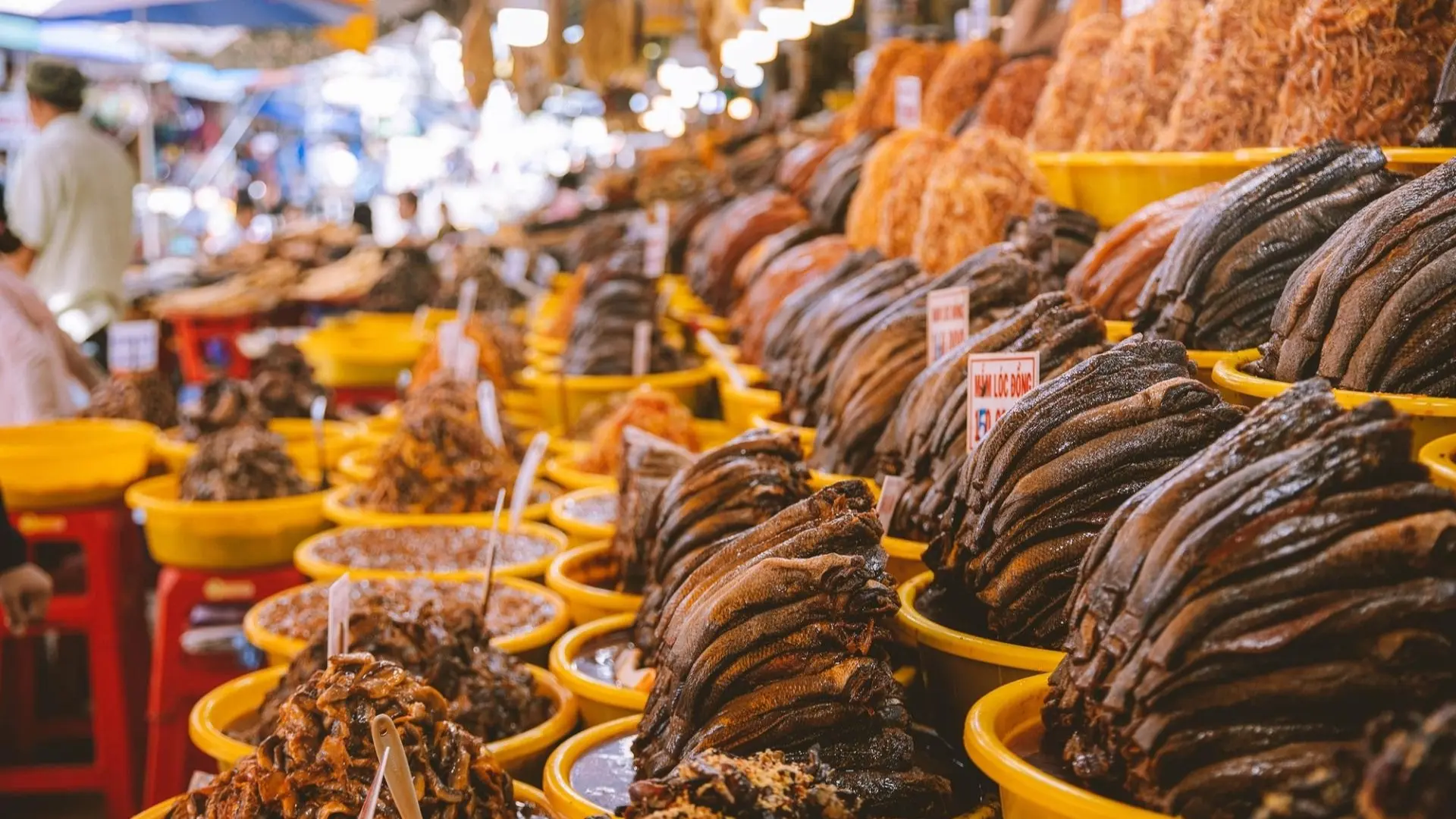
Fermented fish is closely associated with Chau Doc Market.
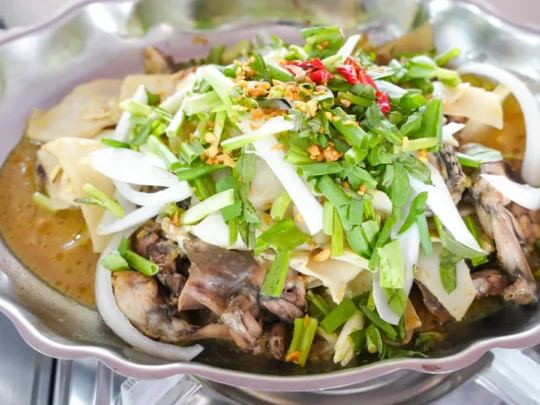
If you want to experience the flavour as part of a cooked meal rather than buying preserved fish directly, lẩu mắm is one option. The hotpot combines fermented-fish broth with vegetables and other ingredients.
The flavour and aroma can be strong, so it is better approached out of curiosity than as something every visitor is expected to enjoy.
Palm-sugar snacks
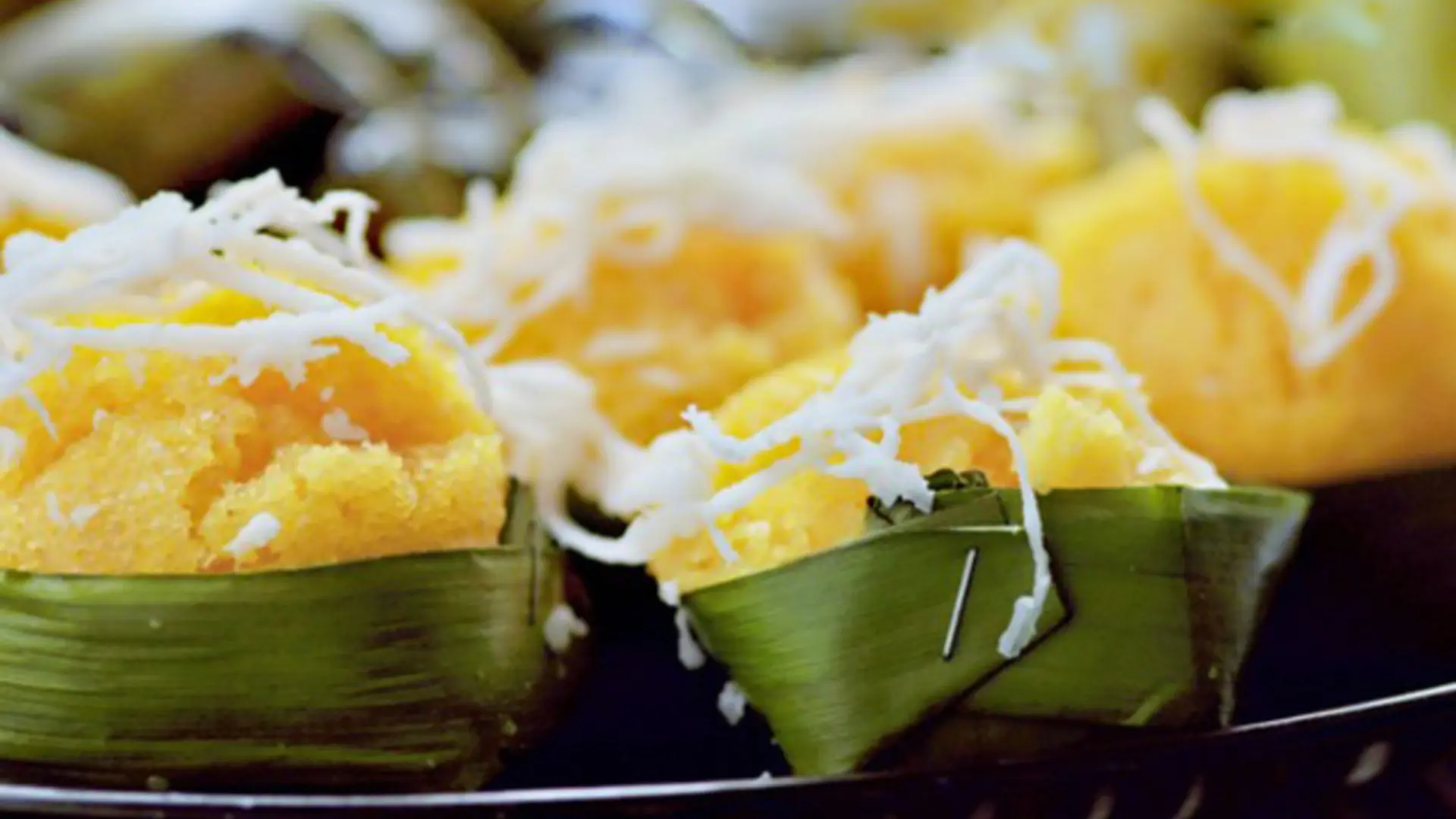
Palm sugar is widely used in An Giang.
Bánh bò thốt nốt is a soft palm-sugar cake that works well as a snack during the day.
Cham food
If you visit a Cham community, look for food that is actually prepared locally.
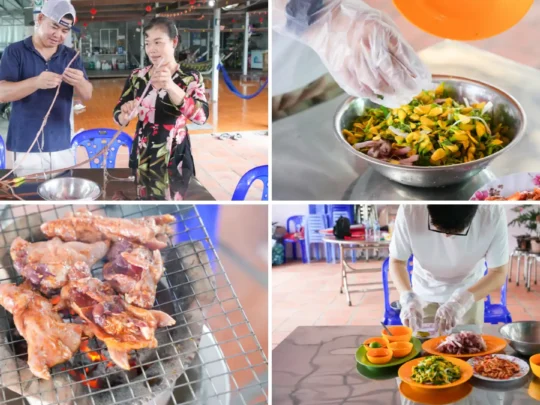
Dishes associated with Cham cuisine in An Giang include cơm nị, cà púa and tung lò mò.
Availability depends on the household, restaurant or community you visit.
How to Get to Chau Doc
From Ho Chi Minh City
Chau Doc is roughly 250 km from Ho Chi Minh City.
Allow around six hours by road, depending on traffic, stops and where you start in the city.
Buses and private cars are common options.
For a useful reference point:
Ben Thanh Market → Chau Doc Market
A same-day return leaves little useful sightseeing time, so staying at least one night is more comfortable.
From Can Tho
From central Can Tho, allow roughly three hours by road to Chau Doc.
If you are already traveling through the Mekong Delta, the route works naturally as:
Can Tho → Chau Doc → Tra Su / Cambodia
For a useful reference point:
Ninh Kieu Wharf → Chau Doc Market
From Phnom Penh
Passenger speedboats connect Phnom Penh and Chau Doc.
As of August 2026:
-
Phnom Penh → Chau Doc: departure around 12:30 PM, journey around 6-6.5 hours.
-
Chau Doc → Phnom Penh: departure around 7:00 AM, journey around 6.5 hours.
The Chau Doc departure point is around the Victoria Chau Doc Hotel area.
Schedules, fares and border requirements can change, so recheck them before traveling.
Explore Chau Doc with Mekong Smile
If you would rather spend your time exploring than arranging boats, transfers and separate local stops, Mekong Smile also offers Chau Doc and An Giang itineraries.
Attractions in Mekong Delta
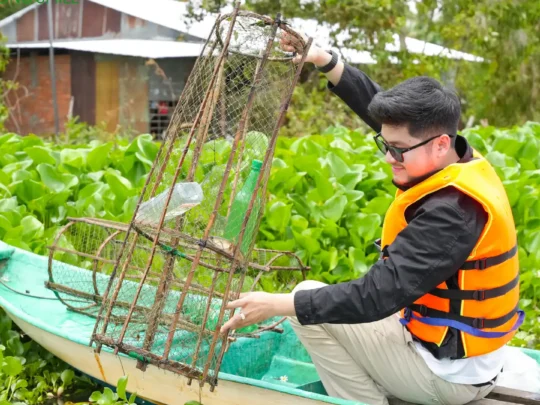
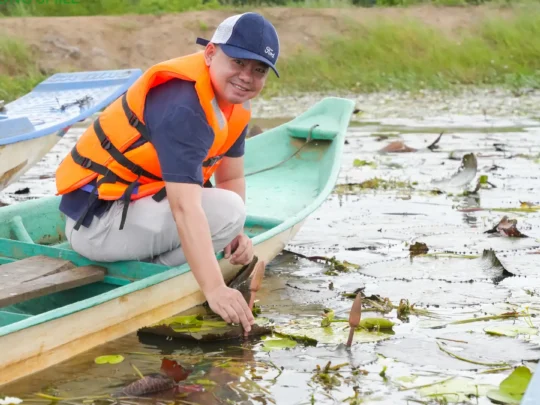
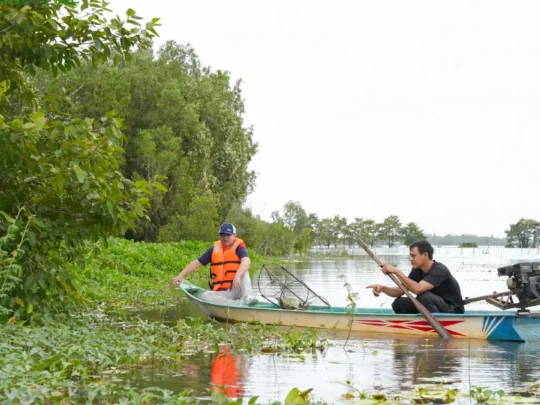
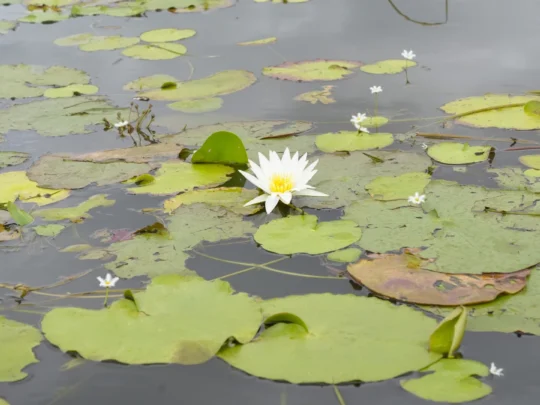
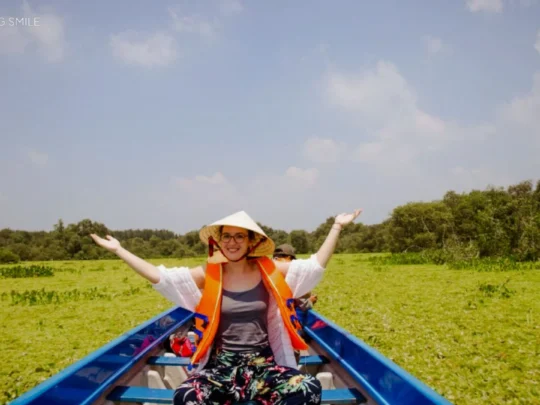
Water Lily Harvesting Tour in Chau Doc – 2 Days 1 Night Floating Season Experience
From $16011,590,000₫
08:00 AM • 2 days 1 night (approx.) • Community-based tours


Attractions in Mekong Delta
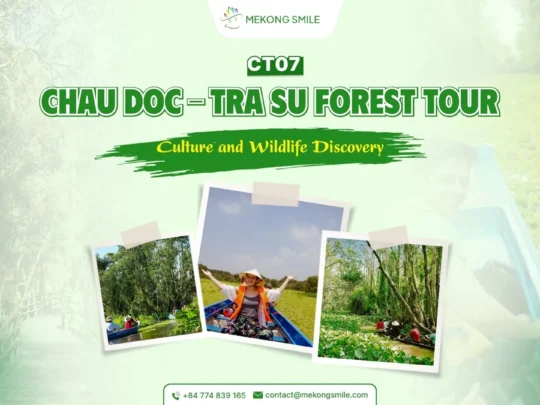
Explore Chau Doc – Tra Su Forest Tour | Culture and Wildlife Discovery
From $1082,700,000₫
6:30 AM • 10 hours (approx.) • Sightseeing & Leisure Tours
Need help planning your time in Chau Doc? Contact Mekong Smile via Hotline or WhatsApp for current itineraries, pickup options and seasonal experiences.
Getting Around Chau Doc
A motorbike is not necessary for a short visit.
The market and parts of the riverfront can be explored on foot. Taxis, cars and motorbikes are more practical for longer distances.
Boats and ferries are useful for the floating village and communities across the river.
Sam Mountain lies outside the central riverfront area, so road transport is easier.
Tra Su requires a separate drive before transferring to boats and walking routes inside the forest.
If you want to combine several places in one day, deciding the order beforehand will save time.
Things to Know Before Visiting Chau Doc
Dress appropriately at religious sites. Ba Chua Xu Temple, pagodas and mosques are active places of worship. Cover shoulders and knees and avoid interrupting ceremonies or prayers.
Ask before photographing people. Cham villages are residential communities rather than open-air exhibits.
Expect crowds around Sam Mountain during the festival period. Roads, religious sites and accommodation can become considerably busier.
Carry some Vietnamese dong. Cash remains useful for markets, small food stalls, ferries and local purchases.
Prepare for rain in wetter months. Rain can affect boat trips, mountain views and outdoor walking.
Take care when boarding small boats. Travelers with limited mobility may want to check boarding conditions in advance.
Practical Questions Before Visiting Chau Doc
Is Chau Doc worth visiting if I am not traveling to Cambodia?
Yes. The Cambodia connection is convenient, but Chau Doc stands on its own through the floating village, river life, Cham communities, Sam Mountain and access to Tra Su.
What should I expect from Chau Doc Floating Market?
Do not expect the scale of Cai Rang Floating Market. River trading in Chau Doc is smaller, while the floating village and fish-farming community provide a different view of life on the water. Because activity varies, avoid building the entire trip around the floating market alone.
Can I visit Cham communities independently?
Yes. Ferries and local road transport can take you across the river. A guide can provide useful cultural context but is not required. Dress respectfully around mosques and ask before photographing people.
Do I need to stay overnight to visit Tra Su?
Not if you are already in Chau Doc. Tra Su can fit into roughly half a day. An overnight stay becomes more useful if you also want to see the floating village, Cham communities, market and Sam Mountain.
Is Sam Mountain worth visiting if I am not religious?
Yes, if you are interested in architecture, local culture, history or the surrounding landscape. You do not need to participate in worship, but the religious role of the sites should be respected.
Can families visit Chau Doc?
Yes, although heat, boat transfers and busy religious periods may require more planning with young children. Fewer stops and a slower pace generally work better than trying to cover everything in one day.
Can I explore Chau Doc without renting a motorbike?
Yes. Central Chau Doc can be explored partly on foot, while taxis, cars, boats and ferries cover the main longer journeys.
Can I travel directly from Chau Doc to Phnom Penh?
Yes. Passenger speedboats operate between Chau Doc and Phnom Penh. The current Chau Doc departure is around 7:00 AM, with a journey of roughly 6.5 hours. Recheck the timetable and border-entry requirements before traveling.
Before You Go
Chau Doc is not a place where one attraction explains the whole destination.
The river shows one side of local life. Sam Mountain introduces the religious and historical landscape. Across the water, Cham communities bring a different cultural setting. Farther out, Tra Su replaces houses and temples with flooded forest.
With one night, focus on the river, floating village, Cham culture and Sam Mountain.
With two days, add Tra Su and give each part of the trip enough time to feel different.
For travelers moving between Can Tho, An Giang and Cambodia, Chau Doc can be more than a transit point. It is a useful place to slow down and see how the river, border communities, religious traditions and wetland landscape come together.
