

Step into the vibrant world of Ong Temple (Chua Ong), a 130-year-old architectural gem nestled in the heart of Can Tho’s Ninh Kieu Quay. Famous for its mesmerizing hanging incense coils and intricate Cantonese design, this temple is more than just a photo spot. This comprehensive Ong Temple travel guide covers every detail you need for a meaningful visit, from understanding the unique architecture to practical advice on dress codes and the best times for photography. We also share insider tips on how to participate in the local fortune-telling ritual and seamlessly combine your trip with nearby attractions, ensuring you experience the full spiritual and cultural depth of the Mekong Delta.
An Overview of Ong Temple
A glance of Ong Temple
- Built: 1894 – 1896
- Location: 32 Hai Ba Trung Street, Tan An Ward, Ninh Kieu District, Can Tho (Facing the Can Tho River)
- Opening Hours: 7:00 AM – 5:00 PM daily
- Entrance Fee: Free
- Time Needed: 30 – 45 minutes
- Famous For: Giant hanging incense coils, authentic Chinese architecture, Quan Cong worship, “Instagrammable” aesthetics
About Ong Temple
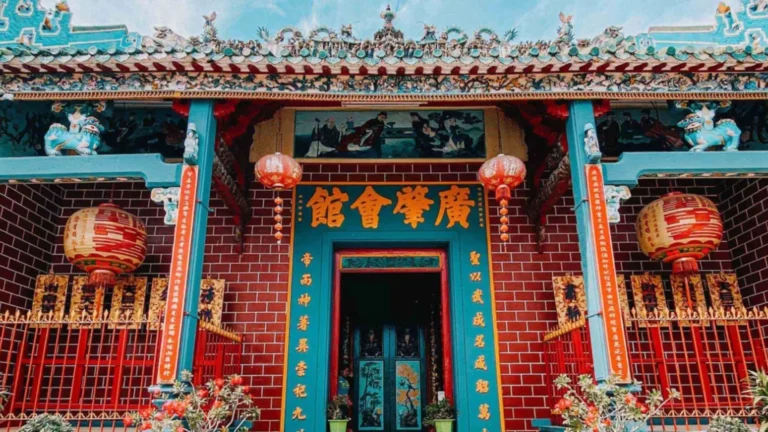
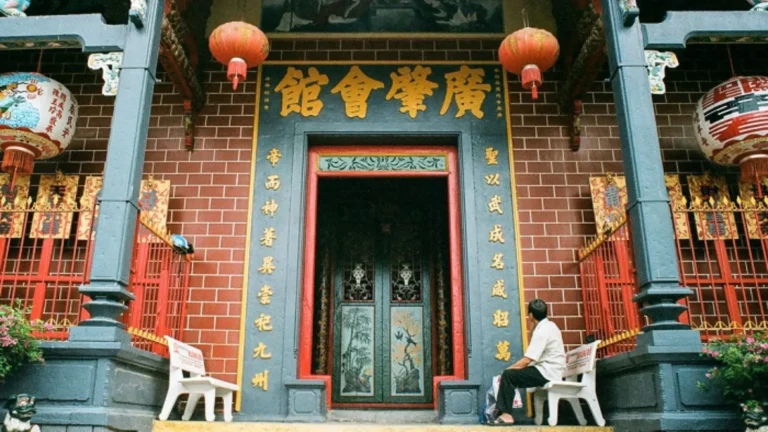
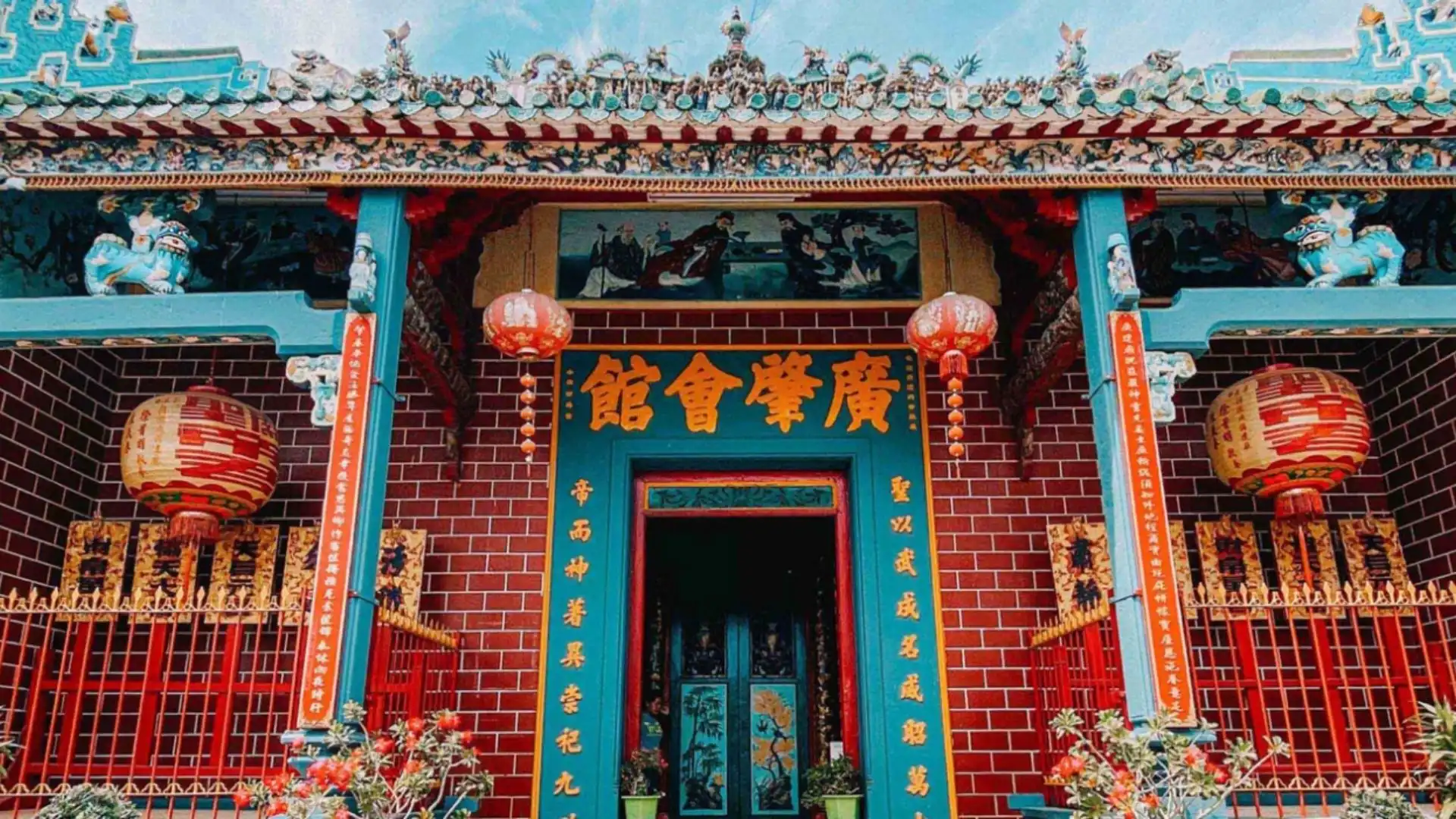
Situated right in the bustling heart of Ninh Kieu Quay, Ong Temple (officially known as Quang Trieu Assembly Hall) is arguably the most colorful and photogenic spiritual site in Can Tho. Unlike the serene, spacious Zen monasteries, this compact temple is a vibrant explosion of red and gold, incense smoke, and intricate artistry.
Built by the Cantonese community in the late 19th century, the temple has remained almost entirely intact for over 130 years, preserving its original architecture through decades of war and change. It is not a Buddhist pagoda but a temple dedicated to Quan Cong (Guan Yu)—a general from the Three Kingdoms period symbolizing loyalty, justice, and bravery. Stepping inside, visitors are instantly transported from the noisy riverside streets into a sacred, atmospheric world illuminated by hundreds of large incense coils hanging from the ceiling.
Video about Ong Temple (Eng subtitles)
Planning Your Visit to Ong Temple
Location & Address
Ong Temple boasts one of the most prime locations in the city, situated right on the riverside promenade of Ninh Kieu Quay.
- Address: 32 Hai Ba Trung Street, Tan An Ward, Ninh Kieu District, Can Tho City.
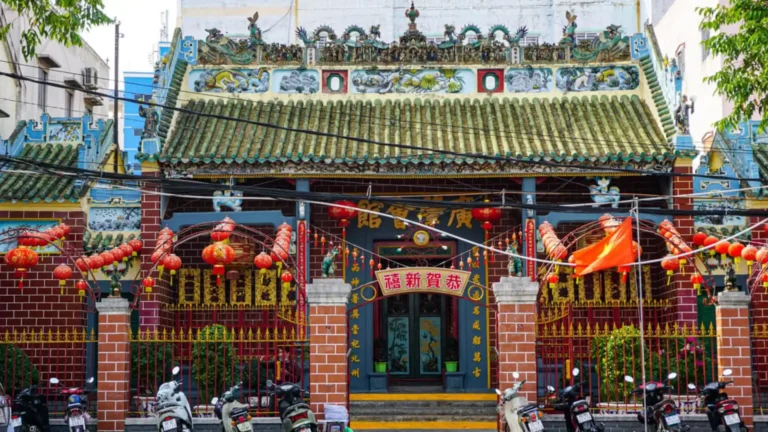
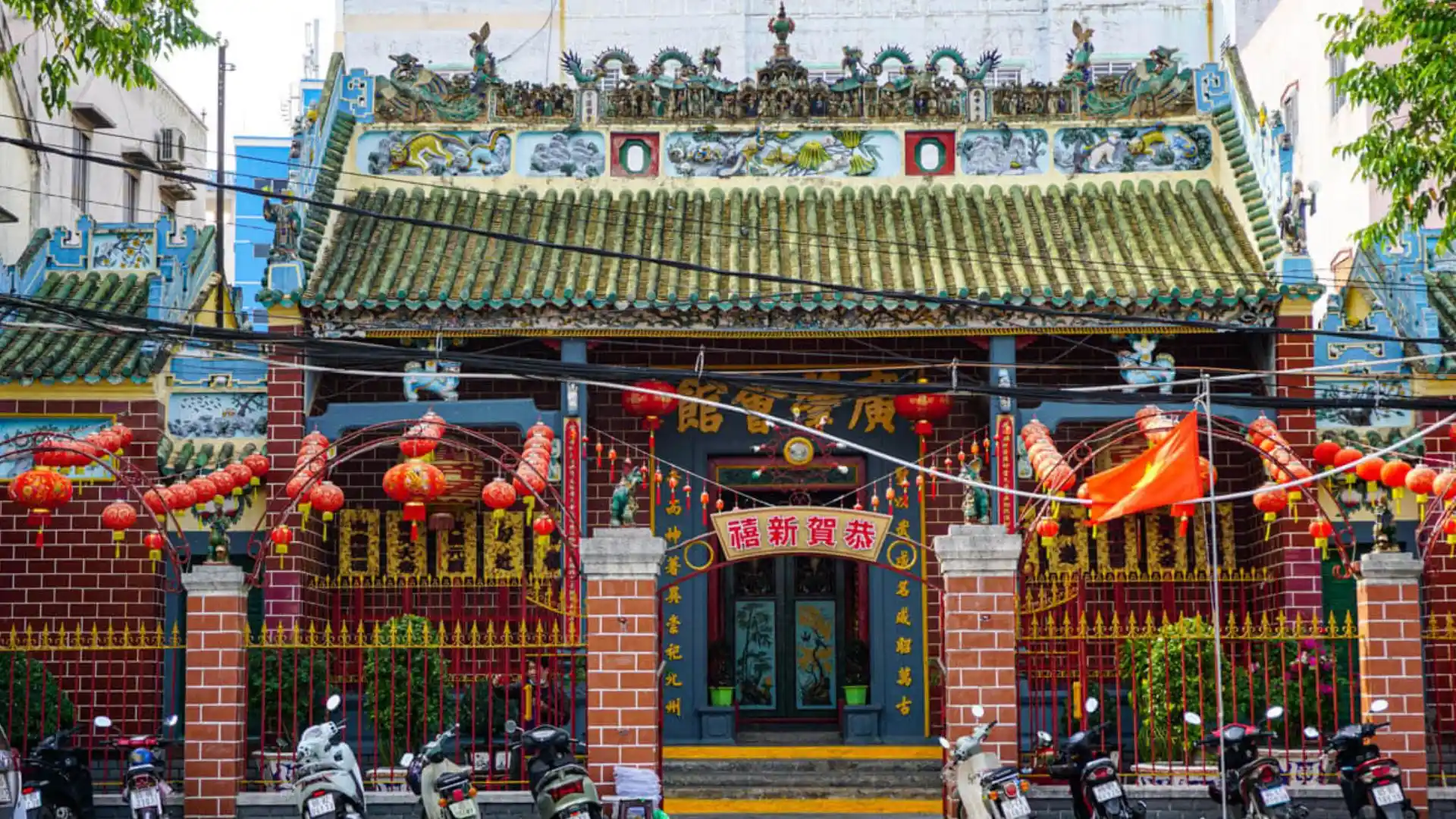
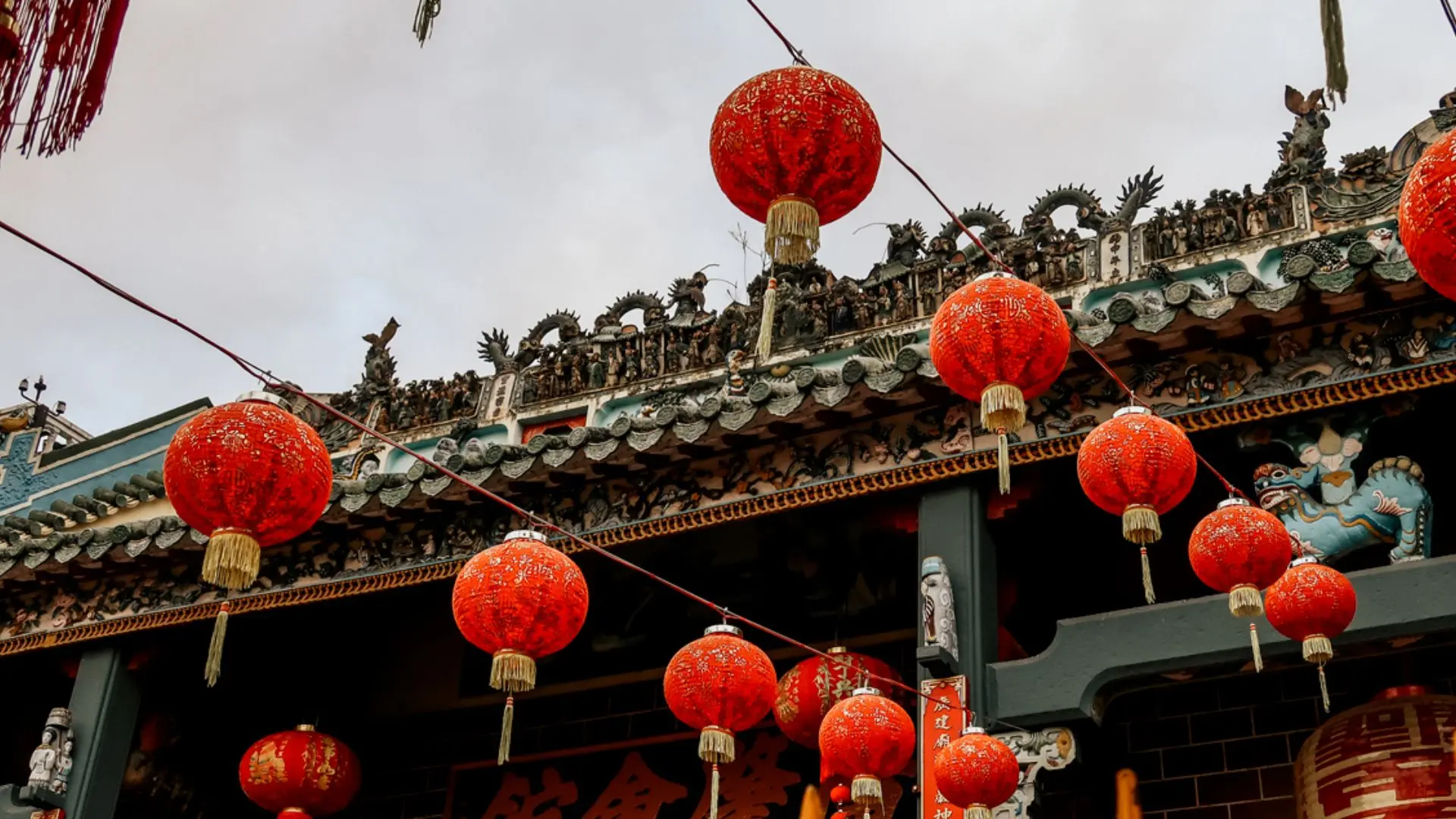
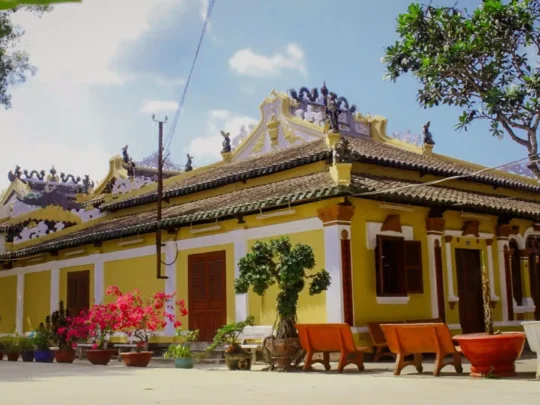
- Landmark: It is located directly across the street from the Ho Chi Minh Statue and the Ninh Kieu Park. You can’t miss it—it’s the vibrant building with red lanterns and green glazed tiles standing out among modern shops.
Operating Hours & Schedule
The temple is open daily for both worshippers and tourists.
- Opening Hours: 7:00 AM – 5:00 PM (Daily).
- Best Time to Visit:
- Early Morning (7:30 AM – 9:00 AM): The lighting is softest, and the temple is quieter.
- Lunar New Year (Tet) & Festivals: If you visit during the Lunar New Year or the Guan Yu Festival (24th day of the 6th lunar month), the temple is incredibly lively, filled with smoke and devotees, though it can be quite crowded.
Admission & Duration
- Entrance Fee: Free. There is no ticket required. Visitors are welcome to make a small contribution in the donation box (Thung Phuoc Suong) to help with maintenance, but it is not mandatory.
- Duration: The temple is compact. A visit usually takes about 30 to 45 minutes. This allows enough time to walk through the main courtyard, admire the intricate wood carvings, and take photos of the incense coils.
How to Get There
Because it is in the absolute center of the city, getting here is effortless.
- On Foot (Recommended):
- If you are staying at a hotel in the Ninh Kieu district, the best way to arrive is by walking.
- Simply walk along the Ninh Kieu Pedestrian Bridge or the riverside park towards the Ho Chi Minh Statue. The temple is just a few steps away from the statue.
- By Motorbike/Taxi:
- Ask the driver to drop you at “Chùa Ông” or “Bến Ninh Kiều” (Ninh Kieu Wharf).
- Parking: If you ride your own motorbike, you cannot park directly on the sidewalk in front of the temple. You should park at the designated public parking lots along Hai Ba Trung Street or near the Night Market entrance.
Must-Try Experiences at Ong Temple
Get Lost in the “Forest” of Incense Coils
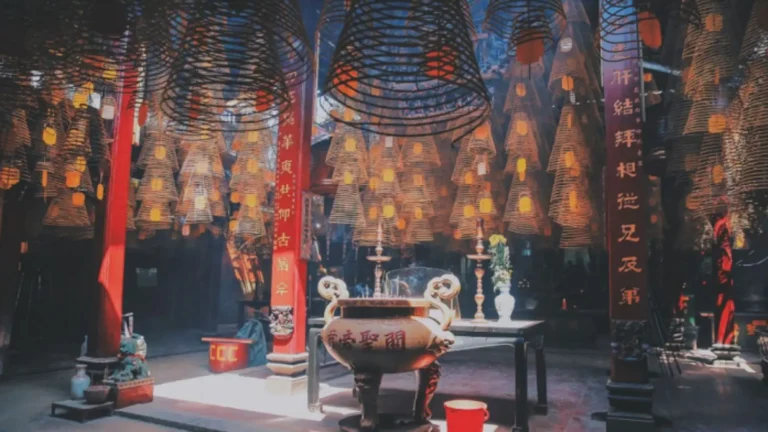
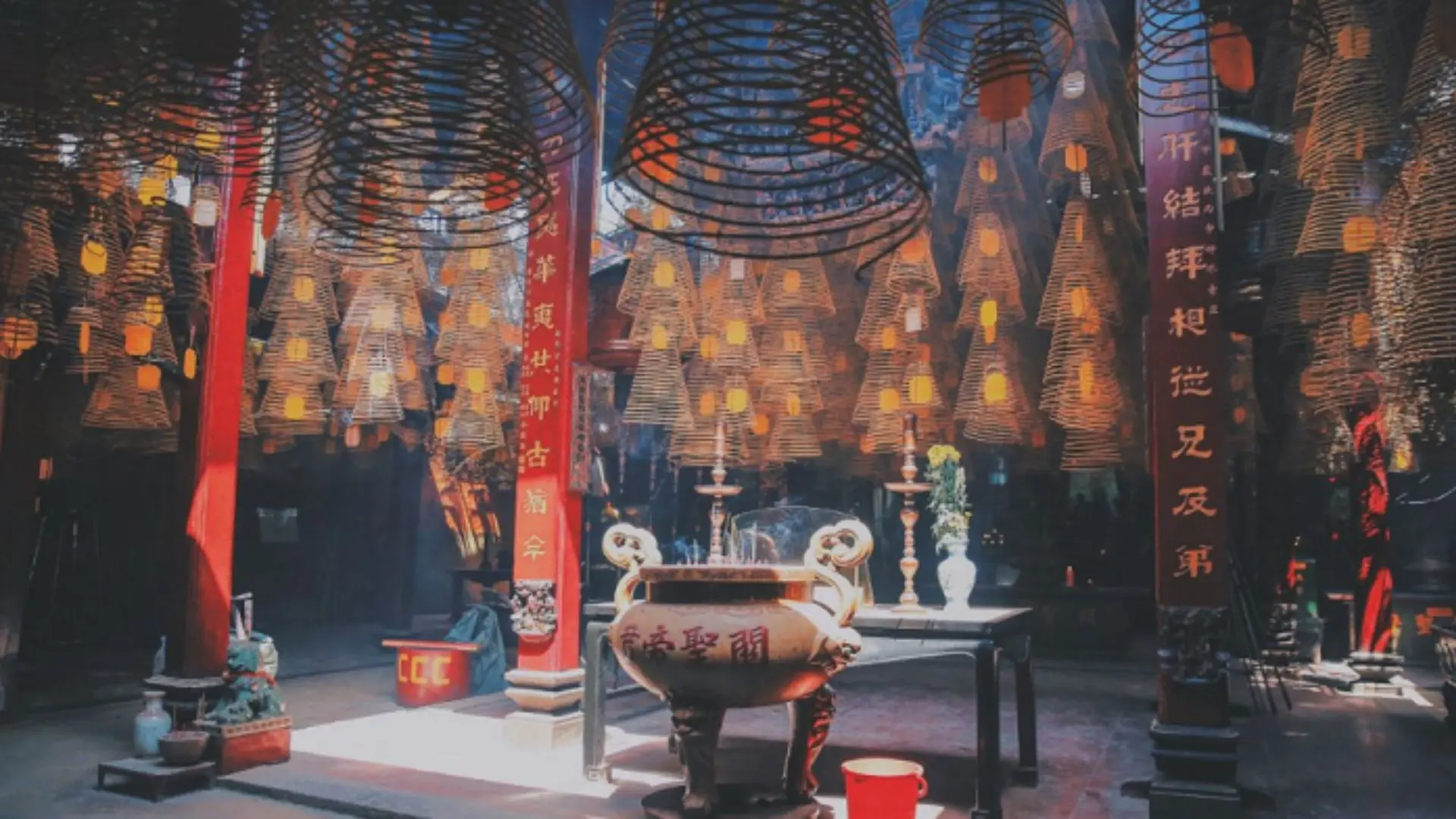
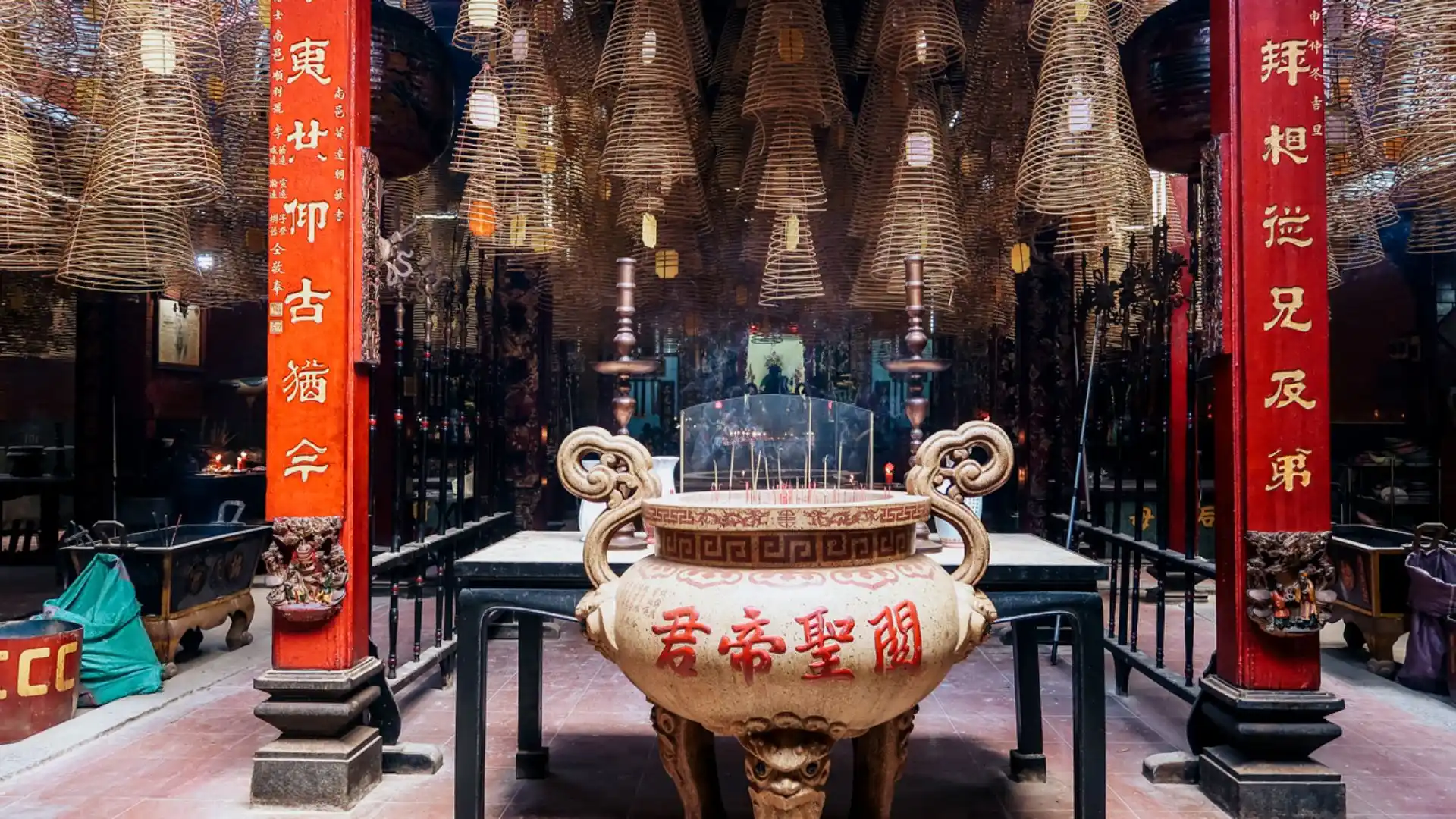
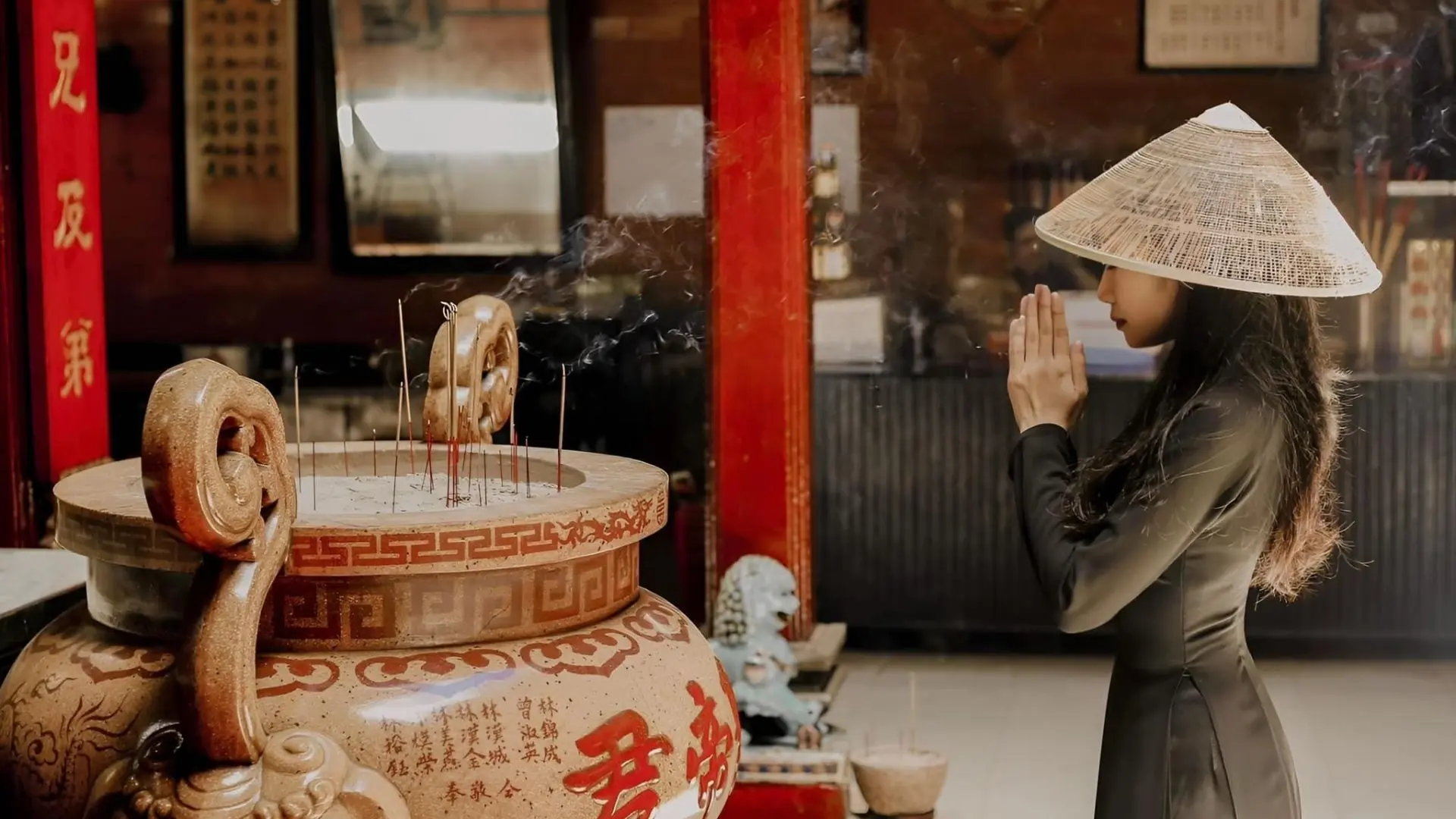
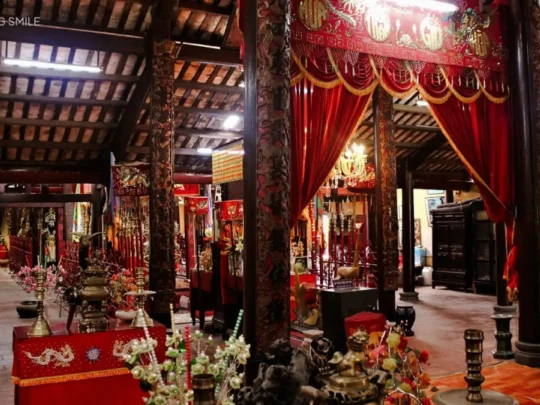
The most iconic feature of Ong Temple is the hundreds of large, spiral incense coils (nhang khoanh) hanging from the ceiling beams.
- The Sight: Unlike normal incense sticks that burn quickly, these giant coils can burn for weeks. Each coil usually has a red piece of paper attached to it containing the name and prayers of a devotee.
- The Atmosphere: As sunlight streams through the open roof (sky well) and cuts through the lingering smoke, it creates a mystical, cinematic atmosphere that is mesmerizing to watch. It is the defining image of this temple.
Try Your Luck with “Xin Xam” (Fortune Telling)
One of the most interesting cultural activities here is Xin Xam—a traditional form of Chinese fortune telling.
- How it works: You kneel before the altar, shake a cylinder full of numbered bamboo sticks until one falls out. You then take that stick to the temple caretaker to exchange it for a “poem” or paper explanation (Oracles) corresponding to the number.
- The Experience: Even if you cannot read the Chinese/Vietnamese text, shaking the sticks is a respectful way to participate in local traditions. If you have a tour guide, they can translate the fortune for you.
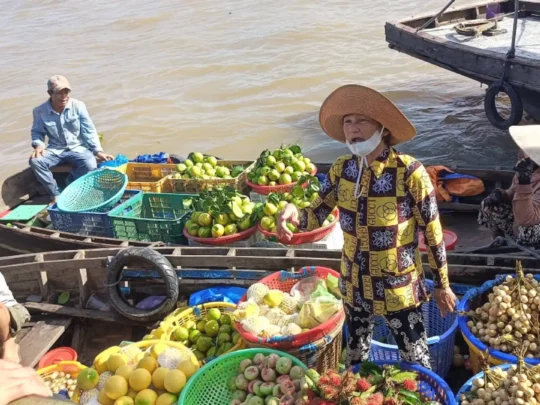
For the most immersive experience, it is a good idea to combine the Ong Temple with Can Tho Floating Market Tour, letting a private local guide unveil the deep cultural significance.
Marvel at the “Five Elements” Architecture
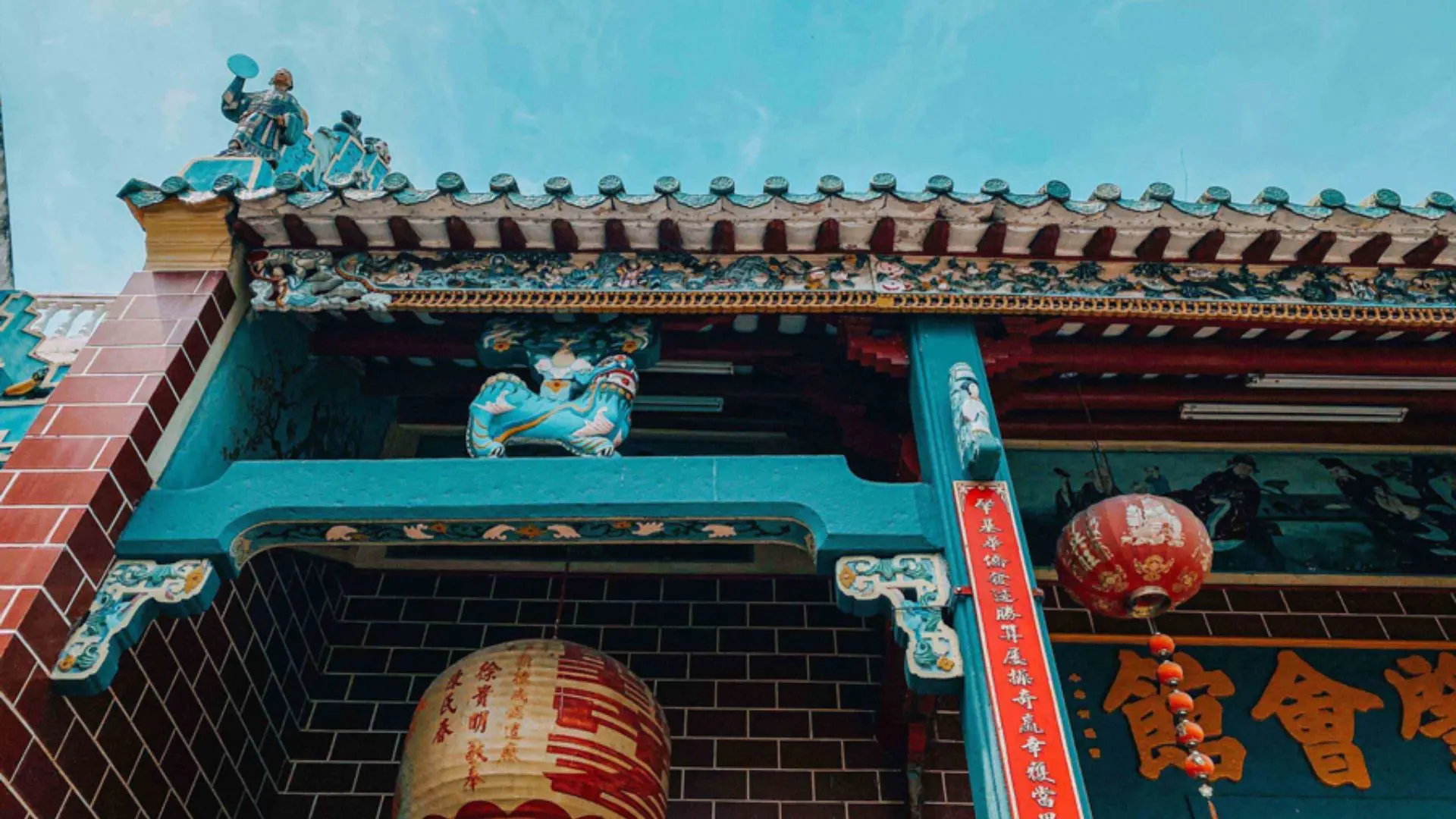
Ong Temple is a masterpiece of the Cantonese Assembly Hall style, built in the shape of the Chinese character “Quoc” (Country).
- The Roof: Look up at the roof ridges to see vibrant, multi-colored ceramic statues depicting scenes from Chinese mythology, dragons, and phoenixes. These are original pieces from the 19th century.
- The Sky Well (Thien Tinh): Stand in the center of the temple where the roof opens up to the sky. This architectural feature allows natural light and air to circulate, balancing the Yin and Yang and letting the incense smoke escape.
Pay Respects to General Quan Cong
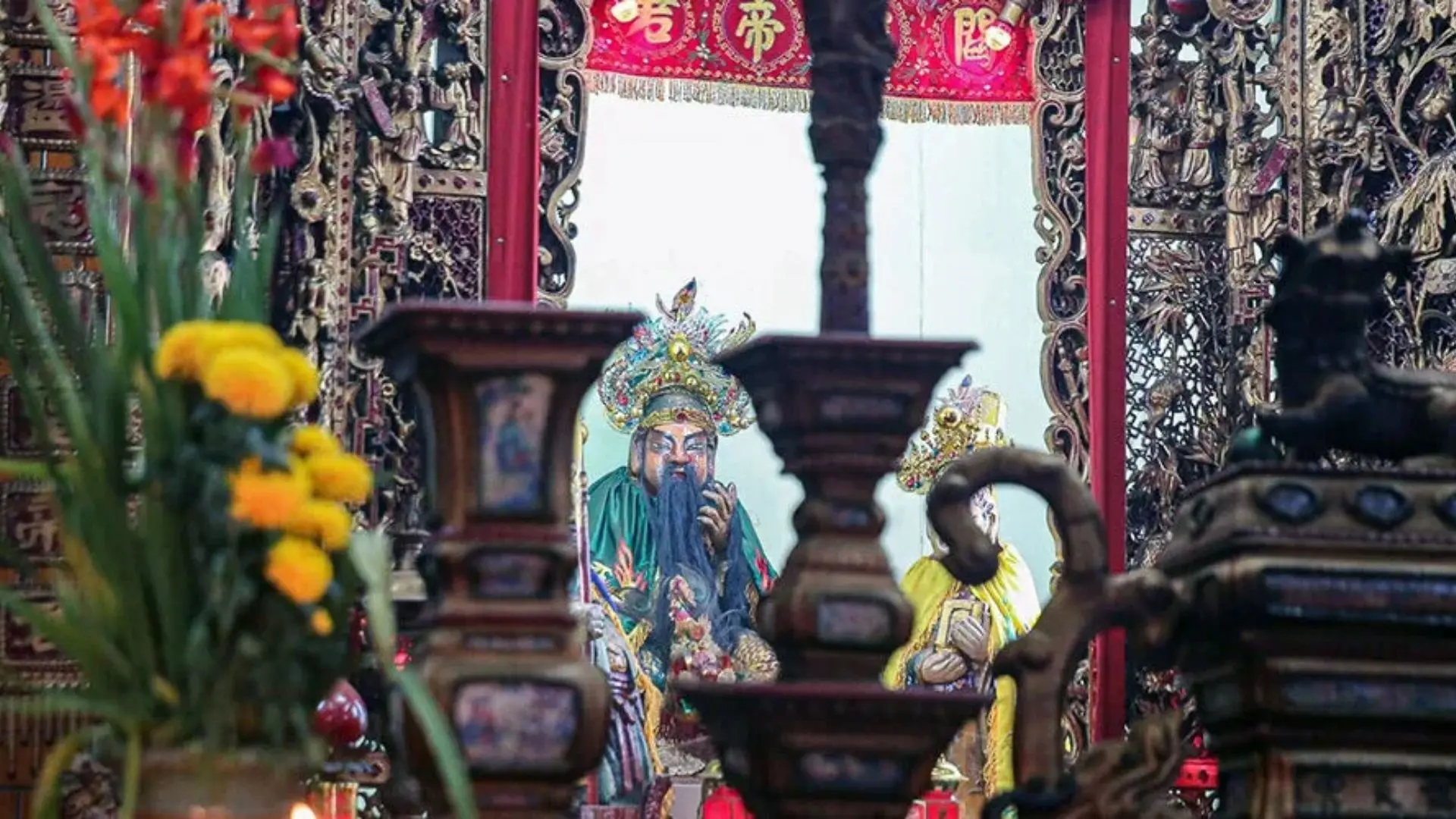
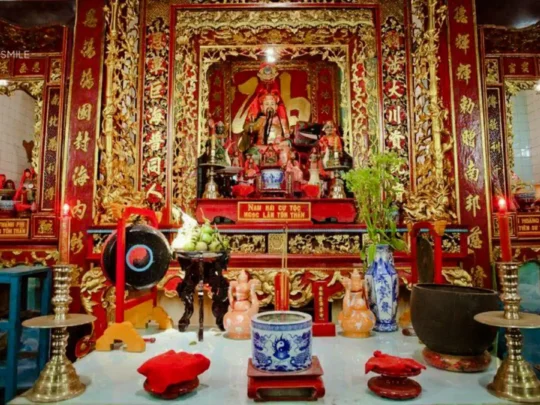
The main altar is dedicated to Quan Cong (Guan Yu), the red-faced general with a long beard who symbolizes loyalty, righteousness, and brotherhood.
- The Altar: Flanking him are his trusted assistants: the strategist Chau Xuong and the administrative mandarin Quan Binh.
- The Ritual: You don’t need to be religious to offer a small gesture of respect. Simply clasping your hands and bowing slightly is enough to show appreciation for the culture.
Capture “Cinematic” Photos
Because of the interplay between the dark wooden interiors, the vibrant red lanterns, and the shafts of natural light from the sky well, this temple is a photographer’s dream.
- Best Angle: Stand near the back of the courtyard and shoot towards the entrance to capture the layers of hanging incense coils against the bright daylight.
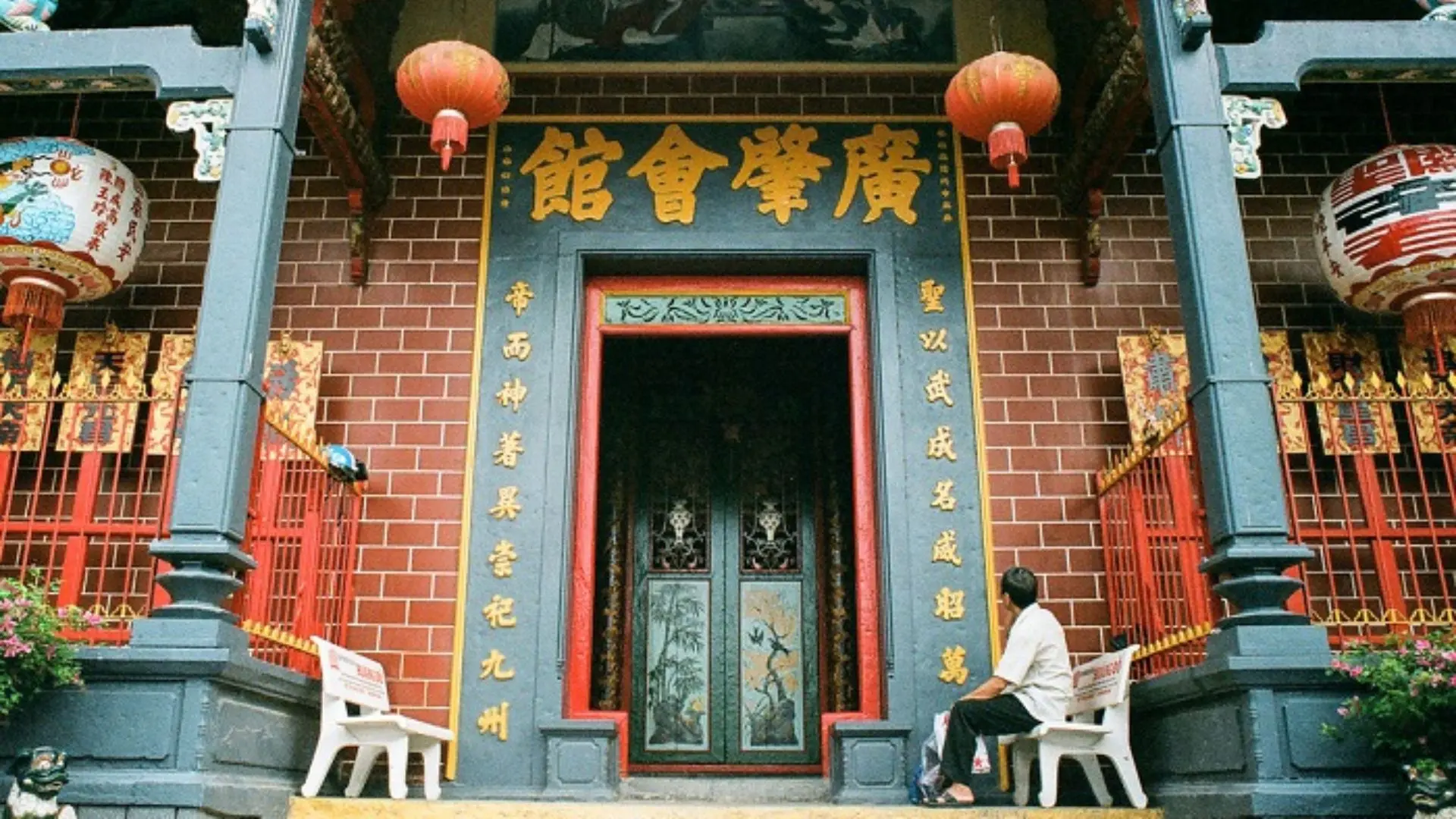
- Portrait Tip: The intricate wooden doorways and the red brick walls serve as excellent, moody backgrounds for portraits (just remember to pose respectfully).
Insider Tips for an Enhanced Visit
To ensure a smooth and meaningful experience at this sacred heritage site, here are some practical tips from locals:
- Dress for the Occasion: While there isn’t a strict guard at the door, this is a functioning place of worship. Avoid wearing tank tops, short shorts, or overly revealing clothing. If you are dressed casually for the weather, bring a light scarf or shawl to cover your shoulders when entering.
- Best Light for Photography: If you are a photography enthusiast, visit between 8:00 AM and 10:00 AM. At this time, the sunlight angles perfectly through the open roof (sky well), cutting through the incense smoke to create stunning “rays of light” effects (Tyndall effect).
- Respect the “Center” Rule: When entering through the main gate, traditional custom suggests entering through the right door (Dragon side) and exiting through the left door (Tiger side). The large central door is traditionally reserved for gods and spirits, so avoid walking directly through the middle unless it is fully open for a festival.
- Protect Your Lungs: The temple can get very smoky due to the hundreds of burning incense coils, especially on the 1st and 15th of the lunar month. If you are sensitive to smoke or have asthma, consider wearing a mask or keeping your visit short (15-20 minutes).
Combining Ong Temple with Nearby Attractions
Located centrally on Ninh Kieu Quay, Ong Temple is the perfect anchor point for a walking tour of downtown Can Tho. Here are the best spots to visit within walking distance:
- Ninh Kieu Wharf: A famous riverside park just steps away, perfect for strolling and boat trips.
- Can Tho Ancient Market: A restored French-style indoor market right behind the temple, ideal for souvenirs.
- Can Tho Museum: The Delta’s largest museum nearby, showcasing regional history and cultures.
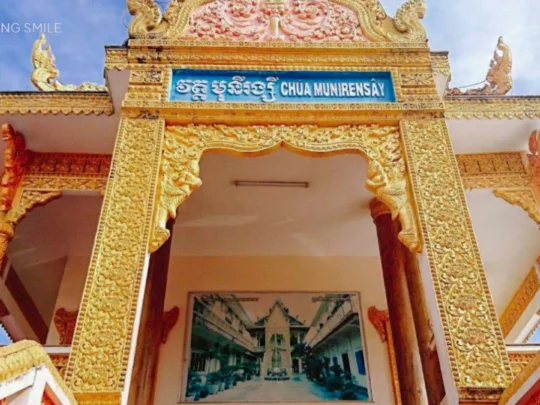
- Munir Ansay Pagoda: A dazzling golden Khmer pagoda offering a striking architectural contrast nearby.
- Can Tho Grand Prison: A historical site preserving colonial prison history, located just minutes away.
Our Signature Authentic Can Tho Tour
We design authentic cultural tours throughout the Mekong Delta, from floating markets and traditional villages to multi-day expeditions showcasing Southern Vietnam’s heritage, sustainable communities, and vibrant river life.



Attractions in Mekong Delta



Attractions in Mekong Delta




Attractions in Mekong Delta



Attractions in Mekong Delta
Can Tho Floating Market & Fruit Garden Tour: Mekong Tropical Sense



Attractions in Mekong Delta
Cai Rang Floating Market Tour: Cacao Farm, Fruit Garden & Canals






Attractions in Mekong Delta
Can Tho Rural Tour: Cai Rang Floating Market and Rural Cycling






Attractions in Mekong Delta






Attractions in Mekong Delta



Attractions in Mekong Delta



Attractions in Mekong Delta

Attractions in Mekong Delta
Attractions in Mekong Delta
Get an Advisor and Book Your Authentic Mekong Delta Tour
Planning Your Mekong Trip?
Get a free, personalized itinerary from our local experts in under 120 minutes.

Get a Free Consultation Leave your contact, we handle the rest.
Frequently Asked Questions about Ong Temple
Is there an entrance fee to visit Ong Temple?
No, admission to Ong Temple is completely free for all visitors. There is a red donation box near the main altar if you wish to contribute to the temple’s maintenance or lighting of oil lamps, but it is entirely voluntary.
Is Ong Temple a Buddhist Pagoda?
Technically, no. Although locals call it “Chua Ong” (Ong Pagoda), it is actually a Chinese Assembly Hall (Temple). It is dedicated to Quan Cong (Guan Yu)—a historical general symbolizing loyalty, justice, and bravery—along with the Goddess of the Sea (Thien Hau).
What is the dress code when visiting Ong Temple?
Since it is a sacred space, respectful attire is expected. While not as strictly enforced as at major Zen monasteries, it is polite to wear clothes that cover your shoulders and knees.
Can I buy and hang an incense coil in the Ong Temple?
Yes, this is a popular activity. Visitors can purchase large spiral incense coils from the temple caretakers. You can write your name and a specific wish on a piece of red paper, which is then attached to the coil and hung from the ceiling.
Is photography allowed inside the Ong Temple?
Yes, photography is allowed, and the temple is famous for being incredibly photogenic due to the natural light and smoke. However, please be respectful. Avoid using flash directly in front of worshippers, and try not to pose for selfies with your back directly turned to the main altar.
Where is the Ong Temple located?
It is in the most central location possible: 32 Hai Ba Trung Street, right facing the river at Ninh Kieu Wharf. It is situated directly across the street from the Ho Chi Minh Statue and the park, making it very easy to find while walking along the riverside.
